Mold on Soil on Hoya: Causes, Checks & Fixes
Quick answer
Surface mold on Hoya is a moisture warning, not a leaf disease. First step: stop watering, scrape the fuzzy top layer off the mix, and let the top half of the soil dry fully before the next drink.
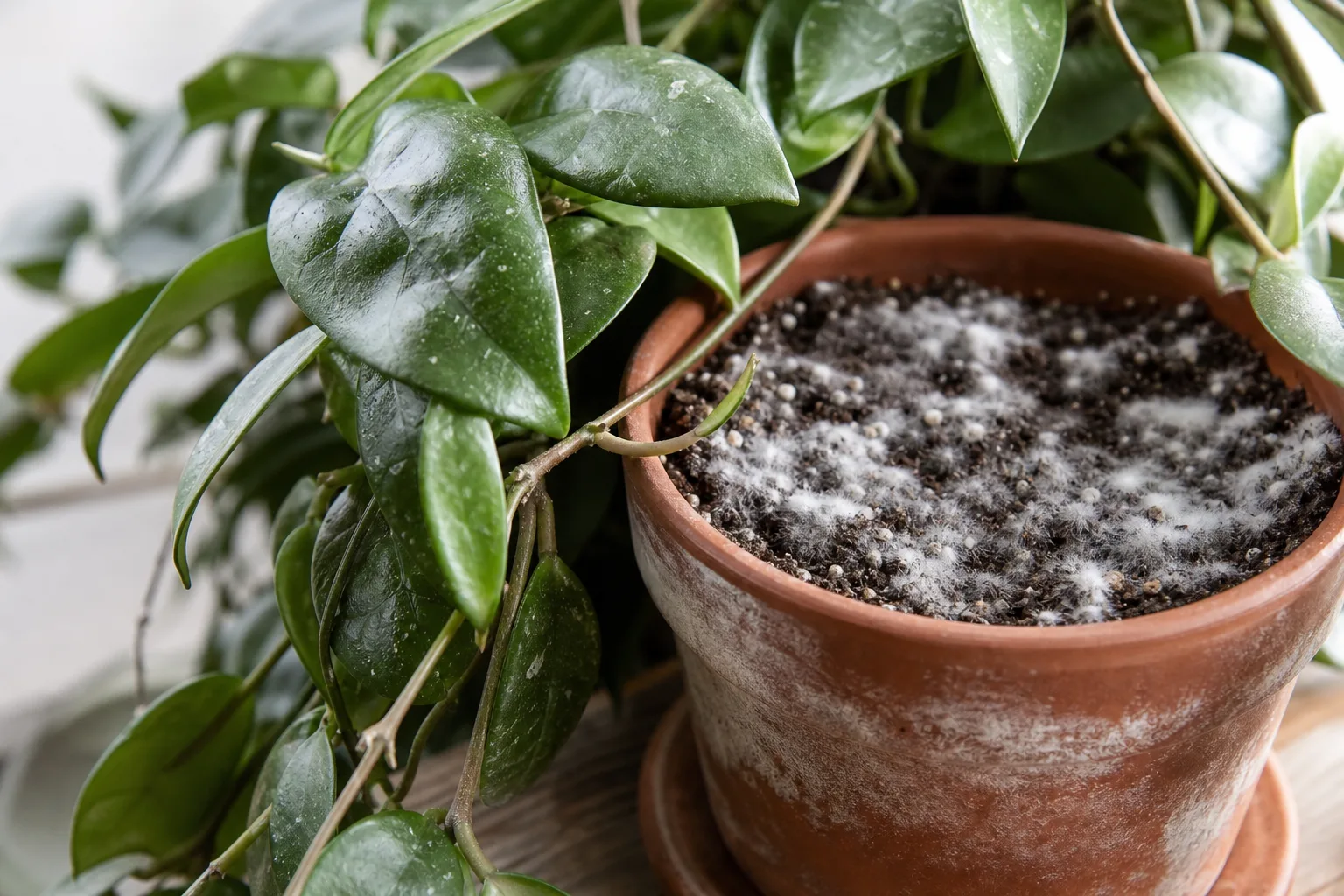
Mold on Soil on Hoya: Causes, Checks & Fixes
This guide covers mold on soil on Hoya. See also the general Mold on Soil guide, watering, and light pages for this plant.
Mold on Soil on Hoya: Causes, Checks & Fixes
Quick answer
White or gray fuzz on Hoya potting mix is almost always saprophytic fungus feeding on decaying organic matter in a surface that stays wet too long. It is unsightly, but it is not attacking healthy waxy leaves or peduncles the way a leaf pathogen would.
On this semi-succulent vine, surface mold is a drainage and watering signal. Hoya stores water in its fleshy leaves and prefers a well-drained mix that dries through the top half between drinks-not a constantly damp cap. When the surface never dries, mold appears first; root rot on Hoya and stem blackening at the soil line often follow if the schedule does not change.
First step: stop watering and scrape off the moldy top layer. Remove the fuzzy quarter-inch of mix, discard it in the trash (not compost), and let the top half of the soil dry completely before you water again. Only after the mix dries should you check whether roots and stems are still firm or starting to soften.
What mold on soil looks like on Hoya
The classic sign is a white or gray cottony film spread across the potting mix, sometimes threading between bark chunks or clinging to fallen leaf bits. You may notice it:
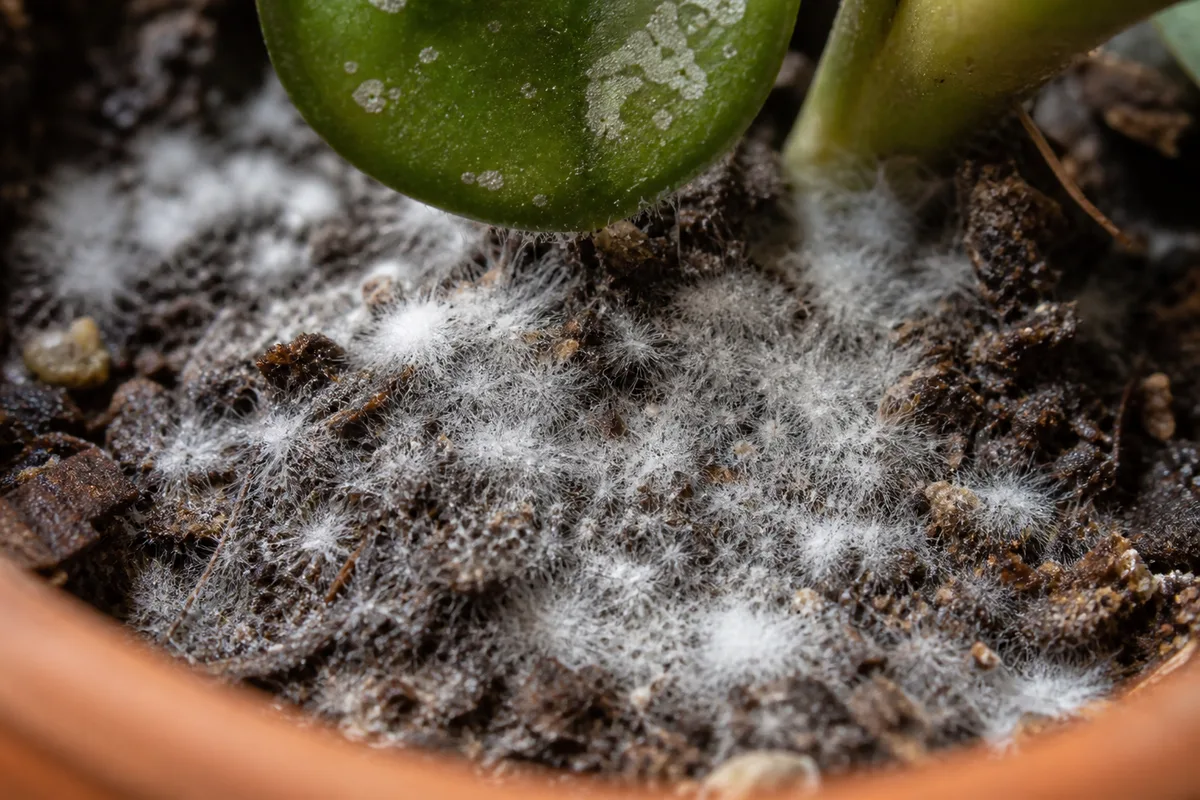
Mold on Soil symptoms on Hoya - compare with healthy tissue on the same plant.
- After several days when the surface still feels damp to the touch
- Around the base of trailing stems where debris collects in hanging baskets
- Along with tiny dark flies hovering near the pot when you disturb the mix
- After winter watering on a calendar while the plant is nearly dormant
Hoya leaves often look normal during early mold-firm, waxy, still producing new nodes along the vine. That is different from overwatering on Hoya damage, where leaves yellow or feel mushy, vines wilt despite wet mix, and stems blacken at the soil line.
Green algae on the same wet surface is a related lookalike: a slick green layer instead of fuzzy white. Both mean the culture is too wet and too stagnant for a plant that needs airy, drying cycles.
A musty smell from the pot strengthens the case that organic matter is decomposing in moisture-not that the mold alone is lethal, but that conditions favor gnats and root stress.
Why Hoya gets mold on soil
Hoya (Hoya spp., wax plant) is a trailing or climbing member of Apocynaceae with thick, water-storing leaves. Indoors, mold shows up when the pot mimics a wet forest floor instead of a fast-draining epiphyte perch.
Overwatering or watering on a calendar is the leading trigger-roots in waterlogged mix lose oxygen and vigor. Hoya prefers the top half of the mix to dry before the next drink-roughly every 7–14 days in active summer growth and every three to four weeks in cool winter rest. Watering because a week passed, while the mix is still damp underneath, keeps the surface wet enough for fungi to colonize.
Dense or peat-heavy mix defeats semi-succulent roots. Standard bagged potting soil without enough perlite and orchid bark compacts, stays wet at the surface, and breaks down into organic particles fungi feed on. Hoya in the wrong substrate molds faster and rots sooner.
Low light plus frequent watering slows water use. Hoya needs Hoya light guide for steady growth and flowering; in dim corners the same Hoya watering guide leaves the mix wet longer and mold returns faster.
Low airflow around hanging or crowded shelves slows evaporation. Warm, humid, still air around a wet mix surface is ideal fungal territory-especially when several plants share a tight display.
Organic debris on the mix supplies food. Trailing vines drop small leaves; spent flowers and old leaf litter decay on the soil surface. That matter is exactly what saprophytic molds consume.
Oversized pots hold a large wet zone around a small root ball. Hoya blooms better slightly pot-bound, but an excessively large container dries slowly at the surface, mold persists, and fungus gnat larvae find a stable home in the damp mix.
Winter overwatering is a common Hoya trap. When growth slows in cool conditions, the plant drinks far less. Watering on a summer schedule while the mix stays wet for weeks is a reliable path to surface mold and eventual stem softening.
How to confirm the cause
Work through these checks before Hoya repotting guide or spraying anything:
- Leaf and stem firmness - Healthy Hoya leaves feel plump and waxy, not limp or translucent. Stems should be flexible but not mushy at the base. Soft tissue plus wet mix points past surface mold toward rot.
- Surface moisture - Press a finger into the top inch. If it clings to your skin or feels cool and soggy days after watering, the culture is too wet.
- Weight of the pot - A heavy pot days after the last drink means water is not moving through the mix fast enough. Lift the pot-light means dry, heavy means still moist.
- Smell - Neutral or slightly earthy is fine. Sour, swampy, or fermented odors suggest decomposing roots or saturated organic matter.
- Debris layer - Look for matted old leaves, fish-emulsion residue, or broken-down peat on the surface-all mold food.
- Drainage - Confirm holes are open and the pot is not sitting in a full saucer. Decorative outer pots without drainage trap moisture.
- Pests - Small flies rising from the mix when you water indicate fungus gnats sharing the same wet habitat.
- Roots (if unsure) - Slide the plant partly out of the pot. Firm, pale roots support a cosmetic mold diagnosis. Brown, mushy roots mean you are treating rot, not just scraping fungus.
If only the surface is fuzzy, stems are firm, and smell is neutral, saprophytic mold on wet mix is the likely answer. If multiple rot signs appear together, treat root failure as the primary problem.
First fix for Hoya
Stop watering and remove the moldy surface layer today.
Use a spoon or small fork to scrape off the top quarter-inch to half-inch of affected mix-including any visible mold and matted debris. Bag it and discard it; composting can spread spores to other pots.
Leave the plant in bright indirect light with gentle airflow so the mix surface can dry. Do not mist foliage while you are drying the pot out; extra surface moisture works against you.
Do not water again until the top half of the mix feels dry and the pot noticeably lightens. On Hoya that often means several days to more than two weeks, depending on season, humidity, and pot size. The goal is a dry-down rhythm, not a fixed calendar.
After the surface dries, resume watering by soaking the pot briefly and letting all excess drain out-or bottom-water for fifteen to twenty minutes and empty the saucer. Avoid repeated shallow overhead pours that re-saturate only the top layer.
Only consider repotting on day one if the mix is clearly wrong (heavy peat, no bark chunks, no drainage) or roots already feel mushy. For firm plants in a good airy mix, scraping and drying usually suffices-and Hoya often performs better when left slightly pot-bound.
Step-by-step recovery
Once the first fix is done, work through recovery in this order:
- Clean the pot rim and saucer - Wipe away mold residue so spores are not splashed back onto fresh mix.
- Replace the scraped layer - Add a thin topping of dry perlite or orchid bark if you removed a lot of material. Skip wet top dressings until the watering rhythm is stable.
- Remove debris promptly - Pick off fallen leaves from the mix after each watering session. Do not cut peduncles; old bloom spurs can flower again.
- Adjust placement - Move the pot slightly away from walls or dense plant groupings to improve air movement. Brighter indirect light speeds drying without scorching waxy leaves.
- Match water to season - Stretch winter intervals when growth slows; resume shorter dry-down cycles only when new vine tips are actively extending.
- Address fungus gnats if present - Let the top one to two inches stay dry, use yellow sticky traps for adults, and consider a Bacillus thuringiensis israelensis drench if larvae persist after two weeks of dry surface culture.
- Repot chronic cases - If mold returns within a week despite dry surfaces, repot into fresh mix with perlite and orchid bark, use a right-sized pot, and discard old soggy substrate.
Hold fertilizer until new growth looks normal for two weeks. Feeding a plant recovering from wet stress adds salt load to roots that are already struggling for oxygen.
Recovery timeline
Surface mold should not reappear within one to two weeks once the mix top stays dry between waterings. You may see a brief return if a single heavy overhead soak re-wets the surface-adjust technique rather than assuming failure.
Firm leaves and new node growth along the vine within two to four weeks confirm the roots are stable. Hoya is not a fast exploder of foliage, but trailing tips should not stay stalled or wrinkled.
Fungus gnat numbers often drop within two to three weeks of dry surface management, though adults may linger until sticky traps catch the last flyers.
Worsening signs during the same window-spreading yellow leaves, blackening at the soil line, sour smell returning, or mold that covers the surface again within days of scraping-mean the mix is still too wet or roots are declining. Escalate to a full root inspection and possible repot into dry, chunky mix.
Lookalike symptoms
- Mineral or hard-water crust - Flat white deposits on pot edges, not fluffy; wipe off with water, adjust watering technique.
- Green algae - Slick green film on wet mix in low light; same fix as mold-dry the surface and brighten indirect light slightly.
- Powdery mildew on leaves - White dust on foliage, not soil; improve airflow and avoid wet leaves overnight.
- Mealybugs at leaf axils - Cottony white clumps tucked into stem joints, not a soil sheet; isolate and treat pests, not drainage.
- Root rot without visible mold - Soft stems and sour roots can occur with no surface fuzz; do not assume health just because soil looks clean.
What not to do
Do not keep watering on schedule because waxy leaves still look fine-Hoya hides drought and rot stress in fleshy tissue until damage is advanced.
Avoid heavy fungicide drenches for harmless surface mold. Fixing moisture and airflow resolves the issue; chemicals stress roots without addressing why the fungus appeared.
Do not repot into a much larger container to “fix mold.” Extra wet mix around a small root ball recreates the problem-and Hoya often blooms better when slightly pot-bound.
Skip peat-heavy potting soil when repotting chronic cases. An airy blend with perlite and bark dries faster and suits semi-succulent roots.
Do not leave the pot in a full saucer or sealed outer cache pot after watering.
Do not remove peduncles while troubleshooting mold-they are future bloom sites unrelated to soil fungus.
How to prevent mold on Hoya soil
Prevention is mostly culture, not cleanup:
- Use well-draining mix with perlite and orchid bark-not straight heavy peat.
- Water when the top half of the mix is dry, not on a fixed weekly alarm.
- Soak and drain or bottom-water so the surface does not stay saturated.
- Remove fallen leaves from the pot top promptly.
- Maintain gentle airflow around hanging and shelf plants.
- Right-size the pot so roots fill most of the volume without drowning in extra wet mix.
- Empty saucers after every drink and confirm drainage holes stay open.
- Reduce winter watering when growth slows-near-dormant Hoya in cool rooms may need water only every three to four weeks.
Press the mix before each watering. If moisture clings to your finger from the top inch, Hoya does not need water yet-regardless of what the calendar says.
When to worry
Surface mold alone on a firm plant is low urgency. Escalate if:
- Stems soften or blacken at the soil line
- Leaves yellow or wrinkle while mix stays damp
- Pot smell turns sour or fermented
- Mold returns within days after repeated scraping
- Fungus gnats persist after a month of dry surface management
- Roots on inspection are brown, mushy, or hollow
Hoya forgives dry mix far more willingly than wet mix. When in doubt, withhold water, improve airflow, and inspect roots before adding more moisture.
Conclusion
Mold on Hoya soil is a wet-surface warning on a semi-succulent vine that needs airy, fast-drying mix. Scrape the fuzzy layer, stop watering until the top half dries, and resume a sparse rhythm matched to your light and season. Firm stems, plump leaves, and new vine tips mean you caught it in time; soft tissue, blackening at the base, and sour mix mean shift focus to root recovery-not another round of surface scraping alone.
When to use this page vs other Hoya guides
- Hoya watering guide - Use for routine moisture checks before assuming mold on soil is the main issue.
- Hoya problems hub - Browse all 17 common issues on this species.
- Fungus Gnats on Hoya - Different entry point when symptoms overlap with mold on soil.
- Overwatering on Hoya - Different entry point when symptoms overlap with mold on soil.
- Root Rot on Hoya - Different entry point when symptoms overlap with mold on soil.