Drooping Leaves on Hoya: Causes, Checks & Fixes
Quick answer
Drooping leaves on Hoya usually mean the plant cannot hold water in its thick waxy foliage-either because the mix is too dry (soft, wrinkled leaves and a light pot) or roots are failing on wet soil (limp leaves that stay limp after watering). First step: pinch a mature leaf for firmness, lift the pot for weight, and probe the top half of the mix before you pour.
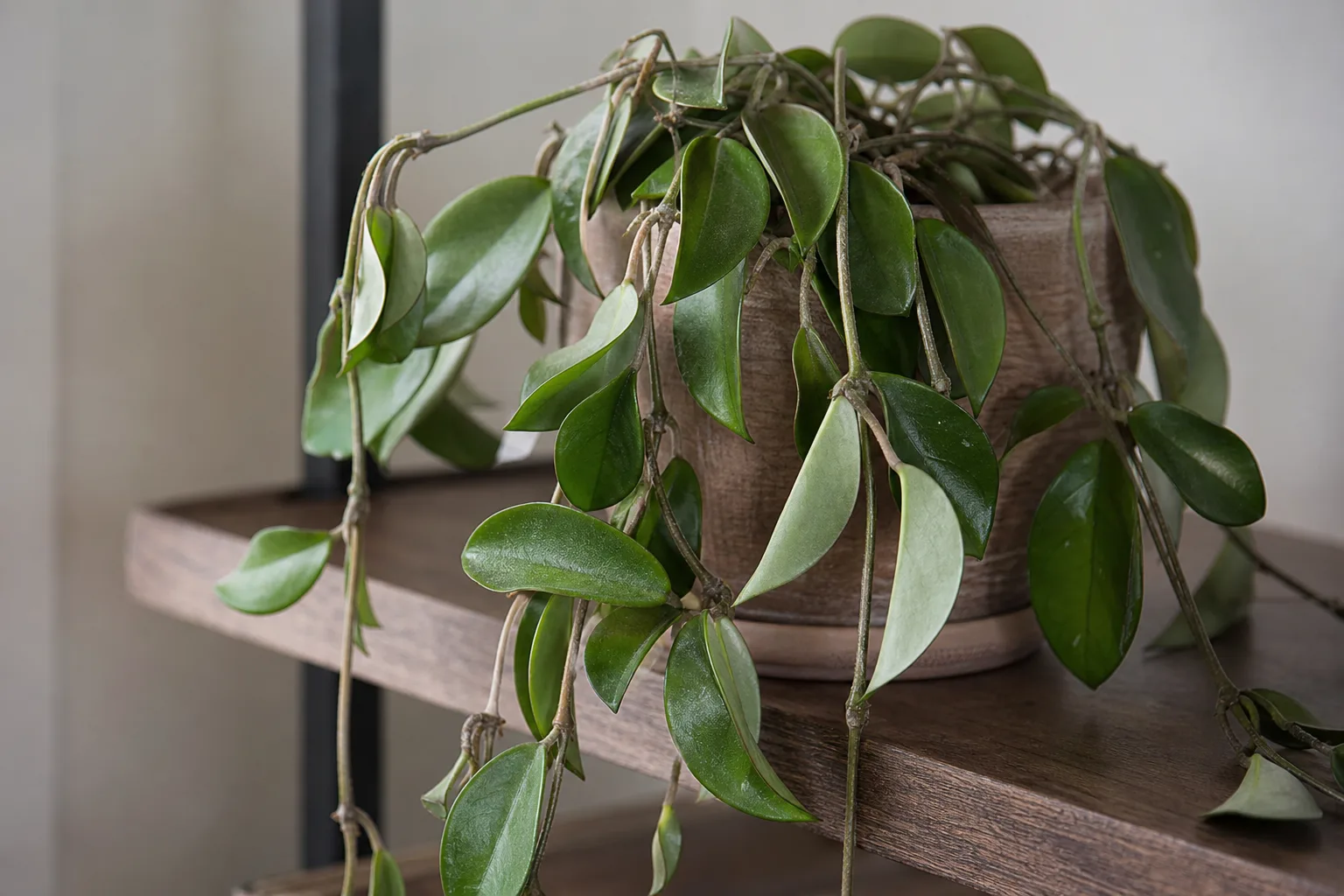
Drooping Leaves on Hoya: Causes, Checks & Fixes
This guide covers drooping leaves on Hoya. See also the general Drooping Leaves guide, watering, and light pages for this plant.
Drooping Leaves on Hoya: Causes, Checks & Fixes
Quick answer
Drooping leaves on Hoya (Hoya spp., wax plant) mean the vine has lost turgor-the internal water pressure that keeps thick, waxy leaves firm and leathery. Hoya stores water in semi-succulent foliage, so droop is the plant’s visible signal that uptake and loss are out of balance.
The split that matters most is soil moisture at depth, not how sad the leaves look:
- Soft or wrinkled leaves + light pot + dry top half of mix → thirst or hydrophobic dry mix. See underwatering on Hoya.
- Limp leaves + damp mix for days + yellow lower leaves → root failure from overwatering. See overwatering and root rot.
- Limp, slightly translucent leaves after a cold window-sill night → cold stress; warming the plant matters more than another drink.
First step: pinch a mature leaf, lift the pot, and probe the top half of the mix. Do not water until you know which branch fits. Pouring on wet roots is the fastest way to turn a recoverable droop into rot on an epiphytic plant that needs dry intervals between soaks.
What drooping looks like on Hoya
Healthy Hoya foliage feels firm, thick, and glossy when you gently squeeze a mature leaf. Drooping shows up when that tissue goes soft, limp, or wrinkled along the vine.
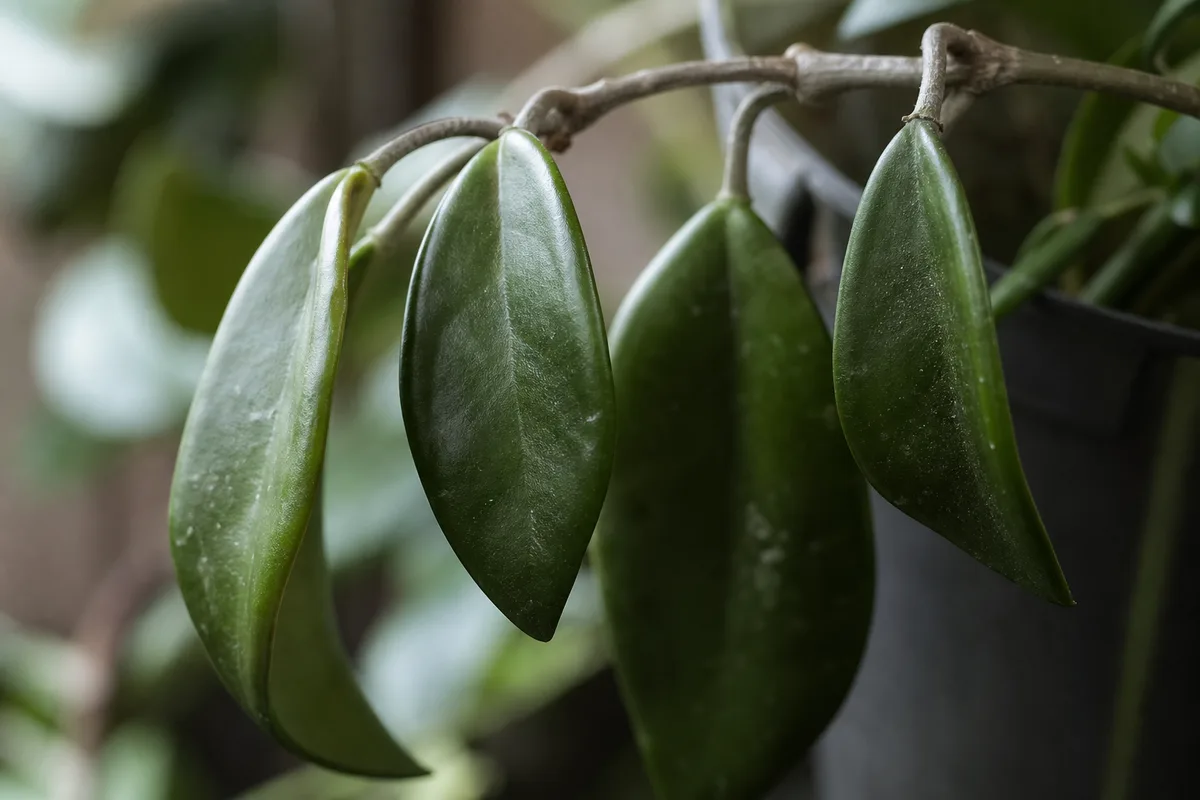
Drooping Leaves symptoms on Hoya - compare with healthy tissue on the same plant.
Soft, wrinkled leaves on a dry, lightweight pot (thirst)
- Leaves lose their plump look and develop fine creases or puckers, especially on older leaves farthest from the pot
- Stems may feel slightly rubbery on trailing vines
- Pot feels noticeably light when lifted
- Mix is dusty dry through the top half; soil may pull slightly from the pot edge
- Leaves often perk within hours to two days after one thorough soak if roots are alive
This is normal drought communication on a plant with fleshy, drought-tolerant leaves-not an automatic emergency, but it should be corrected the same day.
Limp foliage on wet mix with yellow lower leaves (root failure)
- Leaves stay limp and depleted even though you watered recently
- Lower leaves turn yellow and may drop while soil stays cool and damp
- Stems at the soil line may soften; a sour smell from the pot is a red flag
- Damaged roots cannot move water upward even when surrounded by moisture-the classic wet-soil paradox on Hoya
Water runs straight through on the first pour (hydrophobic mix)
- Surface looks briefly damp after a quick pour, but the center of the root ball stays dry
- Leaves soften over several days despite your belief that you “watered yesterday”
- Common after weeks of neglect in bark-heavy or aged peat mixes
Limp or translucent leaves after cold exposure
- Plant sits on a cold window-sill, near a drafty door, or below about 50°F (10°C) overnight
- Foliage looks limp and slightly translucent or water-soaked without dry soil
- Hoya is frost intolerant and cold-damaged tissue may not firm up from watering alone
Farthest leaves on a trailing vine droop first
During drought, the distal leaves on long stems often soften before leaves near the crown-normal for a vine moving stored water from older tissue. If only the tips droop on dry mix, thirst is likely; if the whole plant collapses on wet soil, think roots.
Thin-leaf species such as Hoya lacunosa or H. bella show droop faster than thick-leaf H. carnosa on the same schedule-adjust checks to leaf texture, not a generic calendar.
Drooping vs. wilting on Hoya - when to use this page
“Drooping” and “wilting” describe the same visible limpness on Hoya; searchers use both terms. This page is your water-direction triage: dry-soil thirst, wet-soil root failure, hydrophobic mix, and cold stress.
- For deep dry-side recovery (soak methods, fear-of-overwatering swings, pot-weight rhythm), use underwatering on Hoya.
- For chronic soggy soil and yellowing, use overwatering.
- For general epiphytic watering rhythm, see the Hoya watering guide and overview.
Why Hoya leaves droop
Hoya evolved as an epiphyte on tree branches with roots that breathe between rain events. Its thick leaves bank water, which is why droop can appear suddenly after weeks of firm foliage-then resolve quickly once moisture returns.
Common Hoya-specific triggers:
Underwatering and calendar neglect. Growers wait until leaves shrivel because Hoya tolerates drought better than soggy soil. By then fine roots may have died back, slowing the next soak’s effect.
Overwatering after misreading limp leaves. Limp foliage triggers a reflex pour. On already-wet mix, that compounds root rot in poorly drained soil-the opposite problem.
Hydrophobic bark after long dry spells. Epiphytic mixes dry fast; when they stay dry too long, water sheets off instead of penetrating.
Tight pots in bright summer windows. Hoya blooms better slightly root-bound, but a dense root mass in July can dry the whole container in 48 hours. Drooping on a light pot is expected-not a reason to wait another week.
Cold drafts in winter. A plant watered on schedule but parked on a cold sill can look limp from chilled tissue while soil stays damp-watering more makes it worse.
Recent repot or move. Temporary wilt for five to seven days is common even with adequate moisture. Wait unless soil is clearly dry and the pot is light.
Lookalike symptoms to rule out
| Pattern | Soil / pot | Leaf feel | Likely cause | Next page |
|---|---|---|---|---|
| Soft, wrinkled | Dry top half, light pot | Thin, creased | Thirst / hydrophobic dry core | Underwatering |
| Limp, yellowing lower leaves | Wet for days | Soft, not plump | Root rot / overwatering | Overwatering |
| Crispy tips, firm leaves | Normal moisture | Firm, dry edges | Low humidity or salts | Overview |
| Sticky residue, white cotton | Any | Gradual weakness | Mealybugs | Inspect leaf axils |
| Whole vine limp after repot | Moist | Soft temporarily | Transplant shock | Wait 5–7 days |
How to confirm the cause
Work through this checklist before any fix:
- Leaf-firmness pinch - Gently squeeze a mature leaf. Firm and thick points away from urgent thirst; soft or wrinkled confirms tissue water loss.
- Pot weight - Lift the pot. Very light strongly suggests dry soil; heavy and cool suggests wet mix.
- Moisture at depth - Push a finger, skewer, or chopstick into the top half of the mix. Dusty and loose confirms drought; clinging cool soil means do not water yet.
- Pour test for hydrophobic mix - If you suspect dry core, start a slow top pour. Water racing straight through without darkening the mix points to hydrophobic bark.
- Yellowing pattern - Lower yellow leaves on damp soil favor root stress over simple thirst.
- Temperature check - Note cold window-sills, AC blasts, or recent nights below 50°F (10°C).
- Root spot-check (if split is unclear) - Slide the plant out. Pale, firm roots on dry mix confirm underwatering. Brown, mushy roots on damp mix mean stop watering and treat rot.
If soil is wet and leaves are soft, do not water. Inspect roots before the next pour.
First fix for Hoya
One clear first action based on what you confirmed-not a stack of treatments.
If top half of mix is dry and leaves feel soft or wrinkled
Give one thorough soak, then wait. Bottom-water 30–45 minutes in a sink, or top-water slowly until excess drains freely. Empty the saucer within 30 minutes. Full step-by-step options live on underwatering on Hoya.
If mix is wet and leaves stay limp after recent watering
Stop watering immediately. Move the plant to bright indirect light with good airflow. Unpot when soil is damp enough to work, trim brown mushy roots, and repot into fresh chunky bark-perlite mix only if damage is confirmed. Follow overwatering recovery paths-adding water will not rehydrate leaves when roots are failing.
If water runs straight through (hydrophobic bark)
Bottom-soak until the surface moistens, or poke shallow aeration holes in the dry crust before a slow top soak. Refresh hydrophobic old soil at the next repot so future soaks penetrate evenly.
If plant sits in a cold draft or on a cold sill
Move to a stable 65–80°F (18–27°C) spot with bright indirect light. Allow soil to dry between waterings before the next drink-do not compensate for cold limpness with extra water on already-damp mix.
If plant was recently moved or repotted
Hold extra interventions. Check that soil is not bone dry and the pot is not baking in direct sun. Mild droop often resolves within a week when roots settle.
Step-by-step recovery by cause
Thirst on dry soil: Soak once → let top half dry → resume normal rhythm from the watering guide. Judge success by firmer leaves within 48 hours, not by old creases vanishing.
Wet-soil root stress: Dry-down → root trim if mushy → repot into airy mix → cautious rewater only when mix approaches dry at depth. Recovery is measured in weeks, by new firm leaves, not overnight perk.
Hydrophobic mix: Bottom-soak cycle → consider repotting off-season if water never penetrates after two attempts.
Cold damage: Warm stable placement → moderate light → normal dry-down watering. Severely translucent leaves may scar; watch new growth.
Recovery timeline
Mild thirst droop - Leaves that softened in the last few days on dry soil often firm within 24–48 hours after a proper soak.
Moderate drought - A vine dry one to two weeks may need one to two weeks for stable new glossy tips. Some lower leaves may yellow as the plant rebalances.
Root rot on wet soil - Expect several weeks after drying out, trimming, and repotting. Old limp leaves may not fully smooth; new growth should look firm.
Cold-stressed tissue - Recovery depends on damage extent; lightly chilled leaves may firm in days after warming, while severely translucent tissue may remain marked.
Signs recovery is working: pot weight stays moderate for days after watering, leaves feel thick again, new stems look glossy, no spreading stem blackening.
Signs the problem is worsening: soft leaves on wet soil, sour smell, stem softening at the base, or continued limpness 72 hours after a confirmed thorough soak on dry mix.
What not to do
- Do not water a drooping Hoya when mix is already wet - you risk accelerating rot on epiphytic roots.
- Do not mist leaves instead of soaking dry soil - surface humidity does not rehydrate a dry root ball.
- Do not fertilize a stressed plant - rehydrate or fix roots first; fertilizer on dry or rotting roots burns fine tissue.
- Do not stack repot, prune, and pesticide on the same day - make one care correction at a time so you can read the plant’s response.
- Do not confuse normal post-soak slight limpness for an hour with systemic failure - judge by next-morning firmness and soil moisture.
- Do not wait for every leaf to wrinkle as your only cue - use pot weight and depth checks earlier; thick H. carnosa leaves store water for weeks before creasing.
How to prevent drooping leaves next time
Build rhythm around how your specific pot dries, not a fixed weekday:
- Water when the top half of the mix is dry-roughly every 7–14 days in active growth and every 3–4 weeks in winter rest, adjusted for light and pot size per the watering guide.
- Lift the pot each check; light means a soak is due soon, heavy means wait.
- Use a chunky, well-draining mix with drainage holes so you can soak confidently when dry.
- Keep bright indirect light-weak light slows water use unpredictably and invites overwatering mistakes.
- Refresh hydrophobic old soil before chronic dry-core droop returns.
- In winter, reduce frequency but do not ignore a bone-dry pot in a heated room, and keep the plant off cold glass.
Hoya forgives a missed drink more than a soggy week. Aim for full soak, then real drying-not chronic drought followed by panic drowning.
When to worry
Simple thirst droop on confirmed dry soil is fixable the same day. Escalate if:
- Leaves stay limp 72 hours after a confirmed full soak on previously dry soil
- Stems soften or darken at the soil line
- More than half the roots are brown and mushy when you unpot
- Lower leaves yellow in clusters while soil stays wet for weeks
- Every leaf is crisp after months of neglect in hot sun-recovery may be partial
If fine roots are mostly gone but firm stems and some healthy roots remain, trim dead tissue, repot into fresh airy mix, and water sparingly until new growth shows. See root rot on Hoya when wet-soil collapse spreads fast.
Hoya care cross-check
When droop keeps returning, verify baselines from the Hoya overview:
- Light: Bright indirect year-round; too dim slows drying and stalls recovery.
- Soil: Chunky bark-perlite mix that drains in hours, not days.
- Pot: Drainage holes; avoid cachepots that hold standing water.
- Species: Thin-leaf Hoyas need more frequent checks than thick-leaf H. carnosa.
- Related symptoms: Persistent yellowing with wet soil → yellow leaves; general limpness vocabulary overlap → wilting.
Hoya is non-toxic to dogs and cats per ASPCA-still handle stressed vines gently when inspecting roots.