Hoya Fertilizer: When, How, and Mistakes to Avoid
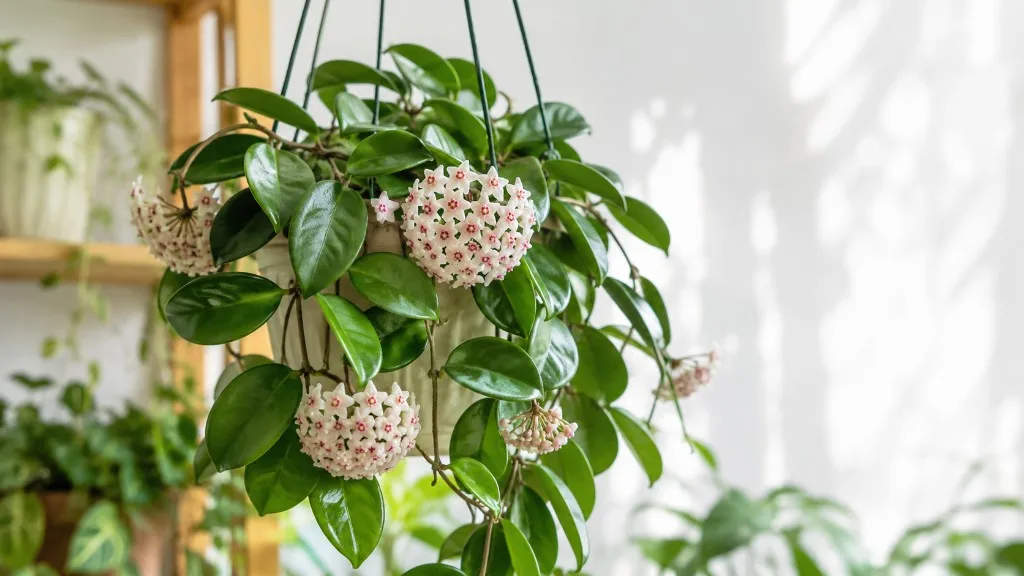
Hoya Fertilizer: When, How, and Mistakes to Avoid
Hoya Fertilizer: When, How, and Mistakes to Avoid
Hoya fertilizer decisions are less about finding a magic bottle and more about matching a slow-growing epiphyte to a lean, seasonal rhythm. Hoya species - the wax plants and porcelain flowers collectors trail from shelves and trellises - build structure gradually. They store energy in thick leaves and woody stems, then commit to flowering on permanent spurs called peduncles that can bloom repeatedly for years. Feed too aggressively with high-nitrogen houseplant food and you get lush vines with no flowers. Dump extreme “bloom booster” phosphorus on immature roots and you risk salt burn, micronutrient lock-up, and aborted buds. The approach that works for most homes is conservative: dilute balanced liquid feeding during active growth, a modest shift toward phosphorus only when peduncles actually form, and a complete pause in winter.
The practical baseline for most indoor Hoya is a water-soluble balanced or slightly nitrogen-leaning formula at one-quarter to one-half label strength, applied every three to four weeks from spring through late summer onto already-moist soil. When you see a peduncle - the knobby flower stalk that persists after blooms finish - beginning to elongate or set buds, you can switch to a moderate bloom-oriented ratio such as 5-10-10 or 5-10-3 for a few weeks, still diluted. Avoid ultra-high-phosphorus products marketed as miracle bloom triggers; Hoya responds better to steady, moderate nutrition than to chemical shock. Flush the pot with plain water monthly to prevent salt buildup, and skip feeding entirely from late fall through early spring unless your plant is under strong grow lights and pushing visible new growth.
This guide covers when to fertilize, how much to use, which NPK ratios fit vegetative versus flowering phases, how to read peduncles as your timing cue, and the mistakes that cause more damage than skipping a month ever would.
Why Fertilizer Matters for Hoya
Hoya is an epiphytic or lithophytic genus in the Apocynaceae family, native to humid tropical and subtropical forests across Asia, Australia, and the Pacific. In cultivation it typically trails or climbs 2–10 feet depending on species, growing at a slow to moderate pace indoors. That pace shapes everything about nutrition. Unlike fast annuals that exhaust a small pot in weeks, Hoya accumulates resources over seasons. Fertilizer supports that accumulation - new leaves, longer stems, root development, and eventually the energy reserves flowering demands - but it cannot force blooms on a juvenile plant, compensate for insufficient light, or fix chronic overwatering on Hoya.
Missouri Botanical Garden notes that Hoya species prefer Hoya light guide, well-drained media, and regular watering during active growth while tolerating drier winter conditions (Missouri Botanical Garden - Hoya carnosa). Those cultural facts matter for feeding because a plant in bright light with a chunky, airy mix uses water and nutrients on a predictable warm-season rhythm, while the same species in a dim corner metabolizes slowly and tolerates far less fertilizer.
Think of feeding as maintenance for a healthy, actively growing Hoya - not a rescue tool for a plant with yellow leaves from soggy roots or a specimen that has not seen meaningful light in months. The Royal Horticultural Society recommends a balanced orchid fertilizer applied every couple of weeks during the growing season, preferably urea-free, and stopping in winter. Iowa State Extension advises light fertilizer at half or quarter strength in spring and summer, with no feeding in winter to promote better flowering. Those recommendations converge on the same idea: light, frequent, dilute feeding while growing; nothing while resting.
Does Hoya need fertilizer at all? In fresh, quality potting mix with a starter charge, a newly purchased plant may go months without supplemental food. In the same small pot for a year or more, with regular watering leaching nutrients, yes - modest feeding during active growth helps. The goal is preventing gradual pale new growth and weak stems, not maximizing leaf size for its own sake.
When to Fertilize Hoya: Active Growth vs Rest
Timing follows the plant’s metabolism more than a date on the calendar. Feed when Hoya is actively producing new leaves, extending stems, or developing peduncles, and stop when growth slows sharply. Outdoors in warm climates, that tracks long days and stable warmth. Indoors, heated rooms and supplemental light can extend the window - but most Hoya still slow noticeably in late fall and winter even if old foliage stays green.
A Hoya that looks “alive” through December is not necessarily using nutrients at summer rates. Lower light and cooler room temperatures reduce new shoot production. Unused fertilizer salts accumulate while roots absorb water more slowly - a common path to brown tips, dropped buds, and spring growth that feels sluggish until you flush the mix.
Spring and Summer Feeding Window
Start feeding when you see fresh growth - new leaves unfurling firm and appropriately colored, stems extending with reasonable internode length for your light level, and the pot drying on its normal warm-season rhythm. In temperate indoor setups, that usually means mid-spring through late summer, roughly March through August, though your exact dates depend on latitude, window exposure, and whether you use grow lights.
During this active window, half-strength balanced liquid feed every three to four weeks suits most container Hoya. Growers who prefer an even more conservative approach - especially with slow species like Hoya linearis or recently rooted cuttings - can use quarter strength at the same interval or half strength every four to six weeks. Both are valid if leaves stay deep green (or true to the cultivar’s variegation pattern), stems are sturdy rather than etiolated, and the soil surface stays free of heavy white crust.
Iowa State Extension recommends diluted liquid feed at half or quarter strength during spring and summer when Hoya produces the most new growth, and no supplemental fertilizing in winter during rest. That winter pause aligns with what most experienced collectors practice: when the plant stops drying quickly and stops pushing new nodes, food belongs on the shelf.
| Month (temperate indoor climate) | Growth phase | Feeding guidance |
|---|---|---|
| March–April | Waking up, new shoots | Start quarter- to half-strength liquid if active growth visible |
| May–August | Peak growth and bloom window | Every 3–4 weeks; switch to moderate bloom ratio when peduncles develop |
| September | Slowing slightly | Reduce to every 4–6 weeks or taper off |
| October | Wind-down | Final light feed if still growing, then pause |
| November–February | Low growth typical indoors | No fertilizer unless under strong lights with steady new growth |
The table is a framework, not a law. A Hoya on a bright east-facing windowsill in July may dry its pot every week and use nutrients faster than one in a north window. Watch the plant: if it is building healthy new tissue steadily, the timing is right. If it is static, solve light and water before adding food.
Fall Taper and Winter Pause
Taper feeding in early to mid-fall as day length drops and night temperatures cool. One practical approach: give a final half-strength balanced feed in early fall if you still see new growth, then stop entirely from late fall through winter. Most indoor Hoya do fine with no fertilizer from November through February, especially in cooler rooms or north-facing windows.
University of Maryland Extension notes that excessive or frequent fertilizer use is a primary cause of high soluble salts in indoor plants, with symptoms including brown leaf tips and marginal necrosis (University of Maryland Extension - Fertilizer Toxicity). Winter feeding on a plant that is not using nutrients is an easy way to create exactly that problem.
Exception: if you grow under strong supplemental grow lights and the plant keeps producing new shoots and peduncles all winter, you can feed lightly - still at quarter to half strength - but extend the interval to six to eight weeks and watch closely for salt crust. Even then, skipping winter feeds is safer than forcing growth with nutrients the roots cannot process. Hoya’s natural rhythm includes a drier, leaner winter rest that supports flowering the following season; respect that rest rather than treating fertilizer as a year-round vitamin.
Best Fertilizer Type for Hoya
The best hoya fertilizer for most homes is a complete, water-soluble formula with moderate nitrogen and enough phosphorus and potassium to support roots and blooms without excess. Because Hoya shares epiphytic habits with orchids - anchoring to bark, tolerating lean conditions, sensitive to salt - orchid fertilizers and balanced houseplant liquids both work well when diluted. You want nitrogen sufficient for healthy foliage but not so high that the plant never shifts toward reproductive growth, phosphorus for root and flower function at moderate levels, potassium for overall vigor and stress tolerance, and micronutrients including iron, magnesium, and ideally calcium, which supports bud development in many epiphytes.
Avoid shopping by the word “Hoya” on the bottle unless you already trust the brand’s dosing guidance. A standard balanced indoor formula or urea-free orchid feed used conservatively outperforms most specialty products applied at full label strength.
Balanced Liquid Formulas and NPK Ratios
For vegetative maintenance - building leaves, stems, and roots on young plants or established vines without active peduncle development - a 3-1-2, 2-1-2, or balanced 10-10-10 / 20-20-20 water-soluble fertilizer diluted to half strength (or quarter strength for cautious growers) is the default recommendation across horticultural sources. The RHS growing guide recommends light feeding with balanced orchid feed during growth, keeping nitrogen from dominating the ratio - nitrogen drives vegetative growth, which matters because excess nitrogen can delay flowering on a mature plant that already has size.
Liquid formulas win for control. You mix, dilute, and apply a known dose to moist soil. That matters in small pots where precision prevents localized hot spots of concentrated salts. For a typical Hoya in a 4- to 6-inch pot, mix fertilizer at half the label’s recommended strength for houseplants or orchids, then apply until a little water drains from the bottom. Discard saucer water so roots are not sitting in concentrated runoff.
Orchid fertilizers - often 20-20-20 or 30-10-10 urea-free blends with calcium - are popular in the Hoya community because epiphytes and orchids share sensitivity to salt and benefit from calcium in the 50–130 ppm range when diluted to feeding strength. The RHS recommendation for urea-free orchid feed every two weeks during growth translates, for most hobbyists, to half-strength weekly-equivalent doses split into monthly or biweekly applications rather than literal weekly full-strength pours.
Organic options such as fish emulsion, liquid kelp, or compost tea can work at heavily diluted rates and provide micronutrients, though odor and inconsistent NPK make them secondary choices for indoor collections. Slow-release granules and fertilizer spikes are poor fits for Hoya in small pots: release is uneven, hard to reverse if you overapply, and incompatible with the monthly flush routine that keeps epiphytic roots healthy.
Bloom Booster vs Moderate Phosphorus
Here is where hoya fertilizer advice often goes wrong. Products labeled “bloom booster” frequently carry extreme phosphorus ratios - 0-10-10, 9-58-8, or even 0-50-30. The marketing implies more middle number equals more flowers. In practice, excess phosphorus binds with calcium and iron in potting mixes containing perlite, bark, or coir, creating insoluble compounds that block micronutrient uptake. Symptoms include chlorosis, stunted peduncles, and aborted buds - the opposite of what you wanted.
Hoya does benefit from a modest phosphorus emphasis when it is actually preparing to flower, not from chemical shock. Suitable bloom-phase ratios include 5-10-10, 5-10-3, 3-10-10, or similar formulas where phosphorus and potassium exceed nitrogen moderately, not astronomically. Iowa State Extension notes that light spring and summer feeding supports bloom potential when paired with adequate light and a winter rest - a gentler protocol than switching to extreme high-phosphorus products.
For general maintenance throughout spring and summer on mature plants with existing peduncle spurs, some growers skip the separate bloom product entirely and stay on 3-1-2 or 2-1-2 all season. That works because the plant is continuously primed for flowering rather than shocked mid-cycle. The separate bloom phase is most useful when you see a peduncle beginning to develop and want to support that specific reproductive push - which brings us to the peduncle rule.
How Much and How Often to Fertilize Hoya
How much: Dilute to one-quarter to one-half the label rate for houseplants or orchids. If the label says one teaspoon per gallon for weekly feeding, Hoya typically gets half a teaspoon per gallon applied monthly, not weekly. When in doubt, start at quarter strength; Hoya tolerates lean feeding far better than concentrated doses.
How often:
- Standard indoor Hoya in active growth: every 3–4 weeks at half strength
- Conservative / slow species / newly established plants: every 4–6 weeks at quarter to half strength
- Bright light, small pots, fast dry-down: may tolerate the shorter end of the interval; watch for salt crust
- Winter (typical indoor conditions): none
- After Hoya repotting guide or stress: none for 4–6 weeks
Monthly flush: Once a month during the feeding season, replace a scheduled feed with a thorough plain-water irrigation that runs through the mix and out the drainage holes for several minutes. This leaches accumulated salts and mimics the rain-wash epiphytes receive in habitat. Skip flushing only if your plant is in extremely lean conditions and shows no crust - but for most fertilized indoor Hoya, flush anyway as prevention.
Step-by-Step: How to Feed Hoya Safely
Feeding Hoya is simple mechanically and easy to botch chemically. The sequence matters as much as the product.
Step 1 - Check the calendar and the plant. Confirm it is within your active growth window and the plant is producing new tissue or developing peduncles. If growth has stalled for weeks, investigate light and water before feeding.
Step 2 - Verify soil moisture. The mix should be moist but not waterlogged. If the top half is dry, water with plain water first, wait a few hours or until the next day, then apply fertilizer solution. Never pour fertilizer onto bone-dry roots; the sudden osmotic shift causes burn.
Step 3 - Mix fertilizer at quarter to half strength. Use a measuring spoon and clean gallon jug or watering can. Stir well. If you are switching to a bloom-oriented ratio because a peduncle is active, mix that product at the same dilution - do not compensate for the ratio change by increasing concentration.
Step 4 - Apply evenly. Pour slowly over the soil surface, avoiding prolonged wetting of fuzzy-leaved species unless you can dry leaves afterward. Continue until a small amount drains from the bottom. Do not mist fertilizer onto leaves as a primary feeding method; foliar uptake is inconsistent and leaf spots can follow.
Step 5 - Discard runoff and record the date. Empty the saucer. Note when you fed so you do not double-feed after a growth spurt tempts you to “help” the plant.
Step 6 - Observe for seven to ten days. Healthy response looks like continued firm new growth, stable older leaves, and peduncles progressing without yellowing or drop. Burn shows up as tip browning, leaf edge crisping, or sudden leaf loss within days.
Pre-Feed Checks and the Moist-Soil Rule
Before every feed, run this checklist:
- Soil moisture: moist throughout the root zone, not saturated for days
- Salt crust: none on the soil surface or pot rim; if present, flush and skip feed
- Stress signals: no recent repot, pest outbreak, or heat/cold shock
- Growth state: visible new leaves, extending stems, or active peduncles
- Season: within spring–summer window, or winter only with grow lights and active growth
The moist-soil rule is non-negotiable for Hoya. Epiphytic roots are adapted to quick wet-dry cycles in airy media, not to concentrated fertilizer hitting dry tissue. Water first, feed second - every time.
Switching to Bloom-Focused Feeding When Peduncles Form
The user’s core question - when to use bloom booster - has a precise answer: when peduncles form, not before, and with moderate phosphorus rather than extreme formulas.
A peduncle is the permanent flower spur from which Hoya produces umbels of waxy flowers, year after year on the same structure. Never prune peduncles after blooming; the plant reuses them. If you cut them off, you remove future bloom sites. Fertilizer strategy ties directly to peduncle biology because flowering is a multi-year investment - the plant needs maturity (often two to three years in many species), adequate light, a slight winter rest, and appropriate nutrition when it finally commits to a peduncle.
When to switch: Move from balanced maintenance feed to a moderate bloom-oriented ratio when you observe a peduncle beginning to elongate, swell, or set visible bud clusters - not when you merely hope the plant will bloom, and not preemptively in early spring on a juvenile vine with no spur history. Some growers begin a four-to-six-week phosphorus emphasis when new peduncle initials appear at a node, especially on species like Hoya carnosa that bloom in late spring to summer indoors. If your Hoya has old peduncles from prior years that have not reflowered, nutrition alone will not wake them; light intensity, maturity, and not disturbing the spur matter more.
What to switch to: 5-10-10, 5-10-3, or a diluted orchid bloom formula with moderate P - always at half strength or less. Continue monthly flushing. Once buds are set and flowers open, return to 3-1-2 or balanced maintenance for the remainder of the growing season.
What not to do: Do not apply 0-50-30 or similar extreme bloom boosters. Do not increase frequency and concentration simultaneously. Do not feed a plant pushing its first-ever peduncle at full strength bloom product on dry soil - first blooms are fragile.
Reading Peduncle Development Before You Switch
Peduncles look like small, knobby protrusions at nodes, distinct from leaf or tendril buds. Over weeks they may lengthen slightly, develop round bud bumps at the tip, or show color change as flowers prepare to open. That visible progression is your green light for a modest phosphorus shift.
If you see peduncles but no bud development after a full season with good light, fertilizer is rarely the primary bottleneck. Check whether the plant is root-bound enough (many Hoya bloom best slightly tight in pot), whether light exceeds six hours of bright indirect daily, and whether winter rest was lean enough. Fertilizer supports a plant already inclined to bloom; it does not override missing maturity or dim corners.
Signs Your Hoya Needs More Nutrition
Under-fertilizing is less common than over-fertilizing on Hoya, but it happens - especially in the same pot for 18–24 months with no refresh, in very leached bark-heavy mixes, or on fast-growing specimens in bright light that exhaust the available nutrients.
Possible deficiency signals (after ruling out light and water problems):
- Pale new leaves while older leaves stay green - may indicate nitrogen or iron limitation
- Small new leaves relative to prior growth on the same stem
- Slow internode extension despite adequate light and proper watering
- Weak peduncle development or buds that stall early on an otherwise mature plant
- Overall loss of vigor over months in old, depleted mix
If symptoms match, a single half-strength balanced feed on moist soil, followed by observation, is reasonable. Do not escalate to full strength or bloom booster until the baseline health improves. Repotting into fresh mix with a starter charge sometimes solves “hunger” better than doubling fertilizer.
Signs of Over-Fertilizing and Salt Buildup
Over-fertilizing is the most common Hoya fertilizer mistake. Epiphytic roots are sensitive to soluble salts; small pots amplify mistakes quickly.
Watch for:
- Brown or crisp leaf tips and margins on otherwise healthy-looking leaves
- White or yellowish crust on soil surface, pot rim, or saucer
- Sudden leaf drop shortly after feeding
- Yellowing leaves with burned edges - distinct from uniform overwatering yellow
- Peduncle or bud drop after a heavy feed
- Stunted new growth despite good light - roots struggling in salty mix
- Sour or musty smell from stagnant saucer water combined with fertilizer salts
University of Maryland Extension lists tip burn, marginal necrosis, and reduced growth as classic salt-toxicity symptoms in container plants (University of Maryland Extension - Fertilizer Toxicity). On Hoya, bud abort after feeding is a especially frustrating sign because you lose the bloom cycle for that peduncle push.
If you suspect burn, stop feeding immediately and move to the flush protocol below - do not compensate with more bloom product “to save” the buds.
How to Flush Hoya After Over-Feeding
Flushing leaches excess salts from the root zone. It is both preventive (monthly during feed season) and corrective after over-feeding.
Corrective flush steps:
- Stop all fertilizer for four to six weeks minimum.
- Place the pot in a sink or tub. Water slowly and thoroughly with plain room-temperature water until it runs freely from drainage holes.
- Repeat two to three times over thirty minutes, allowing brief drains between passes. The goal is dilution and removal of soluble salts, not one quick splash.
- Empty saucers and keep the plant in bright indirect light, not direct hot sun while recovering.
- Do not repot immediately unless roots are clearly rotting from unrelated water issues - repotting plus fertilizer stress compounds shock.
- Resume feeding only when new growth looks normal and no crust returns - at quarter strength for the first application.
Badly burned leaf tissue will not green up again; judge recovery by new leaves and stable peduncles, not by old damage. Most Hoya recover within one to two new leaf cycles if salts were the main problem.
Seasonal and Situational Adjustments
The baseline schedule assumes a healthy adult Hoya in a typical indoor environment. Real collections need tweaks.
Bright summer windows: Higher photosynthesis can increase nutrient demand slightly - stay at half strength but you may feed at the three-week end of the range if growth is vigorous and flush monthly.
Grow-light setups: Plants may grow nearly year-round. Feed lightly every six to eight weeks in winter if new nodes appear, still diluted; flush monthly whenever you feed.
Species differences: Slow trailers like Hoya linearis and thick-leaved Hoya kerrii often want leaner feeding than fast Hoya carnosa cultivars. Start conservative and increase only with evidence.
Hard water: If your tap water is high in minerals, salts accumulate faster. Flush more diligently; consider filtered water for both watering and mixing fertilizer.
After Repotting, Stress, and Young vs Mature Plants
After repotting: Wait four to six weeks before feeding. Fresh mix often contains starter fertilizer; damaged root hairs from handling need time to heal. Feeding too soon after repotting invites burn and root rot on Hoya on wet, disturbed roots.
During stress: Skip feed during pest treatment, extreme heat waves, AC blasts, or recovery from root issues. A stressed Hoya cannot metabolize nutrients; salts accumulate instead.
Young plants and cuttings: Rooted cuttings and one-year-old vines need balanced quarter-strength feed only after they show active new growth, typically six to eight weeks after rooting. Priority is root and leaf development, not bloom booster. Immature Hoya will not bloom regardless of phosphorus - patience beats pushing.
Mature bloomers: Specimens with peduncle history are candidates for the peduncle-triggered bloom switch described above. Maturity plus light plus lean winter rest matters more than any single product.
Common Hoya Fertilizer Mistakes
Feeding on a calendar without checking growth. Monthly feeding in August makes sense on an actively growing plant; the same feed in November on a static Hoya builds salts.
Using full label strength. Houseplant labels assume fast growers in bright greenhouse conditions. Hoya is not that plant indoors.
High-nitrogen general fertilizer all season. Lush vines, no flowers. Shift strategy when peduncles appear, or use 3-1-2 maintenance from the start.
Extreme bloom boosters on immature plants or dry soil. Phosphorus lock-up and root burn follow.
Fertilizing in winter “to help” a sluggish plant. Fix light first; winter feed rarely helps and often harms.
Ignoring monthly flushing. Even careful feeders accumulate salts over time in small pots.
Pruning peduncles after bloom because they look “dead” - those stubs are next year’s flowers.
Feeding immediately after repotting or while roots are compromised from overwatering - fertilizer on damaged roots accelerates decline.
Conclusion
Hoya fertilizer success comes down to restraint, timing, and reading the plant. Use a dilute balanced or 3-1-2 liquid at quarter to half strength every three to four weeks during spring and summer, flush monthly, and pause completely through winter unless strong grow lights keep the plant in clear active growth. When peduncles form, shift to a moderate bloom-oriented ratio like 5-10-10 - not an extreme phosphorus bomb - still diluted, still on moist soil, still followed by observation.
Fix light and watering before you chase blooms with fertilizer. Protect peduncles, avoid full-strength feeds, and treat salt crust as an early warning rather than a cosmetic issue. Hoya rewards patience: a lean, consistent feeding rhythm on a mature plant in good light will outperform any miracle bloom product on a stressed vine in a dim corner. When in doubt, feed less, flush more, and wait for the peduncle to tell you when it is ready.
When to use this page vs other Hoya guides
- Hoya overview - Start here for whole-plant context before deep-diving this topic.
- Hoya problems hub - Jump to symptom-specific fix guides when this care topic does not resolve the issue.
- No Flowers on Hoya - Escalate here when fertilizer adjustments are not enough.
Related Hoya guides
- Hoya overview
- Hoya watering
- Hoya light
- Hoya soil
- Hoya propagation
- Hoya repotting
- No Flowers on Hoya
- Hoya problems
Related tool
Try the Fertilizer Dilution Calculator with hoya pre-selected to estimate needs for your setup.