No Flowers on Hoya: Causes, Checks & Fixes
Quick answer
Mature Hoyas that never bloom indoors usually lack enough bright light-not fertilizer or a bigger pot. First step: move the plant to the brightest filtered window you have (east or filtered south/west) or add a grow light, and confirm peduncles were not pruned and the plant is at least two to three years old.
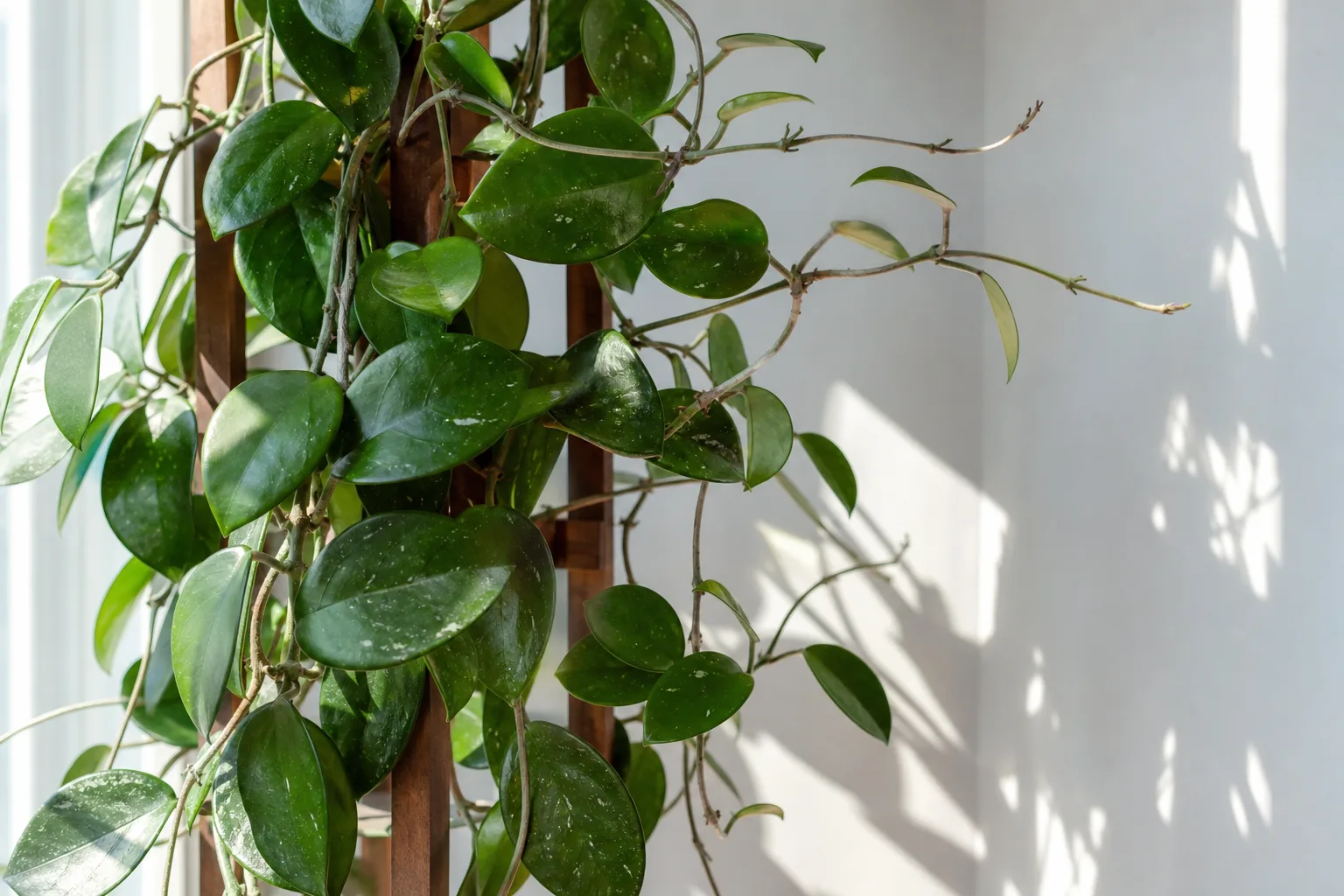
No Flowers on Hoya: Causes, Checks & Fixes
This guide covers no flowers on Hoya. See also the general No Flowers guide, watering, and light pages for this plant.
No Flowers on Hoya: Causes, Checks & Fixes
Quick answer
Hoya - the wax plant genus grown for fragrant umbels of star-shaped blooms - can look perfectly healthy for years while never producing a single flower indoors. That frustration is common, and it is usually fixable once you separate immaturity from care gaps.
On a mature vine, insufficient bright light is the primary indoor cause of no flowers. Iowa State Extension identifies brighter light as the main driver of hoya flowering, ahead of fertilizer tweaks or Hoya repotting guide. Blooming also requires plant age (often two to three years for Hoya carnosa), intact peduncles (never cut the woody spurs), and stable placement once buds form.
First step: increase light before anything else. Move the Hoya to the brightest filtered spot available-typically within one to three feet of an east window or a sheer-curtained south or west exposure-or add a full-spectrum grow light above the canopy. Do not repot, fertilize heavily, or prune bare spurs while you test whether light was the blocker.
This page is a bloom-failure triage guide. For ongoing window placement, lux targets, and grow-light setup, see the Hoya light guide.
What no flowers looks like on Hoya
“No flowers” on a wax plant means no peduncles, no buds, and no umbels-not a late-stage bud failure you can see swelling at the stem. The plant may otherwise look fine: waxy green leaves, slow vine growth, no obvious pests.
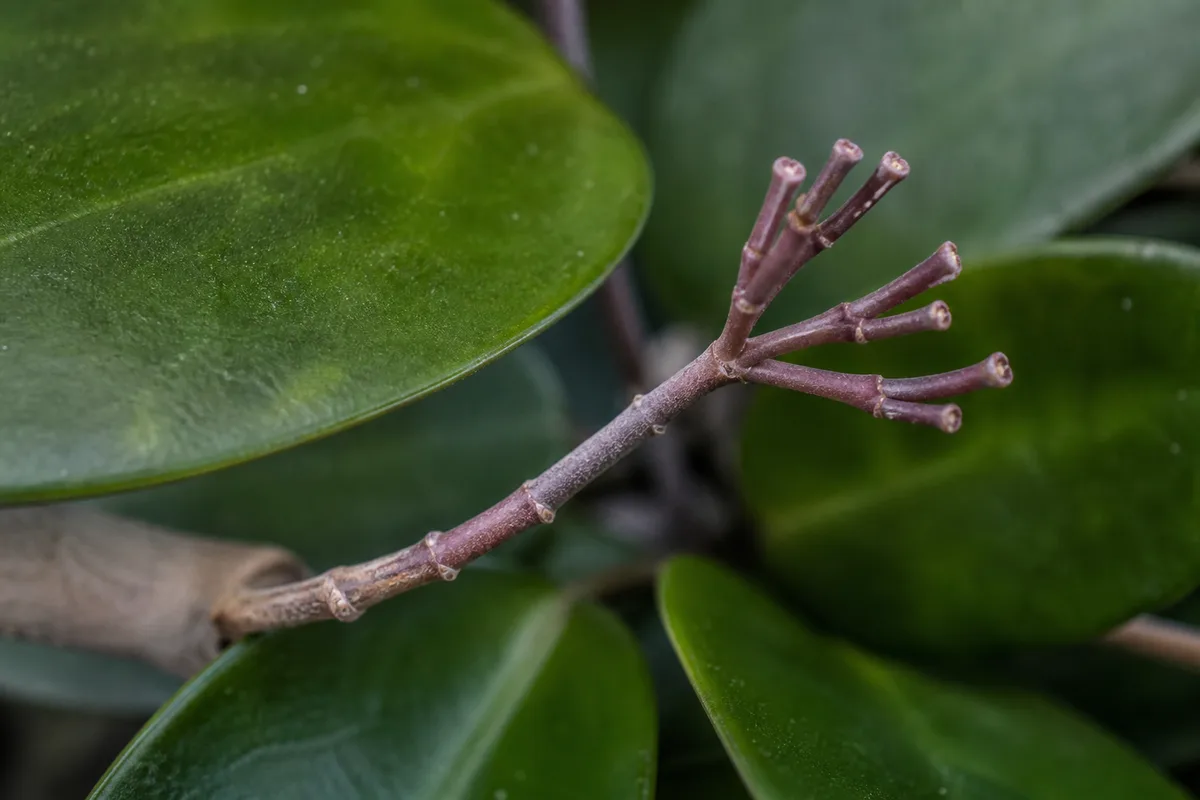
No Flowers symptoms on Hoya - compare with healthy tissue on the same plant.
Healthy foliage but no peduncles or umbels
A bloom-ready Hoya that simply lacks light still shows firm, waxy leaves and steady vine extension during warm months. What is missing is the short woody spur called a peduncle where flower clusters form. Without peduncles, there is nowhere for umbels to develop. NC State Extension notes that cutting off peduncles removes future flowers-so if you or a previous owner trimmed “dead sticks,” the silence may be structural, not seasonal.
Low-light signs: long internodes and small new leaves
Chronic dim placement produces leggy etiolation: internodes-the stem between leaf nodes-stretch longer than older sections, and new leaves arrive smaller and farther apart than foliage formed in brighter light. Iowa State Extension documents that low light generally leads to thin, stretched growth and little or no flowering on hoyas. Long bare vines reaching toward windows are another Hoya-specific clue, not a watering problem.
These signs overlap with not enough light on Hoya and leggy growth-read those pages if stretch is your main symptom.
Lookalikes at a glance
| What you see | Likely cause | First check |
|---|---|---|
| Healthy vine, no peduncles ever, dim room | Insufficient light | Hand-shadow test at pot; move brighter |
| Young cutting or single-leaf plant | Immaturity | Age since rooting; node present? |
| Woody spurs were cut off | Missing peduncles | Inspect stem for pruned stubs |
| Recent repot into large container | Oversized pot | Pot diameter vs. root mass |
| Lush leaves, no buds, heavy feeding | High nitrogen | Fertilizer type and rate |
| Buds formed then vanished after a move | Bud blast | Stability after bud set |
| Plant under three years, good light | Still maturing | Patience; confirm species |
Why Hoya stops flowering
Insufficient light (primary indoor cause)
Hoyas evolved as epiphytic forest vines receiving bright, filtered daylight-not interior shelf shade. NC State Extension describes cultivated hoyas as needing bright light, dappled shade, or full morning sun, but not harsh all-day direct sun through glass.
Indoors, Missouri Botanical Garden recommends at least half a day of direct or curtain-filtered sun for flower production on Hoya carnosa. North windows, rooms far from glass, and winter light collapse are the usual reasons mature plants never allocate energy to reproduction. No bloom booster replaces adequate daily photons.
Plant immaturity (two to three years)
Light cannot force flowers on a cutting rooted last season. NC State Extension states that most wax plants will not produce flowers until they are two or three years old. Sweetheart hoya (Hoya kerrii) sold as a single rooted leaf without a stem node may never vine or bloom at all-another maturity trap unrelated to fertilizer.
Pruned or missing peduncles
Hoya flowers grow from persistent peduncles (spurs) that rebloom for years. Iowa State Extension calls this the golden rule: never deadhead hoya or cut spent flower stalks, because you remove the site where future umbels form. Owners who tidy “bare sticks” after bloom often wait years for new spurs to develop.
Oversized pot and high-nitrogen feeding
Hoyas commonly flower better when slightly pot-bound. Iowa State Extension advises avoiding oversized containers that keep soil wet longer-energy diverts to roots instead of blooms. Heavy nitrogen fertilizer pushes vegetative growth at the expense of flower initiation. See the Hoya fertilizer guide for seasonal rates rather than chasing phosphorus-heavy “bloom” products on a light-starved plant.
Recent move or repot after bud set
Once buds appear, stability matters. Missouri Botanical Garden warns that pots should not be rotated or moved after flower buds appear-relocation often causes bud drop. The same applies to sudden watering swings and temperature shocks during bud development, per Iowa State Extension.
Seasonal slowdown and winter light
Many hoyas bloom in spring or summer when day length and warmth peak. Very low winter light can pause bud development even on mature plants. A slight nighttime temperature drop compared to daytime-mimicking natural cues-can support bud formation for some species, according to Iowa State. That is a trigger, not a blocker: cool nights in the 60–65 °F range paired with bright days differ from cold drafts below 55 °F, which hoyas tolerate poorly.
How to confirm the cause
Run this checklist before changing fertilizer, repotting, or pruning:
- Age: Has the plant been growing steadily for at least two to three years since rooting? Younger specimens may simply need time.
- Peduncles: Are woody spurs present and uncut? Pruned stubs explain years without blooms even in good light.
- Light test: At canopy height on a bright day, hold your hand above the pot. A soft but readable shadow means usable indirect light; almost no shadow means too dim for reliable flowering.
- Internodes: Are new stem sections stretching longer than older growth? That confirms chronic low light-see leggy growth.
- Pot size: Is the root ball filling most of the container, or is the plant swimming in excess soil?
- Fertilizer: Are you feeding heavily with high-nitrogen products during active growth?
- Recent changes: Was the plant moved, repotting, or rotated after buds formed?
- Species ID: Thin-leaved or variegated forms need brighter placement than solid H. carnosa-check the Hoya overview for your species.
If light fails the hand-shadow test and the plant is mature with intact peduncles, light is the confirmed first fix. If peduncles were cut, brighter light helps future spur formation but recovery takes much longer.
First fix for Hoya
Increase bright indirect light-one deliberate upgrade, then wait.
Move the pot within one to three feet of an east window, or place it beside a sheer-curtained south or west window where hot afternoon sun does not land on leaves for hours. If the brightest natural spot still fails the shadow test, mount a full-spectrum LED grow light 30–45 cm above the canopy and run it 12–14 hours daily on a timer through at least one full growing season.
Do not simultaneously repot, rotate weekly, or apply full-strength bloom fertilizer. Hoya reads clearest when you change one variable and judge new growth and the first peduncle stub over the next months-not days.
Step-by-step bloom recovery
- Confirm maturity and peduncles using the checklist above. Skip aggressive fixes on a two-year-old cutting.
- Upgrade light as described. Acclimate over 10–14 days if moving from deep shade to a much brighter window.
- Hold placement steady for the rest of the growing season. Do not rearrange the shelf every week.
- Adjust watering after the light change-brighter hoyas dry the mix faster. Allow the top half of soil to dry between drinks.
- Feed lightly in spring and summer only: half or quarter-strength all-purpose fertilizer every second or third watering, per Iowa State guidance. Skip winter feeding to allow rest.
- Leave every peduncle intact even if it looks bare for months. New umbels often emerge from old spurs.
- Once buds appear, stop moving the plant until flowers finish. Treat bud set as a commitment to the current spot.
Recovery timeline and realistic expectations
Timeline depends on which blocker you corrected:
- Light upgrade on a mature plant with intact peduncles: First visible peduncle swelling or buds may appear within one to two growing seasons, sometimes sooner if the plant already had dormant spurs ready to activate. Iowa State emphasizes patience alongside brighter light.
- After peduncle removal: Expect years, not weeks, while new spurs form along the vine.
- Immature plant under three years: Blooms may simply arrive when age and light align-no shortcut exists.
- Winter-only dimness: Supplemental light in autumn can shorten the wait into the next spring bloom window.
Old stretched internodes do not shorten after you add light. Judge success by compact new leaves, the first peduncle, and eventually an umbel-not by whether bare stem sections disappear.
What not to do
- Do not cut peduncles to tidy the vine-each spur is a future flower site.
- Do not repot into a much larger container hoping to force blooms; slightly root-bound conditions favor flowering.
- Do not apply full-strength high-nitrogen fertilizer on a plant that has never bloomed; foliage will grow faster while buds stall.
- Do not move or rotate the pot after buds form-bud drop is common.
- Do not blame “cool rooms” alone if light is adequate; a slight cool-night drop can support bud cues on many hoyas when paired with bright days.
- Do not expect blooms from a single rooted sweetheart leaf without a stem node-it may never become a vining, flowering plant.
How to prevent repeat bloom failure
Place Hoya where bright indirect light is realistic year-round, not where a hanging basket fills a dim corner. Re-evaluate light every autumn before winter intensity drops, and add a grow light in north rooms or at high latitudes.
Keep the plant slightly pot-bound, water on a wet-dry cycle that matches the current light level, and fertilize lightly in spring and summer only. Leave spent flowers to fall naturally and never prune peduncles. Once buds set, treat the pot as fixed furniture until blooms finish.
For species-specific placement detail, window compass notes, and lux targets, rely on the Hoya light guide as your ongoing reference-not this triage page alone.
When to worry
No flowers alone is rarely an emergency on an otherwise healthy Hoya. Escalate when:
- Multiple leaves yellow and drop while soil stays wet for weeks-possible root stress; see overwatering.
- Stems soften at the base with sour soil smell-root decline, not a bloom issue.
- Active pest clusters (mealybugs, scale) stress the plant during bud development.
- Buds form repeatedly then abort despite stable light-review watering swings and cold drafts below 55 °F.
A slowly growing, firm-leaved vine in a dim room is a light problem you can fix, not a dying plant-unless paired with wet-soil decline.
Conclusion
Healthy foliage without fragrant umbels is one of the most common Hoya frustrations-and one of the most misdiagnosed. Fertilizer, repotting, and bloom boosters rarely help a light-starved or immature vine. Mature plants with intact peduncles usually need brighter filtered light, stable placement, and seasonal patience, not another product on the shelf.
Start with the hand-shadow test, upgrade light as a single change, protect every peduncle, and read recovery on the first new spur-not on old stretched stems. Get those pieces right, and the wax plant finally delivers the porcelain-star clusters that made you collect it in the first place.
When to use this page vs other Hoya guides
- Hoya watering guide - Use for routine moisture checks before assuming no flowers is the main issue.
- Hoya problems hub - Browse all 17 common issues on this species.