Mealybugs on Hoya: Causes, Checks & Fixes
Quick answer
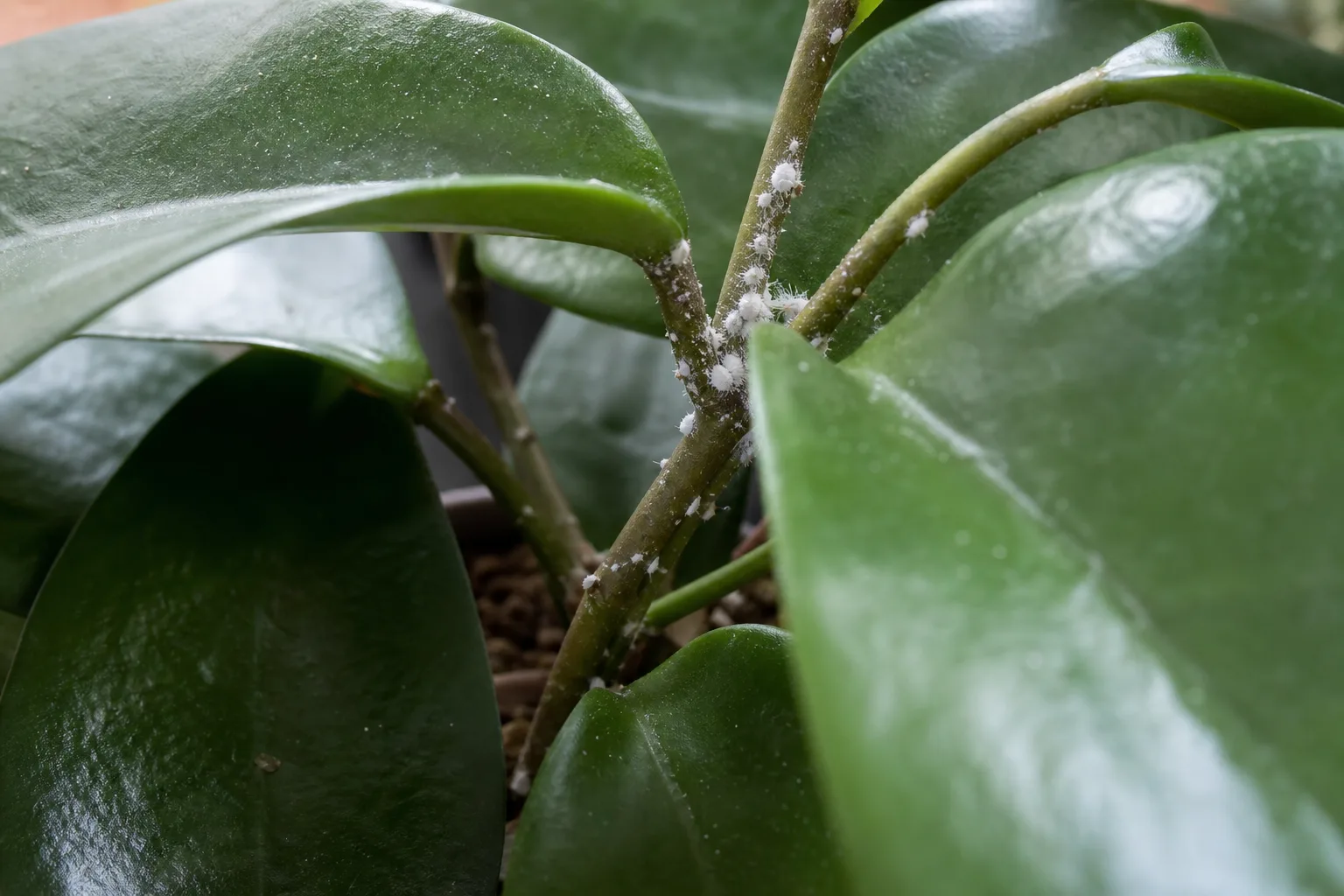
Mealybugs on Hoya hide in leaf axils and tight crowns behind waxy foliage. First step: isolate the plant and dab every visible cottony cluster with 70% isopropyl alcohol on a cotton swab.
Mealybugs on Hoya: Causes, Checks & Fixes
This guide covers mealybugs on Hoya. See also the general Mealybugs guide, watering, and light pages for this plant.
Mealybugs on Hoya: Causes, Checks & Fixes
Quick answer
Mealybugs on Hoya are soft, wax-covered sap feeders that colonize the tight spaces where leaves meet stems. Hoya’s thick, often waxy foliage gives them sheltered feeding sites that are easy to miss during a quick water check.
First step: move the plant away from your collection and dab every visible cottony cluster with a cotton swab dipped in 70% isopropyl alcohol. That direct contact kill comes before any spray. Mealybugs reproduce indoors year-round in warm rooms, so one pass is never enough-you will need weekly follow-ups until crawlers stop appearing.
What mealybugs look like on Hoya
On Hoya, mealybugs usually show up as white, cottony masses tucked into leaf axils, along vining stems, in the crown center, and on the undersides of newer leaves. UC IPM notes they often live in protected areas such as branch crotches and where stems meet leaves-exactly the architecture Hoya builds as it trails or climbs.
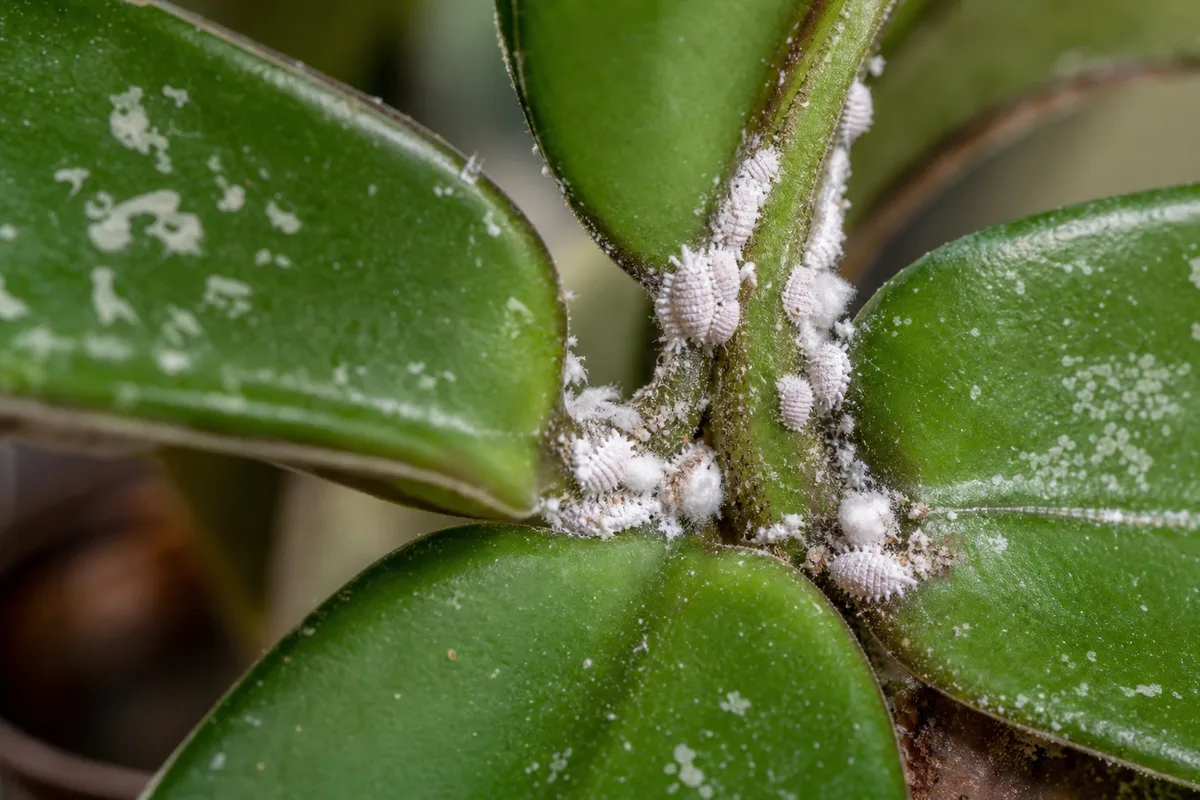
Mealybugs symptoms on Hoya - compare with healthy tissue on the same plant.
Supporting signs include:
- Sticky honeydew on leaves, stems, or the pot rim
- Black sooty mold growing on honeydew deposits
- Ant activity on or around the plant, since ants protect honeydew producers
- Yellowing, curling, or dropped leaves when feeding is heavy
- Stunted or distorted new growth on actively growing vines
Individual insects beneath the wax are small, oval, and segmented. Newly hatched crawlers lack wax and can move briefly before settling; adults stay clustered and barely crawl.
Why Hoya gets mealybugs
Hoya is on the short list of houseplants UC IPM identifies as commonly infested with aboveground mealybugs, alongside ficus, orchids, and palms. That is not because Hoya is weak-it is because mealybugs exploit the plant’s growth habit.
Dense leaf axils and overlapping foliage create pockets where alcohol sprays and casual rinses never reach. A trailing Hoya with several vines in one pot offers dozens of hidden joints. Pubescent or thickly waxy leaves can also mask early colonies until populations build.
Warm, stable indoor conditions let mealybugs breed continuously. Wisconsin Horticulture notes overlapping generations indoors, so eggs, crawlers, and adults may all be present at once-one treatment only hits the insects you can see that day.
Other common entry points:
- New plants without quarantine - mealybugs hitchhike from nurseries and spread when leaves touch neighbors
- Over-fertilization with nitrogen - tender new shoots attract egg-laying; avoid pushing soft growth on a plant already under pest stress
- Stressed or dusty plants - weak growth does not cause mealybugs, but stressed Hoya recover more slowly once sap loss adds up
- Root-zone mealybugs - some species feed below soil; if stems look clean but the plant keeps declining, check roots and drainage holes
How to confirm the cause
Work through these checks before committing to a full spray regimen:
- Leaf axils and crown - Pull vines aside and look where petioles meet stems. Mealybugs cluster here first on Hoya.
- Crush test - Touch a cotton swab to a white mass. Mealybugs smear pink or orange when crushed; mineral dust or dried hard water wipes away without that color.
- Movement - Crawlers may shift when disturbed. Static white fuzz fixed evenly across a fuzzy-leaved species may be natural pubescence, not pests.
- Honeydew - Shiny, sticky residue on leaves or nearby surfaces points to sap feeders (mealybugs, scale, or aphids), not fungal leaf spots.
- Scale check - Hard, immovable brown domes glued to stems are scale, not mealybugs. Mealybugs stay cottony and lift off with alcohol.
- Root inspection - If foliage yellows while stems look clean, unpot and look for white cotton at the soil line or on roots.
Confirmed mealybugs mean isolation and repeated treatment-not a single rinse and wait.
First fix for Hoya
Isolate the plant, then dab every visible cluster with 70% isopropyl alcohol on a cotton swab.
UC IPM recommends dabbing mealybugs directly with a cotton swab for small houseplant infestations. The alcohol dissolves the waxy coating and kills on contact. Work methodically through leaf axils, stem nodes, and the crown-on Hoya, that is where 90% of the colony hides.
Before treating the whole plant, patch-test one leaf for 24 hours. Alcohol can burn sensitive foliage, especially on sun-stressed or newly unfurled Hoya leaves. If the test leaf shows spotting, dilute to a 10–25% alcohol solution or rely more on insecticidal soap after manual removal.
Do not repot, fertilize, or prune heavily on day one unless you find root mealybugs. Those steps can wait until after the first alcohol pass shows where colonies remain.
Step-by-step recovery
Once isolated and dabbed, continue in this order based on severity:
- Repeat alcohol dabs weekly - Newly hatched crawlers emerge on a rolling schedule. Plan at least three to four weekly passes before calling the plant clear.
- Wash off honeydew - Rinse foliage with lukewarm water or wipe sticky leaves with a damp cloth. This reduces sooty mold and makes remaining insects easier to spot. Avoid leaving Hoya crowns soggy overnight.
- Spray for crawlers you cannot reach - After manual removal, apply insecticidal soap or horticultural oil to wet leaf undersides, stems, and axils. Oils and soaps must contact the insect; they have little residual effect. Repeat every five to seven days until no new cottony masses appear for three weeks.
- Prune only isolated hotspots - If one vine is heavily infested and others are clean, cut it out and discard the clippings in sealed trash-not the compost pile. Mealybugs survive on detached tissue while it stays moist.
- Address root mealybugs if present - White cotton at drainage holes or on roots may require Hoya repotting guide into fresh mix after washing roots and discarding old soil. Root infestations are harder to control than stem colonies.
- Monitor the collection - Inspect neighboring plants at every watering while the affected Hoya stays isolated. Crawlers walk to overlapping leaves on nearby pots.
Skip systemic insecticides unless you have tried repeated contact treatments and understand label risks on flowering plants. Contact methods are the standard first line for indoor Hoya.
Recovery timeline
Expect visible clusters to shrink within one to two weeks of consistent alcohol dabbing. Because overlapping generations hatch indoors, three to four weekly treatment cycles are typical before the plant is truly clear.
Signs recovery is working:
- Fewer white masses in previously infested axils
- No new honeydew on leaves or pot surfaces
- Clean new leaves and firm growth at vine tips
- No ants returning to the plant
Signs the problem is worsening:
- Cottony masses spreading to new vines or neighboring pots
- Increasing leaf yellowing and drop despite treatment
- Sooty mold covering large leaf areas
- Soft stems or declining growth with clean-looking foliage above (possible root mealybugs)
Heavily damaged leaves may not regain their shape. Judge success by new growth staying pest-free, not by old leaves reversing damage.
Lookalike symptoms
Several Hoya issues mimic mealybugs at a glance:
- Natural leaf fuzz - Some Hoya species have permanent pubescence that looks white but is evenly distributed and cannot be wiped away as insect clusters.
- Hard scale - Brown or tan domes fixed to stems; no cottony filaments. Scrape test: scale stays glued; mealybugs lift with alcohol.
- Mineral or dust deposits - Dry white crust on leaf surfaces from hard water or fertilizer splash; does not smear pink when crushed and does not cluster in axils.
- Powdery mildew - White powder on leaf faces, not concentrated in stem joints; wipes off as dust without insects underneath.
- Aphids on new growth - Soft-bodied but not wax-covered; usually on tender tips rather than old leaf axils.
Getting the pest right matters because scale and mealybugs both need contact treatment, but their hiding spots on Hoya differ slightly-scale favors stems, mealybugs favor axils and crowns.
Mistakes to avoid
- Treating once and returning the plant to the shelf - Crawlers hatch for weeks; isolation should last until you see no new cotton for at least two weeks after the last treatment.
- Spraying without manual removal first - Waxy adults resist sprays; alcohol dabs remove the bulk so sprays can reach younger nymphs.
- Applying full-strength alcohol without a patch test - Burned Hoya leaves do not recover; test one leaf first.
- Over-fertilizing during recovery - Lush nitrogen-driven growth gives mealybugs fresh egg-laying sites. Hold fertilizer until new growth looks healthy and pest-free.
- Ignoring ants - Ants protect mealybugs from predators. If ants are present, treat the Hoya and block ant access to the pot.
- Composting infested cuttings indoors - Crawlers survive on moist pruned material.
How to prevent mealybugs on Hoya
Prevention on Hoya is mostly about finding colonies before they spread:
- Quarantine new plants for two weeks and inspect leaf axils, not just open leaf surfaces.
- Check during every watering - Regular examination catches pests early when alcohol dabs alone may suffice.
- Space trailing vines so leaves from different pots do not touch; mealybugs crawl between overlapping foliage.
- Fertilize lightly during active growth - Avoid excess nitrogen that pushes soft shoots mealybugs prefer.
- Keep plants healthy - Proper light and a dry-down Hoya watering guide for Hoya reduce chronic stress, though clean plants can still get mealybugs from introductions.
When buying Hoya, look specifically at leaf bases and the crown-cosmetic leaf marks matter less than hidden cotton in the axils.
When to worry
Escalate treatment or consider discarding the plant if:
- Multiple plants in the collection show cottony masses at the same time
- Sooty mold covers most foliage and keeps returning despite honeydew removal
- Root mealybugs persist after stem treatment and repotting
- Peduncles or flower buds are heavily infested on a blooming Hoya you cannot reach with alcohol without damaging bloom sites-sometimes sacrificing one inflorescence is worth saving the vine
- Three to four treatment cycles fail to reduce populations; heavily infested houseplants are often cheaper to replace than to cure
Hoya is generally resilient if enough stem tissue stays firm. A severely infested small plant may be worth replacing to protect a large collection-especially when mealybugs have already spread to neighboring pots.
Conclusion
Mealybugs on Hoya are a hiding problem, not a mystery one. The insects live where the plant folds in on itself-leaf axils, crowns, and stem joints-protected by waxy foliage that makes casual inspection fail. Isolate first, dab with alcohol second, repeat weekly third. Sprays support the work but do not replace picking off what you can see. With consistent passes over three to four weeks and early checks on neighboring plants, most Hoya recover cleanly and push pest-free new growth.
When to use this page vs other Hoya guides
- Hoya watering guide - Use for routine moisture checks before assuming mealybugs is the main issue.
- Hoya problems hub - Browse all 17 common issues on this species.
- Yellow Leaves on Hoya - Different entry point when symptoms overlap with mealybugs.
- Slow Growth on Hoya - Different entry point when symptoms overlap with mealybugs.
- Spider Mites on Hoya - Different entry point when symptoms overlap with mealybugs.