Not Enough Light on Hoya: Causes, Checks & Fixes
Quick answer
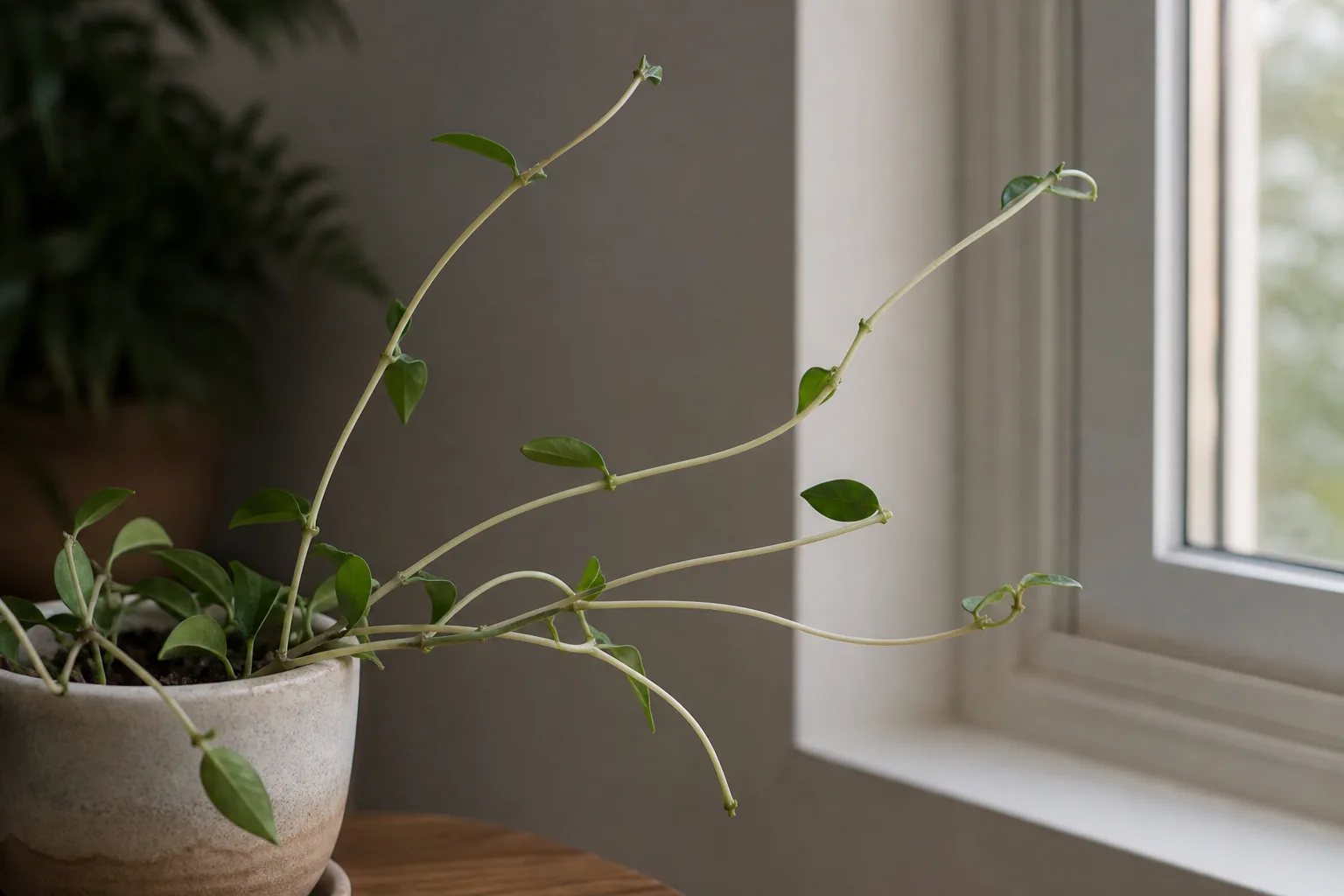
Insufficient light on Hoya produces long internodes, leafless searching vines, and stalled or absent flowering. First step: test brightness at the pot with a hand shadow-if the shadow is faint, move the plant to bright indirect light within a few feet of an east or filtered south or west window, or add a grow light before changing watering or fertilizer.
Not Enough Light on Hoya: Causes, Checks & Fixes
This guide covers not enough light on Hoya. See also the general Not Enough Light guide, watering, and light pages for this plant.
Not Enough Light on Hoya: Causes, Checks & Fixes
Quick answer
Hoya - the wax plant - survives in dim rooms longer than many houseplants, but it is not a low-light vine. When daily brightness at the pot falls too low, stems stretch between leaves, long bare vines reach toward windows, growth stalls for months, and flowering never starts even when watering and humidity look fine.
First step: test light where the pot actually sits. At canopy height on a bright day, hold your hand between the window and the plant. A soft, diffuse shadow means usable indirect light; almost no shadow means the spot is too dim for Hoya overview to thrive. If the test fails, move the Hoya to Hoya light guide within one to three feet of an east window or a filtered south or west exposure-or mount a full-spectrum grow light above the canopy-before you change fertilizer, repot, or prune leafless vines.
What insufficient light looks like on Hoya
Low-light stress on a wax plant shows up in vine structure and growth rate before dramatic leaf color change. Read the newest stems first.
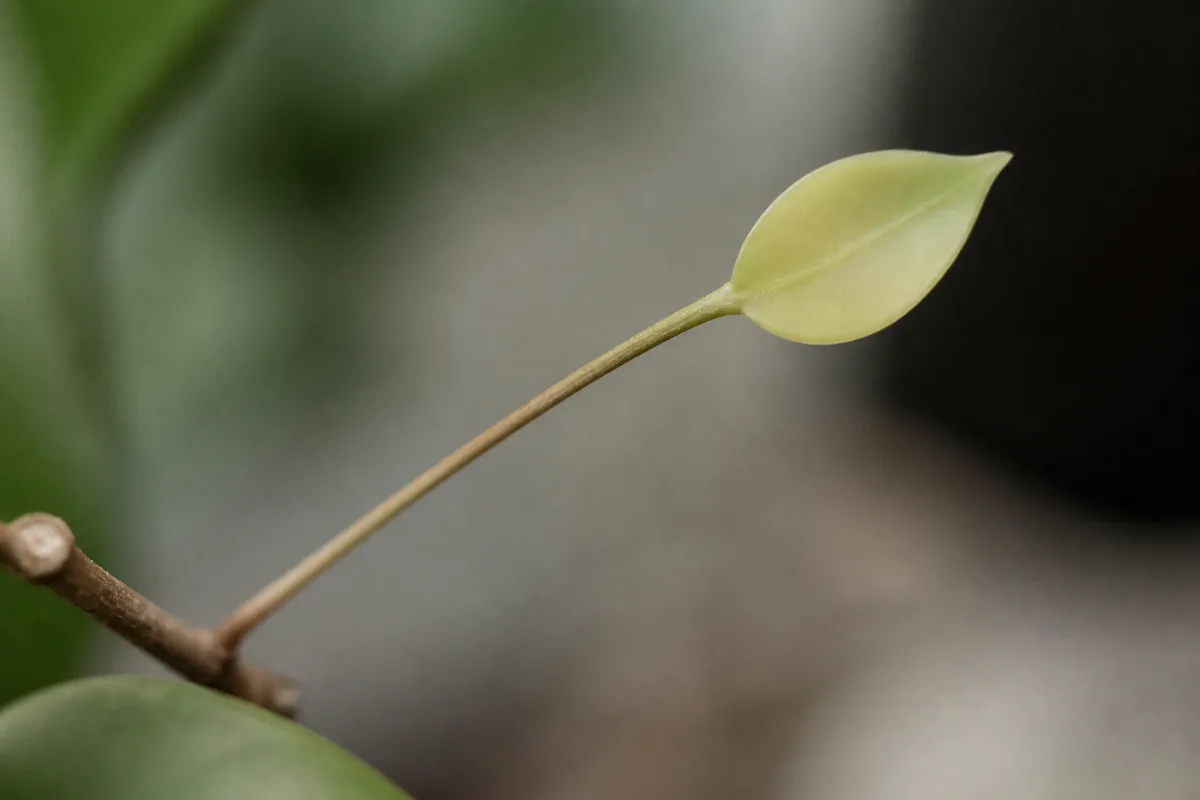
Not Enough Light symptoms on Hoya - compare with healthy tissue on the same plant.
The signature sign is leggy etiolation: internodes-the stem between leaf nodes-grow longer than older sections, so leaves sit farther apart and the plant looks sparse or top-heavy. Iowa State Extension notes that low light generally leads to thin, stretched growth and little or no flowering on hoyas. Healthy specimens in adequate light hold leaves closer together on firm vining stems.
Long, leafless vines confuse many owners. Hoyas sometimes produce searching tendrils before new leaves appear-a normal maturing habit. In dim placement, those whips reach toward the brightest wall and may stay bare for weeks because the plant lacks energy to leaf out along them. Do not cut them off in frustration; they are future growth points once light improves.
Slow or absent new growth is common. A Hoya in bright indirect light often pushes new leaves and occasional peduncles during spring and summer. In a bookshelf corner or north room far from glass, the apical bud may sit dormant for months while old waxy leaves stay green and the plant looks “fine.”
No flowers despite years of care is one of the clearest Hoya-specific clues. Iowa State Extension identifies brighter light as the primary driver of flowering indoors-many healthy hoyas that never bloom are simply not receiving enough light. Peduncles (spurs) may never form at all in chronic shade.
Chronic under-lighting also changes water use. Hoya stores moisture in thick, semi-succulent leaves and slows uptake in dim conditions. The same Hoya watering guide that worked in a bright window leaves soil wet for two weeks or more, which owners read as overwatering on Hoya when low light slowed the plant’s drink rate and set up root-stress risk.
Variegated cultivars such as Hoya carnosa ‘Krimson Queen’ show stress sooner. White and cream leaf sections contain no chlorophyll, so the plant must produce all its energy from a smaller green surface-fading variegation and stalled growth in medium-bright rooms that suit solid-green carnosa.
Why Hoya struggles in dim rooms
Hoyas evolved as tropical epiphytes in Asia, Australia, and Pacific forests, anchoring to branches where they receive bright, filtered daylight through canopy gaps-not deep interior shade. NC State Extension recommends bright indirect light year-round for Hoya carnosa, with partial shade meaning direct sun only part of the day.
Each thick, waxy leaf costs energy to maintain. Hoya keeps its compact trailing form only when incoming light supports full foliage along short internodes. When daily light integrals fall too low-common in rooms more than six feet from glass, heavily curtained windows, or winter months with short photoperiods-the plant enters survival mode. It elongates stems toward photons, produces fewer leaves per foot of vine, and redirects stored carbohydrates away from flower production.
Clemson Extension classifies Hoya carnosa among high-light houseplants suited to bright western or southern exposures with curtain filtering-the same category as weeping fig and jade plant, not snake plant or cast-iron plant territory. University of Maryland Extension places Hoya in the high-light group (roughly 500–1000 foot-candles), typically requiring south-facing windows or strong filtered west exposures. Missouri Botanical Garden notes that plants not receiving enough light often develop light green foliage, stretch toward the light, and show diminished flowering and poor growth compared to brighter conditions.
Distance matters as much as compass direction. Light intensity drops sharply as you move away from glass. A hanging basket placed for décor in a room center may receive reflected brightness sufficient for survival but not for compact vines or umbels of porcelain flowers. Trailing specimens add another wrinkle: the top of the cascade may get acceptable light while lower sections starve, producing uneven leaf spacing along the same stem.
Hoya is also placement-sensitive once buds form. Sudden moves after light correction are usually fine during vegetative growth, but once peduncles swell, relocating the plant can trigger bud drop. Chronic dim placement plus repeated relocations compounds stress without solving the underlying photon deficit.
How to confirm the cause
Work through these checks before committing to a new placement:
- Hand-shadow test at canopy height - On a bright day, hold your hand at the top of the vine. Soft shadow = likely adequate indirect light. Faint or absent shadow = too dim for active growth and flowering on this species.
- Internode length on newest growth - Compare spacing between the last three leaves to sections from six months ago. Longer gaps on new stems confirm stretch from insufficient light.
- Whip direction and leaf-out rate - Bare vines growing toward a window that have not produced leaves in eight or more weeks during spring or summer fit chronic low light. Sudden leaf drop within days of a move fits relocation shock even if the new spot is technically brighter.
- Flowering history - Healthy vine, correct watering, no blooms for two or more years in the same dim spot strongly implicates light, not patience alone.
- Soil dry-down rate - Stick a finger halfway into the mix. If soil stays wet more than fourteen days while growth stalls, low light may be slowing water use. Pair that finding with light correction, not only fewer drinks.
- Window distance and sky view - Measure roughly how many feet the pot sits from glass and whether buildings, trees, or sheers block sky view. Open horizon predicts usable indirect light better than “south window” alone.
- Brown-spot pattern - Crisp bleached or reddish patches on leaves facing hot afternoon glass suggest too much direct sun, not too little. Soft yellowing with wet soil and dim placement suggest combined light and watering stress.
Check leaf firmness and stem color at the base. Soft, wrinkled leaves with sour-smelling wet soil suggest root decline from overwatering in shade, not light alone. Firm waxy leaves, moderately dry soil, and directional stretch toward a window keep low light at the top of the list.
First fix for Hoya
Move the plant to the brightest location that still qualifies as bright indirect light-or add a grow light there-and then stop moving it.
Pick a final spot within one to three feet of an unobstructed east window, or three to five feet back from south or west glass with a sheer curtain to block hot direct afternoon rays. The canopy should see bright sky without leaves pressed against hot panes. Iowa State Extension describes the target as light bright enough to cast a shadow or comfortably read a book by, but not direct sun that scorches waxy foliage.
If no window in your home passes the hand-shadow test at canopy height, install a full-spectrum LED twelve to eighteen inches above the top of the vine on a twelve- to fourteen-hour timer. Clemson Extension notes that sixteen hours of supplemental light and eight hours of darkness work well for most indoor plants when natural light is insufficient.
Make this one placement change, then wait. Hoyas react less dramatically to relocation than fiddle leaf figs, but repeated moves still waste recovery time. Water to the new dry-down rate after the move-brighter spots dry faster; do not keep the old dim-corner schedule that left soil wet for weeks.
Do not jump from a dim interior to unfiltered south sill in one step. If the upgrade is large, acclimate over seven to ten days by increasing hours at the brighter location gradually while watching new leaf color for bleached or reddish sun-stress patches.
Step-by-step recovery
Once the Hoya is in corrected light, support recovery in this order:
- Hold placement stable for at least fourteen days - No Hoya repotting guide, no heavy pruning of leafless vines, no fertilizer on the same week as the move.
- Adjust watering to match new light - Check soil depth twice weekly until you learn the rhythm. Allow the top half of the mix to dry before watering again, not on a fixed calendar from the old spot.
- Leave leafless whips intact - New nodes and leaves often develop along bare vines once light is adequate. Cutting them removes growth points and delays a fuller silhouette.
- Never prune peduncles - NC State Extension warns that cutting peduncles where flowers have formed removes future bloom sites. Allow spent flowers to fall naturally.
- Rotate the pot a quarter turn every two to three weeks - Even growth prevents a permanent lean; rotation redistributes light but does not create it.
- Add supplemental light through winter if needed - Short days at mid and high latitudes often drop window intensity below flowering thresholds even for vines that summered well.
Skip fertilizer until new growth looks normal in spacing and leaf size for two weeks. Nutrients cannot replace missing light on a declining vine.
Recovery timeline
New leaf spacing is the metric that matters. Many hoyas show the first compact leaf set or new foliage along a whip within three to six weeks after light improves during spring or summer active growth. Late fall or winter corrections may stall until longer days return-patience beats repeated moves.
Old stretched internodes do not shorten. Bare lower sections may stay bare until dormant nodes activate along whips; that cosmetic correction can take two to four months even when care is correct. Flowering may wait until the following growing season after light correction-hoyas often need maturity plus bright light plus slight winter rest before peduncles swell.
Worsening signs: continuing yellowing and leaf drop after twenty-one days of stable bright placement, soft stems at the soil line, or mix that stays sour and wet-audit for root problems and mealybugs in leaf axils rather than moving again.
Lookalike symptoms
- Normal maturing whips - Long bare vines on an otherwise healthy plant in adequate light as the Hoya searches for a climb surface. Response: add a small trellis or hoop; leaves often follow without a placement change if the hand-shadow test passes.
- Overwatering in a dim corner - Yellowing leaves with wet soil and possible sour smell while vines look limp. Response: correct light and let the mix dry appropriately; epiphytic roots need oxygen and photons together.
- underwatering on Hoya - Slightly wrinkled, rubbery leaves with a very light pot and dry mix throughout. Response: deep soak once, then resume dry-down checks-rare as the sole cause when the plant is stretching toward light.
- Sunburn - Bleached, papery tan, or reddish stress patches on leaves touching hot afternoon glass. Response: pull back from direct rays or add sheer curtain; do not confuse with low-light stretch.
- Mealybugs - White cottony clusters in leaf axils along stems, often hiding under dense waxy foliage. Response: treat pests with alcohol swabs after light is adequate; weak vines recover slowly in shade.
What not to do
Do not fertilize heavily to compensate for dim placement-salt builds up while the plant cannot use it. Avoid unfiltered afternoon sun as a panic fix; hot glass scorches leaves trained in low light. Do not water less as the only response when soil stays wet in a dark room; fix light so the vine uses moisture again.
Resist cutting leafless whips because they look ugly. Those stems are the plant’s strategy for finding better light and will often leaf out once placement improves. Do not prune peduncles after flowers fade-you remove years of future bloom sites. Avoid repotting on day one unless roots are clearly failing; repotting plus relocation stacks stress on a semi-succulent epiphyte that blooms better slightly pot-bound.
How to prevent insufficient light next time
Choose placement before décor. Hoya belongs where bright indirect light is realistic all day, not where a hanging basket fills an empty corner. East windows and filtered south or west exposures are the usual winners in temperate homes; north rooms and interior shelves need grow lights for compact growth and flowers year-round.
Clean windows seasonally, trim outdoor obstructions when possible, and re-evaluate in late autumn before winter angle drops intensity. Pair stable light with watering tied to dry-down rate-allow the top half of soil to dry between drinks, with longer intervals in winter rest. When you must move-renovation, new furniture-plan one relocation and then leave the plant alone through at least one full watering cycle.
Conclusion
Insufficient light on Hoya is a slow structural crisis disguised as a patient, easy houseplant. The vine stretches between leaves, sends bare whips toward windows, and often gets overwatered by accident because dim plants drink slowly. Flowering never arrives because the energy surplus needed for umbels of waxy stars simply is not there. The fix is not more fertilizer, aggressive pruning, or frequent relocation-it is enough bright indirect light, measured at the pot, kept stable long enough for new leaves to prove the spot works. Test with a hand shadow, upgrade placement or add a grow light as a single deliberate change, adjust water to match, and read recovery on the next leaf set and the first leaves along old whips. Get light right, and a wax plant finally earns the porcelain-flower reputation that made you collect it.
When to use this page vs other Hoya guides
- Hoya watering guide - Use for routine moisture checks before assuming not enough light is the main issue.
- Hoya problems hub - Browse all 17 common issues on this species.
- Leggy Growth on Hoya - Different entry point when symptoms overlap with not enough light.
- Slow Growth on Hoya - Different entry point when symptoms overlap with not enough light.
- Yellow Leaves on Hoya - Different entry point when symptoms overlap with not enough light.