Brown Tips on Hoya: Causes, Checks & Fixes
Quick answer
Brown tips on Hoya usually mean sun scorch on variegated or sun-facing leaves, winter low-humidity edge crisping (especially on thin-leaf species), fertilizer salt burn at margins, or drought crisping when the pot is light and leaves feel soft. First step: note which leaf edges browned and which direction they face the window-do not water until you know whether the problem is light, salts, dry air, or thirst.
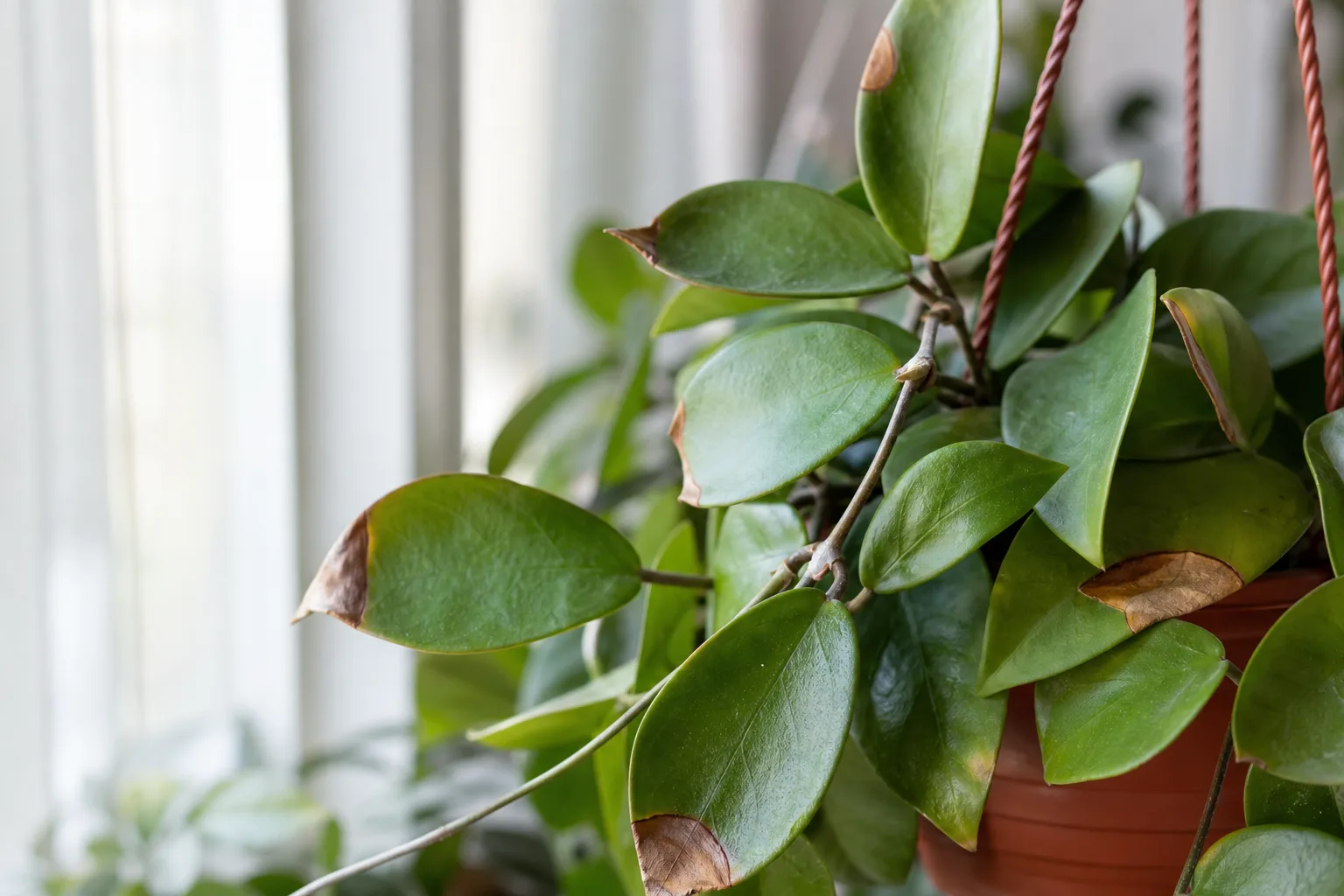
Brown Tips on Hoya: Causes, Checks & Fixes
This guide covers brown tips on Hoya. See also the general Brown Tips guide, watering, and light pages for this plant.
Brown Tips on Hoya: Causes, Checks & Fixes
Quick answer
Brown tips on Hoya (Hoya spp., wax plant) are almost always environmental edge damage on waxy foliage-not a mysterious disease. On this epiphytic vine, the same crispy margin can come from four common causes that need opposite fixes: sun scorch on leaves facing harsh glass, low winter humidity crisping thin-leaf species, fertilizer salt burn at tips after heavy feeding, or drought crisping when the pot is light and leaves feel soft.
First step: look at which edges browned and which direction they face your window. Sun-facing bleached or tan patches mean reduce direct light-not more water. Tip-only burn with white crust on the soil surface means flush salts-not a soak. Crisp margins on firm leaves in dry heated air mean humidity-especially for H. linearis. Crisp tips on a light, dry pot with slightly soft leaves mean one thorough drink after confirming firm roots.
What brown tips look like on Hoya
Hoya leaves are thick and waxy; brown tips usually appear as dry, papery margins or bleached patches before the whole leaf dies. The pattern on the leaf-not just the color-tells you which branch to follow.
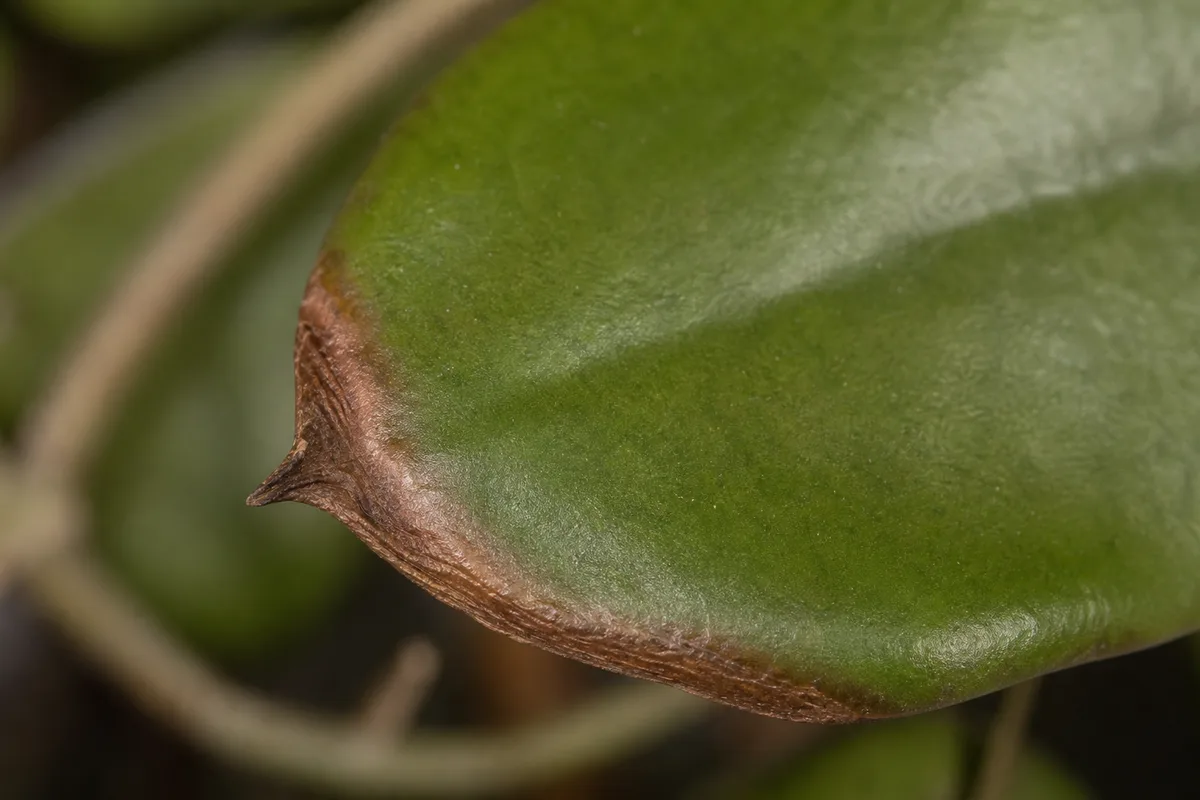
Brown Tips symptoms on Hoya - compare with healthy tissue on the same plant.
Sun scorch on sun-facing leaves
- Bleached, tan, or reddish-brown patches on the side facing the window
- Often hits variegated sections first-white or pink tissue on H. carnosa ‘Tricolor’ or ‘Krimson Princess’ burns before green areas
- Tissue feels dry and brittle, not mushy
- May follow a recent move closer to south or west glass without acclimation
- New leaves emerging after you reduce light should look glossy and evenly colored
Winter low-humidity edge crisping
- Even brown crisping along leaf margins, sometimes on many leaves at once
- Leaves stay firm, not wrinkled-soil may still be appropriately dry
- Worse on thin-leaf species such as H. linearis; thick H. carnosa tolerates drier air longer
- Peaks when indoor humidity drops below about 30% with heating running
- Often appears in January–February before you changed watering
Fertilizer salt burn at tips
- Brown or black tips concentrated at the leaf point, sometimes with stunted new growth
- White or crusty mineral film on the soil surface or pot rim
- Follows heavy or frequent feeding, especially on dry soil
- Margins may crisp even when moisture rhythm seems correct
- Flushing and pausing feed usually stops new damage within one to two growth cycles
Drought crisping on a light dry pot
- Brown tips or margins on leaves that also feel soft, thin, or slightly wrinkled
- Pot feels noticeably light; top half of mix is dusty dry
- Thick-leaf hoyas can look fine for days after the mix dried-margins crisp before obvious wilt
- One thorough soak firms leaves within 24–48 hours if roots are healthy
- Opposite of overwatering, which shows yellow lower leaves on wet soil first
Spider mite stippling (less common)
- Fine speckling or bronzing near margins, often with webbing on thin-leaf types in dry air-spider mites thrive in low humidity indoors
- Not classic tip-only burn-inspect leaf undersides and see low humidity overlap
- Isolate and treat pests before correcting humidity alone
Brown tips vs. yellow leaves vs. full leaf browning
| Pattern on Hoya | What it usually means | Best page |
|---|---|---|
| Crisp brown tips or margins only | Sun, salts, dry air, or drought edge stress | This page |
| Yellow lower leaves on wet soil | Overwatering or root stress | Yellow leaves |
| Whole leaf brown and mushy | Advanced rot, cold damage, or severe scorch | Root rot or light adjustment |
| Soft wrinkled leaves, light pot | Thirst before tips crisp | Underwatering |
| Bleached patches on variegation | Direct sun on sensitive tissue | Hoya light guide |
Use this guide when damage is localized to edges or tips and the stem base is still firm. Shift to yellow leaves or overwatering when lower foliage yellows on a heavy wet pot.
Why Hoya gets brown tips
Hoya is an epiphytic vine with semi-succulent leaves that store water. That storage buffers short dry spells-which is why thick-leaf types can look healthy while margins slowly crisp, and why underwatering sometimes shows as tip burn before full wilt.
Sun scorch happens when bright light becomes direct sun on the leaves. Hoyas want bright indirect light; unfiltered afternoon sun on waxy foliage causes bleaching and brown patches. Variegated cultivars have less photosynthetic tissue and scorch more easily than all-green forms.
Low humidity pulls moisture from leaf edges faster than the plant replaces it-especially on thin-leaf species in heated winter rooms. Average 40–60% humidity suits thick-leaf hoyas; thin types need more attention when air is very dry.
Salt burn follows overfeeding or feeding on dry soil. Salts accumulate at the root zone and show up as brown leaf margins even when watering seems fine. The overview care guidance applies: flush the pot and pause fertilizer when margins crisp despite good moisture.
Drought crisping appears when transpiration outpaces uptake-bright light, small pots, and summer growth dry the mix faster than a winter mental model. Hoya prefers the top half of the mix dry before the next drink; waiting until leaves shrivel often means margins browned first.
Do not assume every brown tip means underwatering. Sun scorch and salt burn worsen when you add water. Overwatering usually yellows lower leaves before tips dominate.
How to confirm the cause
Work through this checklist in order-stop when one branch clearly fits:
- Leaf type - Thick (H. carnosa, H. obovata) versus thin (H. linearis)? Thin types point to humidity sooner.
- Light direction - Are damaged leaves on the sun-facing side of the pot? Bleaching plus brown on that side means scorch.
- Recent moves - Did the plant shift closer to south or west glass in the last one to two weeks?
- Pot weight and top-half moisture - Light and dusty dry suggests drought; heavy and cool suggests do not water-check for yellow lower leaves instead.
- Leaf feel - Firm leaves with crisp edges in dry air fits humidity or sun; soft wrinkled leaves on dry soil fits drought.
- Humidity context - Heating running, humidity gauge below 30%, or many plants crisping at once fits winter air stress.
- Feeding history - Recent full-strength fertilizer, white crust on soil, or monthly feeding through winter fits salt burn.
- Pest scan - Stippling and webbing on undersides means mites, not classic tip burn alone.
| If you see… | And the pot is… | Likely cause | First fix direction |
|---|---|---|---|
| Bleached sun-facing patches | Any weight | Sun scorch | Reduce direct sun |
| Even crisp margins, firm leaves | Moist appropriately | Low humidity | Raise humidity / group plants |
| Tip-only burn, white soil crust | Any weight | Salt burn | Flush, pause feed |
| Crisp tips + soft leaves | Light, dry | Drought | One thorough soak |
| Yellow lower leaves | Heavy, wet | Overwatering | Stop watering-see yellow-leaves guide |
First fix for Hoya
One clear action based on your confirmation-not a stack of treatments.
If leaves face the window and show bleached or tan patches
- Move the vine back from harsh glass or hang a sheer curtain on south or west exposures.
- Acclimate gradually over one to two weeks if coming from a dim shop-do not jump to deep shade.
- Do not water extra-scorch is a light problem, not thirst.
- Trim fully dead patches only after new growth looks healthy.
See the Hoya light guide for placement targets.
If margins are crisp on firm leaves in dry winter air
- Run a humidifier or group plants to raise local humidity-especially for thin-leaf species.
- Keep the plant off blasting heat vents and cold draft paths.
- Do not increase watering if the mix is already appropriately dry and leaves are firm.
- Expect old scarred margins to remain; watch new leaves for clean edges.
See low humidity on Hoya for species-specific targets.
If tips burned after heavy feeding or white crust shows on soil
- Pause all fertilizer for six to eight weeks.
- Flush the pot with plain water at two to three times the pot volume; let it drain fully.
- Resume feeding at quarter to half strength only during active growth, on already-moist soil.
- Do not foliar-feed scorched leaves.
See the Hoya fertilizer guide for safe rates.
If pot is light, top half is dry, and leaves feel soft
- Confirm roots are pale and firm if you have any doubt.
- Bottom-soak or top-water thoroughly until runoff drains freely.
- Empty the saucer within 30 minutes.
- Wait for the top half to dry before the next drink-do not switch to daily sips.
Full soak workflow: underwatering on Hoya.
If mix is wet, lower leaves yellow, and tips brown
- Stop watering immediately.
- Inspect for root rot before misting, feeding, or Hoya repotting guide on impulse.
- Escalate via overwatering and yellow leaves-not this page’s drought or humidity branches.
Recovery timeline
Sun scorch - New leaves emerging after light adjustment should look evenly colored within two to four weeks. Old bleached tissue does not revert; judge success by new growth only.
Low-humidity crisping - New leaves unfurl with clean margins within one to three weeks once humidity stabilizes. Existing brown edges remain cosmetic.
Salt burn - After flush and feed pause, new tips stay green within four to eight weeks through one growth cycle. Persistent crisping on new leaves means flush again or check for compacted mix holding salts.
Drought crisping - Firm leaves often return within 24–48 hours after one proper soak on a confirmed dry pot.
Signs recovery is working: glossy new leaves without spreading margin burn, stable pot weight between soaks, no new yellow lower leaves.
Signs the problem is worsening: brown margins spreading to new leaves after you applied the wrong fix (watering scorched plants, feeding salt-burned plants), soft stems at the base, or yellowing clusters on wet soil.
What not to do
- Do not water heavily when tips browned from sun or salt burn-that deepens root stress without fixing bleached tissue.
- Do not fertilize a plant with crisp margins-fix light, salts, or moisture first.
- Do not mist leaves as your only humidity fix in stagnant air; it can leave wet foliage that invites fungal spotting.
- Do not trim every brown tip before correcting the cause-new leaves will brown the same way.
- Do not assume “brown tips = needs water” on Hoya; check moisture at depth and pot weight first.
- Do not stack repot, flush, prune, and pesticide on the same day-one care change at a time.
- Do not place variegated hoyas in unfiltered afternoon sun to “fix” slow growth-variegation burns first.
How to prevent brown tips on Hoya
Prevention follows leaf type, light, and dry-down rhythm, not a calendar:
- Grow in bright indirect light-east windows or filtered south/west; see Hoya overview for species notes.
- Acclimate variegated cultivars slowly when increasing light; they scorch before all-green forms.
- Water when the top half of the mix is dry for thick-leaf species-allow soil to dry between waterings, roughly every 7–14 days in active growth and every 3–4 weeks in winter, adjusted for your pot and window.
- Lift the pot every check; light means water soon for drought-prone setups.
- Keep stable temperatures between 65 and 80°F (18 and 27°C) and avoid sustained cold below about 55°F (13°C) near winter glass.
- Flush salts two to three times yearly if you feed monthly; use diluted fertilizer on moist soil only in spring through early fall.
- Raise humidity for thin-leaf species in dry winters-humidifier beats occasional misting.
- Inspect sun-facing leaves weekly in summer when light intensity peaks.
Hoya forgives a missed drink more than a soggy week-but crispy margins are the early warning that light, air, salts, or dry-down have drifted out of range.
When to worry
Cosmetic tip burn on a firm vine with a clear environmental cause is fixable without repotting. Escalate if:
- New leaves keep browning two weeks after you corrected light, humidity, or feeding
- Lower leaves yellow widely while mix stays wet-possible root failure, not edge crisping
- Stems soften at the base with sour smell-see root rot
- Mites or mealybugs coat new growth despite humidity fixes
- Whole leaves turn brown and mushy after cold exposure below 55°F (13°C)
Trim-only cosmetic damage on old leaves is normal; systemic decline with wet soil and crown softening needs root inspection, not another humidity bump.
Related Hoya problems
- Low humidity - winter edge crisping on thin-leaf species
- Underwatering - drought crisping on a light dry pot
- Yellow leaves - lower-leaf fade on wet soil
- Overwatering - when wet roots, not dry air, drive symptoms
- Wilting - soft leaves and lost turgor diagnostic
- Hoya overview - epiphytic care, light, and species leaf-type notes
- Hoya watering guide - top-half dry-down and leaf firmness checks
- Hoya light guide - filtered bright placement
- Hoya fertilizer guide - feeding without salt buildup
When to use this page vs other Hoya guides
- Hoya watering guide - Use for routine moisture checks before assuming brown tips is the main issue.
- Hoya problems hub - Browse all 17 common issues on this species.
- Low Humidity on Hoya - Different entry point when symptoms overlap with brown tips.
- Underwatering on Hoya - Different entry point when symptoms overlap with brown tips.
- Overwatering on Hoya - Different entry point when symptoms overlap with brown tips.