Underwatering on Hoya Carnosa: Causes, Checks & Fixes
Quick answer
Underwatering on Hoya carnosa usually shows as soft or wrinkled leaves with dry mix several centimeters down and a very light pot. First fix: one thorough soak until water drains freely, then wait for the top half of the mix to dry before watering again.
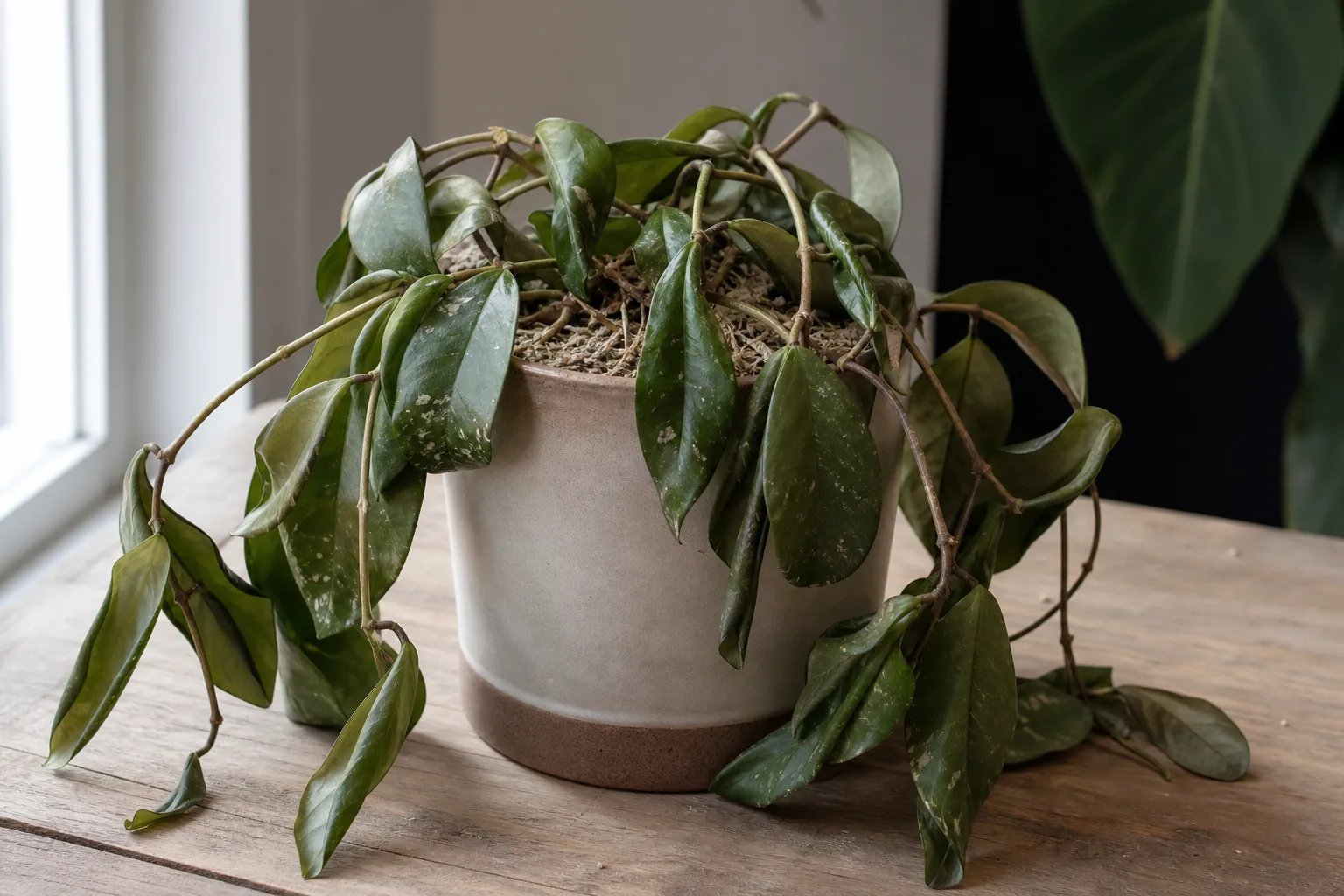
Underwatering on Hoya Carnosa: Causes, Checks & Fixes
This guide covers underwatering on Hoya Carnosa. See also the general Underwatering guide, watering, and light pages for this plant.
Underwatering on Hoya Carnosa: Causes, Checks & Fixes
Quick answer
Use this page for emergency drought triage when your wax plant already looks stressed. For routine watering rhythm, see the full Hoya carnosa watering guide.
On Hoya carnosa, underwatering usually appears as leaves that feel softer, thinner, or wrinkled while the potting mix is dry below the surface and the pot feels unusually light. This fits how the species grows in nature as an epiphytic vine that prefers an airy medium and dry intervals between deep drinks (NC State Extension; Iowa State Extension).
Use this decision rule before you act:
- Dry mix + light pot: treat as underwatering and rehydrate.
- Wet mix + heavy pot: pause watering and check for root dysfunction.
- Firm leaves + slower winter growth: likely seasonal slowdown, not rescue mode.
First fix: one full soak. Water slowly until runoff is steady, let excess drain, and empty the saucer. Avoid small daily sips; they often wet only the top layer while roots deeper in the mix stay dry.
Author, review, and methodology
- Author: sai-ananth
- Reviewed by: LeafyPixels Review Board
- Last reviewed: 2026-06-17
- Method used: species-specific diagnosis and fix sequence are checked against extension and botanical references, then reviewed for practical indoor constraints before publication.
This page is intentionally scoped to underwatering triage on Hoya carnosa. For broader species context, use Hoya carnosa overview. For recurring schedule calibration after recovery, use Hoya carnosa watering.
What underwatering looks like on Hoya carnosa
Hoya carnosa has thick, waxy, somewhat succulent leaves, so drought signs can appear late and then accelerate. Leaves that were normally firm begin to feel flexible or lightly puckered, especially on mature vines (NC State Extension).
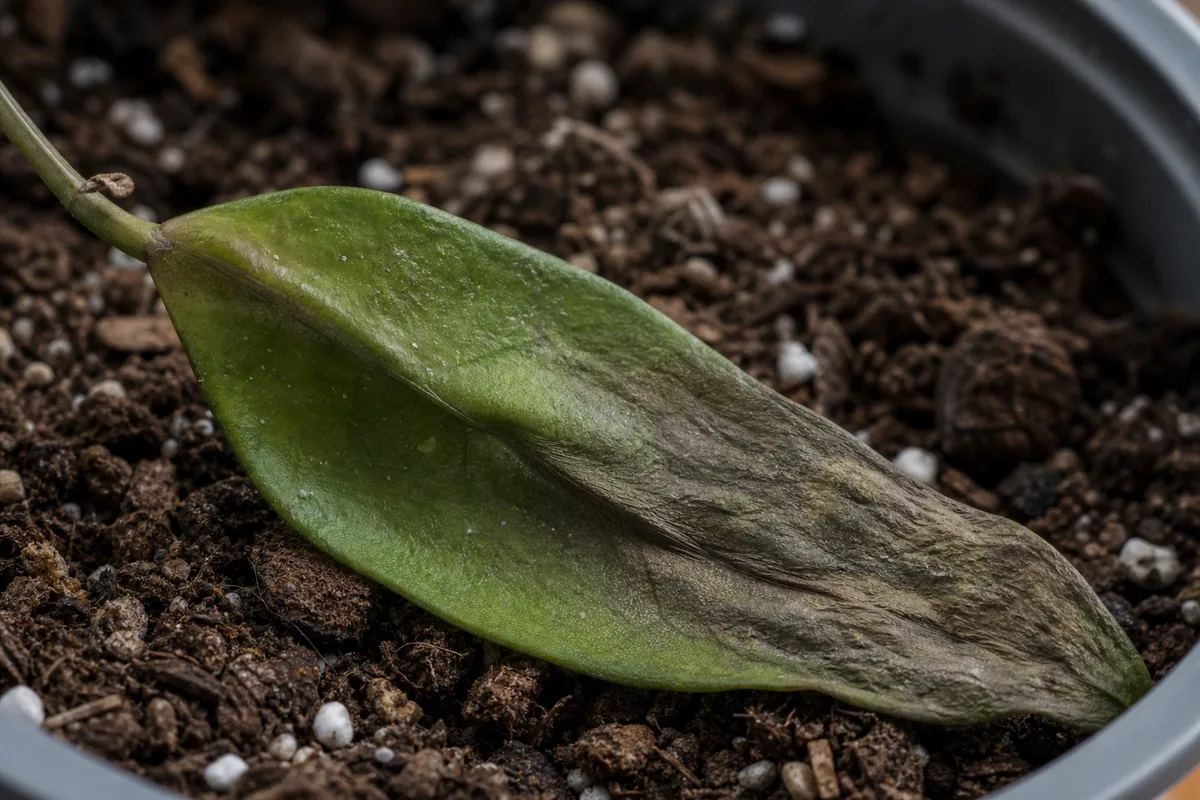
Underwatering symptoms on Hoya Carnosa - compare with healthy tissue on the same plant.
Common signs that support underwatering:
- Pot feels much lighter than after a normal watering
- Mix looks pale and dry several centimeters down, not just on top
- Water runs through quickly after long dryness (hydrophobic behavior)
- Growth slows in warm active months despite adequate light
Species-specific pattern to watch: on trailing Hoya carnosa, older middle-vine leaves usually soften first while the newest tip growth can still look acceptable for a few days. On thicker-leaf cultivars such as ‘Compacta’, visible wrinkling can lag behind actual root-zone dryness.
Why this happens on Hoya carnosa
This species is drought-tolerant compared with many foliage houseplants, but that tolerance can mislead growers into waiting too long. Hoya roots still need periodic full rehydration to stay functional.
Frequent triggers:
- Overcorrection after a rot scare: growers skip water too long to avoid overwatering
- Bright, warm placement: faster dry-down in active growth
- Very chunky mix left dry too long: media can repel water at first pass
- Missed checks during travel: trailing plants can dry quickly in heat
Hoya also performs best in a free-draining mix and is intolerant of prolonged sogginess, so the goal is not constant moisture but a reliable wet-dry cycle (Iowa State Extension; NC State Extension).
How to confirm the cause
Six-step home check
- Leaf firmness: soft or wrinkled leaves suggest water deficit.
- Depth moisture: test at least halfway down the pot; surface dryness alone is not enough.
- Pot weight: compare with post-watering weight.
- Drainage behavior: instant channeling can mean the root ball is too dry.
- Odor and stem base: sour smell or mushy tissue points away from simple drought.
- Root check when needed: wrinkled leaves plus wet mix can indicate root rot, not thirst.
Dry vs wet decision table
| Pattern | Most likely issue | First move |
|---|---|---|
| Wrinkled leaves + dry mix + light pot | Underwatering | Full soak and drain |
| Wrinkled leaves + wet mix + heavy pot | Root dysfunction / overwatering | Pause watering, inspect roots |
| Slow winter growth + firm leaves + moderate dry intervals | Normal seasonal slowdown | Keep reduced winter watering |
For overwatering lookalikes, cross-check Hoya carnosa overwatering and Hoya carnosa root rot. General extension guidance also notes wilting can happen in soil that is either too dry or too wet when roots fail (Missouri Botanical Garden).
First fix to try
Give the root zone one complete rewetting:
- Water slowly in passes until runoff is consistent, or
- Bottom-water until the surface darkens, then remove and drain
If the mix is severely dry, it may need repeated passes to rehydrate evenly. University guidance on houseplant drought and rewetting supports deep, thorough watering over frequent shallow watering (Missouri Extension; UC ANR).
Step-by-step recovery
- Rewet thoroughly and drain completely.
- Return plant to Hoya Carnosa light guide, not harsh midday scorch.
- Wait until the top half of mix dries before watering again.
- Hold fertilizer until the plant regains firmness and active growth.
- Remove only fully dead tissue; partially dehydrated leaves may still recover turgor.
Real-world check example
If your 12-15 cm hanging pot feels feather-light around day 10-14 in bright indirect summer light, and a mid-vine leaf folds easily in the taco test, treat that as a true drought pattern. After one full soak, reassess in 48 hours: improved leaf firmness supports underwatering; no improvement with still-moist mix points to root dysfunction instead.
For light placement, use bright-but-filtered indoor conditions rather than sudden high direct sun while stressed (Clemson HGIC).
Scenario-based troubleshooting branches
Fast triage table (urgency + branch)
| What you see right now | Urgency | Most likely branch | Next action |
|---|---|---|---|
| Wrinkled, soft leaves + pot is feather-light + mix dry at depth | Moderate | True underwatering | Rehydrate once, then reassess at 48 hours |
| Wrinkled leaves + pot still heavy/wet + sour odor or mushy stem base | High | Root dysfunction lookalike | Stop watering and move to root rot diagnostics |
| Slight softness in winter + pot only moderately dry + no stem collapse | Low | Seasonal slowdown | Extend interval slightly and keep monitoring pot weight |
| Plant recently missed watering during travel + bright warm placement | Moderate | Acute drought episode | Full soak, stable bright indirect light, no fertilizer until recovery |
| Repeated fast dry-down in small hanging pot | Moderate | Rhythm mismatch, not one-off stress | Rebuild cadence with watering guide and depth checks |
Branch A: “I underwatered after a rot scare”
If you delayed too long because of a previous overwatering episode, do not swing back to daily sipping. Give one complete soak, drain fully, and reassess leaf firmness plus pot weight at 48 hours. If leaves are still wrinkled while mix remains moist, switch to the root rot guide instead of adding more water.
Branch B: “Water runs through but the root ball stays dry”
This is common in hydrophobic media after prolonged dryness. Rewet in slow passes: first pass, wait 5-10 minutes, second pass, then optional short bottom soak. If the center repeatedly resists water, refresh the medium and align with the watering guide so drought cycles do not harden into chronic root stress.
Branch C: “Winter rest or actual drought?”
Check evidence, not season labels. In winter, a light pot and dry mid-depth still mean water is needed; a heavy pot with wrinkled leaves points away from underwatering and toward root or aeration issues. Compare with overwatering signs before intervening.
Branch D: “Travel lapse in bright conditions”
If the plant was left dry in a warm bright spot, recover in stages: full soak, drain, stable bright indirect light, then no fertilizer until turgor returns. Avoid immediate Hoya Carnosa repotting guide unless the root ball cannot rewet after repeated passes.
Recovery timeline
With healthy roots, leaf firmness often improves within a few days after a proper soak. Severely dehydrated plants can take longer, and damaged margins do not turn green again.
Track recovery by:
- firmer existing leaves
- stable stems at the base
- resumed vine extension
- no new drought wrinkling between normal waterings
If wrinkling worsens despite moist mix, treat it as a root problem and use the root rot guide path. If your plant is repeatedly difficult to rewet, compare your process with the full watering guide before changing pot size or feeding.
Mistakes to avoid
- Watering by calendar without checking root-zone dryness
- Misting leaves instead of rehydrating roots
- Swinging from severe dryness to constantly wet soil
- Repotting into an oversized container during stress recovery
- Fertilizing drought-stressed roots before they recover
How to prevent it next time
- Use pot weight plus depth moisture, not surface appearance alone
- Keep a chunky, airy mix that drains fast but can still be fully rewetted
- Water deeply, then allow substantial dry-down before next watering
- Adjust frequency by season and light intensity
- Keep care context connected through Hoya carnosa overview and the full watering guide
When to worry
Escalate quickly if leaves become papery, vines collapse, or wrinkling persists after complete rehydration. At that point, the main risk is not simple drought but compromised roots.
How this page is reviewed
This article is written for single-problem triage and cross-checked against extension and botanical references, then reviewed under LeafyPixels editorial methodology before publication. Author/reviewer and review date are recorded in frontmatter and updated when guidance is materially revised.
For full species context, link out to Hoya carnosa overview, watering rhythm, overwatering lookalikes, and root rot escalation.
Frequently asked questions
Why do my Hoya carnosa leaves wrinkle even though I water “regularly”?
Regular watering can still miss the root zone if only the top layer gets wet. On Hoya carnosa, a barky or hydrophobic mix may channel water around dry pockets, so leaves stay soft even after surface watering. Confirm with pot weight and mid-depth moisture, then use a full soak-and-drain cycle.
What is the safest first move if I previously lost a Hoya to overwatering?
Use evidence, not fear: if the pot is light and dry at depth, perform one thorough soak. Then wait for meaningful dry-down before watering again, instead of daily sips. If the pot remains wet but leaves are still wrinkled, switch to overwatering and root rot checks.
Can wrinkled leaves become firm again after underwatering?
Mildly dehydrated leaves often regain firmness within a few days when roots are healthy. Tissue that has browned, scarred, or gone papery will not return to original texture. Track recovery by new stable growth and reduced new wrinkling, not by expecting every damaged leaf to look new.
Is winter slowdown the same thing as underwatering on wax plant?
No. Winter slowdown means reduced growth demand, but the plant can still dry out in heated rooms or bright windows. If the pot is light and the center is dry, water; if the pot is heavy and symptoms persist, treat it as a root health issue rather than simple thirst.
When should I escalate instead of repeating more water?
Escalate if leaves remain wrinkled after 48 hours in a now-moist mix, or if you notice sour odor, collapsing stems, or persistent decline despite correct rehydration. Those patterns point away from simple drought and toward root dysfunction. Use the root rot guide for next-step diagnosis.
Conclusion
Underwatering on Hoya carnosa is usually a timing problem: checks are spaced too far apart until a drought-tolerant plant finally shows stress. Confirm with the dry-mix + light-pot pattern, correct with one full soak, then shift to a repeatable dry-down routine that prevents both drought stress and root rot.
When to use this page vs other Hoya Carnosa guides
- Hoya Carnosa watering guide - Use for routine moisture checks before assuming underwatering is the main issue.
- Hoya Carnosa problems hub - Browse all 17 common issues on this species.
- Wilting on Hoya Carnosa - Different entry point when symptoms overlap with underwatering.
- Brown Tips on Hoya Carnosa - Different entry point when symptoms overlap with underwatering.
- Yellow Leaves on Hoya Carnosa - Different entry point when symptoms overlap with underwatering.