Best Soil for Hoya Carnosa: Chunky Epiphytic Mix
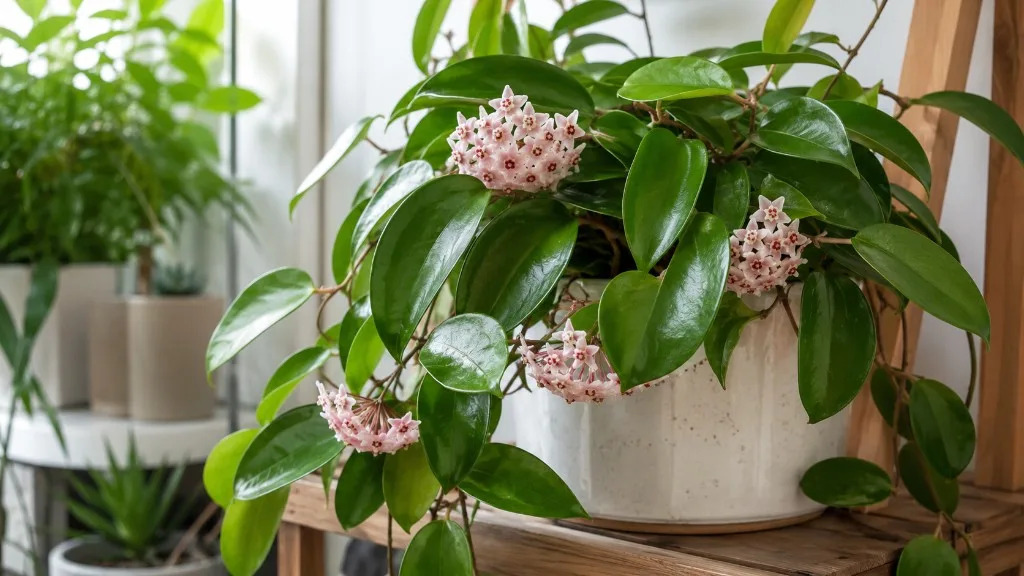
Best Soil for Hoya Carnosa: Chunky Epiphytic Mix
Best Soil for Hoya Carnosa: Chunky Epiphytic Mix
The best soil for Hoya carnosa is not a single bagged product - it is a chunky, fast-draining epiphytic mix that keeps roots breathing while still holding enough moisture between waterings. Hoya carnosa, the classic wax plant, evolved as an epiphyte gripping tree bark in the humid forests of Southeast Asia, Japan, and Taiwan. Its roots expect open air pockets, rapid drainage, and a wet-dry rhythm - not the dense, water-retentive peat blends most houseplants tolerate. Put a carnosa in straight potting soil and you are asking epiphyte roots to survive in conditions they never evolved for. The result is predictable: yellowing leaves, mushy stems, dropped buds, and the slow suffocation that growers call root rot on Hoya Carnosa.
The practical target for most home growers is the 1:1:1 mix by volume that Clemson HGIC and NC State Extension both frame as standard for wax plants: one part quality potting soil, one part orchid bark, and one part perlite or pumice. That blend delivers structural aeration from bark, drainage acceleration from perlite, and modest nutrient-holding capacity from the organic base. Allow the mix to dry substantially between waterings, use a pot only slightly larger than the root ball, and run a simple drainage check after every full watering. Get those three things right and Hoya carnosa becomes one of the most forgiving long-term houseplants you can grow.
This guide covers why epiphyte roots demand airy substrate, how to build and adjust a chunky mix, commercial shortcuts that work, pot selection, Hoya Carnosa repotting guide steps, and the soil mistakes that cause more damage than any single missed watering.
Why Hoya Carnosa Needs Airy, Fast-Draining Soil
Hoya carnosa is often sold as an easy houseplant, which creates a dangerous assumption: that any indoor potting mix and any container will work as long as you water on a schedule. In practice, soil is the control system for everything else you do. It decides how long moisture sits around the roots after you water, how much oxygen reaches fine root hairs, whether organic matter compacts into an anaerobic brick over time, and how quickly the plant recovers from a heavy drink. A carnosa in the wrong mix can look healthy for months and then collapse within weeks once the lower roots lose access to air - a pattern growers often blame on watering when the real issue is dense, slow-draining medium holding water at the root zone.
NC State Extension’s plant toolbox describes Hoya carnosa as an epiphyte that requires a loose, fast-draining potting mix high in organic matter and a container with good drainage, with soil allowed to dry between waterings (NC State Extension - Hoya carnosa). Iowa State University Extension explains that many hoyas grow in nature on tree branches where roots anchor to bark and absorb moisture from rainwater and decomposing organic matter - a growth habit that explains why they perform best indoors in chunky, airy mixes that drain rapidly while still holding some moisture (Iowa State Extension - All About Hoyas). Container culture amplifies every soil weakness because the root zone is confined. There is nowhere for excess water to go except out the drainage hole, and no deep soil profile to buffer compaction.
Think of soil as infrastructure, not decoration. A chunky epiphytic mix supports the wet-dry watering cycle carnosa demands during active growth and the conservative dry-down it needs in winter. Heavy, exhausted, or straight-from-the-bag potting soil forces you into a reactive cycle of yellow-leaf fixes, emergency unpotting, and lost peduncles - all of which are harder to reverse than getting the substrate right from the start.
What Makes a Good Chunky Epiphytic Mix
A good Hoya carnosa mix is not defined by a brand name. It is defined by how the finished substrate behaves in your specific pot, room, and Hoya Carnosa watering guide. The word “chunky” is not marketing language - it describes a physical structure where large bark pieces and perlite grains create persistent air channels that survive repeated watering. When you squeeze a handful of properly mixed carnosa substrate, it should feel light, springy, and heterogeneous. You should see distinct bark chunks and white perlite grains rather than a uniform brown paste.
The goal is to replicate, as closely as a pot allows, the conditions of bark-dwelling roots: moisture available when you water, oxygen available immediately afterward, and no standing water at the bottom of the root zone. Hoya carnosa is among the more forgiving hoya species, but forgiveness has limits. Dense mix in a large plastic pot under weak winter light is a combination that defeats even experienced growers.
The Three Non-Negotiable Properties
Every successful Hoya carnosa soil system delivers three properties simultaneously: fast drainage, adequate moisture retention between waterings, and long-term structural stability. Missing any one produces recognizable symptoms above ground long before you inspect the roots.
Fast drainage means excess water exits the pot within minutes of a thorough watering rather than pooling around the lower roots. Clemson HGIC notes that the ideal blend ensures soil dries quickly, preventing waterlogged conditions that lead to root rot (Clemson HGIC - Waxflowers (Hoya)). Moisture retention means the mix does not go bone-dry within hours - carnosa stores water in its thick, waxy leaves, but fine roots still need a substrate that holds some moisture through the dry-down period. Structural stability means the mix does not collapse into a compacted brick after three to six months of watering; organic components like peat and coco coir break down over time, which is why refreshing mix at repotting matters.
Run this quick test after mixing a new batch: moisten the blend lightly, fill a small cup, and water until runoff appears. The water should move through quickly, not sit on the surface. Press the moistened mix - it should spring back rather than form a solid clump.
How Wild Epiphyte Roots Inform Indoor Mixes
In habitat, Hoya carnosa roots do not sit in a uniform soil column. They grip bark crevices, weave through moss, and intercept rainwater that drains away almost immediately. Roots are exposed to humid air as much as to moisture. That architecture explains several indoor care patterns that confuse growers who treat carnosa like a standard foliage plant.
Epiphyte roots are adapted to intermittent moisture and constant airflow. They are not adapted to sitting in saturated peat for days. They are also not adapted to pure bark that dries in hours with no nutrient reserve. The indoor compromise is a mixed substrate: bark and perlite for structure and oxygen, plus a modest organic base for moisture buffering and slow nutrient release. Iowa State Extension emphasizes that what matters most is that roots get oxygen and water does not linger in heavy, compacted medium - a framing that should guide every ingredient decision you make.
The 1:1:1 DIY Recipe Extension Sources Recommend
The most reliable starting recipe for Hoya carnosa is a 1:1:1 blend by volume of potting soil, orchid bark, and perlite. Clemson HGIC lists this as the ideal soil blend for wax plants (Clemson HGIC - Waxflowers (Hoya)). NC State Extension recommends a loose, fast-draining mix high in organic matter for epiphytic culture. The Royal Horticultural Society uses a similar three-component framework for hoyas: orchid bark, peat-free compost, and coarse perlite in equal parts. This convergence across extension and horticultural bodies is worth trusting - it reflects decades of observation on what epiphytic Apocynaceae roots tolerate in containers.
To mix a batch, use any consistent volume measure: a scoop, yogurt cup, or gallon pot. Combine one scoop potting soil, one scoop orchid bark (medium grade), and one scoop perlite. Mix thoroughly in a tub or on a tarp until the components are evenly distributed. Moisten lightly before potting so dry perlite does not float to the top during the first watering. This recipe handles Hoya carnosa well across most indoor setups because the species is notably forgiving compared to fine-leaved hoyas that demand bark-heavier ratios.
Choosing Potting Soil as the Base
The potting soil component provides modest moisture retention and baseline nutrients. It should be a quality indoor blend - not garden soil, not topsoil, and not a moisture-control formula loaded with wetting agents. Look for a peat-based or peat-free commercial mix labeled for houseplants, with perlite or bark already blended in. You are using it as one-third of the final mix, so its water-retention properties are diluted significantly by the orchid bark and additional perlite.
Avoid heavy, all-purpose mixes with high compost content if you live in a humid home or use plastic pots. Those conditions already slow drying, and a rich base tips the balance toward chronic wetness. In dry, bright environments with terra-cotta pots, a slightly richer base is less risky. The 1:1:1 ratio is a starting point, not a law - but it is the best starting point for carnosa because it has been field-tested across extension guidance and thousands of home collections.
Why Orchid Bark Creates Structure
Orchid bark is the ingredient that makes the mix genuinely chunky. Medium-grade fir or pine bark pieces create large voids in the substrate that perlite alone cannot replicate. Those voids persist through watering because bark decomposes slowly compared to peat or fine coir. Roots grow around and through bark chunks, accessing both moisture films on bark surfaces and air in the surrounding spaces.
Without bark, a “well-draining” mix of potting soil and perlite can still compact over time as fine organic particles settle into the voids between perlite grains. Bark acts as structural scaffolding that resists this collapse. For Hoya carnosa specifically, medium-grade bark is the sweet spot: large enough to create air channels, small enough that roots can explore easily. Fine orchid mix alone dries too fast and holds too little nutrition for long-term container culture without heavy supplemental feeding.
Perlite, Pumice, and Drainage Amendments
Perlite is expanded volcanic glass - lightweight, sterile, and excellent at increasing drainage and aeration. It holds a small amount of moisture on its porous surface but primarily functions as a drainage accelerator and anti-compaction agent. In the 1:1:1 recipe, perlite ensures water moves through the mix quickly and that even the organic third does not become a wet sponge.
Pumice serves a similar role but is heavier, which helps top-heavy climbing pots stay stable, and it resists floating during watering. Either works well; pumice is often preferred in very humid homes. Do not substitute sand or vermiculite - sand fills pore spaces without creating air channels, and vermiculite holds too much moisture for epiphytic culture.
Commercial Mixes vs Making Your Own
You do not have to mix from scratch to give Hoya carnosa acceptable soil. Several commercial categories work as bases if you understand what each lacks and what to add. The decision comes down to cost, storage space, and how many hoyas you grow.
Orchid mix alone is too lean for long-term carnosa culture - excellent drainage and aeration, but it dries fast and carries minimal nutrient reserve. Use orchid mix as a component, not the whole substrate. Cactus and succulent mix is a reasonable shortcut because it is already formulated for fast drainage. Amend it with 20–30% additional perlite or orchid bark to close the aeration gap and add structural chunk. Aroid or monstera mixes can work if they are genuinely chunky and not peat-heavy; inspect the label and add bark if the blend looks uniform and fine.
Premade “Hoya soil” products from specialty retailers vary widely in quality. Evaluate any bagged product with the same three-property test: Does water move through quickly? Does the mix contain visible bark chunks? Does it feel light and heterogeneous, or dense and uniform? If it fails any of those checks, amend it or build your own 1:1:1 batch instead.
When Cactus Mix Works as a Shortcut
For a single carnosa in a small collection, cactus mix plus extra perlite and bark is the fastest path to acceptable soil. Start with two parts cactus/succulent mix, one part orchid bark, and one part perlite. This approximates the extension-recommended blend without buying three separate base products. The cactus mix contributes drainage; the added bark supplies structure; the added perlite ensures the final blend does not compact as the organic components age.
This shortcut works best for Hoya carnosa and other thick-leaved, forgiving species. Fine-leaved hoyas like H. linearis need bark-heavier ratios - up to 40% orchid bark - because they tolerate even less residual moisture around their roots. If you grow multiple hoya species, mix your own 1:1:1 base and adjust bark upward for delicate types rather than relying on a single cactus-mix shortcut for the whole collection.
Optional Ingredients That Improve Performance
Beyond the core trio, several amendments can improve a Hoya carnosa mix when used in moderation. None are required for a healthy plant, but each solves a specific problem growers encounter in real homes.
Coco coir can replace part of the potting soil base for peat-free growers, but keep it to one-third or less and pair it with generous bark and perlite because coir compacts over time. Worm castings at 5–10% of total volume add slow-release nutrients. Horticultural charcoal at 5–10% helps manage odors in slow-drying mixes. Skip sphagnum moss as a primary component - it holds too much moisture for carnosa in standard pot culture.
Ideal pH for Hoya Carnosa Soil
Hoya carnosa tolerates a neutral to slightly acidic pH range, with NC State Extension listing 6.0 to 8.0 as acceptable for cultivated plants (NC State Extension - Hoya carnosa). In practice, most peat-based and peat-free potting components land between 6.0 and 7.0, which is ideal for home container culture. Carnosa is not as pH-sensitive as acid-loving ericaceous plants, and it is not as vulnerable to alkaline lockout as heavy-blooming tropical shrubs.
pH still matters over the long term because composted organic matter breaks down, microbial activity shifts, and irrigation with hard tap water can slowly push container pH upward. If leaf tips brown and a white crust forms on the soil surface, flush the pot with plain water until runoff flows clear, or refresh the mix at the next repot. For most growers, choosing a quality peat-free or peat-based potting component and avoiding excessive lime or alkaline amendments keeps pH in range without active management.
If you want to verify pH, test at repotting time using an inexpensive probe or a slurry test with distilled water. Adjust only when readings fall outside the 5.5–7.5 window and symptoms suggest nutrient uptake problems. For carnosa, soil texture problems masquerade as pH problems far more often than actual pH drift - fix drainage and compaction before chasing chemical adjustments.
Choosing the Right Pot for Your Mix
Even perfect mix fails in the wrong pot. The container is the second half of the soil system, controlling how fast the substrate dries and how much oxygen reaches the root zone from the sides.
Drainage holes are non-negotiable for long-term Hoya carnosa care. A hole (or several) at the bottom allows excess water to exit after a full watering. Decorative cachepots without drainage are fine only if you lift the inner pot to water, drain completely, and never let the outer vessel hold standing water. NC State Extension explicitly recommends a container with good drainage for epiphytic wax plants.
Pot size should stay conservative. Carnosa tolerates - and often flowers better when - slightly pot-bound. NC State Extension advises repotting when the plant outgrows its container but notes it does not mind being pot-bound, and the new pot should be no more than 2 inches larger than the existing one. Iowa State Extension warns that oversized containers let soil stay wet longer, which hoyas despise. Match pot diameter to root mass, not leaf span.
Pot material changes drying speed. Terra-cotta is porous and pulls moisture from the mix edges, making it an excellent choice for growers who tend to overwater or live in humid homes. Glazed ceramic and plastic retain moisture longer - pair them with a bark-heavier or perlite-heavier mix if you notice slow dry-down. Hanging baskets dry fastest and suit trailing carnosa well, but they require more frequent watering checks in bright summer light.
How to Mix and Moisturize Fresh Substrate
Mixing Hoya carnosa soil is straightforward, but a few technique details improve consistency and reduce repot shock.
Work on a clean tarp, in a large tub, or in a wheelbarrow for bigger batches. Add all dry components first and mix until no streaks of plain potting soil remain - uneven distribution creates wet pockets that cause localized root decline. Once blended, add water gradually while mixing until the substrate is lightly moist, not wet. Aim for the texture of a wrung-out sponge: darkened color, no dripping water.
Pre-moistening serves two purposes. It prevents dry perlite from floating to the top during the first watering, and it gives roots immediate access to moisture after repotting without requiring a soaking that drives out all the air you just mixed in. Store unused mix in a sealed bin if you live in a dry climate; open storage is fine for a few weeks in humid areas. Refresh any stored mix that develops a sour smell or visible mold before using it.
Repotting Hoya Carnosa into Fresh Chunky Mix
Repotting is the moment when soil quality matters most. Done well, it resets the root zone for years of healthy growth. Done poorly - wrong timing, oversized pot, or dense mix - it sets back a carnosa for an entire season.
When to repot: Refresh soil when the mix compacts, drainage slows, roots circle the pot densely, or the plant dries so fast that watering becomes chaotic. NC State Extension recommends repotting when the plant outgrows its container and is not in bud or flower. Iowa State Extension advises conservative repotting - only when the plant has clearly outgrown its pot or the mix has broken down. Spring and early summer, when growth is active, is the safest window.
How to repot:
- Water lightly a day before if the root ball is brittle; skip watering if the mix is already wet.
- Slide the plant out and inspect roots. Trim only mushy, black, or hollow roots with clean scissors. Healthy hoya roots are firm and often white or tan.
- Loosen the outer inch of old mix if it is compacted, but do not bare-root unnecessarily - carnosa recovers faster with partial old mix intact.
- Place in a pot one size up at most, with fresh 1:1:1 mix at the bottom and sides. Keep the root crown at the same depth it was growing before.
- Fill around the root ball, tapping the pot to settle mix without compressing it.
- Water lightly to settle, then let the plant rest in Hoya Carnosa light guide. Resume normal watering only after the new mix approaches the dry point your routine uses.
Do not fertilize for two to three weeks after repotting. Fresh mix and root recovery matter more than a nutrient push.
Signs Your Hoya Carnosa Soil System Is Failing
Soil problems announce themselves through the leaves and stems long before you unpot. Learning to read these signals saves plants that are still recoverable.
Yellowing leaves with wet or heavy pot weight point to overwatering on Hoya Carnosa in dense or exhausted mix. The lower leaves often yellow first because the bottom roots lose oxygen first. Mushy stems at the soil line indicate advanced root decline - unpot immediately, trim damaged roots, and repot into dry chunky mix. Wrinkled leaves on a heavy wet pot suggest root damage has already reduced the plant’s ability to take up water even though the mix is moist - a confusing pattern that still traces back to prior overwatering in poor substrate.
Stalled growth despite good light often means the mix has compacted and roots cannot expand. Flower buds dropping before opening can follow root stress from wet soil, especially if it coincides with a recent repot into dense mix or a jump to an oversized pot. Fungus gnats clustering around the soil surface signal chronically moist upper layers - usually dense mix, oversized pot, or watering before the previous drink has dried.
Run a one-minute drainage check after every full watering: water should exit the drainage hole freely, the pot weight should increase noticeably, and the surface should not hold standing water after ten minutes. If water pools on top or the pot feels unchanged in weight, the soil system needs correction - more bark and perlite, a smaller pot, or a full mix refresh.
Common Hoya Carnosa Soil Mistakes
The same errors appear repeatedly in struggling carnosa collections. Most are preventable once you understand epiphyte root logic.
Using straight potting soil from the bag is the most common mistake. All-purpose mixes are formulated for moisture retention - the opposite of what epiphytic roots need. At minimum, amend with 30% perlite and 30% orchid bark. For best results, use the full 1:1:1 blend.
Adding a gravel layer at the pot bottom does not improve drainage. It creates a perched water table where fine mix meets coarse gravel, sometimes keeping the root zone wetter, not drier. Drainage comes from chunky mix throughout the full pot depth and a hole at the bottom.
Oversized pots hold excess wet mix around a small root ball. Growers repot into large containers hoping for faster growth; carnosa responds with root stagnation and bud drop. Go up one size only.
Repotting during bloom stresses the plant at the worst moment. NC State Extension specifically notes repotting when not in bud or flower. If the mix is not actively killing roots, wait until flowering finishes.
Moisture-retaining additives like water crystals, heavy vermiculite doses, or moisture-control potting formulas fight the wet-dry cycle carnosa needs. Skip them entirely.
Never refreshing old mix allows peat and coir to decompose into a dense, sour-smelling substrate that looks fine on top but suffocates roots below. Refresh every two to three years, or sooner if drainage slows.
Adjusting Mix Texture for Your Home Environment
The 1:1:1 recipe is a baseline, not a final answer. Your home environment should dictate fine adjustments.
Humid homes with low light and plastic pots dry slowly - increase bark or perlite to 40% of the blend, or switch to terra-cotta. Dry, bright homes with terra-cotta dry quickly; the standard 1:1:1 mix usually suffices. Winter heating slows growth - reduce watering frequency rather than switching to moisture-retaining mix. For propagation, use a 50/50 perlite and potting soil blend, then transition rooted cuttings into the standard 1:1:1 mix. Track one plant for a month after any mix change to learn your personal dry-down interval.
Conclusion
The best soil for Hoya carnosa is a chunky epiphytic mix that drains fast, holds modest moisture, and stays structurally open over time. The 1:1:1 blend of potting soil, orchid bark, and perlite - endorsed by Clemson HGIC and aligned with NC State Extension guidance - gives most home growers a reliable starting point that outperforms straight potting soil, pure cactus mix, or bark alone. Pair that substrate with a conservatively sized pot, a drainage hole, and a wet-dry watering rhythm, and carnosa rewards you with thick waxy foliage, fragrant umbels, and decades of low-drama growth.
Soil is not a background detail. It is the system that decides whether your roots breathe or suffocate after every watering. Build the mix with intention, refresh it before it collapses, and read the plant’s leaves and pot weight before reaching for the watering can. Get the substrate right once, and Hoya carnosa becomes the kind of plant you keep not because it demands constant rescue, but because it quietly thrives on the other side of the glass.
When to use this page vs other Hoya Carnosa guides
- Hoya Carnosa overview - Start here for whole-plant context before deep-diving this topic.
- Hoya Carnosa problems hub - Jump to symptom-specific fix guides when this care topic does not resolve the issue.
- Root Rot on Hoya Carnosa - Escalate here when soil adjustments are not enough.
- Mold on Soil on Hoya Carnosa - Escalate here when soil adjustments are not enough.
Related Hoya Carnosa guides
- Hoya Carnosa overview
- Hoya Carnosa watering
- Hoya Carnosa light
- Hoya Carnosa propagation
- Hoya Carnosa fertilizer
- Hoya Carnosa repotting
- Root Rot on Hoya Carnosa
- Mold on Soil on Hoya Carnosa
- Hoya Carnosa problems
Related tool
Try the Soil Mix Calculator with hoya-carnosa pre-selected to estimate needs for your setup.