Overwatering on Hoya Carnosa: Causes, Checks & Fixes
Quick answer
Overwatering on Hoya carnosa shows as yellow lower leaves, dropped buds, or soft pliable vines while the mix stays damp and the pot feels heavy. First step: stop watering until the top half of the mix is dry at one to two inches depth-do not water again on a calendar.
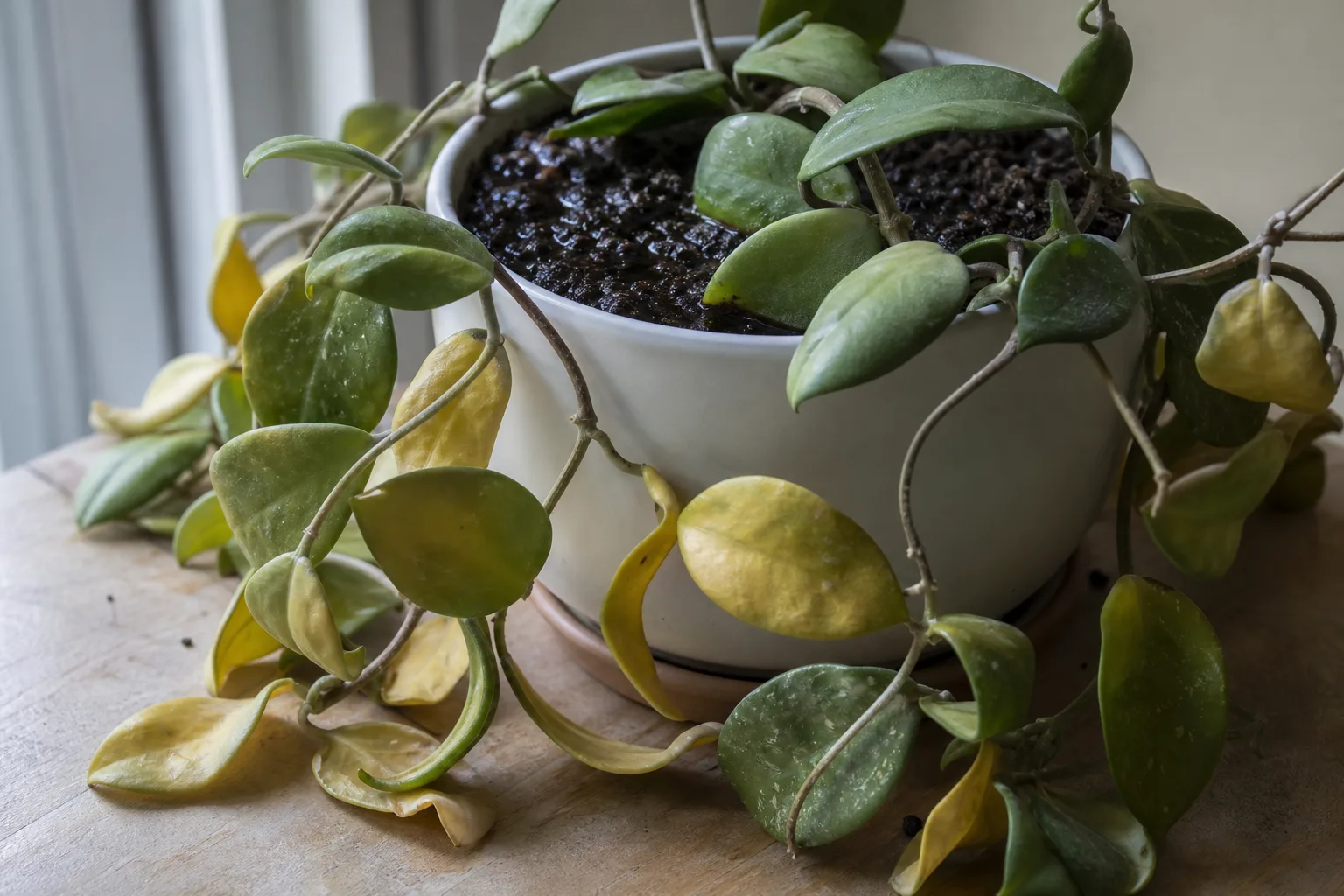
Overwatering on Hoya Carnosa: Causes, Checks & Fixes
This guide covers overwatering on Hoya Carnosa. See also the general Overwatering guide, watering, and light pages for this plant.
Overwatering on Hoya Carnosa: Causes, Checks & Fixes
Quick answer
Overwatering on Hoya carnosa (Hoya carnosa, wax plant) means the epiphytic root zone stays wet too long-roots lose oxygen, uptake fails, and thick waxy leaves can look thirsty even while sitting in saturated mix. The signature trap is soft, pliable vines on a heavy wet pot, not the crisp wrinkling you see when the mix is genuinely dry.
First step: stop watering immediately. Probe the top half of the mix at one to two inches depth near the pot edge. If soil clings cool and damp while lower leaves yellow, buds abort, or fungus gnats hover, you are overwatering-not underwatering. Let the mix dry down before the next soak. For the full dry-between workflow, see the Hoya carnosa watering guide.
What overwatering looks like on Hoya Carnosa
Wax plant stores water in thick, succulent leaves that mask root trouble longer than thin-leaved houseplants. Overwatering signs build in stages-watch for patterns together rather than one leaf in isolation.
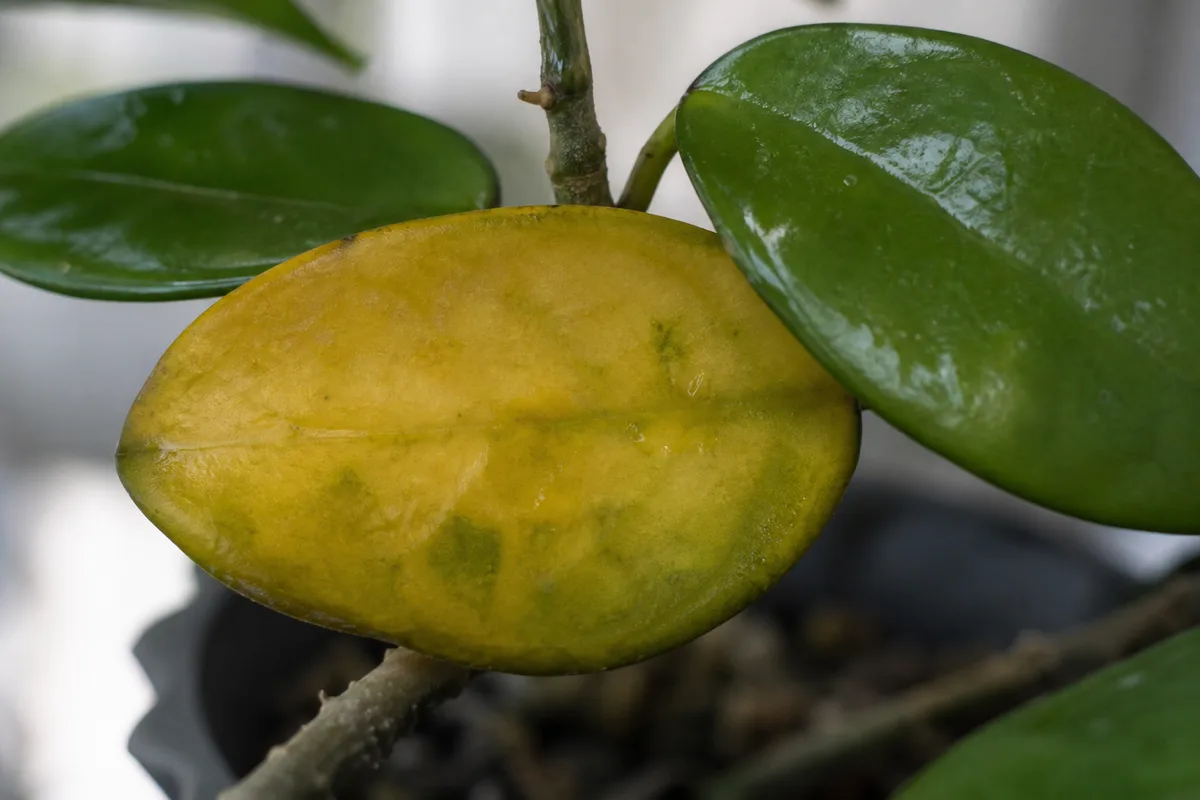
Overwatering symptoms on Hoya Carnosa - compare with healthy tissue on the same plant.
Yellow leaves, mushy stems, and dropped buds
- Yellow lower or inner leaves while the mix stays damp-not the slow fade of a single old leaf aging out on an otherwise firm vine
- Mushy stems or a soft base where vines meet the soil-rot advancing upward from the root zone
- Dropped flower buds after a heavy watering or during winter overwatering-buds are energy-expensive; roots in oxygen-poor wet mix cannot support them
- Fungus gnats hovering near the pot surface-attracted to potting mixes that are too wet on this epiphytic species
- Wilting or limp vines on a heavy wet pot on Hoya Carnosa-damaged roots cannot move water, so foliage collapses despite moisture
A single yellow leaf on dry soil between scheduled waterings may be natural senescence. Multiple yellow leaves appearing while the mix never completes a dry-down cycle is the overwatering pattern. For overlap with advanced rot, see root rot and yellow leaves.
Lookalikes: underwatering vs. natural leaf aging
The taco test-gently pinching or folding a mature leaf-separates thirst from drowning better than colour alone:
| Pattern | Pot weight | Mix at 1–2 inches | Leaf taco test | What it usually means |
|---|---|---|---|---|
| Overwatering | Heavy | Wet, cool, clings to finger | Soft, pliable on wet mix | Root stress on saturated mix |
| Underwatering | Light | Dry and crumbly | Soft on dry mix | Turgor loss from drought |
| Natural aging | Normal | Dry on schedule | Firm | One old lower leaf yellows and drops |
Wrinkled leaves on a light, dry pot point to underwatering-soak thoroughly and drain. Soft leaves on a heavy wet pot mean pause watering and assess roots, not add more water. Iowa State Extension notes that wrinkled or soft leaves with wet soil can signal damaged roots that no longer function because of overwatering.
Why Hoya Carnosa gets overwatered
Hoya carnosa evolved as an epiphytic vine gripping tree bark in Southeast Asia, Japan, and Taiwan. Its roots expect intermittent rain and constant airflow-not days of saturation in dense peat. Iowa State Extension explains that hoyas perform best indoors in an airy, fast-draining mix allowed to dry slightly between waterings, and that overwatering in poorly drained potting soil is the quickest path to root decline.
Calendar watering, oversized pots, and heavy peat mix
Calendar watering is the most common trigger. Watering every seven days because “that is what I did all summer” ignores how fast your specific pot dries. A carnosa in bright June may need water every 7–14 days; the same plant in a cool February room may hold moisture for three to four weeks without harm.
Oversized pots keep the center wet long after the surface looks pale. NC State Extension recommends Hoya Carnosa repotting guide into a container no more than two inches larger than the existing one-extra wet volume around a modest root ball suffocates epiphytic roots. Carnosa tolerates being pot-bound and often flowers better with snug roots.
Dense bagged potting soil without orchid bark or perlite holds water around fine roots longer than Hoya Carnosa overview tolerates. Clemson HGIC identifies overwatering as the most common issue leading to root rot on wax plants and recommends a 1:1:1 blend of potting soil, orchid bark, and perlite so mix dries quickly.
Standing water in saucers and cachepots after every soak recreates conditions epiphytic roots never evolved to handle. Light daily sips that keep the surface damp while the center stays stressed are another frequent mistake.
Epiphytic biology: why constant dampness kills wax plant roots
Thick waxy leaves buffer drought far better than rot. Roots in stale, airless mix lose function fast-Pythium root rot follows chronic overwatering in heavy soil, especially in low light where evaporation slows. NC State Extension notes that too wet or too dry soil can both cause leaves to drop; indoors, the wet extreme is far more dangerous for carnosa.
The practical rule from our watering guide: allow the top half of the mix to dry during active growth and a more complete dry-down in winter. A July calendar will overwater the same plant in January.
Winter slow uptake and extended wet cycles
During cool, low-light winter rest, carnosa uptake drops sharply. Growth pauses. Watering on a summer schedule leaves mix wet for weeks while the plant barely drinks-variegated cultivars like ‘Krimson Princess’ and ‘Krimson Queen’ often yellow first when the mix stays damp in dim conditions. Resume shorter summer intervals only when you see consistent new growth and the pot dries on a faster, predictable pattern again.
How to confirm the cause
Work through these checks in order before changing anything else:
- Moisture at depth - Press a finger or wooden skewer one to two inches into the mix near the pot edge. Cool, clingy soil at depth while you have been watering on schedule confirms overwatering regardless of surface colour.
- Pot weight - Lift the pot. Clemson HGIC recommends the weight test: heavy and wet means wait; light and dry with soft leaves means thirst.
- Leaf taco test - Firm stiff leaves on damp mix mean do not water. Soft pliable leaves on a heavy wet pot mean root stress, not thirst.
- Leaf pattern - Yellowing starting from lower or inner leaves while mix stays damp supports overwatering. One old leaf fading on firm vines with appropriate dry-down may be natural aging.
- Smell and pests - Sour odor, surface mold, and fungus gnats often appear when soil stays wet too long.
- Season and light - Is it winter with slow new growth and a pot that never lightens? Wet soil during semi-dormancy is high risk.
Confirmation decision table
| Check result | Likely diagnosis | First action |
|---|---|---|
| Heavy pot + wet at 1–2 inches + firm leaves | Early saturation | Stop watering; improve drainage |
| Heavy pot + wet + soft yellowing leaves | Active overwatering / early rot | Stop watering; inspect if decline continues |
| Heavy pot + sour smell + mushy stem base | Advanced rot | Unpot and trim-see root rot guide |
| Light pot + dry mix + soft wrinkled leaves | Underwatering | One thorough soak-see underwatering guide |
| Normal weight + one yellow lower leaf | Natural aging | Monitor; no schedule change needed |
The first fix to try
Stop watering. Do not give another drink until the top half of the mix is dry at one to two inches depth and the pot feels noticeably lighter than it did right after the last soak.
Empty any water sitting in the saucer or cachepot. Move to Hoya Carnosa light guide if the plant is in a dim corner so remaining moisture evaporates faster-but do not stack repotting, pruning, fertilizer, or pesticide on the same day. One correction at a time makes it obvious what helped.
If leaves stop declining after the mix dries completely and new vine tips stay firm, you likely caught the problem early. Resume watering only when finger, skewer, and weight checks agree the plant is ready-per the watering guide soak-and-dry method.
Mild cases: stop watering and improve drainage
When roots are still mostly firm and only lower leaves have yellowed:
- Let the full root ball dry down-surface colour alone is unreliable on peat-based mixes
- Ensure drainage holes are open and saucers stay empty after every future soak
- Switch from light daily sips to infrequent deep soaks once the dry-down cycle restarts
- Run the taco test before every watering: slightly soft mature leaves on a light pot mean water; firm leaves on a heavy pot mean wait
Moderate cases: unpot, trim rot, repot with airy bark-perlite mix
If yellowing continues after the surface dries, soil smells sour, or fungus gnats persist:
- Unpot and inspect - Gently slide the plant out and rinse mix from roots. Healthy hoya roots are firm and pale. Mushy brown or black roots are rot.
- Trim only rotten tissue - With clean sharp scissors, cut away soft roots back to firm material.
- Discard old wet mix - Do not reuse sour soil. Repot into fresh 1:1:1 potting soil, orchid bark, and perlite.
- Choose appropriate pot size - Use a container with drainage holes only slightly larger than the root mass-no more than two inches larger per NC State Extension.
- Hold water briefly after repot - Let the plant settle in bright indirect light. Water lightly once to settle new mix if roots were mostly healthy; wait longer if you removed substantial root tissue.
- Resume on dry-down rhythm - When you do water again, soak until runoff exits the bottom, then wait until the top half is dry at depth before the next drink.
If more than half the root mass is mushy with soft stem tissue at the base, saving the plant becomes unlikely. See the root rot guide for propagation salvage from firm vine sections above the rot line.
Recovery timeline and what to watch
Minor overwatering caught while roots are still mostly firm often stabilizes within one to two weeks once watering stops and the mix dries. Yellow leaves may not green up again, but firm new growth along vine tips confirms recovery.
Moderate cases with some root loss take several weeks to a few months. Expect old leaves to continue dropping while the plant rebuilds roots. Do not fertilize until new growth looks normal-feeding stressed roots adds salt stress.
Improvement signs: lighter pot between waterings, new firm leaves emerging along vines, peduncles holding buds through a dry-down cycle, soil that dries at a predictable pace.
Worsening signs: spreading soft stems, sour smell returning quickly after repot, wilting on wet soil, repeated bud abort after every watering-escalate to full root inspection the same day.
Dropped leaves and yellowed tissue do not revert to perfect form. Judge recovery by stable new growth and root firmness, not by old foliage greening up.
Mistakes to avoid
Do not water because leaves look sad without checking soil first-wilting is not always a sign to water. Soft foliage on a heavy wet pot is the classic trap on thick-leaved epiphytes.
Do not fertilize a waterlogged plant hoping to push new growth or replace dropped buds. Salts stress damaged roots further. Bud drop after watering is a moisture warning, not a nutrient deficiency.
Do not repot into a much larger container to “help drying.” Extra soil holds more water and stays wet longer. Do not use dense peat-only mix without bark or perlite for carnosa.
Do not resume a summer watering calendar in winter when growth slows-overwatering during rest is one of the fastest ways to drop developing buds and invite rot in a slow-moving root zone.
Do not assume wrinkled leaves always mean thirst. Run the taco test and lift the pot before every drink.
How to prevent overwatering next time
Match watering to the plant’s wet-dry cycle, not the calendar. During active summer growth, water when the top half of the mix is dry at one to two inches depth, the pot feels light, and mature leaves pass the taco test as slightly soft-typically every 7–14 days indoors in bright indirect light, but always verify with touch and weight.
During winter rest, allow a more complete dry-down before watering again-often every 3–4 weeks in cool dim rooms. The pot weight test becomes your primary signal because surface checks mislead when the plant is barely drinking.
Use loose, fast-draining potting mix high in organic matter with orchid bark and perlite, a pot with real drainage holes, and room-temperature water-NC State Extension warns that cold water can shock this plant. Always empty saucers within minutes of bottom-watering.
Learn your container’s dry-down rhythm during the first month in your home. Weigh the pot when freshly watered versus dry. That personal baseline beats any generic schedule. For seasonal intervals, variegated cultivar notes, and the full soak-and-dry technique, see the Hoya carnosa watering guide and species overview.
When to worry
Treat overwatering as urgent if several leaves fail at once, soil smells sour, stem bases soften where vines meet the mix, or the plant wilts while soil is wet. Those signs mean rot may be moving into the stem-act the same day.
Repeated bud drop after every watering during winter or on a heavy wet pot is a moisture alarm even before stems go mushy. Lengthen dry-down before chasing fertilizer or light changes.
Slow yellowing on one or two lower leaves with soil drying normally between waterings can wait for a schedule adjustment. But wet soil plus rapid multi-leaf drop should not wait through another watering cycle.
If you are unsure whether roots are healthy, unpot and look. A five-minute inspection prevents weeks of guessing. For advanced rescue, see root rot. For the wet-mix pest companion, see fungus gnats.
Conclusion
Overwatering is among the most common indoor plant problems-and the number-one killer of Hoya carnosa indoors. Thick waxy leaves store water and forgive missed drinks far more willingly than they forgive soggy, airless mix. Stop watering, confirm the heavy-pot wet-soil pattern with the taco test, then let the top half of the mix dry before you adjust anything else. Firm new vine growth-not perfect old leaves-is how you know carnosa is recovering. Match water to how fast your pot actually dries in your light and season, and this epiphytic collector’s plant stays healthy enough to reward you with those fragrant porcelain blooms.
When to use this page vs other Hoya Carnosa guides
- Hoya Carnosa watering guide - Use for routine moisture checks before assuming overwatering is the main issue.
- Hoya Carnosa problems hub - Browse all 17 common issues on this species.
- Root Rot on Hoya Carnosa - Different entry point when symptoms overlap with overwatering.
- Yellow Leaves on Hoya Carnosa - Different entry point when symptoms overlap with overwatering.
- Wilting on Hoya Carnosa - Different entry point when symptoms overlap with overwatering.