Mold on Soil on Hoya Carnosa: Causes, Checks & Fixes
Quick answer
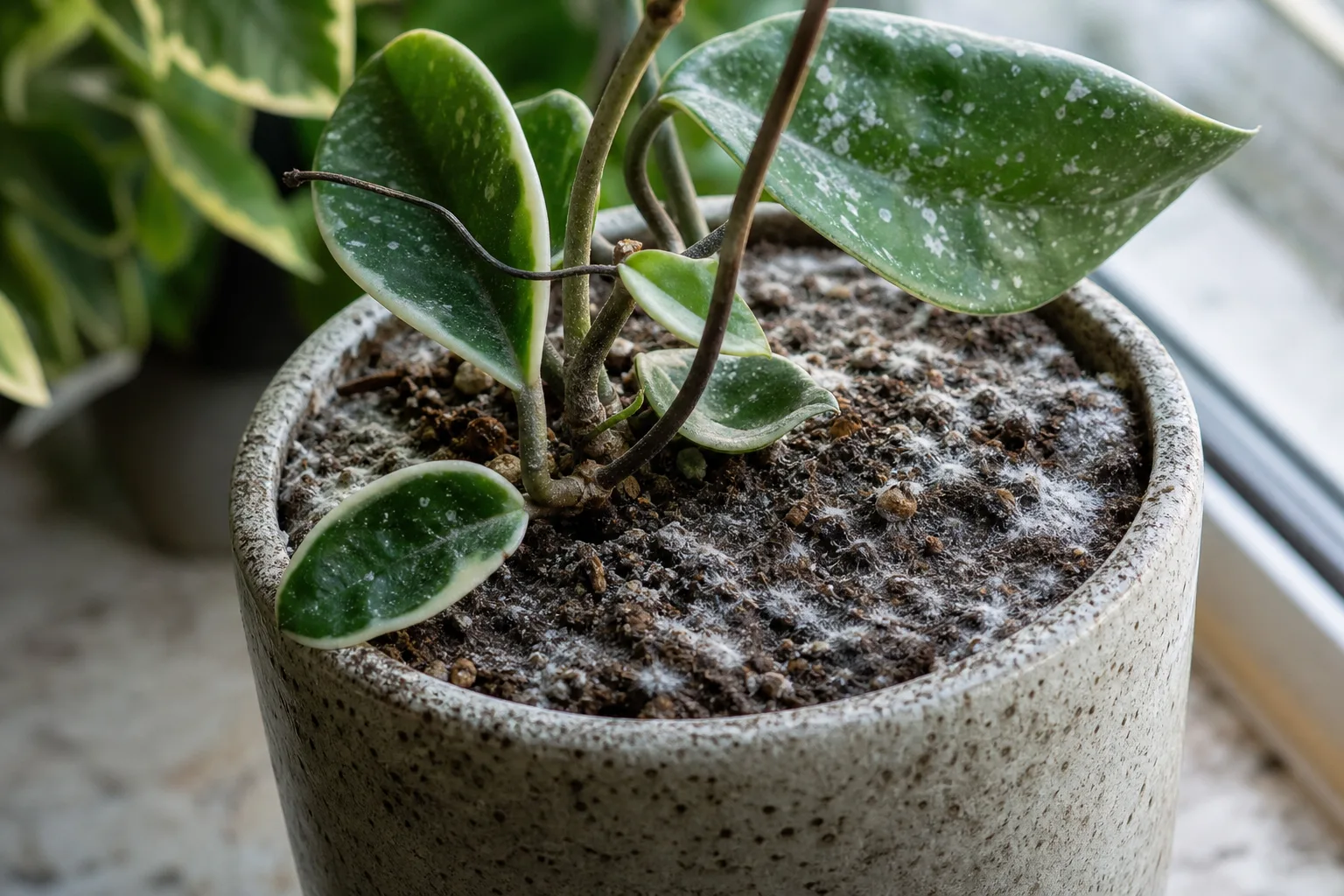
Fluffy white or gray mold on Hoya Carnosa's soil is almost always harmless surface fungus feeding on wet organic mix-not a leaf disease. First step: scrape off the top quarter-inch and pause watering until the upper half of the mix dries.
Mold on Soil on Hoya Carnosa: Causes, Checks & Fixes
This guide covers mold on soil on Hoya Carnosa. See also the general Mold on Soil guide, watering, and light pages for this plant.
Mold on Soil on Hoya Carnosa: Causes, Checks & Fixes
Quick answer
Fluffy white or gray mold on your wax plant’s soil is usually saprophytic fungus-organisms breaking down organic matter in a mix that has stayed wet too long at the surface. It is not the same as powdery mildew on leaves or the black sooty film that follows sap-sucking pests.
Hoya Carnosa stores water in its thick, waxy leaves and prefers a dry-then-drink rhythm. When the top of the pot never dries, surface mold is a warning that your watering, pot size, or mix may be edging toward the overwatering on Hoya Carnosa problems Hoya Carnosa overview is known for.
First step: scrape off the top quarter-inch of moldy mix and stop watering until the upper half of the soil feels dry. Do not reach for fungicide on a healthy-looking plant. Fix the moisture pattern first, then watch whether new growth stays firm over the next two weeks.
What mold on soil looks like on Hoya Carnosa
On a wax plant, soil mold almost always starts on the surface, not on the foliage. Typical signs include:
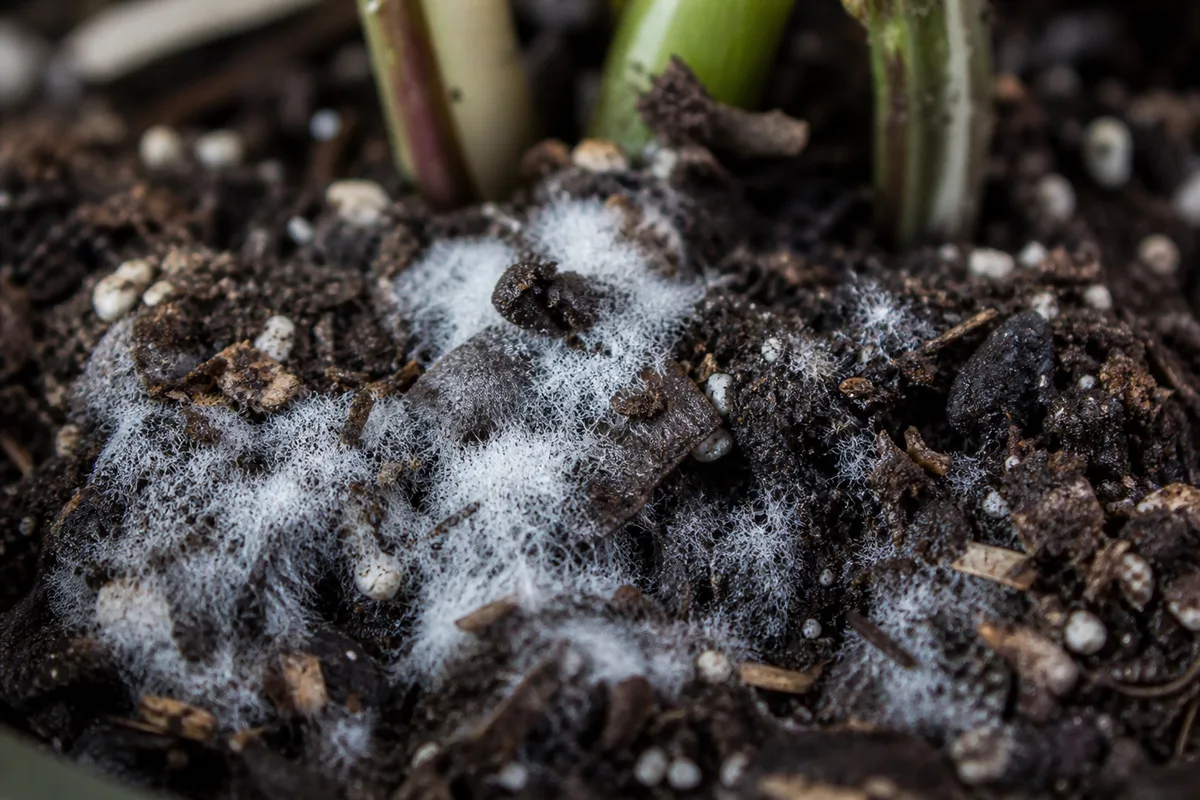
Mold on Soil symptoms on Hoya Carnosa - compare with healthy tissue on the same plant.
- White, gray, or occasionally yellow-tan fuzzy patches on top of the mix
- A thread-like mat (mycelium) spreading across damp soil after watering
- Surface that stays dark and cool for many days while vines and leaves still look normal
- Musty smell near the pot rim in chronic cases
- Fallen leaves or bark chips on the soil acting as food for the fungus
- Small fungus gnats hovering around the same pot
Healthy Hoya Carnosa leaves stay firm and slightly succulent. Waxy green (or variegated) foliage should not be coated in fuzz unless you are dealing with a different problem-pests, high humidity on leaves, or sooty mold from honeydew.
Soil mold alone rarely wilts a Hoya. If vines are limp while the mix is wet, yellow lower leaves are spreading, or stems feel soft at the soil line, treat that as possible root stress from overwatering, not cosmetic surface fungus.
Lookalikes worth separating
- Green algae on the rim - constant surface moisture plus low light; same fix (dry the surface, brighten indirect light slightly).
- Sooty mold on leaves - black, wipeable film from mealybugs, aphids, or scale; scrub leaves and treat pests, not just the soil.
- Powdery mildew on foliage - white dust on leaf surfaces in stagnant humid air; rare on Hoya compared with soil-surface fungus.
- Mineral crust - hard white buildup from hard water; scrape and flush, not a living mold.
Why Hoya Carnosa gets mold on soil
Hoyas evolved as epiphytes-climbing and trailing on bark with roots exposed to air. Hoya carnosa has semi-succulent leaves that hold moisture, so the root zone should cycle between dry and moist, not stay continuously damp at the top.
Several Hoya-specific habits make surface mold more likely indoors:
Watering before the mix has dried. Allow the top half to dry in summer and more complete drying during winter rest. Watering on a calendar-every Sunday, for example-ignores how fast your home evaporates moisture. A trailing Hoya in a cool north window uses far less water than the same plant in bright spring growth.
Heavy or peat-rich mix in a large pot. Standard bagged potting soil without bark and perlite holds water at the surface. Hoyas prefer being slightly pot-bound; an oversized container surrounds a small root ball with a wide wet zone that never dries on top.
Low light slowing evaporation. Hoya Carnosa needs Hoya Carnosa light guide for steady growth. In dim corners, the plant drinks slowly while you keep watering, so the surface stays wet and organic particles feed mold.
Organic debris on the soil. Trailing vines drop older leaves onto the mix. Bark fines, slow-release fertilizer granules, and top-dressed moss all give saprophytic fungi something to colonize once moisture lingers.
Poor airflow around grouped pots. Dense plant shelves or decorative pot covers trap humidity at the soil line-especially under hanging baskets where splash from watering hits the surface repeatedly.
Winter overwatering during rest. From late fall through early spring, Hoya Carnosa growth slows and root uptake drops. The same summer watering volume in cool, short-day conditions leaves the mix wet for weeks-a classic setup for mold and, if ignored, root decline.
Surface mold is usually not pathogenic to the plant directly, but it flags conditions that also attract fungus gnats and root oxygen loss when saturation persists deeper in the pot.
How to confirm the cause
Work through these checks before Hoya Carnosa repotting guide or spraying:
- Leaf and stem firmness - Pinch a mature leaf; it should feel thick and springy, not soft or yellowing. Stems at the soil line should be stiff, not mushy.
- Surface moisture - Is the top inch damp when you have not watered for five to seven days? That confirms chronic wetness, not a one-time splash.
- Depth check - Stick a finger halfway down. For Hoya Carnosa in active growth, that layer should dry before the next drink. Wet deep mix with a light, firm plant may still mean you are watering too soon.
- Pot weight - Lift the container. A Hoya pot that never feels noticeably lighter between waterings is holding too much moisture.
- Pot and mix audit - Drainage holes open? Mix chunky with bark and perlite, or dense peat? Pot much larger than the root ball?
- Light and season - Short winter days plus frequent watering is a common mismatch for wax plants.
- Pest scan - Sticky leaves or white cottony clusters in leaf axils suggest mealybugs; black leaf film means sooty mold, not soil fungus.
- Smell and roots (if worried) - Sour odor or black, mushy roots when you unpot means escalate beyond a surface scrape.
If only the topsoil is fuzzy, leaves are firm, and stems are sound, you have confirmed harmless surface mold tied to moisture culture-not an airborne leaf disease.
First fix for Hoya Carnosa
Scrape off the top quarter-inch of moldy soil and pause watering until the upper half of the mix is dry.
Use a spoon or fork to remove and discard the upper layer of fuzzy mix and any visible leaf litter with it. Discard that material in the trash, not the compost pile indoors. Leave the plant in place-do not repot on day one for mild surface mold alone.
After scraping:
- Wait until the top half of the pot feels dry before watering again (more complete drying in winter).
- Empty the saucer within thirty minutes if you bottom-water.
- Brush fallen leaves off the soil surface when you see them.
- Move the pot to brighter indirect light if it sits in a dim spot-faster evaporation helps the surface stay clean.
Only if mold returns within a few days after the mix has genuinely dried should you repot the top inch with fresh, dry epiphytic mix or reassess pot size.
Step-by-step recovery
Once you have scraped and dried the surface, follow this order:
- Days 1–3 - No watering. Let air reach the exposed soil. Gently loosen any crust if water beads on the surface instead of soaking in.
- First drink - Water lightly from the bottom or top until a little runs from drainage holes, then stop. Do not soak a Hoya that has been wet for weeks.
- Week 1–2 - Watch for new fuzzy growth. None, plus firm leaves, means the fix is working.
- If gnats appear - Let the top two inches dry between waterings and use yellow sticky traps; drying the mix breaks their life cycle.
- If yellow leaves continue on wet mix - Unpot and inspect roots. Trim brown mushy roots, let cuts callus a few hours, repot into fresh bark-heavy mix in a right-sized pot.
Do not fertilize until new growth looks normal and the Hoya Carnosa watering guide is stable. Feeding a waterlogged Hoya adds salt stress without solving the mold source.
Recovery timeline
Surface mold should disappear within a few days to two weeks once the top layer stays dry. You will not “heal” the old fuzz-it simply stops forming when conditions change.
Signs the problem is resolving:
- Dry, lighter-colored soil surface between waterings
- No new white mat after scraping
- Firm leaves and active peduncles or new vines
- Fewer or no fungus gnats
Signs you need a deeper fix:
- Mold returns within 48 hours of scraping while the mix is still wet
- Lower leaves yellowing in clusters
- Soft stem tissue at the soil line
- Sour smell from drainage holes
- Wilting despite wet soil (root damage)
Yellow leaves from past overwatering may not green up again; judge recovery by new firm leaves, not old ones.
Mistakes to avoid
- Spraying fungicide first on a healthy Hoya with only surface mold-culture change works and avoids unnecessary chemicals.
- Cinnamon or baking soda as a substitute for drying the mix-cosmetic at best if the pot stays saturated.
- Repotting into a bigger container “to freshen soil”-extra wet volume worsens Hoya root rot on Hoya Carnosa risk.
- Watering on a fixed schedule instead of checking whether the top half is dry.
- Overhead splashing onto trailing vines that sheds organic debris onto wet soil.
- Ignoring gnats-they signal the same damp mix that supports mold and can stress roots in heavy infestations.
- Confusing soil mold with sooty leaf mold and only cleaning the pot while mealybugs keep dripping honeydew.
How to prevent mold on soil next time
Build prevention around how Hoya Carnosa actually uses water:
- Water when the top half of mix is dry in spring and summer; allow more complete drying during winter rest.
- Use epiphytic mix-potting soil amended with perlite and orchid bark-for fast drainage.
- Keep Hoyas slightly snug in their pots; upsize only when roots circle heavily and the pot dries in a day or two after every watering.
- Bottom-water or water carefully at the soil line so the surface stays drier between drinks.
- Remove fallen leaves from the pot surface promptly.
- Provide bright indirect light so the plant uses water at a predictable rate.
- Space pots for gentle airflow, especially on crowded shelves.
- Skip decorative moss toppers that hold moisture against the mix.
A wax plant with dry surface soil, firm leaves, and seasonal bloom cycles is far less likely to grow mold-even in humid homes.
When to worry
Soil mold alone on an otherwise firm Hoya Carnosa is low urgency. Treat it as a moisture audit, not a crisis.
Escalate promptly if:
- Stems blacken or soften at the base while soil stays wet
- More than a third of roots are mushy on inspection
- Mold, gnats, and yellowing leaves appear together and keep spreading after two weeks of corrected watering
- The mix smells rotten or drains slower than it used to (possible breakdown of peat or salt crust)
In those cases, stop watering, unpot, trim rot to firm tissue, and repot dry into fresh chunky mix. Take cuttings from healthy vine tips if basal rot is advancing-Hoya Carnosa roots easily from stem nodes when the mother plant is failing.
For most owners, scraping the surface and drying the mix is enough. The mold is telling you the wax plant wants less moisture at the top-not that the plant is doomed.
When to use this page vs other Hoya Carnosa guides
- Hoya Carnosa watering guide - Use for routine moisture checks before assuming mold on soil is the main issue.
- Hoya Carnosa problems hub - Browse all 17 common issues on this species.
- Fungus Gnats on Hoya Carnosa - Different entry point when symptoms overlap with mold on soil.
- Overwatering on Hoya Carnosa - Different entry point when symptoms overlap with mold on soil.
- Root Rot on Hoya Carnosa - Different entry point when symptoms overlap with mold on soil.