Slow Growth on Hoya Carnosa: Causes, Checks & Fixes
Quick answer
Hoya Carnosa grows slowly to moderately indoors-faster in bright warm months, noticeably slower in cool dim winters. First step: count new nodes from the last eight weeks, check peduncle formation on mature vines, and measure window distance before fertilizing or repotting.
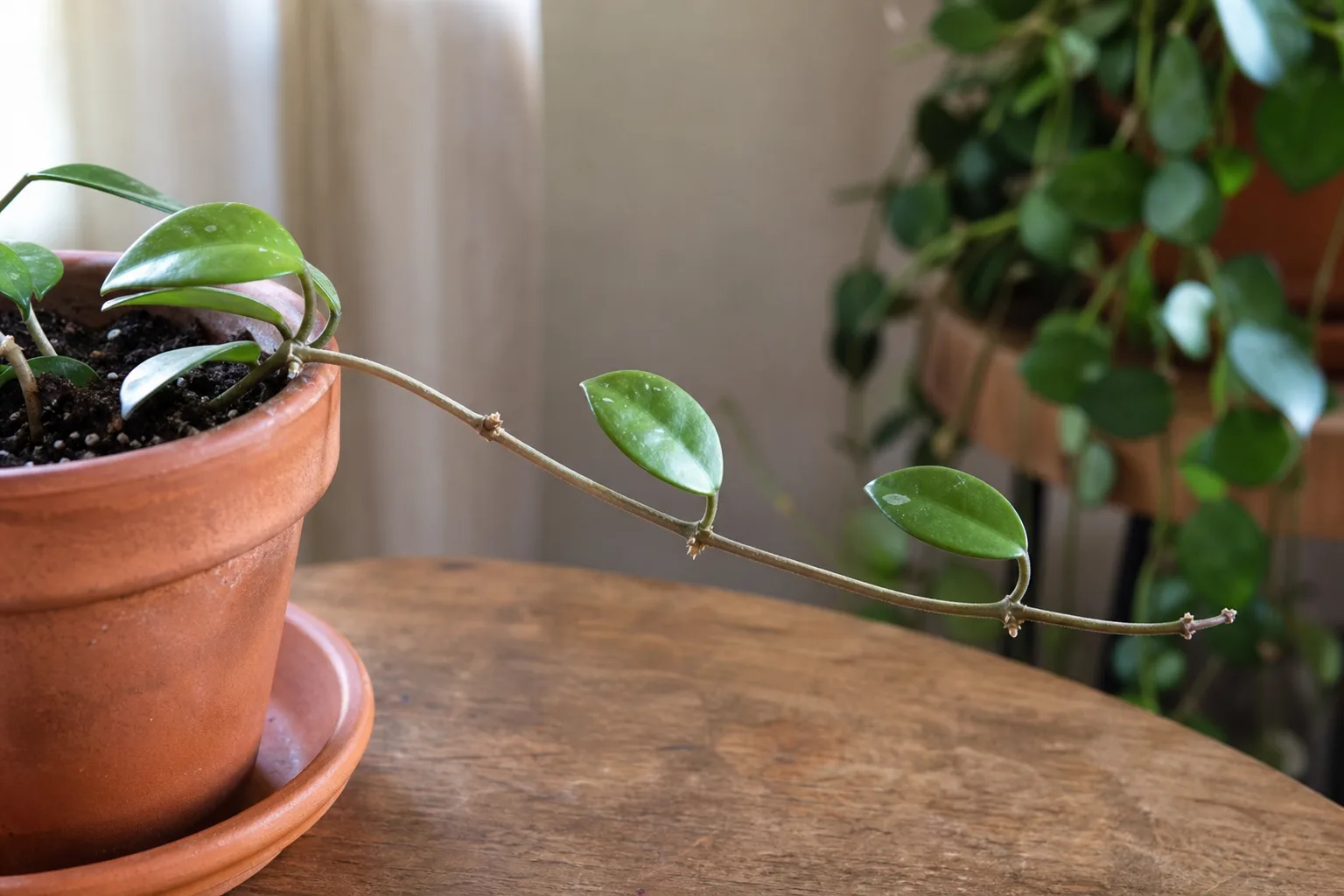
Slow Growth on Hoya Carnosa: Causes, Checks & Fixes
This guide covers slow growth on Hoya Carnosa. See also the general Slow Growth guide, watering, and light pages for this plant.
Slow Growth on Hoya Carnosa: Causes, Checks & Fixes
Quick answer
Hoya Carnosa (Hoya carnosa, wax plant) is sold as easy-going because it survives mediocre care-but its natural pace is slow to moderate, not fast filler growth. In bright warm months you may see a new node pair every few weeks; in a cool dim winter, zero new vine length for six to eight weeks with firm waxy leaves is often normal semi-dormancy, not a death spiral.
Slow becomes a problem when no new nodes appear through an entire warm spring despite stable watering, when every new leaf arrives smaller and paler than the last, or when mature vines produce no peduncles year after year in a room you assumed was bright enough.
First step: audit the newest growth point. Count nodes added in the last eight weeks, measure internode spacing on the last two leaf pairs, note peduncle count on mature vines, check window distance, and probe soil moisture at depth-before fertilizing, repotting, or pruning.
What slow growth looks like on Hoya Carnosa
On wax plant, stall reads on active vine tips and node frequency, not on how long the trailing stems already are.
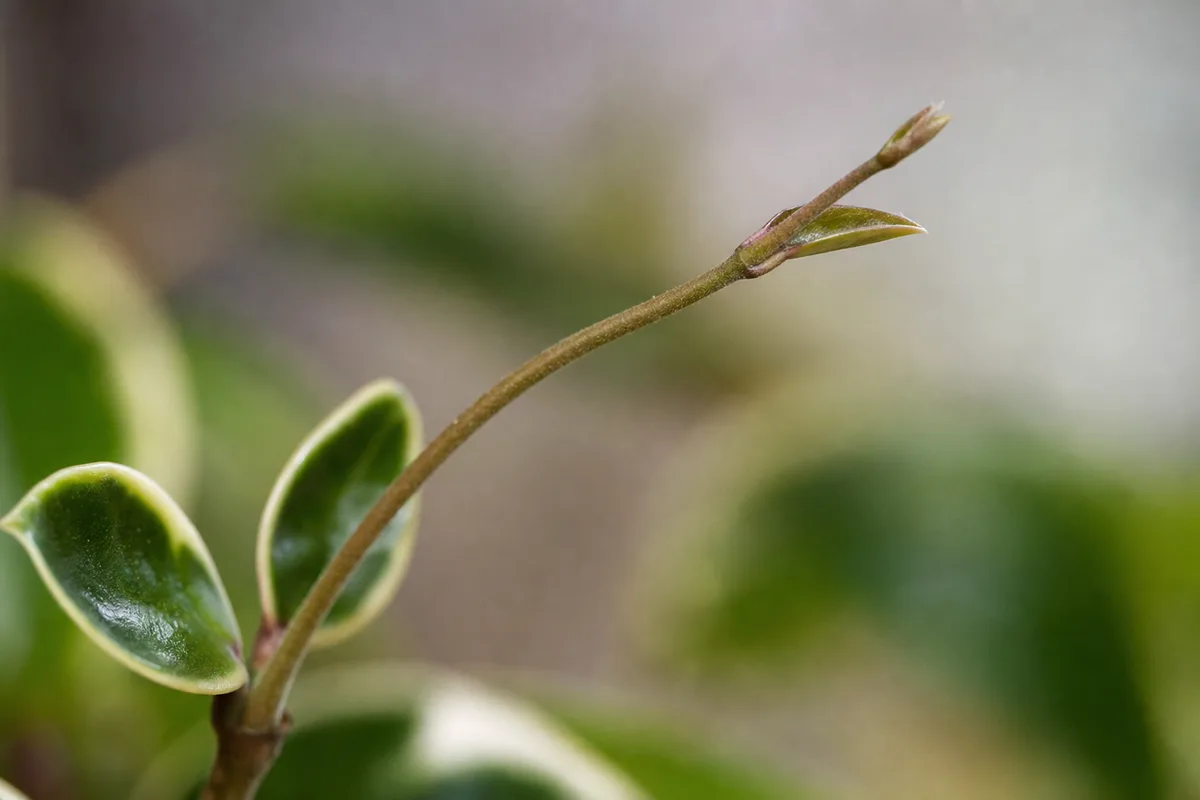
Slow Growth symptoms on Hoya Carnosa - compare with healthy tissue on the same plant.
Typical signs of pathological slow growth:
- No new nodes through warm months - the same vine tip sits unchanged from April through August despite stable care
- Absent peduncles - mature vines three or more years old with zero bloom spurs while foliage looks otherwise healthy
- Compact but thin new leaves - recent foliage smaller and duller than older leaves, with short internodes (general stall, not stretch)
- Wet soil persisting weeks - top half of mix still damp 10 to 14 days after watering while growth is flat
- Very fast dry-down with no flush - pot dries in two to three days in summer but tips stay dormant (possible severe root-binding or root decline)
Not the same as leggy growth. Low light produces long gaps between leaf pairs as the vine searches for photons-that is etiolation, covered in the not-enough-light guide. True slow growth often shows short spacing but little forward progress, or no new tissue at all at the tip.
Variegated Krimson Queen and Krimson Princess stall sooner in medium interior light: pale zones wash out, margins brown, or growth flatlines while solid-green carnosa in the same room still pushes occasional nodes.
What’s normal: baseline growth rate and winter rest
Hoya carnosa is an epiphytic Apocynaceae vine native to Southeast Asia, Japan, and Taiwan. Missouri Botanical Garden describes indoor growth as slow to moderate, reaching roughly 60 to 120 cm (2 to 4 feet) over years-not weeks. (Missouri Botanical Garden)
Expect:
- Spring through early fall - faster metabolism in bright indirect light; several inches of vine and periodic node pairs when light, water, and roots align
- Late fall through winter - reduced transpiration, longer dry-down intervals, and often little visible vine extension even in healthy plants
- Compacta (Hindu rope) - inherently slower contorted growth; compare against its own past nodes, not standard carnosa speed
- Post-repot pause - two to four weeks of stall after root disturbance is normal; panic repotting compounds the issue
Winter rest is not dark dormancy. NC State Extension notes wax plant tolerates less bright light and less watering in winter without demanding a blackout. Firm leaves, stable color, and zero new nodes in January fit rest. Zero nodes through May in a bright room does not.
Why Hoya Carnosa stops growing
Human patience and pothos expectations misread carnosa’s biology. These are the common limiters, ranked by how often they stall otherwise healthy vines indoors.
Insufficient light
The primary indoor throttle. Good light is necessary for flower production and compact growth on this species. Dim rooms keep carnosa alive while vine tips stall and peduncles never form. Low light also slows transpiration, so the same watering schedule leaves mix wet longer-a root-stress loop detailed in the light guide and not-enough-light page.
Root-bound or degraded mix
Hoya carnosa tolerates being slightly root-bound and may bloom better snug-but severe girdling limits water and nutrient uptake. Signs: roots circling drainage holes, water running through in seconds, pot drying unnaturally fast, stall despite bright placement. Fresh chunky mix restores function; see repotting guide.
Oversized container
Counterintuitive but common. A pot much larger than the root ball holds wet mix around a small root zone. Energy diverts to root exploration instead of vine extension. NC State recommends repotting no more than 2 inches larger than the existing container-oversized upgrades often delay growth and bloom.
Nutrient depletion during active season only
Carnosa is a light feeder. Years in the same mix without spring-through-summer feeding can produce pale, small new leaves in otherwise bright conditions. Fertilizer cannot replace photons-see fertilizer guide. RHS describes hoyas as needing only light feeding.
Chronic overwatering root stress in low light
Wet, airless mix in a dim corner stalls growth before leaves yellow dramatically. Fungus gnats, sour smell, and soft lower stems mean roots-not light alone-need attention. Cross-check overwatering and root rot pages.
Underwatering and drought stall
Repeated bone-dry cycles in bright summer rooms weaken fine roots and pause vine tips. Wrinkled leaves plus light, dry pot signal thirst-see underwatering guide.
Cool temperatures and seasonal slowdown
Sustained temperatures below about 50°F (10°C) outdoor tolerance slow metabolism sharply indoors as well. Drafty winter window sills where leaves touch cold glass compound stall. Brief cool nights can support bloom cues; chronic cold plus wet soil stalls growth.
Relocation or repot shock
Moving pots, bare-rooting, or stacking stressors the same week pauses growth for two to four weeks even when care is otherwise correct. Judge only after the plant sits stable in one bright spot.
Pest feeding during growing season
Mealybugs and spider mites sap vigor before obvious collapse. Inspect leaf axils and undersides weekly on stalled plants-especially in dry winter air.
Lookalike symptoms to rule out
| Pattern | Likely cause | Key check |
|---|---|---|
| Long internodes, vine reaching toward window | Low light (leggy growth) | Gap between last two leaf pairs longer than leaf width |
| Zero nodes Nov–Feb, firm waxy leaves | Winter rest (normal) | Resume tracking in March; growth should return in bright conditions |
| Zero nodes Apr–Aug, wet soil 2+ weeks | Low light + overwatering trap | Window distance; soil moisture at depth |
| Zero nodes, pot dries in 2–3 days, roots at holes | Severe root-bound or degraded mix | Slide plant out; inspect root mat |
| Zero nodes, huge pot, damp center mix | Oversized container | Pot diameter vs. root mass |
| Zero nodes 2–4 weeks after repot, firm leaves | Repot shock (normal pause) | Wait; do not repot again |
| Small pale new leaves, bright window, old mix | Nutrient depletion | Feed only after light and water stable |
| Stippling, webbing, cottony axils | Pests | Treat before fertilizing or repotting |
How to confirm the cause
Work through this numbered checklist in order-season and light before pot surgery:
- Season check - Is it late fall through February in a cool room? If yes, winter rest is likely until March light returns. If it is warm spring with long days and still zero nodes, continue.
- New node count - Mark the current vine tip. Count nodes added in the last eight weeks. Zero in summer is abnormal; zero in January may not be.
- Internode spacing - Measure the gap between the last two leaf pairs. Long gaps point to leggy growth from light shortage; short gaps with no forward tip growth point to root, water, or nutrient limits.
- Peduncle inventory - Mature vines often need two to three years before first bloom when conditions align. A five-year-old plant with zero peduncles in a north room is a light problem until proven otherwise.
- Window distance - Stand where the pot sits at midday. Leaves should receive strong ambient brightness within about 12 inches of suitable glass. Bright enough to cast a faint shadow but not harsh direct sun is the useful band.
- Soil moisture rhythm - Probe halfway into the mix. Wet for two weeks with no growth suggests low transpiration from dim light or overwatering. Dry in two to three days with stall suggests root-binding or underwatering stress.
- Pot size vs. root mass - Slide the plant out gently. Circling white roots filling 80 percent of the pot differ from a small root ball swimming in a large wet container.
- Leaf firmness - Stiff waxy leaves with wet soil suggest root dysfunction. Soft wrinkled leaves with dry soil suggest drought stall.
- Pest scan - Check axils and undersides for mealybugs, scale, and spider mite stippling on newest growth.
Two-week trial: If light is the prime suspect, move to the brightest suitable window without changing water, feed, or pot. If the next node arrives closer and firmer, light was the limiter.
First fix for Hoya Carnosa
Match the first fix to the confirmed bottleneck-not a bundle of changes.
| Confirmed cause | First fix |
|---|---|
| Dim placement / zero summer nodes | Move within 12 inches of east glass or filtered south/west window |
| Wet soil weeks + dim room | Improve light and lengthen dry-down before next drink |
| Severe root-bound + bright light + fast dry-down | Repot one size up in chunky epiphytic mix in early spring |
| Oversized pot + damp center mix | Downsize or wait through one dry cycle; do not water on old schedule |
| Pale small new leaves in bright active growth | One quarter-strength feed on moist soil after two weeks of stable growth |
| Bone-dry cycles + wrinkled leaves | One thorough soak; see watering guide |
| Pests on new growth | Isolate and treat before any feed or repot |
When multiple issues overlap, light and moisture come before fertilizer and repotting. Hoya dislikes stacked stress.
If you have not confirmed the cause yet, default first action: audit placement and count newest nodes before touching the pot.
Step-by-step recovery by cause
After light correction
- Move pot within 12 inches of brightest suitable window-or add a full-spectrum LED 12 to 18 inches above the canopy for 12 to 14 hours daily.
- Hold watering steady initially; brighter placement dries the pot faster-recheck rhythm after two weeks.
- Wait for two nodes of new growth before judging; old vine length does not shrink.
- Add grow-light hours in winter if internodes lengthen again November through February.
After watering correction
- If soil stays wet: let top half dry fully; verify drainage holes and empty saucers.
- If soil dries too fast with stall: confirm root-bound status before assuming thirst.
- Resume soak-and-dry rhythm from the watering guide-never calendar watering.
After repotting (only when root-bound or mix failed)
- Repot in early spring when not in bud or flower.
- Go up one pot size only with bark-perlite mix.
- Minimal root disturbance-do not bare-root.
- Water once lightly, then return to dry-down checks; expect two to four weeks before new nodes.
After nutrient correction
- Confirm bright light and stable watering for two weeks.
- Apply quarter-strength balanced feed on moist soil every two to four weeks during active growth only.
- Pause through winter regardless of stall anxiety.
Recovery timeline
Judge recovery by new nodes and peduncles, not old vine length.
- Light increase in active season - next node pair often visible within two to four weeks; compact habit across several nodes takes six to ten weeks
- Watering correction - wrinkled leaves may firm within days; new nodes follow in two to three weeks if roots are healthy
- Repot recovery - expect two to four weeks of pause, then gradual resumption through spring
- Winter interventions - little above-soil change until day length rises in late February or March even when placement improves
Worsening signs: soft stems with sour soil (root decline-inspect immediately), bleach patches on new leaves (too much direct sun-filter), or continued zero nodes through May in a bright room (deeper root or pest issue).
What not to do
Do not fertilize a stalled dim Hoya hoping to force growth-salts stress roots without supplying photons.
Do not repot before checking light and moisture-root disturbance on a stressed epiphyte compounds stall.
Do not jump to an oversized pot to “give it room”-wet idle mix delays vines further.
Do not stack repot, prune, feed, and relocate the same week-change one variable, watch two nodes, then adjust.
Do not prune peduncles while diagnosing bloom-related stall-those stubs are reusable flower sites for years.
Do not mistake winter rest for failure and overwater a cool, slow plant-soggy winter soil stalls spring growth.
How to prevent slow growth on Hoya Carnosa
Place carnosa where light hits leaves within a foot of suitable glass-not where the basket looks best across the room. Match soak-and-dry watering to seasonal dry-down; stretch winter intervals deliberately. Keep slightly snug pots with chunky mix rather than oversized decorative containers. Feed lightly only during active growth. Inspect pests on newest nodes monthly. Track node count per season on a trailing vine so normal slow pace does not read as crisis.
When repotting or feeding is appropriate
Repot when roots circle drainage holes, mix no longer drains or retains water properly, or water races through in seconds-typically spring, when not flowering, one size up only.
Feed when new growth is active in bright conditions and leaves look pale despite correct light and water-quarter to half strength, every two to four weeks spring through summer, per Clemson HGIC hoya guidance.
Do neither during winter stall, within two weeks of repotting, or while soil stays chronically wet in a dim room.
When to worry
Treat as urgent when soft stems, sour soil, or widespread yellowing accompany stall-that suggests root decline, not patience. Also escalate when zero nodes persist through a warm May after honest bright placement, or when pests coat new growth during the active season.
Normal winter pause with firm leaves in a cool room is not urgent. Resume tracking when March light strengthens.
Conclusion
Slow growth on Hoya Carnosa is often normal seasonal rhythm misread as failure-or low light and root-zone mismatch misread as a mystery disease. Confirm by counting newest nodes, checking peduncles, measuring window distance, and reading soil dry-down against the season. Fix light and moisture before fertilizer and repotting, judge recovery on the next compact nodes, and accept that wax plant will never grow like pothos. That patience is the species-not a problem you failed to solve.
Related Hoya Carnosa guides
- Hoya carnosa overview - slow-to-moderate baseline growth and seasonal variation
- Light requirements - growth rate and bloom gate
- Watering - winter rest and growth pause
- Fertilizer - feeding during active growth only
- Repotting - root-binding and pot-size effects
- Not enough light - stall and stretch from low light
- Leggy growth - differentiate stretch from general stall
- Underwatering - drought stall vs. overwatering root stress
- Overwatering - wet-soil stall in dim rooms
- Root rot - chronic wet mix and stalled tips