Not Enough Light on Hoya Carnosa: Causes, Checks & Fixes
Quick answer
Hoya Carnosa in too little light stretches between leaves, blooms rarely, and dries its pot slowly. First step: move the plant within a foot of your brightest suitable window before changing water, fertilizer, or pot size.
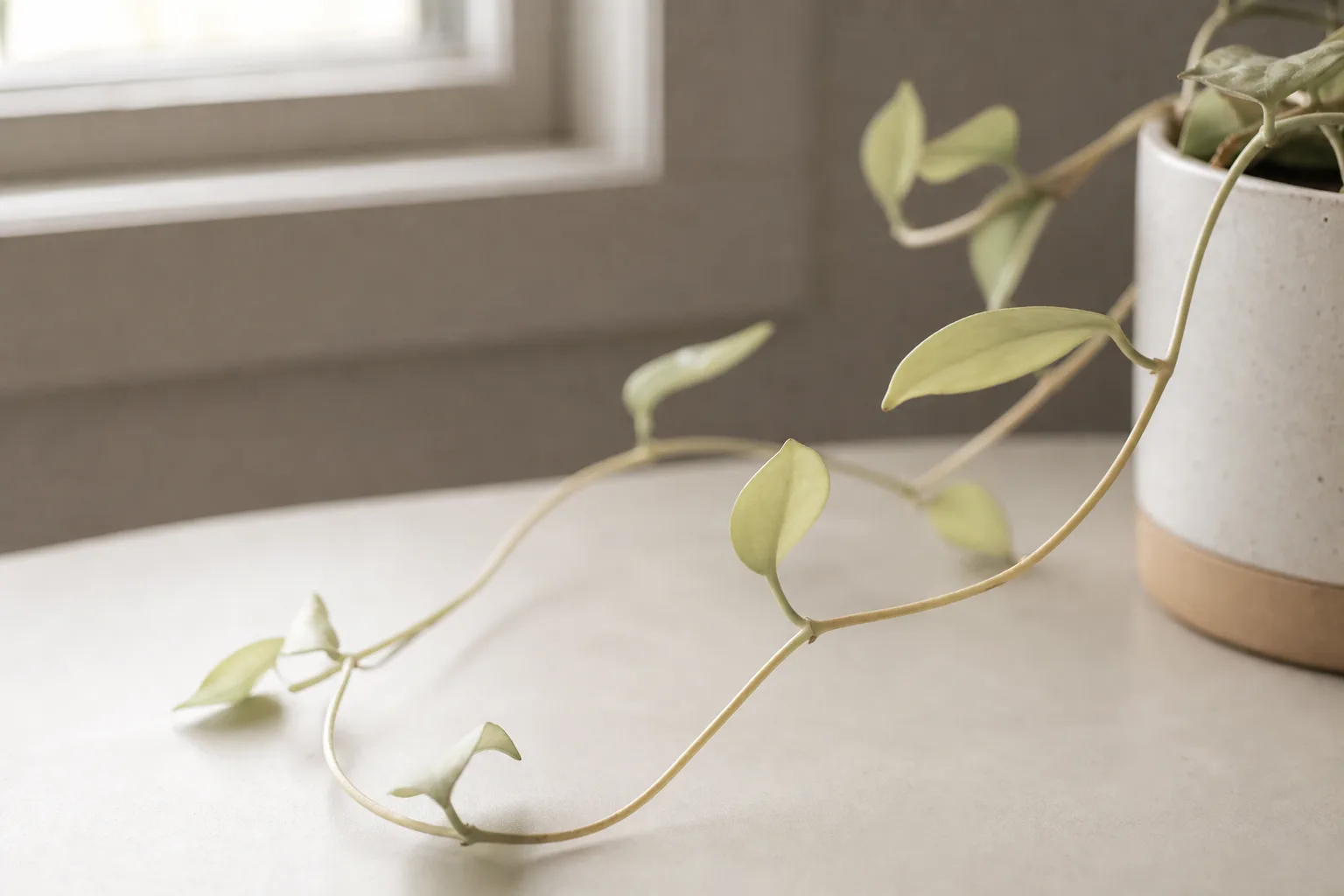
Not Enough Light on Hoya Carnosa: Causes, Checks & Fixes
This guide covers not enough light on Hoya Carnosa. See also the general Not Enough Light guide, watering, and light pages for this plant.
Not Enough Light on Hoya Carnosa: Causes, Checks & Fixes
Quick answer
Hoya Carnosa (Hoya carnosa, wax plant) is sold as easy-going, but it is not a shade plant. In habitat it climbs into filtered canopy light; indoors it needs Hoya Carnosa light guide for most of the day to build dense foliage and the peduncles that carry porcelain flower clusters. When photons fall short, the vine stretches toward the brightest source, new leaves arrive smaller and duller, and blooms stop even if everything else looks fine.
First step: move the pot to your brightest safe window-within about 12 inches (30 cm) of east glass, or filtered south or west exposure-before you change watering, fertilizer, or pot size. Hoya stores water in thick leaves, so a dim plant that barely transpires can sit in wet mix for weeks; fixing light often matters more than adding another drink.
What not enough light looks like on Hoya Carnosa
Low light on wax plant reads on new growth first. Older leaves may still look plump and green while the active tip tells the truth.
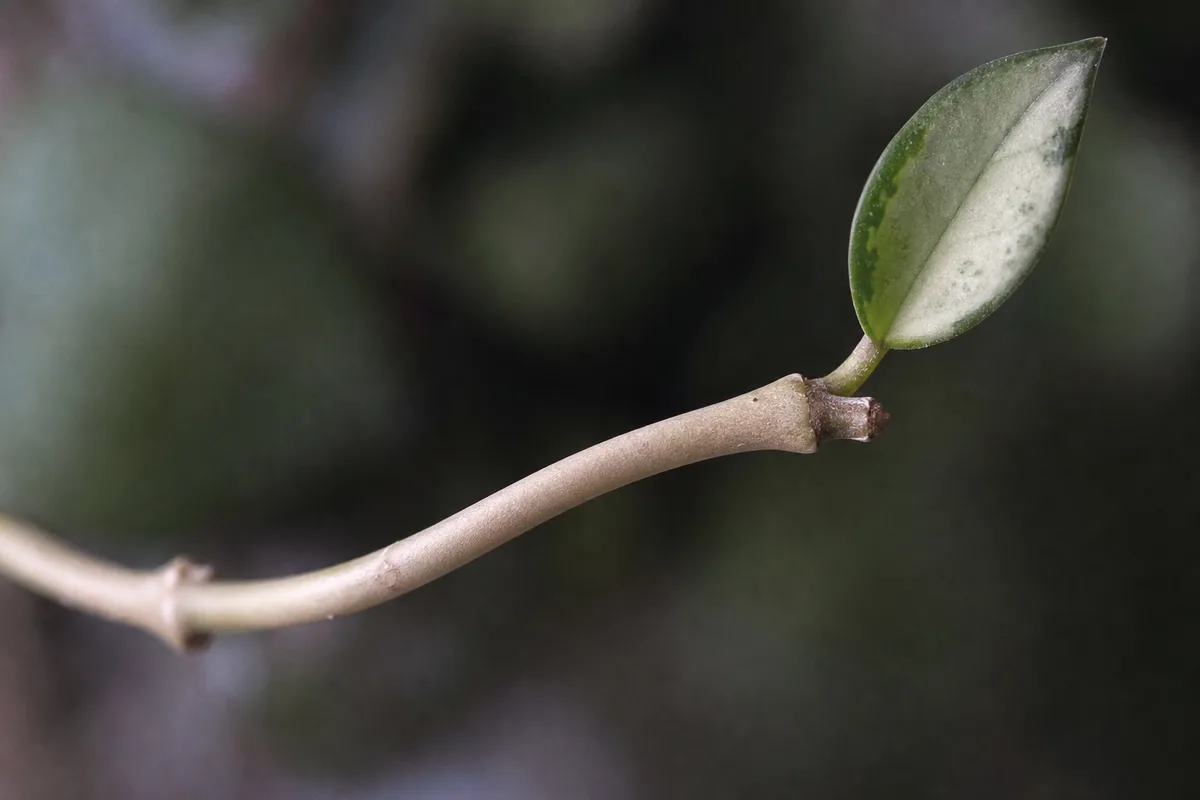
Not Enough Light symptoms on Hoya Carnosa - compare with healthy tissue on the same plant.
Typical signs:
- Long internodes - gaps between pairs of waxy leaves longer than the leaf itself on the newest vine section, matching the thin, stretched growth hoyas show in low light
- Smaller new leaves - recent foliage noticeably narrower or thinner than leaves formed when the plant had better light
- Leaning or reaching - the whole pot or hanging basket tilts toward the window; aerial tendrils search upward with sparse side branching
- Dark, dull green color - leaves lose the glossy firm look of well-lit carnosa and look flat rather than waxy
- Slow or stalled growth - little new vine length across an entire growing season despite stable watering
- No peduncles - healthy mature vines but zero bloom spurs year after year
- Soil that stays wet - top half of mix still damp 10 to 14 days after watering because the plant is not using water quickly
Variegated forms like Krimson Queen and Krimson Princess show stress sooner: pale zones wash out, margins brown in dim rooms, or the plant reverts toward green as it hunts for photosynthetic tissue.
Not the same as sunburn. Too much unfiltered afternoon sun bleaches or crisps leaf surfaces within days of a sudden move. Too little light builds gradual stretch over weeks. If window-facing leaves show white patches or tan crisp edges after a placement change, pull back from direct rays-that is excess light, not deficiency.
Why Hoya Carnosa runs out of light indoors
Human eyes adapt to dim rooms; leaves do not. A spot that feels “bright enough” at breakfast may deliver too few photons for an epiphytic vine that evolved to climb toward filtered sun.
Common triggers:
- Decor placement over function - pots on interior shelves, bathroom ledges, or hall tables more than a few feet from glass
- North-facing windows - often fine for survival, rarely enough for compact growth or reliable flowering without supplemental light
- Winter daylight drop - same shelf that worked in June fails in December when sun angle and day length shrink
- Obstructed glass - heavy sheers, tinted film, porch overhangs, or dirty panes cut intensity more than owners expect
- Hanging baskets too low - a basket suspended far below the sill hangs in decorative shade even in a bright room
Hoya Carnosa tolerates lower light longer than many hoyas, which is part of the problem: the plant survives while you assume care is adequate. NC State Extension classifies it for bright indirect light indoors with partial shade outdoors-survival in medium indirect light is possible, but flower production and tight growth need stronger brightness. Missouri Botanical Garden states plainly that good light is necessary for flower production on Hoya Carnosa overview.
Low light also closes a secondary trap. A dim Hoya transpires slowly, so the epiphytic mix you chose to drain fast may stay damp too long. That pattern invites fungus gnats-NC State lists gnats attracted to mixes that stay too wet-and root stress that mimics thirst. Fixing water alone without raising light leaves the throttle closed.
How to confirm the cause
Work through these checks before Hoya Carnosa repotting guide, feeding, or pruning peduncles:
- Leaf-level placement - Stand where the plant sits at midday. Can you read comfortably? Do leaves cast a faint shadow? Iowa State Extension’s hoya guidance describes useful brightness as bright enough to cast a shadow but not direct sun-no meaningful shadow usually means too dim for bloom-focused growth.
- Internode comparison - Measure the gap between the last two leaf pairs on an active vine. Compare to an older section grown in brighter past conditions. Lengthening gaps confirm etiolation.
- Newest leaf size - Hold a recent leaf next to one from a year ago. Smaller, thinner new foliage with longer spacing points to light, not nitrogen deficiency.
- Soil dry-down - Stick a finger halfway into the mix. If the top half stays wet for two weeks while leaves are not wrinkled from drought, low transpiration from dim light may be slowing water use-especially in winter.
- Peduncle history - Mature Hoya carnosa often needs two to three years before first bloom, but NC State notes plants will not flower until they reach that age when other conditions align. A five-year-old vine with zero peduncles in a north room is a light problem until proven otherwise.
- Two-week trial move - Shift the pot to the brightest suitable sill without changing watering. If the next node pair arrives closer together, light was the limiter.
Rule out lookalikes before treating:
- overwatering on Hoya Carnosa - yellowing leaves paired with persistently wet soil, soft stems, sour smell; soil wet while leaves droop
- underwatering on Hoya Carnosa - slightly wrinkled thick leaves, very light pot, dry mix throughout
- Recent repot - temporary stall after root disturbance with otherwise firm leaves
- Peduncle pruning - cutting bloom spurs removes future flower sites regardless of light
If the caudex is not applicable here-but if stems soften and soil smells sour in a dark room, address drainage and rot before chasing more light alone.
First fix for Hoya Carnosa
Move the plant to brighter indirect light at the window.
Place the pot or hanger so the leaf canopy sits within 12 inches (30 cm) of an east-facing window, or one to two feet back from filtered south or west glass with a sheer curtain during hot months. East is the safest default: morning sun is bright but cooler than harsh afternoon rays through bare west panes.
Do not repot, fertilize, prune vines, or overhaul watering the same week. Hoya dislikes stacked stress, and you need clean feedback from the next one or two leaf nodes to know the move worked.
If your brightest window is still north-facing or blocked, add a full-spectrum LED grow light 12 to 18 inches above the canopy for 12 to 14 hours daily rather than pushing the plant into unfiltered afternoon sun.
Step-by-step recovery
After the first placement move, follow this order:
- Acclimate if jumping more than one light level - Step exposure over 7 to 14 days when moving from a dim back room to strong south glass. Increase direct contact gradually and watch newest leaves for bleach patches.
- Hold watering steady initially - Do not water more because growth looks slow. Check the top half of soil; Hoya prefers drying between drinks. When light rises, the pot will dry faster-recheck on that new rhythm after two weeks.
- Rotate a quarter turn weekly - Even growth prevents hard lean. Stop rotating once you see peduncle bud swell; Missouri Botanical Garden warns not to move the plant after flower buds appear.
- Wait for two nodes of new growth - Judge success on internode length and leaf firmness, not on old stretched sections.
- Trim only after proof - Once new spacing tightens, optionally cut back bare leggy leaders to a node above compact tissue to reshape. Leave peduncle stubs intact; they rebloom in later seasons.
- Add grow-light hours in winter - Slide to the brightest winter sill and supplement if internodes lengthen again between November and February.
Skip fertilizer until new growth looks firm and glossy for two weeks. Extra nitrogen in dim conditions pushes leaves without fixing the energy deficit.
Recovery timeline
Expect visible change on the next vine node within two to three weeks after a meaningful light increase during active growth. Internodes should shorten; new leaves should match or exceed the size of the previous pair.
Compact habit across several nodes usually takes six to ten weeks in spring and summer. Winter moves may show little above-soil change until day length rises-even though brighter winter placement still beats a dark back room.
Old stretched stems do not shorten. They remain long unless you prune them. Recovery is forward-looking: the next leaves tell you whether placement is correct.
Peduncles may take one or more full growing seasons after light correction on a mature plant. Blooming also depends on age, slight root restriction, and stable placement through bud development-not light alone.
Worsening signs during adjustment: bleach or crisp patches on new leaves (too much direct sun-filter or pull back), yellow lower leaves with soggy soil (overwatering enabled by low use-reduce water and improve light together), or soft stems and sour mix (inspect roots; rot is not fixed by sunlight alone).
Lookalike symptoms
- Leggy growth from youth on Hoya Carnosa - Young Hoya sends long leafless tendrils searching for support; leaves fill in later. Persistent long gaps between leaf pairs on mature vines point to light, not normal tendril behavior.
- No flowers from immaturity - Plants under two to three years old may not bloom regardless of light. Combine age check with placement before assuming failure.
- No flowers after peduncle removal - Pruned bloom spurs do not regrow quickly. Light cannot restore a cut peduncle.
- Slow growth from oversized pot on Hoya Carnosa - Very large pots divert energy to roots and delay blooming even in good light. A firm, root-filled pot plus bright light outperforms a dim room with perfect pot size.
- Wilting with dry soil - Underwatering wrinkled leaves in a bright window; stretching with wet soil fits low light better.
- Spider mites or mealybugs - Stippled or sticky leaves with webbing or white cotton in axils; pests need isolation and treatment, not just a window move-though brighter airflow helps prevention.
What not to do
Do not blast the plant with unfiltered south or west afternoon sun to fix stretch in one day. Unacclimated carnosa leaves burn quickly; filter peak hours or use morning sun first.
Do not over-fertilize to compensate for dim rooms. High nitrogen feeds foliage at the expense of buds and salts stress roots when the plant is already energy-limited.
Do not water on the old calendar after moving to a brighter sill. Faster dry-down needs a new check habit-wet feet in improved light still rot roots.
Do not repot into a larger container hoping to force growth. Hoyas often bloom best slightly root-bound; a big wet soil mass in a dim corner worsens both problems.
Do not cut peduncles while troubleshooting bloom failure. Those stubs are reusable flower sites for years.
Do not move the plant weekly once buds form. Stability matters through bloom cycles.
How to prevent low-light stress next time
Place Hoya Carnosa where light hits leaves, not where the pot looks best in the room. East windows and bright filtered south or west exposures are the reliable defaults; treat north glass as a grow-light bench if you want flowers.
Clean windows seasonally, thin obstructing sheers, and lower hanging baskets until the canopy sees sky-not just reflected ceiling light. Rotate for even shape until peduncles appear, then hold placement steady.
In apartments with limited glass, run 12 to 14 hours of supplemental LED light through short winter days rather than accepting stretch as normal. Match watering to the new dry-down speed whenever you change light intensity.
When to worry
Low light by itself rarely kills a mature wax plant-it degrades form and bloom. Treat as urgent when soft stems, sour soil, or widespread yellowing accompany dim placement; that combination suggests root decline from chronic wet mix, not photons alone.
If two nodes of new growth still arrive elongated after a honest move to your brightest filtered window, assume the spot is still too dim and add grow lights rather than waiting another year.
Conclusion
Not enough light on Hoya Carnosa is a placement problem disguised as patience. The vine stretches, blooms stall, and soil lingers wet because the plant is running a survival budget-not a growth budget. Confirm it by reading newest internodes and leaf size, move to bright indirect light at the window as the first fix, and judge recovery on the next compact nodes, not old stretched stems. Give mature plants time for peduncles after light improves, keep peduncles intact, and pair brighter placement with a Hoya Carnosa watering guide that matches faster dry-down. Wax plant forgives many mistakes; it rarely flowers in the corner you forgot to measure.
When to use this page vs other Hoya Carnosa guides
- Hoya Carnosa watering guide - Use for routine moisture checks before assuming not enough light is the main issue.
- Hoya Carnosa problems hub - Browse all 17 common issues on this species.
- Leggy Growth on Hoya Carnosa - Different entry point when symptoms overlap with not enough light.
- Slow Growth on Hoya Carnosa - Different entry point when symptoms overlap with not enough light.
- Yellow Leaves on Hoya Carnosa - Different entry point when symptoms overlap with not enough light.