Yellow Leaves on Hoya Carnosa: Causes, Checks & Fixes
Quick answer
Yellow leaves on Hoya carnosa usually mean wet mix and failing roots, too little light, or one old leaf aging out at a proximal node-not a fertilizer shortage. First step: probe the top half of the mix at one to two inches depth and run the taco test before you water, feed, or repot.
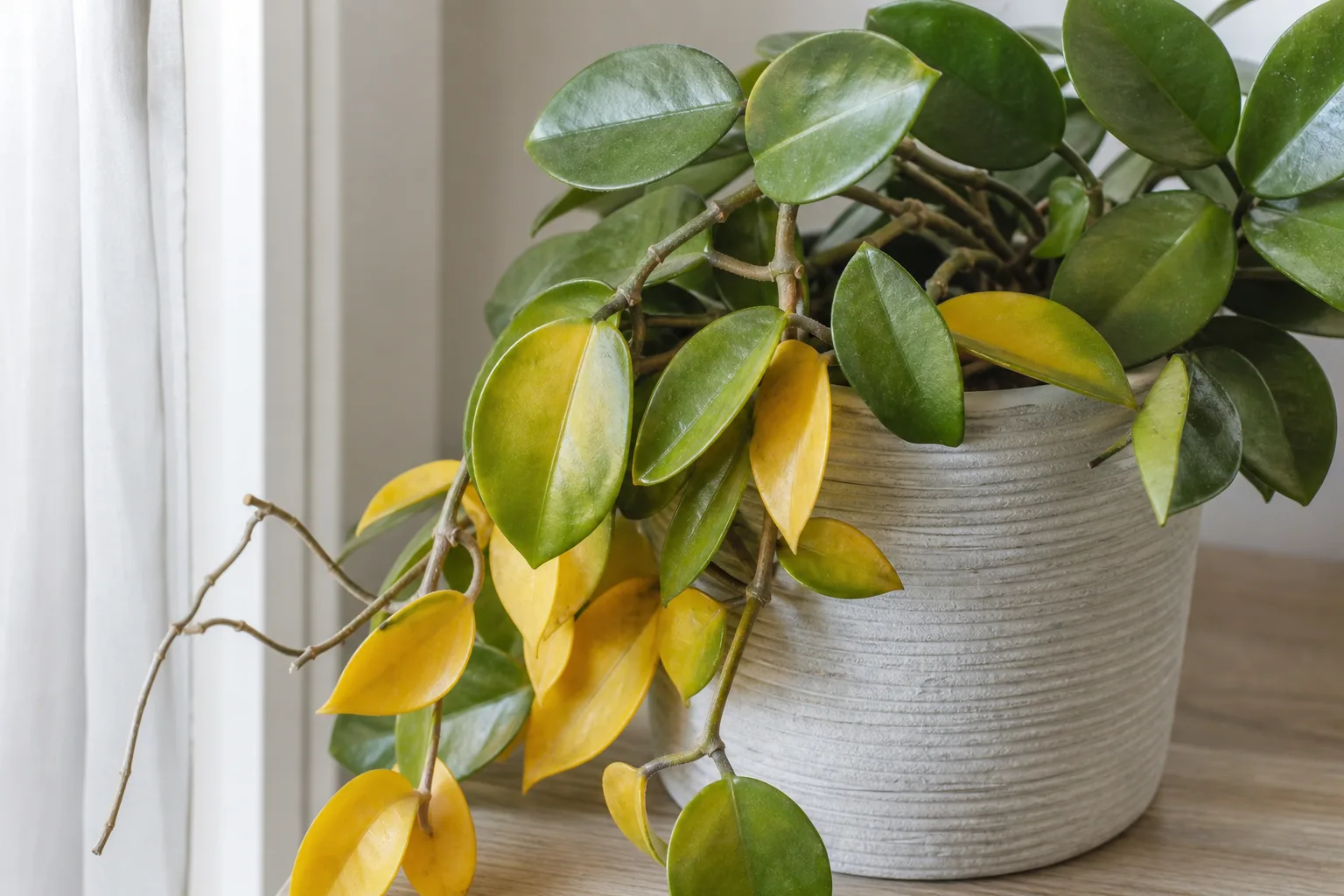
Yellow Leaves on Hoya Carnosa: Causes, Checks & Fixes
This guide covers yellow leaves on Hoya Carnosa. See also the general Yellow Leaves guide, watering, and light pages for this plant.
Yellow Leaves on Hoya Carnosa: Causes, Checks & Fixes
Quick answer
Yellow leaves on Hoya carnosa (Hoya carnosa, wax plant) are a symptom, not a diagnosis. On this vining epiphyte, yellowing usually falls into three buckets: wet mix and declining roots, too little light slowing water use, or one old leaf aging out at a proximal node along a trailing vine. Thick waxy leaves store water and mask trouble until lower leaves soften and fade-so colour alone is unreliable.
First step: probe the top half of the mix at one to two inches depth and lift the pot for weight before you water, fertilize, or repot. If the mix stays damp while multiple lower or inner leaves yellow, pause watering and run the taco test. A single yellow leaf on a firm vine with appropriate dry-down may be harmless senescence. For the full dry-between workflow, see the Hoya carnosa watering guide.
What yellow leaves look like on Hoya Carnosa
Yellowing on wax plant reads differently depending on whether roots, light, or natural aging is driving the change. Older leaves may stay plump while the pattern on newer tissue and soil moisture tells the truth.
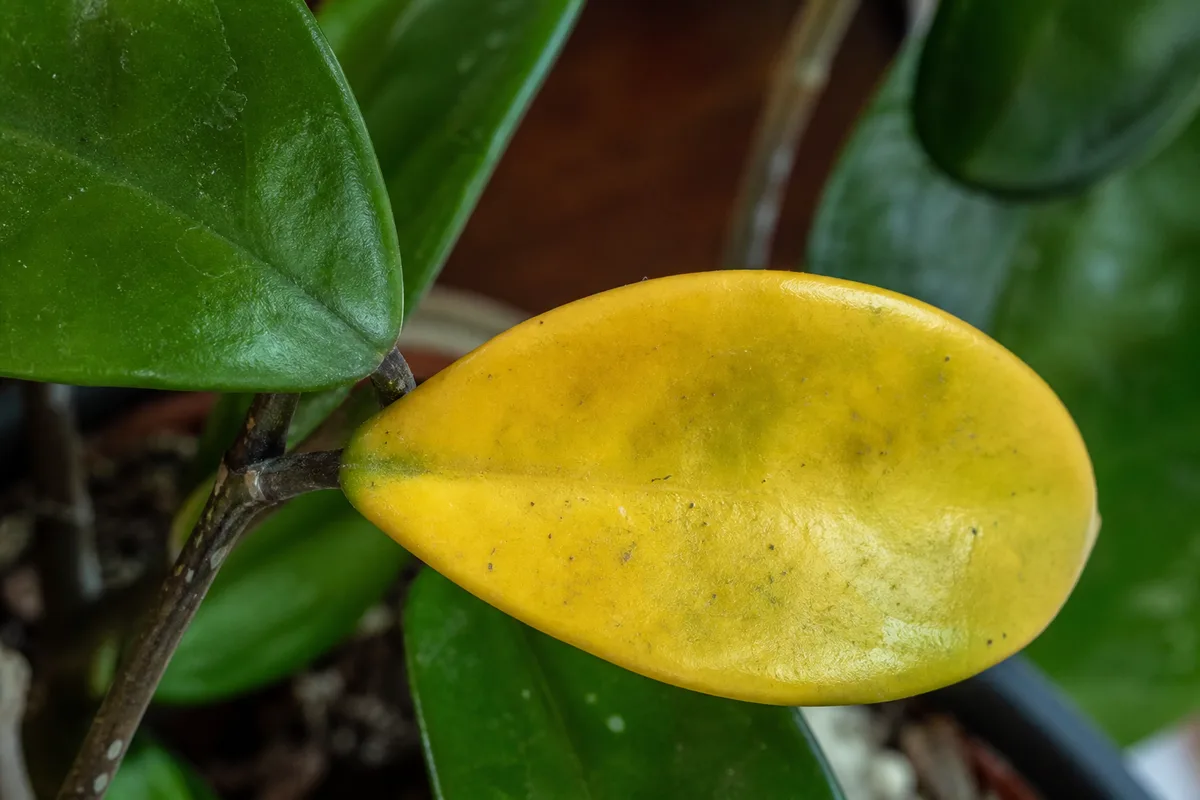
Yellow Leaves symptoms on Hoya Carnosa - compare with healthy tissue on the same plant.
Normal vine-node aging vs. stress yellowing
Hoya carnosa grows as a climbing epiphyte with pairs of waxy leaves at nodes along thin trailing vines-not as a basal rosette. Natural senescence shows as one or two oldest leaves at the proximal end of a long vine fading from green to yellow over weeks or months, then dropping cleanly while apical nodes keep producing firm new leaf pairs. That slow, localized fade on an otherwise healthy trailing stem is normal.
Stress yellowing looks different: multiple leaves-often lower or inner foliage-turn soft yellow at once while the mix stays damp, the pot feels heavy, or flower buds abort after a heavy soak. Widespread yellowing on wet soil is urgent; one fading leaf at a base node on a dry, light pot is not.
Overwatering, low light, and underwatering on Hoya Carnosa patterns
| Pattern | Pot weight | Mix at 1–2 inches | Leaf feel | What it usually means |
|---|---|---|---|---|
| Wet-root stress | Heavy | Cool, clings at depth | Soft, pliable on damp mix | Overwatering / early root decline - see overwatering |
| Thirst | Light | Dry throughout | Wrinkled, pliable on dry mix | Underwatering - soak when checks agree |
| Low light | Normal to heavy | Slow dry-down | Pale yellow upper leaves, long internodes | Insufficient light - see not enough light |
| Natural aging | Normal | Dry on schedule | Firm | One old leaf at proximal node yellows and drops |
Overwatering signature: yellow lower or inner leaves, dropped peduncle buds, fungus gnats, or a soft base where vines meet soil while mix never completes dry-down.
Low-light signature: pale or dull yellow-green on upper leaves along vines with long gaps between leaf pairs-etiolation, not root failure. Dim rooms also slow transpiration, so mix stays wet longer and invites the same yellowing overwatering causes.
Underwatering signature: slightly wrinkled thick leaves, very light pot, dry mix throughout-not yellowing on heavy wet soil.
Cold-draft stress: sudden yellowing or leaf drop when temperatures fall below about 50°F (10°C) near a winter window or AC vent. NC State Extension lists minimum indoor temperatures around 50°F for this species.
Variegated forms like ‘Krimson Princess’ and ‘Krimson Queen’ often show stress in pink or white sections first when the mix stays wet in dim winter rooms.
Why Hoya Carnosa gets yellow leaves
Epiphytic wet-dry cycle and root stress
In habitat, Hoya carnosa clings to tree bark in Southeast Asia, where rain arrives in bursts and roots dry quickly between showers. Indoors, chronic damp mix is the most common yellow-leaf trigger. Iowa State Extension notes that yellowing leaves paired with persistently wet soil usually point to overwatering or poor drainage-and that wrinkled leaves on wet soil can signal damaged roots that no longer function.
Thick succulent leaves buffer drought but mask root failure until uptake collapses. The cruel trap: soft pliable leaves on a heavy wet pot look thirsty, so growers water again and accelerate decline. Clemson HGIC identifies overwatering as the most common issue leading to root rot on wax plants and recommends allowing soil to dry between waterings.
The practical rule from our watering guide: allow the top half of the mix to dry during active growth and a more complete dry-down in winter. Watering on a summer calendar in January leaves mix wet for weeks while the plant barely drinks.
Low light, cold drafts, and variegated winter sensitivity
Low light alone rarely yellows leaves overnight, but it closes a secondary trap. A dim Hoya transpires slowly, so epiphytic mix stays damp too long-inviting the same root stress that yellows lower leaves. NC State Extension classifies H. carnosa for bright indirect light indoors; survival in medium light is possible, but stretched vines with pale upper foliage point to insufficient brightness.
During cool, low-light winter rest, carnosa uptake drops sharply. Variegated cultivars with less chlorophyll in white or pink sections often yellow first when mix stays wet in dim conditions. Resume shorter summer intervals only when you see consistent new growth and the pot dries on a faster, predictable pattern again.
How to confirm the cause
Work through these checks in order before Hoya Carnosa repotting guide, feeding, or pruning vines:
- Top-half moisture probe - Press a finger or skewer one to two inches into the mix near the pot edge. Cool, clinging soil at depth while leaves yellow means pause watering.
- Pot weight test - Lift the container. A heavy pot days after the last soak while lower leaves fade supports wet-root stress, not thirst. Clemson HGIC recommends the weight test to determine when soil is dry enough to water.
- Leaf taco test - Gently pinch a mature leaf. Firm stiff leaves on damp mix mean do not water. Soft pliable leaves on a heavy wet pot mean root stress, not thirst. Wrinkled leaves on a light dry pot mean underwatering.
- Leaf pattern and vine architecture - Note whether yellowing is one proximal-node leaf vs. multiple lower/inner leaves. Check internode length on active tips for low-light stretch.
- Bud and stem signals - Dropped peduncle buds after heavy watering, mushy tissue at the soil line, or sour smell from drain holes escalate beyond mild yellowing.
- Root inspection when warranted - If wet soil pairs with spreading yellow leaves, gently slide the plant from the pot. Firm white or tan roots support dry-down rescue; brown mushy roots need trimming and repot per the root rot guide.
Confirmation decision table
| What you see together | Most likely cause | First branch |
|---|---|---|
| Heavy pot + wet mix + soft yellow lower leaves | Overwatering / early rot | Stop watering; dry-down cycle |
| Light pot + dry mix + wrinkled leaves | Underwatering | Thorough soak; resume dry-between rhythm |
| Pale upper leaves + long internodes + slow dry-down | Low light (+ possible overwatering) | Brighten placement; hold water until mix dries |
| One firm yellow leaf at base node + normal dry-down | Natural vine-node aging | Monitor; remove spent leaf when fully yellow |
| Yellowing after cold exposure below ~50°F | Cold stress | Move away from draft; stabilize temperature |
If multiple branches fit-yellow lower leaves in a dark corner with wet soil-fix light and watering together, not fertilizer.
The first fix to try
Stop and assess moisture before any other treatment.
Probe the top half of the mix at one to two inches depth and lift the pot. If soil is wet and leaves are yellowing, do not water until the mix dries down and the pot feels noticeably lighter-often one to three weeks indoors, longer in winter. That single pause prevents further root damage while you confirm the pattern.
Cause-specific branches
Wet mix + multiple yellow leaves: Follow the dry-down rescue in our overwatering guide. Hold water, run taco and weight checks, and inspect roots only if decline continues after the surface dries.
Pale upper leaves + long internodes: Move to brighter indirect light within about 12 inches of east glass or filtered south/west exposure per the not enough light guide before changing water or feed.
Light dry pot + wrinkled leaves: Soak thoroughly until drainage flows, empty the saucer, then resume the top-half-dry rhythm from the watering guide.
One aging leaf at a proximal node: Remove the fully yellow spent leaf to reduce pest hiding spots. No schedule change needed if dry-down and new apical growth stay healthy.
Do not fertilize, repot, or stack multiple treatments the same week. Hoya dislikes bundled stress, and you need clean feedback from the next one or two nodes.
Recovery timeline and what to watch
Fully yellow leaves do not green up again-they drop or stay cosmetic. Judge recovery by firm new leaf pairs emerging from apical nodes and stable root firmness on inspection, not by old foliage colour.
Minor wet-soil stress caught while roots are still mostly firm often stabilizes within one to two weeks once watering stops and the mix dries. Visible improvement on the next vine node-firm waxy texture, no new yellowing-may take two to three weeks during active growth.
Good signs: new growth stays green and glossy; pot weight drops predictably between soaks; no fresh yellowing on lower leaves; peduncles hold buds after care stabilizes.
Worsening signs: rapid multi-leaf yellowing with sour-smelling mix, mushy stem base, or wilting on a heavy wet pot. Escalate to root inspection and the root rot rescue path-do not keep watering on hope.
Winter corrections may show little above-soil change until day length rises, even though brighter placement and drier mix still beat leaving the plant in a dark, wet corner.
Mistakes to avoid
Do not assume yellow leaves always need fertilizer. Salt buildup from overfeeding can also yellow foliage-and feeding a root-stressed plant on wet soil makes recovery harder.
Do not increase watering when the pot is heavy and mix is damp. Soft leaves on wet soil mean damaged roots, not thirst.
Do not treat surface dryness as readiness to water. Peat-based mixes can look pale on top while the center holds moisture; use depth probes and pot weight, not colour alone.
Do not repot on day one unless roots are clearly mushy or soil smells sour. Mild yellowing often resolves with a longer dry-down cycle in the existing pot.
Do not prune peduncles while diagnosing. Bloom spurs are reusable; cutting them removes future flower sites regardless of yellow-leaf cause.
How to prevent yellow leaves next time
Match watering to how fast your pot actually dries in your light and season-not a calendar. During active summer growth, water when the top half of the mix is dry at one to two inches depth, the pot feels light, and mature leaves pass the taco test as slightly soft-typically every 7–14 days in bright indirect light, but always verify with touch and weight.
Use a chunky epiphytic mix-potting soil, orchid bark, and perlite in roughly equal parts-so water drains in seconds rather than pooling. Empty saucers and cachepots after every soak.
Place the vine in bright indirect light so transpiration and dry-down stay predictable. See the Hoya carnosa overview for species context and the light guide for placement detail.
Stretch winter intervals to every three to four weeks in cool dim rooms. Err drier with variegated forms when pink or white sections are involved.
Remove spent lower leaves promptly when they fully yellow at proximal nodes-cosmetic cleanup, not a cure for root stress.
When to worry
Escalate immediately when rapid widespread yellowing pairs with wet soil, mushy tissue at the vine base, dropped buds after repeated heavy soaks, or a sour smell from drain holes. Those patterns suggest advancing root decline-not a single aging leaf.
Wet soil plus multi-leaf drop should not wait through another watering cycle. Unpot, inspect root texture, and follow the root rot guide if roots are brown and mushy.
Low light alone is rarely an emergency, but yellow lower leaves in a dark corner with soggy mix need light and watering correction together. For advanced cases beyond home rescue, consult your local cooperative extension office with clear photos of leaves, soil surface, and roots if exposed.
Conclusion
Yellow leaves on Hoya carnosa are a symptom ladder, not a single diagnosis. Separate one fading leaf at a proximal node from multiple soft yellow leaves on heavy damp mix, run the top-half moisture probe and taco test before every drink, and branch to the right sibling guide-overwatering, not enough light, or root rot-when the pattern is clear. Fully yellow foliage will not green up again; judge recovery by firm new leaf pairs at apical nodes and predictable pot dry-down. Match water to epiphytic rhythm, not sympathy, and wax plant usually stabilizes once the mix breathes again.
When to use this page vs other Hoya Carnosa guides
- Hoya Carnosa watering guide - Use for routine moisture checks before assuming yellow leaves is the main issue.
- Hoya Carnosa problems hub - Browse all 17 common issues on this species.
- Overwatering on Hoya Carnosa - Different entry point when symptoms overlap with yellow leaves.
- Underwatering on Hoya Carnosa - Different entry point when symptoms overlap with yellow leaves.
- Not Enough Light on Hoya Carnosa - Different entry point when symptoms overlap with yellow leaves.