Hoya Carnosa Repotting: When, How, and Mistakes
Hoya Carnosa Repotting: When, How, and Mistakes
Hoya Carnosa Repotting: When, How, and Mistakes
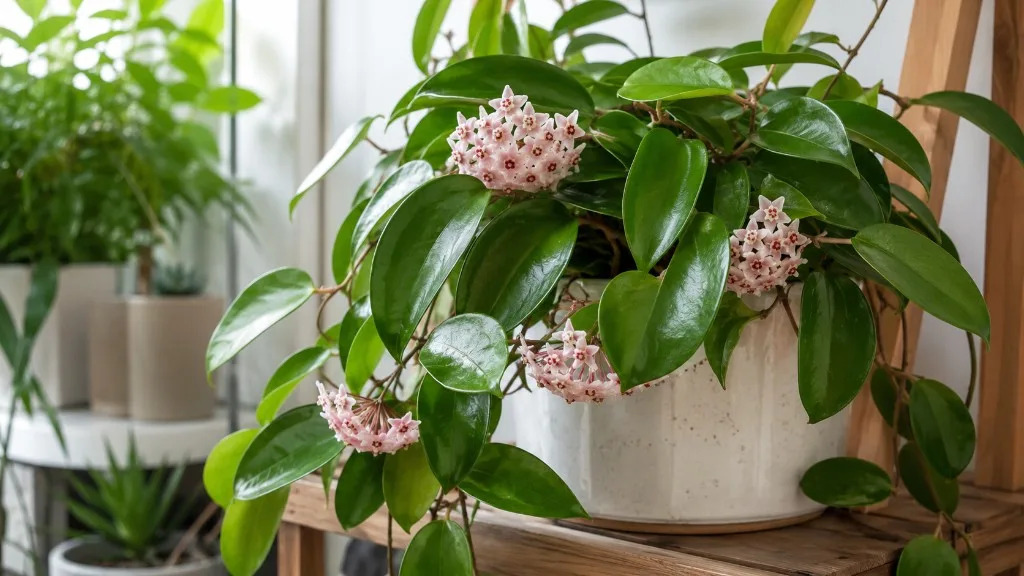
Hoya carnosa repotting is one of the few houseplant tasks where restraint beats enthusiasm. The wax plant - also called porcelain flower or honey plant - is a slow-growing, epiphytic vine from Southeast Asia, Japan, and Taiwan that evolved to grip bark and rock in open air, not to spread through deep, waterlogged soil. In your home, that biology translates into a counterintuitive rule: tight, snug roots are usually fine - even beneficial - until clear diagnostic signs say otherwise. Repot only when the mix has failed or roots have genuinely outgrown their function, move up one pot size at most, and handle the root ball with the lightest touch you can manage. Get those three things right and recovery takes weeks. Jump two pot sizes, bare-root the plant, or repot mid-bloom and you may trade a year of fragrant white umbels for a year of sulking stems.
The practical goal is not to give your carnosa “room to grow” the way you would a fast-draining pothos or a hungry coleus. The goal is to refresh degraded soil, relieve true constriction, and restore drainage without resetting the moisture and hormonal conditions that trigger flowering. NC State Extension notes that wax plant “doesn’t mind being pot-bound” and that the new pot should be “not more than 2 inches larger than the existing container,” repotting only when the plant outgrows its current home and is not in bud or flower (NC State - Hoya carnosa). The Royal Horticultural Society recommends spring repotting into a container only a few centimetres larger than the rootball, using sharply draining compost (RHS - How to grow hoya). That conservative framing is the foundation everything below builds on.
Why Hoya Carnosa Repotting Works Differently Than Most Houseplants
Most common houseplants - pothos, philodendrons, peace lilies in their early years - benefit from regular pot upgrades because their roots expand quickly and their soil structure breaks down within a year or two. Hoya carnosa does not follow that script. Its roots are thick, often fleshy, and adapted to cling to bark rather than mine deep soil profiles. Above ground, growth is slow to moderate: the Missouri Botanical Garden describes it as reaching 60–120 cm (2–4 feet) indoors on trailing or climbing stems, with glossy, elliptic, succulent leaves up to 10 cm long (Missouri Botanical Garden - Hoya carnosa). Below ground, the root system fills a pot gradually, and during that fill-in period the plant often shifts energy toward reproductive structures - the umbels, peduncles, and fragrant star-shaped flowers collectors wait seasons to see.
That is why the standard advice for tropical foliage plants - repot annually into a bigger pot so it can grow - backfires on carnosa. An oversized container surrounds a modest root system with a large volume of mix that stays wet too long. Epiphytic roots need oxygen between waterings; perched moisture at the center of a 20 cm pot when the roots only occupy the inner 8 cm is a reliable path to root decline, even if the top of the mix feels dry. The difference is not aesthetic preference. It is moisture physics applied to a plant whose thick, waxy leaves store water for drought but whose roots suffocate in stagnant wet soil.
Hoya carnosa repotting is also different because disturbance has a longer memory than it does on fast growers. Tear off most of the old soil, aggressively comb out roots, or bare-root the plant, and you strip fine root hairs that took seasons to build. The plant may survive, but new growth and flowering often pause while it rebuilds. A minimal-disturbance approach - keeping much of the original root ball intact, refreshing only the outer layer and the mix below - typically produces faster recovery and less leaf drop. Think of repotting carnosa as soil renewal and slight spatial relief, not a full root renovation. Iowa State University Extension links slight pot-binding to better flowering in Hoyas generally, recommending repotting only when the plant has clearly outgrown its container or the mix no longer drains well (Iowa State - All About Hoyas).
What Tight Roots Mean for Wax Plant Health and Blooms
“Root bound” is one of the most misused phrases in houseplant care. For Hoya carnosa, the useful concept is not whether roots touch the pot wall - they often should - but whether the root system still functions: absorbing water and nutrients, draining properly, and signaling the plant to bloom. Slightly root-bound means the roots have explored most of the pot volume, the plant is stable and upright without wobbling, and you may see a few roots peeking through drainage holes or circling lightly at the bottom. In that state, many carnosa plants flower prolifically from the same peduncles - the woody spurs where umbels form - year after year. Missouri Botanical Garden explicitly advises not to remove the flowering stalk after bloom because new flowers will form on the old spur.
The confusion arises because the same visual - roots at the drainage holes - can mean two opposite things. A few exploratory roots exiting a hole in a plant that otherwise drains well and grows steadily is snug, not sick. Roots that have formed a dense, soil-displacing mat; water that runs straight through in seconds; soil that dries in a day regardless of season; or growth that stalls despite good light and conservative watering - that is moving toward harmful binding. The plant is not “happy tight.” It is running out of functional substrate.
A useful mental model: carnosa prefers rapid drying cycles more than literal confinement. A small pot achieves fast drying because there is less mix to hold water. But you can also achieve rapid drying in a slightly larger pot with a very chunky, epiphytic-style mix and disciplined watering. The “tight roots OK” rule is a practical shortcut for preventing overwatering on Hoya Carnosa, not a commandment that roots must suffer. When the mix is fresh, airy, and the pot is only one size up, you are preserving the drying advantage while giving roots a little more room to breathe. Variegated cultivars like ‘Krimson Queen’ and ‘Tricolor’ follow the same logic but may show stress on white or pink leaf sections first if roots are disturbed too aggressively - another reason minimal handling matters.
Snug Roots vs. Harmful Girdling on Carnosa
Snug roots look white to light tan, feel firm, and occupy the pot without displacing most of the soil. You might see a light circling pattern at the bottom when you slide the plant out, but you can still see mix between root strands, and the root ball holds together without being a solid brick. The plant drinks on a predictable schedule, pushes new leaves at a steady pace, and may carry peduncles year after year on the same spurs. Long, bare tendrils on carnosa are normal - they are climbing vines searching for support, and flower spurs often develop on those stems. Do not prune them during repotting.
Girdling roots coil tightly around themselves and the pot wall, forming a dense sleeve that leaves little soil in the center. In advanced cases, the root ball is so hard you must score it to get new mix in. Roots may be brown or black at the circling edge, smell sour when wet, or show jelly-like decay. Water either channels through instantly or sits on the surface. New growth is small, pale, or absent. Fertilizer seems to do nothing because roots cannot access the nutrient solution effectively. This is not the bloom-friendly snugness extension guides describe. It is constriction that warrants intervention - but intervention should still be gentle.
When you inspect, aim for a calm diagnosis. Gently tip the pot and slide the plant out after watering the day before. If the root ball looks like a woven basket with soil still visible inside, you can wait. If it looks like a root burrito with almost no soil core, plan a repot in the next active growth window using the minimal-disturbance method below. Never repot solely because three or four years have passed on the calendar.
When Hoya Carnosa Actually Needs Repotting
How often should you repot Hoya carnosa? The honest answer: every three to five years for many specimens, but only when signs confirm the need - not on a schedule. NC State Extension and multiple horticulture sources converge on infrequent repotting for Hoya Carnosa overview. A thriving carnosa in a 10 cm terracotta pot that blooms reliably and drinks on a normal rhythm is a success state, not a problem to fix. Repot when two or more of the following are true at once: roots are actively escaping multiple drainage holes or circling thickly at the base; water runs through the pot in seconds and the plant wilts soon after because the mix no longer holds moisture properly; the soil has broken down into fine, compacted dust that smells stale or sour; growth has stalled for a full growing season despite adequate light and appropriate watering; or you need to address confirmed root rot on Hoya Carnosa and must replace contaminated mix. A single stray root at one hole, by itself, is not an emergency.
Diagnostic Signs Worth Acting On
Rapid, uneven drying is one of the most overlooked signals. When a carnosa that used to need water every ten to fourteen days in summer suddenly needs it every three days - and the pot feels light almost immediately after watering - the mix has likely collapsed or roots have consumed the soil volume. The plant is not “thirsty because it is growing fast.” It is living in a degraded root environment where water channels through without wetting the root mass evenly.
Stalled vegetative growth during the warm months matters when light is adequate. If stems produce no new leaves from spring through early fall, peduncles may still form on old spurs, but the overall plant looks static. Check the roots before you increase fertilizer. Fertilizer on a root-bound plant with no soil matrix often burns rather than helps. NC State Extension recommends repotting when the plant outgrows its container - outgrowth means functional limitation, not cosmetic tightness.
Visible root crowding on inspection confirms what the pot exterior hinted at. When you slide the plant out, roots form a thick mat at the bottom, wrap the circumference, or rise to the soil surface. A healthy carnosa root ball should still show mix between roots. When mix is scarce, repot.
Emergency root rot overrides the usual patience. Soft stems at the base, a sour smell from the pot, or black mushy roots when you probe gently mean repot immediately into fresh, airy mix - even if timing is imperfect - after removing only the clearly dead tissue.
When to Wait Despite Visible Roots
If your carnosa is blooming or carrying swollen flower buds, wait unless you face root rot. NC State Extension explicitly recommends repotting when the plant is not in bud or flower. Repotting during bud development is one of the fastest ways to lose an entire bloom cycle. Peduncles are reusable flowering spurs; damaging them during a rough repot costs more than the temporary tightness of the pot.
If the plant is growing steadily, drinking on a normal rhythm, and producing new leaves each season, tight roots are doing their job. Do not repot a happy plant because the pot looks small aesthetically. A compact carnosa in a snug container that pushes waxy leaves and fragrant umbels is exactly what you want.
If it is late fall or winter and the issue is mild crowding without rot, wait for spring. Carnosa slows in cool, dim months. Missouri Botanical Garden notes that winter care includes less watering and tolerance for night temperatures to 10°C (50°F), but root repair happens faster when temperatures are warm and days are long.
If you just bought the plant from a nursery and it is adjusting to your home, give it four to six weeks of stability before repotting - unless the mix is clearly waterlogged or wrong for epiphytes. Acclimation stress plus repot stress compounds.
Best Time of Year to Repot Hoya Carnosa
The best time to repot Hoya carnosa is spring or early summer, when the plant is entering or already in active growth. RHS identifies spring as the best repotting window for Hoyas. In most temperate indoor homes, that means roughly March through June - whenever you consistently see new stem tips, longer daylight, and warmer room temperatures above 18°C (65°F). At that stage, roots can grow into fresh mix quickly, and the plant has months of favorable conditions to repair any minor damage from handling.
Spring and Early Summer Timing
During active growth, carnosa roots produce new tips within days of contact with fresh, airy mix. A spring repot gives the plant an entire summer to re-establish before winter slowdown. Early summer remains acceptable; avoid the hottest weeks if your carnosa sits in a sun-facing window. After repotting, shade from harsh direct sun for one to two weeks while roots settle.
Fall repotting is a backup when you missed spring and the plant clearly needs help before winter. Proceed with extra conservatism: minimal root disturbance, no fertilizing for a month, and slightly reduced watering until you see new growth. Winter repotting should be reserved for emergencies - rot, extreme binding, or a plant that cannot make it to spring. A non-urgent winter repot often produces a plant that sits unchanged until April, which growers misread as transplant failure when it is really seasonal dormancy.
Choosing the Right Pot Size and Material
Go up one pot size only: about 2.5–5 cm (1–2 inches) wider in diameter than the current pot. A carnosa in a 10 cm nursery pot moves to a 12 cm pot - not a 15 cm or 20 cm showpiece. NC State Extension caps the increase at 2 inches. RHS recommends a pot only a few centimetres larger than the rootball. The mechanism is straightforward: excess soil volume holds excess water. Carnosa roots cannot colonize that wet zone fast enough, and epiphytic species suffer in chronically moist centers.
Drainage holes are non-negotiable. At least three to five holes, each roughly 6 mm or larger, are appropriate for containers in the 10–15 cm range. Elevate the pot on feet or pebbles so saucers never hold standing water. If you use a decorative cachepot, lift the nursery pot out when watering and empty the outer shell.
The One-Size-Up Rule for Carnosa
The one-size-up rule preserves the rapid drying cycle that tight roots provide without leaving the plant in degraded mix. Terracotta wicks moisture and speeds drying; plastic nursery pots work well in drier homes. If aesthetics matter, keep the carnosa in a snug nursery pot inside a cachepot for display rather than upsizing into a huge decorative container.
Best Soil Mix for Hoya Carnosa Repotting
Hoya carnosa needs a chunky, well-draining, airy mix that mimics the bark and leaf-litter pockets it occupies in nature. Missouri Botanical Garden recommends a standard, loamy, well-drained potting mix with good light - but for long-term container success, most experienced growers amend heavily toward epiphytic structure. Standard peat-heavy indoor potting soil alone compacts within a year, holds too much moisture in the center of the pot, and suffocates thick epiphytic roots. Repotting is the right moment to shift permanently to an epiphytic blend.
The principles matter more than a single sacred recipe: large pore spaces for air, fast drainage, moderate moisture retention at the periphery, and slow decomposition so the structure lasts two to three years. Ingredients that deliver those properties include orchid bark, perlite, pumice, coarse horticultural charcoal, and smaller amounts of coco coir or quality potting soil for slight water holding.
Chunky Epiphytic Blend Recipe
RHS recommends an equal-parts mix by volume of orchid bark, peat-free multi-purpose compost, and coarse perlite - or cactus compost with added perlite. A reliable starting blend for most carnosa and hybrids like ‘Compacta’ (Hindu rope):
- 40% orchid bark (medium grade, 10–20 mm chunks)
- 30% perlite or pumice
- 20% quality potting soil or coco coir
- 10% optional additions: coarse charcoal, horticultural grit, or a small handful of worm castings mixed through
For drier-home growers who tend to overwater, push bark and perlite to 45% each and drop potting soil to 10%. Pre-moisten the mix before use so dry bark does not wick moisture away from the root ball after planting. The mix should feel lightly damp, not wet. Do not add slow-release fertilizer pellets into the repot mix unless you are confident about rates; RHS advises holding feed for five to six weeks after repotting.
Step-by-Step Minimal-Disturbance Repotting
The entire procedure below is designed around one principle: change the container and refresh the outer soil environment without dismantling the root system. Expect the process to take twenty to forty minutes. Rushing causes breakage and peduncle damage.
Before you start: Water the plant 24 hours before repotting so the root ball is pliable and holds together. Gather a new pot one size up, pre-moistened mix, clean scissors, a flexible spatula or thin knife, a chopstick, and a tray for the work surface. Sterilize cutting tools with rubbing alcohol if you may trim rot.
Removing the Plant and Inspecting Roots
Turn the pot on its side and support the plant at the base with one hand. Tap the rim gently against the bench - not the stem or vines - until the root ball slides free. If it resists, run a flexible spatula around the inside wall of the pot to separate circling roots from plastic. Never yank the plant by the vine. Long trailing stems are fragile and carry future peduncles.
If the root ball is extremely tight, soak it in lukewarm water for five to ten minutes to loosen the old mix at the outer edge only. Do not submerge the foliage. The goal is to soften the outer crust, not to wash the interior away.
Inspect roots in good light. Healthy roots are white, cream, or light tan and firm. Trim only black, mushy, or foul-smelling sections with sterilized scissors. Remove no more than 20% of the root mass unless rot is advanced.
For severe circling at the bottom or sides, make three to four shallow vertical scores about 12 mm deep into the outer root mat - like slicing a pie - rather than shredding the whole ball. Then tease the outer 12–15 mm of roots outward with your fingers. Do not shave the bottom flat. Do not bare-root. Keep the interior old soil intact around the central root mass. That old soil is a stable microenvironment; stripping it sets the plant back months.
Settling Into the New Pot
Add 2–3 cm of fresh mix to the pot bottom. Set the carnosa so the top of the original root ball sits slightly below the rim - roughly 12–20 mm of headroom for watering. The plant should sit at the same depth it occupied before; burying the stem invites rot.
Hold the plant centered and fill around the sides with fresh mix. Use a chopstick to guide mix into gaps without stabbing roots. Tap the pot gently on the bench to settle mix; do not press down hard with your palms. Compaction destroys the air pockets carnosa roots need.
Water lightly - just enough to moisten the new mix and contact fresh roots. Do not flood the pot on day one. Keep the plant in Hoya Carnosa light guide, out of direct sun, for two weeks. Missouri Botanical Garden warns that pots should not be rotated or moved after flower buds appear - the same sensitivity applies during post-repot recovery when the plant is re-establishing.
Expect to wait seven to ten days before the next full watering, depending on how fast the new mix dries in your conditions. Do not fertilize for four to six weeks. RHS and multiple sources agree that post-repot feeding stresses roots before they colonize new substrate. Resume your normal feeding schedule only after you see new growth or confirm the plant is stable.
Peduncle note: Never cut healthy peduncles during repotting. They are reusable bloom spurs. Missouri Botanical Garden advises not removing the flowering stalk after bloom because new flowers form on the old spur, and warns not to rotate or move the plant after flower buds appear.
Common Hoya Carnosa Repotting Mistakes
Jumping two or more pot sizes is the most common error. A showy 20 cm bowl for a plant that came from a 10 cm pot feels generous; biologically it is a swamp waiting to happen. One size up, every time. NC State’s two-inch maximum exists because carnosa’s root system is modest relative to its foliage mass.
Bare-rooting or washing away all old soil destroys fine absorptive roots and beneficial biology. Unless you are treating advanced rot and must inspect every centimeter, keep the core root ball intact. This is the single most important distinction between carnosa repotting and repotting fast-growing herbs like coleus, where more aggressive teasing is tolerated.
Repotting during bud swell or bloom resets the flowering cycle. If flowers are open and healthy and you must repot, wait until blooms finish. If root rot forces your hand, accept that blooms may abort. Iowa State Extension notes that oversized containers let soil stay wet longer and that hoyas commonly flower better when slightly pot-bound.
Using dense, peat-only mix recreates the waterlogging problem in a new pot. Repotting into fresh but wrong mix solves nothing. Shift to the chunky blend above.
Compacting soil with heavy hand pressure eliminates air space. Tap the pot; do not pack.
Fertilizing or overwatering immediately stresses roots that are not yet functional in new mix. Light water, long pause, no feed - the recovery triad.
Repotting every year “to help it grow” on a thriving, blooming plant is how collectors lose flowers. Patience is a care skill with carnosa.
Recovery and Bloom Timeline After Repotting
Mild transplant shock - slight leaf droop, one or two yellowed lower leaves, a brief pause in new growth - is normal and usually clears within one to two weeks when light and water are conservative. The plant is not dying; it is reallocating energy to root tips. Carnosa’s thick leaves store water, so brief wilting is less dramatic than on thin-leaved plants, but variegated sections may show stress first.
Full root re-establishment takes longer: typically four to six weeks in spring and summer, and potentially the remainder of the season if you repotted in late summer or under suboptimal light. New growth is the clearest recovery signal. When fresh leaves emerge at normal size and waxy texture, roots are working.
Flowering delay after repotting is common and can last one to two growing seasons if the disturbance was significant or the new pot was too large. A minimally handled, one-size-up spring repot may delay blooms only until the next natural cycle on existing peduncles. A bare-rooted winter repot into a huge pot may silence flowers for years. Adjust expectations to match how gently you treated the plant.
Damaged leaves do not heal retroactively. Watch new growth, not old blemishes. If wilting persists beyond three weeks, check for rot, buried stems, or a pot that is too large.
When Repotting Is the Wrong Move for Carnosa
Sometimes the best repot is the one you skip. If your carnosa is blooming reliably in a tight pot with healthy waxy leaves and predictable watering, leave it alone. Bloom-focused growers sometimes top-dress instead - scrape out the top 2–3 cm of degraded mix each spring and replace with fresh chunky blend - without moving the plant to a larger container at all.
If growth is slow because the plant sits in too little light, repotting will not fix it. Missouri Botanical Garden and NC State both emphasize that good light is necessary for flower production. Move to brighter indirect light - with some direct sun tolerance - before upsizing the pot.
If wilting follows every watering, the problem may be overwatering in adequate light, not pot size. Fix the Hoya Carnosa watering guide before repotting. Allow soils to become nearly dry between water applications, as Missouri Botanical Garden recommends for the growing season.
Hindu rope cultivars (‘Compacta’) follow the same conservative rules but their twisted foliage hides root signals longer - lift and inspect periodically rather than guessing from above-ground appearance alone.
Conclusion
Hoya carnosa repotting rewards restraint. Tight roots are OK - even beneficial - until diagnostic signs say otherwise. Repot in spring or early summer when roots have genuinely outgrown the mix or the substrate has failed, not because the calendar or a decorative pot called to you. Move up one size, use a chunky epiphytic blend, keep the root ball intact, water lightly, and hold fertilizer for a month. Preserve peduncles, avoid bare-rooting, and never repot mid-bloom unless rot forces your hand.
When in doubt, inspect roots, top-dress if binding is mild, and wait until after the current bloom cycle. A carnosa that stays slightly snug in a well-draining pot will often outflower and outlast one that gets annual upgrades into ever-larger containers. Less disturbance, less shock, more porcelain blossoms - that is the trade worth making.
When to use this page vs other Hoya Carnosa guides
- Hoya Carnosa overview - Start here for whole-plant context before deep-diving this topic.
- Hoya Carnosa problems hub - Jump to symptom-specific fix guides when this care topic does not resolve the issue.
- Root Rot on Hoya Carnosa - Escalate here when repotting adjustments are not enough.