Hoya Carnosa Fertilizer: When, How, and Mistakes to Avoid
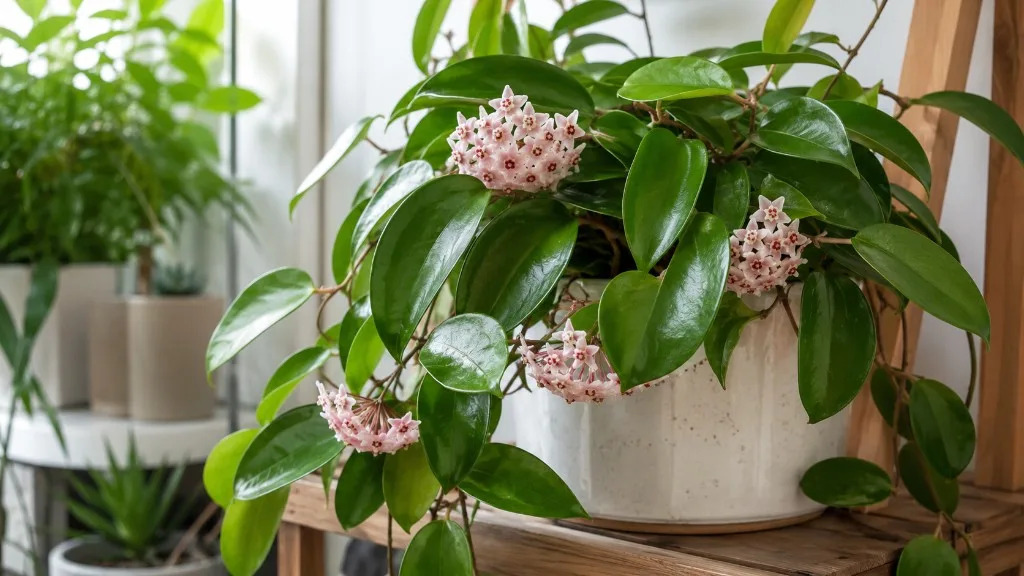
Hoya Carnosa Fertilizer: When, How, and Mistakes to Avoid
Hoya Carnosa Fertilizer: When, How, and Mistakes to Avoid
Hoya carnosa fertilizer decisions are simpler than most houseplant guides make them sound - and more consequential than many growers realize. Hoya carnosa, the classic wax plant with thick, waxy leaves and fragrant clusters of pink-and-white star-shaped flowers, is a slow-to-moderate epiphytic vine native to Eastern Asia. In habitat it climbs trees and draws moisture and nutrients from humid air, bark crevices, and accumulated organic debris. Indoors it lives in a small pot of well-draining mix, which changes everything about how it handles food. Feed too much, too often, or with the wrong nitrogen-heavy formula, and you get brown leaf tips, salt crust on the soil, wilting despite moist mix, and lush trailing stems with zero flower spurs. Feed lightly and consistently during active growth, and you support the steady leaf production and occasional spectacular bloom clusters Hoya Carnosa overview is famous for.
The practical goal for most home growers is straightforward: use a water-soluble fertilizer with a 2:1:2 or 3:1:2 NPK ratio (or a balanced orchid feed), dilute it to one-quarter to one-half label strength, apply it every two to four weeks from spring through late summer while the plant is actively growing, and pause entirely from late fall through winter. Water onto moist soil, never onto dry roots. Flush the pot with plain water monthly to prevent salt buildup. Avoid heavy nitrogen “lawn and garden” formulas and slow-release pellets in small pots. A Hoya carnosa that is stressed, dry, or freshly repotted needs no fertilizer until it stabilizes.
This guide covers when to fertilize, how much to use, which products work best, how to read deficiency versus burn, how feeding connects to blooming, and the mistakes that cause more damage than skipping a month ever would.
Why Fertilizer Matters for Hoya Carnosa
Hoya carnosa is not a heavy feeder. The Royal Horticultural Society describes hoyas as plants that only need light feeding - a deliberate contrast with fast-growing foliage crops like pothos or coleus that burn through potting mix nutrients in a single season (RHS - How to grow hoya). That low appetite reflects its epiphytic biology. In the wild, H. carnosa roots attach to bark and absorb what washes over them during rain events. Nutrients arrive in small, dilute doses separated by dry intervals. The plant evolved to make the most of lean conditions, storing water in its succulent leaves and building new tissue slowly when resources allow.
Indoors, your Hoya carnosa still pulls nitrogen, phosphorus, potassium, and trace elements out of its potting mix every time it pushes a new leaf pair, extends a vine, or develops a flower peduncle. Watering leaches some of those nutrients. Root growth and microbial activity consume others. Over months in the same container, even a well-made epiphytic mix gradually depletes. Fertilizer replaces what the plant uses - but only up to the point its roots can absorb without salt damage.
Think of feeding as maintenance for a healthy, actively growing plant - not a rescue tool for a Hoya carnosa that is pale because it sits in too little light, dries out repeatedly, or struggles in waterlogged mix. Fix light and water first, then add nutrients on a conservative schedule. Iowa State University Extension recommends light, regular fertilizer applications in spring and summer at half or quarter strength, explicitly noting that skipping winter feeding allows rest and promotes better flowering during warmer months (Iowa State Extension - All About Hoyas). That seasonal rhythm - lean winter, gentle summer - mirrors how the plant behaves in its native range far better than year-round heavy feeding.
When to Fertilize Hoya Carnosa
Timing is the first decision, and it follows the plant’s metabolism more than the calendar on your wall. Feed when Hoya carnosa is actively producing new leaves, extending vines, or developing peduncles, and stop when growth slows sharply. Outdoors in temperate climates, that rhythm tracks warm weather and long days. Indoors, heated rooms and bright windows can extend the window - but most specimens still slow noticeably in late fall and winter, especially in cooler rooms or north-facing windows.
A Hoya carnosa kept indoors through winter often retains its thick, waxy leaves and looks perfectly healthy, which tricks growers into feeding on a summer schedule through December. In practice, lower light and shorter days reduce new shoot production even when old foliage stays upright. Unused nutrients then accumulate as soluble salts while roots absorb water more slowly - a common path to brown tips and stunted spring growth. The plant is not dormant in the strict sense, but its metabolic demand drops enough that fertilizer becomes a liability rather than a benefit.
Spring and Summer Active Growth Window
Start feeding when you see fresh growth at vine tips - new leaf pairs unfurling with full color, stems thickening, and roots visibly active if you gently check the drainage hole or slip the root ball from its pot. In most temperate-climate homes, that means mid-spring through late summer, roughly April through September depending on your light setup and whether the plant sits in a bright window or under grow lights.
During this active window, a quarter- to half-strength liquid feed every two to four weeks works for most container plants. The RHS recommends applying a balanced orchid feed every couple of weeks during spring and summer, preferably urea-free (RHS - How to grow hoya). Iowa State Extension suggests skipping an application every other or every third watering - a practical way to avoid the cumulative salt load that catches many first-time Hoya growers off guard. Both approaches share the same principle: small, frequent doses beat occasional heavy ones.
| Month (temperate climate) | Growth phase | Feeding guidance |
|---|---|---|
| March–April | Waking up, new shoots | Start quarter- to half-strength liquid if active growth visible |
| May–August | Peak vine and leaf production | Every 2–4 weeks; bright-light plants on shorter end |
| September | Slowing slightly | Reduce to every 4–6 weeks or taper off |
| October | Wind-down | Final light feed if still growing, then pause |
| November–February | Low growth indoors | No fertilizer for typical setups |
The table is a framework, not a law. A Hoya carnosa in a bright south window in July may dry its pot every week and use nutrients faster than one in a shaded corner. Watch the plant: if it is building new leaves steadily and internodes stay reasonably short, the timing is right. If it is static - no new tissue for weeks - solve light and water before adding food. Fertilizer cannot compensate for a plant that is not metabolically active.
Fall Taper and Winter Pause
Taper feeding in early to mid-fall as day length drops and night temperatures cool. One practical approach: give a final half-strength feed in early fall if you still see new growth, then stop entirely from late fall through winter. Most indoor Hoya carnosa do fine with no fertilizer from November through February, especially in cooler rooms or windows with reduced winter light.
Winter rest is semi-dormant rather than fully dormant. The plant keeps its leaves, may hold existing peduncles, and roots continue limited activity - but new shoot production slows sharply. University of Maryland Extension notes that excessive or frequent fertilizer use is a primary cause of high soluble salts in indoor plants, with symptoms including brown leaf tips and marginal necrosis (University of Maryland Extension - Fertilizer Toxicity). Winter feeding on a plant that is not using nutrients is an easy way to create exactly that problem.
Exception: if you grow under strong supplemental grow lights and the plant keeps producing new shoots all winter, you can feed lightly - still at quarter strength - but extend the interval to six to eight weeks and watch closely for salt crust. Even then, skipping winter feeds is safer than forcing growth with nutrients the roots cannot process. The Iowa State guidance is explicit: do not fertilize in winter if you want the best flowering when the growing season resumes.
Best Fertilizer Type for Hoya Carnosa
The best Hoya carnosa fertilizer for most homes is a complete, water-soluble, low-to-moderate nitrogen formula with adequate phosphorus and potassium plus micronutrients. You want enough nitrogen for healthy leaf production without pushing excessive vegetative growth at the expense of flowers, phosphorus for root function and bud development, and potassium for overall vigor and stress tolerance. Micronutrients on the label - iron, magnesium, manganese, calcium - matter because pale new growth on otherwise well-watered plants sometimes traces to trace-element gaps rather than macronutrient hunger.
Avoid shopping by the word “hoya” on the bottle unless you already trust the brand’s dosing guidance. A standard balanced orchid or houseplant formula used conservatively outperforms most specialty products applied at label strength.
NPK Ratios That Support Blooms Without Burn
Clemson Cooperative Extension recommends a fertilizer with an NPK ratio of 2:1:2 or 3:1:2 to support flowering in hoyas, with a preference for liquid formulas over slow-release granules because of the infrequent Hoya Carnosa watering guide most hoyas need. That ratio range keeps nitrogen moderate relative to phosphorus and potassium - enough to maintain the thick, waxy foliage H. carnosa is known for, but not so much that the plant pours all its energy into endless vine extension while ignoring flower spur development.
A 10-5-10 or 13-3-15 water-soluble fertilizer diluted to half strength fits this profile well. So does a classic 20-20-20 at quarter strength, though the equal-ratio formula is slightly more nitrogen-heavy than ideal for bloom-focused growers. What is not reasonable for a Hoya carnosa you want to flower is a high-nitrogen lawn or foliage formula - products where the first number dominates heavily, like 24-8-16 applied at full strength or 30-10-10 “green growth boosters.” Excess nitrogen produces lush, trailing vines with no peduncles, which is the single most common complaint among Hoya carnosa owners who feed aggressively all summer.
Liquid formulas win for control. You mix, dilute, and apply a known dose to moist soil. That matters in small pots where precision prevents localized hot spots of concentrated salts. For a typical container Hoya carnosa in a 4- to 6-inch pot, mix fertilizer at one-quarter to one-half the label’s recommended strength for houseplants or orchids, then apply until a little water drains from the bottom. Discard saucer water so roots are not sitting in concentrated runoff.
If you are deciding between two bottles on the shelf: pick moderate nitrogen, adequate phosphorus and potassium, water-soluble, with micronutrients listed. Skip anything marketed primarily for lawns, heavy-feeding vegetables, or “instant green-up.”
Orchid Feed, Urea-Free Formulas, and What to Skip
The RHS specifically recommends a balanced orchid feed, preferably free from urea, for hoyas (RHS - How to grow hoya). That recommendation is not arbitrary. Hoyas share epiphytic habits with orchids: they prefer airy, well-draining media, infrequent but thorough watering, and nutrients delivered in dilute liquid form. Orchid fertilizers often include calcium and magnesium - two secondary nutrients that many standard houseplant formulas omit or under-dose. Calcium supports cell wall development in new tissue and plays a role in bud formation; magnesium sits at the center of the chlorophyll molecule and deficiency shows as interveinal yellowing on new leaves.
Urea-free matters because urea requires microbial conversion in soil before plants can use it as nitrogen. In fast-draining epiphytic mixes with limited microbial activity, urea-based fertilizers can release nitrogen unpredictably or remain partially unavailable - while still contributing to salt buildup. Formulations that rely on nitrate or ammoniacal nitrogen sources tend to behave more consistently in the bark-perlite-coco mixes Hoya carnosa prefers.
What to skip:
- Slow-release pellets or spikes in small pots. They release unpredictably in fast-draining mix and are difficult to remove once salt damage appears. Iowa State Extension notes slow-release can work if applied strictly per label directions, but liquid feeding gives better control for beginners.
- Foliar feeding as a primary method. Hoya carnosa leaves are waxy and poorly suited to foliar nutrient uptake. Foliar sprays risk leaf spotting and provide negligible nutrition compared with root uptake.
- Fertilizer-pesticide combo products. You lose the ability to feed independently of chemical treatments, and the combined salt load stresses roots unnecessarily.
- Undiluted full-strength application. Even products labeled for indoor plants can burn epiphytic roots when applied at full label rates to a plant that only needs light feeding.
Organic options like diluted fish emulsion or liquid kelp work for growers who accept the smell and variable nutrient analysis. Use them at lower concentrations than the label suggests and watch for faster salt accumulation in small pots. Worm castings mixed into fresh potting medium at Hoya Carnosa repotting guide can supply slow, gentle nutrition for the first few months - but that is a soil amendment, not a substitute for a summer feeding schedule on an established plant.
How Much and How Often to Feed Hoya Carnosa
How often depends on growth rate, pot size, light level, and watering frequency. The baseline for most indoor Hoya carnosa in active growth:
- Every 2–4 weeks at quarter to half strength during spring and summer
- Plain water only from late fall through winter
- One plain-water flush per month during the feeding season to leach accumulated salts
Two scheduling philosophies both work if you stay conservative:
Scheduled feeding: Feed on a calendar rhythm - for example, the first Sunday of every month at half strength from April through September, with a plain-water flush on the third watering of each month. Simple, predictable, and easy to remember.
Weakly weekly: Apply a very dilute fertilizer solution at roughly one-eighth to one-quarter strength at most waterings during the active season, skipping every third or fourth watering entirely and flushing with plain water monthly. This mimics the constant low-level nutrient availability epiphytes experience in humid forests. It works well for experienced growers who water consistently and monitor salt crust closely. Beginners often find scheduled feeding easier to manage without accidentally over-accumulating salts.
How much per application: enough diluted solution to moisten the entire root zone thoroughly, typically until a small amount drains from the bottom. For a 5-inch pot, that is often 300–500 ml of half-strength solution. The volume matters less than the concentration. A common mistake is using the right volume at full label strength - which delivers two to four times the dose a Hoya carnosa can use.
Dilution math example: if the label says “1 teaspoon per liter for houseplants,” use half a teaspoon per liter for routine feeding, or quarter teaspoon per liter if you feed every two weeks in bright light. When in doubt, err toward weaker. H. carnosa tolerates under-feeding far better than over-feeding.
Step-by-Step: How to Fertilize Hoya Carnosa Safely
A safe feeding routine takes five minutes and prevents most of the problems that send Hoya carnosa to troubleshooting forums.
Step 1 - Check the calendar and the plant. Confirm you are inside the active growth window and the plant is producing new tissue. If it is late fall or winter and you are not running strong grow lights, skip feeding entirely.
Step 2 - Run the pre-feed checklist (detailed below). If any item fails - dry soil, salt crust, recent repot, visible stress - do not feed.
Step 3 - Mix fertilizer at quarter to half label strength in room-temperature water. Stir well. If your tap water is very hard, consider using filtered or rainwater for both mixing and flushing, since hard water adds calcium and magnesium that compound with fertilizer salts.
Step 4 - Water the plant lightly first if the mix is on the dry side. The goal is moist roots, not saturated sogginess. If you watered two days ago and the top inch is still slightly damp, you can proceed directly.
Step 5 - Pour the fertilizer solution slowly over the soil surface, avoiding the leaves when possible. Wet the entire surface evenly. Continue until a small amount drains from the bottom.
Step 6 - Discard drainage from the saucer. Never let the pot sit in fertilizer runoff - roots re-absorb concentrated salts from the saucer and burn.
Step 7 - Log the date. A note on your phone or a pencil mark on the pot bottom prevents accidental double-feeding within the same week.
Pre-Feed Checklist and the Moist-Soil Rule
Before every feeding, confirm all five conditions:
- Active growth is visible - new leaves, extending vines, or developing peduncles in the last two to four weeks.
- Soil is moist, not dry. Fertilizer on dry roots creates concentrated salt contact that burns fine root hairs immediately. If dry, plain water first, wait 24 hours, then feed.
- No white salt crust on the soil surface or pot rim. If present, flush with plain water and skip this month’s feed.
- No recent repot - wait five to six weeks after repotting before resuming fertilizer. The RHS specifically advises against feeding hoyas for five to six weeks after repotting while roots settle (RHS - How to grow hoya).
- No active stress signals - no sudden leaf drop, blackening stems, mealybug infestation, or wilting despite moist mix. Stressed plants cannot process nutrients; feeding adds salt injury on top of existing damage.
The moist-soil rule is non-negotiable. Epiphytic roots are fine and sensitive. Dry fertilizer crystals or concentrated liquid contacting dry roots pull water out of root tissue through osmosis - the same mechanism that causes fertilizer burn on any plant, but especially damaging on a slow-growing species that cannot replace lost root mass quickly.
Signs Your Hoya Carnosa Needs Nutrients
Under-fertilizing is less common than over-fertilizing on Hoya carnosa, but it happens - usually in plants that have lived in the same depleted mix for two or more years without any feeding or repotting. Symptoms develop slowly and can overlap with other care issues, so check light and water before assuming hunger.
Pale or yellowing new leaves on an otherwise well-watered plant in adequate light may indicate nitrogen or micronutrient deficiency. On H. carnosa, look specifically at the newest leaf pairs at vine tips. If they emerge lighter green than mature leaves below and the plant sits in Hoya Carnosa light guide with a sound watering rhythm, a gentle feeding program may help.
Slow or stunted new growth despite good light, appropriate watering, and a stable environment can signal depleted soil - especially in small pots where the root ball has consumed available nutrients over multiple seasons. Compare growth rate to the same season last year. If last spring produced three new leaf pairs per month and this spring produces one, nutrition may be a factor.
Small, pale new leaves relative to older foliage sometimes trace to magnesium or iron deficiency. Interveinal yellowing - green veins with yellow tissue between - on new leaves specifically points to micronutrient gaps. An orchid fertilizer with complete micronutrients usually resolves this within one to two new leaf cycles if the root zone is healthy.
Important caveat: most “deficiency” symptoms on Hoya carnosa are not deficiencies. Pale leaves more often mean too much direct sun, chronic underwatering on Hoya Carnosa, or root damage from overwatering on Hoya Carnosa. Leggy, thin new growth almost always means insufficient light, not insufficient fertilizer. Rule out environmental causes before increasing feed - adding fertilizer to a plant that is pale because it sits in a dark corner only accelerates salt buildup without fixing the problem.
Signs of Over-Fertilizing and Salt Buildup
Over-fertilization is the dominant nutrition mistake with Hoya carnosa. The mechanism is osmotic: fertilizer salts in the soil solution draw moisture out of root and leaf cells, damaging tissue at a cellular level. Symptoms can appear within days with fast-acting liquid fertilizers applied at full strength, or build gradually over several weeks of slightly-too-heavy scheduled feeding.
Watch for these signals:
- White or crusty deposits on the soil surface, pot rim, or drainage holes - visible salt accumulation
- Brown or tan leaf tips and margins, especially on older leaves first
- Wilting or limp leaves despite moist soil - roots damaged by salts cannot absorb water effectively
- Sudden leaf drop or yellowing lower leaves after a recent feeding
- Blackening tips on aerial roots where fertilizer solution contacted exposed roots
- Lush, rapid vine growth with no peduncle development - classic excess-nitrogen pattern
- Stunted new growth despite regular feeding - salt lockout where high EC in the mix prevents nutrient uptake
- Sour or sharp smell from the potting mix - advanced salt stress, sometimes combined with root decline
The RHS lists wilting and dieback of stems as often caused by overwatering or overfeeding, noting that too much fertilizer leads to high salt levels that prevent roots from absorbing water (RHS - How to grow hoya). That wilting-despite-moist-soil pattern confuses many growers into watering more - which worsens the problem if the underlying issue is salt-damaged roots in soggy mix.
If you see two or more of these signs after a recent feed, stop fertilizing immediately and move to the recovery protocol below. Do not compensate by feeding more to “help the plant recover.”
How to Flush and Recover After Over-Feeding
Recovery is straightforward if you act before root rot on Hoya Carnosa sets in. The goal is to dilute and wash soluble salts out of the root zone, then give the plant time to regenerate fine root hairs without additional nutrient load.
Step 1 - Stop all fertilizer for a minimum of four to eight weeks. Mark the calendar. Resist the urge to “give it a little boost” when new growth appears - that growth is the plant recovering, not a signal to resume feeding.
Step 2 - Flush the pot thoroughly. Place the pot in a sink or bathtub. Run lukewarm plain water through the mix slowly and continuously for several minutes - aim for at least three times the pot volume of water passing through. For a 5-inch pot holding roughly one liter of mix, that means three or more liters of water total. Let it drain completely.
Step 3 - Repeat the flush three to five days later if salt crust was heavy or symptoms were severe. One flush helps; multiple flushes help more when salts have accumulated over months.
Step 4 - Inspect roots if symptoms were advanced. Gently slip the plant from its pot. Healthy Hoya carnosa roots are firm, white to tan, and pliable. Mushy, brown, or hollow roots indicate rot - trim affected tissue with clean scissors, repot into fresh mix, and withhold fertilizer for six to eight weeks.
Step 5 - Return to normal care without fertilizer. Bright indirect light, careful watering when the top inch of mix dries, and patience. New leaf pairs that emerge fully green and firm confirm recovery.
Step 6 - Resume feeding at quarter strength only after four to eight weeks, when at least one full cycle of healthy new growth has appeared. Build back to half strength over two to three applications.
Badly burned leaf tips do not heal - they remain brown until the leaf is eventually shed. Judge recovery by new tissue quality, not old damage. One healthy new leaf pair after a flush-and-rest protocol is worth more than a dozen older leaves with cosmetic tip burn.
Adjusting Feed for Bloom Season
Fertilizer alone does not make a Hoya carnosa bloom. Blooming requires bright indirect light (often more than growers provide), a mature plant (many specimens flower reliably in their third year or later), a slightly root-bound pot (frequent repotting removes a bloom trigger), intact peduncle spurs (the bare stems where flower clusters form - never cut them off after blooms fade, because the same spur produces flowers year after year), and appropriate seasonal rest. Nutrition supports the process; it does not replace these conditions.
That said, what you feed during the growing season influences whether energy goes to leaves or flowers. Nitrogen drives vegetative growth - stems and foliage. Phosphorus supports root development and flower formation. Running a high-nitrogen general houseplant fertilizer through spring and summer, when buds could be forming, is a common mistake that keeps plants lush but flowerless.
Phosphorus Timing and Peduncle Care
Clemson’s 2:1:2 or 3:1:2 recommendation works well as a year-round maintenance formula during the active season - keeping phosphorus available without starving the plant of nitrogen. Some growers shift to a slightly higher-phosphorus ratio (such as 5-10-5 or a bloom-oriented orchid feed) for six to eight weeks before their expected bloom window, typically late spring through midsummer when mature plants often flower. Switch when you see a peduncle beginning to develop, not preemptively on a young plant with no bloom history - premature high-phosphorus feeding stresses immature specimens without improving outcomes.
If you already use a balanced 2:1:2 or orchid feed throughout summer, you may never need a separate bloom formula. Consistent moderate phosphorus availability often outperforms dramatic late-season switches for H. carnosa, which is among the more willing bloomers in the genus.
When blooms finish, leave the peduncle intact. Removing it eliminates the site where next year’s clusters form. This is one of the most impactful “bloom care” decisions and has nothing to do with fertilizer - but growers who cut peduncles and then feed heavily with bloom booster wondering why nothing returns are solving the wrong problem.
Seasonal and Situational Adjustments
The baseline schedule flexes for specific situations. These are the adjustments that matter most in real homes.
After Repotting, Variegated Cultivars, and Grow Light Setups
After repotting: Wait five to six weeks before resuming any fertilizer. Fresh mix often contains slow-release organic matter (worm castings, compost) that supplies gentle nutrition during root establishment. Feeding too soon stresses roots navigating new media and can burn tender new root tips. The RHS explicitly recommends this waiting period for hoyas (RHS - How to grow hoya).
Variegated cultivars like ‘Krimson Queen’ or ‘Tricolor’ have less chlorophyll per leaf area and often grow more slowly than the green species form. They may need less fertilizer, not more - and they frequently need more light to maintain variegation intensity. If pink or white margins fade on a variegated Hoya carnosa, increase light before increasing feed. Excess nitrogen can push green growth that outcompetes variegated tissue.
Grow light setups that extend effective day length through winter can justify occasional quarter-strength feeding every six to eight weeks during the cooler months - but only if the plant continues producing visible new growth. Monitor salt crust more closely because year-round feeding increases cumulative salt load.
Outdoor summer placement: Hoya carnosa moved to a shaded patio or porch in summer often grows faster and may benefit from feeding every two weeks at quarter strength. Harden off gradually, bring indoors before nights drop below 10°C (50°F) per RHS guidance, and pause feeding when the plant returns to lower indoor light.
Fresh cuttings and newly rooted plants: No fertilizer until roots are established and the first new leaf pair appears - usually four to eight weeks after rooting. Then begin at quarter strength monthly.
How Fertilizer Fits With Light, Water, and Soil for Hoya Carnosa
Fertilizer is the last variable to optimize, not the first. A Hoya carnosa in the wrong conditions will not respond well to feeding no matter how carefully you dilute the formula.
Light drives photosynthesis and therefore nutrient demand. A plant in bright indirect light - an east window with gentle morning sun, or a few feet back from a south or west window - uses fertilizer efficiently and builds compact, thick leaves. The same plant in a dim north window metabolizes slowly; unused nutrients accumulate as salts. Tune feeding frequency to light level before chasing bloom formulas.
Watering rhythm determines how often salts concentrate or flush naturally. Hoya carnosa prefers its mix to approach dryness between waterings - not bone dry for weeks, but not constantly moist either. Each thorough watering moves some salts toward the drainage hole. Growers who water lightly and frequently without drainage accumulate salts faster than those who soak thoroughly and let the mix dry. Pair your feeding schedule with a sound watering habit: water until drainage appears, discard saucer water, and let the top inch dry before the next session.
Soil and pot shape the root environment. A chunky epiphytic mix - orchid bark, perlite, and coco coir or peat in roughly equal parts - drains fast and limits salt retention compared with heavy peat-based houseplant soil. Small pots concentrate salts faster than large ones. Terra cotta breathes and allows some salt evaporation through the pot wall; plastic retains moisture and salts longer. None of these factors change the recommended NPK ratio, but they change how aggressively you should feed and how often you should flush.
Pet safety: The ASPCA lists Hoya species as non-toxic to cats and dogs (ASPCA - Wax Plant). Fertilizer products themselves are not safe for pets to ingest - store bottles securely and wipe spills - but the plant tissue is not a significant toxicity concern for pet households.
When light, water, and mix are aligned, a conservative fertilizer program supports exactly what most Hoya carnosa owners want: thick, glossy leaves on manageable vines and, on mature plants, those fragrant pink-and-white flower clusters that make the species a lifelong keeper.
Conclusion
Hoya carnosa fertilizer rewards a light touch and a seasonal mind. Use a water-soluble 2:1:2 or 3:1:2 formula - or a balanced urea-free orchid feed - at quarter to half strength every two to four weeks from spring through late summer, flush with plain water monthly, and pause entirely in winter. Always feed moist soil, never feed stressed or freshly repotted plants, and treat over-fertilization - white crust, brown tips, wilting despite wet mix - with a thorough flush and a four-to-eight-week rest before resuming at reduced strength.
Fix light and watering first; fertilizer supports a healthy plant but cannot rescue one in the wrong environment. Keep peduncle spurs intact for repeat blooming, avoid high-nitrogen formulas that produce vines without flowers, and remember that H. carnosa is a low feeder by nature - skipping a month is always safer than doubling up. Get the rhythm right and this forgiving wax plant will give you glossy foliage season after season, with fragrant blooms when maturity, light, and patience align.
When to use this page vs other Hoya Carnosa guides
- Hoya Carnosa overview - Start here for whole-plant context before deep-diving this topic.
- Hoya Carnosa problems hub - Jump to symptom-specific fix guides when this care topic does not resolve the issue.
- No Flowers on Hoya Carnosa - Escalate here when fertilizer adjustments are not enough.
Related Hoya Carnosa guides
- Hoya Carnosa overview
- Hoya Carnosa watering
- Hoya Carnosa light
- Hoya Carnosa soil
- Hoya Carnosa propagation
- Hoya Carnosa repotting
- No Flowers on Hoya Carnosa
- Hoya Carnosa problems
Related tool
Try the Fertilizer Dilution Calculator with hoya-carnosa pre-selected to estimate needs for your setup.