No Flowers on Hoya Carnosa: Causes, Checks & Fixes
Quick answer
Hoya carnosa often skips blooms from too little light, youth under two to three years, or pruned peduncles-not a missing bloom booster. First step: move the plant within a foot of your brightest east or filtered south/west window before changing fertilizer or pot size.
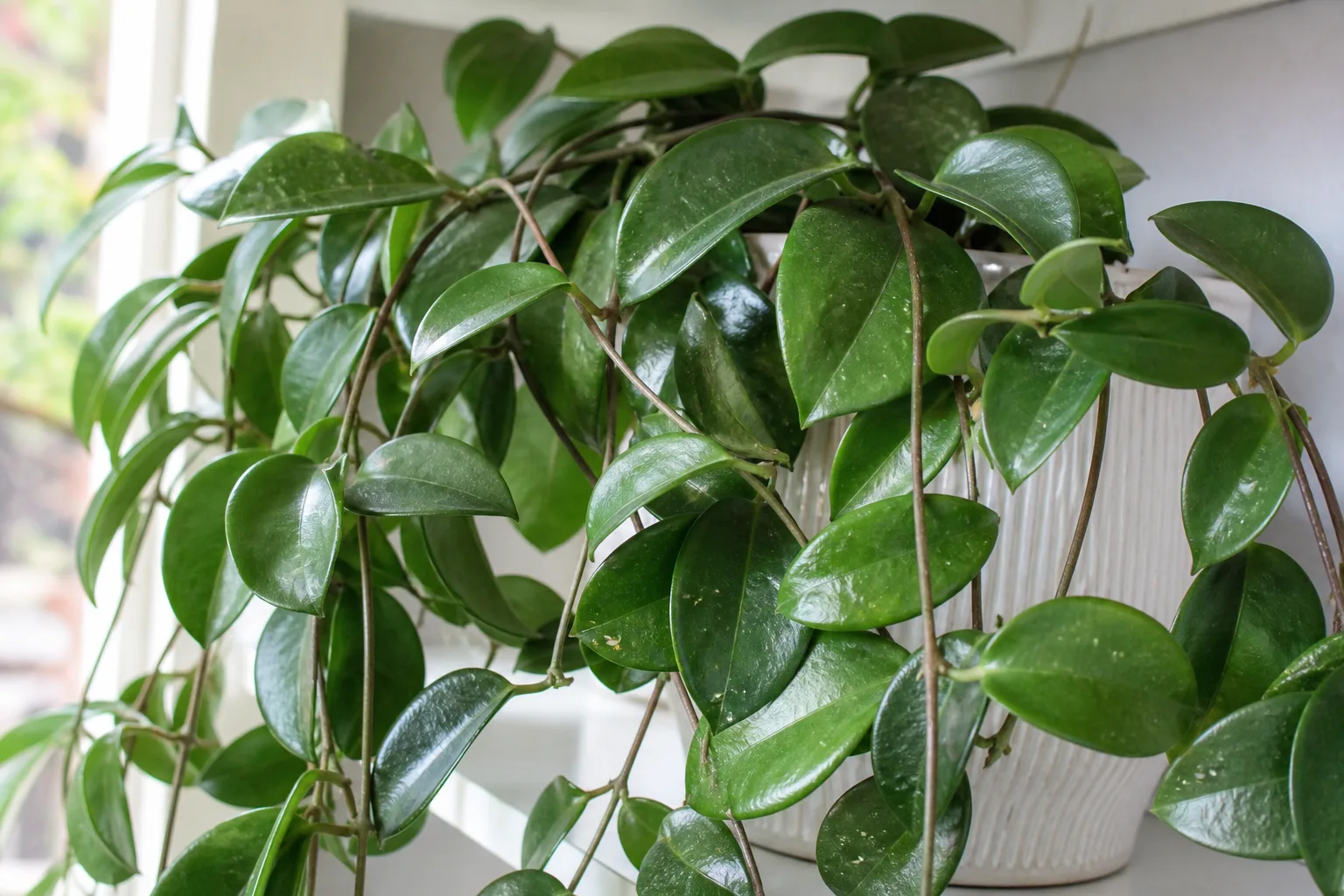
No Flowers on Hoya Carnosa: Causes, Checks & Fixes
This guide covers no flowers on Hoya Carnosa. See also the general No Flowers guide, watering, and light pages for this plant.
No Flowers on Hoya Carnosa: Causes, Checks & Fixes
Quick answer
Healthy Hoya carnosa (Hoya carnosa, wax plant) vines with glossy waxy leaves but no porcelain umbels are one of the most common indoor frustrations-and the fix is rarely a secret fertilizer. Unlike African violets or gesneriads, this epiphytic vine builds blooms on persistent woody peduncles after it reaches maturity and receives enough bright indirect light for most of the day.
First step: increase leaf-level brightness before you change fertilizer, repot, or prune. Move the pot within about twelve inches (30 cm) of your brightest safe window-east glass, or filtered south or west exposure-and confirm no one has cut the bare bloom spurs. A mature carnosa in adequate light with intact peduncles can form buds within weeks; a young plant in a north room may stay flowerless for years regardless of feeding.
Scope: This page troubleshoots why a wax plant is not blooming. For ongoing window placement, direct-sun limits, and grow-light specs, see the dedicated Hoya carnosa light guide.
What no flowers looks like on Hoya Carnosa
“No flowers” on wax plant means no peduncles, no bud swell, and no umbels-not a late-stage bud failure unless you already had clusters abort.
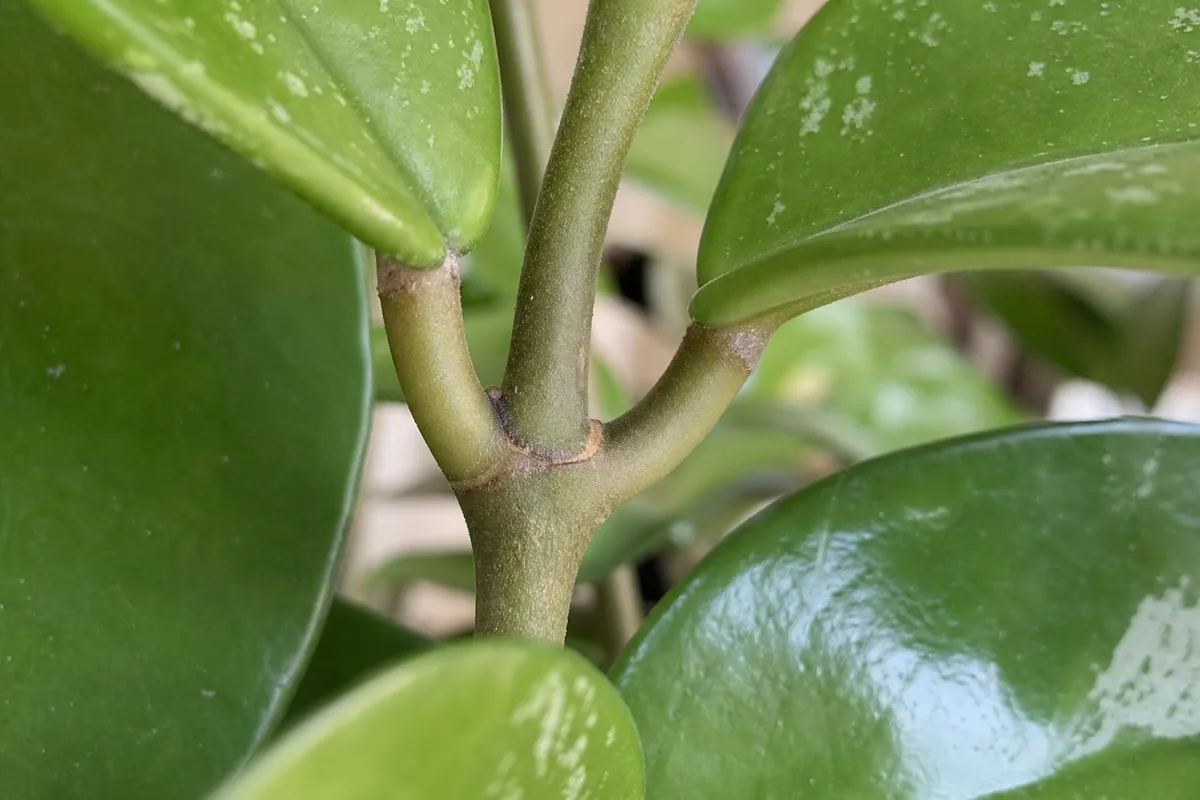
No Flowers symptoms on Hoya Carnosa - compare with healthy tissue on the same plant.
Healthy foliage but no peduncles or umbels
Typical pattern on a bloomless carnosa:
- Thick, waxy, elliptic leaves stay green and firm while vines lengthen
- Zero woody spurs at leaf nodes along mature sections-no short bare stalks where flowers would emerge
- Vines may look vigorous; length alone does not mean bloom readiness
- Seasons pass-spring, summer, fall-with no star-shaped clusters and no evening fragrance
That silence is normal on young plants and on mature plants in dim rooms. It is a problem when the specimen is three or more years old, sits in what feels like a bright room, and still shows no peduncle formation.
Low-light signs: long internodes and small new leaves
When insufficient light is the blocker, the vine often tells you before bloom structures appear:
- Long internodes - gaps between waxy leaf pairs longer than the leaves themselves on the newest section
- Smaller new leaves than older foliage formed in brighter conditions
- Hard lean toward the window or sparse side branching on trailing stems
- No peduncles across multiple growing seasons despite otherwise stable care
Iowa State Extension describes mature wax plant in bright indirect light producing clusters of star-shaped pink and white fragrant flowers-and notes that stems often stretch out before producing leaves when light is marginal. See not enough light on Hoya carnosa and leggy growth when stretch is the dominant symptom.
Lookalikes at a glance
| Pattern | What you see | Most likely cause | First check |
|---|---|---|---|
| Long gaps between leaves, no spurs | Leggy vine, healthy color | Insufficient light | Leaf-level window placement |
| Short vine, no spurs, plant under 2 years | Small pot, steady leaves | Immaturity | Age since propagation or purchase |
| Spurs were cut or never formed | Clean nodes where woody stubs should be | Pruned peduncles | Inspect nodes for cut scars |
| Recent large repot, no buds | Fresh mix, bigger pot | Energy to roots | Pot size vs. root mass |
| Buds swelled then dropped | Aborted clusters after move | Placement change during bud set | Stability after peduncle swell |
Why Hoya Carnosa stops flowering
Insufficient light (primary indoor cause)
Flower production is a high-energy branch of the plant’s budget. Hoya carnosa can survive in medium indirect light for years while routing energy away from peduncles and umbels.
NC State Extension recommends bright indirect light year-round indoors with a partial-shade classification-direct sun only part of the day. Missouri Botanical Garden states plainly that good light is necessary for flower production, while noting tolerance for curtain-filtered sun and bright indirect light. Translation: strong brightness at the leaf canopy, not a dim shelf that faces a window.
A pot six feet from south glass lives in a bright room but not in a bright leaf. Hanging baskets suspended far below the sill often hang in decorative shade. North windows rarely deliver enough intensity for reliable flowering without supplemental LEDs.
Plant immaturity (two to three years)
NC State Extension notes that most plants will not produce flowers until they are two or three years old, with blooming possible in spring, summer, or fall once maturity and light align.
A lush one-year cutting from a friend’s vine is a success story for foliage-not a bloom failure. Vine length misleads owners: a long trailing basket can be biologically young. Ask when the plant was started from cutting or when you acquired a small starter pot, not how many feet of vine you have coiled on the shelf.
Pruned or missing peduncles
Hoya flowers grow from peduncles-short woody spurs that persist after blooms fade. Iowa State Extension’s hoya guidance is explicit: do not deadhead hoya. Flowers grow from spurs easily lost if you remove spent clusters or “tidy” bare stalks. Cutting them off can delay flowering for a long time because you remove the sites where future umbels form.
NC State adds that you should resist pruning the peduncle where flowers have been produced, as that structure repeatedly produces flowers over several years. Cutting off these stems is cutting off future flowers.
If someone pruned your plant for appearance-or you deadheaded thinking you were helping-you may need to wait for new peduncles to form on mature wood after light improves. That timeline is measured in seasons, not weeks.
Oversized pot and high-nitrogen feeding
Carnosa doesn’t mind being pot-bound per NC State, and many experienced growers report better bloom readiness when roots fill the pot without excess empty soil. A recent jump to a much larger container can shift energy into root establishment instead of reproductive structures.
Heavy nitrogen fertilizer pushes leaf growth at the expense of buds on many plants. That does not mean bloom booster on day one-it means avoid chasing flowers with aggressive feeding while light is still limiting. See the Hoya carnosa fertilizer guide for seasonal feeding after light is corrected.
Recent move or repot after bud set
Missouri Botanical Garden warns: pots should not be rotated or moved to another location after flower buds appear. Bud clusters are sensitive to sudden light and temperature shifts. A plant that finally set buds after years in one east window may drop them if moved to the kitchen for “better display” during swell.
The same stability rule applies after you correct chronic low light: once peduncles show bud development, stop rotating the pot weekly until blooms open.
Seasonal slowdown and winter light
Blooming can occur in spring, summer, or fall per NC State, but short winter days and lower sun angle reduce the photon budget even at the same windowsill. A carnosa that bloomed reliably in June may sit idle from November through February-not from a mysterious dormancy disease, but from insufficient winter intensity.
Optional cooler night temperatures around 50°F (10°C) in winter with reduced watering match MOBOT’s winter culture notes and help some growers trigger spring buds-but cool rest does not replace brightness. If winter light is marginal, add a grow light rather than only lowering thermostat.
How to confirm the cause
Work through this checklist in order. One honest placement audit beats a shopping cart of bloom products.
- Plant age - Has this specimen been in your care (or growing from cutting) for at least two to three years? If not, patience is the primary answer until maturity.
- Peduncle inventory - Scan nodes on mature wood for short woody spurs. Cut scars or completely smooth nodes on old vines suggest pruned bloom sites.
- Leaf-level light - Stand where the plant sits at midday. Iowa State hoya guidance describes useful brightness as bright enough to cast a shadow but not direct sun. No meaningful shadow usually means too dim for reliable peduncle formation.
- Internode and leaf size - Compare newest growth to older sections. Lengthening gaps and smaller new leaves confirm light limitation before you blame fertilizer.
- Pot fit - Lift the pot. Roots circling, mix drying on a reasonable schedule, and slight tightness often suit bloom better than a vine swimming in fresh oversized soil after a recent repot.
- Stability history - Did buds appear and abort after a move, repot, or heat vent blast? Placement change during bud swell is a distinct cause from chronic no-bloom.
- Variegation check - On Krimson Queen or Princess, pale zones washing out in dim rooms signal even higher light demand than solid-green carnosa needs for the same bloom outcome.
If checks 1 and 2 pass-mature plant, intact peduncles-and internodes are still long with no spurs, light is the first fix until a two-week brighter placement produces shorter new nodes.
First fix for Hoya Carnosa
Move the plant to brighter leaf-level light before changing fertilizer or pot size.
Practical targets:
- Within twelve inches (30 cm) of east window glass for gentle morning sun plus bright indirect hours, or
- Filtered south or west exposure with sheer curtain or one- to two-foot setback from hot afternoon glass, or
- A full-spectrum grow light twelve to eighteen inches above the canopy for twelve to fourteen hours daily if your best natural spot is north-facing or winter-dim
Increase exposure gradually over seven to fourteen days if the plant lived in deep shade-sudden jumps to unfiltered west summer sun can scorch waxy leaves. Watch newest foliage each step.
Do not repot into a larger pot, apply bloom booster, or prune vines hoping to “trigger” flowers on day one. Do not remove peduncles or bare spurs for tidiness.
Detailed window compass, direct-sun acclimation, and variegated cultivar placement live in the light guide-this page gets you to the correct first lever.
Step-by-step bloom recovery
Once brighter placement is set, follow this sequence:
- Confirm peduncles are intact - Flag any nodes where spurs were cut; those sites need new peduncle formation on mature wood after light improves.
- Hold watering steady - Allow the epiphytic mix to dry between waterings per NC State; wet/dry swings stress bud development. See watering guide if dry-down is inconsistent.
- Wait two weeks for node response - Shorter internodes on the next leaf pair confirm the placement upgrade worked.
- Resume mild feeding only after light is adequate - Light fertilizer during active growth supports energy; it does not replace photons. Details in the fertilizer guide.
- Stop rotating when peduncles swell - Mark the pot orientation and leave stable through bloom per MOBOT guidance.
- Allow spent flowers to fall naturally - Iowa State: do not deadhead; the spur remains for the next cycle.
Recovery timeline and realistic expectations
Timelines depend on which blocker you corrected:
- Low light on a mature plant with intact peduncles - After a verified brightness upgrade, first peduncle formation or bud swell may appear within several weeks to one growing season, not overnight. Existing elongated stems do not shrink; compact spacing shows on new nodes.
- Immaturity - A two-year-old plant may bloom the following spring once age and light align. A six-month cutting needs more seasons regardless of fertilizer.
- Pruned peduncles - New woody spurs must form on mature vines before umbels return. That is often one to three years, not the two-to-four-week window sometimes quoted for light fixes alone.
- Winter short days - Bud progress may pause until day length and intensity recover; supplemental LEDs shorten the wait.
Signs you are on track: shorter internodes, firmer glossy new leaves, first woody spur at a node, peduncle elongation, then cluster swell. Signs the problem persists: continued stretch, smaller new leaves, zero spurs after a full growing season in the upgraded spot-re-audit leaf-level placement or add grow hours.
What not to do
- Do not prune peduncles or bare bloom spurs - you remove the only structures that repeat-bloom.
- Do not deadhead spent wax flowers - let them drop; the spur stays.
- Do not move or rotate the pot after buds form - bud drop is a common consequence.
- Do not repot into a much larger container hoping to force blooms - slight root restriction often suits carnosa better when other factors align.
- Do not apply full-strength bloom fertilizer to a dim, immature, or recently stressed plant.
- Do not judge success by old vine length - blooms gate on age, light, and peduncle presence on new growth under corrected care.
How to prevent repeat bloom failure
- Default to bright indirect light near the glass year-round; treat north rooms as grow-light benches if flowers are the goal.
- Keep peduncles forever - even bare woody stubs are bloom infrastructure.
- Leave the plant stable from peduncle swell through open bloom.
- Avoid oversized pots - repot only when roots crowd, and not while in bud or flower per NC State.
- Match winter light to bloom goals - supplement LEDs when days shorten instead of accepting a four-month pause.
- Give variegated cultivars brighter placement than solid-green carnosa without unfiltered afternoon burn.
Full species context and care hub: Hoya carnosa overview.
When to worry
No flowers alone is rarely an emergency on an otherwise firm, green wax plant. Escalate when:
- Yellowing leaves with wet soil - may indicate root stress unrelated to bloom; see overwatering and root rot
- Soft stems and declining foliage while you chase blooms with fertilizer
- Repeated bud abortion every season after moves - stabilize placement and eliminate heat vents
- Five or more years, bright verified placement, intact peduncles, and still zero spur formation - rare; recheck identity (confirm H. carnosa, not a slow-blooming species like sweetheart hoya) and root health
Young, healthy, flowerless carnosa in a dim room is a care expectation problem, not a dying plant. Correct light and patience before panic Hoya Carnosa repotting guide.
Conclusion
Hoya carnosa rewards patience-but only after light, maturity, and peduncles align. Most indoor bloom failures trace to leaf-level brightness on a plant old enough to flower, not a missing product. Move to your brightest safe window first, inventory woody spurs and protect them, then hold placement steady when buds finally appear. For placement authority and grow-light detail, continue with the light guide; for stretch symptoms without bloom context, see not enough light and leggy growth.
When to use this page vs other Hoya Carnosa guides
- Hoya Carnosa watering guide - Use for routine moisture checks before assuming no flowers is the main issue.
- Hoya Carnosa problems hub - Browse all 17 common issues on this species.