Brown Tips on Hoya Carnosa: Causes, Checks & Fixes
Quick answer
Brown tips on Hoya carnosa most often trace to sun scorch on variegated leaves, winter low-humidity edge crisping, fertilizer salt buildup, or drought when the pot is light and leaves feel soft. First step: note which leaf edges browned, lift the pot for weight, and check moisture one to two inches down before watering or fertilizing.
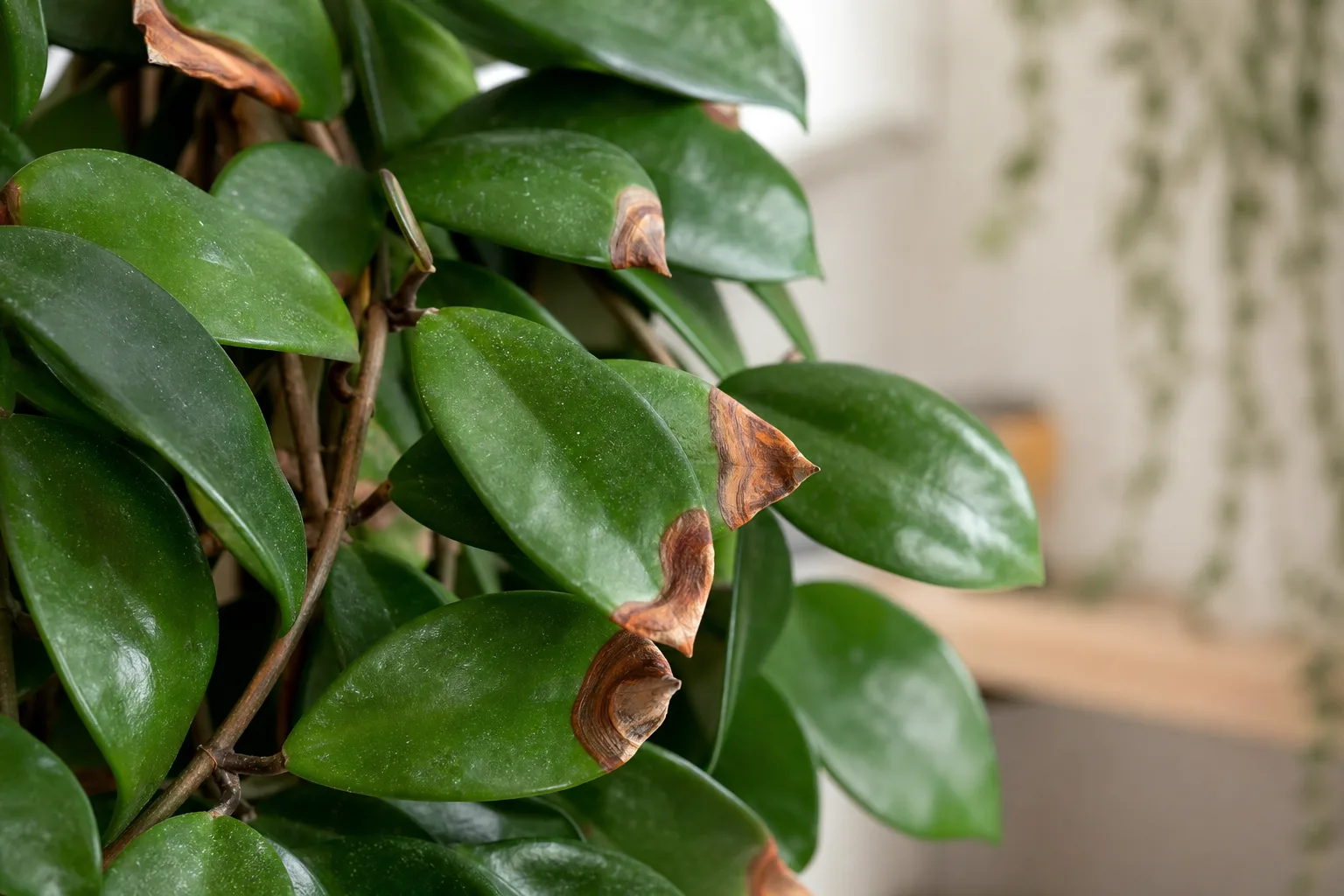
Brown Tips on Hoya Carnosa: Causes, Checks & Fixes
This guide covers brown tips on Hoya Carnosa. See also the general Brown Tips guide, watering, and light pages for this plant.
Brown Tips on Hoya Carnosa: Causes, Checks & Fixes
Quick answer
Hoya carnosa - the classic wax plant - stores water in thick, waxy leaves that mask drought until margins crisp, yet variegated cultivars burn fast when light jumps suddenly. Brown tips on this epiphyte rarely mean one universal cause; they usually fall into four buckets: sun scorch (bleached or brown crispy edges on the window-facing side), dry winter air (papery margins on variegated leaves near heaters), fertilizer salt burn (tip-only browning with crusty soil surface), or drought crisping (brown edges on a light pot with soft, pliable leaves).
First step: stand where the plant sits, note which leaf edges browned, lift the pot for weight, and press your finger one to two inches into the mix. That four-point check separates thirst from salt burn from sun damage before you water, fertilize, or move the plant again. Full species context lives in the Hoya carnosa overview; watering rhythm details are in the watering guide.
What brown tips look like on Hoya carnosa
Wax plant leaves are thick, oval, and leathery - typically three to six inches long with an entire margin. Brown tips on Hoya carnosa therefore read differently than on thin-leaved tropicals like ferns or calatheas. The damage pattern tells you which stressor to fix first.
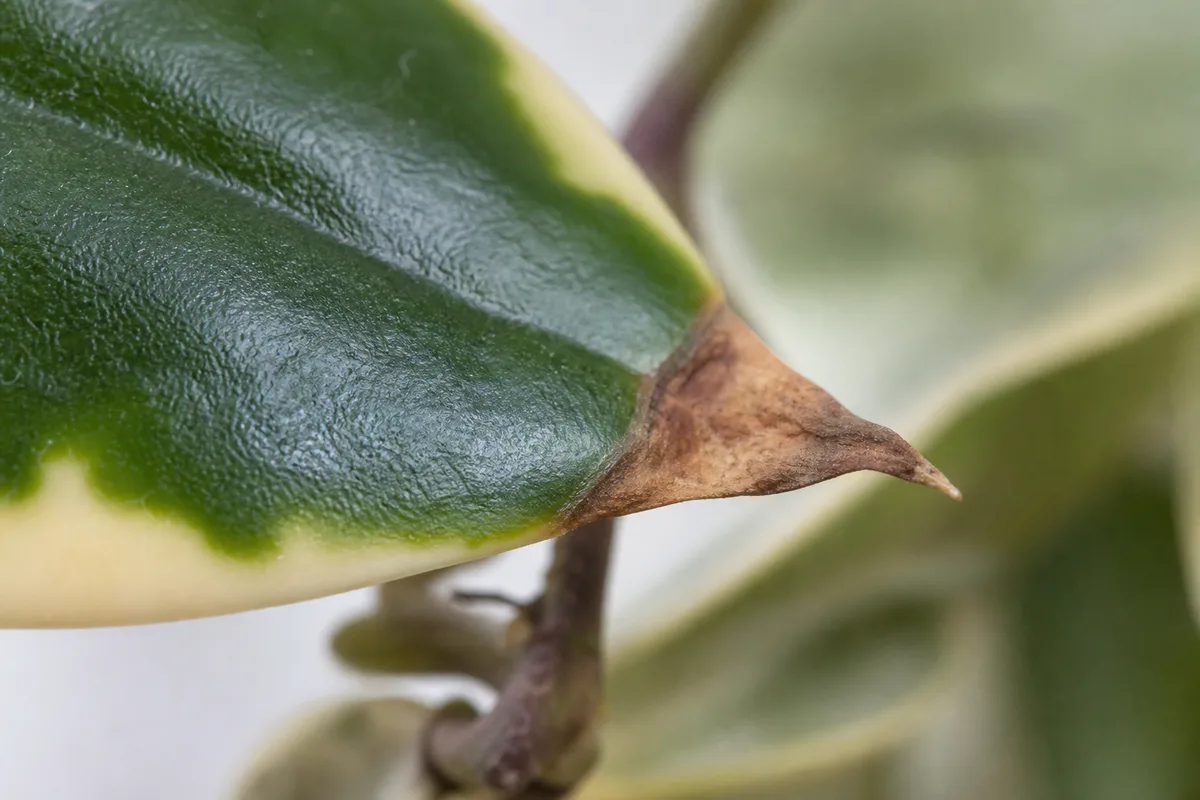
Brown Tips symptoms on Hoya Carnosa - compare with healthy tissue on the same plant.
Sun scorch on variegated or sun-facing leaves:
- Bleached white or pale patches on leaves that face the brightest window
- Brown, papery crispy edges that appear within days of a sudden light increase
- Damage worst on ‘Krimson Queen,’ ‘Krimson Princess,’ and ‘Variegata’ - white and pink sections burn before green centers
- Often asymmetric: one side of the canopy looks fine while the sun-facing leaves crisp
Winter low-humidity edge crisping:
- Narrow tan-to-brown band along leaf margins, sometimes limited to variegated edges
- Papery dry texture on otherwise firm, waxy green tissue
- Worse on leaves nearest radiators, heat vents, or single-pane winter glass
- Develops gradually over weeks of heating season rather than overnight
Fertilizer salt burn at tips:
- Brown or tan discoloration concentrated at the leaf tip with clean, dry margins
- White or crusty residue visible on the soil surface after regular feeding
- Often follows a heavy fertilizer application or months of feeding without flushing
- Leaves may feel brittle at the browned tips while the rest of the leaf stays firm
Drought-related margin crisping:
- Brown crispy edges on leaves that also feel soft or slightly wrinkled when pinched
- Pot feels noticeably light; mix is dry one to two inches down
- Mature foliage shows stress before thin new tips on an otherwise healthy vine
- Recovers leaf firmness within hours after a proper soak - unlike sun scorch, which does not firm up with water
Spider mite stippling (lookalike):
- Fine yellow speckles on leaf undersides plus delicate webbing between stems
- Margins may brown as mite damage advances, but stippling appears before wide crisping
- Common in dry winter air on plants near sunny glass - see spider mites on Hoya carnosa
Why Hoya carnosa gets brown tips
Variegated light sensitivity and winter dry air
Hoya carnosa is an epiphytic vine with thick, succulent-like leaves evolved to store water and tolerate bright conditions when acclimated. Variegated cultivars are the exception: less chlorophyll in white and pink sections means those margins scorch when a plant moves from a dim shop shelf into harsh afternoon sun without gradual adjustment. Clemson HGIC notes that hoyas placed near south-facing windows must be acclimated to direct sunlight to avoid leaf burn, and that high variegation may struggle in lower light.
Winter compounds the problem differently. NC State Extension recommends high humidity for wax plants and notes that spider mites can appear when indoor air is too dry. Average heated-home air often drops below 40% relative humidity from late fall through early spring. The waxy leaf coating slows water loss compared with thin-leaved houseplants, but variegated margins still crisp when transpiration outpaces root uptake in dry air - especially on perimeter leaves nearest heat sources.
Epiphytic watering rhythm vs. surface-dry guesswork
Brown tips are not always a humidity or light problem. Hoya carnosa roots want a wet-dry cycle: soak thoroughly, then let the mix dry down before the next drink. Iowa State Extension explains that many hoyas grow as epiphytes and should be allowed to dry slightly between waterings. When growers water on a calendar because the surface looks pale - or skip drinks because thick leaves still look green - chronic drought eventually shows as crisp margins on soft leaves while the pot is light.
The opposite mistake also produces brown tissue, but through a different pathway. Overwatering degrades roots first; yellow lower leaves and mushy stems typically precede tip necrosis when rot is involved. Brown tips with wet, heavy mix and yellowing vines point toward root trouble, not underwatering - cross-check the yellow leaves guide and overwatering guide before adding water for crispy edges alone.
Salt buildup from regular feeding
Hoya carnosa needs only modest fertilizer during active growth. Heavy or frequent feeding without occasional flushing lets soluble salts accumulate in the pot. Salts follow water movement through the plant and concentrate at leaf tips where moisture exits through transpiration, collapsing cells and producing sharply defined brown tips. This pattern is distinct from sun scorch: tip-focused, often with visible crust on the soil surface, and tied to recent feeding history rather than window direction.
Brown tips vs. yellow leaves vs. full leaf browning
| Pattern | Likely cause | Key checks | First direction |
|---|---|---|---|
| Brown crispy margins or tips only; leaf center green | Sun scorch, humidity, salt, or drought | Window direction, pot weight, soil moisture, feeding history | Fix light, humidity, flush salts, or soak - not all four |
| Yellow lower leaves spreading; mix stays damp | Overwatering / root stress | Wet mix, soft stem base, fungus gnats | Dry down; inspect roots - yellow leaves |
| Soft, pliable leaves + light pot + dry mix | Drought | Leaf firmness test, pot weight | Thorough soak - underwatering |
| Bleached patches on sun-facing side after move | Sun scorch | Recent relocation toward south/west window | Filter light; acclimate - light guide |
| Stippling + webbing on undersides | Spider mites | Dry air + magnification check | Isolate; treat mites - spider mites |
| Whole leaf brown and mushy | Advanced rot or cold shock | Sour smell, wet mix, recent cold draft | Root inspection urgently |
Cosmetic brown tips on a few perimeter leaves while new growth stays firm and green is lower urgency than widespread yellowing with wet soil or a soft crown.
How to confirm the cause
Work through these checks in order. One honest reading beats guessing from a single browned leaf.
- Light direction and recent moves - Did you relocate the plant toward a south- or west-facing window in the last two weeks? Are variegated margins on the brightest side while shaded leaves stay green? Sun scorch is likely.
- Pot weight and soil moisture - Lift the pot. Heavy and damp at one to two inches depth with brown tips suggests salt burn or rot, not thirst. Light with dry mix and soft leaves suggests drought.
- Leaf firmness (taco test) - Pinch a mature leaf. Stiff and rigid with brown tips points away from underwatering. Soft and pliable with crispy margins confirms drought when the pot is also light.
- Humidity and heat sources - Is the plant within three feet of a radiator, forced-air vent, or winter window? Gradual margin crisping on variegated edges in heating season fits low humidity - see low humidity on Hoya carnosa.
- Feeding history and soil crust - Have you fertilized within the last month? Is white crust visible on the soil surface? Tip-only browning after feeding fits salt burn - see the fertilizer guide.
- Pest scan - Hold leaves to the light and check undersides for stippling or fine webbing before assuming environmental stress alone.
Confirmation decision guide
- Sun scorch confirmed → Bleached or brown sun-facing edges + recent light increase + firm leaves + normal pot weight.
- Humidity crisping confirmed → Margin browning on variegated edges + winter heating + firm leaves + stable watering.
- Salt burn confirmed → Tip-focused browning + crusty soil + recent fertilizer + otherwise firm foliage.
- Drought confirmed → Brown margins + light pot + dry mix + soft or wrinkled leaves.
- Root stress suspected → Brown or yellow tissue + wet heavy pot + soft stem base - not a tip-only drought pattern.
First fix for Hoya carnosa (by likely cause)
Make one correction first, then watch new growth for two weeks before stacking changes.
If sun scorch is most likely: Move the plant back to bright indirect light - east window, or south/west with sheer filtering. Do not water extra; scorched tissue does not rehydrate. Acclimate gradually if you want more light later: add one hour of gentler morning sun per week over two weeks. Variegated cultivars need slower acclimation than solid-green wax plants.
If dry winter air is most likely: Move the pot away from heat vents and drafty glass. Add a pebble tray (pot elevated above water) or run a small humidifier near the plant several hours daily. Do not compensate for dry air by keeping soil wet - that invites rot on an epiphyte that prefers dry-down intervals.
If salt burn is most likely: Pause all fertilizer. Flush the pot with plain room-temperature water until excess runs freely from drainage holes; repeat twice over several days. Resume feeding at quarter strength only after new growth looks healthy for two weeks.
If drought is most likely: Soak the mix thoroughly until water drains from the bottom, then empty the saucer. Wait for the top half to dry before the next drink - not a calendar date. Use the leaf firmness and pot-weight checks from the watering guide going forward.
If spider mites are present: Isolate the plant and treat before adjusting light or feed - mites spread in dry air and worsen margin damage.
Recovery timeline
Sun scorch: Existing bleached or brown tissue does not green up again. New leaves should emerge with normal color within two to three weeks once light is corrected. Scorched margins stop spreading within days of moving back from harsh exposure.
Humidity crisping: Margin damage is permanent on affected leaves. New growth should look glossy and intact within two to four weeks after RH improves above roughly 40% near the canopy.
Salt burn: Brown tips remain on old leaves. Fresh foliage should show clean tips within two to four weeks after flushing and pausing fertilizer. Judge success by new leaves, not old damaged ones.
Drought: Leaf firmness often returns within hours to one day after a proper soak. Crisp margins on recovered leaves may stay brown until those leaves are eventually replaced by new growth.
Severe or spreading damage: If brown tissue advances across many leaves while the pot stays wet, or the stem base softens, recovery may take months and require root inspection - not tip trimming alone.
What not to do
Do not increase watering when brown tips came from sun scorch or salt burn - wet soil on an epiphyte that already has firm leaves worsens root health without fixing scorched tissue.
Do not fertilize a stressed wax plant to “green up” browned tips. Fertilizer on dry roots or sun-damaged foliage adds salt pressure when the plant cannot use nutrients.
Do not assume brown tips always mean underwatering. Overwatering shows yellow leaves and wet mix first; adding water to a soggy Hoya carnosa deepens rot.
Do not move the plant into stronger sun to fix brown tips - that intensifies scorch on variegated margins.
Do not stack repotting, heavy pruning, and pesticide on the same day. Change one variable, observe new growth, then adjust again.
Do not prune peduncles (flower spurs) while troubleshooting - those woody stems produce repeat blooms for years when left intact.
How to prevent brown tips next time
Match everyday care to epiphytic biology rather than generic “water when the surface dries” advice.
- Water on plant signals, not a calendar - Let the top half of the mix dry, confirm with pot weight and leaf firmness, then soak and drain. NC State Extension advises allowing soil to dry between waterings for wax plants.
- Acclimate variegated cultivars slowly to brighter windows; filter harsh afternoon sun through sheer curtains.
- Target 40–70% humidity during heating season if variegated margins crisp every winter.
- Fertilize lightly during active growth only - quarter to half label rate on moist soil - and flush salts occasionally if you feed regularly.
- Inspect weekly in dry winter months for spider mites on stressed plants.
- Use room-temperature water - cold water can shock Hoya carnosa and contribute to leaf drop on sensitive specimens.
When to worry - wet mix with yellow lower leaves or soft stem base
Treat as urgent if brown or yellow tissue spreads rapidly across many leaves while the mix stays damp, the stem base feels soft where vines meet soil, or fungus gnats hover constantly over wet potting mix. Those patterns suggest root decline, not cosmetic tip burn. Slide the plant from the pot, inspect root color and smell, and follow the overwatering and root rot guides before trimming foliage for appearance alone.
A few brown tips on outer leaves with firm stems, green new growth, and a pot that dries on a normal rhythm is routine stress - fix the specific cause above and wait for the next leaf.
Related Hoya carnosa guides
- Hoya carnosa overview - light, humidity, troubleshooting
- Watering Hoya carnosa - top-half dry-down, leaf firmness, pot weight
- Light for Hoya carnosa - acclimation and variegated sensitivity
- Yellow leaves on Hoya carnosa - overwatering lookalike
- Low humidity on Hoya carnosa - winter margin crisping
- Fertilizer for Hoya carnosa - salt burn prevention
Related tool
Use the Plant Problem Diagnosis Tool to narrow causes for brown tips on this plant before changing multiple variables at once.