Spider Mites on Hoya Carnosa: Causes, Checks & Fixes
Quick answer
Spider mites on Hoya Carnosa show as fine yellow stippling on thick waxy leaves and delicate webbing at leaf axils along trailing vines-often after winter heating drops humidity below 40%. First step: isolate the plant and rinse every leaf underside with lukewarm water before applying horticultural oil every five to seven days for three cycles.
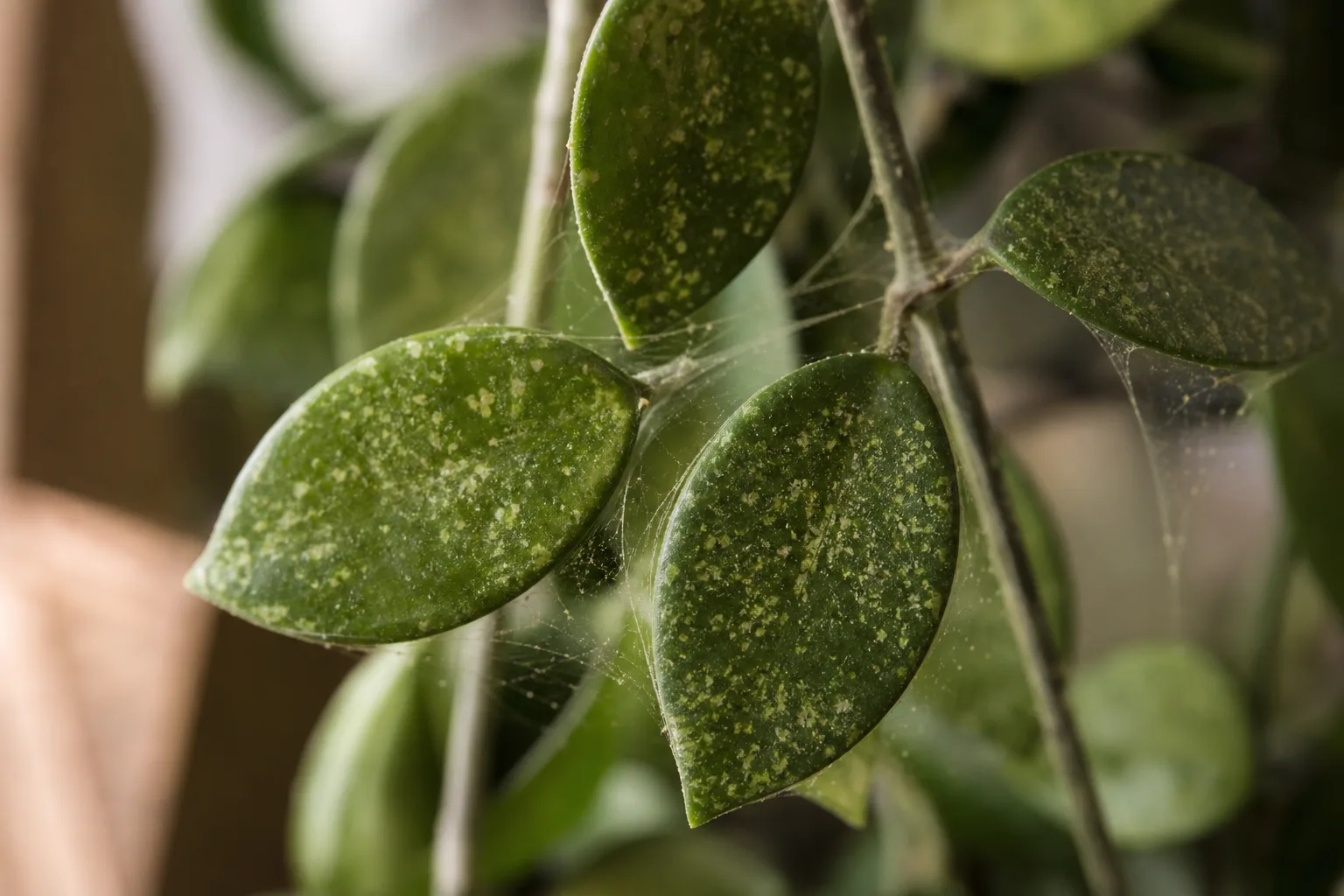
Spider Mites on Hoya Carnosa: Causes, Checks & Fixes
This guide covers spider mites on Hoya Carnosa. See also the general Spider Mites guide, watering, and light pages for this plant.
Spider Mites on Hoya Carnosa: Causes, Checks & Fixes
Quick answer
Spider mites on Hoya Carnosa (Hoya carnosa, wax plant) attack the undersides of thick waxy leaves along trailing vines, leaving fine yellow stipples that bronze over time and delicate webbing at leaf axils where stems fork. Winter heating beside a south-facing window is the classic trigger: warm, dry air below 40% relative humidity stresses the plant and favors mite outbreaks on hanging baskets. First step: move the plant away from neighbors, then rinse every leaf underside with lukewarm water to knock down active mites before you confirm the pest and schedule oil treatments.
Why Hoya Carnosa gets spider mites in dry winter rooms
Hoya Carnosa is not fragile, but its epiphytic biology makes dry indoor air a real pest risk. Spider mites can appear on wax plant when the air is too dry, alongside mealybugs and aphids on this species. Heated winter rooms-especially hanging baskets near radiators, sunny glass, or AC vents-often drop below the 40–60% humidity range hoyas grow best in, which matches the hot, dry conditions where twospotted spider mites reproduce fastest.
Trailing vining stems multiply the problem. Each leaf axil and dense vine cluster creates a sheltered feeding site mites can colonize while a casual top-down glance shows only glossy green foliage. Cultivars with contorted, crowded leaves-especially Hoya carnosa ‘Compacta’ (Hindu Rope)-add extra harborage in leaf folds that stay slightly humid after misting but still dry out fast in forced-air heat. Variegated forms like ‘Krimson Queen’ often show stippling on pale margins first, where thinner tissue is easier for mites to pierce.
Spider mites rarely appear on a healthy, well-humidified Hoya in isolation. They hitchhike on new nursery stock, shared pruning tools, or hands moving between hanging plants on the same shelf. Stress from recent repotting, cold window sills, or chronic underwatering does not cause mites directly, but it slows recovery once they arrive. If brown edges appear without stippling or webbing, check low humidity before treating for pests-the symptom pattern is different on thick waxy leaves.
What mite damage looks like on thick waxy leaves
- Fine yellow or white pinprick stipples scattered across the leaf face, often visible before bronzing spreads
- Bronze or dull patches on older waxy leaves where feeding has been heavy
- Delicate silk webbing at leaf bases, stem nodes, and peduncle forks-not the fluffy white wax of mealybugs
- Crisp, curled leaf edges on heavily infested shoots; premature drop on lower vines in advanced cases
- Slowed new growth on tips that were expanding steadily before the outbreak
- Pale variegated sections on ‘Krimson Queen’ or ‘Variegata’ showing damage before solid-green areas
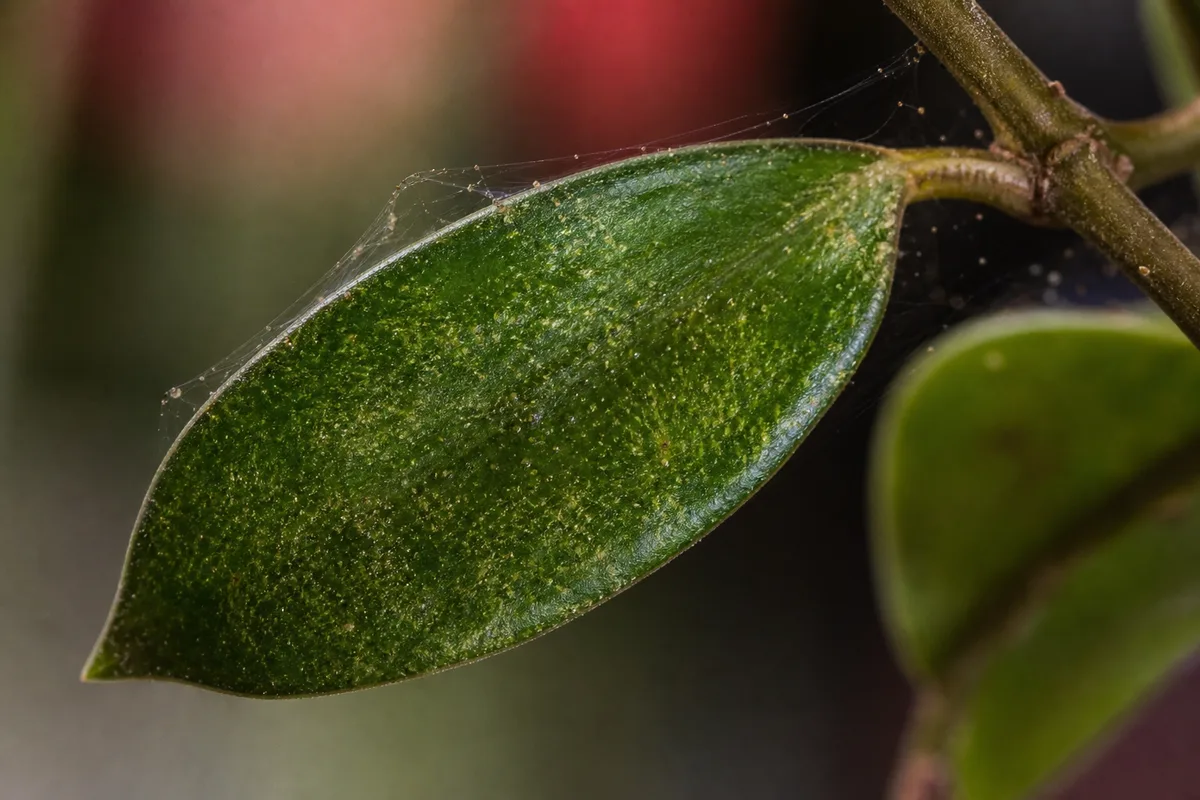
Spider Mites symptoms on Hoya Carnosa - compare with healthy tissue on the same plant.
On trailing Hoya Carnosa, damage often starts one or two nodes back from the visible growing tip, where stems bend and undersides stay hidden. Lift each vine and inspect from below with a flashlight-top-down watering misses the colonies that webbing confirms. Hindu Rope forms need every crinkle opened; stippling inside a twisted fold is easy to mistake for natural leaf texture until you see the silk threads.
Do not confuse mineral deposits or water spots on the glossy leaf face with mite stippling. Hard-water residue sits on the surface and wipes off; feeding damage is embedded in the leaf and does not rub away cleanly.
Spider mites vs. low humidity, thrips, mealybugs, and drought wrinkling
| Sign | More likely |
|---|---|
| Brown crisp edges only, no stippling or webbing | Low humidity below 40% in heated winter air |
| Scattered yellow pinpricks plus fine silk at axils | Spider mites |
| Silver streaks or black specks on new growth | Thrips |
| White cottony wax in leaf axils and crown crevices | Mealybugs |
| Soft wrinkled leaves on a light, dry pot | Underwatering or wilting from drought stress |
| Clusters of soft-bodied insects on tender new shoots | Aphids |
The most common misdiagnosis on wax plant is confusing winter edge crisping with mite stippling. Low humidity browns margins on firm leaves without the scattered pinprick pattern mites leave across the blade. Drought wrinkling makes the whole leaf soft and pleated; mite damage keeps the leaf firm but speckled. Mealybugs leave discrete cottony clumps in joints-very different from the fine stippling-and-webbing pair mites produce.
How to confirm spider mites (six-step checklist)
- Check placement first. Note whether the plant sits near a heater, sunny window, or AC vent in a dry winter room-mite risk rises in that microclimate.
- Lift trailing vines. Inspect leaf undersides and stem nodes along the full length, not just the top-facing leaves you see from the floor.
- Look for stippling plus webbing together. Either sign alone can mislead; the combination on waxy Hoya foliage is the mite fingerprint.
- Run the paper-tap test. Hold white paper under a suspect leaf and tap sharply-slow-moving specks confirm live mites; dirt and mineral dust do not crawl.
- Open Hindu Rope folds. On ‘Compacta’ and other contorted cultivars, spread creased leaves and check inner surfaces with a magnifier if needed.
- Rule out lookalikes. No cottony wax means not mealybugs; no edge-only browning without stippling points to humidity, not mites-see the Hoya carnosa care overview for the 40–70% humidity target.
Confirmed mites warrant treatment. Suspected stippling without moving specks or webbing may be environmental-fix humidity and watering rhythm before stacking pesticides.
First fix: isolate neighbors, rinse trailing vine undersides, and treat on a schedule
Isolate the affected plant away from other Hoyas, pothos, and shared hanging hooks. Spider mites crawl between pots and ride air currents in dry rooms. That single isolation step is your day-one action-do not repot, prune peduncles, or fertilize on the same day.
Once isolated, rinse leaf undersides thoroughly with lukewarm water. Tilt a hanging basket and work a shower wand or sink sprayer along each vine, targeting the underside where mites feed. Let the pot drain completely and place the plant in bright indirect light so waxy leaves dry the same day-avoid leaving the bark-heavy epiphytic mix saturated for days, which invites root stress on a plant already under sap loss. For the soak-and-dry watering rhythm during recovery, see the watering guide.
After the rinse knocks down populations, apply horticultural oil or insecticidal soap labeled for spider mites, coating undersides and stem joints the water alone missed. Repeat every five to seven days for at least three cycles-mite eggs hatch on a staggered schedule and one pass rarely clears a trailing vine. Keep treated plants away from pets until sprays dry; Hoya Carnosa is non-toxic to cats and dogs, but horticultural oils and soaps are not meant to be licked off leaves.
Recovery timeline and what “clean new growth” looks like
Stippling should stop spreading within one to two weeks once rinsing and oil cycles begin consistently. Expect clean new tips within two to three weeks if humidity stabilizes and no fresh webbing appears at nodes during weekly checks. Old bronzed or stippled waxy leaves do not fully green up again-the cosmetic scarring stays, but firm new leaves and wax-free nodes mean the plant is winning.
Flower peduncles you have preserved for reblooming should stay attached during treatment. Do not cut spurs to “clean up” unless they are fully dead-those same peduncles can flower again on Hoya Carnosa once mites are gone.
What not to do
Do not assume insecticides labeled only for insects will kill mites-mites need miticides, horticultural oils, or insecticidal soaps labeled for mite control. Do not shower the epiphytic crown daily; repeated soaking of bark-heavy mix without same-day drainage risks crown rot on a trailing Hoya. Do not confuse winter edge crisping from dry air with mite stippling and spray unnecessarily. Do not cut healthy peduncles while treating. Do not stack repotting, heavy pruning, and pesticide on the same day-spread stress across weeks. Avoid applying oil in harsh direct sun on recently rinsed leaves; treat in bright indirect light and ventilate indoor spaces while sprays dry.
Prevention: humidity, underside scouting, and hanging-basket placement
Raise winter humidity toward the 40–70% range with a pebble tray (pot elevated above the water line), grouped plants, or a small humidifier-more reliable than misting waxy leaves in stagnant air. Scout leaf undersides weekly along trailing vines during heating season, especially on Hindu Rope and variegated cultivars. Keep Hoya Carnosa in bright indirect light with epiphytic mix that dries between waterings so growth stays firm rather than stressed and stagnant.
Quarantine new Hoyas for two weeks before hanging them beside established vines. Clean pruners between plants, and treat the first stippled leaf before mites spread across a multi-foot trailing hanger.
When to escalate or call it quits
Escalate when webbing covers growing tips, multiple vines carry stippling, or neighboring plants on the same wall hook show matching damage-isolate the whole group and treat on the same schedule. Persistent mites after three full oil cycles may need a different labeled product or professional greenhouse supply miticide; rotate approaches rather than doubling concentration.
If more than half the vines are bronzed with webbing at most nodes and new growth has stalled for a month despite consistent treatment, propagation from a clean tip cutting above the worst damage may be more practical than saving a heavily depleted mother plant. Mites will not kill a healthy wax plant overnight, but unchecked feeding during the main growing season can drop buds, shorten vines, and leave the plant depleted going into winter rest.
Related Hoya Carnosa guides
- Hoya carnosa care overview - humidity targets, epiphytic mix, and pet safety
- Low humidity - edge crisping without stippling
- Wilting and underwatering - drought stress vs. pest damage
- Mealybugs - axil inspection technique on the same trailing vines
- Aphids - sap-feeding pests on tender new growth
- Watering guide - dry-between logic during recovery