Mealybugs on Hoya Carnosa: Causes, Checks & Fixes
Quick answer
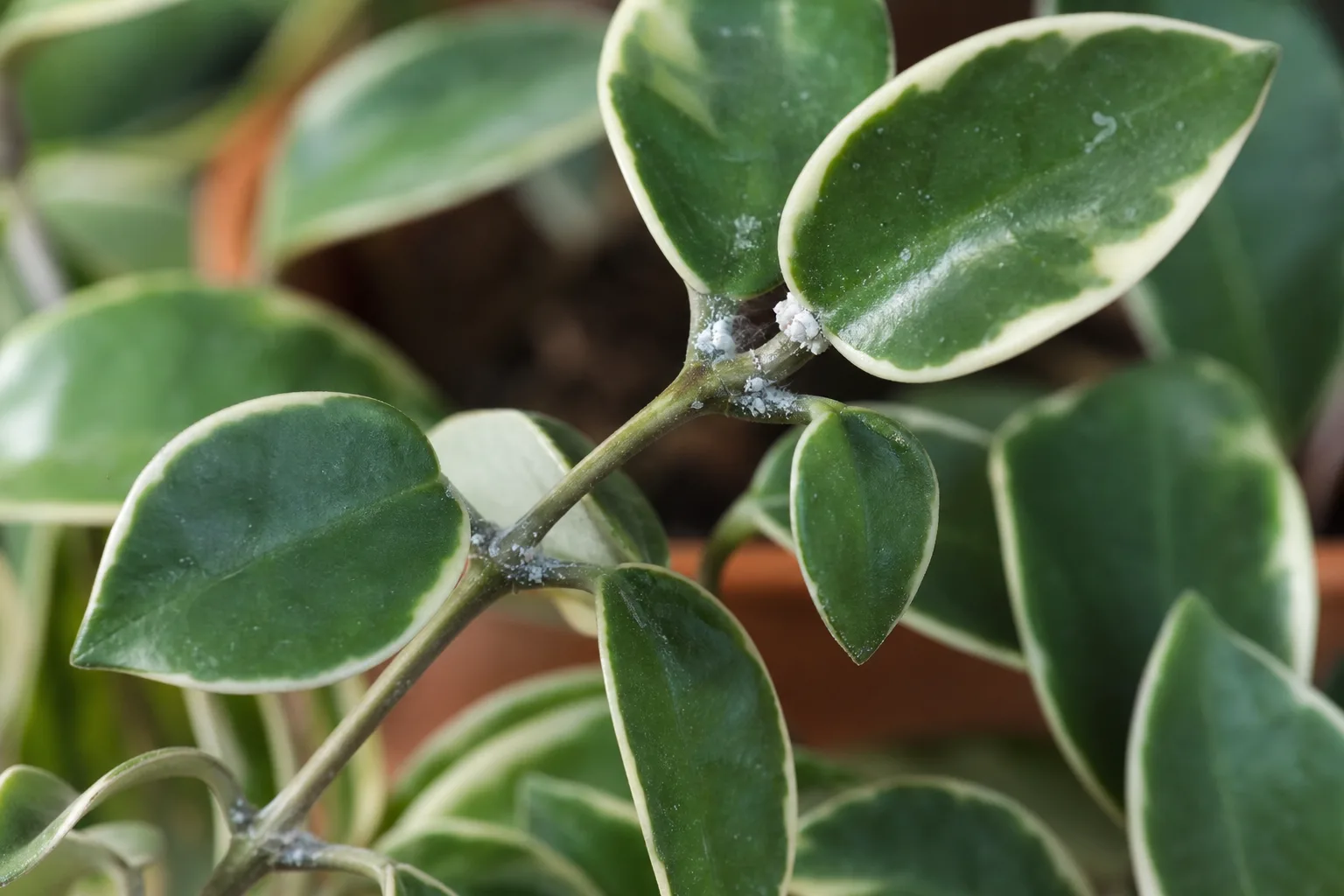
Mealybugs on Hoya Carnosa hide as white cottony clusters in leaf axils, stem nodes, and tight crown crevices along trailing vines. Isolate the plant and dab each visible cluster with 70% alcohol on a cotton swab before spraying insecticidal soap into joints weekly.
Mealybugs on Hoya Carnosa: Causes, Checks & Fixes
This guide covers mealybugs on Hoya Carnosa. See also the general Mealybugs guide, watering, and light pages for this plant.
Mealybugs on Hoya Carnosa: Causes, Checks & Fixes
Quick answer
Mealybugs on Hoya Carnosa (Hoya carnosa, wax plant) show up as white cottony masses tucked into leaf axils, stem nodes, crown crevices, and along the base of flower peduncles. They suck sap, excrete sticky honeydew, and slow the plump new growth and blooming Hoya Carnosa overview is known for. First step: move the plant away from others, then dab every visible cluster with 70% isopropyl alcohol on a cotton swab, working into the tight joints where rinsing never reaches.
Why Hoya Carnosa gets mealybugs
Hoya Carnosa is not pest-proof just because it is drought-tolerant and long-lived. Warm indoor rooms without natural predators let mealybug populations build year-round on houseplants. Trailing vining stems create a long chain of sheltered leaf axils-exactly where mealybugs prefer protected sites to feed and lay eggs. Hoya is among the houseplants most commonly infested with aboveground mealybugs.
Most infestations start on stressed or recently purchased plants. Mealybugs hitchhike on nursery stock, shared tools, or hands moving between hanging baskets. Cultivars with twisted, crowded foliage-especially Hoya carnosa ‘Compacta’ (Hindu Rope)-add extra hiding spots in leaf folds that stay humid after misting. Weak light and overwatered epiphytic mix slow recovery, but the trigger is usually introduction, not humidity alone.
overwatering on Hoya Carnosa does not cause mealybugs directly, but soggy bark-based mix keeps roots stressed and can mask root-feeding mealybugs near the soil line. Ants on the hanger or shelf often signal honeydew above from mealybugs, aphids, or scale-not a separate problem to treat first. Colorado State Extension notes that mealybugs are commonly found on hoya, jade, and other succulent-leaved houseplants where sap is easy to reach.
High-nitrogen fertilizer combined with frequent watering can also invite trouble. Over-application of nitrogen stimulates tender new growth where mealybugs prefer to lay eggs. Hoyas need modest feeding during active growth; pushing nitrogen while fighting pests makes new tips softer and more attractive to crawlers.
What mealybugs look like on Hoya Carnosa
- White or gray cottony ovals clustered in leaf axils, stem forks, crown centers, and peduncle bases
- Sticky, shiny leaves, pot rims, or shelves; black sooty mold on honeydew in heavy infestations
- Slow yellowing, curling, or premature leaf drop on heavily fed shoots
- Stalled new tips on vines that were growing steadily before the infestation
- Bud drop or failure to open on peduncles when sap loss is severe
- Flat tan or brown disks on stems suggest scale, not the fluffy wax of mealybugs
- Fine stippling and webbing point to spider mites instead
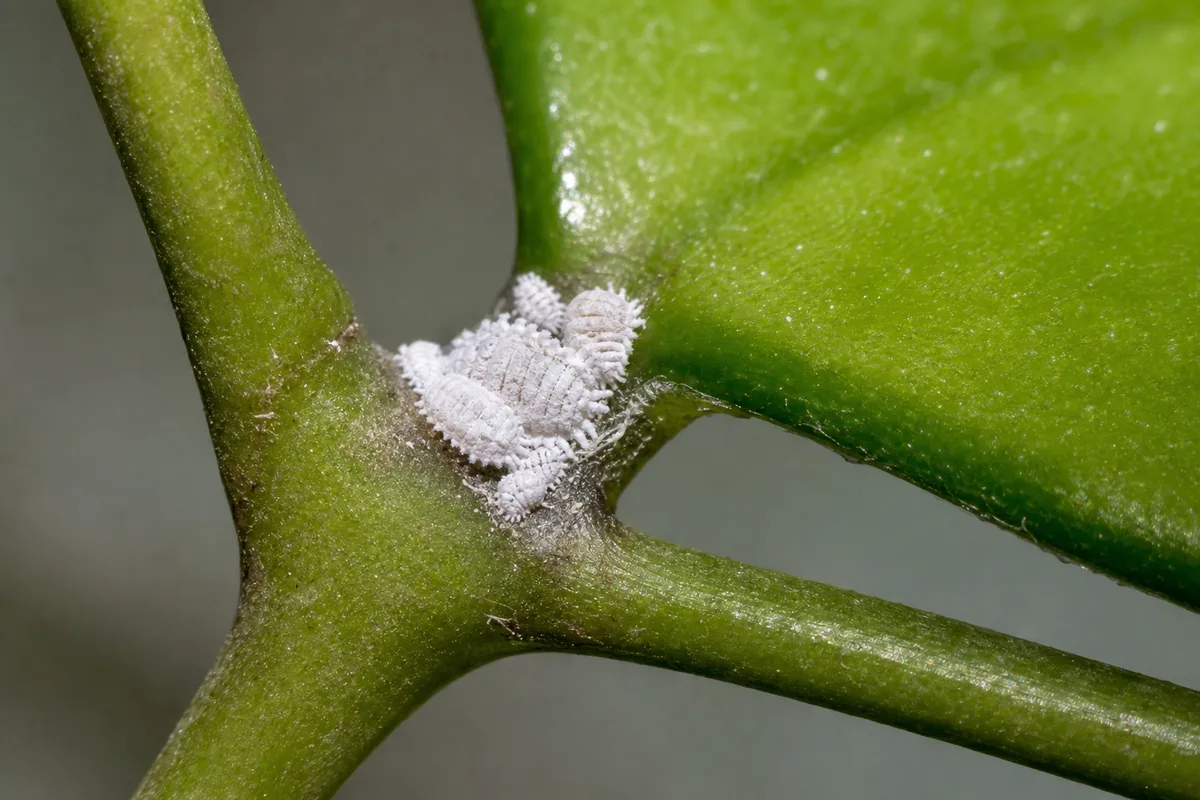
Mealybugs symptoms on Hoya Carnosa - compare with healthy tissue on the same plant.
On trailing Hoya Carnosa, check the underside of every waxy leaf along the vine and the tight center where new leaves emerge. Mealybugs often sit one node back from the visible growing tip where the stem bends. Hindu Rope forms need every crinkle inspected-the cottony wax can look like it belongs on the plant until you see it moving or clustering in fresh groups.
Do not confuse natural leaf texture with pests. Healthy Hoya leaves are thick and glossy, but they lack discrete white cottony clumps at the nodes. Mineral deposits or water spots sit on the leaf face; mealybugs anchor in joints and leave honeydew behind.
How to confirm the cause
Work in good light with a magnifying glass if needed. Pull each leaf back at the node and trace every fork down the trailing stem, paying special attention to leaf axils, crown centers, and peduncle stubs you have left intact for reblooming. Stationary white waxy clumps that dissolve when touched with alcohol confirm mealybugs. Flat white powder only on leaf tops may be mineral deposits or unrelated mold, which need different care.
Press an alcohol swab onto one cluster. Mealybugs turn orange-gray when killed; dust and perlite do not. If stems look clean but the plant stays weak, slide it partly out of the pot and inspect the bark mix surface and upper roots for root mealybugs-white wax without obvious aboveground colonies.
Rule out underwatering on Hoya Carnosa before blaming pests alone: a firm leaf with dry mix and no wax means drought stress, not mealybugs. Hoya Carnosa leaves can wrinkle slightly when thirsty, but they lack cottony wax clusters. Overwatered plants with yellow leaves and wet mix may look sick without any pests-confirm wax before treating.
First fix for Hoya Carnosa
Isolate the affected plant away from other Hoyas, trailing pothos, and shared shelves. Dab each visible mealybug and egg mass with a cotton swab soaked in 70% isopropyl alcohol, pressing into leaf axils, crown crevices, peduncle bases, and stem nodes. Test alcohol on one leaf first if the plant was recently repotted or sits in strong direct sun-Hoya leaves can scorch when stressed.
That single isolation-and-dab pass is your day-one action. Do not repot, prune heavily, or fertilize on the same day. After dabbing, you can follow with insecticidal soap to coat stems and leaf undersides on the next suitable day, repeating weekly for at least three weeks because eggs and crawlers hide in protected joints and survive one pass.
Avoid soaking the epiphytic mix repeatedly while fighting pests. A gentle rinse of affected stems is fine, but keeping bark mix wet for days invites root problems on a plant already weakened by sap loss. Hoyas prefer drying between waterings anyway-let the top half of the mix dry before the next drink.
Step-by-step recovery
- Isolate the plant and inspect every leaf axil, crown crevice, peduncle base, and node along the vines.
- Dab every cottony cluster with alcohol; dispose of swabs in sealed trash.
- Spray insecticidal soap or horticultural oil into crevices the swab could not reach, following label intervals.
- Wipe sticky honeydew from leaves and pot rims so sooty mold does not spread.
- Re-inspect weekly; repeat treatment until no new wax appears for two consecutive checks.
- If root mealybugs are present at the mix surface and control fails after three cycles, repot into fresh epiphytic mix after rinsing roots-only then, not on day one.
Recovery timeline
Visible clusters often collapse within days of alcohol dabbing. Full control typically needs two to three weekly repeats because of hidden eggs and crawlers that hatch on a staggered schedule. Expect clean new tips within two to three weeks once treatment is working. Old scarred or yellowed leaves do not fully revert, but firm new growth and wax-free nodes mean the plant is winning.
Flower peduncles you have preserved for reblooming should stay attached-do not cut them to “clean up” unless they are fully infested and dead. Once pests are gone, the same peduncle can flower again on Hoya Carnosa.
Lookalike symptoms
| Sign | More likely |
|---|---|
| Flat white film on leaf tops only | Mineral deposits or unrelated mold |
| Tan/brown raised bumps on stems | Scale insects |
| Fine webbing, stippled leaves | Spider mites |
| White wax in leaf axils and crown | Mealybugs |
| Ants without visible wax | Honeydew from hidden pests-inspect crevices |
| Wrinkled leaves, no cottony clusters | Underwatering |
| Yellow leaves, wet mix, no wax | Overwatering |
What not to do
Do not stop after one alcohol dab or a single soap spray-mealybugs reproduce in crevices your first pass missed. Do not shower the plant daily; saturated bark mix on an epiphytic Hoya compounds stress. Do not increase watering because leaves look limp; sap loss from pests is not fixed by wet mix. Do not cut healthy peduncle stubs while treating-those are future bloom sites. Keep treated plants away from pets until sprays dry; Hoya Carnosa is non-toxic to cats and dogs, but alcohol and soaps are not meant to be licked off leaves.
How to prevent mealybugs next time
Quarantine every new Hoya for two weeks before placing it near others. Scout leaf axils and crown centers monthly during active growth, especially on Hindu Rope and other crinkled cultivars. Keep Hoya Carnosa in Hoya Carnosa light guide with epiphytic mix that dries between waterings so growth stays firm rather than soft and stagnant. Clean pruners between plants, avoid heavy nitrogen feeds during peak pest season indoors, and treat the first white wax spot before mealybugs spread across a hanging collection.
When to worry
Escalate when colonies cover growing tips, multiple vines carry wax, or ants farm the plant heavily. Root-zone infestations combined with limp stems and sour-smelling mix need faster action than a few axil clusters on an otherwise firm plant. Mealybugs will not kill a healthy Hoya Carnosa overnight, but unchecked feeding during the main growing season can stall vine length, drop buds, and leave the plant depleted going into the cooler, slower winter rest.
When to use this page vs other Hoya Carnosa guides
- Hoya Carnosa watering guide - Use for routine moisture checks before assuming mealybugs is the main issue.
- Hoya Carnosa problems hub - Browse all 17 common issues on this species.
- Yellow Leaves on Hoya Carnosa - Different entry point when symptoms overlap with mealybugs.
- Slow Growth on Hoya Carnosa - Different entry point when symptoms overlap with mealybugs.
- Spider Mites on Hoya Carnosa - Different entry point when symptoms overlap with mealybugs.