Hoya Carnosa Light Requirements: Bright Indirect for Blooms
Hoya Carnosa Light Requirements: Bright Indirect for Blooms
Hoya Carnosa Light Requirements: Bright Indirect for Blooms
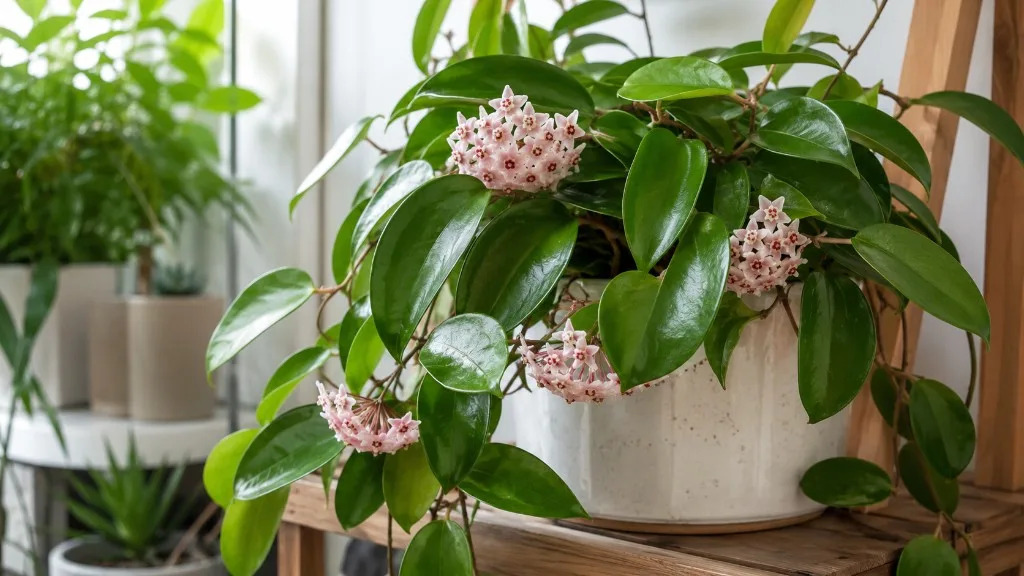
Hoya carnosa is one of those houseplants that looks effortless until you want the thing it is famous for: clusters of waxy, star-shaped porcelain flowers with a sweet evening fragrance. The vines grow in dim corners. The leaves stay green. Years pass. No blooms. The usual culprit is not a missing fertilizer trick or a Hoya Carnosa repotting guide calendar - it is light intensity, specifically whether the plant receives enough bright indirect light over enough hours each day to fund both leaf growth and the expensive work of building peduncles and flower buds.
Hoya carnosa is an epiphytic vine native to Southeast Asia, Japan, and Taiwan, where it climbs tree trunks into bright, filtered canopy light rather than baking in open desert sun or surviving on forest-floor darkness. North Carolina State Extension describes the indoor ideal as bright indirect light year-round, with a cultural classification of partial shade - direct sunlight for only part of the day, roughly two to six hours. (NC State Extension) Missouri Botanical Garden goes further for flower production: site the plant in bright light with at least half a day of direct sun, while noting tolerance for curtain-filtered sun and bright indirect light, and stating plainly that good light is necessary for flower production. (Missouri Botanical Garden)
Those two reputable sources are not contradicting each other. They are describing the same practical band from different angles: strong brightness with direct rays managed, not a dim shelf that happens to face a window. This guide focuses on the decisions that turn a surviving wax plant into a blooming one - how much light Hoya carnosa actually needs, what bright indirect means at your windowsill, where to place the pot indoors and out, how much direct sun is safe, when to add grow lights, and how to read warning signs before legginess or scorch becomes permanent habit.
How Much Light Hoya Carnosa Actually Needs
For healthy foliage and reliable flowering indoors, treat bright indirect light for most of the day as the baseline target. In grower terms, that usually means the plant sits where it receives strong ambient brightness - enough that the canopy is clearly illuminated - without unfiltered hot afternoon sun beating on the leaves for hours. Multiple extension and university-aligned houseplant references converge on this range for hoyas generally, with Hoya carnosa sitting comfortably in the medium-to-bright indirect camp that still supports bloom energy when other conditions cooperate.
Bloom-focused growers often aim for roughly six to eight hours of bright indirect light daily, with optional gentle morning direct sun on an east exposure. That hour count is not a magic switch; it is a useful minimum when your goal is peduncle formation, not mere survival. A plant in a bright room that only receives indirect bounce light from across the room may count as “near a window” in your floor plan but not in the plant’s photon budget. Light must land on the leaf surface, not just illuminate the wall behind the pot.
Hoya carnosa can tolerate lower light for extended periods. It will often keep existing leaves and produce slow, thin new growth. What it will not do - what it structurally cannot do without adequate energy - is build the recurring bloom spurs called peduncles and sustain fragrant umbels year after year. Flower production is optional in botanical terms but mandatory in grower satisfaction, and flowers are the first expense cut when light is limiting.
Light also sets the pace for every other care variable. A Hoya in correct bright light dries its pot faster, metabolizes water and nutrients more actively, and tolerates the slight root restriction that many mature specimens prefer before blooming. A dim Hoya stays wet longer, grows slowly, and becomes vulnerable to overwatering on Hoya Carnosa on a schedule copied from a plant on a brighter sill. Treat light as the throttle for the whole system.
The Short Answer for Busy Growers
If you only remember five rules, use these. Default placement: brightest suitable window with the pot within 12 inches (30 cm) of the glass, not on a distant shelf. Target intensity: bright indirect most of the day; east window or filtered south/west are the safest bloom-friendly defaults. Direct sun: fine when acclimated, with morning sun preferred over harsh afternoon rays through bare glass. Bloom check: if the plant is healthy, mature, and still flowerless after years, increase light before increasing fertilizer. Diagnostic habit: judge by newest leaves and internode length over 10–14 days after any move - old damage does not reverse.
A practical field test used in extension education: if you can read comfortably where the plant sits and the leaves cast a faint but definite shadow at midday, you are likely in the usable bright-indirect band Iowa State Extension describes for hoyas - bright enough to cast a shadow but not in direct sun. If the shadow is sharp and dark, you may be in direct-sun territory that needs filtering or acclimation. If there is no meaningful shadow, the spot is probably too dim for reliable blooming.
Why Bright Indirect Light Unlocks Wax Plant Blooms
Hoyas are often sold as “low-maintenance” because they forgive missed waterings and do not throw dramatic tantrums in mediocre light. That marketing truth creates a bloom trap: growers assume the same conditions that keep the plant alive should eventually produce flowers. They will not. Flowering is a high-energy branch of the plant’s budget. Leaves are the solar panels; peduncles and umbels are the luxury build.
In habitat, Hoya carnosa climbs toward brighter strata as it matures, positioning its thick, waxy leaves where filtered sun delivers consistent photon flux without desiccating exposure. The carnosa epithet means fleshy - these leaves store water and resist drought, but they are not shade-forest specialists like some understory ferns. They are bright-filtered-light specialists that happen to be patient when you underfeed them photons.
NC State Extension notes that most plants will not flower until they are two or three years old, that blooming can occur in spring, summer, or fall, and critically, that you should resist pruning the peduncle (spur) where flowers have been produced, because that structure repeatedly produces flowers over several years. (NC State Extension) Missouri Botanical Garden adds another bloom-critical rule: do not rotate or move the plant to another location after flower buds appear. (Missouri Botanical Garden) Light therefore is not only about intensity at purchase - it is about stable, sufficient intensity through bud development.
Maturity and slight root-bound conditions also influence blooming, but light is the input you can correct this afternoon. A two-year-old Hoya in a appropriately tight pot still will not bloom on a north-facing bookshelf. A five-year-old specimen in a dark dining room will grow legendary vines and zero umbels. When troubleshooting “no flowers,” light comes first, then stability, then Hoya Carnosa watering guide, then patience.
What Bright Indirect Means in a Real Room
Bright indirect light is one of the most misused phrases in houseplant care because rooms feel bright to human eyes long after they stop being bright to a leaf. Human vision adapts; plants do not. Bright indirect means:
- The plant receives strong, diffuse or reflected light for most daylight hours.
- Direct sunbeams do not sit on the leaves for long unfiltered stretches, especially not hot afternoon sun through west or south glass.
- The canopy is visibly lit; you are not relying on a distant window’s “glow.”
Quantitatively, experienced indoor growers and retailer education programs often cite roughly 1,500–2,000 foot-candles as a strong growth and bloom band for Hoya carnosa - a range an east-facing window frequently approaches in morning hours, while a north window usually falls short for consistent flowering. You do not need a meter to apply the idea: east and bright filtered south/west placements hit the target; deep interior shelves usually do not.
Bright indirect is not “any window.” A pot on a table six feet from a south window is in a bright room but low flux at leaf level. A hanging basket tucked under a ceiling soffit may see sky without receiving usable intensity. Move the plant until new growth responds - shorter gaps between leaves, firmer texture, appropriate gloss - then stop chasing marginal gains that risk sunburn.
Best Window Placement for Hoya Carnosa
Compass direction is a starting guess, not a verdict. A “south window” blocked by a porch roof may deliver less usable light than an open east window. A west window with a sheer curtain may outperform an unfiltered south bay that cooks leaves by noon. Placement succeeds when leaf-level light stays in the bright-indirect band for enough hours daily and direct rays are timed and filtered to match acclimation.
Indoors, prioritize proximity: within a foot of the glass on the best exposure you can offer. Hanging baskets are beautiful for Hoya carnosa’s vining habit, but a basket suspended too far below the sill often hangs in decorative shade. Outdoors in warm months, many houseplants including hoya can spend summer on a patio in partial shade, returning inside when nights drop below about 50°F (10°C) per NC State guidance. (NC State Extension) Transition gradually in both directions - indoor winter air and outdoor summer sun both require acclimation.
Rotate the pot a quarter turn every week or two to prevent hard lean, but stop rotating once peduncles show bud swell. Stability matters more than symmetry during bloom cycles.
East, South, West, and North Windows Compared
An east-facing window is the most reliable bloom-friendly default for Hoya carnosa indoors. Morning sun is bright but cooler than afternoon sun, delivering direct rays when leaf temperature and transpiration stress stay manageable. Two to four hours of early direct sun on acclimated leaves often produces excellent growth and the kind of gentle stress that encourages maturity without chronic scorch. If you have one good east sill, start there.
A south-facing window supplies the strongest winter sun in the northern hemisphere and can be outstanding for Hoya carnosa from fall through spring when rays are lower and less intense. In summer, south glass can become a magnifying lens. Use a sheer curtain, pull the pot one to two feet (30–60 cm) back from the pane, or limit direct contact to morning hours if afternoon heat builds. South is ideal when you want maximum bloom potential and you are willing to manage seasonal diffusion.
A west-facing window throws hard afternoon rays - high risk for sudden sunburn on plants moved from nursery shade, high reward for well-acclimated specimens in cooler seasons. If west is your brightest option, filter peak hours and watch the leaf side facing glass for bleach patches first. West works when combined with curtain diffusion or when the plant has been stepped up through east or filtered south exposure over two weeks.
A north-facing window rarely provides enough intensity for consistent Hoya carnosa blooming in most homes. North can maintain slow survival growth for shade-tolerant temperaments, but expect long internodes, smaller new leaves, and absent peduncles unless you supplement with grow lights. Treat north as a grow-light bench, not a bloom window, if flowers are the goal.
Morning Sun and Filtered Afternoon Light
The sweet spot for many bloom-focused Hoya growers mirrors outdoor partial-shade logic: morning direct sun plus bright indirect for the rest of the day. Missouri Botanical Garden’s “at least half a day of direct sun” guidance sounds aggressive until you read the qualifier - curtain-filtered sun and bright indirect light are explicitly acceptable paths to the same bloom outcome. (Missouri Botanical Garden) Translation: you do not need blazing noon beams on the leaves if you provide long-duration brightness and some gentle direct exposure when the plant is ready.
For south and west windows, a sheer white curtain or one- to two-foot setback from glass converts harsh direct into productive bright indirect. Outdoor growers mimic the same pattern under open trees - bright sky with dappled protection from peak rays. If you lack morning sun entirely, compensate with longer bright indirect duration and consider grow-light hours rather than pushing unfiltered afternoon sun.
Direct Sun Tolerance and Safe Acclimation
Hoya carnosa leaves are thick, waxy, and drought-tolerant - traits that correlate with moderate direct-sun tolerance when the plant is acclimated. Unacclimated leaves grown in low light will burn quickly if jumped to a west window in June. Acclimation is not optional etiquette; it is cell-level preparation for higher photon flux and UV exposure.
Step up exposure over 7 to 14 days: move from bright indirect only → one hour of early direct → three to four morning hours → filtered all-day south/west if the plant shows no scorch. Watch newest leaves each step. If you see bleaching, pull back one level and wait for firm new growth before trying again. Never stack a major light jump with repotting, heavy feed, or a watering schedule overhaul - change one stressor at a time.
Two to three hours of morning direct sun is tolerable for most established Hoya carnosa specimens. The danger zone is unfiltered midday and afternoon through south or west glass, especially in summer and especially on variegated leaves with less chlorophyll per area. Hot glass radiates infrared stress independent of PAR - leaves can cook even when the light “looks” fine to you.
Sun Stress vs Sunburn on Hoya Leaves
High light triggers two visually different responses growers often confuse. Good sun stress shows as a bronze, red, or purple flush on leaves - anthocyanin pigments acting as UV sunscreen. Firm leaves, short internodes, and a light tan-to-burgundy cast on sun-exposed surfaces often correlate with high energy availability and bloom readiness in acclimated plants. Many collectors consider mild sun stress desirable on Hoya carnosa because it signals the plant is working near the top of its light band without tissue death.
Bad sunburn shows as bleached white patches, crispy brown edges, yellowing with collapse, or sudden leaf cupping and drying on the window-facing side. Sunburn is tissue damage, not a tan. If you see it, reduce intensity immediately - move back, add shear, shorten direct hours - rather than waiting for adaptation that will not come on dead cells. Old burned leaves will not green up; only new leaves tell you the corrected placement is safe.
Variegated cultivars reach sunburn faster because pale zones lack chlorophyll and protective pigment. Standard green Hoya carnosa tolerates more direct exposure when acclimated; Krimson Queen margins and Krimson Princess centers scorch first. When in doubt, favor bright indirect plus morning sun over all-day unfiltered south glass.
Light Needs of Variegated Hoya Carnosa Cultivars
All Hoya carnosa cultivars share the same bloom gate - sufficient bright light - but variegated forms carry higher light demand per square inch of functioning chlorophyll. White, cream, and pink zones do not photosynthesize. The green tissue must work harder to support the same vine mass, which means variegated plants often need slightly brighter placement than a solid-green specimen to achieve the same growth rate and bloom potential.
They also fail faster in two directions: too little light produces washed-out, floppy variegation and long internodes; too much unfiltered sun bleaches or browns the pale sectors first while green centers may look fine for a few days before the whole leaf declines.
Krimson Queen, Krimson Princess, and Hindu Rope
Hoya carnosa ‘Krimson Queen’ (also sold as Tricolor) carries creamy white to pink margins around a green center. Margin variegation is stunning but UV-vulnerable. Give Krimson Queen bright indirect with morning sun as a default; push toward filtered south only after acclimation and only if new leaves stay firm with stable margin color. If margins brown or bleach, reduce direct hours before moving the whole plant to a dimmer room - the problem is usually ray intensity, not total brightness.
Hoya carnosa ‘Krimson Princess’ inverts the pattern: pink and white variegation in the leaf center with dark green margins. Centers bleach faster than margins in harsh sun. Princess often performs beautifully on east windows and bright filtered south placements. Watch center zones for white-to-tan crisping - the earliest sunburn signal on this cultivar.
Hoya carnosa ‘Compacta’ - the Hindu rope or Krinkle Kurl form with contorted leaves - has the same light requirements as standard carnosa despite its unusual foliage geometry. Rope forms can hold moisture in leaf folds longer, so pairing strong light with careful watering matters even more. Do not hide rope Hoyas in dim corners because the sculptural form looks good there; bloom energy still follows photons, not aesthetics.
Solid-green Hoya carnosa and ‘Variegata’ (cream margins, sometimes pink-tinged per NC State cultivar notes) sit between these patterns: greener types tolerate more direct sun when acclimated; margin-variegated types need brighter indirect but sharper protection from afternoon burn. (NC State Extension)
Low Light Limits and the No-Bloom Problem
Hoya carnosa’s reputation for toughness makes low light seem like a reasonable long-term plan. It is not - not if you want vines that look dense and umbels that return on the same peduncles each season. In low light, the plant enters a survival economy: it elongates internodes to search for photons, produces smaller, paler leaves, and routes energy away from reproductive structures. The result is the classic leggy, bloomless wax plant that frustrates collectors who swear they “do everything right” except place the pot where the leaf canopy actually receives brightness.
Low light also amplifies watering mistakes. A dim Hoya uses less water, so soil stays wet longer, roots breathe less, and fungal gnats or root decline follow - NC State lists fungus gnats attracted to mixes that stay too wet as a common indoor problem for Hoya Carnosa overview. (NC State Extension) Fixing water without fixing light treats the symptom while leaving the throttle closed.
If your only available spot is genuinely dim, do not pretend it is bright because the room feels fine to you at breakfast. Either add a grow light or reset bloom expectations. Hoya carnosa can live in medium indirect light for years; it simply will not behave like the photographs from a greenhouse bench. There is no shame in a foliage-forward display - but there is confusion when expectations assume flowers without photons.
Signs you are below the usable band include internodes longer than two to three leaf widths, new leaves noticeably smaller than older ones, vines reaching toward the window glass with sparse foliage between nodes, and no peduncle formation across multiple growing seasons despite mature age and otherwise stable care. If those signs appear, increase brightness before buying another fertilizer or swapping pot size.
Grow Lights for Dark Homes and Short Winter Days
Not every home offers an east sill or a filtered south bay. Apartments with tinted glass, deep floor plans, and north-primary exposures can still grow excellent Hoya carnosa - and even coax blooms - with full-spectrum LED grow lights that extend the effective day length through dark seasons. Grow lights are not a compromise penalty; they are precision tools that deliver consistent intensity when weather and architecture will not.
Use grow lights when: your brightest window still produces leggy new growth; winter daylight drops below the plant’s summer baseline; you rely on a north exposure; or you keep Hoya on a interior wall far from glass. Supplemental light is especially useful for variegated cultivars that need higher flux to maintain color and density.
Distance, Hours, and Spectrum Setup
A practical starting protocol used widely in hoya-growing practice: position a full-spectrum LED grow light 12 to 18 inches (30–45 cm) above the canopy and run it 12 to 14 hours daily, timed to overlap with natural window light when possible. Choose fixtures marketed for seedlings and houseplants with balanced blue-red spectra rather than cheap purple blur lights designed for novelty, not foliage depth.
Watch leaf temperature at the canopy - if leaves feel warm to the touch after hours under the fixture, raise the light or reduce hours. Heat stress mimics sunburn even when intensity looks moderate. Increase duration before slamming the fixture closer; Hoya carnosa prefers steady bright exposure over pulsed blasting.
Adjust based on new growth: if internodes shorten and leaves thicken, hold the setup. If new leaves bleach or curl upward, raise height or cut hours by two. If vines still stretch, add an hour or move the fixture slightly closer in small increments. Grow lights should create steady plant-facing brightness, not a heat lamp.
Combine grow lights with seasonal window moves thoughtfully. In winter, sliding the pot to the brightest glass and adding a lamp often outperforms either alone. In summer, you may reduce supplemental hours when natural light peaks - let the plant show you when the combined load is too high by reading newest leaves.
Light Changes Across Seasons
Light is not static in real homes. Winter lowers sun angle and shortens days; summer pours heat through south and west glass; deciduous outdoor shade trees change patio exposure between June and September. Hoya carnosa does not need a new care religion each season, but it does need awareness when the photon budget shifts enough to change growth rate, water use, and bloom timing.
In winter, move Hoya carnosa to the brightest stable spot you can offer - often a south window that was too hot in August becomes perfect in January. Reduce watering frequency as growth slows, but do not interpret slower growth as permission to park the plant in a dim back room. Many bloom cycles are set during winter rest when cool nights and bright days combine to differentiate buds for spring and summer flowering. Missouri Botanical Garden notes winter tolerance for less bright light and less watering, with night temperatures down to about 50°F, without demanding a dark dormancy - less light is not the same as no light. (Missouri Botanical Garden)
In summer, watch for heat buildup on window glass and air-conditioning drafts that desiccate leaves even when light levels look ideal. A sheer curtain often improves summer outcomes more than moving the plant away from all direct sun, because total brightness still matters for peduncle maturation. Outdoor summer shade on a patio can boost brightness versus indoor tint, but acclimate before exposing nursery-grown leaves to open sky.
When seasons change, adjust one variable at a time - light OR watering rhythm, not both in the same weekend - and read new growth for ten to fourteen days before calling the move a success or failure.
Winter Brightness and Cool-Rest Context
Bloom timing in Hoya carnosa is not controlled by light alone, but light provides the energy storage that makes cool-rest triggers meaningful. Many experienced growers report that mature specimens bloom more reliably after a winter period with bright days, cooler nights (roughly 60–65°F / 15–18°C night range in heated homes), and slightly reduced watering - mimicking subtropical dry-season cues without dark starvation. This is interpretation grounded in collector practice, not a guaranteed formula; your plant may bloom in summer with stable year-round conditions if light is strong enough and age is sufficient.
The actionable winter takeaway: do not sacrifice brightness to mimic dormancy. Give the brightest winter window or supplemental LED hours, keep nights modestly cooler if safe for your home, avoid repotting or peduncle pruning, and wait. Spring and summer blooms often follow peduncles that initiated quietly while you were focused on watering less in February.
Warning Signs Your Hoya Carnosa Has the Wrong Light
Plants communicate light mistakes on a delay. Old leaves record old sins; new leaves and active vine tips record today’s placement. Train yourself to look at the youngest firm leaf and the newest internode gap every time you water - that ten-second habit catches problems while correction is still a small move rather than a rescue.
Separate too little and too much light before changing water or feed. Yellow lower leaves in dim rooms often mean overwatering enabled by low transpiration, not nutrient deficiency. Bleached upper leaves facing glass mean ray intensity, not thirst. Misdiagnosis sends you in circles.
Too Little vs Too Much Light Symptoms
Too little light typically shows as:
- Elongated internodes - visible gaps between leaves longer than the leaf itself on new growth
- Smaller, thinner new leaves compared to older foliage formed in brighter conditions
- Dull, dark green color without the glossy firmness of well-lit leaves
- Vines leaning or reaching toward the nearest bright source with sparse side growth
- No peduncles across multiple seasons despite plant age and stable roots
- Soil staying wet unusually long after watering in cooler months
Too much light typically shows as:
- Bleached white or tan patches on sun-facing leaf surfaces, especially on variegated zones
- Crispy brown margins or tips developing within days of a placement change
- Upward leaf cupping or folding during brightest hours, sometimes with dry texture
- Sudden leaf drop or yellowing on the window side after unfiltered exposure increase
- Mild sun stress confusion - acceptable bronze-red flush is firm and even; burn is patchy and crispy
Correction path for under-lighting: move closer to glass, shift to east or filtered south/west, add grow-light hours, then wait for two nodes of new growth before judging. Correction path for over-lighting: add shear or distance, restrict direct to morning hours, pause acclimation until new leaves emerge unblemished. In both cases, do not repot, prune peduncles, or overhaul watering in the same week you fix light.
Conclusion
Hoya carnosa light requirements boil down to a grower-realistic target: bright indirect light for most of the day, with managed direct sun - usually morning exposure or curtain-filtered south and west - supplying the energy blooms demand. The plant will survive in less. It will flower in more only when intensity, hours, stability, and maturity align. East windows and bright filtered exposures are the safest defaults; north windows and interior shelves need grow lights if porcelain umbels are the goal.
Place the pot where light hits leaves, not where it flatters the room. Acclimate before pushing direct sun. Keep peduncles and stop moving once buds form. Read new growth after every change. If your wax plant is healthy but flowerless after years of kind treatment, assume insufficient brightness until proven otherwise - then adjust once, wait two weeks, and let the next leaf tell you the truth.
When to use this page vs other Hoya Carnosa guides
- Hoya Carnosa overview - Start here for whole-plant context before deep-diving this topic.
- Hoya Carnosa problems hub - Jump to symptom-specific fix guides when this care topic does not resolve the issue.
- Not Enough Light on Hoya Carnosa - Escalate here when light adjustments are not enough.
- Leggy Growth on Hoya Carnosa - Escalate here when light adjustments are not enough.