Leggy Growth on Hoya Carnosa: Causes, Checks & Fixes
Quick answer
Leggy Hoya Carnosa vines show long gaps between thick waxy leaves from too little light-not disease. First step: move the plant within a foot of your brightest east or filtered south/west window before changing water or fertilizer.
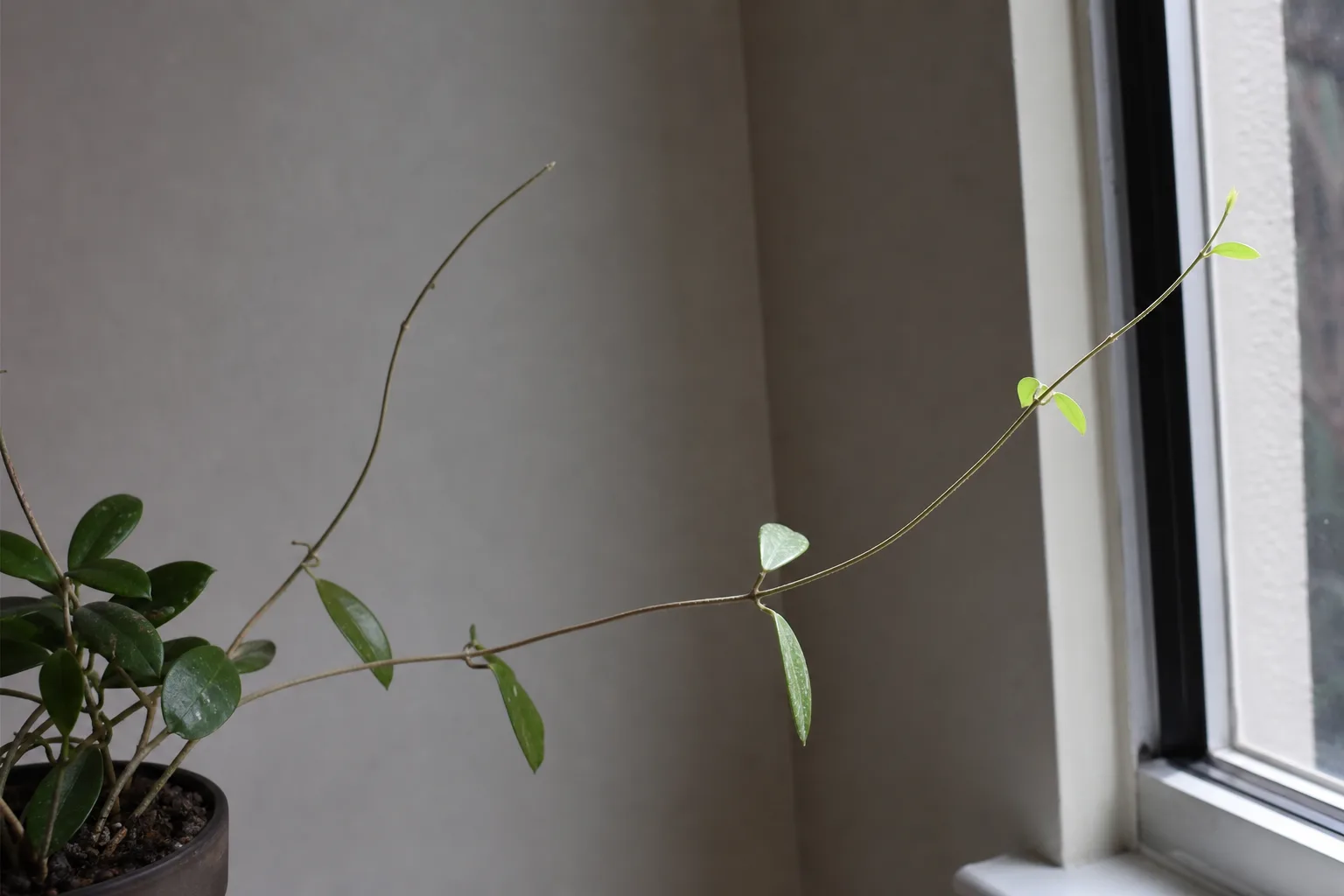
Leggy Growth on Hoya Carnosa: Causes, Checks & Fixes
This guide covers leggy growth on Hoya Carnosa. See also the general Leggy Growth guide, watering, and light pages for this plant.
Leggy Growth on Hoya Carnosa: Causes, Checks & Fixes
Quick answer
Leggy growth on Hoya Carnosa (Hoya carnosa, wax plant) is etiolation: vines stretch when photons fall short of what this climbing epiphyte needs for compact waxy foliage and porcelain flower umbels. Signs include long internodes between thick leaf pairs, smaller dull new leaves, hard lean toward windows, and zero peduncles on otherwise mature vines.
Carnosa is famously forgiving-it survives dim corners while stretching, which tricks owners into thinking care is adequate. That tolerance trap is the hallmark of Hoya Carnosa overview: unlike silver-splashed Hoya pubicalyx, which often looks obviously thin in low light, solid-green or variegated carnosa can look “fine” for years while internodes lengthen and bloom spurs never form.
First step: move to your brightest safe window-within about twelve inches of east glass or filtered south/west exposure. The not enough light page covers full diagnostics; leggy growth names the visible stretch pattern.
What leggy growth looks like on Hoya Carnosa
On wax plant, legginess reads on new vine tips first. Older leaves may still look plump and glossy while the active growth section tells the truth.
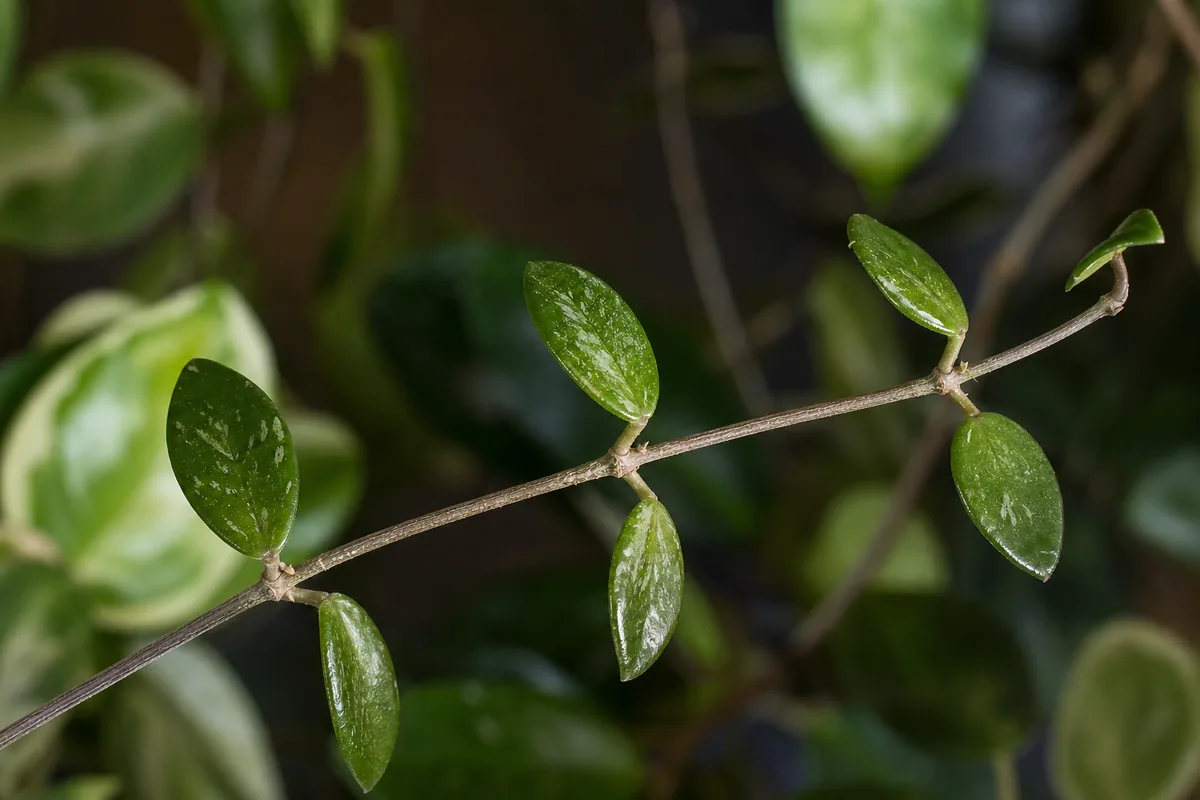
Leggy Growth symptoms on Hoya Carnosa - compare with healthy tissue on the same plant.
Typical signs:
- Long gaps between waxy leaf pairs on newest vine sections-internodes longer than the leaf itself, matching the thin, stretched growth hoyas show in low light
- Smaller new leaves than older sun-formed foliage-the thick, fleshy carnosa leaf shrinks when energy is scarce
- Leaning or reaching toward the brightest source; hanging baskets tilt as vines search upward
- No peduncles year after year on vines older than two to three years
- Soil staying wet because transpiration is low in dim rooms-the mix you chose to drain fast may stay damp for two weeks
Variegated carnosa fades before solid green looks stretched
Krimson Queen, Krimson Princess, and other variegated cultivars stress sooner than solid-green carnosa. Cream and pink margins lack chlorophyll, so the plant needs more usable light per leaf area to match green-form growth. In dim rooms you may see:
- Pale or washed-out margins on newest leaves before internodes look dramatically long
- Reversion toward solid green as the plant produces more photosynthetic tissue-NC State lists Krimson Queen with green centers and creamy white to pink margins, and low light pushes new growth greener
- Smaller, thinner variegated leaves compared with older foliage from brighter placement
Once a vine section has reverted to all-green, that stem rarely regains cream margins even after you add light-though brighter placement stops further loss. Prune reverted sections back to the last variegated node only after compact new growth proves the window works.
Carnosa vs pubicalyx stretch patterns
Both hoyas etiolate in low light, but the visible cues differ:
| Signal | Hoya carnosa (wax plant) | Hoya pubicalyx (silver pink vine) |
|---|---|---|
| Leaf texture | Thick, waxy, ovate pairs | Longer, lance-shaped leaves |
| Low-light tell | Long internodes; variegated fade/reversion | Long internodes; silver splashing fades on new leaves |
| Tolerance trap | Survives dim corners while stretching quietly | Often looks thin sooner |
| Bloom target | Pink-white porcelain umbels on persistent peduncles | Deep pink to reddish star clusters |
If you own both species on the same shelf, pubicalyx may stretch obviously while carnosa still looks presentable-that does not mean carnosa has enough light for blooms.
Why Hoya Carnosa gets leggy
The survival-in-medium-light trap
Carnosa is sold as easy-going because it tolerates neglect. Iowa State Extension notes wax plant is “notably forgiving” yet still needs bright indirect light for flowers-low light leads to thin, stretched growth and little or no flowering. The plant routes energy toward reach instead of building the peduncles that carry fragrant porcelain clusters.
NC State Extension classifies carnosa for bright indirect light year-round with partial shade outdoors. Missouri Botanical Garden states good light is necessary for flower production. Survival in a medium-lit corner masks the deficit until you notice years without peduncles.
Common indoor triggers
- Decor placement over function - interior shelves, bathroom ledges, or hall tables more than a few feet from glass
- North-facing windows without supplemental light-fine for survival, rarely enough for tight growth or reliable porcelain blooms
- Hanging baskets below the sill - a basket suspended far under the windowpane sits in decorative shade even in a bright room; the vine stretches upward toward the glass
- Winter daylight drop - same placement that worked in June fails in December
- Post-bloom neglect - moved to a dim spot after flowering and left there through the next growing season
Low light also slows water use. A dim carnosa transpires little, so epiphytic mix stays wet longer-inviting fungus gnats attracted to wet mix and root stress that mimic thirst. Fixing water alone without raising light leaves the throttle closed.
How to confirm the cause
Work through these checks before Hoya Carnosa repotting guide, fertilizing, or cutting vines:
- Leaf-level shadow test - Stand where the plant sits at midday. Iowa State’s hoya guidance describes useful brightness as bright enough to cast a shadow but not direct sun-no meaningful shadow usually means too dim for bloom-focused growth.
- Internode comparison on active tips - measure the gap between the last two leaf pairs. Lengthening gaps on newest growth confirm etiolation; older stretched sections stay permanent.
- Variegation check - on Krimson Queen or Princess, fading margins or green reversion on new leaves point to light deficit even when spacing still looks acceptable.
- Peduncle history - NC State notes most plants will not flower until two or three years old; a five-year-old vine with zero peduncles in a north room is a light problem until proven otherwise.
- Two-week trial move - shift to the brightest suitable sill without changing watering. If the next node pair arrives closer together, light was the limiter.
- Soil dry-down - if top half of mix stays wet for two weeks while leaves are not wrinkled from drought, low transpiration from dim light may be slowing water use.
Lookalike symptoms on Hoya Carnosa
Leggy stretch is gradual. These patterns need different first responses:
| What you see | Likely cause | Quick check |
|---|---|---|
| Long internodes, lean toward window, no peduncles | Low light (etiolation) | Shadow test fails; newest gaps lengthening |
| Bleached or crisp patches after sudden window move | Sunburn | Damage on window-facing leaves within days |
| Wrinkled thick leaves, very light pot, dry mix throughout | underwatering on Hoya Carnosa | Soil bone-dry; leaves firm but desiccated |
| Yellow lower leaves, soggy soil, soft stems, sour smell | overwatering on Hoya Carnosa / root stress | Yellowing with persistently wet soil; may need rot check |
| Bare woody spurs with no flowers | Peduncle present-do not prune | Short knobby spur at node; not dead wood |
Do not confuse a dormant peduncle with dead wood. Peduncles look leafless between bloom cycles but are permanent rebloom sites-Iowa State warns never to deadhead hoya because cutting spurs removes future flower clusters.
Long leafless tendrils with flexible green tips are normal exploratory growth on a climbing epiphyte-not always etiolation. Etiolated carnosa tendrils carry widely spaced small leaves; healthy search tendrils may eventually fill in once they find support and light.
First fix for Hoya Carnosa
Move to bright indirect light near the glass-one change at a time.
Place the pot or hanger so the leaf canopy sits within twelve inches of an east-facing window, or one to two feet back from filtered south or west glass with a sheer curtain during hot months. East is the safest default for carnosa: morning sun is bright but cooler than harsh afternoon rays through bare west panes.
Do not repot, fertilize, or prune peduncles the same week. Hoya dislikes stacked stress, and you need clean feedback from the next one or two leaf nodes to know the move worked.
If your brightest window is north-facing or the basket hangs below the sill, add a full-spectrum LED grow light twelve to eighteen inches above the canopy for twelve to fourteen hours daily rather than pushing the plant into unfiltered afternoon sun.
Acclimate from deep shade over seven to ten days when jumping more than one light level. Watch newest leaves for bleach patches-pull back if window-facing foliage scorches.
See the light guide for window specifics and the pruning guide before trimming any vine.
Step-by-step recovery
After the placement move, follow this order:
- Wait for the next node pair - judge success by shorter internodes and firmer waxy leaves on new growth, not by old stretched sections shrinking.
- Match watering to new dry-down - brighter light means faster transpiration. Check mix halfway down before watering; do not keep a dim-room schedule.
- Preserve every peduncle - identify woody spurs before any cosmetic cut. NC State advises resisting pruning peduncles because they repeatedly produce flowers over several years.
- Trim leggy sections only after proof - once two or three compact nodes form, cut the most stretched vine above a healthy node, leaving spurs intact. Never remove bare tendrils that host peduncles.
- Rotate weekly until peduncles form - even growth prevents one-sided lean. After buds appear, stop moving the plant-Missouri Botanical Garden warns against relocating hoyas after flower buds form.
Recovery timeline
Old internodes never shrink-etiolated stem tissue is fixed in its stretched state. Moving to brighter light stops new stretch but does not compact existing gaps.
| Milestone | Typical timing after light fix |
|---|---|
| Tighter internodes on new growth | Two to three weeks |
| Firmer, glossier new leaves | Three to four weeks |
| Variegation stabilizes on new Krimson Queen leaves | Several nodes over four to eight weeks |
| First peduncle on mature vine | One to two growing seasons-patience required |
| Porcelain umbel open | Spring through fall once peduncle forms |
Peduncle formation is the slowest payoff. A carnosa that has stretched for years may need a full bright season before bloom infrastructure appears-even though foliage compacts sooner.
When to worry
Leggy stretch alone is cosmetic and gradual. Escalate when:
- Stems soften while soil stays wet in a dark corner-inspect for root rot before assuming light alone will fix it
- Yellow lower leaves stack with persistently damp mix and no wrinkling from drought
- Sudden collapse after months in a post-display dim spot with zero new nodes in spring
- Mealybugs or scale hide in leaf axils along stretched weak growth-pests are not the cause of etiolation but exploit stressed vines
If the plant is mature, well-lit, peduncle-intact, and still bloomless after two bright seasons, review pot size and stability per the no flowers guide-but light correction comes first for most leggy carnosa.
What not to do
- Do not cut peduncles during cleanup-they are permanent bloom spurs, not dead wood
- Do not fertilize in unchanged dim light-nitrogen pushes weak extension without photon energy to support dense tissue
- Do not repot for legginess alone-oversized pots stay wet longer in low light
- Do not overwater because growth looks slow-check dry-down at the new light level first
- Do not confuse sunburn with stretch-pull back from harsh direct sun if leaves bleach or crisp after a sudden move
How to prevent leggy growth next time
Default to bright indirect light near the glass year-round per the overview. Variegated carnosa needs slightly brighter placement than solid-green forms to hold margins without scorching pale zones in unfiltered afternoon sun.
Raise hanging baskets so leaf canopy sits at or above sill height-not dangling in room shade. Add grow-light backup in winter when daylight hours shrink. Match watering to actual dry-down per the watering guide-light is the throttle for the whole system.
Rotate weekly until peduncles form, then leave the plant stable through bud development. A carnosa that finally earns porcelain blooms loses them to bud blast if you move it mid-cycle.
When to use this page vs other Hoya Carnosa guides
- Hoya Carnosa watering guide - Use for routine moisture checks before assuming leggy growth is the main issue.
- Hoya Carnosa problems hub - Browse all 17 common issues on this species.
- Not Enough Light on Hoya Carnosa - Different entry point when symptoms overlap with leggy growth.
- Slow Growth on Hoya Carnosa - Different entry point when symptoms overlap with leggy growth.
- Yellow Leaves on Hoya Carnosa - Different entry point when symptoms overlap with leggy growth.