Hoya carnosa Care: Light, Water, Soil & Tips
Hoya carnosa
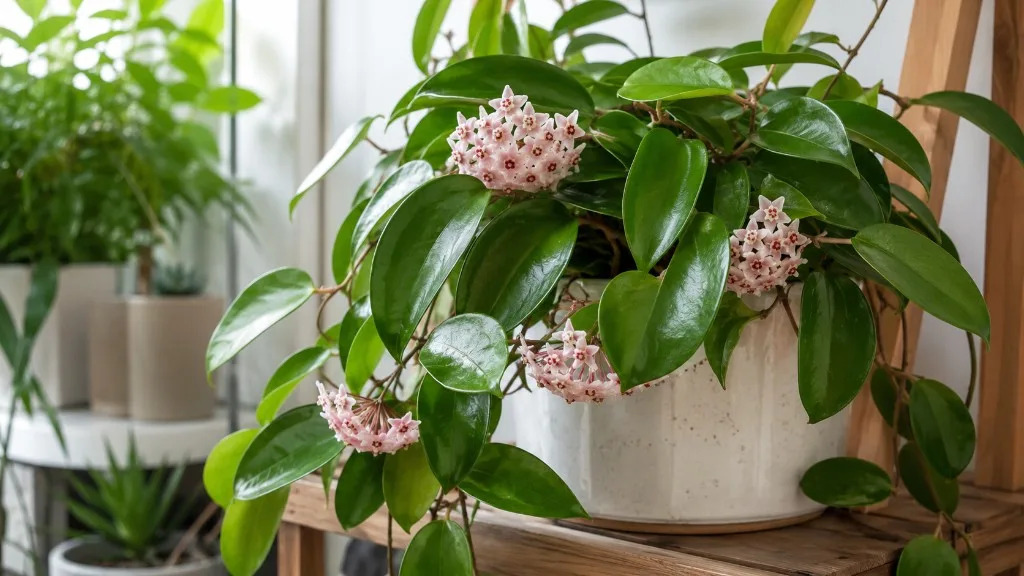
Hoya carnosa is the most reliable hoya for beginners. Bright indirect light with morning sun, seasonal cool/dry winter rest triggers annual blooming. Never cut the peduncle stubs. Very long-lived.
Hoya carnosa Care: Light, Water, Soil & Tips
Start with wateringThe most common care mistake for Hoya CarnosaWatering guide →Hoya Carnosa care essentials
Light
bright indirect light
Water
Allow top half to dry in summer; more complete drying in winter. Seasonal rest supports annual blooming.
Soil
Well-draining epiphytic mix: compost + perlite + orchid bark.
Humidity
40–60%
Temperature
18–27°C (65–80°F)
Fertilizer
Use balanced or phosphorus-rich fertilizer for flowering; low nitrogen and stop if the plant is stressed, newly repotted, or not actively growing. High-nitrogen fertilizer (promotes leaves over flowers); fertilizing in winter.
About Hoya Carnosa
Hoya Carnosa is native to Eastern Asia (China, India, Australia), typically reaches Vines up to 3–6 m in habitat; 60–120 cm as houseplant indoors, with slow to moderate growth. Hoya Carnosa has a trailing growth habit and part of the Apocynaceae family. It is also known as Wax Plant, Wax Flower, and Porcelain Flower.
| Detail | Information |
|---|---|
| Also known as | Wax Plant, Wax Flower, Porcelain Flower |
| Native region | Eastern Asia (China, India, Australia) |
| Mature size | Vines up to 3–6 m in habitat; 60–120 cm as houseplant |
| Growth rate | Slow to moderate |
| Growth habit | Trailing |
| Scientific name | Hoya carnosa |
| Family | Apocynaceae |
Hoya carnosa Care: Light, Water, Soil & Tips
What Is Hoya carnosa?
Hoya carnosa - the classic wax plant or porcelain flower - is one of the most recognizable vining houseplants in cultivation. Its thick, glossy, oval leaves have a leathery, waxy surface that looks almost sculpted, and mature specimens produce clusters of fragrant, star-shaped flowers that collectors describe as porcelain-like. The species is a broadleaf evergreen epiphyte in the family Apocynaceae (historically classified under Asclepiadaceae), native to Southeast Asia, Japan, and Taiwan according to NC State Extension. In the wild it climbs trees and rocks; indoors it trails from hanging baskets, climbs trellises, or drapes from shelves with slow, deliberate grace.
As a houseplant, Hoya carnosa typically reaches 60 to 120 cm (about 2 to 4 feet) of vine length, though plants in ideal conditions can grow considerably longer over many years. Growth is slow to moderate - faster in bright, warm months and noticeably slower in cool or dim winters. The plant stores water in its succulent-like leaves, which changes how you should think about watering compared with thin-leaved tropicals like ferns or calatheas. If you are deciding whether Hoya Carnosa overview fits your home, the honest summary is this: Hoya carnosa rewards bright light, patient watering, and stable conditions - and it punishes soggy soil, frequent Hoya Carnosa repotting guide, and pruning of its flower spurs. It is easier than a finicky orchid and more patient than a pothos, but it will not perform like a fast filler plant. The payoff is decades of manageable growth, easy propagation, and - when conditions align - repeat blooming from the same flower sites year after year.
Botanical Background and Native Range
The species name carnosa means “fleshy,” referring directly to the thick leaves that define the plant’s look and its drought tolerance. Hoya carnosa is an herbaceous perennial vine that behaves like a semi-succulent epiphyte: it wants air around the roots, excellent drainage, and drying intervals between drinks rather than constantly moist potting soil. Knowing that single fact prevents more beginner failures than any product label.
In commerce you will encounter several popular cultivars that share the same core care but differ in appearance and sometimes in light demand. ‘Krimson Queen’ (also sold as ‘Tricolor’) has green leaf centers with creamy white to pink margins. ‘Krimson Princess’ reverses that pattern with variegated centers and green edges. ‘Variegata’ carries cream-white margins that may blush pink in strong light. ‘Compacta’ - the Hindu Rope plant - is a naturally occurring mutation with contorted, rope-like foliage that grows more slowly but follows the same environmental rules. Two pots labeled “wax plant” can therefore look dramatically different while needing the same soak-and-dry rhythm and Hoya Carnosa light guide.
Hoya carnosa is often confused with other Hoya species such as Hoya kerrii (sweetheart Hoya) or Hoya australis, which have overlapping care needs but different leaf shapes and bloom habits. When your plant arrived without a botanical tag, compare leaf thickness, venation, and growth speed rather than assuming every trailing Hoya is H. carnosa. Correct identification matters less for basic watering than for bloom expectations - some species flower readily while others test your patience for years.
Why the Waxy Leaves Matter for Care
The waxy leaf coating is not decorative fluff. It reduces water loss and allows Hoya carnosa to ride out dry intervals that would wilt a thin-leaved houseplant. That physiology is why so many experienced growers describe Hoya care as “treat it almost like a succulent.” The leaves function as a visible moisture gauge: firm, stiff leaves mean the plant still holds adequate internal water; slightly soft, pliable leaves or fine wrinkling on older foliage mean it is time to water. Relying on a calendar alone ignores this built-in signal and is the fastest route to rot in winter or chronic drought stress in summer.
The same leaf structure also affects light tolerance. Thick, pigmented leaves handle bright conditions better than paper-thin tropical foliage, which is why Hoya carnosa can accept some gentle direct sun when acclimated - especially morning exposure - without immediately scorching. Variegated cultivars are the exception: white and pink sections contain less chlorophyll and burn more easily, so ‘Krimson Queen’ and ‘Variegata’ need softer light or slower acclimation than solid-green specimens. Watch the newest leaves, not the oldest ones, when judging whether your light level is correct.
Best Growing Conditions for Hoya carnosa
Hoya carnosa does best when your space approximates the warm, bright, airy conditions of its native range. The four variables that decide almost every outcome are light, water, soil, and temperature. Align those and feeding, repotting, propagation, and blooming become straightforward. Misalign one - especially water or light - and the plant declines in ways that fertilizer cannot fix.
Light Requirements
Hoya carnosa needs bright indirect light for healthy growth and flowering. A practical starting point is a spot within a few feet of an east-facing window for gentle morning sun, or a west- or south-facing window filtered by a sheer curtain or the natural setback of the room. Clemson HGIC recommends placing Hoyas close to west, east, or south windows and acclimating gradually when stronger direct sun is available. Low light is survivable for months, but growth stretches, internodes lengthen, leaves stay smaller, and flowering essentially stops until light improves.
The diagnostic that separates too little from too much light is new growth quality. Compact spacing between leaves, firm texture, and appropriate color mean the plant is likely happy. Long, bare stems with small pale leaves mean it wants more brightness. Bleached patches, brown crisp edges on sun-facing leaves, or midday curling mean it wants less direct exposure or a slower acclimation over one to two weeks. Never move a plant from a dim shop shelf directly into harsh afternoon sun - leaves formed in low light lack the protective capacity to handle sudden intensity.
If natural light is weak - common in north-facing rooms or winter at higher latitudes - a full-spectrum LED grow light on a 10–12 hour timer, positioned 12–18 inches above the canopy, keeps growth compact and preserves bloom potential. Rotate the pot weekly so vines do not lean sharply toward one source. Outdoor summer shade works well in warm climates: when night temperatures stay above 60°F (15°C), many growers move Hoya carnosa to a sheltered patio for brighter ambient light, then bring it back indoors before nights drop toward 50°F (10°C), which NC State Extension cites as the lower limit for outdoor exposure.
Temperature and Humidity
Hoya carnosa prefers stable indoor temperatures roughly between 60 and 85°F (15 and 29°C) during active growth. It tolerates brief heat if soil moisture and air movement keep pace, but it dislikes cold drafts, AC blasts directly on foliage, and winter window sills where leaves touch cold glass. Sustained temperatures below about 55°F (13°C) slow growth sharply and increase the risk of leaf drop if combined with wet soil.
Humidity is helpful but secondary compared with light and watering for most homes. Hoya carnosa enjoys moderate to high humidity in the 40–70% range and may produce slightly glossier foliage at the upper end. Average heated-home winter air often dips below 40%, which rarely kills a healthy wax plant but can encourage spider mites on stressed specimens. A pebble tray with the pot elevated above the water line, grouping plants together, or a small humidifier near the collection all outperform misting, which raises humidity briefly and can leave wet leaf surfaces that invite fungal spotting where air circulation is poor.
A cool-rest strategy can support blooming in some specimens: several weeks in late winter with night temperatures around 60–65°F (15–18°C) and reduced watering mimics seasonal dryness in parts of the native range and may help trigger spring flower development. This is not mandatory for every plant, but if your otherwise healthy Hoya carnosa has not bloomed after years of perfect foliage growth, cooler nights combined with brighter light are worth trying before repotting or fertilizing harder.
Soil and Drainage
Use a well-draining epiphytic mix: compost + perlite + orchid bark. The principle matters more than a branded bag name: the mix must drain freely, hold air around the roots, and dry on a predictable rhythm after each watering. Clemson HGIC recommends a proven blend of one part potting soil, one part orchid bark, and one part perlite. A heavy, peat-dominant indoor mix compacts within months, suffocates fine roots, and stays wet too long - the most common root-rot pathway for epiphytic houseplants grown like ferns.
Target a slightly acidic to neutral pH around 6.0–7.0. Hobbyists rarely need to meter pH for Hoya carnosa; the bigger practical issues are compaction, poor drainage holes, and cachepots that trap runoff. Always plant in a container with a drainage opening. Decorative outer pots are fine only if you empty excess water after every drink. Go up only one pot size at repotting - an oversized pot holds wet mix around a small root system and defeats the fast dry-down epiphytes depend on.
How to Water Hoya carnosa
The general rule for Hoya carnosa is allow the top half of the soil to dry, and err on the drier side rather than keeping the mix constantly moist. More precisely, use every 7–14 days in summer and every 3–4 weeks in winter as a starting range, then adjust based on how fast your actual pot dries in your home. Pot size, soil chunkiness, light intensity, and room temperature all change the interval, so a calendar is a reminder to check - not permission to water blindly.
Combine three checks before every drink: soil moisture an inch or two down, pot weight in your hand, and leaf firmness. If the deeper mix is still cool and damp, wait. If the pot feels light, the skewer comes out dry, and a mature leaf feels slightly soft between your fingers, water thoroughly until a modest amount runs from the drainage hole, then empty the saucer so the roots are not standing in stale water. This soak-and-dry rhythm matches how epiphytes experience rain in habitat: a full wetting followed by airy drying, not perpetual dampness.
Hoya Carnosa watering guide and Seasonal Adjustments
During active growth - typically spring through early fall when light is strong and temperatures are warm - Hoya carnosa uses water steadily and recovers quickly from a proper drink. Water deeply when your checks say dry, not in small sips that moisten only the surface. Shallow top-ups leave the center of the root ball chronically dry while the top looks damp, encouraging weak root development and inconsistent leaf signals.
In cooler, dimmer months, the plant slows transpiration even if your eyes still see green vines. The same summer interval will overwater the plant in winter. Stretch the time between drinks, rely more heavily on leaf firmness and pot weight, and reduce or pause fertilizer until new growth resumes. Resume your warmer-season rhythm only when you see fresh active shoots and the pot is drying on a faster pattern again. Drastically reducing winter water also mimics the dry season some growers use to encourage spring flowering - but never combine a cold, dark, and soggy root zone; that combination kills far more Hoyas than intentional drought ever does.
Always use room-temperature water. NC State Extension notes that cold water can shock Hoya carnosa and contribute to leaf drop in sensitive specimens. If your tap water is heavily chlorinated or very hard, letting it sit overnight or using filtered water can reduce tip browning over long timeframes, though drainage and watering rhythm matter far more than water brand.
Common Watering Mistakes
The single most common mistake is watering on a schedule instead of on the plant’s actual state. The second is leaving the pot in a cachepot full of runoff, which turns the bottom of the mix into an anaerobic swamp even when the surface looks acceptable. The third is responding to limp leaves by watering without checking soil moisture - limp foliage with wet mix signals root trouble, not thirst, while limp foliage with a light, dry pot signals a genuine need for water.
overwatering on Hoya Carnosa shows up as yellowing leaves, mushy stems at the soil line, dropped flower buds, and fungus gnats hovering over constantly damp mix. underwatering on Hoya Carnosa shows up as slightly wrinkled or soft leaves on otherwise healthy vines, especially on older foliage first. A single dry episode usually recovers overnight after a thorough drink; repeated drought weakens fine roots and makes the plant react poorly when water finally returns. If you are unsure, Hoya carnosa forgives dryness more readily than it forgives soggy soil.
How to Feed Hoya carnosa
Hoya carnosa does not need heavy feeding. A modest, balanced fertilizer during active growth is enough to support foliage and flowering without salt buildup in a pot that dries slowly. Strong doses, year-round feeding, and fertilizer applied to dry or stressed roots are how growers burn fine roots and accumulate crust on the soil surface.
A balanced water-soluble houseplant fertilizer at one-quarter to one-half of the label rate, applied every four weeks in spring and summer to already-moist soil, is a safe starting point. Clemson HGIC suggests a fertilizer with an NPK ratio around 2:1:2 or 3:1:2 to support flowering, using liquid formulations rather than slow-release granules because the infrequent watering pattern that Hoyas prefer does not reliably activate coated granules on a useful schedule. If your potting mix contains a starter charge, skip supplemental feeding for the first month after repotting.
Pause feeding during dormancy, after a major repot, while the plant recovers from pests or root issues, and through the deepest low-growth winter weeks. Resume only when new growth is clearly active and the pot is drying on a normal warm-season rhythm. Over-fertilizing a plant that cannot use the nutrients adds salt without adding flowers - and bloom ultimately depends more on light, maturity, and stable peduncles than on any single product.
Repotting and Root Health
Repot Hoya carnosa roughly every one to two years, or when roots circle drainage holes, the mix has broken down and compacts, water runs straight through without soaking in, or the plant dries so fast that you cannot keep pace with normal checks. The best timing is early spring at the start of active growth, and - critically - when the plant is not in bud or flower, because repotting during bloom often causes bud drop.
Go up only one pot size - no more than about 2 inches (5 cm) wider than the previous container, per NC State Extension guidance. Hoya carnosa tolerates being slightly root-bound and may bloom better when the root zone is snug rather than swimming in excess mix. That does not mean leaving a plant in degraded soil forever, but it does mean resisting the impulse to repot a healthy bloomer into a much larger pot “to help it grow.” Fresh, chunky epiphytic mix and a modest size increase restore drainage without destroying the root-bound condition that sometimes triggers flowering.
After repotting, water lightly once, then return to your normal soak-and-dry checks rather than keeping the mix persistently moist “to reduce stress.” Damaged roots need air as much as moisture; soggy recovery soil is how repotting kills plants that would have sailed through in their old mix.
Signs It Is Time to Repot
The clearest signs are physical: roots emerging from drainage holes or circling the surface, water racing through the pot without retention, a plant that dries twice as fast as it did six months ago, or mix that smells sour and compacted. If flowering has been reliable and the plant is healthy, a tight root ball alone is not an emergency - refresh timing can wait until after bloom finishes. If you see yellowing leaves with wet mix, mushy roots when you inspect, or chronic fungus gnats, repotting into fresh airy mix may be part of the fix, but only after you correct the watering pattern that caused the problem.
Propagation Methods for Hoya carnosa
The simplest home propagation method for Hoya carnosa is stem cuttings in water or moist airy mix. Division is rarely needed because most specimens are single-vine or multi-vine plants in one pot rather than clumping perennials. Whichever method you use, start with a healthy, well-hydrated parent plant and clean, sharp scissors or pruners.
Take a cutting 4 to 6 inches (10 to 15 cm) long with at least two nodes - the small bumps where leaves meet the stem. Remove leaves from the lower node so at least one bare node can contact water or medium, leaving two or three leaves at the top. For water propagation, submerge the bare node in a clear jar of clean water with leaves above the waterline, refresh the water every few days, and move the cutting to potting mix once roots reach 2 to 3 inches (5 to 7 cm). For soil or moss propagation, insert the bare node into a damp mix of perlite and coco coir or moist sphagnum, keep humidity high with a loose clear cover, and water lightly when the medium approaches dry.
Never propagate from a single leaf without a node. A heart-shaped Hoya kerrii leaf stuck in soil may root and persist for months, but without node tissue it cannot produce a vine. The same rule applies to Hoya carnosa: leaf cuttings alone are unreliable; stem segments with nodes are the standard. Do not propagate stressed, pest-infested, or recently shipped plants until new healthy growth appears - weak cuttings rot faster than they root.
Getting Hoya carnosa to Bloom
Flowering is the reward that separates a casual wax plant owner from a collector, and Hoya carnosa is capable of spectacular bloom - umbels of fragrant, star-shaped pink or white flowers with a sweet scent that is often strongest in the evening. Most plants grown from cuttings begin flowering at two to three years of age when light and maturity align, though individual specimens vary. Foliage can look perfect for years without a single bud if light is merely “survivable” rather than genuinely bright.
The non-negotiable bloom requirements start with bright indirect light strong enough to produce compact growth. A plant that has been healthy but bloomless for years almost certainly needs more light, not more fertilizer. Second, keep the plant slightly root-bound in a snug pot with excellent drainage - frequent repotting into oversized containers delays flowering. Third, maintain a consistent watering rhythm without wild swings between bone-dry and soggy. Fourth, do not move the plant once flower buds form; bud drop after relocation is common. A late-winter period of cooler nights and reduced water helps some plants set spring buds, but light remains the primary limiting factor indoors.
Peduncles - the bare, woody flower spurs from which umbels emerge - must be preserved. NC State Extension explains that the peduncle repeatedly produces flowers over several years and that cutting it off removes future blooms. Cutting off a peduncle because it looks bare removes future flower clusters from that point permanently. After flowers fade, leave the spur intact. You can gently remove spent bloom parts without amputating the peduncle itself. This detail is one of the most valuable pieces of Hoya carnosa knowledge a beginner can learn, and it is absent from too many generic houseplant guides.
Common Hoya carnosa Problems
Most Hoya carnosa problems are environmental rather than mysterious diseases. They develop slowly and resolve slowly, which tempts owners into changing five variables at once - the worst troubleshooting approach. Change one condition, watch new growth for two to three weeks, then adjust again if needed.
Yellow Leaves, Brown Tips, and Pests
Yellow leaves most often mean overwatering or poor drainage, especially when yellowing starts on lower leaves while the mix stays damp. Less commonly, yellowing follows sudden cold exposure, severe underwatering, or natural aging of the oldest leaves at the base of a long vine. Check moisture at depth first, then temperature stability, then pests before reaching for fertilizer.
Brown leaf tips and margins usually point to salt buildup, inconsistent watering, or very dry air. Flush the pot with plain water occasionally if you fertilize regularly and see crust on the soil surface. Wrinkled, thin-feeling leaves on an otherwise healthy vine point to underwatering or a root system too damaged to take up water - inspect roots if wrinkling persists after a proper soak.
Mealybugs are the most common pest, hiding in leaf axils and stem joints with their cottony white clusters. Spider mites appear in dry winter air as fine webbing and stippled leaf undersides. Scale attaches along stems as immobile brown bumps. Inspect weekly, isolate infested plants, and treat early with manual removal, isopropyl alcohol on a cotton swab for mealybugs, or insecticidal soap for broader infestations. Clemson HGIC notes that Hoyas are generally pest-resistant when healthy but not immune - chronically stressed plants attract pests faster than vigorous ones.
root rot on Hoya Carnosa from overwatering is the most serious disease issue. If stems go mushy at the base and the mix smells sour, unpot immediately, trim dead roots with sterile tools, and repot into fresh airy mix. Severe cases may require stem cuttings from unaffected growth to salvage the genetics. Prevention - chunky mix, drainage holes, and dry-down intervals - is far easier than rescue.
Is Hoya carnosa Safe for Pets?
Hoya carnosa is classified as non-toxic to cats and dogs by the ASPCA, which lists wax plant and Hindu Rope plant under the Hoya carnosa grouping. That makes it a reasonable choice for many pet households compared with true toxic trailing plants. The classification is not a license to let pets treat the vine as food: ingesting any plant material can cause mild stomach upset, especially in quantities large enough to upset any digestive system.
There is a separate human consideration. Like many Apocynaceae plants, Hoya carnosa exudes a milky latex sap when cut. Wearing gloves when pruning is sensible if you have latex sensitivity. The sap is a skin irritant for some people, not a sign of pet toxicity. Keep cuttings and pruned material away from curious puppies who chew stems, and confirm any unusual cultivar’s identity if pet safety is a deciding factor in your plant selection.
Conclusion
The most useful thing to know about Hoya carnosa is that it is a trailing epiphyte from Southeast Asia with thick, water-storing leaves that grows at a slow to moderate pace to roughly 60–120 cm indoors. If bright indirect light, soak-and-dry watering, chunky well-draining mix, and stable temperatures fit that description, the rest is routine - modest feeding, cautious repotting, stem propagation when you want more plants, and patience with peduncles until bloom arrives on its own schedule. If growth is leggy, leaves stay wrinkled after watering, or flowers never appear despite years of healthy foliage, fix light and root-zone moisture first before buying another product. Hoya carnosa is not a plant that rewards constant fussing; it rewards observation, and it can stay with you for decades when you read what the waxy leaves are already telling you.
When to use this page vs other Hoya Carnosa guides
- Hoya Carnosa overview - Canonical hub for this species - care topics and problems branch from here.
- Hoya Carnosa problems - Symptom-first path when you already know something is wrong.
Related Hoya Carnosa guides
How to care for Hoya Carnosa?
How much light does Hoya Carnosa need?
bright indirect light
- bright indirect light - bright indirect light.
When should you water Hoya Carnosa?
Allow top half to dry in summer; more complete drying in winter. Seasonal rest supports annual blooming.
- Top half of soil dry; thick leaves store water-err on the drier side - Allow top half to dry in summer; more complete drying in winter.
- Drain excess water - Empty the saucer after watering so the roots are not sitting in standing water.
What soil works best for Hoya Carnosa?
Well-draining epiphytic mix: compost + perlite + orchid bark.
- potting mix - Well-draining epiphytic mix: compost + perlite + orchid bark.
- perlite - Well-draining epiphytic mix: compost + perlite + orchid bark.
- orchid bark - Well-draining epiphytic mix: compost + perlite + orchid bark.
Grower notes for Hoya Carnosa
What matters most with Hoya Carnosa
Hoya Carnosa stores more water than it looks like it does. Treat soft leaves, wrinkling, and stalled growth as signals to check both moisture and light before watering again. In practice, the care checkpoint is simple: bright indirect light. Pair that with well-draining epiphytic mix: compost + perlite + orchid bark, and avoid changing water, pot size, and placement all at once.
Best placement in a real home
Hoya Carnosa belongs where bright indirect light is realistic for most of the day, not only where the pot looks good. Allow top half to dry in summer; more complete drying in winter. Seasonal rest supports annual blooming. If the pot stays wet longer than expected, move the plant into better light or reassess the mix before watering again. Humidity target: 40–60%. Temperature comfort zone: 18–27°C (65–80°F).
Before you buy this plant
Choose Hoya Carnosa with firm new growth, clean leaf undersides, and soil that does not smell sour or feel compacted. Be cautious if you see no-flowers, sticky residue, collapsed crowns, or a pot that is wet in poor light. Cosmetic old-leaf damage is less worrying than weak roots or active pests.
First month after bringing it home
Do not repot Hoya Carnosa on day one unless the mix is failing or pests are obvious. Quarantine it, learn how fast the pot dries, and keep care boring while it adjusts. Watch especially for no-flowers, yellow-leaves, and mealybugs. If problems appear, correct the condition first rather than stacking fertilizer, repotting, and pruning together.
Pet-aware note for Hoya Carnosa
Hoya Carnosa is a better choice for pet-aware homes than toxic ornamentals, but pet safe does not mean the plant should be chewed. Use hanging, shelf, or room placement if pets dig in soil or shred leaves, and choose sturdier plants for high-traffic pet zones.
How to tell Hoya Carnosa is settling in
Also sold as Wax Plant, Wax Flower, and Porcelain Flower, this plant should be judged by stable new growth rather than label names alone. If you plan to multiply it later, common methods include Stem node cuttings. Repot only when you see roots escaping heavily and very fast drying despite adequate watering. If yellow-leaves shows up early, inspect light, watering, and roots before assuming the plant is permanently weak.
Is it pet safe?
Hoya carnosa is non-toxic to cats and dogs.
Non-toxic to cats and dogs. Safe for pet households.
Watering Hoya Carnosa
For Hoya Carnosa, top half of soil dry; thick leaves store water-err on the drier side and water every 7–14 days in summer; every 3–4 weeks in winter. Drastically reduce in winter; mimics dry season which encourages spring flowering.
| Detail | Information |
|---|---|
| How often | Every 7–14 days in summer; every 3–4 weeks in winter |
| How to check | Top half of soil dry; thick leaves store water-err on the drier side |
| Seasonal changes | Drastically reduce in winter; mimics dry season which encourages spring flowering |
Signs of overwatering
- yellowing leaves
- mushy stems
- dropped flower buds
Signs of underwatering
- slightly wrinkled leaves (fleshy cultivars)
Soil & potting for Hoya Carnosa
Use a mix of potting mix, perlite, orchid bark for Hoya Carnosa. Excellent. Target soil pH around 6.0–7.0. Repot every 2–3 years; Hoyas prefer being slightly pot-bound, ideally in spring.
| Detail | Information |
|---|---|
| Recommended mix | potting mix, perlite, orchid bark |
| Drainage | Excellent |
| Soil pH | 6.0–7.0 |
| Repotting frequency | Every 2–3 years; Hoyas prefer being slightly pot-bound |
| Best season to repot | Spring |
Signs it needs repotting
- roots escaping heavily
- very fast drying despite adequate watering
Humidity & temperature for Hoya Carnosa
Hoya Carnosa prefers 40–60%, though normal home humidity is usually fine. Keep temperatures around 18–27°C (65–80°F).
| Detail | Information |
|---|---|
| Humidity | 40–60% - normal home humidity is fine. |
| Ideal temperature | 18–27°C (65–80°F) |
Fertilizer & pruning for Hoya Carnosa
Use use balanced or phosphorus-rich fertilizer for flowering; low nitrogen and stop if the plant is stressed, newly repotted, or not actively growing. High-nitrogen fertilizer (promotes leaves over flowers); fertilizing in winter. for Hoya Carnosa.
| Detail | Information |
|---|---|
| Fertilizer type | Use balanced or phosphorus-rich fertilizer for flowering; low nitrogen and stop if the plant is stressed, newly repotted, or not actively growing. High-nitrogen fertilizer (promotes leaves over flowers); fertilizing in winter. |
Common problems on Hoya Carnosa
No Flowers
MediumLikely cause: Insufficient light or removed peduncles prevent flowering in H. carnosa
Quick fix: Increase light; leave all peduncle stubs intact; allow seasonal cool/dry rest
Full fix guide →Yellow Leaves
MediumLikely cause: Overwatering is the most common cause of yellow leaves in H. carnosa
Quick fix: Allow top half to dry; check drainage; reduce frequency
Full fix guide →Mealybugs
MediumLikely cause: Mealybugs hide in leaf axils of wax plant
Quick fix: 70% alcohol on cotton swab; neem oil; inspect weekly
Full fix guide →Brown Tips
MediumLikely cause: Common on this plant type; confirm with recent watering, light, and root checks.
Quick fix: Inspect the plant and correct the most likely care stressor before stacking treatments.
Full fix guide →Root Rot
MediumLikely cause: Common on this plant type; confirm with recent watering, light, and root checks.
Quick fix: Inspect the plant and correct the most likely care stressor before stacking treatments.
Full fix guide →Overwatering
MediumLikely cause: Common on this plant type; confirm with recent watering, light, and root checks.
Quick fix: Inspect the plant and correct the most likely care stressor before stacking treatments.
Full fix guide →Underwatering
MediumLikely cause: Common on this plant type; confirm with recent watering, light, and root checks.
Quick fix: Inspect the plant and correct the most likely care stressor before stacking treatments.
Full fix guide →Spider Mites
MediumLikely cause: Common on this plant type; confirm with recent watering, light, and root checks.
Quick fix: Inspect the plant and correct the most likely care stressor before stacking treatments.
Full fix guide →Aphids
MediumLikely cause: Common on this plant type; confirm with recent watering, light, and root checks.
Quick fix: Inspect the plant and correct the most likely care stressor before stacking treatments.
Full fix guide →Leggy Growth
MediumLikely cause: Common on this plant type; confirm with recent watering, light, and root checks.
Quick fix: Inspect the plant and correct the most likely care stressor before stacking treatments.
Full fix guide →Slow Growth
MediumLikely cause: Common on this plant type; confirm with recent watering, light, and root checks.
Quick fix: Inspect the plant and correct the most likely care stressor before stacking treatments.
Full fix guide →Wilting
MediumLikely cause: Common on this plant type; confirm with recent watering, light, and root checks.
Quick fix: Inspect the plant and correct the most likely care stressor before stacking treatments.
Full fix guide →Drooping Leaves
MediumLikely cause: Common on this plant type; confirm with recent watering, light, and root checks.
Quick fix: Inspect the plant and correct the most likely care stressor before stacking treatments.
Full fix guide →Low Humidity
MediumLikely cause: Common on this plant type; confirm with recent watering, light, and root checks.
Quick fix: Inspect the plant and correct the most likely care stressor before stacking treatments.
Full fix guide →Not Enough Light
MediumLikely cause: Common on this plant type; confirm with recent watering, light, and root checks.
Quick fix: Inspect the plant and correct the most likely care stressor before stacking treatments.
Full fix guide →Fungus Gnats
MediumLikely cause: Common on this plant type; confirm with recent watering, light, and root checks.
Quick fix: Inspect the plant and correct the most likely care stressor before stacking treatments.
Full fix guide →Mold on Soil
MediumLikely cause: Common on this plant type; confirm with recent watering, light, and root checks.
Quick fix: Inspect the plant and correct the most likely care stressor before stacking treatments.
Full fix guide →