Low Humidity on Hoya Carnosa: Causes, Checks & Fixes
Quick answer
Hoya carnosa tolerates typical indoor humidity of 40–60% thanks to its thick waxy leaves, but forced-air heating can drop air below 40% and encourage spider mites or stippling before leaves crisp. First step: place a hygrometer near the trailing canopy and run a small humidifier or pebble tray-not extra watering-if RH stays low through winter.
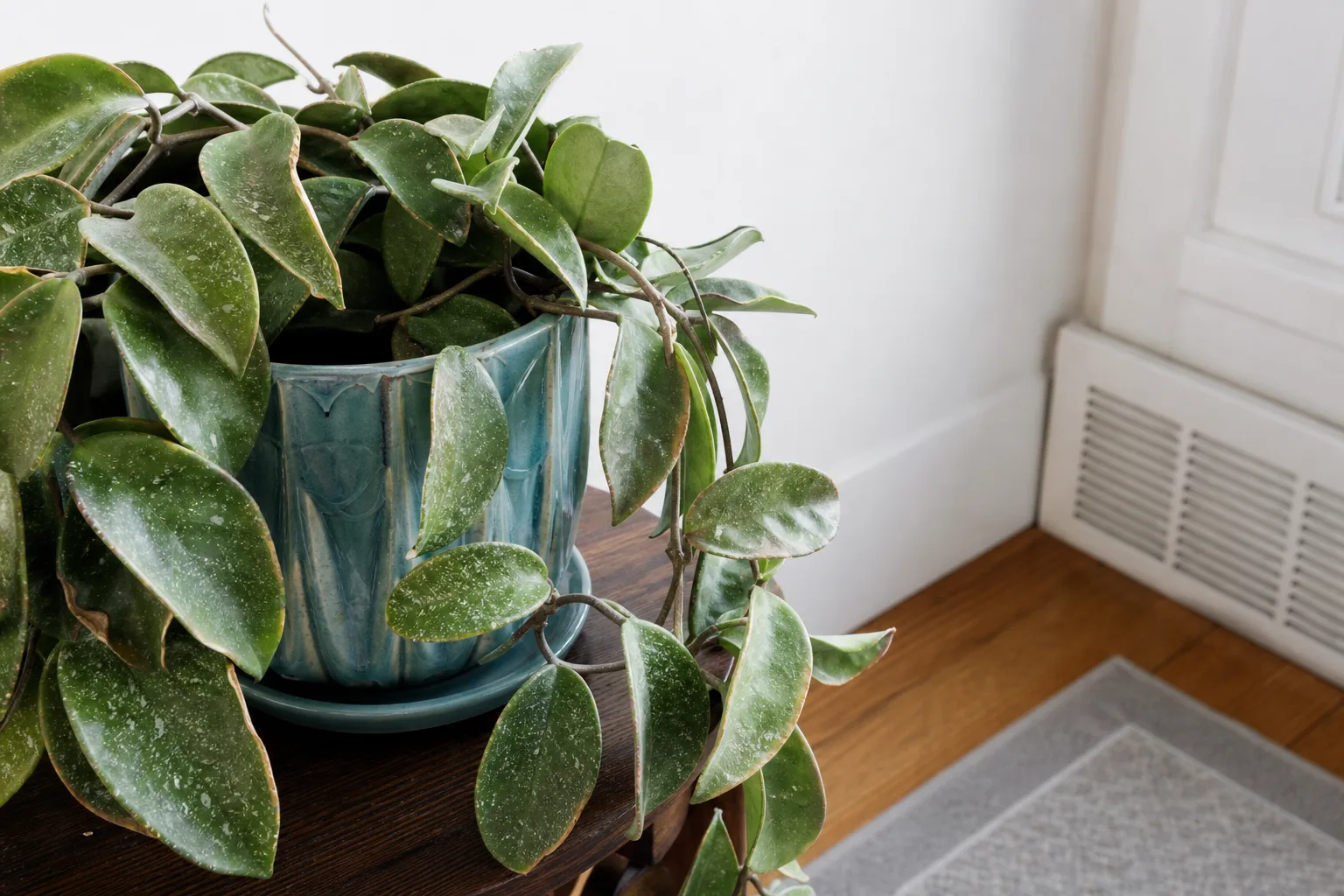
Low Humidity on Hoya Carnosa: Causes, Checks & Fixes
This guide covers low humidity on Hoya Carnosa. See also the general Low Humidity guide, watering, and light pages for this plant.
Low Humidity on Hoya Carnosa: Causes, Checks & Fixes
Quick answer
Hoya carnosa (Hoya carnosa, wax plant) is a tropical epiphyte with thick, waxy, water-storing leaves that tolerate average home humidity far better than thin-leaved tropicals like calatheas or delicate hoyas such as H. linearis. Iowa State Extension recommends 40–60% relative humidity for best growth and bloom; the LeafyPixels Hoya carnosa overview places the comfort range at 40–70%, with humidity secondary to light and watering in most rooms.
Forced-air heating from late fall through early spring often pulls indoor RH below 40%, which rarely kills a healthy wax plant but can encourage spider mite outbreaks, fine stippling on leaves, and-in very dry bloom conditions-flower bud drop on active peduncles. Full species context: Hoya carnosa overview.
First step: place a hygrometer within 12 inches of the trailing canopy and note whether RH stays below 40% through a typical winter week. You need a reading at plant level-not a guess from how the room feels-before buying a humidifier or changing your watering rhythm. If RH is low and leaves show stippling while soil moisture is normal, address humidity. If the pot is light and mix is dusty dry, fix watering first-see underwatering on Hoya carnosa.
What humidity Hoya carnosa actually needs indoors
Wax plant biology explains why humidity advice for carnosa differs from fussier houseplants.
Thick waxy cuticle stores water. The species name carnosa means “fleshy.” Those glossy leaves function like small reservoirs, reducing transpiration loss in dry air. Clemson HGIC describes hoyas as adaptable indoor plants that prefer bright light and well-drained mix; they are not rainforest-floor dwellers that collapse when a hygrometer reads 45%.
40–60% suits most homes. Iowa State Extension notes hoyas tolerate and adapt well to average indoor humidity, ideally between 40–60%, which encourages growth and flowering. The Hoya carnosa watering guide aligns with 40–60% for typical indoor conditions. You do not need greenhouse humidity for a healthy trailing vine.
Below ~40% is where problems start-not leaf death, but pest pressure. The overview and spider mites on Hoya carnosa pages both note that dry heated-home air below 40% rarely kills carnosa outright but favors spider mites on stressed specimens near heaters, sunny glass, or AC vents. Clemson HGIC notes spider mites can become a problem in winter when indoor air is drier from home heating. Thin-leaved hoya species need more humidity attention; carnosa is the forgiving end of the genus.
Humidity is secondary to light and watering. A carnosa in Hoya Carnosa light guide with correct soak-and-dry watering often looks fine at 40% RH. Chasing 70% humidity while the mix stays soggy or the plant sits in dim light fixes the wrong variable.
How low humidity shows up on Hoya carnosa
Dry air rarely announces itself with one dramatic wilt on this species. The pattern builds slowly on firm, waxy foliage that holds turgor even when ambient moisture is poor.
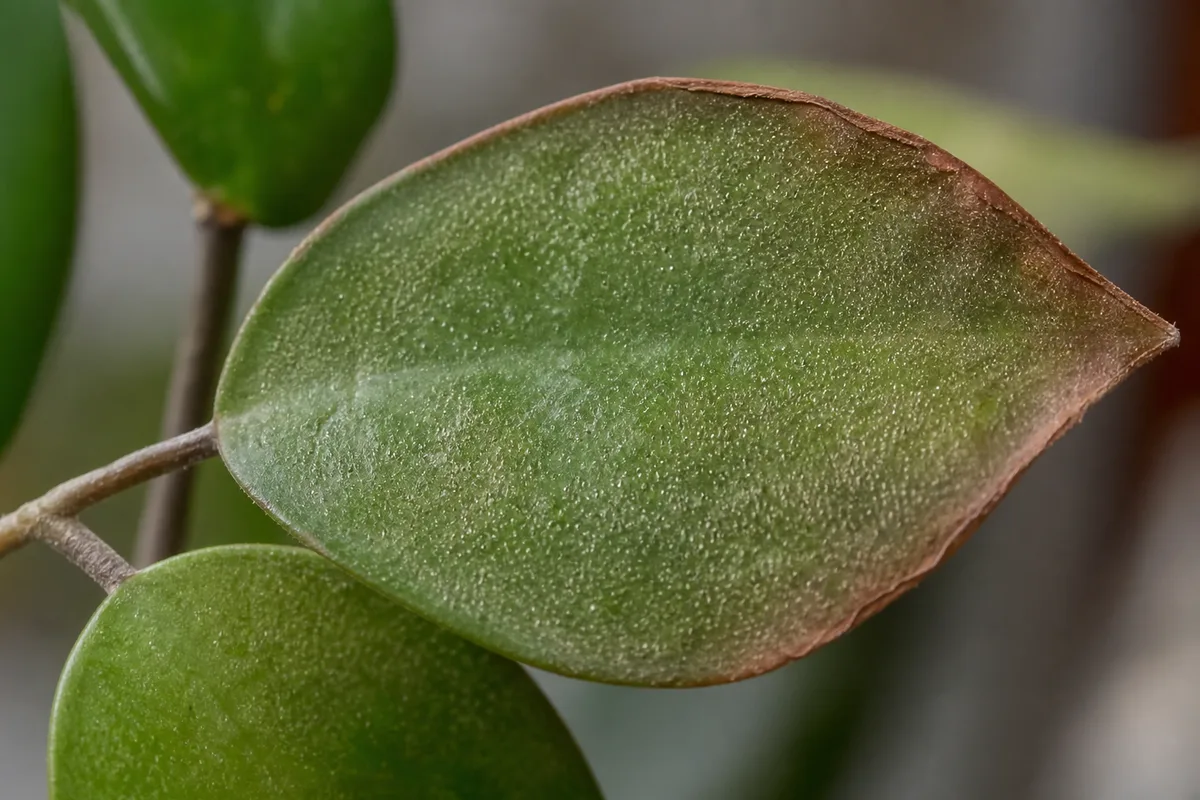
Low Humidity symptoms on Hoya Carnosa - compare with healthy tissue on the same plant.
Stippling and spider mites in dry winter air
The most common dry-air consequence is pest pressure, not crisp leaf margins:
- Fine yellow or silvery stippling on upper leaf surfaces, often starting on leaves nearest a heating register or west-facing winter glass
- Tiny webbing between leaf pairs or along vine stems-hold white paper under a leaf and tap to confirm moving specks
- Duller leaf sheen on outer foliage in the driest microclimate while interior leaves on the same vine stay glossy
Spider mites thrive in dry, warm conditions on houseplants stressed by low humidity and heat. Carnosa near forced-air vents loses leaf moisture faster, which favors mite colonies on undersides. Humidity stress alone shows stippling without webbing in some cases; active mites add silk and accelerating speckle spread-see spider mites on Hoya carnosa for treatment steps.
When waxy leaves tolerate dry air without damage
Many carnosa vines show no visible humidity damage at 40–50% RH all year. Healthy signs include:
- Firm, stiff leaves that resist the taco fold test
- Steady vine extension in bright indirect light through winter
- No stippling, webbing, or bud abort on existing peduncles
If your hygrometer reads 42% and foliage looks glossy with normal growth, you likely do not need a humidifier. This page matters when symptoms or readings say the air around your hanging basket is too dry-not because every carnosa requires extra moisture hardware.
Crispy tips and bloom bud drop (less common)
Brown crisp edges on waxy leaves are less typical on carnosa than on thin-leaved houseplants, but they can appear after weeks of very dry air combined with salt buildup or direct heat blast. Low humidity is a common cause of brown leaf tips on houseplants, but crispy tips with firm leaves and moist soil often point to salts or pests-not drought. Check fertilizer history and pest signs before blaming humidity alone.
Peduncle bud blast-flower buds yellowing and dropping before opening-can follow bone-dry air during active bloom development. This is an advanced caveat on otherwise healthy plants; most winter humidity concerns on carnosa are mite prevention, not bloom rescue.
How to confirm low humidity is the cause
Work through these checks in order. One hygrometer reading at canopy height beats guessing from symptom photos.
- Hygrometer at canopy height - Place a digital hygrometer within 12 inches of the top leaves on a hanging basket or trellis, not on the opposite wall. Readings below 40% through heating season with stippling or mite signs strongly support low humidity when watering is stable.
- Heat-source and draft map - Note distance to radiators, forced-air vents, fireplaces, and single-pane winter windows. A plant in a 45% room can sit in a 30% microclimate directly above a register.
- Soil moisture cross-check - Probe the mix halfway down. Firm leaves with evenly dry-to-moderate soil and only stippling point to atmospheric dryness. A light, feather-light pot with wrinkled leaves means address underwatering before humidity hardware.
- Leaf firmness - Carnosa stores water in leaves. Soft, pliable foliage with dry soil is thirst. Firm foliage with stippling and normal soil moisture fits dry air or mites.
- Pest inspection - Magnify leaf undersides along vine joints. Stippling plus webbing means treat mites even while you raise RH.
- Seasonal timing - Gradual stippling weeks after heating season starts, with no recent repot, fits humidity. Sudden limp vines with wet soil point to overwatering, not dry air.
You have confirmed low humidity when RH near the canopy stays below 40%, soil moisture follows normal carnosa dry-down, leaves stay firm, and damage concentrates on outer foliage or mite-prone zones without a dry pot.
Lookalike comparison
| Pattern | Likely cause | First direction |
|---|---|---|
| Stippling on firm leaves; normal soil moisture; RH below 40% | Low humidity / spider mites | Raise RH + inspect undersides |
| Wrinkled soft leaves; light dry pot | Underwatering | Thorough soak; then reassess RH |
| Yellow lower leaves; wet heavy pot; limp stems | Overwatering | Stop watering; check drainage |
| Crispy tips; firm leaves; moist soil; white soil crust | Salt / fertilizer burn | Flush soil; reduce feeding |
| Fine webbing + accelerating stipple | Spider mites | Rinse + treat; see spider mites |
First fixes for Hoya carnosa
After you have a hygrometer reading, apply one humidity upgrade at a time so you can judge whether new growth emerges clean over the next two to three weeks.
Humidifier placement for hanging baskets
A small room humidifier is the most reliable fix when canopy-level RH stays below 40%. Run it several hours daily in the same room as the plant-not aimed directly at waxy leaves, which can stay wet too long in stagnant air. For a trailing basket, place the unit on a stable surface below or beside the pot so rising mist mixes with room air before it reaches the canopy. Target 40–60% RH at vine level; sustained readings above 65% in a closed room can encourage mold on walls.
Do not compensate for dry air by watering more often. The watering guide explicitly warns against keeping mix constantly wet to fix dry winter air-that path invites fungus gnats attracted to overly wet potting mix and root stress on this epiphyte.
Pebble trays and plant grouping
Pebble tray (modest boost): Fill a wide tray with rinsed gravel, add water to just below the stone surface, and set the pot on top-never in standing water, which carnosa roots cannot tolerate. Refill every few days. Expect a localized bump near the pot, not whole-room correction-especially for a hanging basket where a tray may be impractical; a humidifier still wins.
Plant grouping: Clustering several houseplants within 18 inches creates a shared transpiration zone that raises humidity slightly. Useful as a supplement near a windowsill collection, not a sole fix for a single vine above a radiator.
Misting: why it fails on waxy carnosa leaves
Do not rely on misting as your primary humidity fix. Misting raises ambient RH for only minutes and wets waxy leaf surfaces that shed water quickly anyway. NC State Extension recommends a humidifier or a tray of wet pebbles for sustained moisture; wet foliage in poor airflow can invite fungal spotting per Iowa State Extension disease guidance. If you mist occasionally for dust removal, do it in morning with air movement-not as a substitute for sustained RH.
Recovery timeline
Stippling and mite damage on old leaves is permanent. Speckled tissue does not revert to solid green. Judge recovery by new leaves opening without stippling, stopped web spread, and stable peduncles-not by old foliage repairing itself.
- After humidifier or pebble-tray use: Expect new clean growth within two to four weeks once canopy-level RH holds near 45–55%.
- After mite treatment plus humidity correction: Stippling often stops spreading within one to two weeks; heavily speckled leaves rarely look pristine again.
- Crisp tip damage: Brown edges on old leaves remain; only new margins tell you the air is adequate.
If new vine tips stay glossy and firm for three weeks and mite checks stay clear, consider the humidity problem controlled. Continue monitoring through the rest of heating season.
What not to do
- Do not increase watering to fix dry-air stippling. Roots may already follow correct dry-down; extra water on an epiphytic mix worsens overwatering risk without raising RH.
- Do not assume misting replaces a humidifier in a bone-dry winter room with active mite stippling.
- Do not fertilize a stressed vine before humidity and pests stabilize. Resume feeding at reduced strength only when new growth emerges firm.
- Do not stack Hoya Carnosa repotting guide, heavy pruning, and pesticide on the same day as a humidity overhaul. Make one care correction at a time.
- Do not chase calathea-level humidity for carnosa-40–60% is enough for most homes; focus on staying above the ~40% mite threshold.
How to prevent dry-air damage next winter
- Run a hygrometer through heating season and act when canopy-level RH drops below 40%.
- Start humidifier or grouping habits in late fall before stippling appears, not after webbing spreads.
- Keep hanging baskets away from forced-air paths once you find a stable bright spot-moving a blooming carnosa can drop buds.
- Inspect leaf undersides weekly in dry winter air so spider mites are caught before colonies explode.
- Maintain soak-and-dry watering from the watering guide-humidity fixes and watering rhythm solve different problems.
When to worry
Act within a week if stippling spreads rapidly, webbing coats multiple vine sections, peduncle buds yellow and drop during bloom, or a hygrometer reads below 30% beside a heat source. A few speckles on outer leaves in an otherwise firm plant at 38% RH is lower urgency-raise RH and inspect before treating aggressively.
Hoya carnosa is non-toxic to cats and dogs, but keep trailing vines out of reach when inspecting stressed plants or applying treatments.
Conclusion
Low humidity on Hoya carnosa is a real but often overstated problem. Thick waxy leaves let this epiphyte ride out typical 40–60% indoor air better than most tropicals; trouble usually starts when winter heating drops RH below ~40%, inviting spider mites and occasional stippling-not sudden vine collapse. Measure humidity at the canopy, add a humidifier or pebble tray for sustained moisture, and resist the urge to water more. Recovery shows on new growth, not repaired old leaves-and crisp tips on firm foliage with wet soil often mean something other than dry air, so cross-check underwatering and pests before you buy hardware.
When to use this page vs other Hoya Carnosa guides
- Hoya Carnosa watering guide - Use for routine moisture checks before assuming low humidity is the main issue.
- Hoya Carnosa problems hub - Browse all 17 common issues on this species.
- Brown Tips on Hoya Carnosa - Different entry point when symptoms overlap with low humidity.