Wilting on Hoya Carnosa: Causes, Checks & Fixes
Quick answer
Wilting on Hoya Carnosa usually means soft, pliable waxy leaves on a dry, lightweight pot (thirst) or limp foliage on wet mix with yellow lower leaves (root failure). First step: pinch a mature leaf, lift the pot, and probe the top half of the mix before watering or withholding water.
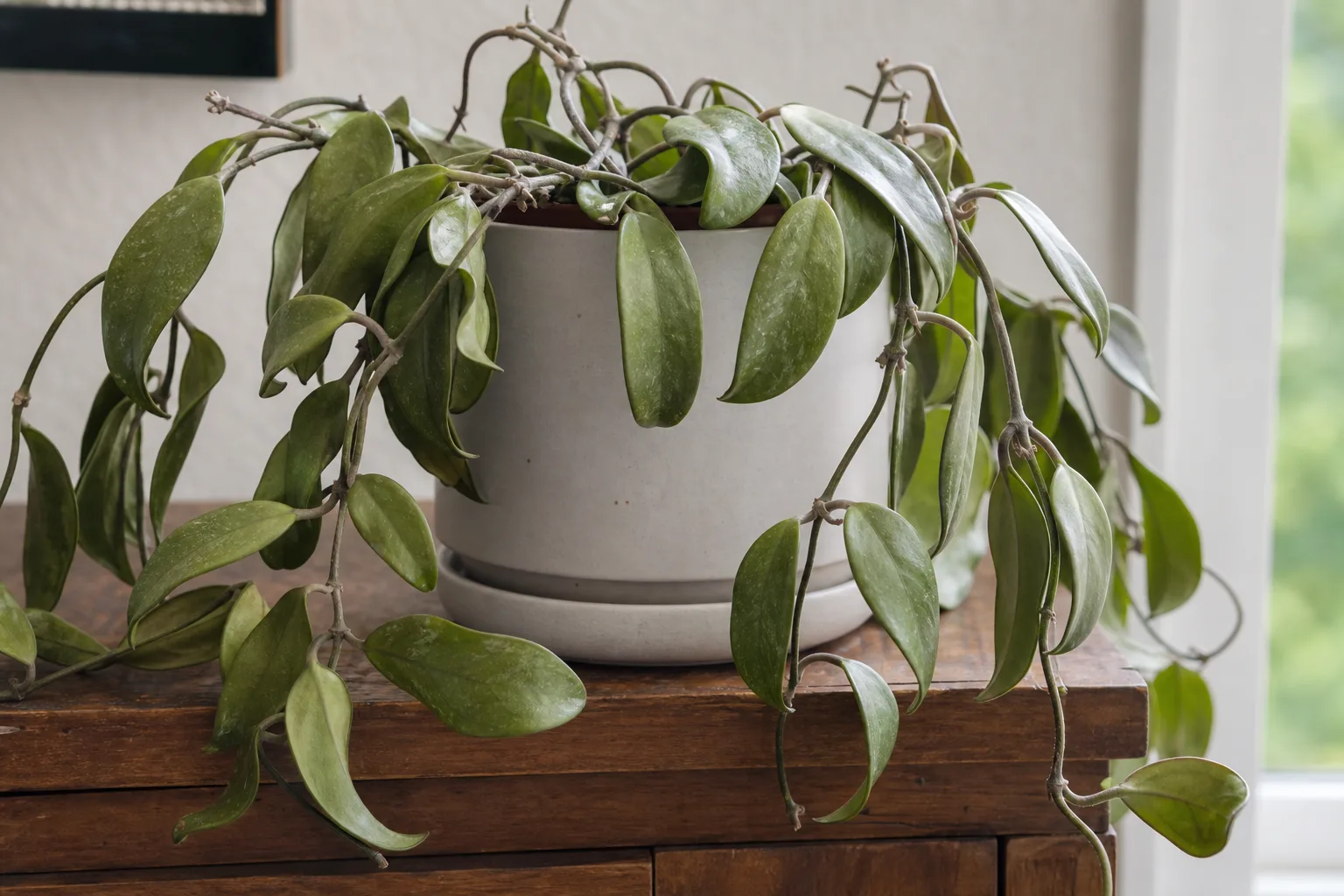
Wilting on Hoya Carnosa: Causes, Checks & Fixes
This guide covers wilting on Hoya Carnosa. See also the general Wilting guide, watering, and light pages for this plant.
Wilting on Hoya Carnosa: Causes, Checks & Fixes
Quick answer
Wilting on Hoya carnosa (Hoya carnosa, wax plant) means trailing vines and waxy leaves lose turgidity - they hang limp or feel soft instead of stiff. On this epiphytic vine, wilt almost always traces to water direction (too dry or too wet), mix failure (hydrophobic bark), or environmental stress (heat, cold, recent repot).
First step: do not water yet. Pinch a mature leaf for firmness, lift the pot for weight, and probe the top half of the mix several centimetres down. Soft pliable leaves on a light, dry pot mean thirst - one thorough soak is the fix (see underwatering guide). Limp leaves on dark, cool, wet mix with yellow lower foliage mean root failure - hold water and inspect roots (see overwatering and root rot).
Hoya carnosa stores water in thick, fleshy waxy leaves, so wilt can appear suddenly after weeks of looking fine - then correct within days once you match the cause.
What wilting looks like on Hoya Carnosa
Wilting here is limp or soft foliage, not always colour change first. Healthy carnosa leaves feel stiff and leathery - the taco test: a turgid leaf resists folding. Wilting reverses that signal.
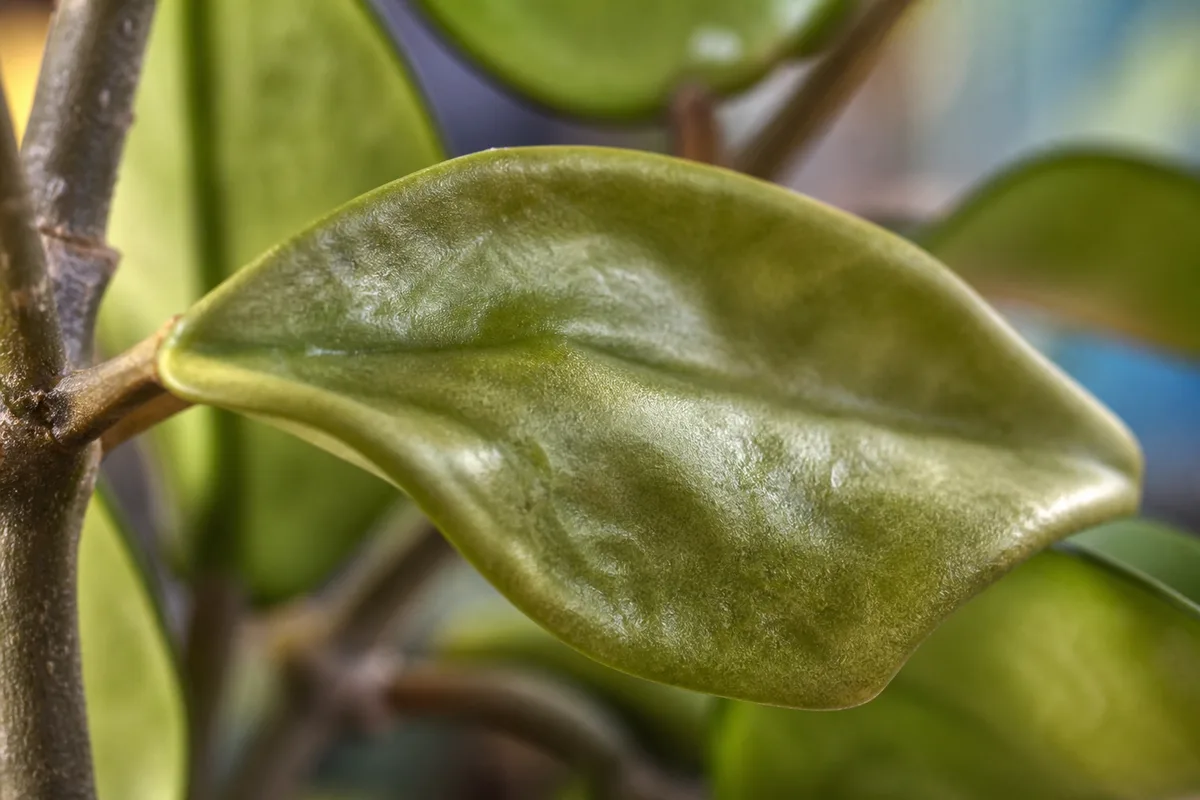
Wilting symptoms on Hoya Carnosa - compare with healthy tissue on the same plant.
Soft pliable leaves on a dry, lightweight pot (thirst wilt)
- Leaves feel thin, soft, or lightly puckered - especially on flat-leaf carnosa; Hindu rope (H. carnosa ‘Compacta’) may show rope-like wrinkling instead of flat limpness.
- Pot feels noticeably light compared with right after a soak.
- Mix is crumbly and dry well below the surface, not just dusty on top.
- Stems stay firm; soil smells neutral, not sour.
- Vines may droop toward the pot but petioles are not mushy.
This is normal drought communication - carnosa tolerates dry intervals, then softens quickly once internal leaf stores run low.
Limp vines on wet mix with yellow lower leaves (root-failure wilt)
- Leaves stay limp after recent watering or feel soft while mix is dark, cool, and clingy.
- Yellow lower leaves may precede or accompany limpness.
- Pot feels heavy; saucer or cachepot may hold stale water.
- Sour smell, fungus gnats, or mushy lower stems point to saturated roots.
- New growth stalls or blackens at tips.
This is the wet-soil paradox: damaged roots cannot take up water even when the mix is wet.
Water races through on first pour (hydrophobic bark)
- First watering after long neglect channels straight to the saucer while a skewer from the core exits dry.
- Surface may look briefly damp; leaves still soften over following days.
- Common in chunky bark-perlite epiphytic mixes left bone dry too long - peat and bark can go hydrophobic after prolonged drought.
Afternoon limpness that perks overnight (heat stress)
- Leaves limp in late-day heat near a hot window but recover by morning when mix moisture is adequate.
- No yellowing pattern; stems firm; pot weight normal.
- Often follows a sudden move to stronger sun without acclimation.
Limp or translucent leaves after cold exposure
- Foliage on a cold winter window sill or in a draft below about 55°F (13°C) turns limp or slightly translucent - bring plants inside when nights fall below 50°F (10°C).
- May occur with wet soil in a cool corner - compound stress, not thirst.
- Watering alone does not fix cold damage; warmth and dry-down come first.
Wilting vs. drooping on Hoya Carnosa
Searchers use both words. On carnosa they often describe the same limp vine - but the diagnostic split matters:
| Symptom word | What it usually means on carnosa | Start here |
|---|---|---|
| Wilting | Loss of leaf turgidity - soft, thin, or collapsed tissue | Leaf taco test + pot weight + mix moisture |
| Drooping | Vines hanging lower; may be normal trailing habit or gravity | Check whether leaves are still firm; droop with firm leaves is often posture, not stress |
Use this page when leaf texture changed - soft, pliable, or wrinkled - not when a long trailing vine simply hangs down with stiff leaves. For posture-only droop, see drooping leaves. For confirmed dry-soil thirst, the underwatering guide goes deeper on soak-and-dry recovery.
Why Hoya Carnosa wilts
Wax plant is an epiphytic vine with thick, water-storing waxy leaves native to Southeast Asia, Japan, and Taiwan. It is built for dry intervals followed by deep drinks, not constant moisture - too wet or too dry soil can cause leaves to drop. That physiology explains why carnosa wilts on both extremes:
Underwatering - Waxy leaves mask drought for weeks, then soften fast. Fear of rot after one overwatered plant pushes many growers to calendar neglect. See underwatering.
Overwatering / root failure - Saturated mix suffocates fine roots; the plant cannot hydrate despite wet soil. Overwatering is the most common issue for hoyas, often leading to root rot. See overwatering.
Hydrophobic mix - Bark-heavy epiphytic blends dry thoroughly between drinks - which carnosa needs - but repel water after long drought, mimicking chronic underwatering.
Heat and light stress - Bright windows and warm rooms increase transpiration. A plant on the edge of dry may wilt in afternoon heat, then recover overnight if roots still function.
Cold + wet combination - Sustained temperatures below about 55°F (13°C) slow metabolism; wet soil in a cool corner compounds limpness.
Tight pots and fast dry-down - Carnosa doesn’t mind being pot-bound, which dries the mix faster than growers expect from a fixed watering calendar.
Recent repot or move - Root disturbance or light shock can cause temporary limpness even when care was correct.
Lookalike symptoms to rule out
- Yellow leaves from natural aging at the vine base - firm leaves, dry appropriate mix, no widespread limpness.
- Spider mites - Fine stippling and webbing on leaf undersides; limpness may be secondary. Inspect with magnification before soaking repeatedly.
- Normal post-soak limpness - Rare on carnosa, but very heavy watering after long drought can briefly stress tissue; should firm within 24–48 hours if roots are sound.
- Bud drop during bloom - Sharp drought while peduncles are active aborts flowers; leaves may soften at the same time. Rehydrate and leave peduncle stubs intact.
How to confirm the cause
Work through this checklist before watering or repotting:
- Leaf taco test - Stiff leaf + appropriate dry mix = wait. Soft, pliable leaf = act.
- Pot weight - Lift the container before and after watering until you learn the dry versus wet feel. Feather-light with soft leaves = thirst. Heavy with limp leaves = hold water.
- Mix moisture at depth - Probe the lower third with a finger, chopstick, or skewer. Dry and crumbly vs. cool, dark, and clingy splits thirst from rot risk.
- Yellowing pattern - Lower yellow leaves on wet mix favour root dysfunction over drought.
- Drainage and smell - Neutral dry scent supports thirst. Sour odour or standing saucer water supports overwatering.
- Light and temperature - Hot afternoon wilt that recovers overnight differs from persistent limpness. Cold glass contact or sub-55°F drafts need warmth, not another drink.
- Watering history - Calendar watering in winter, cachepots without emptying, or fear-driven drought after a rotted plant are common carnosa-specific triggers.
| Check | Thirst wilt | Root-failure wilt |
|---|---|---|
| Leaf feel | Soft, pliable, may wrinkle | Limp, may stay soft after watering |
| Pot weight | Light | Heavy |
| Mix at depth | Dry, crumbly | Wet, cool, clingy |
| Lower leaves | May yellow after repeated dry cycles | Often yellow first |
| Stem base | Firm | May soften if rot advances |
| Recovery after soak | Firms in 2–5 days | Stays limp or worsens |
First fix for Hoya Carnosa
Match one action to what the checklist shows - not both.
If top half of mix is dry and leaves feel soft or pliable
Give one thorough soak until water drains freely, then empty the saucer. Water in slow passes if the mix was hydrophobic. Do not fertilize or repot on day one. Full soak-and-dry steps live in the underwatering guide and watering guide.
If mix is wet and leaves stay limp
Stop watering until the top half of the mix dries. Verify drainage holes are open and no cachepot holds runoff. Move to bright indirect light if the plant sits in deep shade - slow evaporation worsens wet soil. If limpness persists after the mix dries appropriately, slide the plant out and inspect roots for brown, mushy tissue.
If water runs straight through (hydrophobic bark)
Re-wet in pulses - top-water slowly in two or three rounds over an hour, or bottom-soak 30–45 minutes until a skewer from the core exits moist. Do not assume one quick pour hydrated the root ball.
If plant sits in a cold draft or on a cold sill
Move to stable warmth above about 60°F (15°C) and away from glass contact. Let wet mix dry down before the next drink. Do not soak a cold, waterlogged plant.
If plant was recently repotted or moved to stronger light
Hold extra interventions for one to two weeks. Provide consistent bright indirect light, water only when the top half of mix dries, and avoid fertilizer until new growth looks stable.
Step-by-step recovery by cause
Thirst wilt (confirmed dry mix + soft leaves):
- Soak thoroughly from top or bottom until the full root ball rewets.
- Drain all runoff; never leave carnosa standing in water.
- Wait until the top half of mix dries before the next drink.
- Judge success by firmer leaves within two to five days and stable new vine tips.
Root stress (wet mix + persistent limpness):
- Withhold water until appropriate dry-down for your season.
- Improve airflow and light if the plant is in a dim, cool corner.
- Inspect roots; trim only clearly mushy tissue with clean tools.
- Repot into fresh chunky epiphytic mix only if roots are damaged and smell sour - not as a day-one reflex.
- Track recovery by new growth quality, not old limp leaves re-firming instantly.
Hydrophobic mix:
- Pulse-water or bottom-soak until core moisture returns.
- If repeated soaks fail and roots are still firm, refresh mix per the soil guide and repotting guide.
Heat stress:
- Confirm mix moisture is adequate with the checklist.
- Filter harsh midday sun or move back from hot glass.
- Acclimate gradually if increasing light for bloom.
Recovery timeline
Thirst wilt: Leaf firmness often returns within two to five days after a proper soak when roots are intact. Very thick leaves may take up to a week.
Root-failure wilt: Old limp leaves may not fully re-turgidize even after roots recover. Judge progress by stopped yellowing, firm stems, and new node growth over one to three weeks.
Hydrophobic recovery: One successful re-wet can firm leaves within the same two to five day window as simple drought.
Cold stress: Limpmess may persist several days to two weeks after warmth returns; damaged leaf tissue does not green up again.
Worsening signs: Crown softening, spreading stem mush, leaves collapsing after watering, or sour smell - escalate to root inspection immediately.
What not to do
Do not water a wilting carnosa when mix is already wet - you risk advancing rot, not curing wilt.
Do not mist instead of fixing soil moisture - surface humidity does not replace a dry or waterlogged root zone.
Do not stack repot, prune, fertilize, and pesticide on the same day as wilt discovery. Make one care correction, then read the plant for a week.
Do not assume wilt always means thirst because hoyas are “succulent-like” - wet-soil limpness is equally common indoors.
Do not repot into a much larger container to “help drying” - extra wet volume slows dry-down and worsens overwatering risk.
Avoid cold tap water on stressed waxy leaves - room-temperature water is safer.
When trimming damaged tissue, note that cut stems release milky sap that can irritate latex-sensitive skin - handle carefully; the plant is non-toxic to cats and dogs per ASPCA.
How to prevent wilting on Hoya Carnosa
- Water on dry-down, not calendar: top half dry in active summer growth; more complete drying in winter rest - details in the watering guide.
- Use chunky epiphytic mix (potting soil, orchid bark, perlite) with open drainage holes.
- Lift the pot weekly until weight tells you when to drink.
- Read leaf firmness before every watering - waxy leaves are a built-in moisture gauge.
- Empty cachepots within 30 minutes of watering.
- Acclimate gradually before increasing direct sun.
- Keep winter plants above cold glass and avoid watering on a summer schedule in December.
When to worry
Treat same day if the crown feels soft with wet soil, stems collapse at the base, or a trailing plant wilts completely in hot conditions with bone-dry mix.
Escalate to root inspection if leaves stay limp 48 hours after a confirmed full soak on dry mix, or if limpness worsens while soil stays wet.
Repeated wilt cycles - dry collapse, soak, repeat, or chronic wet limpness - stress fine roots beyond a single fix. Inspect roots and consider refreshing hydrophobic or compacted mix if recovery stalls beyond two weeks.
Hoya Carnosa care cross-check
Wilting is a symptom, not a diagnosis. Align the basics from the overview:
| Factor | Carnosa target | Wilting link |
|---|---|---|
| Light | Bright indirect; east or filtered south/west | Too dim slows dry-down and weakens recovery |
| Water | Soak when top half dry; drain fully | Both under- and over-watering cause wilt |
| Soil | Loose, fast-draining epiphytic mix | Dense mix → wet wilt; hydrophobic bark → dry wilt |
| Temperature | Roughly 60–85°F (15–29°C) active growth | Below ~55°F (13°C) → limp cold stress |
| Pot | Slightly snug; max +2 inches at repot | Oversized pot holds wet mix too long |
Conclusion
Wilting on Hoya carnosa is your plant asking for a direction check - dry or wet, not a blind drink. Soft pliable waxy leaves on a light pot with dry mix mean soak once and wait for firmness. Limp foliage on wet mix with yellow lower leaves means roots, not thirst. Run the taco test, pot weight, and depth probe before any fix, then follow the branch that matches. Carnosa forgives drought more willingly than rot - when in doubt on a limp plant with damp soil, withhold water and inspect roots instead of pouring again.
When to use this page vs other Hoya Carnosa guides
- Hoya Carnosa watering guide - Use for routine moisture checks before assuming wilting is the main issue.
- Hoya Carnosa problems hub - Browse all 17 common issues on this species.
- Underwatering on Hoya Carnosa - Different entry point when symptoms overlap with wilting.
- Overwatering on Hoya Carnosa - Different entry point when symptoms overlap with wilting.
- Root Rot on Hoya Carnosa - Different entry point when symptoms overlap with wilting.