Aphids on Hoya Carnosa: Causes, Checks & Fixes
Quick answer
Aphids on Hoya Carnosa colonize soft new vines and peduncles. First step: isolate the plant and rinse all tender growth with lukewarm water before any spray.
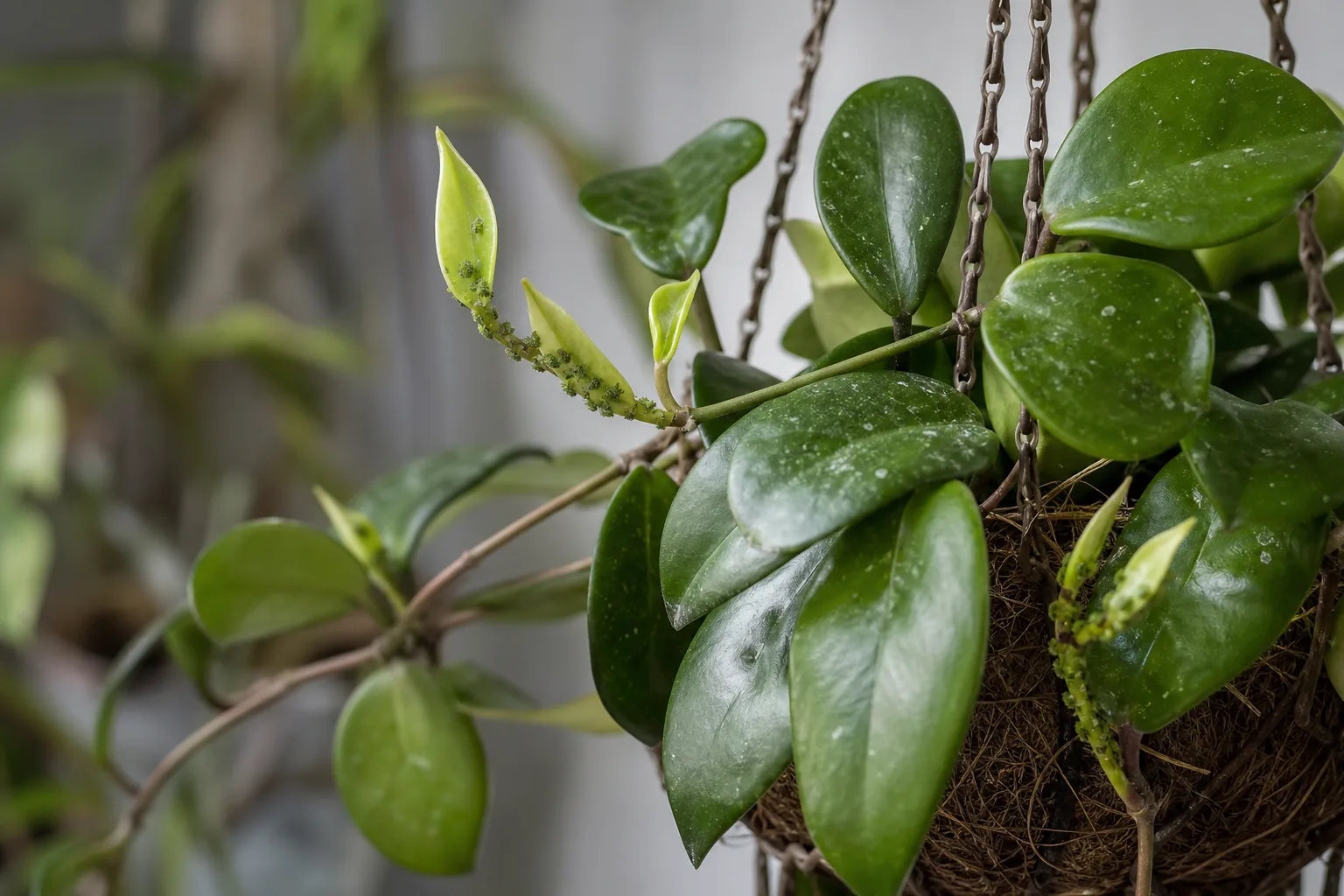
Aphids on Hoya Carnosa: Causes, Checks & Fixes
This guide covers aphids on Hoya Carnosa. See also the general Aphids guide, watering, and light pages for this plant.
Aphids on Hoya Carnosa: Causes, Checks & Fixes
Quick answer
Aphids on Hoya Carnosa (Hoya carnosa, wax plant) are small sap-sucking insects that pile onto tender new vines, leaf tips, and peduncles-the short stalks that carry flower clusters. On this slow-growing trailer, even a modest colony can distort the only fresh shoot on a long bare stem.
First step: move the plant away from your collection and rinse every soft growing point with lukewarm water. Use a sink or shower spray strong enough to knock insects loose but gentle enough not to tear waxy leaves. You need to confirm live aphids and reduce the population before reaching for soap, neem, or pruning shears.
Do not cut peduncles just because aphids are present. Hoya Carnosa blooms from the same peduncle stubs year after year, and removing them trades a fixable pest problem for years of lost flowers.
What aphids look like on Hoya Carnosa
Aphids are pear-shaped, soft-bodied insects about 1/16 to 1/8 inch long with visible legs and antennae. Most are wingless and green, though indoor colonies may also look yellow, brown, black, or gray.
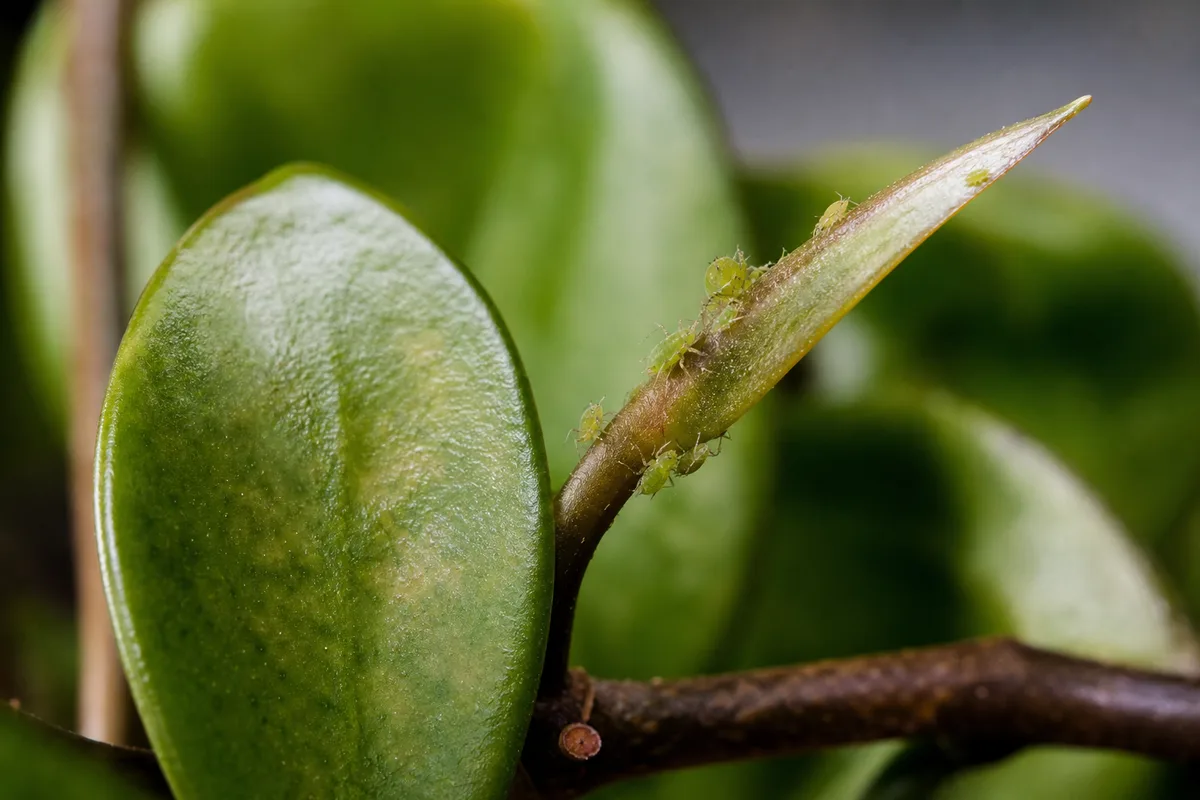
Aphids symptoms on Hoya Carnosa - compare with healthy tissue on the same plant.
On Hoya Carnosa, check these spots first:
- New vine tips and unfurling leaves - the plant puts out growth slowly, so aphids often concentrate on the only soft tissue available
- Peduncles and flower buds - aphids cluster on stems just below opening buds, which is especially frustrating on a plant valued for porcelain-like blooms
- Undersides of young leaves along the midrib, where sap is easiest to reach
- Leaf axils where petioles meet the vine - the same sheltered joints that hide mealybugs on wax plants
Supporting clues include shiny, sticky honeydew on leaves or the shelf below, white cast skins left after molting, ants climbing the pot or trellis, and black sooty mold growing on dried honeydew. Heavy feeding can curl, yellow, or stunt new leaves while older thick foliage may look fine until honeydew spreads.
Why Hoya Carnosa gets aphids
Aphids rarely mean your Hoya is doomed. They mean soft, nitrogen-rich new growth is available and predators are missing indoors.
New growth timing. Hoya Carnosa grows most actively in warm, bright months. Aphid populations also build fastest in mild indoor temperatures, so spring and summer vines are the usual target. A single tender shoot on an otherwise mature plant can host the entire colony.
Hitchhiking and collection spread. Aphids arrive on new nursery plants, cuttings, or open windows. Isolating affected plants limits spread to other specimens in a shared shelf or hanging display.
Soft shoots from excess nitrogen. Hoya owners sometimes push growth with high-nitrogen fertilizer hoping for faster vines or more leaves. That produces the lush, succulent shoots aphids prefer. Overfertilization encourages soft growth that attracts aphids-a poor trade on a plant that already grows slowly and flowers best with modest feeding.
Sheltered trailing habit. Long hanging stems keep vine tips at eye level near windows, where aphids can enter from outdoor populations. Dense leaf clusters reduce airflow slightly around inner stems, though the bigger issue is simply that pests are hard to spot on a plant you water from above without inspecting undersides.
Stress without rot. Unlike overwatered Hoyas that yellow from root trouble, aphid damage stays concentrated on new tissue while the caudex-like vine and older leaves remain firm. Thick leaves store water; aphids do not cause the wrinkled, thirsty look of drought-unless honeydew and sooty mold block light badly enough to weaken the plant over time.
How to confirm the cause
Work through these checks before treating:
- Find moving insects - Disturb a cluster with a cotton swab. Aphids walk slowly; if nothing moves, you may be looking at dried honeydew, leaf shine residue, or mealybug wax.
- Follow the stickiness - Honeydew feels tacky and appears on surfaces below infested tips. Mineral dust on waxy Hoya leaves is dry and wipes away clean.
- Inspect peduncles separately - Bud drop from overwatering on Hoya Carnosa or moved plants is common on Hoya Carnosa, but aphid-covered peduncles show live insects on the stalk itself, not just a fallen bud scar.
- Rule out mealybugs - Mealybugs form white cottony masses in leaf axils and crowns. Aphids are smaller, smoother, and usually greener, without fluffy wax.
- Rule out scale - Scale looks like immobile brown or tan bumps on older wood. Aphids stay clustered on soft tissue and change position when disturbed.
- Check neighbors - Aphids often appear on multiple plants. If only one Hoya tip is affected, you likely caught an early introduction.
Confirmed diagnosis requires live aphids on tender growth plus honeydew or distorted new leaves. Yellow lower leaves with wet soil point to watering trouble, not this pest.
First fix for Hoya Carnosa
Isolate the plant and rinse all tender growth with lukewarm water.
Move the pot away from other plants. Wrap the pot in plastic if you shower the foliage so bark-heavy mix does not wash down the drain. Spray vine tips, peduncles, leaf undersides, and stems until aphids knock loose-they often drop off when disturbed but can climb back, so rinsing is a starting move, not a one-time cure.
Let the plant drain fully and return it to Hoya Carnosa light guide. Do not apply soap or oil the same hour if leaves are dripping wet and the room is warm; waxy foliage can hold droplets that magnify sun or product burn. Wait until leaves are dry, then inspect what survived the rinse.
Step-by-step recovery
After the first rinse, continue in this order based on what you still see:
- Repeat washing every two to three days for light infestations confined to one or two vine tips. Washing needs repetition because aphids return to stems.
- Hand-wipe small colonies on peduncles with a damp cloth or cotton swab dipped in rubbing alcohol. Test alcohol on one leaf first; most Hoya Carnosa tolerate spot dabs, but variegated or sun-stressed plants can mark.
- Apply insecticidal soap if live aphids remain after two rinse cycles. Use a product labeled for houseplants, not dish detergent. Coat stems, bud clusters, and leaf undersides until spray runs off. Insecticidal soap kills by contact and has no residual effect, so coverage matters more than concentration.
- Repeat soap every five to seven days for two to three weeks to catch nymphs hatching from eggs you missed. Aphids can reach reproducing adults in about a week in warm conditions, which is why single sprays fail.
- Add neem oil only if soap falls short - useful for hidden colonies along curled young leaves, but patch-test first on waxy foliage and avoid hot windows immediately after treatment.
- Prune only as a last resort - Snip a heavily infested vine tip if you cannot reach every insect, but do not remove peduncles unless the stalk is already dead and black. Flower potential lives in those stubs.
- Wipe honeydew and sooty mold from mature leaves with a damp cloth so the plant can photosynthesize normally while recovering.
Hold fertilizer until new growth looks clean for two weeks. Feeding during an active infestation produces more aphid-friendly shoots.
Recovery timeline
Within three to five days of consistent rinsing, live aphid numbers on accessible tips should drop sharply. You should see fewer moving insects and less fresh honeydew.
Two to three weekly soap cycles (about two to three weeks total) usually clear typical houseplant infestations if every vine tip and peduncle gets covered each time. Mississippi State Extension notes that all aphid life stages respond to contact sprays when coverage is thorough.
New leaves are the recovery signal. Expect clean, firm unfurling growth within two to four weeks after the last live aphids are gone. Old curled or yellowed leaves rarely flatten completely; trim them for appearance once the plant is stable.
Worsening signs include ants intensifying on the pot, sooty mold spreading despite cleaning, winged aphids on multiple plants, or new colonies reappearing on every fresh vine tip after three treatment rounds. That pattern calls for stricter isolation and possibly discarding a severely infested cutting while saving the main vine.
Lookalike symptoms
- Mealybugs on Hoya Carnosa - White cottony patches in leaf axils and crowns; same honeydew, but insects are larger and waxy, not smooth green pears.
- Scale insects - Hard tan or brown domes on older stems; does not cluster on the softest new tip the way aphids do.
- Spider mites on Hoya Carnosa - Fine stippling and webbing, especially in dry air; mites are microscopic without a lens, not visible pear-shaped groups.
- Powdery residue - Natural wax on Hoya leaves can look pale; wipe it-aphids leave stickiness and cast skins behind.
- Bud drop from care stress - Overwatering, moving a plant, or cutting peduncles can drop buds without insects. Inspect the stalk surface for live aphids before blaming pests.
What not to do
Do not cut peduncles to remove aphids unless the stalk is already dead. Hoya Carnosa re-blooms from the same peduncle year after year.
Avoid homemade dish soap sprays - they burn waxy leaves more easily than labeled insecticidal soap.
Do not overwater because the plant looks stressed. Hoya Carnosa still wants the top half of the mix to dry between drinks; soggy soil weakens recovery and invites fungus gnats.
Skip systemic insecticides on flowering plants you may move outdoors in summer unless you accept bee toxicity risks on blooming specimens.
Do not return the plant to a shared shelf after one rinse. Two weeks without new pests is a safer clearance window.
Do not fertilize heavily while treating. Soft nitrogen-rich shoots feed the next generation of aphids.
Hoya Carnosa care cross-check
While treating, keep basics steady:
- Light - Bright indirect light supports sturdy growth. Weak light produces soft, stretched shoots that stay vulnerable after pests leave.
- Water - Allow the top half of the mix to dry in summer; drier in winter. Thick leaves store water, so err on the dry side rather than keeping soil moist “to help recovery.”
- Airflow - Gentle air circulation dries honeydew faster and discourages sooty mold on waxy foliage.
- Pot size - Hoyas prefer being slightly root-bound. Do not repot mid-infestation unless soil pests are also present.
- Feeding - Resume balanced or low-nitrogen fertilizer only after new growth is clean.
How to prevent aphids next time
Quarantine every new Hoya or cutting for at least two weeks and inspect vine tips with a magnifier before hanging it near established plants.
During weekly care, follow each trailing stem to its growing point instead of only glancing at older leaves. Early colonies are easiest to rinse away.
Avoid high-nitrogen fertilizer during active growth surges. Modest feeding and strong light produce tougher tissue less attractive to aphids.
Keep ants off plant stands. Ants protect aphids from predators and signal honeydew-producing pests nearby.
If you summer the plant outdoors, rinse and inspect before bringing it back indoors in fall-outdoor aphids hitchhike on new growth.
When to worry
Escalate quickly if flower peduncles are coated, multiple Hoyas in one room show the same clusters, or winged aphids appear on windowsills. Those signs mean reproduction is outpacing rinsing.
A single infested tip on an otherwise healthy wax plant is manageable. A vine that loses every new shoot to curling for a month despite three soap cycles may need aggressive pruning of that stem or disposal of a small rooted cutting to protect the wider collection.
Hoya Carnosa is long-lived and pet-safe, so patience usually wins. Replace the plant only when most growing points stay infested and no clean new leaves emerge after a full month of correct treatment.
Conclusion
Aphids on Hoya Carnosa are a new-growth pest, not a death sentence. Confirm them on vine tips and peduncles, isolate the plant, and rinse before you spray. Repeat contact treatments weekly, protect peduncles, and hold nitrogen until clean leaves return. The wax plant rewards careful inspection more than aggressive pruning-and the first shower you give those tender vines is often the most important step.
When to use this page vs other Hoya Carnosa guides
- Hoya Carnosa watering guide - Use for routine moisture checks before assuming aphids is the main issue.
- Hoya Carnosa problems hub - Browse all 17 common issues on this species.
- Mealybugs on Hoya Carnosa - Different entry point when symptoms overlap with aphids.
- Spider Mites on Hoya Carnosa - Different entry point when symptoms overlap with aphids.
- Yellow Leaves on Hoya Carnosa - Different entry point when symptoms overlap with aphids.