Underwatering on Hoya Kerrii: Causes, Checks & Fixes
Quick answer
Underwatering on Hoya Kerrii shows as soft or wrinkled heart leaves while the mix is very dry and the pot feels light. First step: one thorough soak until water drains freely, then wait for the mix to dry down again before the next drink.
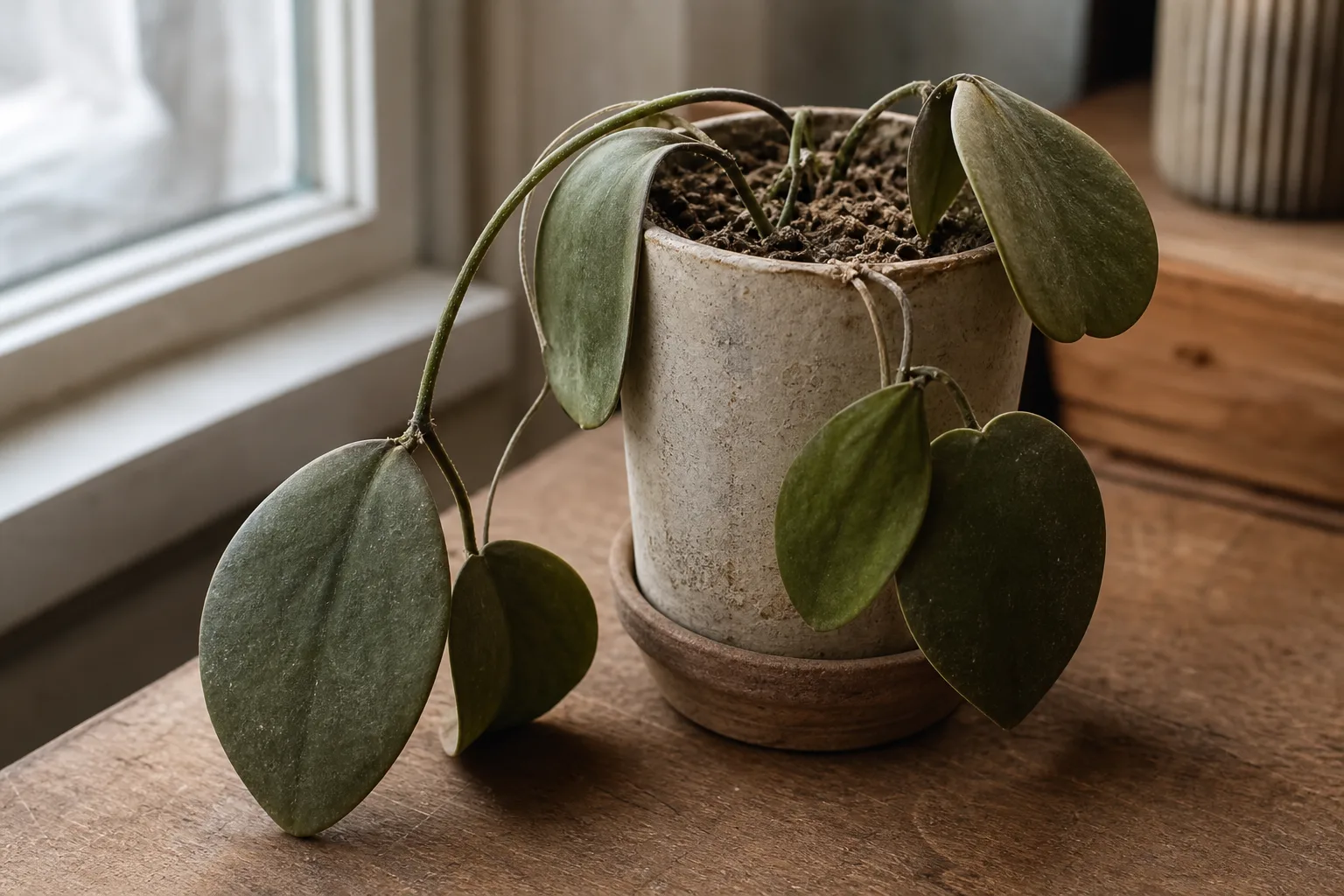
Underwatering on Hoya Kerrii: Causes, Checks & Fixes
This guide covers underwatering on Hoya Kerrii. See also the general Underwatering guide, watering, and light pages for this plant.
Underwatering on Hoya Kerrii: Causes, Checks & Fixes
Quick answer
Underwatering on Hoya Kerrii (Hoya kerrii, Sweetheart Hoya) means the plant has used up both soil moisture and the water stored in its thick heart-shaped leaves. You will usually see soft, thin, or slightly wrinkled foliage while the potting mix is dry well below the surface and the container feels noticeably light.
First step: give one thorough soak. Water slowly from the top until excess runs freely from the drainage holes, or bottom-water in a tray until the surface moistens, then lift the pot and empty any saucer. Do not dribble small sips every day - shallow drinks often fail to rewet a dry epiphytic mix and can leave the root ball thirsty while you think you watered.
Hoya kerrii tolerates drought far better than soggy soil, so underwatering is less common than overwatering on Hoya Kerrii indoors. Hoyas developed semi-succulent leaves that store water as epiphytes with less ground moisture - that tolerance also hides the problem: leaves stay plump for weeks, then wrinkle quickly once internal stores run low.
What underwatering looks like on Hoya Kerrii
The signature clue is leaf texture, not colour alone. Healthy kerrii hearts feel firm and slightly succulent, like a thick coin. When underwatered, the same leaves feel thin, soft, or lightly puckered along the surface - especially near the petiole. NC Extension notes that thinning, brown, or wrinkled leaves can mean the plant is allowed to dry too much between waterings.
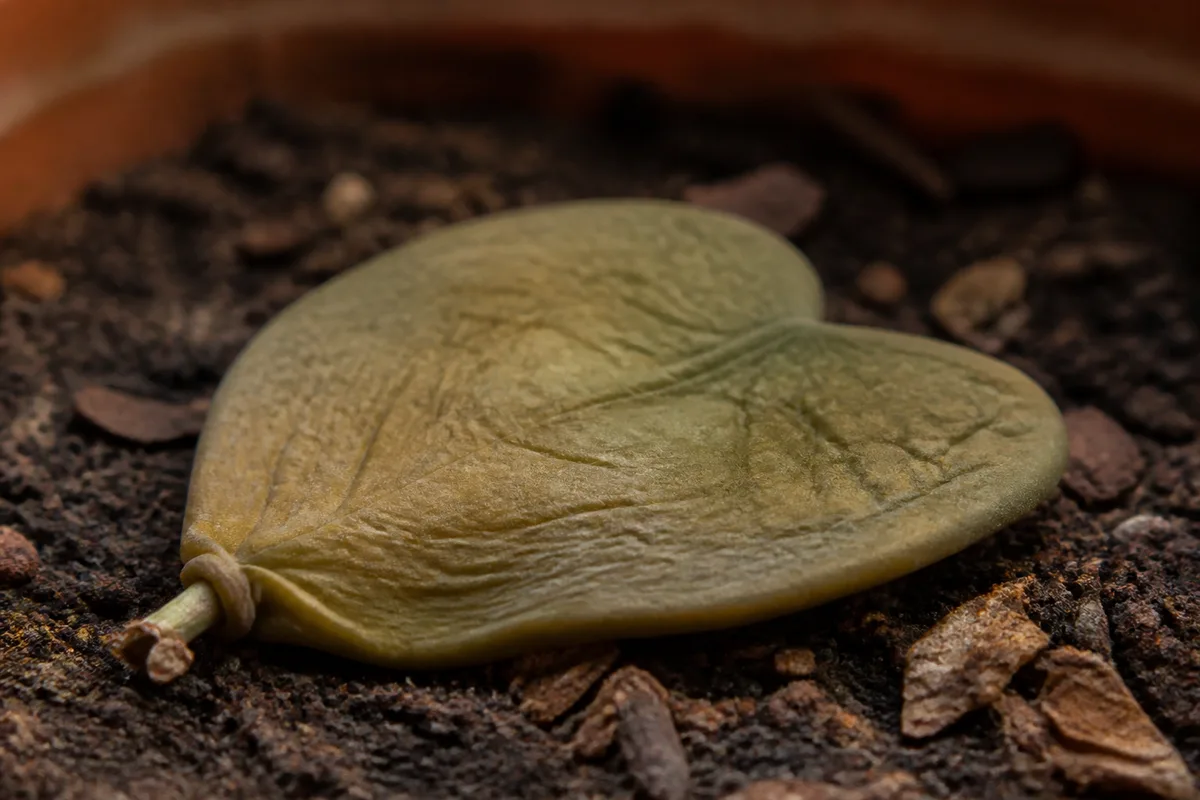
Underwatering symptoms on Hoya Kerrii - compare with healthy tissue on the same plant.
Other patterns that fit drought on a vining specimen:
- Pot weight drops sharply - a dry epiphytic mix in a small pot feels almost hollow compared with the same pot after a soak.
- Mix pulls slightly away from the pot wall or looks pale and dusty several centimetres down, not just at the surface.
- Older leaves yellow and drop after repeated dry cycles - the plant sheds foliage to conserve moisture.
- Growth stalls during warm months when light is adequate; a thirsty kerrii stops pushing vines even though it is not dormant.
- Water runs straight through on the first pour because peat or bark has gone hydrophobic after a long dry spell.
Single-leaf Valentine plants behave differently. A rooted leaf with no node can stay visually unchanged for months while the mix is dry, because the leaf itself is a water reservoir. Underwatering there shows up late - sudden limpness or browning at the base after the leaf has exhausted its stores.
Why Hoya Kerrii gets underwatered
Sweetheart hoya is an epiphytic vine with succulent leaves - NParks describes it as intolerant of waterlogging and needing little water, with potted plants watered when the top 3 cm of soil becomes dry. That biology makes drought easy to misread. Owners who fear root rot on Hoya Kerrii often wait too long, assuming thick leaves mean the plant cannot possibly be thirsty.
Common triggers specific to Hoya Kerrii overview:
Overcorrecting for overwatering. Kerrii fails fast in wet, dense mix. After one rotted plant, many growers swing to calendar neglect. The safer middle path is dry-down watering - let the mix go very dry, then soak - not skipping water for a month in active summer growth.
Bright light and small pots. A kerrii in a sunny east or west window, a warm room, or a snug container dries faster than the same plant in a cool corner. LeafyPixels care data suggests every 10–14 days in summer for typical vining plants in Hoya Kerrii light guide, versus every 3–4 weeks or longer in winter - but a hot July windowsill can need water sooner.
Hydrophobic mix. Chunky bark-and-perlite epiphytic blends dry thoroughly between drinks - which kerrii needs - but if left dry too long, the mix can repel water so the surface looks briefly damp while the core stays bone dry. Very dry potting mix may need to be soaked to wet properly again.
Single-leaf novelty confusion. Gift hearts store water in one leaf and use almost none. They need water less often than vining plants, yet still need occasional deep soaks. Complete neglect for months dries fine roots beyond easy recovery.
Root-bound stress in extreme drought. NParks notes kerrii flowers best when kept rootbound. A tight root ball in a small pot dries in a day or two during heat. That is not a reason to upsize immediately, but it is a reason to check weight more often in summer.
How to confirm the cause
Work through these checks before you pour:
- Leaf firmness - Plump and hard with dry soil means the plant still has reserves; wait. Soft or wrinkled with dry soil means drink now.
- Soil moisture at depth - Insert a finger, chopstick, or skewer to the lower third of the pot. Crumbly and dry confirms drought. Cool, clingy, or dark mix means hold water - even if leaves look sad.
- Pot weight - Lift before and after watering sessions until you learn the light versus heavy feel.
- Drainage and smell - Dry, neutral-smelling mix supports underwatering. Wet mix with sour odour points to rot, not thirst.
- Light and season - Active summer growth with strong light uses water faster. A leafless or slow winter plant may need water monthly or less without being underwatered.
- Root peek if leaves stay wrinkled after a soak - Slide the plant out. Firm, pale roots with dry mix confirmed thirst. Mushy brown roots with damp mix mean overwatering damage - adding more water will not plump leaves.
The critical split: wrinkled leaves + dry mix = underwatering; wrinkled leaves + wet mix = root dysfunction, usually from past overwatering - wilted leaves can mean soil is too dry or too wet when rotting roots cannot take up water.
First fix for Hoya Kerrii
Soak the root zone once, thoroughly, and drain all runoff.
Place the pot in a sink or shower. Water in slow passes until liquid runs steadily from the holes - often two or three rounds if the mix was hydrophobic. Alternatively, set the pot in a tray of water for 30–45 minutes until the surface darkens, then remove and let it drain completely.
That single deep drink recharges both soil and the leaf tissue kerrii uses as a buffer. Wait until the mix dries down again before the next watering. Do not fertilize, repot, or mist heavily on day one.
Step-by-step recovery
Once you have confirmed dry-soil drought:
- Rewet the full root ball - Repeat top watering or bottom soaking until a skewer from the bottom third exits without dry streaks.
- Empty the saucer - Kerrii is intolerant of waterlogging; never leave it standing in runoff.
- Move to appropriate light if needed - Bright indirect light helps the plant use water predictably and supports recovery growth. Avoid blasting a stressed plant with direct midday sun.
- Trim only fully crisp tissue - Brown, dead edges will not green up. Snip for appearance after the plant firms.
- Hold fertilizer - Wait until leaves feel plump again and, on vining plants, you see stable new growth for two weeks.
- Adjust rhythm, not volume - Kerrii wants infrequent but deep drinks. Shallow daily splashes recreate chronic drought in the centre of the pot.
- Fix hydrophobic mix if water channels through - Work water in pulses across several hours, or repot into fresh chunky epiphytic mix only if repeated soaks fail and roots are still firm.
If leaves remain wrinkled 48 hours after a confirmed full soak and the mix is moist, stop treating it as underwatering and inspect roots for rot.
Recovery timeline
Leaf firmness often returns within two to five days after a proper soak when roots are intact. Very thick kerrii leaves can take up to a week because the plant refills internal stores gradually.
Old yellow or brown leaves do not revert - judge success by turgid existing foliage and new vine tips, not by repairing damaged margins.
Fine root hairs damaged by long drought may slow uptake for one to two weeks; growth resumes once the plant stabilizes.
Worsening signs: leaves go papery and collapse after watering, stems soften at the base, or the mix stays wet while leaves keep wrinkling - those suggest rot or stem damage, not simple thirst.
Lookalike symptoms
- Overwatering / root rot - Wrinkled or limp leaves while soil stays damp, yellow lower leaves, mushy petioles, sour smell. NC Extension warns that containers without good drainage can lead to root rot; damaged roots cannot move water even when the mix is wet.
- Heat or light stress - Bleached or scorched patches on leaves facing the window, often with soil that is actually dry from fast evaporation. Rehydrate, then filter harsh direct sun.
- Normal slow winter rest - Few new leaves and long dry intervals in cool, short days are expected. Do not force summer watering frequency in December.
- Single-leaf stagnation - A rooted leaf without stem tissue may never vine regardless of water. Lack of growth is not always underwatering; confirm the cutting included stem tissue.
- Low humidity alone - Kerrii tolerates typical indoor humidity. Crispy tips with otherwise firm leaves and moist soil point to salts, pests, or airflow issues more often than drought.
What not to do
Do not water on a fixed calendar without checking mix dryness - kerrii needs differ by season, pot, and light.
Do not mist instead of soaking roots - surface humidity does not replace dry soil moisture.
Do not drench daily after one dry spell - swinging to constant wet soil invites rot in this epiphyte.
Do not repot into a much larger container to “help watering” - extra wet soil volume slows drying and worsens overwatering risk.
Do not fertilize a drought-stressed plant - salts on dry roots burn fine hairs.
Avoid cold tap water shocks - room-temperature water is safer; NC Extension recommends room-temperature watering for hoyas.
How to prevent underwatering next time
Build a dry-down routine tied to your pot, not a blog schedule:
- Check when the top half of the mix is dry in warm active growth, or when the top 3 cm is dry per NParks guidance - combine with pot weight on your specific container.
- Water deeply, then let the mix approach dry again before the next drink.
- In summer bright light, expect roughly every 10–14 days for a typical vining kerrii; in winter, stretch toward monthly or longer unless grow lights keep the plant actively growing.
- Use chunky, well-drained epiphytic mix with open drainage holes so you can soak safely without waterlogging.
- Lift the pot weekly until weight tells you when the plant is ready.
- For single-leaf gifts, water sparingly but thoroughly when the tiny root zone is fully dry - often every 4–6 weeks, not never.
When to worry
Treat same-day if a vining plant wilts completely with bone-dry mix in hot conditions, or if leaves feel papery thin rather than slightly soft.
Escalate to root inspection if leaves stay wrinkled after a full soak, stems soften, or soil smells sour.
Single-leaf plants that brown from the petiole upward after long neglect may not recover - the leaf had no vine meristem to replace lost tissue.
Conclusion
Underwatering on Hoya Kerrii is a timing and technique problem masked by succulent leaves. Confirm it with soft or wrinkled foliage plus dry mix and a light pot, then one thorough soak with full drainage. Prevent it by respecting kerrii’s dry-down rhythm - very dry, then soaked - without swinging to months of neglect in bright summer rooms. When wrinkling persists in wet soil, stop watering and look at roots instead; this plant forgives drought more willingly than it forgives rot.
When to use this page vs other Hoya Kerrii guides
- Hoya Kerrii watering guide - Use for routine moisture checks before assuming underwatering is the main issue.
- Hoya Kerrii problems hub - Browse all 16 common issues on this species.
- Wilting on Hoya Kerrii - Different entry point when symptoms overlap with underwatering.
- Brown Tips on Hoya Kerrii - Different entry point when symptoms overlap with underwatering.
- Yellow Leaves on Hoya Kerrii - Different entry point when symptoms overlap with underwatering.