Root Rot on Hoya Kerrii: Causes, Checks & Fixes
Quick answer
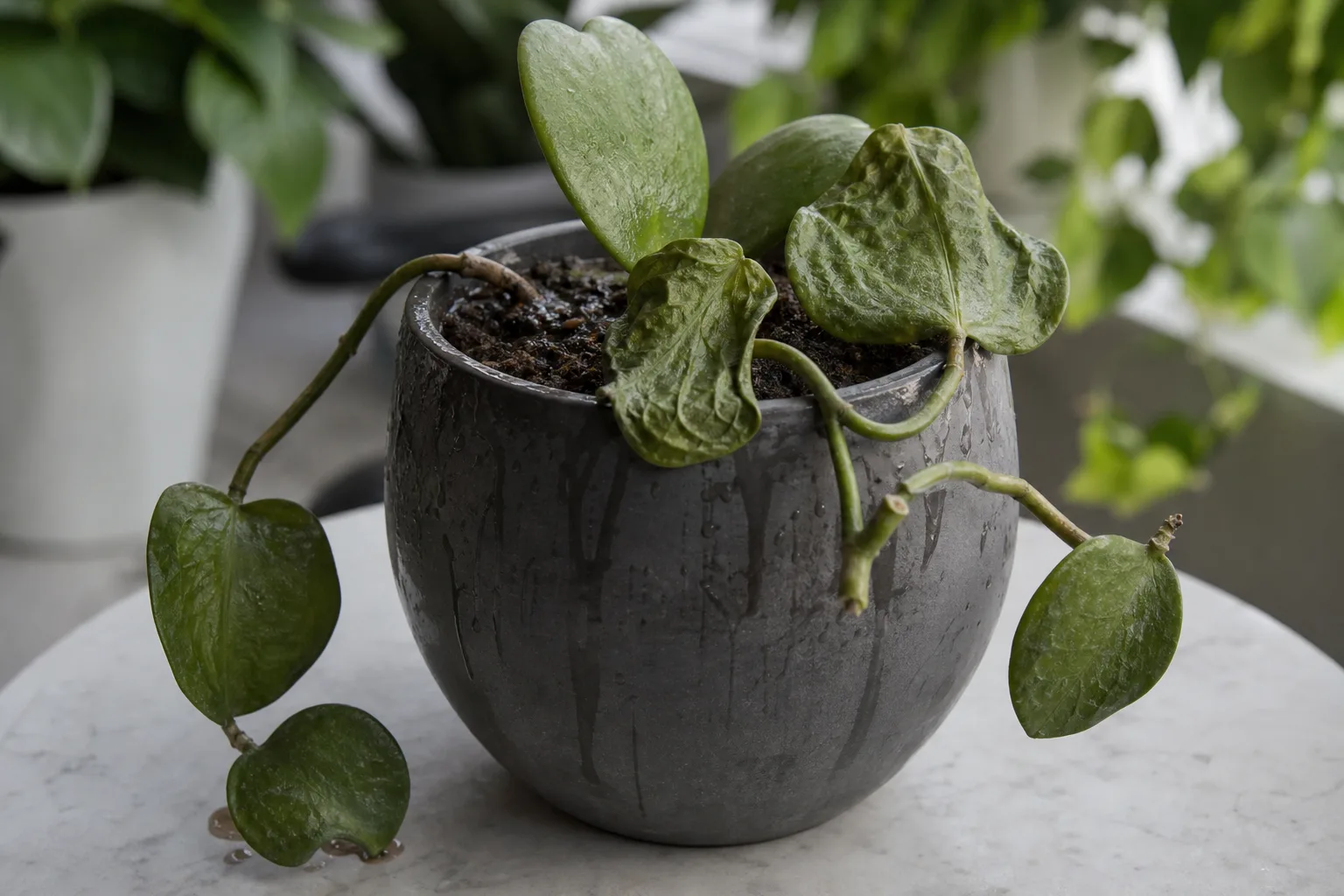
Root rot on Hoya kerrii shows as limp or wrinkled heart leaves while the mix stays wet and the pot feels heavy - not light and dry. First step: stop watering immediately and inspect the root zone before repotting or fertilizing.
Root Rot on Hoya Kerrii: Causes, Checks & Fixes
This guide covers root rot on Hoya Kerrii. See also the general Root Rot guide, watering, and light pages for this plant.
Root Rot on Hoya Kerrii: Causes, Checks & Fixes
Quick answer
Root rot on Hoya kerrii (Sweetheart Hoya, Valentine heart) means the root zone has stayed wet long enough that tissue decays and can no longer move water - even though the thick heart-shaped leaves may still look plump for a while. The defining indoor signal is limp, soft, or wrinkled foliage while the mix stays damp and the pot feels heavy, not light and crumbly dry.
First step: stop watering immediately. Pull the nursery pot out of any decorative cachepot, confirm drainage holes are open, and slide the root ball out for inspection before you repot, fertilize, or pour another drink. Kerrii is an epiphytic vine intolerant of waterlogging; it tolerates drought far better than soggy soil, so withholding water on wet mix is always the correct opening move.
If leaves are wrinkled on bone-dry, light soil, you likely have underwatering instead - opposite first fix. This page covers confirmed or suspected wet-soil root failure.
Root rot vs. drought wilt on kerrii
Sweetheart hoya confuses owners because the same wrinkled heart leaf can mean thirst or rot. The soil moisture split is the fastest home test:
| Signal | Root rot / wet-soil failure | Underwatering |
|---|---|---|
| Mix at 3–5 cm depth | Cool, dark, clingy; stays wet for days | Crumbly, dry; pulls from pot wall |
| Pot weight | Heavy despite limp leaves | Noticeably light |
| Leaf texture | Soft yellow, mushy petiole possible | Thin, papery, wrinkled but petiole firm |
| Smell | Sour or musty from pot | Neutral |
| After one deep soak | No improvement; may worsen | Firms within several days |
Wrinkled or thinning leaves on kerrii can mean drought - but only when the root zone is actually dry. When rotting roots cannot absorb water, leaves wilt while soil stays saturated, the same paradox described for overwatered houseplants with failing roots.
What root rot looks like on Hoya Kerrii
Early rot is easy to miss because hoyas store water in semi-succulent leaves that mask root damage until uptake fails.
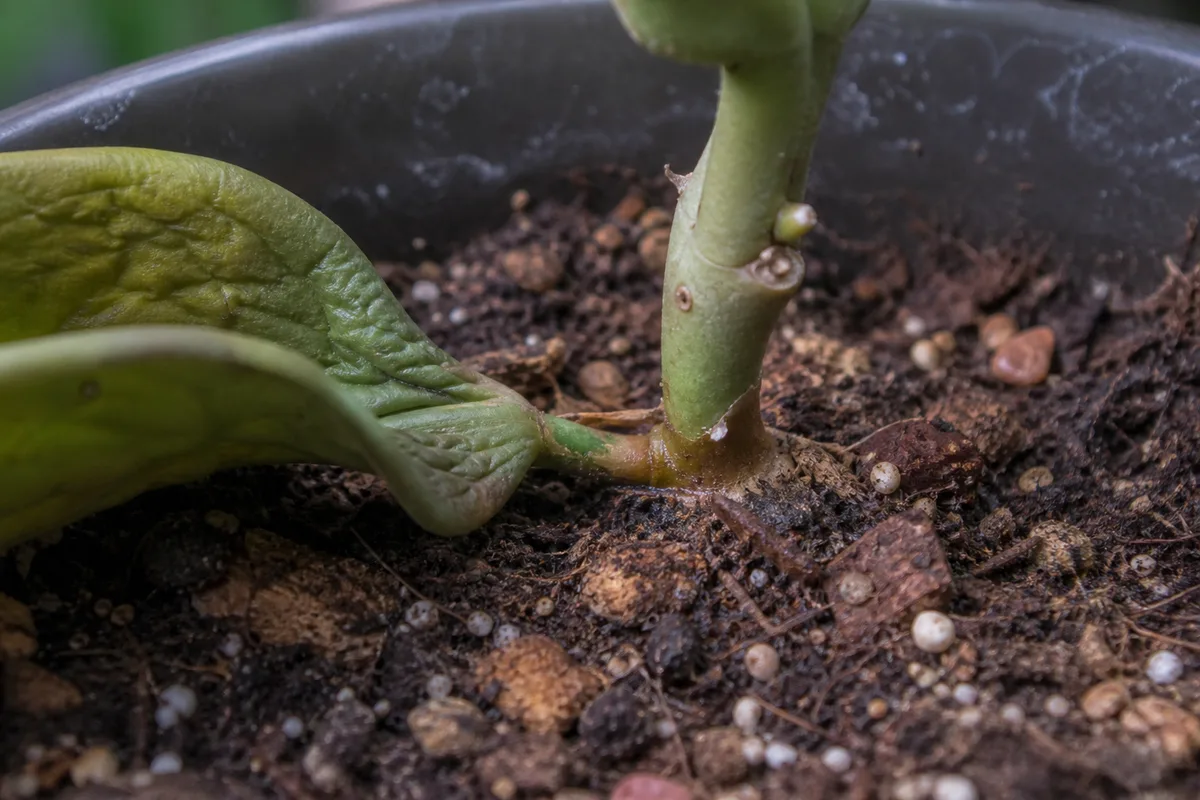
Root Rot symptoms on Hoya Kerrii - compare with healthy tissue on the same plant.
Early signs:
- Limp or slightly wrinkled hearts on mix that has not dried for a week or more
- Yellowing lower leaves while the pot still feels heavy
- Soft or denting petiole where the leaf meets the soil - one of kerrii’s most specific rot signals
- Sour, musty, or stagnant smell when you lift the pot or scrape the surface
- Fungus gnats hovering over constantly damp mix
- Surface mold or algae on soil that never crusts dry - see mold on soil for early-stage wet-mix warnings
Advanced signs:
- Mushy stem or petiole tissue at the soil line
- Translucent or collapsing heart leaves despite wet mix
- Whole-plant collapse after months in a decorative cachepot with no drainage
- Brown, slimy roots that disintegrate when touched on unpotting
Single-leaf Valentine vs. vining plant: NParks notes kerrii is commonly sold as a single leaf. A rooted heart without stem nodes stores water in one thick leaf and uses almost none - rot in a tiny glazed pot often kills the base before the leaf wrinkles. A vining specimen shows wet-soil wilt on multiple hearts and may still salvage from firm nodes higher on the stem. NC Extension warns that cuttings without stem tissue may not grow well long-term even when the leaf persists.
Why Hoya Kerrii gets root rot
Kerrii is a tropical epiphytic vine with succulent leaves and a woody stem - it evolved for brief rain on bark, then fast drying. Potted indoors, the same biology makes roots suffocate in dense, chronically wet mix.
Overwatering on a calendar. Owners see plump hearts and keep watering weekly while the lower mix stays saturated. NParks recommends watering potted kerrii only when the top 3 cm of soil becomes dry. Watering before that dry-down - especially in cool, dim winter rooms - is the most common rot trigger.
Heavy peat-rich mix without bark. Standard bagged soil holds moisture at the center while the surface looks lighter. Epiphytic roots need air pockets; waterlogging intolerance is documented for this species.
Oversized pots and cachepots. NC Extension notes that if the container does not keep the plant root-bound, it may hold excess water that can lead to root rot. A small root ball in a large wet zone rots silently. Decorative outer pots without drainage re-soak the mix from below.
Winter stagnant mix. Growth slows sharply in cool, short-day months. Continuing a summer watering rhythm on a slow epiphyte leaves mix cold and oxygen-starved for weeks - a reliable path to rot even in bright homes.
The moisture paradox. Because kerrii survives drought well, owners who previously underwatered may overcorrect with frequent drinks. A wilted heart in wet soil is not asking for water - damaged roots cannot take it up. Watering a wilted plant with rotting roots makes the problem worse.
Cross-check early overwatering signs before roots are fully mushy - dry-down alone may still save a mild case.
How to confirm the cause
Work through these checks in order:
- Wet-soil wrinkle test - Limp or wrinkled hearts plus damp mix at depth strongly suggests root dysfunction, not thirst.
- Top 3–5 cm probe - Insert a finger or dry chopstick. Cool, clingy, dark soil days after watering confirms saturation. Align with the watering guide dry-down standard.
- Pot weight - Heavy with sad foliage means waterlogged mix; light with wrinkled leaves points to drought instead.
- Petiole firmness - Pinch where the leaf meets the soil. Mush or a dent that does not spring back means rot at the base.
- Drainage and smell - Open holes, empty saucers, sniff for sour rot. Blocked drainage accelerates decay.
- Root inspection - Slide the plant out gently. Firm, pale roots with wet mix mean advanced overwatering stress; brown, slimy, hollow roots confirm active rot.
Lookalike symptoms
| Problem | Key kerrii clue | First action |
|---|---|---|
| Underwatering | Wrinkled hearts, light pot, dry mix throughout | One thorough soak, then dry-down |
| Overwatering (early) | Yellow leaves, wet mix, firm petioles still | Stop water until top 3–5 cm dry |
| Mold on soil | Surface fuzz only; may precede rot | Dry top half; watch petiole |
| Fungus gnats | Adults over damp mix; larvae stress roots | Dry soil; traps if persistent |
| Wilting (general) | Same wet/dry fork - use pot weight | Match fix to moisture direction |
First fix for Hoya Kerrii
Stop watering and stabilize the environment before any repot.
Move the plant to Hoya Kerrii light guide if it has been in deep shade - not hot direct sun on stressed leaves, but enough light that the mix can dry evenly once you stop adding water. Remove cachepots. Empty saucer water. Do not fertilize, mist heavily, or trim on day one unless the petiole is already mushy.
If the petiole is still firm and roughly half or more of roots look pale and solid on a quick peek, dry-down alone may suffice - hold water until the top 3–5 cm are crumbly and the pot lightens, then resume soak-and-drain per the watering guide. Many mild cases never need repotting.
Step-by-step rescue when rot is confirmed
When you find mushy petiole, sour smell, or slimy roots, proceed in order:
- Unpot and rinse roots under lukewarm running water to see true color and texture.
- Trim all brown, black, or mushy roots with clean, sharp scissors or pruners. Keep only firm, pale tissue. Sterilize blades between cuts if rot is extensive.
- Let cut surfaces air-dry five to seven days on paper towel in bright indirect light - callused cuts resist reinfection better than immediate repotting into wet mix.
- Repot into fresh chunky epiphytic mix - bark, perlite, modest peat-free base - following the soil guide. Use a pot only slightly larger than remaining root mass, not a big upgrade. See repotting guidance for sizing.
- Wait five to seven days after repot, then give one modest soak until water runs from drainage holes. Empty the saucer within thirty minutes.
- Resume dry-down watering - top 3–5 cm dry, pot lighter - never on a calendar.
Single-leaf salvage: If the heart is still firm but half the fine roots were mush, repot into a small container with fast-draining mix and water sparingly. If the petiole base collapses, propagation from a healthy vining node - if you have one - is often the only path; a lone leaf without node rarely grows a new vine after severe base rot.
When recovery is unlikely: Crown mush, every root sloughing away, or total leaf collapse on wet mix after weeks of rescue. Discard or propagate from any firm stem segment above the rot line before the whole plant liquefies.
Wear gloves when handling cut tissue. NParks lists kerrii as toxic upon ingestion with irritant sap.
Recovery timeline
Stabilization after dry-down - Wilting on mild cases often eases within two to three weeks once mix oxygen returns, even before new growth.
Leaf changes - Yellow or soft hearts will not re-green. Judge success by firm petioles and new vine tips or nodes, not by old leaf recovery.
New growth signal - A fresh leaf from a vine node or a second node pushing on a vining plant usually means roots are working again. Expect four to eight weeks in warm active growth on this slow species; two to three months in cool winter rooms.
Single-leaf cuttings - May show no visible progress for months; firmness at the soil line is the only reliable metric.
Worsening signs - Petioles soften further after dry-down, sour smell intensifies, or new growth emerges small then collapses. Escalate to propagation or discard.
What not to do
Do not water because hearts look limp when soil is already wet - that deepens rot on epiphytic kerrii.
Do not repot into garden soil, pure peat, or a much larger pot - all extend the wet phase.
Do not fertilize waterlogged or freshly trimmed plants; salts stress damaged roots.
Do not assume Valentine’s single hearts need frequent drinks - they need far less water than vining plants and rot fastest in cute pots without drainage.
Do not mist as a rescue - it does not dry roots and can leave marks on thick foliage.
Do not expect old yellow hearts to recover - remove them once the plant is stable if they bother you aesthetically.
How to prevent root rot next time
Match water to mix dryness and pot weight, not the calendar. Let the top 3–5 cm go very dry, then soak thoroughly and drain all runoff within thirty minutes.
Use chunky epiphytic mix in a pot with open drainage, sized so roots fill most of the volume - slightly root-bound is safer than oversized wet zones per NC Extension.
Cut winter frequency sharply - often every three to four weeks or longer for vining plants in cool rooms; single-leaf gifts may go four to six weeks between drinks.
Lift before you pour until you learn light versus heavy by feel.
Review seasonal rhythm on the watering, soil, repotting, and overview guides so rot rescue never fights your everyday care protocol.
Practical checks
Urgency check
Treat as urgent today if: petiole mushes at the soil line, soil smells rotten, more than one-third of roots are slime on inspection, or every leaf yellows while mix stays wet ten or more days.
Can wait a few days if: one or two lower yellow hearts, firm petiole, mix that still dries within two weeks in summer light - try overwatering dry-down first.
Best inspection order
- Lift pot and note weight.
- Probe top 3–5 cm of mix.
- Pinch petiole firmness.
- Sniff drainage hole area.
- Unpot only if wet-soil wilt plus soft petiole, smell, or yellow spread align.
Kerrii care cross-check
- Bright indirect light - not dark shelf stagnation
- Drainage holes open; no standing saucer water
- Chunky mix, not dense peat alone
- Winter interval longer than summer
- Vining plant vs. single-leaf water needs separated
When to worry
Root rot on kerrii becomes a propagation decision when the base collapses but firm vine remains above the soil line. Take a stem cutting with at least one node into airy mix before the whole plant fails.
If only a single rooted leaf exists and the petiole base is mush, salvage is unlikely - learn from pot size and drainage for the next plant.
For active yellowing without full collapse, the yellow leaves guide may help narrow concurrent stress.
Conclusion
Root rot on Hoya kerrii is a wet-root oxygen failure, not a mysterious leaf disease. Confirm it with limp or wrinkled hearts on heavy, damp mix, inspect petioles and roots, then stop watering before you trim and repot. Recovery shows in firm new vine growth, not re-greened old hearts. Kerrii forgives drought; it rarely forgives roots that never dry.
Related guides: watering · underwatering · overwatering · wilting · mold on soil · soil · repotting
When to use this page vs other Hoya Kerrii guides
- Hoya Kerrii watering guide - Use for routine moisture checks before assuming root rot is the main issue.
- Hoya Kerrii problems hub - Browse all 16 common issues on this species.
- Overwatering on Hoya Kerrii - Different entry point when symptoms overlap with root rot.
- Yellow Leaves on Hoya Kerrii - Different entry point when symptoms overlap with root rot.
- Wilting on Hoya Kerrii - Different entry point when symptoms overlap with root rot.