Hoya Kerrii Watering: Schedule, Dry Checks, and Mistakes
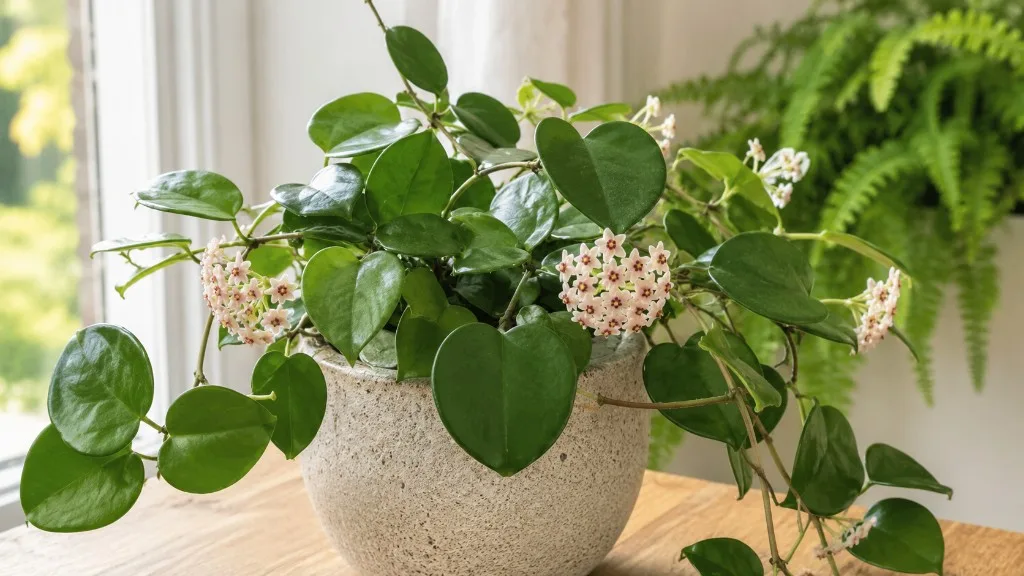
Hoya Kerrii Watering: Schedule, Dry Checks, and Mistakes
Hoya Kerrii Watering: Schedule, Dry Checks, and Mistakes
Hoya kerrii watering is one of those houseplant topics where the conventional advice sounds contradictory until you understand the plant’s biology. Sweetheart hoya - the thick-leaved vine sold as a single heart-shaped leaf around Valentine’s Day and as a slow-growing trailing plant the rest of the year - stores a surprising amount of water in its fleshy foliage. That storage changes everything about how often you should reach for the watering can. The practical rule is simple: let the potting mix go very dry between waterings, then soak thoroughly and let the excess drain away. A calendar that says “every Tuesday” will overwater Hoya Kerrii overview in a cool room and underwater it on a bright windowsill in July. The mix, the pot, the light, and the season matter more than any fixed interval.
Most experienced growers agree on one point without much debate: Hoya kerrii is safer underwatering on Hoya Kerrii than overwatered. Its epiphytic roots evolved to grab moisture from bark and humid air, not to sit in dense, constantly wet soil. overwatering on Hoya Kerrii is the fastest route to root rot on Hoya Kerrii, yellow leaves, and a plant that looks fine on top while the root zone collapses underneath. Underwatering, by contrast, usually shows up as slightly soft or wrinkled leaves that recover after one thorough drink - provided you have not let the plant go months without water and damaged the fine root hairs beyond easy repair.
This guide covers how often to water, what “dry between” actually means in your pot, how to read those thick succulent leaves, seasonal adjustments, the single-leaf novelty versus a vining plant, and what to do when watering has already gone wrong.
Why Hoya Kerrii Needs Dry-Down Watering
Hoya kerrii is a tropical epiphytic vine native to Southeast Asia - Laos, Thailand, Vietnam, and parts of China - where it climbs trees and attaches with aerial roots rather than rooting deeply in ground soil. Singapore’s NParks Flora & Fauna Web describes it as an epiphyte with succulent leaves and a woody stem, intolerant of waterlogging, with a preference for little water and well-drained substrates (NParks - Hoya kerrii). That single word - epiphyte - explains more about watering than any schedule printed on a plant tag.
In nature, rain runs off bark quickly. Roots absorb what they need, then the surrounding environment dries. The plant compensates by storing water in its thick, heart-shaped leaves, which NParks notes reach roughly 5–15 cm long with a fleshy texture. North Carolina Extension’s Plant Toolbox similarly classifies sweetheart hoya as having fleshy, succulent-like leaves and recommends containers with good drainage so the plant can dry somewhat between watering (NC Extension - Hoya kerrii). When you pot an epiphyte in standard heavy indoor mix and water on a leafy-tropical schedule, you are fighting its entire evolutionary history.
The leaves are a drought buffer. Hoyas as epiphytes evolved semi-succulent leaves that store water, which pairs naturally with periodic dry-downs between waterings. Treat kerrii like a foliage plant that wants constantly moist soil, and root rot follows. Treat it like the epiphytic vine it is, and watering becomes straightforward: dry, then soak, then dry again.
How Often to Water Hoya Kerrii
There is no honest single answer to “how often” that applies to every home. What you can rely on is a range tied to season and environment, refined by moisture checks in your specific pot. As a starting framework - not a rule carved in stone - most vining Hoya kerrii in typical indoor conditions need water roughly every 10–14 days during active warm-season growth and every 3–4 weeks or longer in cooler, slower months. Some growers in bright, warm rooms with small terracotta pots hit the shorter end; plants in large plastic pots in dim winter corners may go five or six weeks between drinks without harm.
The interval lengthens or shortens based on four variables that matter more than the species name on the label: light intensity, pot volume relative to root mass, mix porosity, and ambient temperature. A kerrii moved from a north window to a bright east-facing sill may need water twice as often within a week. The same plant repotted from a snug 10 cm pot into a roomy 15 cm container may need water half as often until roots explore the new mix. Always treat published intervals as a starting guess and let the pot tell you when it is actually ready.
Summer Active-Growth Rhythm
From late spring through early fall - roughly when nights stay warm and daylight is long - Hoya kerrii pushes the most new growth it will all year. Even though kerrii is a slow grower compared to pothos or tradescantia, metabolic activity rises with warmth and light, and the potting mix dries faster. During this active window, expect to water every 10–14 days for a typical 12–15 cm pot in Hoya Kerrii light guide with a chunky epiphytic mix.
Water thoroughly when the dry-down criteria are met - not a splash on the surface, but enough volume that water runs freely from the drainage holes. Then empty the saucer or cachepot so the plant is never standing in runoff. NParks recommends watering potted specimens when the top 3 cm of soil becomes dry (NParks - Hoya kerrii). In a shallow pot that may correspond to most of the root zone approaching dry; in a deeper container, combine the knuckle test with pot weight rather than relying on surface color alone.
Outdoor summer placement in partial shade dries pots faster - check more often, not because kerrii wants wet soil, but because the mix physically dries sooner.
Winter Slow-Season Rhythm
Winter is where most Hoya kerrii die from kindness. Growth slows sharply as daylight shortens and room temperatures drop, especially if the plant sits near a cool window. Roots absorb water more slowly, evaporation from the mix drops, and the thick leaves continue supplying stored moisture to the vine. Watering on a summer schedule in December is one of the most reliable paths to cold, stagnant root rot.
From late fall through winter, stretch the interval to every 3–4 weeks at minimum, and often once a month or less in cool, dim conditions. Some experienced growers water only every 4–6 weeks through the darkest months, judging readiness almost entirely by pot weight and leaf firmness rather than anxiety. The correct winter mindset is not “my plant might be thirsty” but “can I prove the mix is dry enough to justify a drink?”
If you heat your home aggressively and supplement with grow lights so the plant keeps producing new leaves through winter, you can water slightly more often - but still well below summer frequency. Even actively lit indoor kerrii rarely need weekly watering unless the pot is very small and the room runs hot and dry.
What “Very Dry Between” Actually Means
“Let it dry out” gets repeated so often that it loses meaning. For Hoya kerrii, very dry between does not mean the surface looks lighter in color while the core of the mix stays damp for days. It means the majority of the root zone has released most of its available moisture before you add more. In practice, that usually translates to:
- The top 3–5 cm of mix feels dry and crumbly, not cool and clingy, when you insert a finger or dry chopstick.
- A wooden skewer pulled from near the bottom of the pot comes out without dark water stains and without soil clinging wetly to it.
- The pot feels noticeably lighter when you lift it - a skill you develop quickly if you lift before and after every watering session.
- A moisture meter, if you use one, reads dry in the lower zone, not merely “moist” at the top and “wet” below.
Kerrii is not a cactus that wants bone-dry mix for weeks in summer, but it is closer to succulent logic than to fern logic. The safe error direction is waiting an extra three to five days, not watering because the calendar says so. If you are genuinely unsure, wait. The leaves will tell you when reserves are running low long before permanent damage occurs - and that lag is intentional protection built into the plant’s design.
Heavy, peat-rich mixes blur the dry-down signal. The surface crusts dry while the center stays saturated - exactly the condition epiphytic roots hate. If your pot never seems to lighten despite weeks without water, suspect compact or water-retentive mix before suspecting a drought-tolerant plant that suddenly needs more water.
Reading Thick Succulent Leaves for Water Status
The heart-shaped leaves on Hoya kerrii are more than a cute silhouette - they are your most accessible moisture gauge, especially once you learn what normal feels like on your specific plant. At healthy hydration, leaves should feel firm, thick, and slightly resistant when you gently squeeze them between thumb and finger. They have turgor: internal water pressure that keeps the surface smooth and the leaf rigid.
Because the leaves store water, the plant can look perfectly plump while the mix is already dry - and that is fine. Plump leaves plus dry mix means the storage system is working. Do not water just because the calendar says so if the leaves still feel solid. Conversely, do not assume firm leaves guarantee the roots are happy if the mix has been wet for two weeks; overwatered plants can retain leaf turgor briefly while roots fail underneath.
Plump vs Soft vs Wrinkled Leaves
Learning the texture spectrum prevents both chronic overwatering and unnecessary panic:
- Plump and firm: The plant has adequate internal reserves. If the mix is also dry, you are in the ideal pre-water window - ready for a thorough soak.
- Slightly soft or flexible: Internal stores are declining. The plant is signaling thirst without crisis. Water within the next day or two if the mix confirms dryness.
- Noticeably wrinkled or thin-feeling: Reserves are depleted. NC Extension notes that thinning, brown, or wrinkled leaves can indicate the plant is allowed to dry too much between watering (NC Extension - Hoya kerrii). One deep watering usually restores turgor within several days if roots are still healthy.
- Yellow, mushy, or translucent: This pattern points away from drought and toward overwatering or root damage, especially if the mix has been wet and the pot feels heavy. Do not respond by watering more.
Leaf texture works best as a secondary check after soil dryness, not as the sole trigger. A wrinkled leaf with wet soil means root dysfunction, not thirst. A firm leaf with dry soil means wait - the plant is still drawing on reserves. Combine both signals and you rarely guess wrong.
Best Moisture Checks Before You Water
Build a consistent pre-water routine and guesswork fades. Use two or three of these checks every time:
Finger or knuckle test. Insert to the first knuckle in several spots. Cool, clingy soil means wait; dry, loose soil means proceed.
Skewer probe. Push a dry chopstick toward the pot bottom. No moisture stain and no wet soil clinging - dry enough.
Pot weight. Lift before and after every watering for two months. You will quickly learn the light empty feel versus the heavy just-watered feel.
Moisture meter (optional). Read near the bottom of the root ball, not the surface. Wait until the lower zone reads dry.
Leaf squeeze (confirmatory). After soil checks suggest dryness, a gentle squeeze confirms whether reserves are declining. Firm leaves plus dry soil still means you can wait; softening leaves plus dry soil means water today.
How to Water Hoya Kerrii the Right Way
Once the dry-down checks pass, water with intention. Half measures - a cup sprinkled on the surface every few days - keep the upper mix intermittently damp while never fully hydrating the root zone, and they prevent the deep dry-down kerrii needs. The goal is a full soak followed by a full dry-down, not permanently damp soil with occasional top-ups.
Use room-temperature water. NC Extension notes that cold water can shock tropical houseplants (NC Extension - Hoya kerrii). Let tap water sit overnight if your supply is very cold or heavily chlorinated, though kerrii is less fussy about minerals than many calatheas or ferns.
Water slowly and evenly until excess runs from the drainage holes - typically equivalent to roughly one-fifth to one-quarter of the pot volume, though the exact amount matters less than seeing free drainage. Then discard saucer water within thirty minutes. Never let the pot sit in a filled cachepot “to keep humidity up.” Epiphytic roots interpret standing water as an emergency, not a spa treatment.
After watering, note the pot weight and leaf firmness again. This closes the learning loop and calibrates your hand for the next cycle.
Top Watering vs Bottom Soaking
Top watering - applying water at the soil surface until it drains - works perfectly for kerrii and is what most growers use daily. It flushes salts that accumulate from fertilizer and tap water, and it lets you see drainage clearly.
Bottom soaking - setting the pot in a basin of water for fifteen to twenty minutes so the mix wicks moisture upward - is a valid alternative, especially if you want to avoid wetting leaf surfaces in a dry home where water droplets linger on thick foliage. After soaking, remove the pot, allow it to drain fully, and only then return it to its display spot. Bottom watering still requires that full dry-down between sessions; it is a delivery method, not permission to water more often.
Neither method fixes overwatering frequency. If the mix is not dry enough before you water, the delivery direction does not matter - the roots still suffocate.
Soil Mix and Pot Choice Affect Watering
Watering schedule and substrate are inseparable. NParks recommends planting Hoya kerrii in well-drained, slightly acidic to neutral soil - roughly one-third orchid mix to two-thirds potting mix, pH 6.0–7.5 (NParks - Hoya kerrii). In practice, most successful indoor growers go chunkier than that baseline: orchid bark, perlite, and a modest portion of compost or coco coir, sometimes with charcoal for additional aeration. The mix should feel light, resist compaction, and drain in seconds when you pour water through a handful.
Dense peat-heavy bagged mixes retain moisture too long for epiphytic roots. They extend the wet phase after every watering and make “dry between” nearly impossible even if you wait three weeks. If your kerrii always seems wet despite infrequent watering, revising the mix matters more than revising the calendar.
Pot choice shifts timing just as much:
- Terracotta breathes and dries faster - good for heavy-handed waterers and humid climates.
- Glazed ceramic or plastic holds moisture longer - fine if you truly let the mix dry deeply, but risky combined with dense soil.
- Drainage holes are non-negotiable. No hole, no reliable kerrii care.
- Pot size relative to roots: Kerrii flowers best and often grows most happily when slightly root-bound (NParks - Hoya kerrii). An oversized pot holds excess wet mix that roots never reach, extending the dangerous damp phase after every watering. Match pot volume to root mass, not to aspirational vine length.
After Hoya Kerrii repotting guide into fresh, airier mix, expect the first few weeks to dry faster than the old root ball did. After roots fill a larger pot, expect the opposite - slower dry-down until you adjust interval length upward.
Light, Temperature, and Humidity Variables
Water use follows energy. A Hoya kerrii in bright indirect light - the condition NParks and NC Extension both describe as ideal - photosynthesizes more actively and transpires more water than the same plant in a dim corner. Move a kerrii closer to an east or south window and the watering interval usually shortens, even though the plant still demands dry-down between drinks.
Temperature works the same way. Warm rooms (roughly 18–27°C / 65–80°F, the range NC Extension cites as ideal) accelerate metabolism and evaporation. Cool rooms slow everything. A plant on a cold windowsill in January may need water half as often as the same plant in a warm kitchen in August, even under similar light.
Humidity affects leaf health more than root-zone timing. Kerrii appreciates 40–60% humidity, but misting is a poor watering substitute and can leave water on thick foliage where spotting develops. A humidifier helps in dry homes; it does not replace proper dry-down watering. Good air circulation around the pot also supports the dry cycle and reduces fungal risk at the soil surface.
Signs You Are Overwatering Hoya Kerrii
Overwatering is the most common cause of Hoya kerrii failure indoors. The thick leaves mask root trouble until damage is advanced, which is why soil checks matter more than leaf appearance early on. Watch for these patterns:
- Yellowing leaves, especially lower or older hearts, while the mix stays wet or the pot feels heavy days after watering.
- Soft, mushy petioles where the leaf meets the stem - a serious sign of tissue breakdown, not normal thirst.
- Black or mushy roots when you inspect the root zone - healthy kerrii roots are firm and pale, not dark and slimy.
- Sour or musty smell from the mix, indicating anaerobic conditions in waterlogged soil.
- Persistent fungus gnats, which thrive in constantly moist organic mix.
- Stalled growth despite apparently “good care” - new leaves fail to emerge while existing foliage hangs on, often because roots can no longer absorb water efficiently even though the mix is wet (a classic dysfunctions pattern).
- Failure to flower on mature vining plants; NC Extension notes overwatering can inhibit flowering (NC Extension - Hoya kerrii).
If several signs appear together, stop watering immediately. Let the mix dry much longer than usual, improve airflow, and inspect roots if the plant does not stabilize. Adding fertilizer, repotting hastily into an even larger pot, or “compensating” with more water each makes recovery harder.
Signs You Waited Too Long to Water
Underwatering kerrii is real but usually less catastrophic than overwatering, thanks to leaf storage. Typical underwatering signals include:
- Slightly wrinkled or thinner-feeling leaves that regain firmness within a few days after a thorough soak.
- Dry, lightweight pot combined with softening leaves - the clearest “water now” combination.
- Slowed growth during the active season when every other condition - light, temperature, pot size - suggests the plant should be pushing new tissue.
A single dry episode rarely kills an established kerrii. Repeated drought cycles are different: fine root hairs die back, and when water finally returns the damaged root system cannot absorb it efficiently - sometimes mimicking overwatering symptoms on the next attempt to hydrate. If you forget the plant for six weeks in summer and the leaves go deeply wrinkled, water thoroughly once, then wait for the normal dry-down before watering again rather than drowning it daily out of guilt.
Brown, crispy leaf edges after drought are often permanent cosmetic damage on the affected leaf, not a sign to keep watering. New growth tells you whether recovery succeeded.
Seasonal Watering Adjustments Month by Month
Use this table as a framework for temperate indoor growing, then adjust based on your pot checks. Southern Hemisphere growers should shift months accordingly.
| Month | Growth phase | Typical interval (12–15 cm pot, bright indirect light) | Key notes |
|---|---|---|---|
| January–February | Minimal growth, cool short days | Every 4–6 weeks or longer | Resist “just in case” watering; root rot risk peaks |
| March–April | Waking up, first new shoots possible | Every 3–4 weeks, tightening as growth resumes | First warm spell dries pots faster - recheck weight |
| May–August | Peak active season | Every 10–14 days | Most frequent watering window; still dry between |
| September | Growth slowing | Every 2–3 weeks | Begin stretching interval as nights cool |
| October–November | Wind-down | Every 3–4 weeks | Last thorough soak before winter caution |
| December | Low metabolism indoors | Every 4–6 weeks | Prioritize pot weight; leaves store winter reserves |
The table describes a vining plant in a well-draining mix, not a single-leaf cutting in a tiny pot (covered below). Outdoor summer placement, heated dry air, and grow-light winter setups all shift the interval - the month labels give rhythm; your hand and the pot give precision.
Single-Leaf vs Vining Plant: Different Water Needs
Commerce has split Hoya kerrii into two very different objects that share a species name but not the same watering reality.
Single-leaf cuttings - the rooted heart sold around Valentine’s Day - often lack a node capable of vining. They survive as novelty leaves using almost no water. Water very sparingly, often every 4–6 weeks or when the leaf softens. Overwatering a single leaf in a tiny pot is the default failure mode.
Vining specimens with active stems follow the 10–14 day summer / 3–4 week winter framework, adjusted by pot checks. Total demand rises modestly as leaf count increases, but dry-down never changes. A nodeless leaf will not vine regardless of watering - buy a stem cutting with visible nodes if you want a trailing plant.
Common Hoya Kerrii Watering Mistakes
Even experienced growers slip on these patterns: watering on a fixed calendar instead of checking the pot; treating thick leaves like thin tropical foliage when firm leaves plus dry soil is often correct; using dense peat-heavy mix that never truly dries; decorative cachepots that trap runoff; winter watering at summer frequency; misting instead of soaking roots; repotting into an oversized pot that holds excess wet mix; and ignoring pot weight after repotting when fresh airy mix dries on a new timeline. Each mistake extends the wet phase or adds water before the root zone is ready - the two conditions kerrii handles worst.
Recovering from Overwatering and Root Rot
If overwatering is suspected before collapse is total, stop watering and let the mix dry far longer than feels comfortable - often two to three weeks. Move the plant to bright indirect light with good airflow and remove standing saucer water. If leaves yellow or stems soften, inspect roots: trim mushy, black, or foul-smelling tissue with clean scissors. Repot into fresh chunky mix in a pot sized to remaining root mass only if more than roughly one-third of roots are rotted. Water once lightly to settle, then resume the normal dry-down cycle without fertilizer until new growth appears. Recovery on this slow species takes weeks to months; severely compromised single-leaf cuttings may not survive base rot. Prevention - dry between, chunky mix, drainage, winter restraint - remains far easier than surgery.
Conclusion
Hoya kerrii watering succeeds when you respect what the plant is - an epiphytic vine with thick, water-storing leaves - rather than what it resembles on a gift-shop shelf. Let the mix go very dry between waterings, confirm readiness with finger, skewer, or pot-weight checks, then soak thoroughly and drain completely. Expect roughly every 10–14 days in warm active growth and every 3–4 weeks or longer in winter, always adjusted to your light, pot, and mix.
Read the leaves as a secondary gauge: firm and plump means reserves are intact; soft or wrinkled means drink after the soil confirms dryness; yellow and mushy with wet mix means stop watering and inspect roots. Single-leaf novelties need far less water than vining plants. Chunky epiphytic soil and a snug, drained pot do more to prevent root rot than any perfect calendar ever will.
When in doubt, wait a few more days. Your sweetheart hoya evolved for exactly that kind of patience - and it will outlast almost every watering mistake except the wet ones.
When to use this page vs other Hoya Kerrii guides
- Hoya Kerrii overview - Start here for whole-plant context before deep-diving this topic.
- Hoya Kerrii problems hub - Jump to symptom-specific fix guides when this care topic does not resolve the issue.
- Overwatering on Hoya Kerrii - Escalate here when watering adjustments are not enough.
- Underwatering on Hoya Kerrii - Escalate here when watering adjustments are not enough.
- Root Rot on Hoya Kerrii - Escalate here when watering adjustments are not enough.
Related Hoya Kerrii guides
- Hoya Kerrii overview
- Hoya Kerrii light
- Hoya Kerrii soil
- Hoya Kerrii propagation
- Hoya Kerrii fertilizer
- Hoya Kerrii repotting
- Overwatering on Hoya Kerrii
- Underwatering on Hoya Kerrii
- Root Rot on Hoya Kerrii
- Wilting on Hoya Kerrii
- Drooping Leaves on Hoya Kerrii
- Mold on Soil on Hoya Kerrii
Related tool
Try the Plant Watering Calculator with hoya-kerrii pre-selected to estimate needs for your setup.