Hoya Kerrii Fertilizer: Dilute Feeding for a Slow Grower
Hoya Kerrii Fertilizer: Dilute Feeding for a Slow Grower
Hoya Kerrii Fertilizer: Dilute Feeding for a Slow Grower
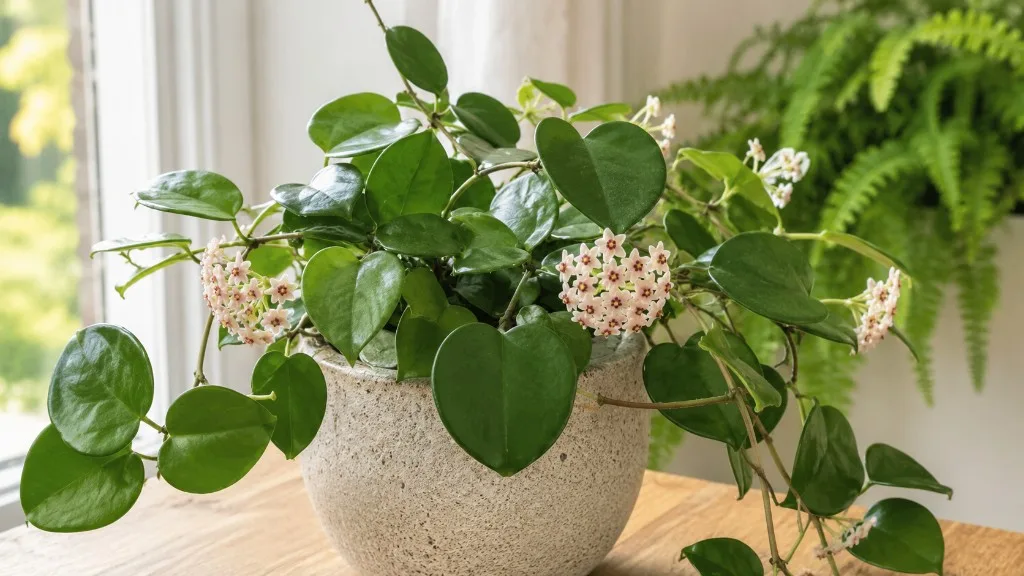
Hoya kerrii fertilizer decisions are less about finding a magic product and more about respecting how slowly Hoya Kerrii overview actually grows. Hoya kerrii - the sweetheart plant or heart-leaf hoya - is a succulent-leaved epiphyte from Southeast Asia that stores water in its thick, heart-shaped leaves and builds new tissue at a pace that tests even patient growers. A mature vine can eventually reach several meters, but indoors it often adds only a few centimeters of stem per year. That slow metabolism means the plant uses nutrients sparingly, and the root zone in a small pot cannot tolerate the salt load that faster houseplants shrug off.
The practical goal for most home growers is straightforward: use a balanced water-soluble fertilizer at quarter to half the label strength, apply it once every four to six weeks from spring through early fall while the plant is actively growing, and pause entirely from late fall through winter. Water onto moist soil, never onto dry roots. Skip fertilizer completely on single-leaf novelty cuttings - they lack a growth node and cannot use nutrients, so feeding only accumulates salts. For established vines with nodes, lean feeding beats enthusiasm every time.
This guide covers when to fertilize, how much to dilute, which formulas work best, how single-leaf hearts differ from real vines, how to read deficiency versus burn, and the mistakes that cause more damage than skipping a month ever would.
Why Hoya Kerrii Needs a Lean Feeding Strategy
Hoya kerrii belongs to Apocynaceae, the same family as milkweed and many tropical vines. In its native range across Laos, Thailand, Vietnam, and Malaysia, it grows as an epiphyte on tree branches in rainforest canopy conditions - bright filtered light, excellent drainage, and substrates that leach minerals quickly after rain. The plant evolved in nutrient-poor, fast-draining conditions where minerals wash through rather than accumulate. In cultivation, that translates to a clear preference for frequent, dilute feeding rather than infrequent, concentrated doses.
The thick, succulent leaves store water and slow metabolic demand. Hoya kerrii is not a high feeder. The Royal Horticultural Society notes that hoyas only need light feeding in spring and summer, with pots flushed periodically to prevent salt buildup (RHS - How to grow hoya). Kerrii sits at the sensitive end of the genus - some growers see no new leaves for a year even when care is otherwise correct.
Think of feeding as maintenance for an actively growing vine - not a rescue tool for a plant stalled by low light, soggy mix, or a nodeless single leaf. Fix light, drainage, and watering first, then add quarter- to half-strength liquid on a conservative schedule.
Over-fertilizing is the dominant mistake with this species. Excess salts prevent roots from absorbing water, brown leaf margins appear, white crust forms on the soil surface, and in severe cases stems soften and rot at the base. Under-feeding, by contrast, rarely kills a kerrii. Pale new growth on an otherwise well-watered plant in bright light may signal hunger - but slow growth alone is usually a light or root problem, not a fertilizer problem.
When to Fertilize Hoya Kerrii
Timing follows the plant’s metabolism more than the calendar on your wall. Feed when Hoya kerrii is actively producing new leaves, extending stems, or building flower peduncles, and stop when growth slows sharply. Indoors, that rhythm tracks warm weather and long days. Heated rooms can extend the window slightly, but most kerrii still slow noticeably in late fall and winter regardless of room temperature.
A kerrii that keeps its green leaves through December can look “active” while producing almost no new tissue. Feeding on a summer schedule through winter pushes unused nutrients into the soil as soluble salts while roots absorb water more slowly - a common path to brown tips and a sour-smelling pot. Watch for new shoots at nodes, not just existing leaf color, before you resume or continue feeding.
Spring and Summer Active Growth Window
Start feeding when you see fresh growth - a new leaf unfurling from a node, a stem extending between existing hearts, or a flower spur forming on a mature vine. In temperate climates with typical indoor light, that usually means mid-spring through early fall, roughly April through September depending on your latitude and window exposure.
During this active window, a quarter- to half-strength balanced liquid feed every four to six weeks works for most container plants. NParks Singapore recommends lightly feeding potted kerrii every month with a half-diluted general fertilizer during active growth. Growers in very bright light with established vines may feed monthly at half strength; those in moderate light or with young plants often do better at six-week intervals at quarter strength. Both are reasonable if leaves stay deep green, internodes stay compact for the light level, and the soil surface stays free of heavy salt crust.
| Month (temperate climate) | Growth phase | Feeding guidance |
|---|---|---|
| March–April | Waking up, first new shoots | Resume quarter- to half-strength liquid if active node growth visible |
| May–August | Peak slow growth period | Every 4–6 weeks at half strength, or monthly at quarter strength |
| September | Slowing slightly | Reduce to one light feed or taper off |
| October | Wind-down | Final quarter-strength feed if still growing, then pause |
| November–February | Rest / minimal growth | No fertilizer for typical indoor setups |
The table is a framework, not a law. A kerrii in a bright east-facing window in July may use nutrients slightly faster than one in a north window, but neither approaches the feeding demand of a pothos or coleus. Watch the plant: if it is building new leaves at nodes steadily, the timing is right. If it is static for months, solve light and roots before adding food.
Fall Taper and Winter Rest
Taper feeding in early to mid-fall as day length drops. One practical approach: give a final quarter-strength feed in early fall if you still see new node growth, then stop entirely from late fall through winter - typically November through February in the Northern Hemisphere. Most indoor kerrii do fine with no fertilizer for three to four months, especially in cooler rooms or lower light.
Winter rest is not full dormancy like a deciduous outdoor tree, but metabolic demand drops sharply. NC State Extension notes that lower temperatures can slow growth and flowering - winter feeding on a slow grower that is not using nutrients is an easy way to create exactly that problem.
Exception: if you grow under strong supplemental grow lights and the plant keeps producing new shoots at nodes all winter, you can feed lightly - still at quarter to half strength - but extend the interval to eight to ten weeks and watch closely for salt crust. Even then, skipping winter feeds is safer than forcing growth with nutrients the roots cannot process.
Single-Leaf Cuttings vs Full Plants: Different Fertilizer Rules
This section matters more than almost anything else in a Hoya kerrii fertilizer guide, because the plant you own may not be the plant you think you own. Garden centers and gift shops sell millions of single heart-shaped leaves rooted in tiny pots - adorable Valentine’s novelties that stay green for years. Most of these cuttings lack a stem node, the meristematic tissue where new leaves and stems originate. Without a node, the leaf is botanically frozen: it can stay alive, may form surface roots, but cannot grow into a vine.
Do not fertilize single-leaf cuttings. The leaf is not building new tissue. It has no active shoot to sink nitrogen into. Fertilizer salts accumulate in the small pot, stress whatever root callus exists, and increase the risk of petiole rot and leaf yellowing. Maintain these novelty plants with Hoya Kerrii light guide, a fast-draining epiphytic mix, and infrequent watering - not with monthly plant food. NC State Extension notes that single rooted leaves are not likely to grow well unless stem tissue was included with the leaf - a growth point was missing, not nutrients.
Full plants with nodes - stem cuttings with at least one node and ideally two or more leaves - follow the lean feeding schedule in this guide. Look for visible nodes along a stem, new growth emerging from them, or a plant never sold as an isolated heart in a 2-inch pot. A clean severed petiole with no stem cortex is a decorative leaf, not a developing plant. If you have fertilized monthly for two years and nothing grew, you likely own a nodeless single leaf - a growth point was missing, not nutrients.
Best Fertilizer Type for Hoya Kerrii
The best Hoya kerrii fertilizer for most homes is a complete, water-soluble, balanced houseplant or orchid formula with moderate nitrogen and phosphorus. You want nitrogen for leaf tissue, phosphorus for root function at modest levels, and potassium for overall vigor and drought stress tolerance. Micronutrients on the label - iron, magnesium, manganese - matter because pale new growth on otherwise well-watered plants sometimes traces to trace-element gaps rather than macronutrient hunger.
Avoid shopping by the word “hoya” on the bottle unless you already trust the brand’s dosing guidance. A standard balanced indoor formula used conservatively outperforms most specialty products applied at label strength.
Balanced Liquid Formulas and NPK Ratios
A 10-10-10 or 8-8-8 water-soluble fertilizer diluted to quarter or half strength is the default recommendation for Hoya kerrii. Some growers use 20-20-20 at quarter strength for the same total nutrient delivery with more dilution water - the ratio matters more than the absolute numbers on the bottle. Equal or near-equal NPK ratios keep feeding simple when your main goal is steady, slow vegetative growth rather than pushing flowers on a young plant.
The RHS recommends a balanced orchid feed, preferably urea-free, with periodic flushing (RHS - How to grow hoya). For kerrii’s slower metabolism, use the four- to six-week interval at half strength in this guide rather than biweekly feeding suited to faster hoya species. Liquid formulas give precise dilution in small pots - mix at half label strength, apply to moist soil until a little drains, and empty the saucer.
Mature vines forming flower peduncles may receive one or two half-strength bloom-formula feeds (around 10-20-10) in late spring before reverting to balanced. Young plants need balanced feed only; flowering depends on age, bright light, and slight root restriction more than year-round phosphorus.
Organic Options and What to Skip
Organic liquid options - fish emulsion, seaweed extract, or compost tea - work at half strength or weaker if you already use them successfully on other epiphytes. They tend to smell and can attract fungus gnats if over-applied in small indoor pots, so lean dosing matters even more than with synthetic liquids.
Slow-release granules are risky in small kerrii pots. Pellets release unpredictably with temperature and moisture, and you cannot stop them after application. If slow-release is already mixed into the substrate at Hoya Kerrii repotting guide, skip liquid feeding for two to three months and watch for salt crust before resuming. Foliar feeding is unnecessary for routine kerrii care - the thick cuticle on succulent leaves limits absorption, and wet leaf surfaces invite fungal spotting. Fertilizer-pesticide combination products add complexity without benefit for a plant that needs simple, dilute root-zone feeding.
Pet note: The ASPCA lists Hoya kerrii as non-toxic to cats and dogs (ASPCA - Hoya). That does not make concentrated fertilizer solution safe to ingest - salts and synthetic nutrients can still cause stomach upset. Keep bottles, mixed solution, and crusty soil surface away from curious pets.
How Much to Dilute Fertilizer for Hoya Kerrii
If you remember one number, make it half strength or weaker - never full label strength on a container-grown Hoya kerrii unless you have years of experience flushing salts monthly and the plant is an established vine in bright light showing clear active growth.
Houseplant fertilizer labels assume a range of species and pot sizes. Kerrii sits in the low feeder / high sensitivity category - closer to succulents and orchids than to heavy-feeding tomatoes. Cutting the label rate to one-half is the safest default for liquid feeding during active growth. Quarter strength is the better starting point for monthly feeding on a young vine, a recently rooted cutting, or any plant with a history of tip burn.
Example: if the bottle says 1 teaspoon per gallon for houseplants, use ½ teaspoon per gallon (half strength) or ¼ teaspoon per gallon (quarter strength) for kerrii on a four- to six-week schedule. If it says 1 tablespoon per gallon for outdoor annuals, do not use that rate indoors - cut to 1½ teaspoons per gallon at most. Measure with a spoon or syringe. “Eyeballing” concentrates errors because different products use different scoops and because small pots need small total volumes where measurement errors matter more.
For a final fall feed, quarter strength is enough. Go weaker still if you see salt crust, post-feed tip burn, or a pot that stays wet for days after watering. Pale new foliage on a plant in bright light with good drainage may signal mild hunger; pale growth on a plant in a dim corner almost always means move the plant or add light, not double the fertilizer.
How Often to Feed Hoya Kerrii
Frequency should follow growth rate, container size, and salt management - not guilt about whether you are “doing enough” for a slow plant.
For most established kerrii vines with nodes indoors:
- Every 4 to 6 weeks with half-strength balanced liquid from mid-spring through early fall
- Every 6 to 8 weeks at quarter strength if the plant is young, recently rooted, or in moderate light
- Once in early fall at quarter strength if node growth is still visible, then stop
- No fertilizer from late fall through winter for typical room-grown plants
- Optional light feed every 8 to 10 weeks only if the plant keeps actively growing at nodes under bright light or grow lights in winter
For single-leaf novelty cuttings:
- No fertilizer, ever - plain water on a dry-soil schedule only
That monthly-to-six-weekly range beats feeding at every watering for most owners because constant low-dose fertilizer stacks salts faster than kerrii’s slow metabolism can use them, especially in 2- to 4-inch pots. Hoya kerrii does better with a clear feeding event followed by plain waterings than with a perpetual weak solution in the watering can.
| Situation | Suggested frequency | Strength |
|---|---|---|
| Active node growth, bright light, established vine | Every 4–5 weeks | Half label strength |
| Active growth, moderate light, young vine | Every 5–6 weeks | Quarter to half strength |
| Single-leaf cutting, any light | None | - |
| After repotting | None for 5–6 weeks | - |
| Winter, typical indoor light | None | - |
| Winter, strong grow lights, active shoots | Every 8–10 weeks | Quarter strength |
Skipping one scheduled feed because you are traveling or forgot is usually harmless. Doubling the next dose to “catch up” is not - that concentrates salts in a single application and stresses roots that kerrii cannot replace quickly.
Step-by-Step: How to Fertilize Hoya Kerrii Safely
Safe feeding is a short routine repeated a handful of times per year. Confirm the plant is a vine with nodes, not a single-leaf cutting - if you have only an isolated heart, stop here. Check that new tissue is emerging from nodes and that the season is spring through early fall. If the mix is dry, water with plain water first; never apply fertilizer to desiccated roots. Mix at quarter to half label strength in room-temperature water, apply slowly around the base avoiding leaf surfaces, and let a small amount drain. Empty the saucer, return to plain waterings for at least four weeks, and flush monthly in small pots by running three to four pot volumes of plain water through the mix to leach salts.
Pre-Feed Checklist and the Moist-Soil Rule
Before every feed, confirm four things in order: (1) nodes and active shoot growth, (2) moist but not waterlogged mix, (3) no salt crust or brown tips, (4) no repotting or stress in the last five weeks. The moist-soil rule is non-negotiable - dry soil plus fertilizer concentrates salts at root surfaces and causes osmotic shock. Kerrii prefers drying between waterings, but that rhythm applies to plain water, not feed day. Water first, feed second.
Signs Your Hoya Kerrii Is Under-Fed vs Over-Fed
Diagnostic skill saves plants. Over-fertilization is far more common than deficiency on kerrii, but both produce pale or stressed foliage - so read the whole context, not one leaf.
Signs of over-fertilization (more common):
- Brown or crispy tips on otherwise thick, green leaves
- Yellowing leaf margins progressing inward
- White or yellowish salt crust on the soil surface or pot rim
- Sudden leaf drop or softening at the petiole base
- Stunted new growth despite feeding - roots are damaged and cannot absorb
- Sour or musty smell from the pot indicating compromised root zone
- Wilting shortly after feeding even when mix felt moist - salt-induced water uptake failure
The RHS links wilting and stem die-back to overwatering on Hoya Kerrii or overfeeding (RHS - How to grow hoya). Kerrii’s thick leaves mask root trouble until tips brown or the stem base softens.
Under-fertilization is less common and harder to spot: pale new growth on a plant in bright light with correct watering, or smaller new leaves over multiple cycles despite active node development. Slow growth alone is not a hunger signal - kerrii often goes a year without a new leaf in low light, and nodeless single leaves never grow regardless of feed. Rule out light, water, and node status before increasing fertilizer.
Salt Buildup, Flushing, and Recovery After Over-Fertilizing
Even careful feeding leaves residual salts in a small pot over time. Flushing - running plain water through the mix until drainage is heavy - is standard hoya maintenance, not an emergency-only procedure. The RHS recommends flushing hoya pots with plain water every few months to prevent salt accumulation (RHS - How to grow hoya). For kerrii in containers under 6 inches, a monthly plain-water flush during the feeding season is reasonable insurance.
How to flush:
- Place the pot in a sink or outdoors where runoff is manageable.
- Water slowly with plain room-temperature water until water runs freely from drainage holes.
- Continue until you have passed roughly three to four pot volumes of water through the mix.
- Let the pot drain completely. Empty the saucer. Do not feed for at least four weeks after a corrective flush.
Recovery after over-fertilization: Stop feeding at the first sign of burn, flush thoroughly (repeat after a week if crust persists), and pause fertilizer for 4 to 6 weeks. Water conservatively during recovery. Resume at quarter strength only after new healthy tissue appears at a node. If the stem base is mushy after flushing, propagate from any firm tissue rather than continuing to feed a failing root system.
Seasonal and Situational Adjustments
The core schedule assumes a typical indoor kerrii vine in a 4- to 6-inch pot with bright indirect light. On a sheltered summer patio, stay on a four- to five-week half-strength schedule but flush more often as salts concentrate in small pots. Resume spring feeding only when new node growth appears, not when the calendar flips to March. Mature vines forming peduncles may receive one or two half-strength bloom feeds in late spring; insufficient light, not phosphorus, is the usual flowering blocker.
After Repotting, Stress, and Low Light
The RHS advises no fertilizer for five to six weeks after repotting (RHS - How to grow hoya). Hold feeding after shipping, cold drafts, pest treatment, or overwatering until stable new growth returns. In low light, feed every eight weeks at quarter strength or skip entirely - moving to brighter light solves more complaints than any bottle. On propagation cuttings, wait until the first new shoot appears before starting quarter-strength feeds at six- to eight-week intervals.
How Fertilizer Connects to Light, Water, and Soil
Fertilizer is the last layer in kerrii care, not the first. Light drives nutrient demand - kerrii in low light uses almost none, and Clemson Extension notes that lower light may inhibit blooming on hoyas. Hoya Kerrii watering guide matters too: schedule feeds after plain water has moistened the root zone, and fix overwatering before feeding - wet, poorly drained mix plus fertilizer accelerates root rot on Hoya Kerrii. Fast-draining epiphytic mix with perlite and orchid bark flushes salts more easily than heavy peat; small pots concentrate everything. A kerrii in the right mix, light, and pot may thrive on four half-strength feeds per year; the same plant in heavy wet mix with monthly full-strength feed may decline within a season. Tune feeding to the whole system - fertilizer amplifies whatever conditions already exist.
Common Hoya Kerrii Fertilizer Mistakes
The most damaging errors repeat across kerrii forums: feeding single-leaf cuttings that cannot grow, using full label strength in small pots, feeding on a calendar without checking for active node growth, and applying fertilizer to dry soil. Other frequent missteps include feeding after repotting or shipping before roots settle, chasing slow growth with heavier doses when light or nodes are the real problem, skipping monthly salt flushes in small containers, and using bloom booster year-round on young vines that need balanced feed only.
Conclusion
Hoya kerrii fertilizer success comes down to one principle: feed lightly, dilute heavily, and pause often. This slow-growing epiphyte from Southeast Asia evolved in nutrient-poor, fast-draining conditions and brings that metabolism indoors. Use a balanced water-soluble formula at quarter to half strength, apply it every four to six weeks during spring and summer active growth, flush salts monthly with plain water in small pots, and stop entirely from late fall through winter. Never feed single-leaf novelty cuttings without nodes - they cannot use nutrients, and salts only harm the root callus keeping the leaf alive.
Before every application, confirm node growth, moist soil, no salt crust, and no recent repotting or stress. Fix light and watering first when growth stalls; fertilizer is maintenance for an already healthy vine, not a shortcut past the patience this plant demands. When in doubt, skip a feed - kerrii tolerates a missed month far better than it tolerates a double-strength catch-up dose. Get the dilution and timing right, and you will support steady, if slow, progress toward the trailing, heart-leaved vine this species becomes when conditions - and nodes - are in place.
When to use this page vs other Hoya Kerrii guides
- Hoya Kerrii overview - Start here for whole-plant context before deep-diving this topic.
- Hoya Kerrii problems hub - Jump to symptom-specific fix guides when this care topic does not resolve the issue.
Related Hoya Kerrii guides
- Hoya Kerrii overview
- Hoya Kerrii watering
- Hoya Kerrii light
- Hoya Kerrii soil
- Hoya Kerrii propagation
- Hoya Kerrii repotting
- Hoya Kerrii problems
Related tool
Try the Fertilizer Dilution Calculator with hoya-kerrii pre-selected to estimate needs for your setup.