Overwatering on Hoya Kerrii: Causes, Checks & Fixes
Quick answer
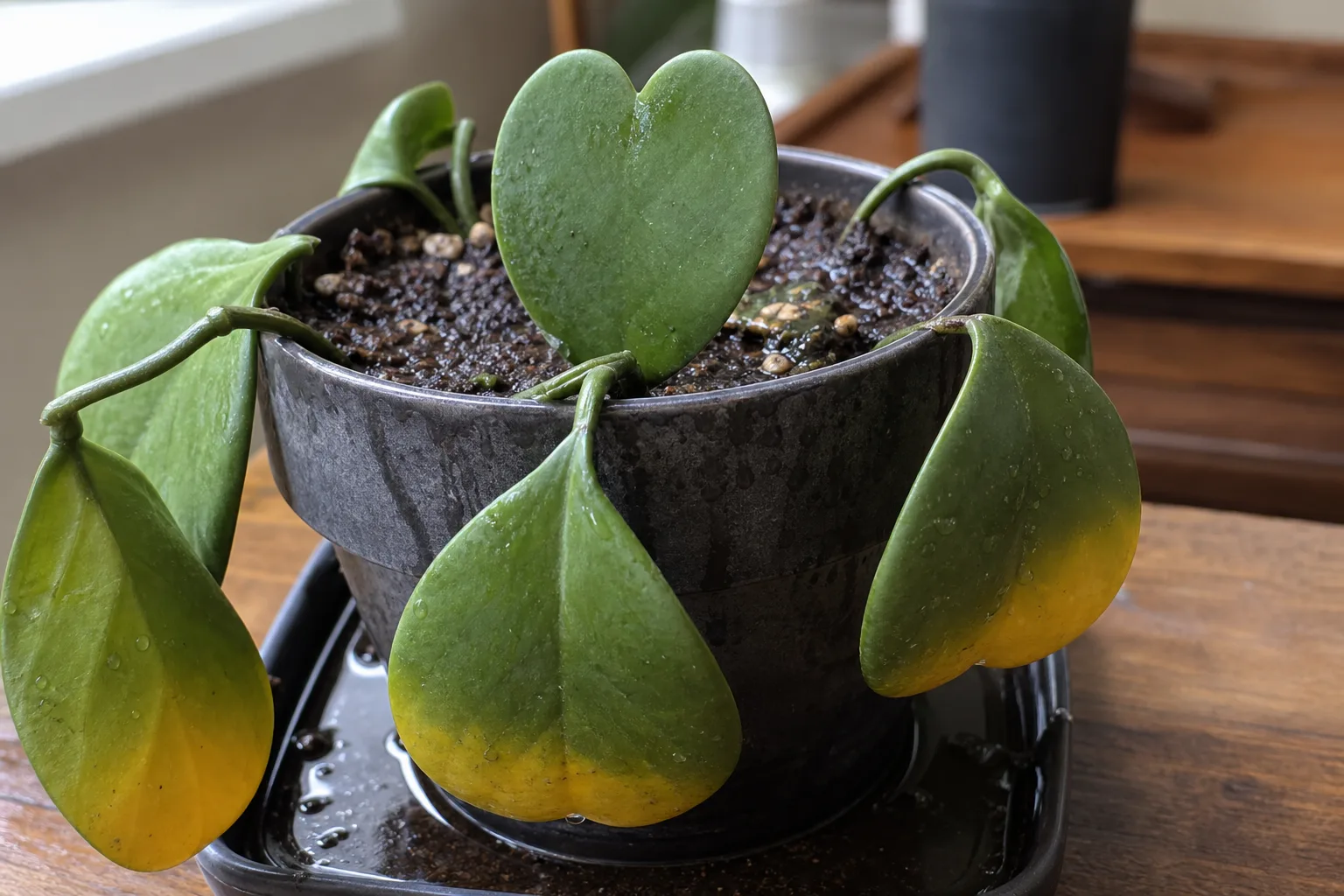
Overwatered Hoya kerrii wilts while the mix stays wet-thick heart leaves mask root damage until petioles soften or lower leaves yellow. First step: stop watering until the top 3–5 cm of mix is dry and the pot feels noticeably lighter.
Overwatering on Hoya Kerrii: Causes, Checks & Fixes
This guide covers overwatering on Hoya Kerrii. See also the general Overwatering guide, watering, and light pages for this plant.
Overwatering on Hoya Kerrii: Causes, Checks & Fixes
Quick answer
Overwatered Hoya kerrii - sweetheart hoya, Valentine heart, wax hearts - sits in wet mix too long for an epiphytic vine with thick, fleshy leaves that store water. Roots suffocate, uptake fails, and the plant shows limp heart-shaped leaves, yellowing lower foliage, and sometimes a sour smell from the pot-even though the soil feels damp.
The wilt-on-wet-soil paradox is the key diagnostic: damaged roots cannot move water upward, so the plant looks thirsty while the mix is saturated. Watering again deepens the cycle.
First step: stop watering until the top 3–5 cm of mix is dry and crumbly and the pot feels noticeably lighter. Confirm drainage holes are open and no saucer is holding standing water. NC Extension recommends containers with good drainage so the plant can dry somewhat between watering-kerrii tolerates drought far better than soggy soil. For the full dry-down protocol, see the Hoya kerrii watering guide.
Overwatering vs. other Hoya kerrii problems
Not every limp heart means wet roots. Before you change care, separate overwatering from lookalikes:
| Signal | Overwatering | Underwatering | Low light alone |
|---|---|---|---|
| Pot weight | Heavy for days after watering | Light, lifts easily | Normal to light |
| Mix at 3–5 cm depth | Wet, cool, clingy | Dry, crumbly | Usually dry on schedule |
| Leaf texture | Limp or yellow; may stay plump briefly | Thin, soft, or wrinkled | Small, pale; often firm |
| Petiole at soil line | Soft or mushy when advanced | Firm | Firm |
| Smell | Sour or musty from mix | Neutral | Neutral |
Wrinkled leaves on dry mix point to thirst, not saturation-see the underwatering guide. Gradual vine stretch with small pale leaves on appropriately dry soil suggests light, not watering volume-check the light guide. Overwatering is the match when wet mix and limp foliage coexist.
What overwatering looks like on Hoya kerrii
Sweetheart hoya does not announce wet roots loudly at first. Its succulent-like leaves buffer drought, so chronic overwatering can kill roots while hearts still look plump-a delay that tricks owners into watering more.
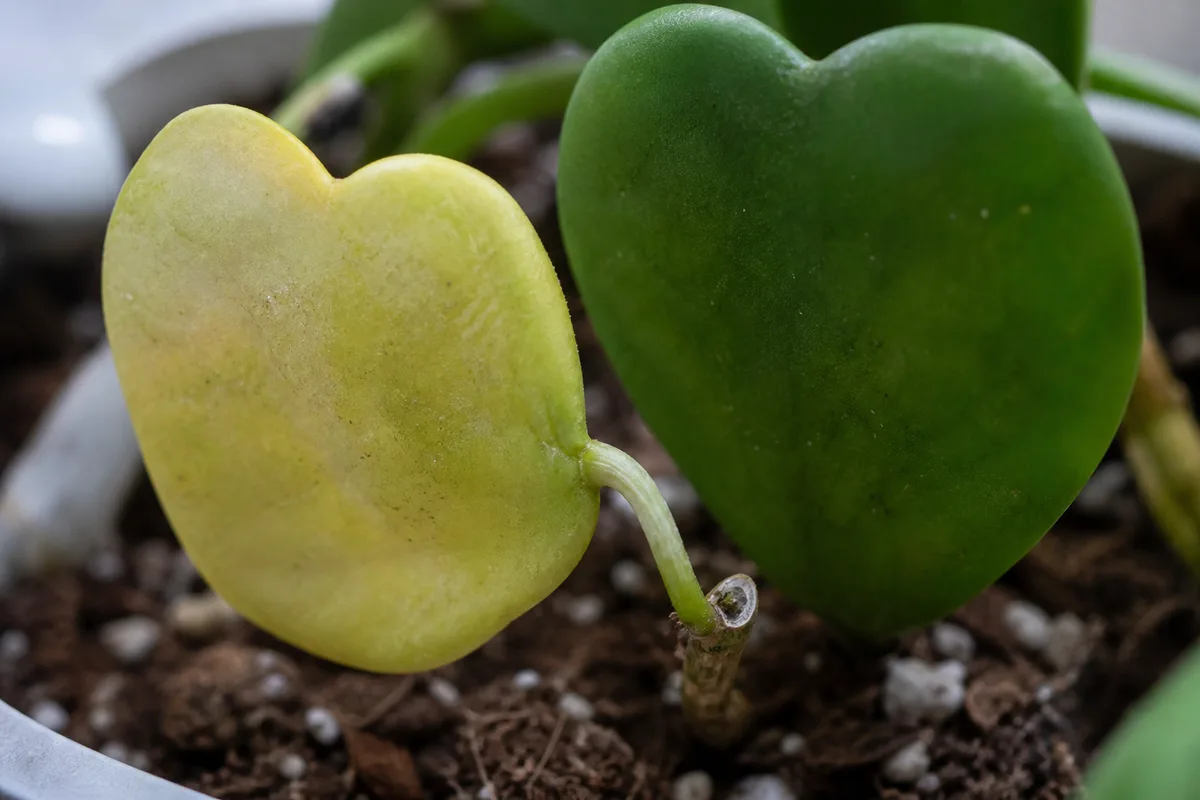
Overwatering symptoms on Hoya Kerrii - compare with healthy tissue on the same plant.
Early signs
- Limp or drooping heart-shaped leaves while mix below the surface stays moist
- Yellowing lower or older leaves with a heavy pot that does not lighten between drinks
- Fungus gnats hovering near the surface-larvae thrive in constantly wet organic mix
- White mold or algae on the soil surface
- Stalled new growth on vining plants despite apparently attentive care
- Sour or musty smell when you lift the pot or disturb the mix
Advanced signs
- Soft, mushy petioles where the leaf meets the stem at the soil line-tissue breakdown, not thirst
- Translucent or waterlogged-looking leaf tissue on severe cases
- Black or slimy roots on inspection-healthy kerrii roots are firm and pale
- Stem collapse at the base on single-leaf cuttings in tiny pots
Healthy kerrii leaves feel firm, thick, and slightly resistant when squeezed. Overwatered tissue often turns soft yellow rather than the wrinkled, thin feel of drought.
Single-leaf sweetheart vs. vining plant
Commerce sells two very different objects under one species name.
Single-leaf Valentine cuttings - rooted hearts without stem nodes - survive as novelty leaves using almost no water. NParks notes they are commonly sold as a single leaf and that cuttings without stem tissue may not grow well. Overwatering a single heart in a tiny glazed pot is the default failure mode: a small wet zone around one petiole rots the base before the thick leaf shows distress.
Vining specimens with active stems follow longer dry-down cycles but are still intolerant of constant moisture. Total water demand rises modestly as leaf count grows, but the epiphytic dry-then-soak rhythm never changes.
Why Hoya kerrii gets overwatered
Hoya kerrii is a tropical epiphyte with succulent leaves and a woody stem native to Southeast Asia. In nature, rain runs off bark quickly; roots absorb moisture, then the environment dries. Potting an epiphyte in dense indoor mix and watering on a leafy-tropical schedule fights its entire biology.
Calendar watering is the most common trigger. A weekly summer habit in a cool, dim room keeps roots saturated through winter when growth slows and evaporation drops.
Oversized pots surround a small root ball with excess wet mix. NC Extension warns that if the container does not keep the plant root-bound, it may hold excess water that can lead to root rot.
Heavy peat-rich mixes retain moisture too long. NParks describes kerrii as intolerant of waterlogging and recommends well-drained substrates-dense bagged soil suffocates epiphytic roots even when you water lightly.
Decorative cachepots without drainage trap runoff at the bottom. Standing water is an emergency for epiphytic roots, not humidity therapy.
Winter kindness kills more kerrii than summer neglect. Short days and cool windows slow transpiration while owners continue summer frequency. RHS notes that damp conditions in winter can rot the roots and kill the plant.
Mistaking thick leaves for thirst - firm, plump hearts on wet mix mean the storage system is masking root trouble underneath. Do not water because leaves look limp when the pot is already heavy.
Fresh repotting plus immediate soak in a larger container extends the dangerous wet phase. See the repotting guide for sizing rules.
How to confirm the cause
Work through these checks before repotting or trimming:
- Mix moisture at depth - Insert a finger or dry chopstick to 3–5 cm. Cool, clingy soil days after watering confirms saturation. NParks recommends watering potted kerrii when the top 3 cm of soil becomes dry-if you have not reached that dry point since the last drink, you are overwatering.
- Pot weight - Lift the container. Heavy with limp foliage points to waterlogged mix; light with limp, wrinkled leaves suggests underwatering instead.
- Petiole firmness - Gently press the stem where the leaf meets the soil. Firm is reassuring; soft or mushy means escalate toward root inspection.
- Leaf pattern - Soft yellow on multiple hearts plus wet soil fits overwatering. Wrinkled, thin leaves with dry, light pot fits drought.
- Drainage check - Water should exit holes within minutes. Saucer water sitting for hours means roots may stand in liquid.
- Light and season - Note room brightness and month. Dim, cool conditions extend drying time and make your usual schedule excessive.
- Root spot-check (if unsure) - Slide the plant out gently. Healthy roots are firm and pale. Brown, slimy roots that collapse between fingers confirm advanced damage-see the root rot guide next.
If the mix is dry throughout, the pot is light, and leaves are wrinkled but firm, underwatering is more likely. Do not withhold water further without checking.
First fix for Hoya kerrii
Stop watering until the top 3–5 cm of mix is dry and the pot feels noticeably lighter.
That single pause lets oxygen return to the root zone and breaks the wet soil → failed uptake → “it looks thirsty” → more water loop. Move the pot to bright indirect light if it has been in deep shade-faster photosynthesis uses water and helps the mix dry evenly without scorching thick leaves.
Pull the nursery pot out of any decorative outer container so air reaches bottom holes. Empty saucer water within thirty minutes of any future soak.
Do not fertilize, mist heavily, or repot on day one unless petioles are already soft or roots are clearly mushy on inspection. Most early overwatering cases stabilize with dry-down plus better light alone.
Step-by-step recovery
If symptoms are mild (yellowing leaves, wet mix, firm petioles):
- Hold water until the top 3–5 cm are crumbly dry-often one to three weeks in cool rooms.
- Adjust placement - Bright, indirect light speeds recovery. NC Extension lists dappled sunlight as the cultural ideal.
- Remove spent leaves - Yellow hearts will not re-green; snip at the base once the plant is stable.
- Monitor new growth - A fresh leaf from a vine node means roots are working again.
If symptoms are moderate (persistent wet mix, multiple yellow leaves, fungus gnats):
- Scrape the top inch of moldy or gnat-infested surface mix and discard it.
- Let the pot dry until the skewer probe shows no moisture stain near the bottom-this may take two to three weeks.
- Set yellow sticky traps near the pot to reduce adult gnats while soil dries. See the fungus gnats guide if they persist.
- Resume watering only when finger, skewer, and pot-weight tests pass; never on a fixed weekday.
If symptoms are severe (soft petioles, sour smell, mushy roots on unpotting):
- Unpot and rinse roots under lukewarm water.
- Trim all brown, mushy roots with clean scissors, keeping firm pale tissue.
- Repot into fresh chunky epiphytic mix - bark, perlite, modest coco-in a pot sized to remaining root mass only. Follow the soil guide for mix ratios.
- Wait five to seven days before the first light watering so cut roots callus.
- Shift fully to the root rot protocol if more than roughly one-third of roots were lost.
Recovery timeline
Stabilization often takes two to three weeks after you stop watering and the mix dries-wilting should ease before new leaves appear on vining plants.
Leaf re-firming on mildly stressed hearts may happen within several days once soil oxygen returns, but yellow foliage will not turn green again.
New vine nodes or fresh leaves are the best success signal. Expect them in four to eight weeks during spring or summer active growth on this slow species; winter recovery may take two to three months in cool, dim rooms.
Single-leaf cuttings recover slowly or not at all if the petiole base rotted-judge by firmness at the soil line, not by expecting a vine to emerge.
Worsening signs: petioles soften further after dry-down, yellowing spreads to every leaf, or new growth emerges small then collapses-those point toward active rot, not simple overwatering.
What not to do
Do not water because leaves look limp when soil is already wet-that feeds the failure loop on epiphytic Hoyas. Avoid repotting into garden soil or a much larger pot; both hold excess moisture. Do not fertilize a waterlogged plant; salts on damaged roots add stress.
Skip misting as a fix; it does not dry wet roots and can leave spots on thick foliage. Do not assume Valentine’s hearts need frequent drinks-single-leaf novelties need far less water than vining plants.
When unpotting or trimming, wear gloves. NParks lists kerrii as toxic upon ingestion with irritant sap-keep trimmed leaves and old soil away from pets and children.
How to prevent overwatering on Hoya kerrii
Match water to soil dryness, not the calendar. Let the top 3–5 cm of mix go very dry, then soak thoroughly until water runs from drainage holes and empty the saucer within thirty minutes.
Use chunky epiphytic mix with bark and perlite in a pot with open drainage. Size up only when roots fill the current container-oversized pots extend the wet phase after every watering.
Reduce frequency in winter or dim rooms. Vining plants often need water every 3–4 weeks or longer from late fall through winter; single-leaf cuttings may go four to six weeks between drinks.
Lift before you pour-a noticeably lighter pot means the root zone has released enough moisture to justify another soak.
Cross-check your rhythm against the watering guide, soil guide, and overview for seasonal adjustments.
When to worry
Escalate immediately if petioles dent or mush at the soil line, soil smells rotten, or more than a third of roots are mushy on inspection. Those signs mean root rot is active-dry-down alone is unlikely to save the plant.
Slow yellowing on one or two lower hearts with firm petioles and mix that dries normally within two weeks can wait for a schedule adjustment.
If every leaf yellows while mix stays wet for ten or more days, treat as urgent even before repotting-on this slow species, propagation from healthy stem nodes may be the only salvage path if the base collapses.
Conclusion
Overwatering on Hoya kerrii is a moisture-timing problem rooted in epiphytic biology, not bad luck. Confirm it with wet mix at depth plus limp hearts, then stop watering until the top 3–5 cm dry and the pot lightens. Adjust light, drainage, mix, and pot size so the root zone breathes between drinks. Kerrii rewards dry cycles with firm new growth; it rarely forgives roots that never get oxygen.
For prevention and seasonal rhythm, keep the watering guide as your primary reference-this page focuses on rescue when wet soil has already gone wrong.
When to use this page vs other Hoya Kerrii guides
- Hoya Kerrii watering guide - Use for routine moisture checks before assuming overwatering is the main issue.
- Hoya Kerrii problems hub - Browse all 16 common issues on this species.
- Root Rot on Hoya Kerrii - Different entry point when symptoms overlap with overwatering.
- Yellow Leaves on Hoya Kerrii - Different entry point when symptoms overlap with overwatering.
- Wilting on Hoya Kerrii - Different entry point when symptoms overlap with overwatering.