Hoya Kerrii Propagation: Stem Cuttings With Nodes
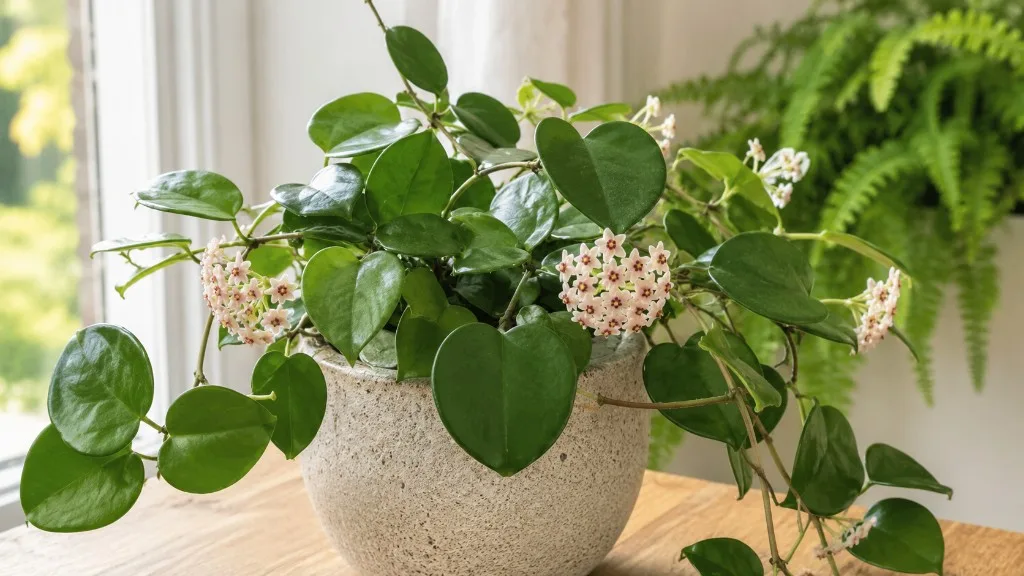
Hoya Kerrii Propagation: Stem Cuttings With Nodes
Hoya Kerrii Propagation: Stem Cuttings With Nodes
If you bought a Hoya kerrii around Valentine’s Day, you probably received a single heart-shaped leaf in a tiny pot. It may still look healthy months or years later - green, firm, and quietly occupying a windowsill. What it almost certainly is not doing is growing. No new leaves. No vining stems. No progression toward the trailing plant you imagined when you searched for hoya kerrii propagation advice.
That gap between expectation and reality is the central problem this guide solves. Hoya kerrii can be propagated reliably, but only through stem cuttings that include at least one node - the small joint on the stem where new shoots and roots originate. A leaf alone, even a healthy one, lacks the growing tissue needed to build a full plant. Understanding that distinction before you cut anything saves months of waiting on a cutting that was never capable of becoming more than a living decoration.
Why Hoya Kerrii Propagation Confuses So Many Growers
Hoya kerrii, commonly called Sweetheart Hoya or Valentine Hoya, is sold in two visually similar forms that lead to completely different outcomes. The first is a single-leaf cutting - one succulent heart planted upright in soil, often with no visible stem above the soil line. The second is a stemmed plant with multiple heart-shaped leaves attached along a vine. Both look like the same species. Only the second form contains the anatomical equipment required for ongoing growth.
The confusion is compounded by partial success. A single leaf can callus, produce a few surface roots, and remain green for an extended period using stored carbohydrates in its thick, succulent tissue. That survival reads as propagation success to an inexperienced grower. Roots appear, so the process seems to be working. But roots without a node cannot generate the buds that produce stems, leaves, or the vining architecture that defines a mature Hoya kerrii plant.
Commercial packaging reinforces the misunderstanding. Single-leaf pots are marketed as complete plants, not as novelty decorations with a fixed ceiling. If you were told your heart-shaped leaf would eventually trail across a shelf, you were given an incomplete picture. The fix is not better watering or more fertilizer. The fix is starting with stem tissue that includes nodal meristem - the only tissue in the plant capable of initiating organized new growth.
The Single-Leaf Sweetheart Myth: What Actually Happens
The single-leaf sweetheart cutting is one of the most persistent myths in houseplant propagation. Search forums and you will find occasional anecdotes claiming a lone leaf eventually sprouted. The majority of documented attempts - including long-term trials by experienced growers - end the same way: the leaf roots or calluses, stays alive, and produces no new stems or leaves for many months or indefinitely.
Nell Foster at Joy Us Garden documented this directly. She rooted Hoya kerrii leaves by leaf-cutting method and observed roots forming after five to six weeks. After ten months, there was no new growth at all. NC State Extension confirms that single rooted leaves are not likely to grow well unless a bit of stem tissue was included with the leaf - the leaves remained unchanged, alive, but developmentally frozen.
Why a Leaf Without a Node Cannot Become a Full Plant
Plant growth requires meristematic tissue - undifferentiated cells that can divide and specialize into stems, leaves, and roots in organized patterns. On Hoya kerrii, that tissue concentrates at nodes: the slightly swollen joints along the stem where leaves attach, where aerial roots sometimes emerge, and where dormant buds wait for the right signal to activate.
A leaf blade stores water and performs photosynthesis. Its petiole (the short stalk connecting leaf to stem) can transport sugars and water. Neither structure contains the bud-forming meristem needed to generate a new shoot system. When a grower removes a leaf and sticks it in soil, the leaf may form a callus at the cut surface and even push out adventitious roots from basal tissue. Those roots absorb moisture and anchor the leaf. They do not create a shoot apex. Without a shoot apex originating from nodal tissue, there is no source for new leaves, no internode elongation, and no vine.
This is not unique to Hoya kerrii, but the species became the face of the problem because of how aggressively single-leaf forms are sold. The biology is straightforward: no node, no vine. A rooted leaf without a node is botanically alive and horticulturally static.
If you currently own a single-leaf pot, checking for a hidden node is worth doing before you abandon hope. Gently brush away soil at the base. Look for a stem segment - even a few millimeters - with a visible joint or bump where a leaf or root could emerge. Some commercial cuttings include a tiny stem stub with a node intact. Most do not. If you see only a leaf base flush with soil and no joint above it, the plant will not develop further regardless of how carefully you care for it.
What a Node Looks Like on Hoya Kerrii
Finding a node on Hoya kerrii is the single most important skill in successful propagation. The node is not inside the heart-shaped leaf. It is always on the stem, at the point where the leaf petiole meets the vine. Visually, it appears as a slight thickening, ridge, or bump along the stem - sometimes with a small scar from a previously removed leaf, sometimes with a tiny aerial root nub beginning to form.
On a healthy vining Hoya kerrii, nodes repeat at regular intervals along the stem, separated by smooth internode sections. Each node is a potential propagation point. NParks Singapore notes that roots will form from the stem nodes on Hoya Kerrii overview. The cut must include stem tissue on both sides of that junction, with at least one full node contained within the cutting.
Aerial roots often emerge directly from nodes or immediately adjacent to them. That is favorable material - the plant has already signaled willingness to root from that point.
Node vs Petiole: The Distinction That Decides Everything
Growers frequently confuse the petiole with the node because both sit at the base of the heart-shaped leaf. The petiole is the thin stalk attaching the leaf blade to the stem. The node is the stem joint itself - the wider point on the vine, not the leaf stalk.
A cutting that includes the leaf and its petiole but no stem segment with a node will behave like a leaf cutting: it may survive, but it will not vine. A valid cutting includes the leaf (optional but helpful for energy production during rooting), the petiole, and at least one internode-plus-node section of actual stem below the petiole attachment point. When in doubt, include more stem rather than less. Two nodes per cutting is better than one because it provides a backup bud if the lower node fails and gives you a clearer above-water or above-soil line during propagation.
Stem Cuttings With Nodes: The Only Reliable Method
Stem cuttings with nodes are the only propagation method that consistently produces a full Hoya kerrii plant. NParks Singapore lists stem cutting as the primary propagation method for this species.
The cutting does not need to be large. Hoya kerrii is a slow grower with thick, water-storing leaves. A modest cutting with strong nodal tissue outperforms a long, leggy section from weak growth every time. Prioritize firm stems, plump leaves, and visible nodes over length.
How to Choose the Right Stem Section
Select material from the parent plant’s active growth - stems that are neither brand-new and brittle nor old and woody. On Hoya kerrii, soft green stems with mature succulent leaves root well. Avoid cuttings from stems that are yellowing, wrinkled, pest-damaged, or growing in very low light. Weak parent tissue propagates poorly and fails faster in wet rooting conditions.
If your plant is still a single leaf with no vine, you cannot take a stem cutting from it. Your options are to purchase a stemmed plant, trade with another grower, or continue enjoying the leaf as a decorative piece. This is a hard boundary, but accepting it early prevents wasted effort.
When your plant has vining growth, choose a section with at least two nodes. Remove the bottom leaf or leaves so that one or two nodes can contact the rooting medium without submerged foliage. Leaving one or two leaves at the top provides photosynthetic energy during rooting. Stripping all leaves is unnecessary and slows the process.
Best Timing and Conditions for Rooting
Hoya kerrii roots fastest during active growth, which for most indoor growers falls in late spring through summer when light is strong and temperatures are warm. The plant should be pushing visible new growth on the parent vine before you take cuttings. A plant that is dormant, recently shipped, recovering from root rot on Hoya Kerrii, or fighting a pest infestation is a poor propagation candidate.
Target air temperatures of 18–27°C (65–80°F) during rooting - the range NC State Extension cites as ideal for sweetheart hoya. Cooler conditions do not prevent rooting entirely, but they extend timelines sharply. A cutting that roots in three to four weeks in summer may take eight weeks or longer in a dim, cool winter windowsill. If you propagate in cooler months, supplement with a grow light and consider a humidity dome or clear bag to reduce moisture loss from the leaves while roots form.
Do not propagate as a panic response to a struggling parent plant. Stabilize the mother plant first - correct watering, address pests, improve light - then take cuttings from the healthiest section. Propagation is a backup and expansion strategy, not a rescue operation for dying tissue.
Step-by-Step: Taking and Preparing a Stem Cutting
Begin by sterilizing your cutting tool. Wipe scissor or blade blades with 70% isopropyl alcohol or pass them through a flame briefly. A clean cut minimizes crushing and reduces entry points for rot organisms.
Identify a stem section with at least one node, preferably two. Cut just below the lowest node you want to include, making a straight or slightly angled cut through the stem. Angled cuts slightly increase surface area for rooting but matter less than node health and cleanliness. The critical rule: the lowest node on the cutting must be able to contact water or moist rooting medium.
Remove leaves from the lower node or nodes that will sit below the water line or inside the soil. Any leaf submerged in water or buried in moist mix will rot within days, and rot on a cutting spreads fast. Leave one or two healthy leaves at the top of the cutting.
Allow the cut end to callus for two to six hours in a dry, shaded spot before placing it in water or soil. Hoya cuttings produce milky latex sap (common in Apocynaceae). A brief callusing period helps seal the wound. You do not need to wait days - a few hours is sufficient for most indoor conditions.
Label your cutting with the date. Hoya kerrii is slow, and you will forget when you started unless you write it down. Dating cuttings also helps you diagnose stalled attempts - if eight weeks pass with no root initials in warm, bright conditions, the node may have been damaged or the cutting taken from weak tissue.
Water Propagation vs Soil and Perlite Rooting
Both water propagation and soil or perlite propagation work for Hoya kerrii stem cuttings with nodes. Neither is universally superior. Water lets you observe root development directly. Soil and perlite reduce the transplant shock debate and keep roots adapted to airy media from the start.
Your choice should depend on your habits and environment. If you tend to overwater, water propagation with a clear vessel may be easier to monitor without saturating media blindly. If you forget to change water and your home runs warm, soil propagation in a very open mix may be safer against stagnant water and anaerobic conditions.
Setting Up Water Propagation
Place the cutting in a clear glass or jar with enough water to submerge the lowest node by roughly 1–2 cm (½–¾ inch). Do not submerge leaves. Use room-temperature water. Tap water is fine in most municipalities; if your tap water is heavily chlorinated, let it sit uncovered for 12–24 hours before use.
Position the vessel in bright, indirect light. Direct sun through glass heats water quickly and cooks stem tissue. A north or east window, or a few feet back from a south or west window, is appropriate. Change the water every five to seven days, or sooner if it clouds or smells. Fresh water maintains oxygen availability, which roots need.
Root initials typically appear in three to six weeks under warm, bright conditions. Fully functional roots long enough for transplanting often take six to ten weeks. Resist transplanting at the first sign of a nub. Wait until roots are at least 2–3 cm (about 1 inch) long and branching. Premature potting is one of the most common reasons cuttings fail after apparent success.
Setting Up a Fast-Draining Soil Mix
For direct-to-media rooting, use a very open, epiphytic-appropriate mix. Clemson Extension recommends equal parts potting soil, orchid bark, and perlite - a practical blend that feels chunky and drains instantly when you water it. Hoya kerrii is epiphytic in nature - its roots expect air as much as moisture.
Moisten the mix lightly before inserting the cutting. Use a chopstick to create a narrow hole so you do not scrape rooting hormone or damage the stem pushing it in. Bury the lowest one or two nodes while keeping leafy growth above the surface. Firm the mix gently around the stem without compacting it.
Water lightly after insertion - enough to settle the mix, not enough to saturate it like a bog plant. Cover the pot with a clear plastic bag or humidity dome with ventilation holes if your air is dry below 40% relative humidity. Open the cover daily for a few minutes to exchange air and prevent mold. Remove the cover once you see new growth or resistance when you give the stem a very gentle tug after six to eight weeks.
LECA (expanded clay pebbles) is a viable alternative for growers who prefer semi-hydro culture. Place the cutting so the node contacts moist LECA with a small reservoir of water below, not submerging the stem entirely. The same node-contact rule applies regardless of medium.
Light, Humidity, and Optional Rooting Hormone
During rooting, Hoya Kerrii light guide is the target. Hoya kerrii cuttings need enough light to support the remaining leaves without scorching them. Too little light slows root formation and encourages leggy, weak shoots after rooting. Too much direct sun bleaches succulent leaves and raises water temperature in propagation vessels.
Humidity in the 50–70% range accelerates rooting for slow-growing Hoyas, especially in dry indoor winter air. A humidity dome, propagation box, or grouping cuttings together on a tray with pebbles and water (pot elevated above the water line) all help. Do not mist leaves as a substitute - surface moisture evaporates quickly and can encourage fungal spotting without meaningfully raising ambient humidity.
Rooting hormone containing indole-3-butyric acid (IBA) is optional, not mandatory. Stem cuttings with healthy nodes on Hoya kerrii root without it. Hormone may shorten time to first root initials by a week or two and can help marginal cuttings with only one node. If you use it, apply a thin dust or gel to the cut end and the lowest node surface before placing the cutting in water or mix. Excess powder does not improve results and can inhibit rooting.
Avoid fertilizer until the cutting has an established root system and shows new growth. Fertilizing a cutting with no functional roots adds salt stress to tissue that is already redirecting energy toward root formation.
After Rooting: Transplanting and First-Year Care
When roots in water reach 2–3 cm (about 1 inch) with branching, transplant into a small pot with the same epiphytic mix described above. Small pots matter for Hoya kerrii because they limit excess moisture around slow-growing roots. A 8–10 cm (3–4 inch) pot is appropriate for a single fresh cutting. Upsizing too early invites rot.
If you rooted directly in mix, do not repot immediately after the first root tug-test success. Let the plant establish for several weeks unless the mix is clearly staying too wet. The first repot after rooting should still be into a modest container - not a large decorative pot.
Water the newly potted cutting thoroughly once, then let the top half of the mix dry before watering again. Hoya kerrii leaves store significant water. overwatering on Hoya Kerrii a freshly rooted cutting is more dangerous than slight underwatering on Hoya Kerrii. Watch for firm, plump leaves as the health indicator. Wrinkling suggests underwatering or failed roots. Yellowing with wet mix suggests overwatering.
Keep the plant in bright indirect light and stable temperatures. The first new stem or leaf growth may take several weeks to a few months after rooting, because Hoya kerrii is inherently slow. Do not interpret slow shoot development as failure if roots are healthy and leaves remain firm.
How to Tell When a Cutting Is Ready to Transplant
Water-propagated cuttings are ready when roots reach 2–3 cm (about 1 inch) long, show branching, and appear white or cream-colored rather than thin and translucent. A single wispy root is not enough - wait for a small cluster. Soil-propagated cuttings signal readiness through gentle resistance on a light tug test combined with visible new growth at a node or firm, plump leaves that are not wrinkling. If leaves wrinkle while the mix is dry, roots are not yet functional. If leaves yellow while the mix stays wet, rot may be starting and you should inspect carefully rather than transplanting into a larger pot.
During the first year, avoid aggressive fertilizing. A diluted balanced fertilizer at one-quarter strength once a month during active growth is sufficient after the plant has produced at least one new leaf or stem segment. Prioritize consistent light and a drying rhythm over feeding pressure.
Common Propagation Mistakes and How to Avoid Them
The most common mistake is starting with a single leaf and no node. No technique adjustment fixes missing meristem. If you already did this, you can keep the leaf as a living ornament or start over with proper stem material.
The second mistake is submerging or burying leaves during rooting. Rotting leaf tissue produces bacteria and fungi that invade the stem. Strip lower leaves before placing cuttings.
The third is checking roots daily. Pulling a cutting from mix to inspect breaks delicate root hairs and sets progress back. In water propagation, transparent vessels exist precisely so you do not need to disturb the cutting. Patience is a technical requirement for Hoya kerrii, not a personality preference.
The fourth is propagating weak or stressed parent plants. Cuttings mirror the health of the tissue they came from. Yellowing vines, mealybug-infested stems, and recently overwatered plants produce poor cuttings.
The fifth is transplanting too early or into oversized pots. Roots that are barely visible nubs cannot support a large soil volume. Match pot size to root mass.
The sixth is low light after rooting. A rooted cutting with no shoot growth for months in a dark corner is often a light problem, not a rooting failure. Move it gradually into brighter indirect light.
Realistic Timelines: What Growth Looks Like Month by Month
Setting accurate expectations prevents unnecessary discarding of healthy cuttings. Hoya kerrii is among the slower Hoyas because of its thick, succulent leaves and compact growth habit.
In weeks 1–2, the cutting calluses and settles. Leaves may look unchanged. No action is needed beyond maintaining clean water or lightly moist mix.
In weeks 3–6, root initials often appear at submerged or buried nodes in warm, bright conditions. Water propagations show small white bumps first, then thread roots. Soil propagations give fewer visible clues - resist digging.
In weeks 6–10, roots elongate and branch. Water-rooted cuttings become ready for transplant toward the end of this window. Soil-rooted cuttings may show slight firmness at the stem base when gently tugged.
In months 3–6 after rooting, the first new stem or leaf growth may appear. Some cuttings push growth earlier; many wait until the root system is well established. Slow does not mean failed.
In year one, expect a small plant with modest vining beginnings, not a long trailing display. Hoya kerrii can eventually reach several meters in ideal conditions, but indoor first-year growth is typically measured in centimeters, not meters.
Single-leaf pots without nodes remain visually unchanged across the same timeline - still green, still heart-shaped, still without new shoots. That contrast is the clearest proof that nodes, not roots alone, define propagation success.
Buying vs Propagating: How to Get a Hoya Kerrii That Will Actually Vine
If you are shopping for a plant you intend to grow and eventually propagate, inspect the base carefully before purchase. A plant that will vine shows visible stem above the soil with multiple leaves attached along that stem. Ask to see the base if leaves obscure it. Avoid pots where a single leaf sits flush with soil and no stem is visible - unless you are buying a novelty decoration with full knowledge it will not develop.
If you already own a vining Hoya kerrii, propagation is straightforward: take nodal stem cuttings during active growth, root in water or airy mix, and wait patiently. If you own only a single leaf, you need a stemmed plant to begin propagation. Trade, purchase, or gift the leaf for what it is and start fresh with valid material.
Price is not a reliable indicator. Expensive single-leaf pots are still single-leaf pots. A small stemmed plant in a modest pot is the better long-term investment for anyone whose goal is a trailing vine or future cuttings.
Conclusion
Hoya kerrii propagation is reliable when you work with the plant’s actual biology instead of the marketing story around Valentine’s Day hearts. A single-leaf sweetheart cutting without stem nodal tissue may root, stay green, and persist for years - but it will not vine, will not produce new leaves, and cannot be upgraded into a full plant through better care. The meristematic tissue that drives new shoots lives at nodes on the stem, not in the leaf blade or petiole alone.
The method that works is a stem cutting with at least one node, preferably two, taken from healthy active growth during warm, bright months. Root it in water or a fast-draining epiphytic mix, keep it in bright indirect light, maintain moderate humidity, and wait through the slow timeline Hoya kerrii demands. Transplant into a small pot only after roots are substantial, then care for the young plant with the moisture discipline its succulent leaves require.
If your current pot contains only a lone heart, you now know why it has not changed. If you have a stemmed vine, you have what you need to propagate with confidence. Match the method to the anatomy, and Hoya kerrii will reward the patience it asks for.
When to use this page vs other Hoya Kerrii guides
- Hoya Kerrii overview - Start here for whole-plant context before deep-diving this topic.
- Hoya Kerrii problems hub - Jump to symptom-specific fix guides when this care topic does not resolve the issue.
Related Hoya Kerrii guides
- Hoya Kerrii overview
- Hoya Kerrii watering
- Hoya Kerrii light
- Hoya Kerrii soil
- Hoya Kerrii fertilizer
- Hoya Kerrii repotting
- Hoya Kerrii problems
Related tool
Try the Propagation Success Calculator with hoya-kerrii pre-selected to estimate needs for your setup.