Hoya Kerrii Light Requirements: Bright Indirect Guide
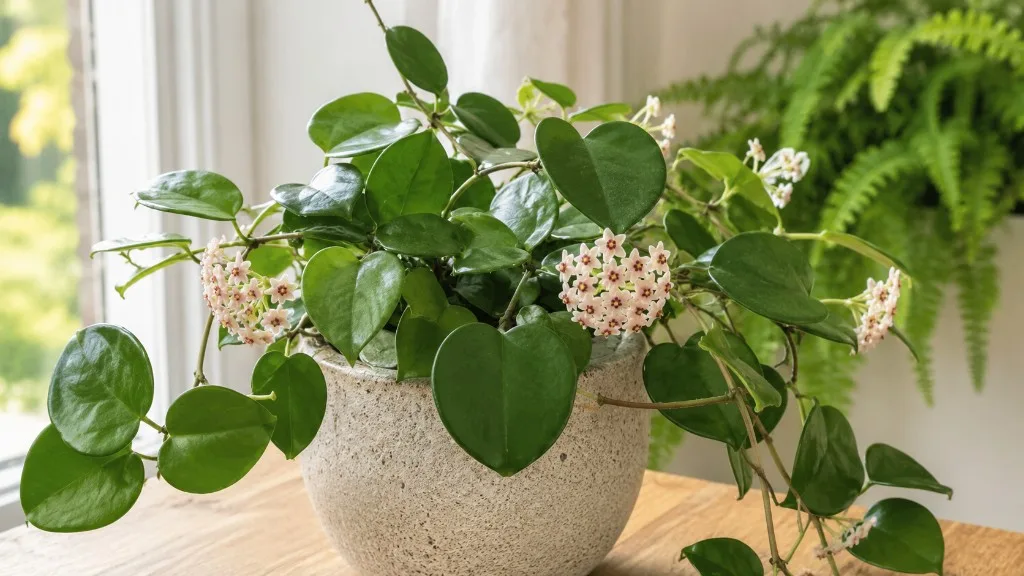
Hoya Kerrii Light Requirements: Bright Indirect Guide
Hoya Kerrii Light Requirements: Bright Indirect Guide
Hoya kerrii is the heart-shaped sweetheart plant sold by the millions around Valentine’s Day - a thick, waxy leaf that looks indestructible and grows at a pace that tests patience. The light advice you find online often contradicts itself: some sources say full sun on the brightest windowsill, others say anything brighter than a hallway will scorch the leaf. Both can be true in different homes because Hoya kerrii is an epiphytic vine from tropical Southeast Asia, not a desert succulent, and because the plant on your desk may be a single rooted leaf with completely different growth potential than a stem-bearing vine on a trellis.
The practical baseline is bright indirect light - strong ambient brightness on the leaf surface without the sustained heat and UV load of unfiltered afternoon sun on glass. NC State Extension lists dappled sunlight as the cultural light preference for Hoya Kerrii overview, which in a home translates to an east window, a bright spot a few feet from a filtered south or west pane, or a sheer-curtained exposure that casts a soft shadow without sharp sun lines. (NC State Extension) NParks Singapore describes the same pattern for cultivated plants: bright but indirect sunlight, with several hours daily supporting healthy growth and flowering on mature specimens. (NParks Singapore)
This guide focuses on the decisions that keep Hoya kerrii firm, green, and eventually vining or flowering: how much light it actually needs, why bright indirect beats both dim corners and harsh direct rays, where to place pots by window direction, how to handle single-leaf novelties differently from real vines, when grow lights make sense, and how to read warning signs before scorch or stagnation becomes the new normal.
How Much Light Hoya Kerrii Actually Needs
Hoya kerrii evolved in primary rainforest canopy across Laos, Thailand, Vietnam, and Malaysia, climbing tree trunks with aerial roots while receiving filtered light through upper leaves for most of the day. NC State Extension lists dappled sunlight as the cultural light preference - the same reason orchids and other epiphytes favor bright indirect rather than open-roof desert conditions. Your job indoors is not to recreate a rainforest; it is to deliver enough photons for slow but steady photosynthesis without the leaf-temperature spikes that thick, succulent tissue still cannot tolerate for long.
For most homes, that means bright indirect light for most of the daylight hours - roughly six to eight hours of meaningful brightness at the leaf, not six hours of direct sunbeams. A useful field test: hold your hand between the plant and the window at midday. Bright indirect produces a visible but soft, diffuse shadow; sharp, high-contrast shadow lines mean direct sun that may need filtering or distance. Clemson Extension recommends placing hoyas close to an east, west, or south-facing window - with south exposures acclimated to avoid leaf burn.
Light also sets the pace for everything else in Hoya kerrii care. A plant in correct bright indirect light dries its potting mix faster, produces firmer new leaves, and maintains the slow but visible growth this species is capable of when it has stem tissue to work with. A plant in marginal light may stay alive for months on stored leaf water while producing almost no new tissue, which beginners often misread as a watering problem. Before you change your water schedule, change how you evaluate whether the leaf is actually receiving plant-level light or only room-level brightness.
The Short Answer for Busy Growers
If you only remember four rules, use these. Default target: bright indirect light near your brightest suitable window, with the pot close enough that light lands on the leaf, not on the table beside it. Best windows: east-facing for gentle morning brightness; filtered south or west when east is unavailable; north only with a grow-light supplement if you want more than survival. Direct sun: a few hours of early morning sun can work on acclimated plants; unfiltered afternoon sun on west or south glass is the most common scorch scenario indoors. Judge by new growth: firm, correctly colored new leaves or vine tips mean the current light works; pale, smaller, slow, or stretched new tissue means increase brightness gradually - bleached, crisp, or sun-bleached patches mean pull back or diffuse.
Give any placement change two to three weeks before declaring failure. Hoya kerrii is a slow grower, and a single-leaf cutting may show almost no visible change in that window even when light improved - but scorch appears faster than growth on this plant, so protect first, then optimize.
Why Hoya Kerrii Prefers Bright Indirect Light
The phrase bright indirect light sounds vague until you map it to Hoya kerrii biology. This is not a low-light foliage plant like a ZZ plant, and it is not a full-sun succulent like many Echeveria species. It sits in the middle band where light energy fuels growth and eventual flowering, but excess direct radiation overheats thick leaves that were built to store water, not to shed heat like narrow grass blades.
Epiphyte Origins in Southeast Asian Rainforest Canopy
As a member of Apocynaceae - the dogbane family shared with plumeria, mandevilla, and oleander - Hoya kerrii grows as a climbing epiphyte with twining stems and opposite, heart-shaped leaves 5 to 15 cm long. (NParks Singapore) In native habitat it attaches to tree bark with adventitious roots while leaves intercept sunflecks and filtered canopy light rather than open-sky radiation all day. That history explains three practical behaviors home growers see repeatedly.
First, the plant rewards brightness with better color and, on mature vines, peduncle formation for the waxy umbels of star-shaped flowers. Hoyas as a group need substantial light to bloom indoors; low light preserves a leaf but rarely produces the energy budget flowering demands. Second, the plant tolerates short dry spells because leaves store water, but it does not tolerate chronic shade without losing vigor over time. Third, sudden jumps from nursery shade to unfiltered window sun cause physiological shock - bleaching, crisping, or leaf collapse - because canopy leaves develop under different UV load than glass-magnified afternoon rays.
Understanding epiphyte logic prevents two common mistakes: treating Hoya kerrii like a shade terrarium plant that never needs a bright window, and treating it like a cactus that wants noon sun on a south pane year-round.
Succulent Leaves and Slow Growth Change the Stakes
Hoya kerrii leaves are thick, fleshy, and succulent-like, which confuses care expectations. NC State Extension classifies the species as having fleshy leaves and recommends dappled sunlight - stored water does not eliminate the plant’s need for photosynthesis.
Slow growth also changes how you diagnose light. Hoya kerrii will not produce a new leaf every week like a pothos; a vine might extend only inches per growing season in average home conditions. That means old damage persists on the leaf face for months, and only new tissue tells you whether a recent move helped. If you are growing a single rooted leaf with no stem node, growth may be effectively zero regardless of light - a separate problem covered below - so light diagnostics apply most cleanly to stem-bearing plants.
The succulent leaf also scorches from the outside in when sun is too strong: sun-facing tissue bleaches or crisps while the shaded side stays green, producing a two-tone heart that will not revert. Prevention through bright indirect placement is easier than recovery.
Single-Leaf Cuttings vs Full Vines: Light Differences
Walk into any garden center in February and you will see Hoya kerrii sold as a single heart leaf rooted in a tiny pot - a living valentine that feels like the perfect desk plant. Light requirements for that leaf overlap with vine care on paper, but growth outcomes diverge sharply, and misunderstanding that gap produces endless forum posts asking why a sweetheart plant “never grows.”
Why a Rooted Heart Leaf Rarely Grows or Blooms
NC State Extension and multiple horticultural sources are explicit: Hoya kerrii is often marketed as a rooted leaf cutting, and that format typically does not develop into a climbing vine because the meristematic tissue needed for stem and node growth is usually absent. (NC State Extension) A single leaf can stay green for years with correct bright indirect light and careful watering, functioning more like a living succulent cutting than a houseplant with upward ambition. It may even produce adventitious roots or occasional callus tissue without ever sending a vine.
Light still matters for leaf health. Too little light on a single leaf produces gradual yellowing, softness, or wrinkling as reserves exhaust; too much direct sun scorches the one leaf you have with no replacement growth to hide damage. But perfect light cannot turn a leaf-only cutting into a flowering vine - that requires a stem segment with at least one node, the propagation format serious growers use when they want the real plant.
If you own a single heart leaf, optimize light to preserve the specimen, not to force vining. If you want a climber or blooms, source a stem-tip cutting or established vine and apply the bright indirect framework below. Comparing your desk heart to a friend’s trellised Hoya kerrii on Instagram is a category error, not a light failure.
For stem-bearing plants, bright indirect light supports internode extension, leaf size maintenance, and peduncle retention on mature wood. Never prune away old flower spurs if blooming is a goal; hoyas rebloom from the same peduncles when light and maturity align.
Best Window Placement for Hoya Kerrii Indoors
Compass labels are starting guesses, not verdicts. A “south window” buried behind a porch overhang may deliver less usable light than an open east pane. Hoya kerrii placement succeeds when leaf-level brightness stays in the bright indirect band for enough hours daily, with heat on glass managed seasonally.
Indoors, prioritize the brightest exposure you can filter, not the spot where the heart pot looks cutest on a shelf. NParks Singapore recommends bright but indirect sunlight with several hours daily for healthy growth and flowering on mature specimens. Keep the pot within 12 to 24 inches (30 to 60 cm) of the glass on that exposure; across the room, the plant sees sky brightness while receiving a fraction of the photons.
East, South, West, and North Windows Compared
An east-facing window is the most reliable default for Hoya kerrii in most homes. Morning sun is bright but cooler than afternoon rays, delivering strong indirect light through midday with only one to three hours of gentle direct sun at most latitudes. East exposure builds color and firmness without the west-window scorch pattern that hits thick leaves hard.
A south-facing window offers the strongest winter sun in the northern hemisphere and can be excellent for Hoya kerrii from fall through spring when rays are lower and shorter. In summer, south glass magnifies heat; watch for bleached sun-facing patches and pull the pot back or add a sheer curtain during peak months. South is ideal when you combine window light with a small full-spectrum LED in the dark season rather than pushing the plant against unfiltered summer glass.
A west-facing window supplies intense afternoon sun - the highest scorch risk for Hoya kerrii indoors. If west is your only bright option, diffuse peak hours, place the pot farther from the pane, or accept only morning-cached brightness by situating the plant where direct beams do not strike the leaf after noon. Many burned sweetheart leaves trace to west glass in summer, not owner neglect.
A north-facing window rarely provides enough brightness for vigorous Hoya kerrii growth at mid and high latitudes. North can maintain a single leaf’s green color through summer in some rooms, but expect slow metabolism, smaller new growth on vines, and no flowering without supplemental light. Treat north as grow-light territory if you want more than a preserved novelty leaf.
Distance From Glass and Rotation Habits
Window direction tells you the quality of light; distance tells you the dose. Move pots closer in winter when sun angle drops and slightly farther in summer when intensity peaks. If only one side of the heart faces the window, rotate the pot a quarter turn every week on vining plants to prevent permanent lean; single leaves are often sold oriented for display and can stay fixed if sun is indirect enough to avoid one-sided scorch.
Watch reflected heat from nearby walls, radiators, and dark furniture. Hoya kerrii tolerates ordinary room temperatures between 65 and 80°F (18 to 27°C) per extension guidance, but leaf temperature beside hot glass can exceed air temperature enough to crisp tissue even when the thermometer on the shelf reads comfortable. (NC State Extension)
Direct Sun: What Hoya Kerrii Can Tolerate
Hoya kerrii light requirements center on bright indirect exposure, but the plant is not a darkness specialist. Some experienced growers keep healthy specimens with partial direct sun when acclimated - especially morning rays or filtered south light through trees or curtains. The failure mode is not “any sun ever”; it is unfiltered afternoon intensity on leaves that developed in nursery shade.
Morning Sun vs Afternoon Sun Risk
Morning sun is lower angle, cooler, and shorter in duration - the closest indoor analog to canopy sunflecks at dawn. A stem-bearing Hoya kerrii acclimated over two weeks can often handle one to three hours of early direct east sun without bleaching, and that extra flux may support tighter growth and better flowering potential on mature vines. Afternoon sun through west or south glass delivers higher UV, higher leaf temperature, and longer exposure at the worst time of day for thick leaves with limited transpiration cooling.
Clemson Extension notes that hoyas placed near south-facing windows must be acclimated to direct sunlight to avoid leaf burn - matching what most hoya collectors report in practice. If you want to push toward the brighter end of the range, do it with morning direct first, not with midday or afternoon beams.
Outdoors, the same rule applies: a shaded porch with open sky brightness often beats full patio sun for this species, even in humid climates. Bring plants back inside before sudden exposure jumps that skip acclimation.
How to Acclimate to Brighter Exposure
Nursery Hoya kerrii frequently comes from high-shade production houses where leaves formed under low UV. Moving that plant straight to an unfiltered south windowsill is how bleached craters form on the heart face in a single afternoon. Acclimation is incremental exposure increase over 10 to 14 days, not a one-step relocation.
Start by placing the plant in bright indirect at the target window but pulled back from direct beams. After four to five days with no scorch, move six inches (15 cm) closer or open sheer curtains one hour earlier. Repeat until the plant sits at the final distance. If any bleaching or crisping appears, revert to the last safe position for a full week before trying again. Leaves formed in low light never harden retroactively; only new growth fully adapts, which on Hoya kerrii may take months.
Do not stack acclimation with Hoya Kerrii repotting guide, fertilizer increases, or watering changes. One variable at a time keeps cause and effect readable on a slow plant.
Low-Light Limits and Leggy Growth
Hoya kerrii can survive medium indirect light or dimmer corners longer than many tropical foliage plants because the leaf stores water and photosynthetic reserves - which is why single-leaf versions persist on desks under marginal conditions. Survival is not thriving. Chronic low light produces pale green or yellowing tissue, smaller new leaves on vines, longer gaps between nodes, and complete absence of flowering even on otherwise mature plants.
NC State Extension classifies kerrii as a slow grower - low light slows development further and can leave leaves smaller than in brighter placements. On a single leaf, low light may show up as softness or wrinkling that mimics underwatering on Hoya Kerrii; check roots and moisture, but also ask whether the leaf receives a soft shadow test at noon or only ambient room glow.
Low light also extends soil dry-down time, which invites overwatering on Hoya Kerrii damage when owners keep a weekly schedule designed for a brighter window. If you must keep Hoya kerrii in a dim office for aesthetic reasons, reduce watering frequency to match slower uptake and consider a compact grow light rather than accepting a multiyear stall.
Grow Lights When Natural Light Falls Short
When the brightest window in your home is still a north exposure or a courtyard blocked by neighboring buildings, full-spectrum LED grow lights bridge the gap without forcing the plant into scorch territory. Grow lights are not a failure workaround; they are standard equipment for slow epiphytes in apartments where window real estate is competitive.
Fixture Height, Hours, and Spectrum
Position a full-spectrum LED grow light 12 to 18 inches (30 to 45 cm) above the leaf canopy - slightly farther for high-output fixtures, closer for small desk lamps rated for seedlings. Start with 10 to 12 hours daily on a timer to mimic natural day length; Hoya kerrii does not need 16-hour marathon days to compensate for shade, and excess runtime heats leaves and alters rest signals without proportional benefit.
Choose white full-spectrum or labeled 4000K to 6500K lamps rather than purely red-blue “blurple” panels unless you already own one; hoyas respond to balanced spectra for foliage maintenance. Watch for leaf temperature with enclosed hoods; if the heart feels warm to the touch at the end of the light period, raise the fixture.
Increase light in winter before leaves soften, not after wrinkling appears. Combine overhead LED with window brightness when possible rather than relying solely on artificial light in a dark corner - mixed sources produce more natural gradual transitions and easier seasonal adjustment.
Warning Signs Your Hoya Kerrii Has the Wrong Light
Light mistakes announce themselves on new tissue first, though single-leaf plants may only have one data point. Learn the too little and too much patterns separately so you do not treat scorch with more sun or shade a plant that is already starving for photons.
Too little light shows as overall paleness or yellow-green color, smaller new leaves, visible lean toward the window, extremely slow or absent vine extension, and on single leaves progressive softness or wrinkling not explained by active rot. Lower leaves on vines may yellow and drop when the plant reallocates resources, though Hoya kerrii drops leaves less readily than Hoya carnosa; persistent yellowing still warrants a light check.
Too much light shows as bleached white or tan patches on the sun-facing lobe, crisp, papery texture on burned zones, upward curling or folding during peak hours, and sudden collapse after an unacclimated move to harsh glass. Brown spots from cold drafts or fluoride sensitivity can mimic sun damage; if burn appears overnight after a move, sun is the prime suspect - if spots develop slowly on inner tissue in a stable spot, investigate water quality and temperature alongside light.
Use the two-week new-growth test: after adjusting placement, only judge tissue produced after the move. Old heart scars are permanent souvenirs.
Linking Light Changes to Hoya Kerrii watering guide
Every light change alters transpiration and root uptake. Hoya kerrii in brighter correct light uses stored leaf water faster and dries potting mix sooner; dimmer light slows the cycle and raises rot risk if watering stays aggressive. When you move a plant brighter, check moisture at the same clock time but expect to water slightly more often during active growth; when you move dimmer, stretch the interval and verify the top half of the mix dries before rewatering - the pattern most growers use for this epiphyte.
Light and water mistakes often arrive together after a seasonal window shift: owners move the pot closer to glass for winter sun but keep summer watering frequency, or they pull back from scorch in summer without reducing water in the cooler dimmer spot. Pair light adjustments with moisture checks, not calendar autopilot.
Conclusion
Hoya kerrii light requirements resolve to a single practical target for most growers: bright indirect light strong enough to cast a soft shadow, delivered for most of the day at the leaf - not just in the room. East windows and filtered south or west exposures fit that band naturally; harsh afternoon sun on bare glass does not. Single-leaf sweetheart plants and stem-bearing vines share the same light preference but not the same growth ceiling, so judge success by what your plant can actually produce, not by a trellised showplant online.
Place the pot close to the glass, acclimate nursery stock before summer windows, supplement with full-spectrum LEDs when north light or winter angle falls short, and read new tissue for pale shortage or bleached excess. Link brighter light to faster dry-down and dimmer light to longer intervals between waterings. Get bright indirect right, and Hoya kerrii rewards patience with firm hearts, eventual vines on stem cuttings, and - on mature plants given time - the fragrant umbels this species is capable of producing.
When to use this page vs other Hoya Kerrii guides
- Hoya Kerrii overview - Start here for whole-plant context before deep-diving this topic.
- Hoya Kerrii problems hub - Jump to symptom-specific fix guides when this care topic does not resolve the issue.
- Not Enough Light on Hoya Kerrii - Escalate here when light adjustments are not enough.
- Leggy Growth on Hoya Kerrii - Escalate here when light adjustments are not enough.
Related Hoya Kerrii guides
- Hoya Kerrii overview
- Hoya Kerrii watering
- Hoya Kerrii soil
- Hoya Kerrii propagation
- Hoya Kerrii fertilizer
- Hoya Kerrii repotting
- Not Enough Light on Hoya Kerrii
- Leggy Growth on Hoya Kerrii
- Hoya Kerrii problems
Related tool
Try the Plant Problem Diagnosis Tool with hoya-kerrii pre-selected to estimate needs for your setup.