Leggy Growth on Hoya Kerrii: Causes, Checks & Fixes
Quick answer
Leggy growth on Hoya kerrii happens on vining plants with stems, where low light causes long internodes and sparse leaves. First action: confirm you have a stem-bearing vine, then move it to brighter indirect light; a single rooted leaf cutting may stay static for years and is not true legginess.
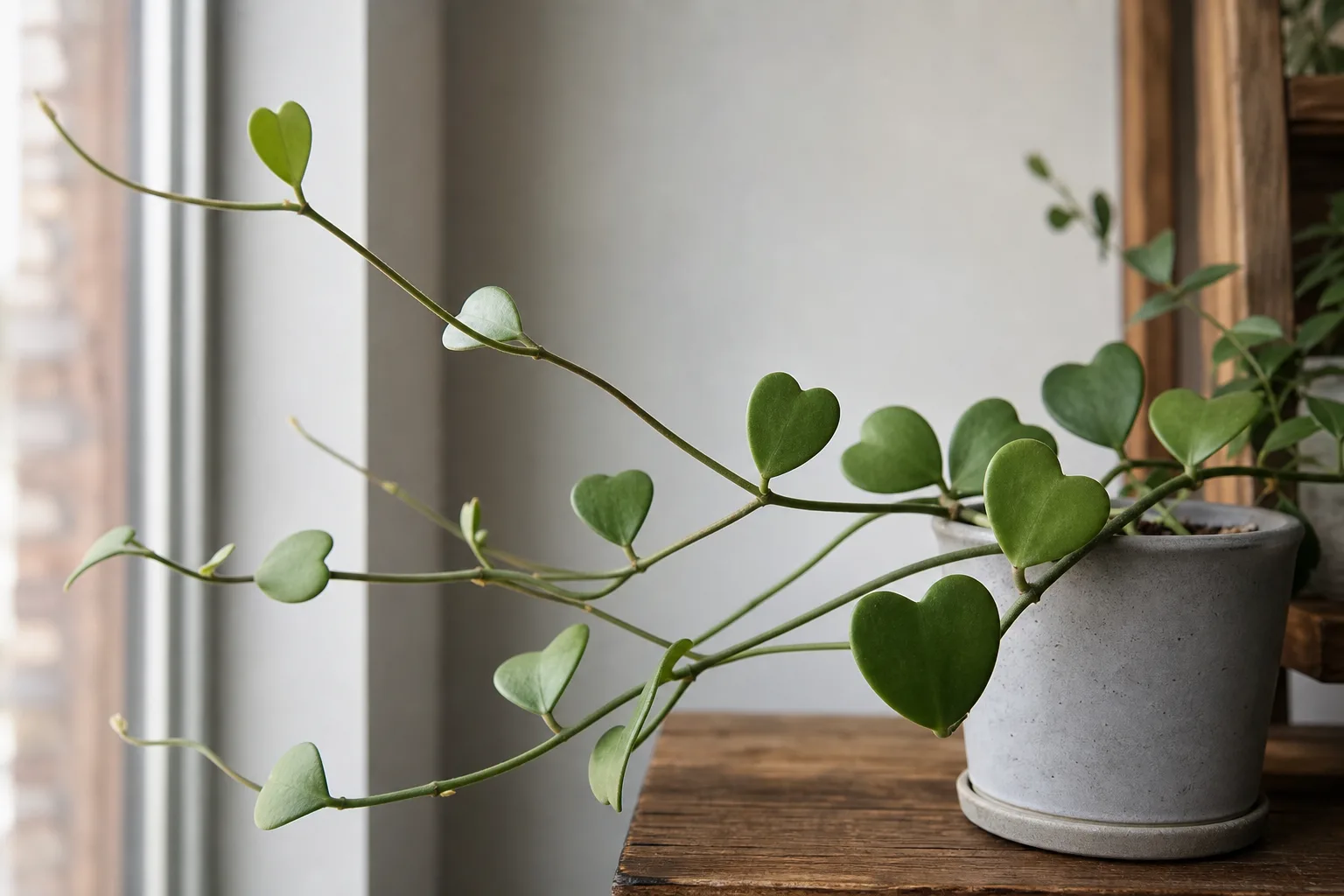
Leggy Growth on Hoya Kerrii: Causes, Checks & Fixes
This guide covers leggy growth on Hoya Kerrii. See also the general Leggy Growth guide, watering, and light pages for this plant.
Leggy Growth on Hoya Kerrii: Causes, Checks & Fixes
Quick answer
Leggy growth on Hoya Kerrii (Hoya kerrii) affects vining plants with active stems, not the common single-heart novelty cutting sold in small pots. Hoya kerrii is an epiphytic, vining species in the dogbane family, and retailers often sell it as a rooted single leaf around Valentine’s season (NC State Extension).
On true vines, legginess is usually etiolation: low light leads to longer internodes, weaker stems, and sparser growth (University of Maine Cooperative Extension, NC State Extension Botany Handbook).
First step: confirm there is a stem with nodes, then improve light before doing anything else.
What leggy growth looks like on Hoya Kerrii
On vining plants with stems
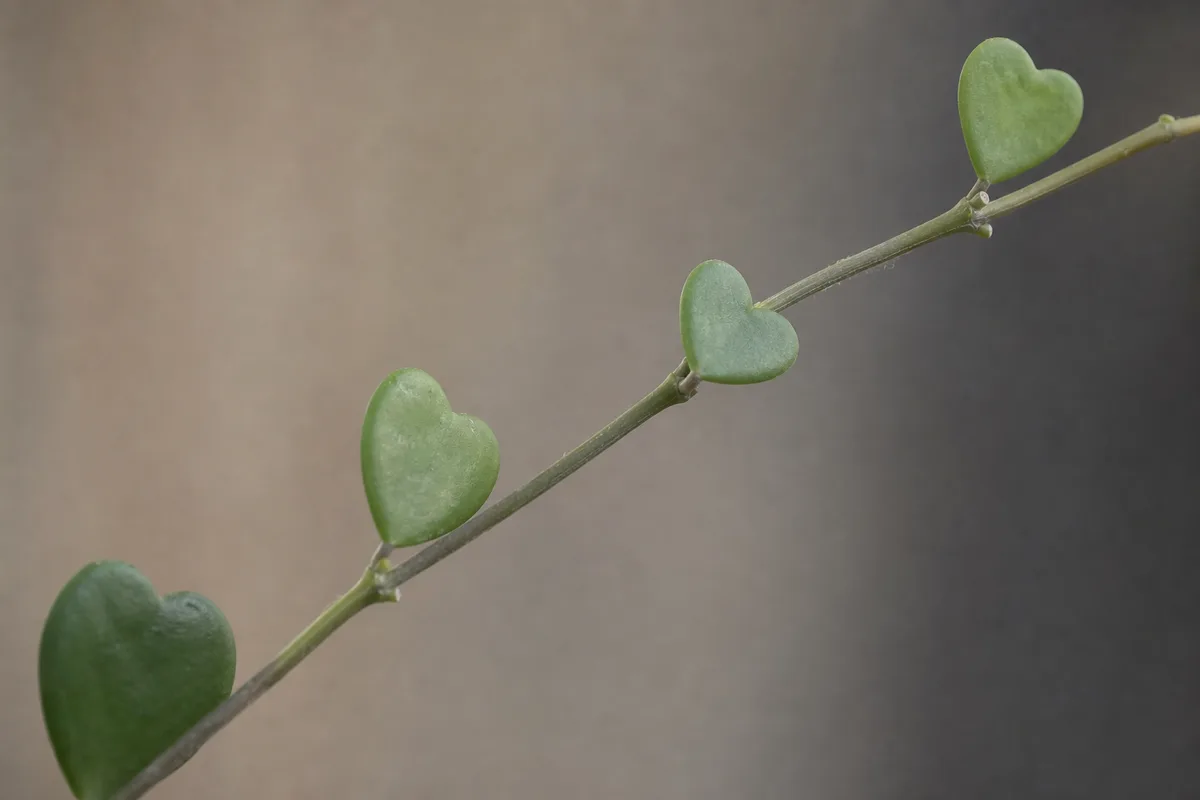
Leggy Growth symptoms on Hoya Kerrii - compare with healthy tissue on the same plant.
- Long spaces between new leaves (internodes)
- Smaller, lighter new leaves than earlier growth
- Vines reaching toward the brightest side of the room
- Sparse growth on long sections of stem
On single-leaf gift plants
A single rooted leaf without meaningful stem tissue can stay alive but not develop into a trailing plant. NParks notes that kerrii roots form from stem nodes and that plants sold as single leaves are common in trade (NParks Flora & Fauna Web). If there is no active stem, this is not a lighting-only legginess diagnosis.
Why Hoya Kerrii gets leggy
Hoya kerrii is adapted to bright, filtered conditions, and extension guidance for hoyas consistently recommends medium to Hoya Kerrii light guide near windows (Penn State Extension, Iowa State Extension, RHS).
When light drops too low, the plant stretches to find it, so internodes get longer and growth looks thin.
Single-leaf cuttings are a separate issue: if you do not have stem nodes, you may not get new vining growth regardless of fertilizer, Hoya Kerrii repotting guide, or pruning attempts.
How to confirm the cause
- Confirm plant type first.
If you only have one rooted heart leaf and no vine, treat it as a single-leaf cutting, not as a leggy vine. - Inspect newest internodes.
Compare the newest growth to older compact sections. Longer spacing on new growth points to low-light stretch. - Check real placement, not room brightness.
Measure where the leaves sit: near a bright window is different from being several feet back. - Run a two-to-three-week light trial.
Move a stem-bearing plant to brighter indirect light and watch whether new growth comes in closer together. - Rule out root stress overlap.
If mix stays wet for too long in dim light, root stress can stack on top of legginess and slow recovery.
First fix to try
For a stem-bearing vine, do one primary action first: move it to brighter indirect light near an east window or a filtered south/west exposure. RHS also warns that harsh direct summer sun can scorch hoyas, so increase light without sudden midday burn (RHS).
Do not stack multiple “rescues” on day one. Improve light first, then reassess the next node or two before pruning or repotting.
Step-by-step recovery for vining plants
- Relocate for better light and keep conditions stable for 2-3 weeks.
- Track new growth only. Old stretched sections will not tighten.
- Prune above a healthy node once you see compact new growth; this encourages fuller branching.
- Support the vine on a trellis so new growth is easier to space and monitor.
- Resume normal feeding lightly only after active, healthier growth returns.
Recovery timeline (realistic)
- 2-4 weeks: earliest signs of improved new growth under better light.
- 1-3 months: noticeably tighter node spacing on new sections if conditions stay consistent.
- Long term: old stretched sections stay stretched; they only disappear after selective pruning and replacement growth.
For single-leaf cuttings, timeline is unpredictable: some remain one leaf for years. If your goal is a vining plant, start with a cutting or plant that clearly includes a stem and nodes.
Lookalikes to rule out
- Normal exploratory vines: hoyas can send leafless runners before producing leaves, so one bare section does not always mean chronic low light.
- Root stress plus low light: yellowing, soft stems, and persistent wet mix suggest additional root problems, not just legginess.
- Single-leaf stagnation: a static leaf-only plant is often a propagation limitation, not failed care.
Mistakes to avoid
- Repeatedly repotting a single-leaf plant to force vining
- Heavy fertilizer on a light-starved, stretched plant
- Severe pruning before you improve light and verify new compact growth
- Treating all slow growth as legginess without confirming stem presence
How to prevent leggy growth next time
Keep stem-bearing Hoya kerrii in consistent bright indirect light, rotate periodically for even growth, and avoid deep low-light corners. If natural light is weak in winter, use a grow light as support.
When buying new plants, check for an actual stem and node presence so expectations match what the plant can do.
When to worry
Escalate quickly if legginess is paired with mushy stems, blackening nodes, or persistent wet mix smell. That combination points to broader health decline and may require root inspection and corrective repotting.
If the plant is a single leaf and remains stable, this is usually not urgent; it is mostly a limitation of starting material.
When to use this page vs other Hoya Kerrii guides
- Hoya Kerrii watering guide - Use for routine moisture checks before assuming leggy growth is the main issue.
- Hoya Kerrii problems hub - Browse all 16 common issues on this species.
- Not Enough Light on Hoya Kerrii - Different entry point when symptoms overlap with leggy growth.
- Slow Growth on Hoya Kerrii - Different entry point when symptoms overlap with leggy growth.
- Yellow Leaves on Hoya Kerrii - Different entry point when symptoms overlap with leggy growth.