Yellow Leaves on Hoya Kerrii: Causes, Checks & Fixes
Quick answer
Yellow leaves on Hoya kerrii are a symptom, not one diagnosis. Firm wrinkled hearts on dry mix mean underwatering; soft yellow leaves on heavy wet soil with a mushy petiole mean overwatering. First step: lift the pot, probe the mix at depth, and squeeze a leaf before changing water, light, or fertilizer.
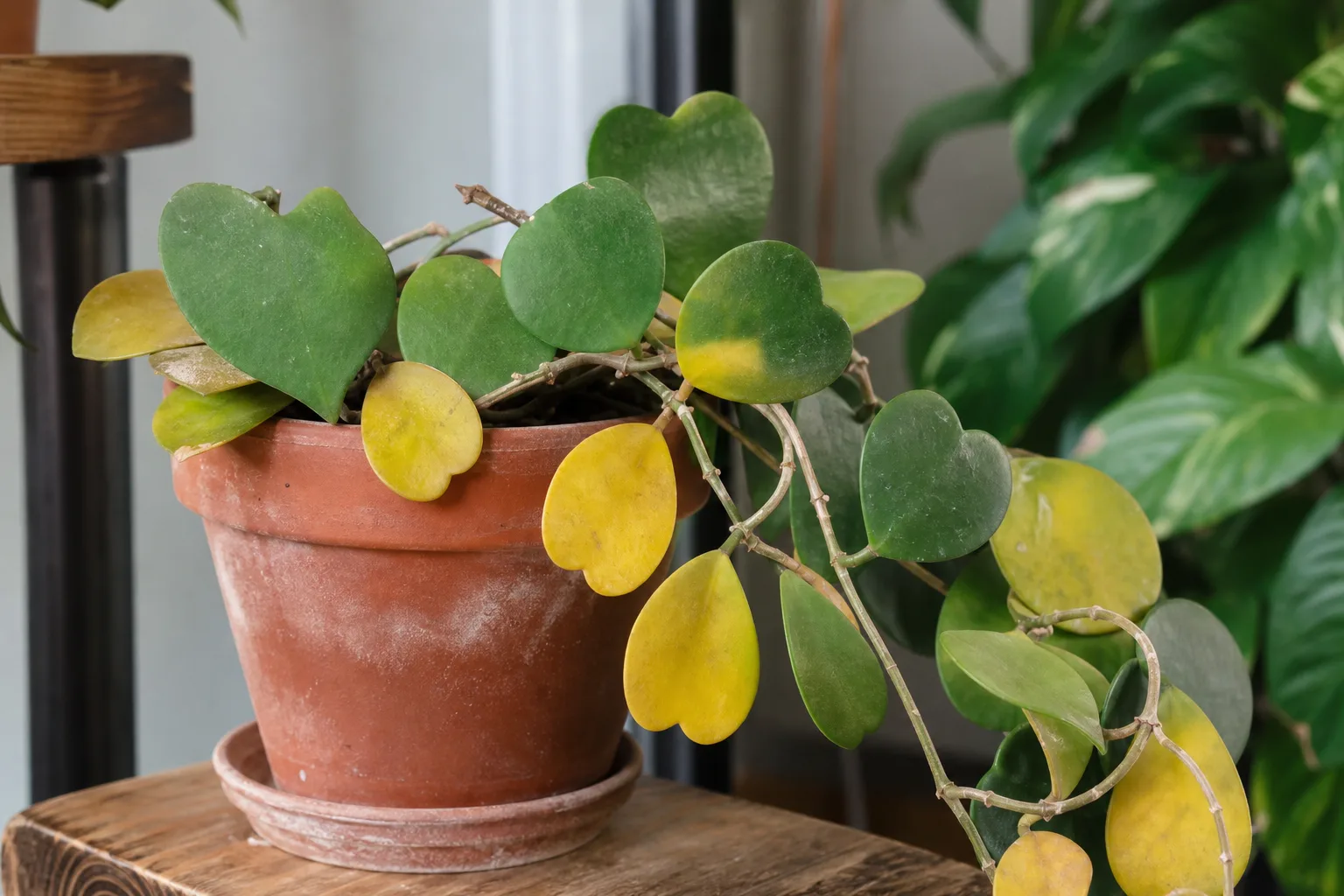
Yellow Leaves on Hoya Kerrii: Causes, Checks & Fixes
This guide covers yellow leaves on Hoya Kerrii. See also the general Yellow Leaves guide, watering, and light pages for this plant.
Yellow Leaves on Hoya Kerrii: Causes, Checks & Fixes
Quick answer
Yellow leaves on Hoya Kerrii (Hoya kerrii, Sweetheart Hoya) are a symptom, not a single diagnosis. This slow epiphytic vine with thick, water-storing heart leaves can yellow from overwatering, underwatering, too little light, normal aging, or pest sap loss-and the first fix depends on which pattern you confirm.
Scope: Use this page when hearts are already yellowing and you need cause-specific triage. For routine dry-down rhythm and prevention, start with the Hoya kerrii watering guide instead.
The fastest split on kerrii is texture plus pot weight, not color alone:
- Firm but wrinkled hearts on light, dry mix → likely underwatering - one deep soak after dry-down confirmation.
- Soft yellow leaves on heavy wet mix, especially with a mushy petiole at the soil line → likely overwatering or advancing root rot - stop watering first.
- Pale yellow upper leaves, long gaps between nodes on a vine, mix that stays damp for weeks → likely not enough light - move to bright filtered light before watering more.
- One old heart fading slowly at the base of a vine or on a single-leaf gift plant → often normal reserve exhaustion or proximal-node senescence - no emergency fix if tissue stays firm.
First step: lift the pot, probe the mix at 3–5 cm depth, and gently squeeze a leaf. Do not fertilize, repot, or increase watering until you know whether the root zone is wet or dry and whether the petiole is firm.
What yellow leaves look like on Hoya Kerrii
Kerrii hides stress longer than thin-leaf houseplants because semi-succulent foliage stores water. Yellowing therefore arrives after an underlying problem has already started-often with misleading leaf firmness.
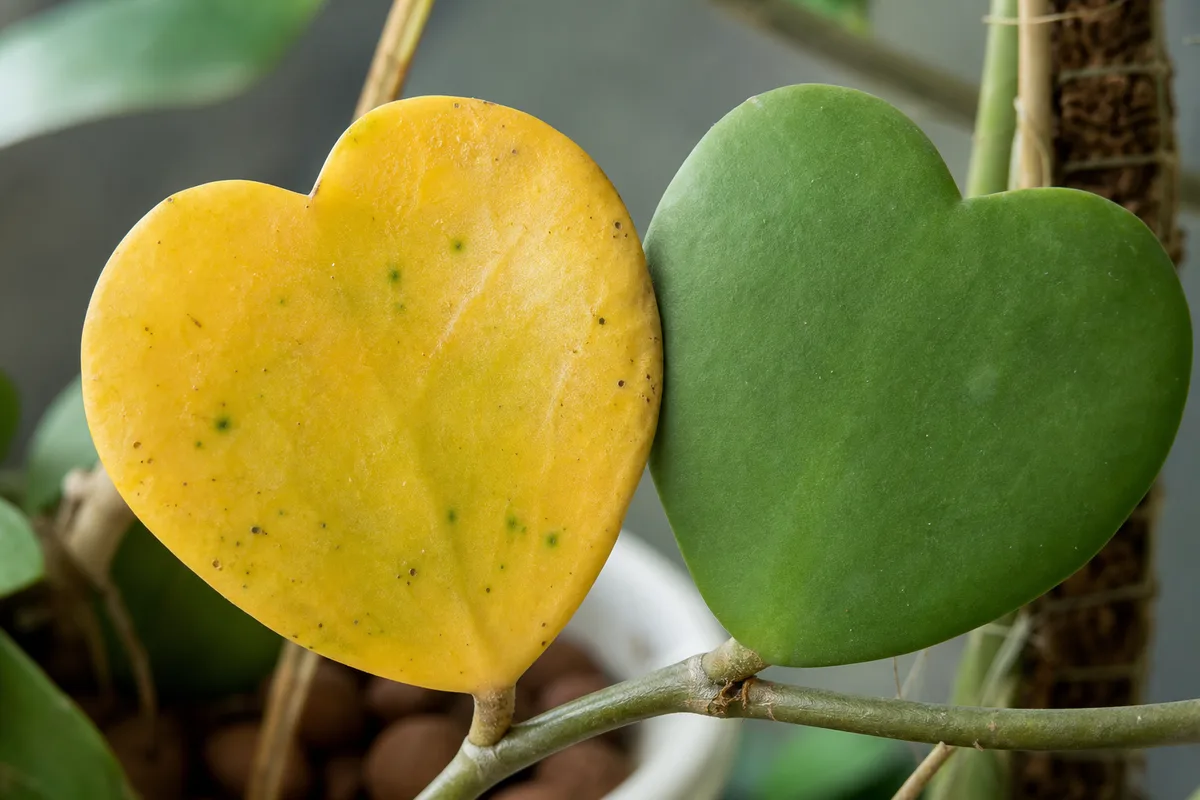
Yellow Leaves symptoms on Hoya Kerrii - compare with healthy tissue on the same plant.
On vining plants
- Uniform yellow of one or two oldest leaves at the proximal node along the stem while apical vine tips stay green and firm - classic slow senescence on a trailing kerrii.
- Multiple soft yellow hearts with a heavy pot that does not lighten between drinks - overwatering or root dysfunction; leaves may still feel plump briefly while roots fail underneath.
- Pale yellow-green new leaves with long internodes and lean toward the window - low light limiting chlorophyll, not necessarily root death.
- Yellow with fine stippling or sticky residue on tender growth - sap loss from aphids, mealybugs, or spider mites, not a watering calendar issue.
- Yellow lower leaves after repeated dry cycles - the plant sheds foliage to conserve moisture during chronic underwatering.
On single-leaf Valentine gift plants
A rooted leaf without stem tissue behaves differently from a vining specimen. One thick heart can stay green for months while reserves drain, then fade to yellow over a long timeline without ever sprouting a vine. That slow color shift in a stable, appropriately dry pot is often normal aging, not urgent root stress.
Alarm signs on a single leaf: rapid softening, mushy petiole at the soil line, sour smell, or yellowing in a dim corner while soil stays wet for weeks - that combination raises rot risk because photosynthesis is too weak to use stored water.
Example: texture and pot weight beat color
A single Valentine’s heart in a dim office stayed green for months, then shifted pale yellow over eight weeks while the glazed pot stayed heavy and the petiole remained firm. The mix was damp at depth but the leaf had exhausted stored reserves in low light - not urgent rot. After a move to a bright filtered east window and a corrected dry-down rhythm (top 3–5 cm crumbly before each soak), the leaf firmed and color stabilized within three weeks without repotting. If the same pot had smelled sour or the petiole had turned mushy on wet mix, root inspection would have come first.
The wrinkled-vs-wilt trap
Owners confuse two opposite problems because both distort leaf shape:
| What you see | Mix and pot | Likely cause |
|---|---|---|
| Wrinkled, thin-feeling hearts; color may stay green | Dry throughout; pot light | Underwatering |
| Soft yellow hearts; may look plump briefly | Wet, cool, clingy; pot heavy | Overwatering / root stress |
| Pale yellow, small new leaves; vine stretches | Often damp too long in shade | Low light |
| One old heart yellows over months; rest firm | Stable, dry on schedule | Normal senescence |
Thinning, brown, or wrinkled leaves on dry mix mean the plant was allowed to dry too much between waterings - wrinkling on dry mix is thirst. Wrinkling or yellowing while soil stays wet means roots cannot take up water even when saturated - the wilt-on-wet-soil pattern covered in the overwatering guide.
Why Hoya Kerrii gets yellow leaves
Sweetheart hoya evolved as a tropical epiphyte intolerant of waterlogging with thick leaves that buffer drought. Indoor yellowing usually traces to care that fights that biology.
Overwatering and root stress - The most common indoor failure. Dense mix, glazed pots without drainage, or winter watering on a summer schedule keeps roots oxygen-starved. Containers without good drainage can lead to root rot; damaged roots stop moving nutrients, and lower leaves often yellow first as the plant sheds tissue it can no longer support. Mushy petioles at the soil line are an urgent signal.
Underwatering after dry spells - Kerrii tolerates drought, but repeated bone-dry cycles in bright summer rooms force the plant to consume leaf reserves until older hearts yellow and drop. Wrinkling usually precedes yellow on dry mix.
Too little light - In dim corners, photosynthesis drops and new leaves turn pale yellow-green while the mix dries slowly. Owners water on a bright-window schedule in shade; wet soil plus weak growth mimics overwatering. See not enough light when stretch and pallor dominate.
Normal proximal-node senescence - On a slow vining kerrii, the oldest leaf at the base of a stem yellows as apical nodes produce new growth. This is nodal aging along a trailing vine - not rosette “crown” replacement. One or two spent hearts over a season on an otherwise firm plant is expected.
Pest sap loss - Aphids, mealybugs, and spider mites drain sap from tender vine tips, causing mottled yellow stippling rather than uniform lower-leaf drop. Confirm insects before changing water rhythm.
Salt buildup from overfeeding - Heavy fertilizer on dry roots or constant weak feeding in winter can tip margins yellow. Clemson HGIC notes that fertilizer salt accumulation can cause wilting and leaf injury when salts crust on soil or pot rims. This is secondary to watering and light mistakes on most kerrii - do not treat unexplained yellowing with more fertilizer.
Post-repot adjustment - A kerrii repotted into wet, dense mix within the last two weeks may yellow one or two lower hearts while roots re-establish. If the pot was recently disturbed and mix feels heavy, see the Hoya kerrii repotting guide before assuming chronic overwatering.
Lookalike symptoms to rule out
| Pattern | Most likely cause | Key check | Urgency | Next step |
|---|---|---|---|---|
| Soft yellow + heavy wet pot + mushy petiole | Overwatering / root rot | Sour smell; black roots on peek | Same week - inspect roots | Overwatering → root rot |
| Wrinkled firm hearts + light dry pot | Underwatering | Skewer dry at depth | Routine - soak when confirmed | Underwatering |
| Pale upper leaves + long internodes + damp mix in shade | Low light | No soft shadow at leaf | This week - move before watering more | Not enough light |
| One old basal leaf yellows; apical tips green | Normal senescence | Firm newer hearts | Low - monitor | Remove spent leaf; maintain dry-down |
| Stippling + sticky residue on new growth | Aphids / mealybugs | Inspect axils and undersides | This week - isolate and treat | Aphids or mealybugs |
| Fine speckling + webbing at leaf bases | Spider mites | Tap leaf over white paper | This week - isolate and rinse | Spider mites |
| Yellow lower leaves 1–2 weeks after repot | Transplant stress | Recent repot; heavy wet mix | Monitor 2 weeks - dry-down first | Repotting guide |
| Single gift leaf fades over many months, firm petiole | Reserve exhaustion / aging | Stable dry pot | Low - improve light | Accept one-leaf limits |
How to confirm the cause
Work through these six checks in order before you change care:
- Pot weight - Lift the container. A kerrii ready for water feels noticeably light; chronic overwatering keeps it heavy for days after the last drink.
- Mix moisture at depth - Insert a finger, chopstick, or skewer to the lower third. Crumbly and dry supports underwatering or normal dry-down. Cool, clingy, dark mix supports overwatering - even if leaves look thirsty.
- Leaf firmness - Squeeze a heart between thumb and finger. Firm and wrinkled on dry mix = thirst. Soft yellow on wet mix = root stress. Firm but pale in a dim spot = light first.
- Which leaves yellow - Oldest at proximal nodes only with green apical growth suggests senescence. Many leaves at once on wet soil suggests root inspection.
- Petiole at soil line - Mushy tissue where leaf meets stem on wet mix is urgent - shift to root rot protocol. Firm petiole on a slowly fading single leaf points to aging or light, not emergency rot.
- Light and season - Run the hand-shadow test at the leaf: bright indirect light casts a soft, diffuse shadow. Winter in cool rooms slows dry-down - yellowing on a still-wet mix often means you watered on a summer calendar. Pair moisture with brightness from the light guide.
If multiple yellow leaves appear while soil stays wet, unpot and inspect roots before repotting or fertilizing. Overwatering damage shows as brown, mushy roots - firm pale roots with confirmed dry mix point elsewhere.
First fix for Hoya Kerrii
Match one clear action to the confirmed cause - do not stack repot, fertilizer, and extra water on day one.
If mix is wet and leaves are soft yellow
Stop watering until the top 3–5 cm is crumbly dry and the pot lightens - often two to three weeks in cool rooms. Confirm drainage holes are open and saucers are empty. If the petiole is mushy or the mix smells sour, inspect roots per the root rot guide rather than waiting passively.
If mix is dry throughout and leaves are wrinkled or thinning
One thorough soak until water runs freely from drainage holes, then full drainage. Do not dribble daily sips. See underwatering for hydrophobic-mix recovery if water channels through.
If leaves are pale, stretched, and mix stays damp in shade
Move to bright filtered light at the leaf surface - east window or filtered south/west within 12–24 inches - before changing water volume. Low light had the plant using less water; brighter correct light may shorten dry-down during active growth.
If only one or two old basal leaves yellow on a firm vining plant
Remove fully yellow spent leaves and maintain the dry-down watering rhythm. No repot or feed required when apical nodes stay active.
If stippling, webbing, or sticky residue is present
Confirm pests on leaf undersides and axils, then treat per the relevant guide - watering changes alone will not fix aphid, mealybug, or spider mite sap loss.
Recovery timeline
Fully yellow leaves do not re-green - they drop or remain until you trim them. Judge success by new growth, not old leaf color.
On vining kerrii, watch apical vine tips and axillary buds along the stem - not “center crown” growth. New firm green hearts at nodes formed after care correction mean recovery is underway.
Typical windows when the cause is corrected:
- Underwatering: Leaf firmness often returns within two to five days after one proper soak; yellow leaves already formed will not revert.
- Overwatering (early): Yellowing should stop spreading within one to two weeks of dry-down; new growth may take three to six weeks on this slow grower.
- Low light: New tissue should look firmer and more evenly green within two to four weeks after a light move; old pale leaves stay pale.
- Normal senescence: No recovery timeline - one spent leaf drops while the vine continues slowly.
- Single-leaf gift plants: Firmness may stabilize after light correction, but new vine growth is unlikely without stem tissue - accept that a lone heart has limited recovery ceiling.
Worsening signs: rapid spread of yellow up the stem, mushy petioles, sour soil, or wrinkling that persists after a full soak on wet mix - escalate to root inspection immediately.
What not to do
Do not assume yellow leaves always need fertilizer - salt buildup from overfeeding can also yellow foliage, and stressed kerrii roots burn easily on dry mix.
Do not increase watering when the pot is already heavy and wet - the wilt-on-wet-soil trap kills more kerrii indoors than drought.
Do not judge recovery by “center growth” on a vine - watch apical nodes and new vine tips along the trailing stem.
Do not repot on day one unless root rot is confirmed - unnecessary disturbance in wet mix worsens oxygen stress.
Do not move a pale single-leaf gift plant to a dark shelf and water more - fix light first; wet soil in shade is a common rot path documented on the not enough light page.
Avoid removing green hearts in panic - trim only fully yellow or mushy tissue.
How to prevent yellow leaves on Hoya Kerrii
Build prevention around dry-down discipline and adequate filtered light:
- Water when the top 3–5 cm of mix is crumbly dry and the pot feels light - NParks recommends checking when the top 3 cm of soil becomes dry before soaking; combine with pot weight on your container.
- Use chunky, well-drained epiphytic mix and open drainage holes so you can soak safely without waterlogging.
- Place within reach of bright indirect light so the plant uses water predictably - see the Hoya kerrii overview and light guide.
- Stretch intervals in winter - cool, short days slow uptake; calendar kindness in December is a common yellow-leaf trigger.
- Inspect petioles when fungus gnats appear - they signal persistently wet surface mix.
- Remove spent yellow leaves promptly to reduce pest hiding spots.
- Hold fertilizer until growth is stable; flush salts occasionally if you feed frequently during active summer growth.
When to worry
Treat as urgent when:
- Multiple hearts yellow at once while soil stays wet
- Petiole turns mushy at the soil line on single-leaf or vining plants
- Mix smells sour or roots are black and slimy on inspection
- A single gift leaf softens rapidly in low light with constantly wet soil - rot risk, not slow aging
- Yellowing climbs the stem while new apical growth stalls
Same-week action is enough for one slowly fading basal leaf on an otherwise firm vining plant with appropriate dry-down - that is often normal senescence, not collapse.
Related Hoya Kerrii guides
Use this page as a yellow-leaf diagnostic hub; go deeper on confirmed causes:
- Hoya kerrii watering - dry-down protocol, wrinkled-leaf vs. wet-soil FAQ
- Overwatering - wilt-on-wet-soil, mushy petioles
- Root rot - advanced root inspection and trim
- Underwatering - wrinkled firm leaves on dry mix
- Not enough light - pale yellow stretch in shade
- Light requirements - prevention placement
- Spider mites - stippling differential
- Hoya kerrii overview - species hub
What to do next: escalation summary
Once you have run the six confirmation checks, choose one path - do not combine them on day one:
| Confirmed pattern | First action | When to escalate |
|---|---|---|
| Wet mix + soft yellow leaves | Stop watering; dry-down until top 3–5 cm crumbly | Mushy petiole or sour smell → root rot same week |
| Dry mix + wrinkled firm hearts | One thorough soak, then resume dry-down | Wrinkling persists on wet mix → root inspection |
| Pale stretch in dim spot + damp mix | Move to bright filtered light first | No improvement in new growth after 4 weeks → recheck light and watering volume |
| Stippling, webbing, or sticky residue | Isolate; confirm pest; treat per guide | Spread to multiple leaves or neighbors → repeat treatment cycle |
| One old basal leaf on firm vining plant | Remove spent leaf; maintain dry-down | Multiple leaves yellow on wet soil → root inspection |
| Single gift leaf fading slowly, firm petiole | Improve light; accept one-leaf limits | Rapid softening on wet dim soil → stop water; inspect petiole |
For routine watering rhythm and prevention, use the watering guide. Return to this page when yellowing has already started and you need to split wet-soil rot from drought, shade, senescence, or pests before changing care.