Aphids on Hoya Kerrii: Causes, Checks & Fixes
Quick answer
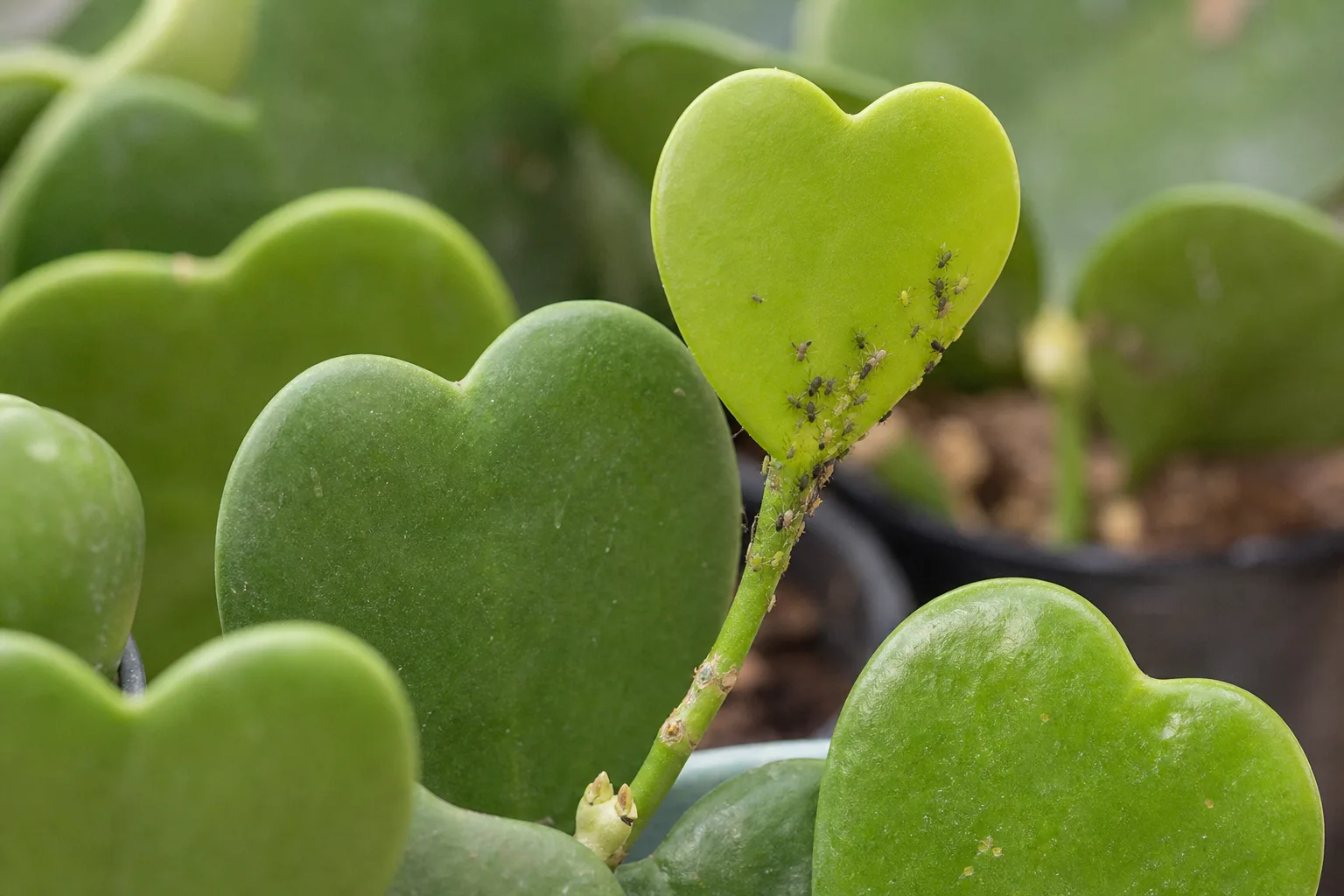
Aphids on Hoya Kerrii feed on tender new vines and peduncles, not the thick mature heart leaves. First step: move the plant away from neighbors and inspect new growth and flower stalks before spraying anything.
Aphids on Hoya Kerrii: Causes, Checks & Fixes
This guide covers aphids on Hoya Kerrii. See also the general Aphids guide, watering, and light pages for this plant.
Aphids on Hoya Kerrii: Causes, Checks & Fixes
Quick answer
Aphids on Hoya Kerrii (Hoya kerrii, Sweetheart Hoya) are small soft-bodied sap feeders that colonize tender new tissue-fresh vine tips, unfolding leaves, and flower peduncles-not the thick, mature heart-shaped leaves that make Hoya Kerrii overview famous. Because Kerrii is a slow grower, outbreaks often appear suddenly when a spring or summer flush produces soft shoots after months of little visible activity.
First step: isolate the plant and inspect new growth before you spray. Move it away from other houseplants, then examine stem tips and peduncles with a hand lens. If you see moving pear-shaped insects or sticky honeydew, a thorough rinse comes next. Treat only after you confirm live aphids-not every sticky leaf means pests.
What aphids look like on Hoya Kerrii
Aphids are pear-shaped, soft-bodied insects about 1/16 to 1/8 inch long with visible legs and antennae. On houseplants they are often green but may be black, brown, yellow, or pink depending on species. Wingless forms cluster densely; winged adults may appear when colonies get crowded.
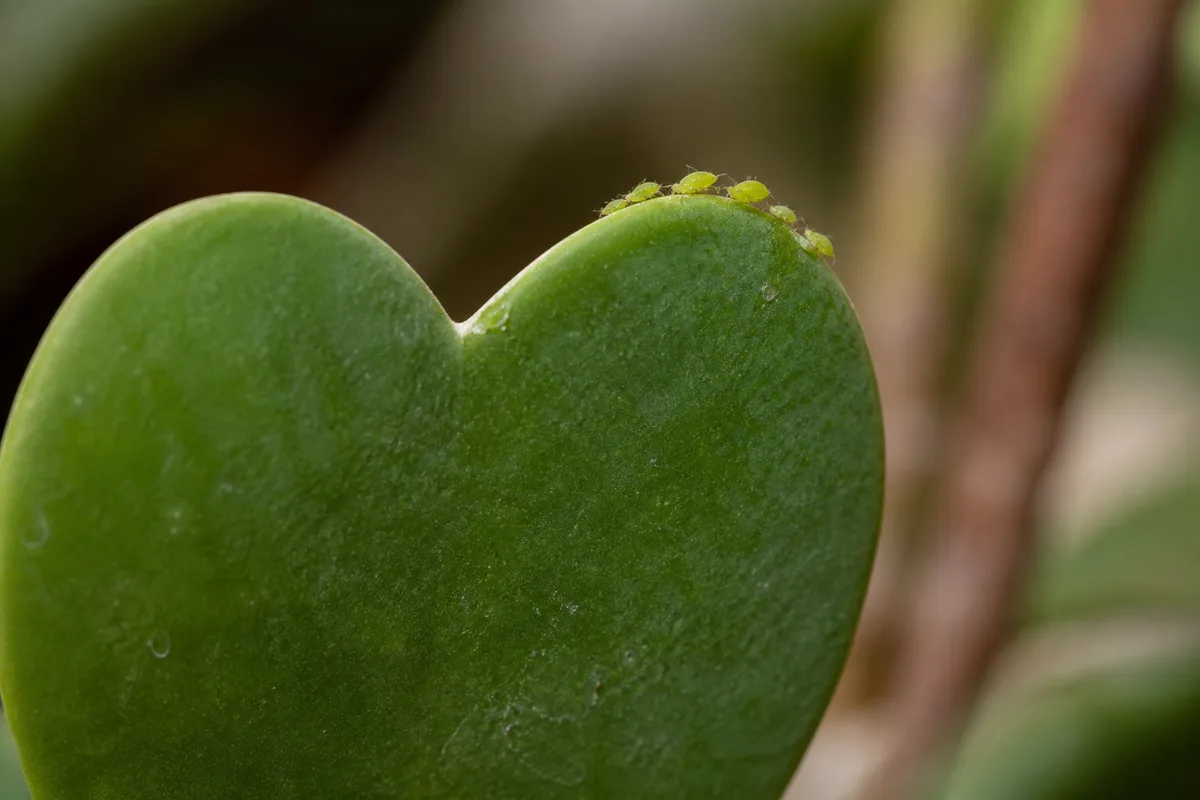
Aphids symptoms on Hoya Kerrii - compare with healthy tissue on the same plant.
On a vining Kerrii, look for them:
- Clustered on the newest leaves and stem tips where tissue is still soft
- Along peduncles (flower stalks) and unopened bud clusters
- On the undersides of young leaves near the growing point
- Sometimes with whitish cast skins stuck to stems after molting
Damage shows up differently than on thin-leaved houseplants. The old heart leaves are so thick that stippling is rare there. Instead, you notice curling or twisting of new leaves, slowed vine extension, shiny honeydew on leaves or the pot rim, and eventually black sooty mold on sticky surfaces. Ants on the pot or nearby windowsill often mean honeydew is present somewhere above.
Single-leaf gift plants deserve a special note. A lone rooted heart leaf without a node will not produce new vines-and rarely attracts aphids because it offers almost no tender growth. If you see insects on a “one-leaf” pot, look for a hidden vine below the soil line or check whether the problem is actually mealybugs in a leaf axil instead.
Why Hoya Kerrii gets aphids
Aphids rarely appear from bad watering alone. They arrive-on a new nursery plant, an open window in warm weather, or from an infested neighbor on the shelf. Kerrii’s slow growth does not protect it; when a vine finally pushes new tissue, that flush is exactly what aphids prefer.
Several factors make outbreaks more likely on this species:
New growth flushes. Aphids concentrate on soft, expanding tissue. After a long quiet period, a Kerrii that finally vines in bright light can produce a week of tender shoots-and aphids already in the room will find it quickly.
Flower peduncles. Hoyas bloom from persistent peduncles that should never be cut. Aphids often settle on these waxy stalks and bud clusters because the tissue is soft and sugars are flowing. An infested peduncle is a common first discovery point on mature vines.
Overfed, soft shoots. Heavy nitrogen fertilizer pushes weak, pale new growth that aphids favor. Kerrii needs only modest feeding during active growth; lush, floppy tips are more inviting than firm leaves on a well-lit, lightly fed plant.
Stressed plants in poor light. A vine stretching in dim conditions produces thin, weak shoots. Stressed plants do not “cause” aphids, but soft etiolated tissue is easier to pierce and colonies expand faster when the plant cannot outgrow damage.
Skipped quarantine. New hoyas often come with pests hiding in tight leaf axils or on tiny new tips. Two weeks of isolation before placement catches most hitchhikers before they reach the rest of the collection.
Mealybugs tend to prefer hoya and other succulents in leaf axils, but aphids and mealybugs can coexist on the same plant-especially during active growth season.
How to confirm the cause
Work through these checks in order:
- Location on the plant - Are insects only on new tips, peduncles, or young leaves? Aphids fit that pattern. Scale sits as immobile bumps on stems. Mealybugs look like white cotton in leaf bases.
- Movement - Touch a cluster with a toothpick. Aphids move slowly. Scale and mealybug adults do not walk away.
- Honeydew - Shiny, sticky residue on leaves or the table below the pot supports aphids (or soft scale/mealybugs). Dry crusty spots without insects may be hard-water deposits.
- Leaf age - Curling on new leaves with visible insects confirms sap feeding. A single thick old heart leaf yellowing with wet soil points to watering stress, not aphids.
- Ant trails - Ants farming honeydew on the pot exterior suggest an active colony above; follow the trail upward.
- Nearby plants - Check other hoyas and any plant with fresh spring growth on the same shelf.
If you find no insects but leaves stay sticky, wipe a leaf with alcohol on a cotton swab-if nothing smears and no bugs appear under magnification, reconsider whether the shine is residue from misting or fertilizer spray.
First fix for Hoya Kerrii
Move the plant away from others and rinse live aphids off tender growth.
Place the pot in quarantine-another room if possible. Carry it carefully so winged aphids do not drift to neighbors. Then:
- Take the plant to a sink or shower.
- Use lukewarm water with enough pressure to knock aphids off stems and leaf undersides, but not so hard that you tear soft new leaves.
- Tilt the pot so water runs through without leaving the crown soggy for hours. Kerrii’s thick leaves hold water on their surface; shake off excess or pat dry after rinsing.
- Inspect peduncles and vine tips again after the rinse. If insects remain, you need a contact spray next-not another rinse alone.
Do not cut peduncles to remove aphids. Hoyas reuse the same flower stalk year after year. Do not repot on day one. Do not fertilize a pest-stressed plant to “help it recover.”
Step-by-step recovery
After isolation and the first rinse, match treatment to severity:
Light infestation (few clusters on one vine tip)
- Repeat the water rinse every two to three days for a week.
- Wipe peduncles gently with a cotton swab dipped in 70% isopropyl alcohol if clusters are accessible without soaking the whole plant.
- Watch for new colonies on the same tip-aphids reproduce quickly in warm rooms.
Moderate infestation (multiple stems, honeydew present)
- Apply insecticidal soap labeled for houseplants, covering stems, leaf undersides, and peduncles until runoff. Soaps kill on contact only; dried residue has no effect.
- Repeat every five to seven days for at least three cycles to catch nymphs that hatch after each pass.
- Wipe honeydew from mature leaves with a damp cloth to reduce sooty mold and ant attraction.
Heavy infestation (curled leaves, ants, mold, winged aphids)
- Continue soap sprays on schedule.
- Prune only severely distorted new growth you cannot reach with spray-never remove peduncles unless they are completely dead and brown.
- Check every plant within three meters; treat or isolate any that test positive.
- If colonies persist after four weekly soap cycles, consider neem oil or horticultural oil labeled for aphids on houseplants, applied in shade and allowed to dry before returning to bright light. Test one leaf first-oils can mark succulent hoya foliage if applied in hot sun or to drought-stressed plants.
Systemic soil drenches are rarely necessary on a single potted Kerrii and can harm beneficial insects if you move the plant outdoors in summer. Focus on contact treatments and thorough coverage of hidden crevices near new leaves.
Recovery timeline
Expect visible improvement within one to two weeks if you catch colonies early and repeat treatment on schedule. Honeydew may linger until you wipe it off-it does not harm leaves by itself but feeds sooty mold.
Signs recovery is working:
- Fewer live aphids on vine tips after each rinse or spray
- New leaves emerging without curl or stickiness
- Ant activity declining as honeydew dries up
- Peduncles staying firm and green without fresh colonies
Signs the problem is worsening:
- Winged aphids appearing on multiple plants
- New tips collapsing or blackening despite treatment
- Sooty mold spreading faster than you can wipe leaves
- Vine growth stopping entirely during what should be active season
Mature heart leaves that yellowed from sap loss may not re-green; judge success by clean new growth, not old leaf color. Curled young leaves often stay slightly twisted even after aphids are gone-that is cosmetic, not a sign of failure.
Lookalike symptoms
| What you see | Likely cause | How to tell apart |
|---|---|---|
| White cottony clusters in leaf axils | Mealybugs | Does not move; smears pink when crushed; no pear shape |
| Brown immobile bumps on stems | Scale | Hard shell; scraping reveals insect underneath |
| Fine stippling + webbing on undersides | Spider mites | Mites are microscopic; webbing at leaf bases; worse in dry air |
| Silvery streaks on leaves | Thrips | Insects are slender and fast; damage is scraped, not sucked |
| Sticky leaves, no insects visible | Honeydew from past aphids, or soft scale | Search peduncles and new tips again; check with magnification |
| Single thick leaf yellowing, wet soil | overwatering on Hoya Kerrii | No insects; soil stays damp; caudex or stem base may soften |
Mistakes to avoid
- Spraying before confirming - Insecticidal soap on a misidentified problem wastes time and stresses leaves.
- One-and-done treatment - A single spray misses nymphs that hatch within days. Plan for repeats.
- Cutting peduncles - Removing flower stalks to “clean up” aphids destroys future blooms on that stalk permanently.
- Drenching the whole plant daily - Kerrii’s thick leaves stay wet too long; focus water and spray on infested new growth.
- Applying oil or soap in direct sun - Leaf burn on succulent hoya foliage is common; treat in indirect light and let leaves dry.
- Using dish detergent - Products not labeled for plants can strip leaf wax and cause permanent spotting.
- Returning from quarantine too soon - Wait until you see no live aphids for at least two weeks after the last treatment.
- Fertilizing during active infestation - Soft new flush from nitrogen feeds the next aphid generation.
Hoya Kerrii care cross-check
While treating aphids, keep baseline care steady-big swings in light or watering add stress on top of sap loss.
- Light: Hoya Kerrii light guide supports firm new growth. A dim vine produces weak tips that aphids colonize faster.
- Watering: Let the top half of the mix dry before watering. Soggy soil does not cause aphids but weakens roots while the plant loses sap to pests.
- Pot and mix: Small pots with epiphytic, well-drained mix dry predictably. Oversized pots stay wet and slow recovery.
- Fertilizer: Hold feeding until new growth looks clean and the infestation is clearly declining. Resume at half strength during active growth only.
- Airflow: Gentle circulation helps leaves dry after rinsing and reduces sooty mold on honeydew.
How to prevent aphids next time
- Quarantine new plants for two weeks before shelf placement; inspect vine tips and leaf axils at each watering during quarantine.
- Inspect weekly during spring and summer growth flushes-the only time Kerrii produces the tender tissue aphids prefer.
- Check peduncles when buds form; early colonies are easiest to rinse off before honeydew spreads.
- Avoid heavy nitrogen that pushes soft, pale shoots.
- Isolate at first sign on one plant before winged forms disperse.
- Keep ants off pots - they protect aphids from natural predators; destroy ant trails to the plant base if present indoors.
When to worry
Aphids alone rarely kill a mature Hoya Kerrii with a established root system. Worry when:
- The entire new vine tip is blackened or mushy after weeks of heavy feeding
- Multiple plants in the collection share winged aphids and treatment is not reducing counts
- You cannot reach colonies curled inside distorted leaves without pruning most of the vine
- A young, recently rooted cutting loses all new growth and shows no replacement after a month of clean care
In those cases, sacrificing one severely infested cutting to protect the collection is reasonable. A large established vine with localized colonies on one peduncle almost always responds to persistent contact treatment.
Conclusion
Aphids on Hoya Kerrii are a new-growth problem-they show up on vine tips and peduncles, not on the thick souvenir heart leaves. Isolation and a thorough rinse of tender tissue is the right first move; insecticidal soap on a five-to-seven-day repeat schedule handles most indoor colonies if you cover stems and undersides completely. Protect peduncles, skip Hoya Kerrii repotting guide and fertilizer until the plant is clean, and judge recovery by fresh unsticky leaves emerging from the growing point-not by whether old tissue reverts to perfect form.
When to use this page vs other Hoya Kerrii guides
- Hoya Kerrii watering guide - Use for routine moisture checks before assuming aphids is the main issue.
- Hoya Kerrii problems hub - Browse all 16 common issues on this species.
- Mealybugs on Hoya Kerrii - Different entry point when symptoms overlap with aphids.
- Spider Mites on Hoya Kerrii - Different entry point when symptoms overlap with aphids.
- Yellow Leaves on Hoya Kerrii - Different entry point when symptoms overlap with aphids.