Mealybugs on Hoya Kerrii: Causes, Checks & Fixes
Quick answer
Mealybugs on Hoya Kerrii cluster in leaf axils and stem joints where thick heart leaves meet the vine. First step: isolate the plant and inspect every axil with a magnifier before treating.
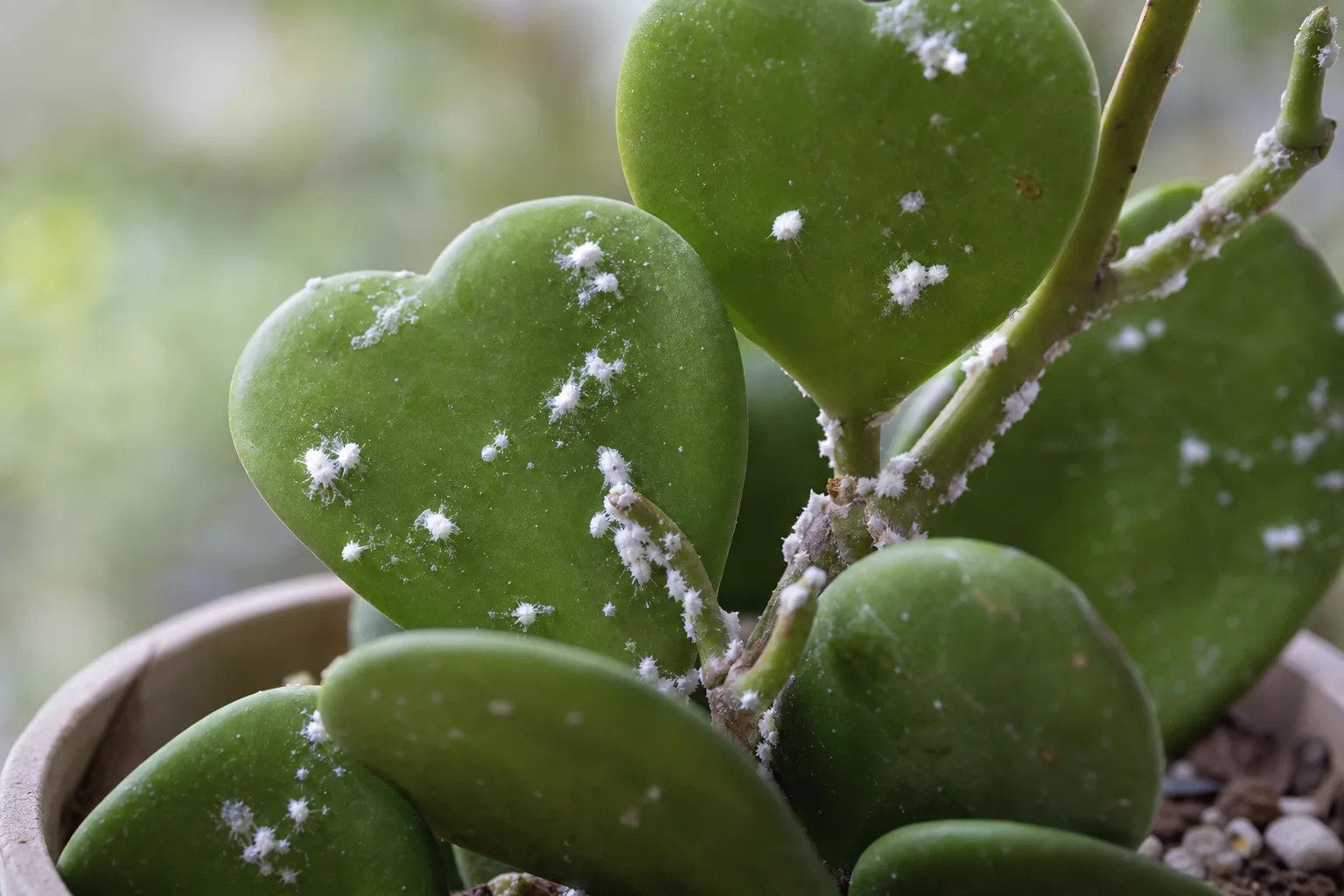
Mealybugs on Hoya Kerrii: Causes, Checks & Fixes
This guide covers mealybugs on Hoya Kerrii. See also the general Mealybugs guide, watering, and light pages for this plant.
Mealybugs on Hoya Kerrii: Causes, Checks & Fixes
Quick answer
Mealybugs on Hoya Kerrii (Hoya kerrii, Sweetheart Hoya) are sap-sucking insects that colonize the tight spaces where thick heart-shaped leaves meet stems. On hoyas, those leaf axils are the first place to look-not the flat leaf face, which can stay clean while colonies build underneath.
First step: isolate the plant and inspect every axil with a hand lens. You need to confirm live mealybugs (white wax, slow movement, pink smear when crushed) before reaching for sprays. Treating the wrong white spot-dried sap, mineral dust, or normal leaf texture-wastes time while crawlers spread to neighboring pots.
What mealybugs look like on Hoya Kerrii
Healthy Kerrii leaves are firm, waxy, and heart-shaped. Mealybugs disrupt that pattern with white, cottony clusters tucked into protected joints:
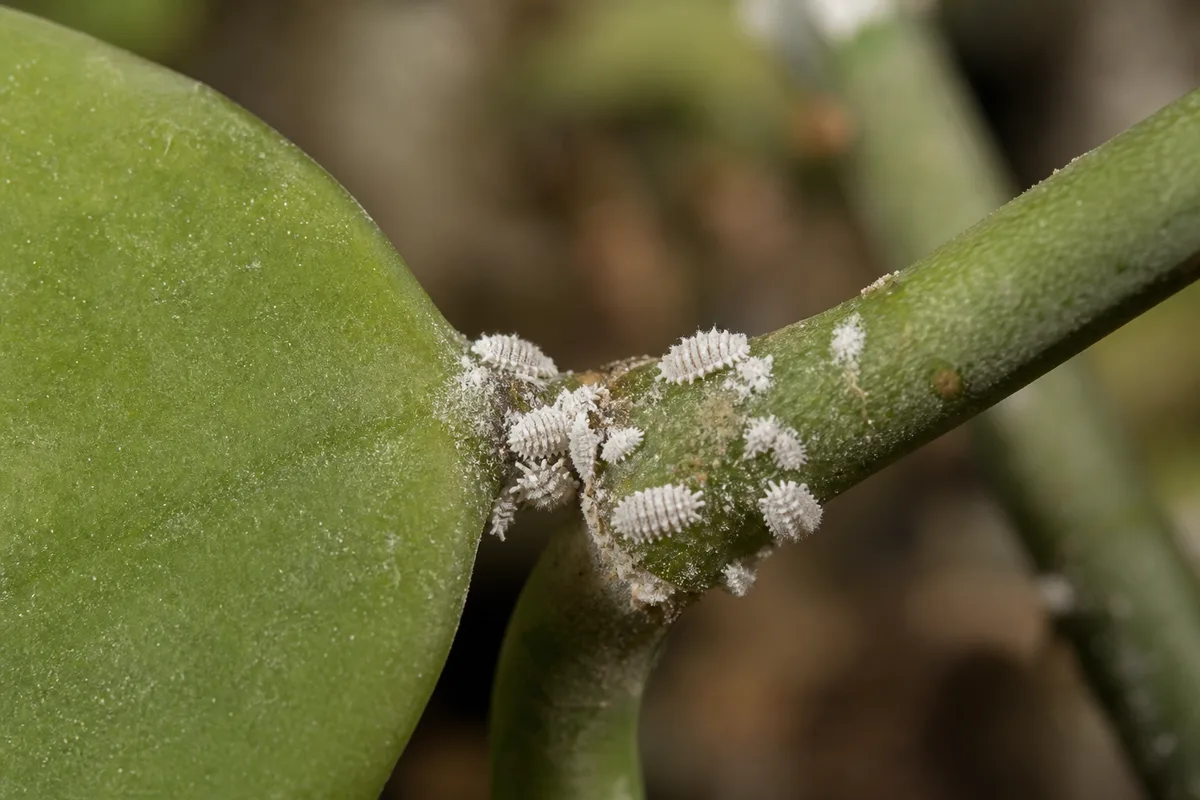
Mealybugs symptoms on Hoya Kerrii - compare with healthy tissue on the same plant.
- Leaf axils where the petiole meets the vine-the classic hoya hiding spot
- Undersides of leaves along midribs and veins
- New vine tips and any tight crown where leaves overlap
- Soil line and lower stem on older vining specimens, especially if the pot stays damp
Individual insects are small, oval, and coated in powdery wax. Egg sacs look like tiny cotton puffs. As colonies feed, you may see sticky honeydew on leaves or the shelf below, followed by black sooty mold on the honeydew itself. Heavy feeding can yellow leaves, stunt new growth, and cause premature leaf drop-though a slow-growing Kerrii may look “fine” for weeks while populations multiply in hidden axils.
Single-leaf gift plants deserve extra scrutiny. One thick leaf still has an axil at its base; mealybugs there are easy to miss because the plant has so few inspection points. Multi-leaf vines offer dozens of axils along the stem-any one can restart an infestation after treatment stops.
Why Hoya Kerrii gets mealybugs
Mealybugs are not a random hoya curse-they arrive on infested new plants, hitchhike on tools or hands, or walk from a nearby infested pot. Indoor conditions favor them: warm rooms, no cold winter to knock populations back, and no outdoor predators.
Hoya Kerrii is especially vulnerable in ways tied to normal care:
- Sheltered axils. Mealybugs prefer branch crotches, crowns, and stem joints-exactly where Kerrii leaves attach. The thick leaf bases create pockets that sprays skim past.
- Slow growth masks damage. on Hoya Kerrii A plant that adds leaves slowly may not show stress until colonies are well established.
- Grouped collections. Hoyas are often shelved together; crawlers travel short distances between touching leaves or shared watering trays.
- Over-fertilized soft growth. High nitrogen combined with regular watering pushes tender new tissue-preferred egg-laying sites for many mealybug species.
- Stress from poor light or wet soil. Weak plants do not “attract” mealybugs magically, but they tolerate sap loss poorly once insects settle in.
Mealybugs are common on hoya among houseplants prone to aboveground infestations. That does not mean every white speck is a pest-but axil checks should be routine on Hoya Kerrii overview.
How to confirm the cause
Work through these checks before committing to a treatment schedule:
- Location pattern - Are white masses in axils and stem joints, not evenly dusted across the leaf surface? Mealybugs cluster; mineral deposits or sun scorch usually follow different patterns.
- Crush test - Touch a cotton swab to a cluster and press. Mealybugs leave a pink or reddish smear; chalky mineral buildup or lint will not.
- Movement - Disturb the cluster with a toothpick. Slow-moving oval bodies or tiny yellow-orange crawlers confirm live insects.
- Honeydew - Shiny, sticky residue on leaves or the pot rim supports sap-feeding pests. Pair this with axil clusters for a firm ID.
- Lookalike pass - Rule out powdery mildew (flat white film on leaf faces), dried latex sap (hoyas bleed milky sap when cut), and water spots on waxy leaves before treating.
- Scope of spread - Inspect every hoya and nearby houseplant. Mealybugs on one Kerrii often mean a second hidden host on the same shelf.
If axils are clean, leaves are firm, and white marks wipe away dry with no smear, pause treatment and re-check in a week-misdiagnosis leads to unnecessary alcohol burns on healthy wax.
First fix for Hoya Kerrii
Isolate the plant away from other hoyas and succulents, then carry out a full axil inspection with a magnifier under good light.
That single step prevents spread and tells you whether you are facing a few localized clusters or a plant-wide infestation. Do not spray the whole room, repot, or prune heavily on day one-know the colony map first.
Step-by-step recovery
Once mealybugs are confirmed, work in this order:
- Isolate - Move the Kerrii to a separate room or closed shelf until you see no new colonies for at least two weeks after the last treatment pass.
- Manual removal - Dip a cotton swab in 70% isopropyl alcohol and dab each visible insect and egg sac. Work axil by axil along the vine; on single-leaf plants, treat the base joint thoroughly. Alcohol dissolves the waxy coating and kills on contact. Test one leaf first and wait 24 hours if you worry about phytotoxicity on stressed plants.
- Repeat weekly - Newly hatched crawlers emerge over several weeks. Plan on at least three to four weekly passes even if adults disappear after the first round. Missing one axil restarts the cycle.
- Follow-up spray for heavy infestations - After manual knockdown, spray insecticidal soap or neem oil to runoff on stems, leaf undersides, and axils-never just the top of heart leaves. Cover crevices where swabs cannot reach. Repeat per label interval, usually every five to seven days, until crawlers stop appearing.
- Shower rinse optional - A lukewarm shower knocks loose crawlers on sturdy vining specimens. Avoid soaking the crown of a single-leaf cutting in a decorative pot with no drainage; let it dry quickly afterward.
- Trim only when necessary - Remove a leaf or stem segment only if it is heavily encrusted and impossible to clean. Sterilize scissors between cuts. Hoya Kerrii is slow to replace lost leaves-save pruning for worst-case axils.
- Check the soil line - Some mealybugs feed near the stem base. If clusters persist after foliage is clean, inspect the top inch of mix and consider Hoya Kerrii repotting guide into fresh epiphytic mix in a clean pot-only after foliage treatment stabilizes.
Skip systemic insecticides unless you have exhausted contact methods and accept label risks on a plant you may eat near or handle often. Contact treatments, repeated patiently, resolve most Kerrii infestations.
Recovery timeline
Visible colonies should shrink within one to two weeks of consistent alcohol dabbing and axil-focused follow-up. That is a reduction sign-not clearance.
Expect three to four weekly treatment cycles minimum before calling the plant clean. Mealybug eggs and hidden crawlers survive a single pass; indoor warmth lets generations overlap year-round.
Improvement markers:
- No new white clusters in previously treated axils
- Firm heart leaves with no spreading yellowing
- Clean new vine tips or leaf buds on multi-leaf plants
- Honeydew and sooty mold stop spreading
Worsening markers:
- White cotton returning in the same axils within days of treatment
- Ant trails on the pot (farming honeydew and protecting mealybugs)
- Leaves yellowing and dropping despite correct watering
- Infestation jumping to neighboring plants-signals missed hosts or insufficient isolation
Old leaf damage does not reverse; judge recovery by pest-free axils and new growth, not by cosmetic marks on mature hearts.
Lookalike symptoms
- Mineral or hard-water deposits - Flat white crust on leaf faces; dry scrape, no pink smear, no clustering in axils.
- Powdery mildew - White film on leaf surfaces in humid, stagnant air; not cottony balls in stem joints.
- Normal leaf texture - Kerrii leaves are naturally thick and waxy; mealybugs add distinct fluffy masses, not uniform gloss.
- Scale insects - Brown or tan immobile bumps on stems; harder shell, not cottony wax.
- Spider mites on Hoya Kerrii - Fine stippling and webbing, usually in dry air-not white cotton in axils.
- Dried hoya sap - Milky residue near a recent cut or broken petiole; localized, not spreading colonies.
What not to do
Do not spray alcohol over the entire plant in hot direct sun-leaf burn on waxy hoya foliage is real. Work swab-by-swab in Hoya Kerrii light guide.
Avoid one-and-done treatment. A single neem spray without axil dabbing rarely clears hoyas.
Do not return the plant to its shelf early. Two pest-free weeks after the last live insect is a safer minimum.
Skip heavy nitrogen fertilizer while fighting an infestation-soft new growth gives mealybugs fresh egg sites.
Do not compost infested prunings indoors or leave them on a shared potting bench; crawlers walk.
When using alcohol or soaps around pets, remember Hoya Kerrii is non-toxic to cats and dogs, but treated leaves should dry before pets investigate-alcohol and soap residues irritate mouths even when the plant itself is safe.
How to prevent mealybugs next time
Prevention on Kerrii is mostly inspection habit, not chemistry:
- Quarantine every new hoya two weeks minimum; examine plants before bringing them home and check axils before it joins the collection.
- Inspect during watering-when you lift the pot to test weight, tilt leaves and scan stem joints with a lens.
- Keep bright indirect light and epiphytic, well-draining mix so the plant stays vigorous without leggy, nitrogen-soft shoots.
- Fertilize lightly during active growth only; avoid pushing lush tender tips in winter when growth is slow.
- Clean tools between plants when pruning or propagating hoya cuttings.
- Watch ants on pots-they often signal honeydew producers nearby.
Regular axil checks take minutes on a slow grower and catch problems before they coat an entire vine.
When to worry
Escalate immediately if multiple plants show axil clusters, ants or sooty mold are present, or a single-leaf Kerrii is weakening with widespread wax at the base-slow growers have little spare tissue to lose.
Consider discarding only when repeated weekly treatment for six to eight weeks fails, stems are shriveled beyond the infestation, or the plant was already declining from chronic overwatering on Hoya Kerrii. Most healthy Kerrii specimens recover with isolation and persistent contact treatment.
Conclusion
Mealybugs on Hoya Kerrii are a location problem as much as a pest problem: the insects win when they stay hidden in leaf axils you never inspect. Confirm with a magnifier and crush test, isolate first, dab alcohol on every cluster, and repeat weekly until crawlers stop. Thick heart leaves forgive a lot-but only after the axils are clean.
When to use this page vs other Hoya Kerrii guides
- Hoya Kerrii watering guide - Use for routine moisture checks before assuming mealybugs is the main issue.
- Hoya Kerrii problems hub - Browse all 16 common issues on this species.
- Yellow Leaves on Hoya Kerrii - Different entry point when symptoms overlap with mealybugs.
- Slow Growth on Hoya Kerrii - Different entry point when symptoms overlap with mealybugs.
- Spider Mites on Hoya Kerrii - Different entry point when symptoms overlap with mealybugs.