Spider Mites on Hoya Kerrii: Causes, Checks & Fixes
Quick answer
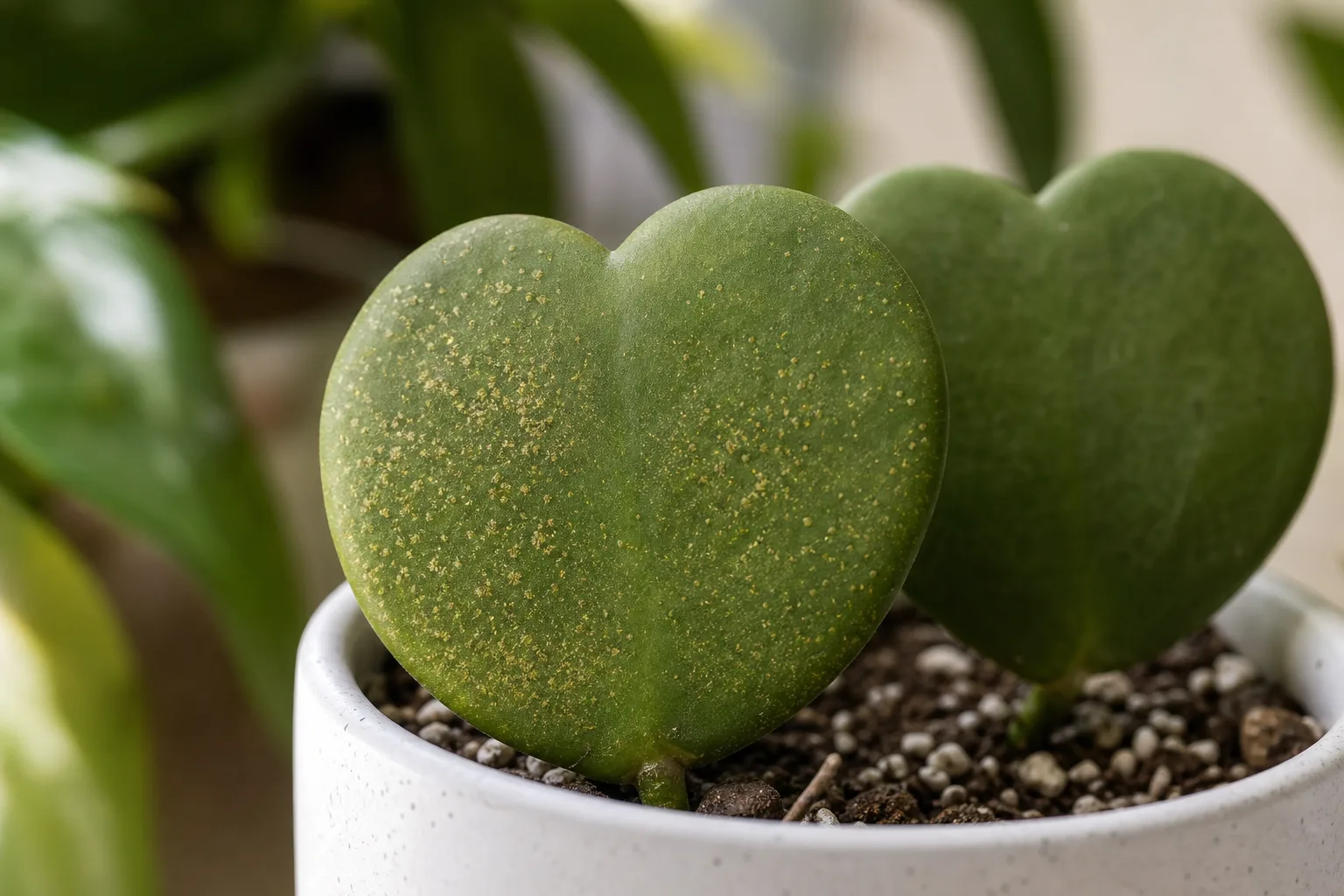
Spider mites on Hoya kerrii show as fine yellow stippling and delicate webbing on thick waxy heart leaves-often after winter heating drops humidity below 30%. First step: move the plant away from neighbors and tap a suspect leaf over white paper to confirm slow-moving specks before rinsing undersides.
Spider Mites on Hoya Kerrii: Causes, Checks & Fixes
This guide covers spider mites on Hoya Kerrii. See also the general Spider Mites guide, watering, and light pages for this plant.
Spider Mites on Hoya Kerrii: Causes, Checks & Fixes
Quick answer
Spider mites on Hoya kerrii (Hoya kerrii, Sweetheart Hoya) are microscopic sap feeders that thrive in warm, dry indoor air. On this species they show up as fine yellow or white stippling across thick waxy heart-shaped leaves and delicate webbing tucked at the base of opposite leaf pairs on vining stems-not as the even margin crisping you see when winter heating pulls humidity below 30%.
Because kerrii is a slow-growing epiphytic vine with semi-succulent leaves, early stippling is easy to miss until bronzing spreads across several hearts. Outbreaks cluster near sunny winter glass, forced-air vents, and shelves where dry air persists for weeks.
First step: isolate the plant and confirm live mites before you spray. Move it away from other houseplants, hold white paper under a suspect leaf, tap firmly, and watch for slow-moving specks. Webbing at leaf-pair bases confirms mites; dry brown edges without speckles usually mean humidity stress instead.
Spider mites vs. other Hoya kerrii problems
Not every blemish on a sweetheart hoya is a mite. Thick leaves buffer drought, so dry edges alone rarely mean spider mites.
| What you see | Likely cause | How to tell apart |
|---|---|---|
| Even tan crisping on variegated margins only | Low humidity | Firm leaf, no speckles, no webbing; hygrometer below ~30% |
| Fine yellow speckles + bronzing + silk | Spider mites | Paper-tap test shows moving dots; webbing at leaf bases |
| Silvery scraped streaks | Thrips | Slender fast insects; damage looks scraped, not sucked |
| White cottony clusters in axils | Mealybugs | Does not move when touched; no stippling pattern |
| Pear-shaped insects on new vine tips | Aphids | Tender growth only; sticky honeydew, not webbing |
| Wrinkled firm hearts, light dry pot | Underwatering | No insects; soil dry throughout |
| White crusty spots after hard water | Mineral residue | Wipes off; no movement on paper tap |
If margins crisp but the leaf face stays evenly green and waxy with no stippling, fix humidity first-do not stack miticide on a misidentified problem.
What spider mites look like on Hoya Kerrii
Spider mites are tiny arachnids-not insects-that pierce leaf cells and suck contents from undersides. You rarely see individuals without magnification; you see their damage.
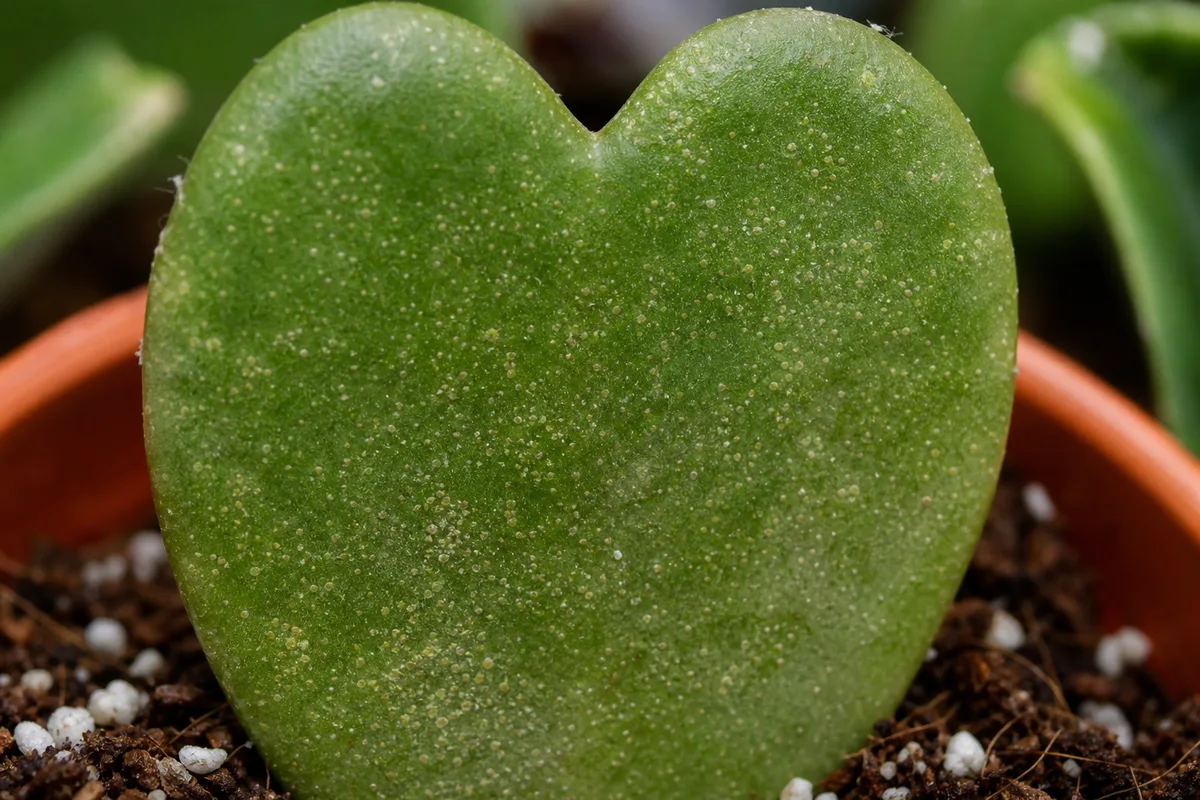
Spider Mites symptoms on Hoya Kerrii - compare with healthy tissue on the same plant.
Stippling on thick heart leaves and bronzing progression
On kerrii’s thick waxy foliage, feeding shows as thousands of pinhead yellow or pale speckles scattered across the leaf face. Each speck is a dead cell. Because the hearts are semi-succulent and slow to replace tissue, stippling can sit quietly for weeks before you notice bronzing spreading from heavy clusters.
Unlike thin-leaved houseplants where mite damage looks obvious quickly, kerrii’s stored leaf water keeps tissue firm while undersides accumulate mites. By the time the top surface bronzes, populations are often established on three or four leaf pairs. Heavily stippled tissue does not re-green-judge recovery by clean new hearts emerging after treatment, not old leaf color.
Webbing at leaf-pair bases on vining stems
On trailing specimens, mites hide where opposite hearts meet the wiry stem. Look for fine silk threads stretching between leaf bases, along petioles, and sometimes bridging to neighboring leaves. Webbing distinguishes mites from thrips or hard-water spots-only mites spin silk on houseplant foliage.
Lift the vine gently and inspect from below. Top-down glances miss most colonies on this plant.
Single-leaf gift plant vs. vining specimen
NParks notes kerrii is commonly sold as a single leaf. A lone rooted heart offers one primary surface and transpires slowly, so mites appear less often but can still colonize the underside if the pot sits in a dry microclimate above a heater. There is no vine to inspect-check the entire leaf back, the petiole, and any stem tissue below the soil line.
A vining kerrii with multiple leaf pairs gives mites more territory and more hiding spots at each axil. Slow internode growth means damage accumulates on the same hearts for months. Expect to inspect every leaf pair on the trailing section, not just the oldest souvenir hearts at the base.
Why Hoya Kerrii gets spider mites
Mites favor warm, dry conditions on houseplants stressed by low humidity and heat. Kerrii is not immune just because its leaves store water-the atmospheric dryness still accelerates mite reproduction while the plant cannot outgrow damage quickly.
Winter heating, sunny glass, and dry air below ~30% RH
The classic indoor trigger is a kerrii on a south- or west-facing windowsill through heating season: bright warmth by day, forced-air dryness at night. Our Hoya kerrii overview recommends 40–60% relative humidity for healthy foliage; when room air drops toward 20–30% for weeks, mite pressure rises while variegated forms may show margin crisping without any pests.
Drafts from AC in summer cause the same pattern-hot dry air strips moisture from waxy surfaces within hours even when you water correctly.
Epiphytic vines stressed by low humidity despite drought-tolerant leaves
RHS describes hoyas as epiphytes with semi-succulent foliage that tolerates intermittent dry periods. That leaf thickness helps kerrii survive missed waterings-it does not prevent mites when the air stays hostile. Stressed plants in poor light may show damage slower, but mites still reproduce faster in dry warmth regardless of soil moisture.
Correct watering dry-down supports recovery after treatment; soggy bark-heavy mix from panic-overwatering on Hoya Kerrii during an infestation adds root stress without drowning mites on leaf surfaces.
How to confirm the cause
Work through these checks in order:
- Paper-tap test - Hold white paper under a stippled leaf and tap the top surface firmly. Slow-moving specks confirm mites. Static dust does not walk.
- Webbing search - Examine leaf-pair bases and petioles on vining stems with a hand lens or phone macro. Fine silk confirms mites; absent webbing with margin-only browning points to humidity.
- Pattern on the leaf - Scattered speckles across the face suggest mites. Even banding on variegated edges only suggests dry air, not sap feeders.
- Moisture and pot weight - Firm hearts with normal soil moisture and a heavy-feeling pot are not underwatering. Wrinkled hearts on bone-dry soil need the underwatering guide instead.
- Location in the room - Plants nearest heaters, registers, or leaky winter windows fail first. Compare with a kerrii farther from the dry zone.
- Neighbor plants - Mites walk between pots on a shelf. Check other hoyas and any thin-leaved plants sharing the same hot dry microclimate.
If you find no movement and no webbing after two inspection passes, reconsider whether the damage is low humidity, salt buildup, or old mechanical scuffing on thick waxy tissue.
First fix for Hoya Kerrii
Move the plant away from others and rinse mite colonies off leaf undersides.
Quarantine in another room if possible-mites disperse on drafts and clothing. Then:
- Carry the pot to a sink or shower.
- Use lukewarm water with moderate pressure on leaf undersides and stems, especially leaf-pair axils where webbing hides.
- Tilt the pot so water runs through chunky mix and exits the drain hole. Kerrii is an epiphyte intolerant of waterlogging-do not leave the crown sitting in runoff for hours.
- Shake excess water from thick waxy hearts or pat dry with a clean cloth. Let foliage dry in Hoya Kerrii light guide the same day; wet waxy leaves in a dark corner invite fungal spotting.
- Inspect again after the rinse. If specks or webbing remain, apply horticultural oil or insecticidal soap labeled for mites next-not before confirmation.
Do not repot, prune heavily, or fertilize on day one. Do not use insecticides labeled only for insects; mites need oils, soaps, or labeled miticides.
Treatment cadence and when to escalate
Contact sprays kill only what they touch; eggs hatch on a staggered schedule. Plan three treatment cycles at five- to seven-day intervals:
- Day 1: Rinse undersides thoroughly, let dry, then apply oil or soap to all leaf surfaces including stems-follow label dilution for actively growing foliage.
- Days 5–7, 10–14, 15–21: Repeat rinse plus spray even if damage looks unchanged. Mississippi State Extension recommends two to three foliar treatments at five-day intervals for spider mites on houseplants.
- Apply in indirect light, not direct sun on wet oil-coated succulent leaves. Test one heart first if the plant was drought-stressed.
Escalate if webbing returns on new growth after three full cycles, multiple plants on the shelf show bronzing, or a young vining cutting loses every leaf pair despite correct repeats. Predatory mites labeled for indoor use are an option for enclosed grow setups; discard severely webbed single-leaf gifts with no vine if the petiole base softens-salvage effort rarely beats protecting the collection.
Pet-safe handling during treatment
The ASPCA lists sweetheart hoya as non-toxic to cats and dogs. That does not make horticultural oil or soap safe to ingest. Keep treated plants out of reach until sprays dry, ventilate the room during application, and wipe overspray from floors where pets walk. Large leaf chewing can still cause mild stomach upset from fiber bulk-contact a veterinarian if a pet shows persistent distress after eating treated foliage.
Recovery timeline
Expect stippling spread to stop within one to two weeks once rinse-and-spray cycles begin on schedule. Webbing on new growth should disappear by the third cycle if humidity improves simultaneously.
Signs recovery is working:
- No fresh speckles on newly inspected undersides
- Clean heart-shaped leaves emerging from vine tips after old damage
- Fewer moving specks on repeat paper-tap tests
- Webbing absent at leaf-pair bases for two consecutive weeks
Signs the problem is worsening:
- Bronzing spreading to hearts that were clean last week
- Webbing bridging between pots on the same shelf
- New vine tips collapsing or failing to open despite treatment
- Mite speckles appearing on a plant you already treated twice
Old stippled hearts stay cosmetically marked-that is normal. Slow kerrii growth means new clean leaves may take several weeks to appear; patience matches the species.
What not to do
- Spray miticide before confirming - Margin crisping without speckles is often humidity; oils on misidentified problems stress waxy leaves for no gain.
- One-and-done treatment - A single rinse misses eggs that hatch within days.
- Soak the crown repeatedly - Full pot submersion or leaving bark-heavy mix soggy after daily rinses risks crown rot on epiphytic kerrii. Rinse foliage, not the root zone, unless mix drainage fails.
- Leave waxy hearts wet overnight in low light - Unlike pubescent fuzzy-leaved plants, kerrii’s issue is prolonged wetness on thick waxy surfaces and stagnant air-not water-spot marks from misting. Dry same-day after rinsing.
- Apply oil in direct hot sun - Leaf burn on semi-succulent hoya foliage is common; treat in shade and let dry before returning to a bright windowsill.
- Use dish detergent - Products not labeled for plants can strip leaf wax permanently.
- Confuse variegated edge crisping with mites - Cream margins browning evenly below ~30% RH without stippling needs a humidifier, not miticide.
- Return from quarantine too soon - Wait until two clean weekly inspections show no movement and no fresh webbing.
How to prevent spider mites next time
- Target 40–60% RH with a small humidifier in the plant’s room rather than misting waxy leaves-the moisture boost from misting lasts minutes and wet foliage in stagnant air can invite spotting. See low humidity on Hoya kerrii for setup detail.
- Move pots off radiator ledges and away from forced-air vents; dry microclimates beat room-average hygrometer readings.
- Inspect leaf undersides weekly during heating season-lift wiry stems and check leaf-pair axils where webbing starts.
- Quarantine new plants two weeks before shelf placement; mites hitchhike on nursery stock.
- Keep baseline care steady - Bright indirect light and proper dry-down watering help kerrii produce firm tissue that tolerates occasional dry air without collapsing into a full outbreak.
- Isolate at first speckle before mites walk to mealybugs’ favorite hoya axils on neighboring pots.
When to worry
Spider mites alone rarely kill a mature vining kerrii with healthy roots if you catch them during the first bronzing wave. Worry when:
- Webbing enmeshes most of a long trailing vine and three spray cycles did not reduce counts
- Multiple hoyas on one shelf share active colonies and heating-season dryness continues
- A single-leaf Valentine develops soft mush at the petiole base after repeated soaking rinses
- New growth stops entirely for a month while stippling spreads on every heart
Discarding one severely webbed gift heart to protect a collection of vining specimens is reasonable. A established trailing kerrii with localized stippling on the oldest leaves almost always responds to persistent contact treatment plus humidity correction.
Conclusion
Spider mites on Hoya kerrii are a dry-air leaf pest on thick waxy hearts-not a mystery plague and not the same as winter margin crisping on variegated forms. Isolate, confirm with a paper tap and webbing check at leaf-pair bases, rinse undersides without drowning the epiphytic crown, then repeat horticultural oil or insecticidal soap every five to seven days for three cycles while you raise humidity toward 40–60%. Judge success by clean new hearts on slow vining growth, not by whether old stippled tissue reverts to perfect green-and inspect undersides weekly through heating season so the next outbreak never spreads across the whole shelf.
When to use this page vs other Hoya Kerrii guides
- Hoya Kerrii watering guide - Use for routine moisture checks before assuming spider mites is the main issue.
- Hoya Kerrii problems hub - Browse all 16 common issues on this species.
- Low Humidity on Hoya Kerrii - Different entry point when symptoms overlap with spider mites.
- Slow Growth on Hoya Kerrii - Different entry point when symptoms overlap with spider mites.