Low Humidity on Hoya Kerrii: Causes, Checks & Fixes
Quick answer
Hoya kerrii tolerates average indoor humidity better than fussy tropicals, but targets 40–60% RH for best foliage. Forced-air heating below 30% can crisp variegated margins and invite spider mites while thick leaves stay firm. First step: place a hygrometer near the plant and move it away from radiators and AC vents before adding a humidifier or pebble tray.
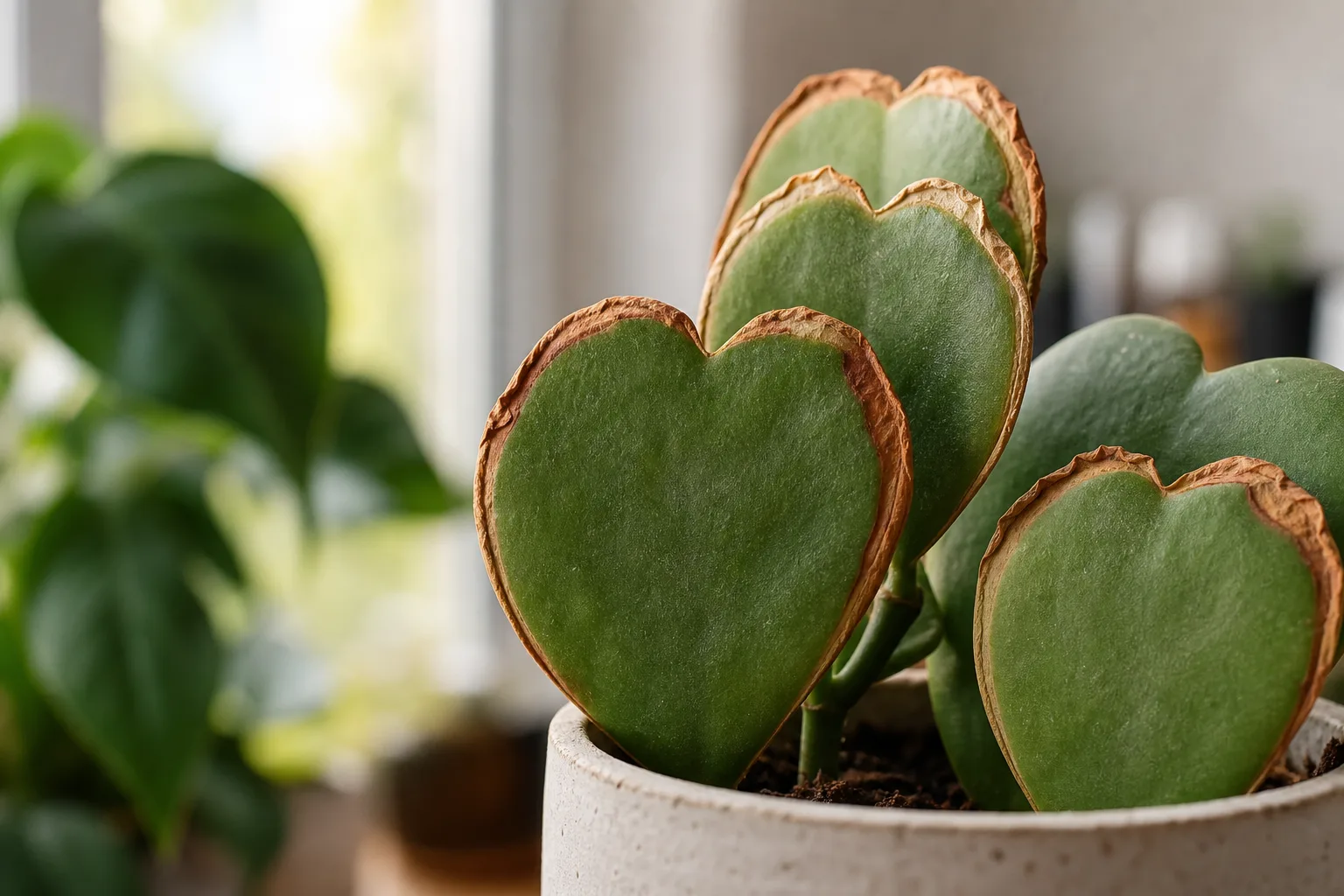
Low Humidity on Hoya Kerrii: Causes, Checks & Fixes
This guide covers low humidity on Hoya Kerrii. See also the general Low Humidity guide, watering, and light pages for this plant.
Low Humidity on Hoya Kerrii: Causes, Checks & Fixes
Quick answer
Hoya kerrii (Hoya kerrii, Sweetheart Hoya) is a Southeast Asian epiphytic vine with semi-succulent, heart-shaped leaves that store water efficiently. That biology means kerrii tolerates average home humidity better than calatheas or ferns - low humidity alone rarely causes dramatic wilting when watering and light are correct. It still matters: aim for 40–60% relative humidity for best foliage, and expect trouble when forced-air heating drops room air below roughly 30%.
First step: place a hygrometer within 12 inches of the leaves and move the pot away from radiators, forced-air vents, and hot windowsills. You need a real reading at plant level before buying a humidifier or changing your watering rhythm. If RH is low but soil is moist and leaves stay firm with only margin crisping, humidity is the problem. If the pot is light and hearts feel thin or wrinkled, fix watering first - see underwatering on Hoya kerrii. Full species context: Hoya kerrii overview.
What humidity Hoya kerrii needs indoors
Kerrii is not a desert succulent and not a steam-loving fern. NC State Extension recommends warm, humid locations between 65 and 80°F for this species - a range that matches typical heated homes when ambient moisture is reasonable.
Target range: 40–60% RH supports healthy waxy foliage and reduces pest pressure. Many vines perform acceptably at 35–45% in bright, stable rooms with correct dry-down watering. Problems cluster when winter heating pulls RH toward 20–30% for weeks - the same conditions that produce brown leaf tips and crisp margins on houseplants across many species.
Why kerrii is less dramatic than calatheas: Thick leaves act as a water buffer. Hoyas developed semi-succulent foliage as epiphytes that experience intermittent dry periods between tropical rains. Indoor dry air still stresses the plant - especially at leaf margins where vascular supply tapers - but the symptom pattern is usually slow edge crisping, not overnight collapse.
When humidity matters most: Variegated Hoya kerrii var. albo-marginata with thin cream margins, plants on desks beside heating vents, and trailing vines with many leaf pairs transpiring in a dry room. Single-leaf gift hearts transpire slowly and show humidity stress late.
How low humidity shows up on thick heart-shaped leaves
Dry air damage on kerrii is subtle compared with thin-leaved tropicals. The thick hearts stay firm while edges fail first.
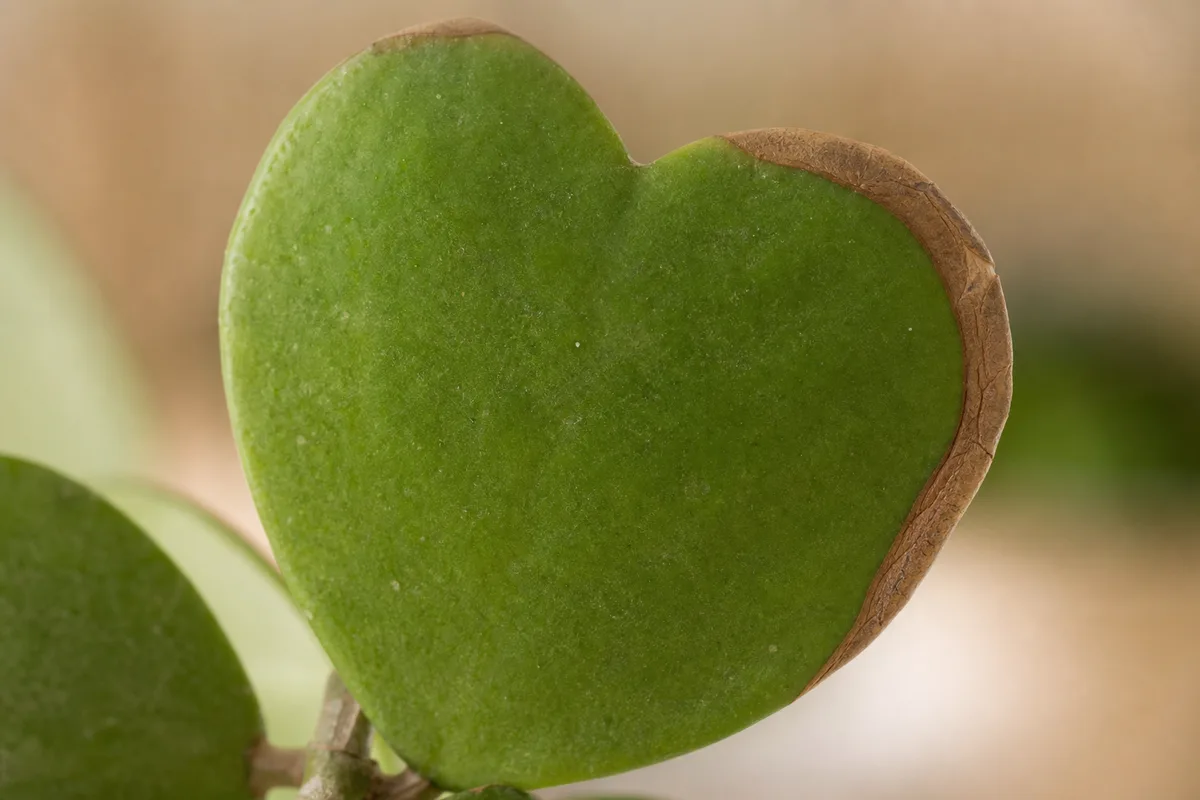
Low Humidity symptoms on Hoya Kerrii - compare with healthy tissue on the same plant.
Margin crisping (most common humidity signal):
- Uniform tan-to-brown band along outer leaf margins, sometimes only on the white or cream edges of variegated forms while the green centre stays plump
- Papery, dry texture on an otherwise firm, waxy leaf
- Often worse on leaves nearest radiators, forced-air registers, sunny winter glass, or frequently opened exterior doors
- Interior leaves may stay pristine while perimeter hearts crisp
No whole-leaf wrinkling when soil is moist:
- Unlike drought, humidity crisping usually appears with normal soil moisture and firm leaf texture
- If hearts feel soft or puckered with a light, dry pot, read underwatering before raising RH
Dull foliage without pests:
- Leaves may lose some gloss in chronically dry air
- New growth can emerge slightly smaller through a long heating season
Spider mites as a secondary dry-air problem:
- Spider mites thrive in warm, dry indoor conditions on houseplants stressed by low humidity and heat
- Kerrii near sunny glass or heater drafts loses leaf moisture faster, which favors mite colonies on undersides
- Humidity stress alone shows crispy margins without stippling or webbing; mites add fine yellow speckles and delicate silk - see spider mites on Hoya kerrii
For localized tip necrosis only - without whole-plant dryness - see brown tips on Hoya kerrii.
Why Hoya kerrii still suffers in dry heated rooms
Sweetheart hoya is marketed as easy and drought-tolerant, which makes winter dryness easy to underestimate.
Epiphyte biology, not cactus logic. NParks describes kerrii as an epiphyte intolerant of waterlogging that needs little water in pots - but its native Indo-China to Malesia range still carries humid forest air between rains. Dry indoor heating removes that atmospheric moisture even when the bark-heavy mix dries correctly between drinks.
Thick leaves buffer short dry spells, not a whole heating season. Stored leaf water masks low RH for weeks. By the time margins crisp, ambient air may have been hostile for months - especially on variegated tissue with less chlorophyll at the edge.
Microclimates beat room averages. A plant in a 45% room can sit in a 25% microclimate directly above a floor register or beside a leaky winter window. Moving air strips moisture from waxy surfaces within hours.
Winter heating outruns summer AC. Central furnaces replace humid outdoor air with heated, low-RH indoor air from late fall through early spring. The same watering rhythm that worked in September can leave margins crisp by January even when you water correctly - because the stress is atmospheric, not root-zone. The watering guide covers how humidity affects leaf health separately from dry-down timing.
How to confirm low humidity is the cause
Work through these checks in order. One hygrometer reading at leaf height beats guessing from symptom photos.
- Hygrometer at canopy height - Place a digital hygrometer within 12 inches of the top leaves, not on the opposite wall. Readings below 35–40% in winter with crisp margins strongly support low humidity when watering is stable.
- Draft and heat-source map - Note distance to radiators, forced-air vents, fireplaces, and exterior doors. Kerrii margins often fail on the side facing dry moving air.
- Soil moisture cross-check - Push a finger or skewer into the lower third of the mix. Evenly dry-down soil with firm hearts and only margin burn confirms air humidity as the primary stressor. Dry, light soil with wrinkled leaves means address water before humidity hardware.
- Which tissue failed - Even margin crisping on variegated hearts with firm green centres fits humidity. Soft, thin, or puckered leaves with dry soil fit drought. Stippling plus webbing fits mites even if RH is low.
- Pest scan - Magnify leaf undersides and stem joints. Moving specks mean treat mites while you raise humidity.
- Salt and feed history - Brown tips that worsened after heavy fertilizer with white soil crust point to salt burn, not dry air alone. Flush salts before assuming humidity is the only issue.
You have confirmed low humidity when RH near the leaves stays below 40%, soil moisture follows kerrii’s normal dry-down rhythm, stems are firm, and browning concentrates on margins without pest signs or drought texture.
Lookalike comparison
| Pattern | Likely cause | First direction |
|---|---|---|
| Crispy margins on firm hearts; normal soil moisture | Low humidity | Hygrometer + humidifier or pebble tray |
| Wrinkled or soft leaves; light pot; dry mix | Underwatering | Thorough soak; see underwatering |
| Yellow mushy leaves; heavy wet pot | Overwatering | Stop watering; check overwatering |
| Stippling + webbing on undersides | Spider mites | Rinse + treat; raise RH - spider mites |
| Tips worsen after heavy feed; white soil crust | Salt burn | Flush; see brown tips |
| Brown only on window-facing hearts | Sun scorch | Pull back from harsh direct sun |
Single-leaf gift plant vs. vining plant
Retail single heart-leaf pots behave differently from established vines - and that changes how you read humidity symptoms.
Single-leaf specimens root one thick leaf, often without a stem node. The leaf stores water like a small reservoir and transpires slowly. Humidity stress shows up as late margin crisping or base browning after months in dry air - not the gradual perimeter pattern you see on a multi-leaf vine. A humidifier still helps variegated gift hearts with thin white margins, but do not expect extra RH to turn a nodeless leaf into a trailer.
Vining plants with multiple leaf pairs lose moisture across more surface area. They respond faster to dry winter air and benefit more from room-level humidification. Trailing stems near heating ducts or sunny glass crisp first.
Practical takeaway: Match hardware to the specimen. A pebble tray or grouped plants may suffice for one desk heart; a trailing kerrii in a dry living room usually needs a room humidifier through heating season.
First fixes for Hoya kerrii
After you have a hygrometer reading and removed obvious heat drafts, apply one humidity upgrade at a time so you can judge whether new hearts open with clean margins over the next two to four weeks.
Move away from heaters, AC vents, and hot glass
Relocate the pot before you buy hardware. Pull the plant at least 3–4 feet from forced-air registers and radiators. In winter, move it inward from single-pane glass that radiates cold at night and bakes leaves by day. Fixing placement alone sometimes stops margin spread within one to two weeks when RH was borderline.
Do not shuffle the pot daily while troubleshooting - kerrii dislikes repeated moves even though it is not as dramatic as a weeping fig.
Humidifier placement (most reliable fix)
A small ultrasonic or evaporative humidifier in the same room, run several hours daily, is the best sustained fix when canopy RH stays below 40%. Aim mist into room air, not directly onto waxy foliage. Target 40–60% RH at leaf height; creeping above 65% in a closed room risks mold on walls and condensation on cold windows.
For a trailing vine, place the humidifier where rising moisture reaches the full canopy - not hidden under a desk with only the pot on top.
Pebble trays and plant grouping
Pebble tray: Fill a wide tray with rinsed gravel, add water to just below the stone surface, and set the pot on top - never in standing water. Kerrii roots are intolerant of waterlogging. Refill every few days as water evaporates. Expect a modest localized bump, not whole-room correction.
Plant grouping: Placing several houseplants within 18 inches creates a shared transpiration zone that raises humidity slightly. Useful as a supplement, not a sole fix for a dry living room with a large trailing vine.
Misting: optional limits on waxy heart leaves
Occasional misting raises RH for minutes, not through a heating season. Wet leaf surfaces in stagnant air can invite fungal spotting on thick waxy foliage - the same reason the watering guide treats misting as a poor watering substitute. If you mist, do it in the morning with good airflow and never as your only humidity strategy.
Recovery timeline
Margin and tip damage is permanent. Brown or crispy tissue on old hearts does not re-green. Judge recovery by new leaves opening with clean edges and stopped spread to previously healthy foliage.
- After draft removal: Perimeter crisping often stabilizes within one to two weeks if placement was the main issue and RH was borderline.
- After humidifier or pebble-tray use: Expect cleaner new growth within two to four weeks once leaf-level RH holds near 40–60%.
- If spider mites appeared in dry heat: Stippling may stop spreading within one to two weeks of treatment plus humidity correction, but heavily damaged leaves rarely look pristine again.
If new margins stay clean for three weeks and leaf texture stays firm, consider the humidity problem controlled. Continue monitoring through the rest of heating season.
What not to do
- Do not increase watering to fix dry-air brown margins. Roots may already be adequately moist; extra water on a heavy pot worsens root stress on this drought-sensitive species.
- Do not assume misting replaces a humidifier in a dry winter room with a trailing vine.
- Do not fertilize a stressed kerrii before RH and placement stabilize. Resume light feeding only when new growth emerges firm.
- Do not stack Hoya Kerrii repotting guide, heavy pruning, and pesticide on the same day as a humidity overhaul. Make one care correction at a time.
- Do not treat kerrii like a cactus that ignores humidity entirely - dry heated air still drives margin crisping and mites even when leaves store water well.
How to prevent dry-air damage next winter
- Run a hygrometer through heating season and act when leaf-level RH drops below 40%.
- Start humidifier or pebble-tray habits in late fall before variegated margins crisp, not after half the plant shows burn.
- Keep permanent placement away from vents and draft paths once the plant acclimates - see overview humidity guidance for the full environmental picture.
- Inspect leaf undersides weekly in dry winter air so spider mites are caught before webbing spreads.
- Match watering to dry-down rhythm, not calendar splashes - humidity fixes air stress; it does not replace correct soaking when the mix is actually dry.
Stable Hoya Kerrii light guide, infrequent deep watering, and sustained ambient humidity let kerrii hold firm waxy hearts through winter without the margin burn many growers blame on mysterious “leaf disease.”
Conclusion
Low humidity on Hoya kerrii is a real but secondary concern - not a mystery disease and not usually the first problem on a healthy vine. Thick heart-shaped leaves buffer short dry spells, yet winter air below 30% still crisps variegated margins and invites spider mites while the plant looks otherwise fine. Measure RH at leaf height, move away from vents and hot glass, then add a humidifier for sustained moisture rather than relying on misting. Recovery appears on new growth, not repaired old edges - and firm leaves with dry soil mean underwatering, not humidity, deserves the first fix.
When to use this page vs other Hoya Kerrii guides
- Hoya Kerrii watering guide - Use for routine moisture checks before assuming low humidity is the main issue.
- Hoya Kerrii problems hub - Browse all 16 common issues on this species.
- Brown Tips on Hoya Kerrii - Different entry point when symptoms overlap with low humidity.