Brown Tips on Hoya Kerrii: Causes, Checks & Fixes
Quick answer
Brown tips on Hoya Kerrii usually mean sun scorch on unacclimated thick leaves, winter low-humidity edge crisping, fertilizer salt burn, or drought crisping-not a mystery disease. First step: note which leaf faces the window and lift the pot before you mist, fertilize, or water.
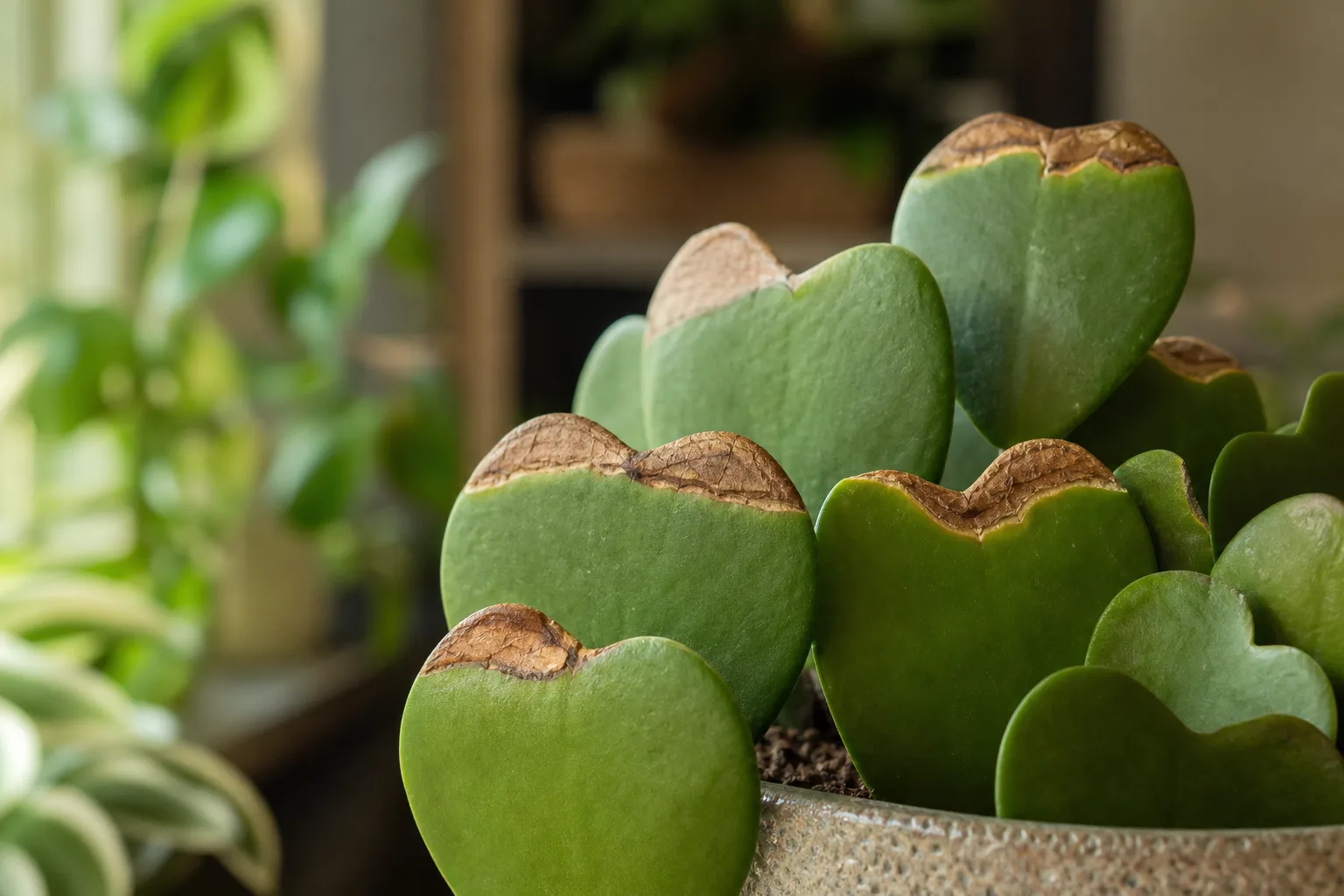
Brown Tips on Hoya Kerrii: Causes, Checks & Fixes
This guide covers brown tips on Hoya Kerrii. See also the general Brown Tips guide, watering, and light pages for this plant.
Brown Tips on Hoya Kerrii: Causes, Checks & Fixes
Quick answer
Brown tips on Hoya Kerrii (Hoya kerrii, Sweetheart Hoya) are almost always environmental edge damage on thick, water-storing heart leaves-not a separate disease. The usual causes are direct sun scorch, dry winter air, fertilizer salt buildup, drought crisping, or spider mite stippling at the margins. Oldest lower leaves on a long vine can also brown naturally as they age.
First step: check light direction and pot weight before you change anything else. Stand at the plant and note which hearts face the brightest window. Lift the pot-light and dry means drought may be involved; heavy and cool means hold water. Only after that split should you adjust humidity, flush salts, or soak.
Hoya kerrii is an epiphytic vine with fleshy, heart-shaped leaves sold as single-leaf gifts or full vines. Those leaves store water like succulents but still scorch when light is too harsh or crisp when indoor air dries out in winter.
What brown tips look like on Hoya Kerrii
Brown tips on this species read differently than on thin-leaf houseplants because each heart is thick, waxy, and slow to show stress.
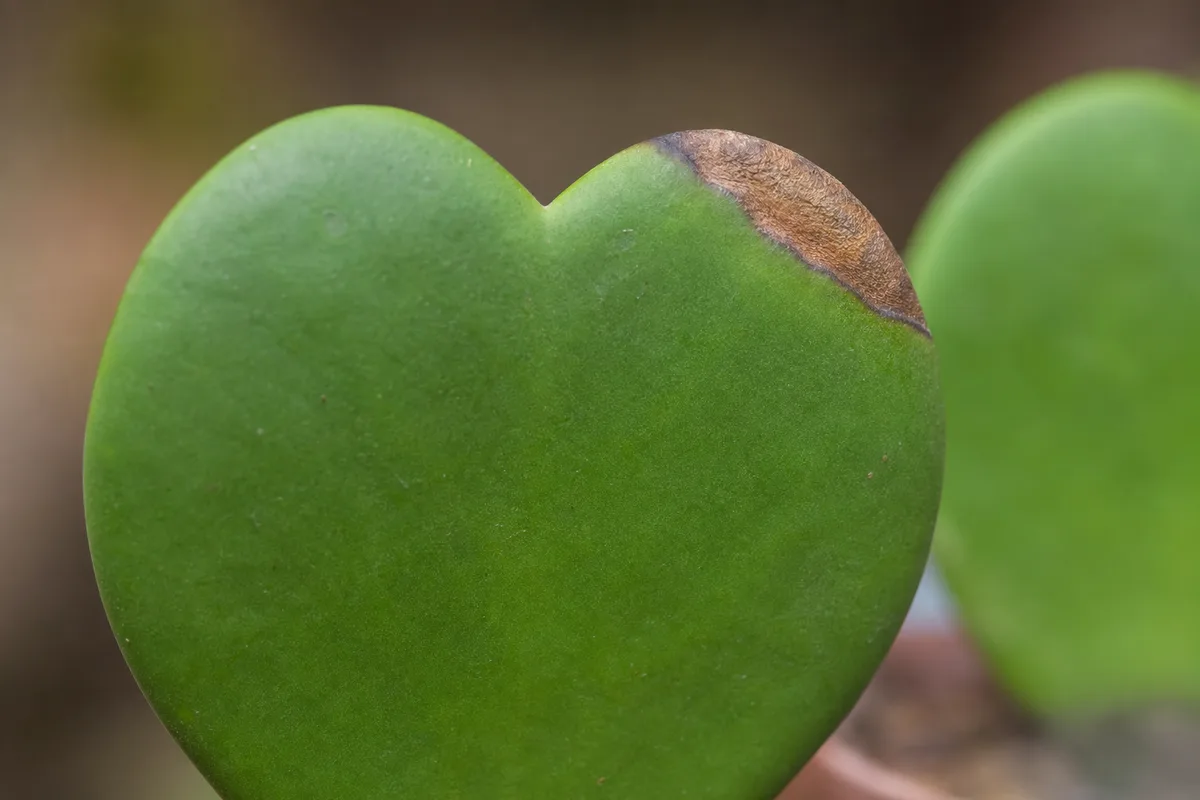
Brown Tips symptoms on Hoya Kerrii - compare with healthy tissue on the same plant.
Sun scorch - Bleached, tan, or papery patches on the side facing the window, often with brown crispy edges that feel dry and brittle. Common after moving a kerrii suddenly onto a south- or west-facing sill without filtering. NC Extension lists dappled sunlight as the cultural ideal; harsh midday rays on unacclimated foliage exceed that.
Low-humidity edge crisping - Uniform browning along outer margins, sometimes only on the cream edges of Hoya kerrii var. albo-marginata while the green centre stays firm. Worsens when heating runs and room humidity drops below roughly 30–40%. Low humidity is a leading cause of brown leaf tips indoors, especially in winter.
Fertilizer salt burn - Brown or tan tip margins on several leaves, often with white crust on the soil surface or pot rim after months of full-strength feeding. Excess salts from over-fertilizing can cause brown leaf tips and edges.
Drought crisping - Tips and sometimes full margins turn brown while leaves feel thin or slightly soft and the pot is very light with dry mix deep in the container. NC Extension notes that thinning, brown, or wrinkled leaves can mean the plant dried too much between waterings.
Spider mite damage - Fine stippling with occasional webbing at leaf bases; margins may bronze before the centre fails. NC Extension lists spider mites among insects affecting hoya kerrii. Mites thrive in dry air-the same winter conditions that crisp variegated edges.
Normal aging - One or two oldest hearts at the base of a vining plant slowly tan at the tip while new pairs stay plump. No spread, no soft stem, no wet soil.
Why Hoya Kerrii gets brown tips
Sweetheart hoya evolved as a climbing epiphyte in humid Southeast Asian forests with filtered light-not on a blazing windowsill above a heating vent. Indoor life stacks stresses that show up on leaf edges first because margins lose water fastest.
Sudden light increases. Thick leaves formed in moderate light burn when thrust into direct afternoon sun. The plant cannot relocate; you must filter or move it back.
Winter dryness. NC Extension recommends warm, humid locations between 65 and 80°F for kerrii. Central heating drops humidity for months. Variegated forms with thin white margins desiccate before solid green hearts.
Salt accumulation. Kerrii is not a heavy feeder. Regular full-strength doses on a small root-bound pot concentrate salts. UC IPM notes brown leaf tips or margins often result from overfertilization or salt buildup.
Extended drought. The species tolerates dry spells, but repeated bone-dry cycles in bright summer rooms deplete leaf reserves. Tips crisp after the plant has been thirsty longer than the thick leaves suggested.
Pest pressure in dry corners. Spider mites attack leaf undersides when humidity is low and airflow is stagnant-common on gift hearts sitting on desks away from kitchens or bathrooms.
Brown tips vs. yellow leaves vs. full leaf browning
| Pattern | What you usually see | Likely cause | First direction | Urgency |
|---|---|---|---|---|
| Crispy brown edges on window-facing leaves | Bleached patches, dry texture | Sun scorch | Filter light, move back | Routine |
| Brown margins on variegated hearts only | Green centre still firm | Low humidity | Humidifier or grouping; not more water | Routine |
| Brown tips on many leaves + white soil crust | No scorch pattern | Salt burn | Flush, reduce feed | Routine |
| Brown tips + soft thin leaves + light pot | Dry mix at depth | Drought | One thorough soak | Routine |
| Stippling + webbing at leaf base | Mites visible with lens | Spider mites | Rinse, raise humidity, treat | Prompt (same day) |
| Whole leaf yellow then brown, wet soil | Mushy petiole possible | Overwatering / rot | Stop water; inspect roots | Prompt (same day) |
| One old heart at vine base only | New growth clean | Natural senescence | No action if stable | Observe |
Yellow leaves on kerrii more often trace to overwatering and root problems than to tip burn alone. If tips brown while lower leaves yellow and soil stays damp, read overwatering on Hoya kerrii before misting for humidity.
How to confirm the cause
Work through this checklist in order. Each step narrows the list before you stack fixes.
- Light direction - Which leaves show damage? Window-facing only strongly suggests scorch. All margins evenly suggests humidity or salts.
- Recent moves - Did the pot shift closer to glass in the last two weeks? Scorch lags a few days behind exposure.
- Pot weight and soil moisture - Lift the container. Very light with crumbly dry mix several centimetres down supports drought. Heavy cool soil argues against underwatering.
- Humidity and season - Is heat running? Are variegated margins crisp while green centres stay firm? Check low humidity on Hoya kerrii if winter air is the suspect.
- Fertilizer history - White crust, recent full-strength feeds, or winter feeding when growth paused points to salts. See the fertilizer guide for safe rates.
- Leaf texture - Firm hearts with only edge burn differ from thin soft leaves that need water per the watering guide.
- Pest scan - Magnify leaf undersides and stem joints. Webbing or moving specks mean mites, not humidity alone.
- Stem base - Soft, dark tissue at soil line with wet mix is rot urgency-not a tip-trim problem.
First fix for Hoya Kerrii
Match one correction to the most likely cause from the checklist above. Do not mist, fertilize, and repot on the same day.
If sun scorch is most likely
Move the pot back from the glass or add a sheer curtain so light is bright but filtered. Acclimate gradually over one to two weeks if you need more light for growth-never jump from a dim shelf to harsh afternoon sun. Trim fully dead crispy tissue only for appearance after the plant stabilizes.
If low humidity is most likely
Raise humidity to the 40–60% range with a humidifier, pebble tray, or grouped plants-not aggressive misting on leaves that may already have fungal spotting risk. Raising humidity is the primary fix for brown tips from dry air. Keep the plant away from heating vents.
If salt burn is most likely
Flush the pot with plain water until excess runs freely from drainage holes; repeat after the mix partially dries. Pause fertilizer for six to eight weeks. Resume at quarter- to half-strength only during active growth. Leaching removes excess salts that burn margins.
If drought is most likely
Give one thorough soak until water drains, then let the mix dry down again before the next drink-same protocol as underwatering recovery. Do not dribble daily sips.
If spider mites are confirmed
Isolate the plant, shower leaf undersides, improve humidity, and then treat both leaf surfaces with insecticidal soap. Insecticidal soaps and horticultural oils only kill mites they directly contact, so coverage under the leaf matters more than spray volume. Because soaps have little residual effect, repeat applications every four to seven days until checks with a hand lens show no live mites. If this keeps recurring, follow the full spider mites on Hoya kerrii guide.
Recovery timeline
Sun scorch - Browning stops spreading within one to two weeks after light is softened. Existing bleached tissue does not green up.
Humidity crisping - New growth shows clean margins within two to four weeks once humidity stabilizes. Old brown edges remain cosmetic.
Salt burn - Tips on new leaves emerge clean four to eight weeks after flushing and reduced feeding, depending on how concentrated salts were.
Drought - Leaf firmness returns in two to five days after a proper soak; brown tips on old leaves stay trimmed or tolerated.
Mites - Stippling halts when pest counts drop; expect two to three weekly treatments for full clearance in dry rooms.
Worsening signs: browning climbs the petiole, stems soften at the base, yellow leaves multiply on wet soil, or webbing coats new growth-escalate beyond tip-burn care.
Lookalike symptoms
- Overwatering / root rot on Hoya Kerrii - Yellow or mushy whole leaves, sour wet soil, limp stems. Tips alone are uncommon as the first sign. See overwatering.
- Underwatering without tip burn - Wrinkled plump-to-soft hearts across the plant with dry soil; tips may stay green until very late. See underwatering.
- Not enough light - Pale stretched growth without crispy scorch; slow dry-down. See not enough light.
- Heat draft damage - Crisp margins on leaves beside a radiator while soil moisture is normal-fix placement, not watering.
- Single-leaf novelty decline - A rooted heart with no node browns at the base after months; no new tissue can replace lost margin. NC Extension notes single leaf cuttings without stem tissue are unlikely to grow well.
What not to do
Do not mist heavily as your first move when leaves face direct sun-fix light first; wet foliage in bright windows can worsen stress.
Do not fertilize a plant with brown tips until you rule out salt burn and confirm active growth.
Do not water more when tips browned from scorch or salts while soil is already moist-that invites rot in this epiphyte that needs good drainage.
Do not trim living green tissue hoping tips regrow-they will not.
Do not repot on day one for cosmetic tip burn unless roots are mushy or soil is completely exhausted.
Avoid cold water shocks when flushing or soaking-room-temperature water is safer for hoya kerrii.
How to prevent brown tips next time
- Place kerrii in bright, filtered indirect light per the light guide; use sheer curtains on south and west windows.
- Acclimate before increasing sun exposure each spring.
- Run a humidifier or pebble tray when indoor heating drops humidity below 40%, especially for variegated hearts.
- Feed lightly in active growth only; flush salts every few months if you feed regularly.
- Water on a dry-down rhythm-let the top portion of chunky mix dry, then soak-rather than calendar splashes.
- Inspect margins weekly in winter and after any window move.
- Review the full Hoya kerrii overview for seasonal care context.
When to worry
Treat same day if the stem base softens while soil is wet, yellowing spreads up the vine with damp mix, or mites coat new growth despite rinsing.
Cosmetic brown edges on firm leaves in a stable pot are not emergencies-identify the cause, apply one fix, and watch new growth.
Single-leaf gift plants that brown from the petiole upward after long neglect may not recover; there is no vine meristem to push replacement leaves.
Single-leaf novelty vs. vining plant
A single rooted heart without a stem node stores water in one leaf and shows tip damage late. Brown edges may be permanent cosmetic scars because no new hearts will form. Confirm whether your pot is a novelty leaf or a true vine before expecting recovery growth.
A vining kerrii with nodes judges success by new leaf pairs with clean edges. Tip burn on old hearts is tolerable once the cause is corrected.
Escalation summary
If leaves are firm and damage is limited to dry edges, treat this as a routine environmental correction and track new growth for two to four weeks. If you see webbing, moving mites, yellowing on wet soil, or stem softening, escalate the same day to pest or root-rot workflows. For single-leaf novelty hearts without nodes, permanent browning is often cosmetic end-of-life tissue, not a recoverable vining setback.
When to use this page vs other Hoya Kerrii guides
- Hoya Kerrii watering guide - Use for routine moisture checks before assuming brown tips is the main issue.
- Hoya Kerrii problems hub - Browse all 16 common issues on this species.
- Low Humidity on Hoya Kerrii - Different entry point when symptoms overlap with brown tips.
- Underwatering on Hoya Kerrii - Different entry point when symptoms overlap with brown tips.
- Overwatering on Hoya Kerrii - Different entry point when symptoms overlap with brown tips.