Not Enough Light on Hoya Kerrii: Causes, Checks & Fixes
Quick answer
Hoya Kerrii in dim light grows pale, stretches, and dries its pot slowly. First step: move the pot to your brightest filtered window and run the soft-shadow test before changing water or fertilizer.
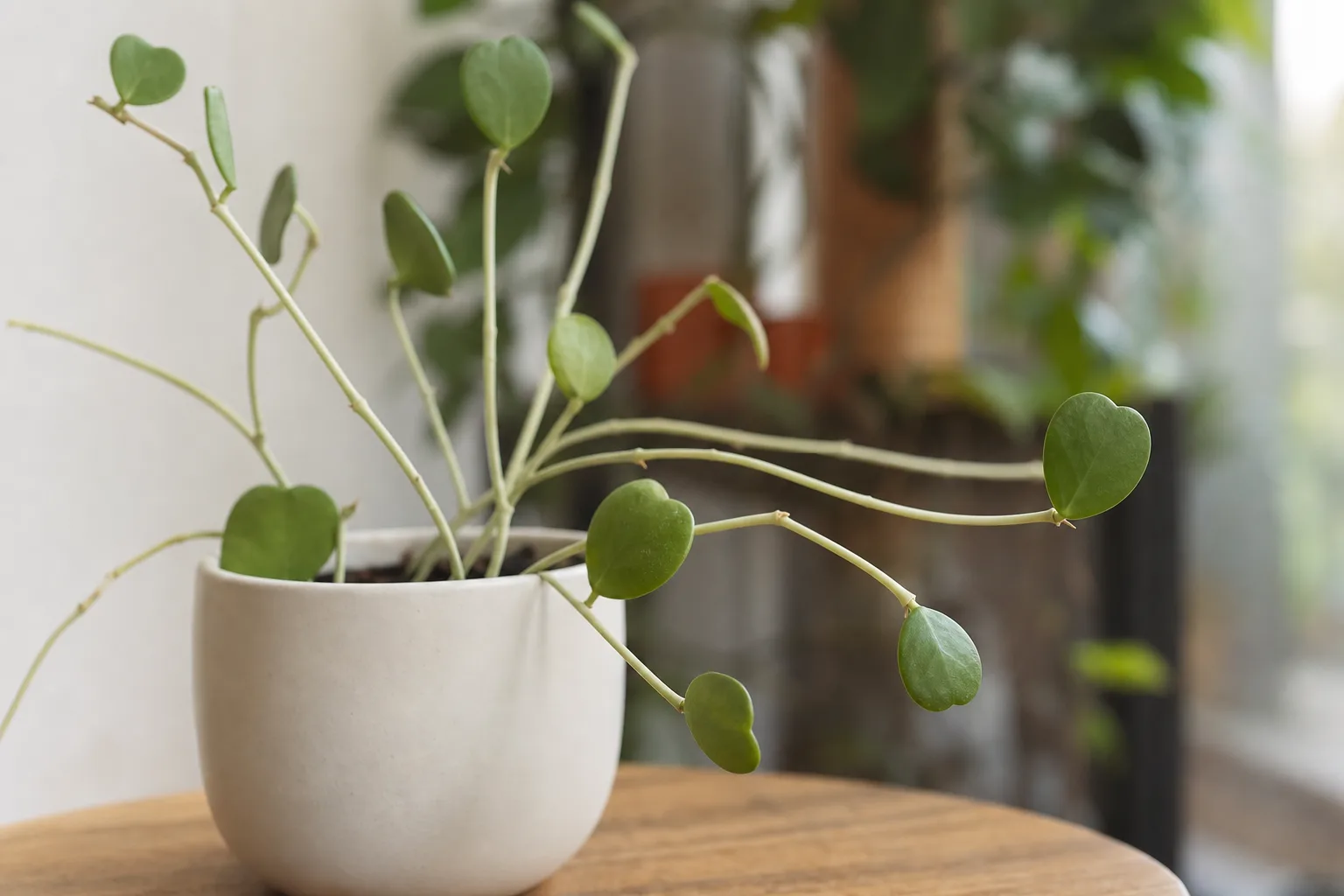
Not Enough Light on Hoya Kerrii: Causes, Checks & Fixes
This guide covers not enough light on Hoya Kerrii. See also the general Not Enough Light guide, watering, and light pages for this plant.
Not Enough Light on Hoya Kerrii: Causes, Checks & Fixes
Quick answer
Hoya Kerrii (Hoya kerrii, Sweetheart Hoya) is an epiphytic vine with thick, water-storing leaves-not a low-light foliage plant. When it sits in a dim corner, on a shelf across the room, or behind heavy curtains, photosynthesis drops and growth stalls long before the leaf looks obviously sick.
First step: move the pot to your brightest safe spot with filtered light-typically within a foot or two of an east window or a sheer-curtained south or west pane. Run the hand-shadow test at the leaf: bright indirect light casts a soft, diffuse shadow, not sharp sun lines. Do not water more, fertilize, or repot until you know whether the heart is actually receiving plant-level brightness.
What not enough light looks like on Hoya Kerrii
Low light on Hoya Kerrii overview shows up slowly because the heart-shaped leaves hold reserves. That delay tricks owners into blaming water when the real limit is photons.
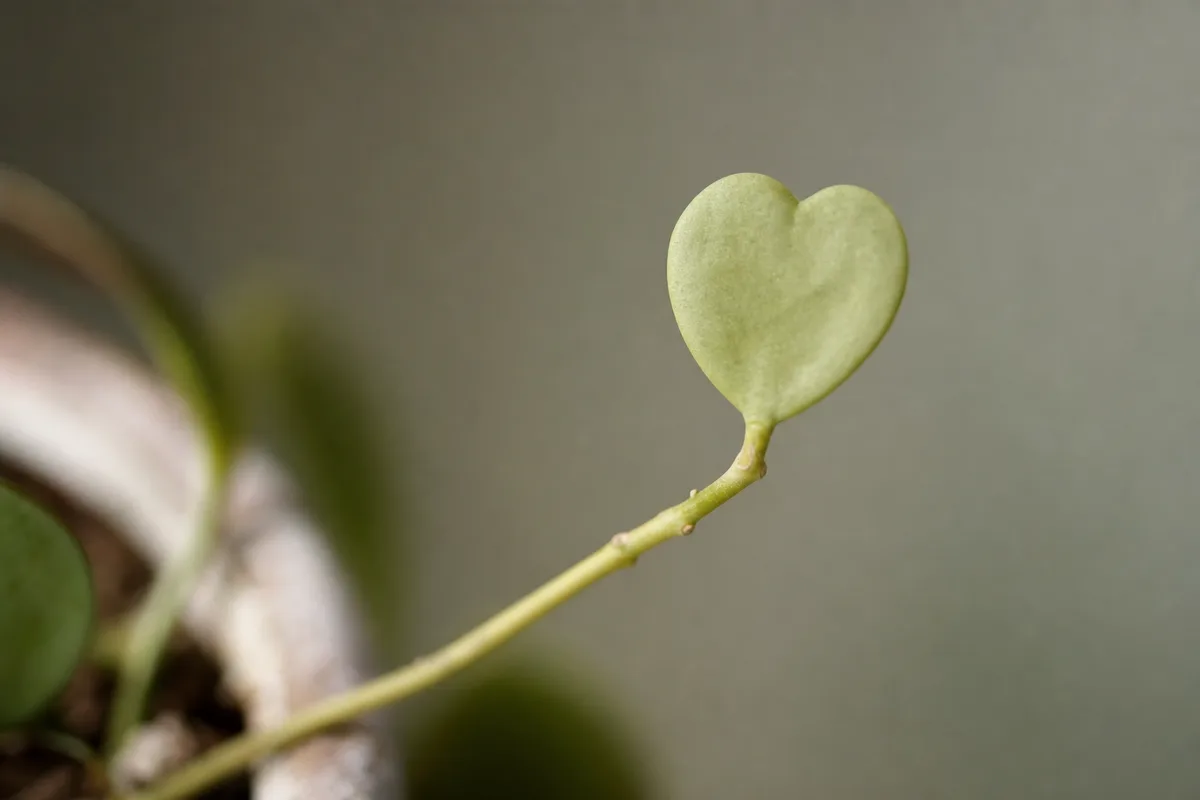
Not Enough Light symptoms on Hoya Kerrii - compare with healthy tissue on the same plant.
On stem-bearing vines, watch for:
- Pale or yellow-green leaves instead of deep waxy green
- Smaller new leaves compared with older ones on the same stem
- Long internodes-visible gaps between leaves as the vine reaches toward the window
- Lean or one-sided growth toward the brightest direction
- No peduncles or flowers on mature wood, even after years of care
- Extremely slow extension-inches per season instead of steady summer progress
On single rooted heart leaves (the common Valentine’s gift format), symptoms differ. NC State Extension notes that rooted leaf cuttings often never vine regardless of care, so “no growth” alone is not proof of low light. Instead look for progressive yellowing, softness, or wrinkling as stored reserves exhaust, or a leaf that stays dark green but never firms up after watering because metabolism is too low.
Soil behavior is an underused clue. Plants in low light use less water, so the epiphytic mix stays damp longer. If you water on a bright-window schedule in a dim office, the top half may never dry and roots sit in slow oxygen-mimicking overwatering on Hoya Kerrii while the real trigger is shade.
Why Hoya Kerrii gets too little light
This species evolved climbing rainforest trees in Southeast Asia, intercepting dappled sunlight through canopy gaps rather than living on the forest floor. NParks Singapore recommends bright but indirect sunlight with several hours daily for healthy growth and flowering on cultivated plants. Indoors, that translates to strong ambient brightness at the leaf-not a dark hallway that feels “fine” to human eyes.
Several home setups push Hoya Kerrii into chronic shade:
- Desk and shelf placement where the pot is decorative but the leaf sits more than 6 feet from glass
- North-facing windows at mid and high latitudes, which rarely deliver enough flux for vigorous hoyas without supplemental light
- Winter daylight drop in the same spot that worked in summer-owners keep watering while photosynthesis falls
- Dirty glass, sheers, or overhangs that cut usable light more than expected
- Nursery-to-home shock when a plant grown under shade house conditions lands in a slightly brighter but still marginal room
The succulent leaf texture confuses expectations. Thick tissue survives months on stored water, so the plant looks alive while starving for light. That is different from a fern that collapses quickly in shade-Hoya Kerrii masks the problem until stretch, pallor, or wet-soil rot appears.
How to confirm the cause
Work through these checks before moving to secondary fixes:
- Shadow test at the leaf - At midday, hold your hand between the leaf and the window. No visible shadow means low light for this species. Sharp, high-contrast lines mean direct sun that may need filtering instead.
- Distance and direction - East and filtered south or west within 12–24 inches (30–60 cm) of glass usually qualify as bright indirect. Across the room or deep in a north window often does not.
- New versus old tissue - Compare the newest leaf or vine tip to older growth. Smaller, paler, or more widely spaced new leaves confirm light as the limiter.
- Soil dry-down speed - Stick a finger into the top half of the mix. If it stays wet for two weeks in a cool room, pair the moisture check with light-slow drying plus stretch is a classic low-light pair.
- Single leaf versus vine - Confirm whether your plant has stem nodes. A lone heart in a tiny pot may never vine; judge light by color and firmness, not climbing speed.
- Rule out rot and drought - Soft leaf with sour soil and mushy roots points to overwatering in shade, not pure underwatering on Hoya Kerrii. A light pot with crispy, fully dry soil in a bright window is drought-do not move that plant darker.
If you move to a brighter filtered spot and new growth firms up or internodes tighten within two to three weeks, light was the main issue. No change on a single leaf after a month may still mean a leaf-only cutting with no meristem-light cannot create a vine from leaf tissue alone.
First fix for Hoya Kerrii
Move the pot gradually to bright indirect light at the leaf surface.
Pick the brightest exposure you can safely filter-an east window is the most reliable default; filtered south or west works when east is unavailable. Place the pot close enough that light lands on the heart, not on the table beside it. Pull back from unfiltered afternoon west or south glass in summer; Clemson Extension notes hoyas need acclimation to direct sun to avoid leaf burn.
Increase exposure over 7–10 days if the plant came from a dim shop: move six inches closer every few days, or open sheer curtains an hour earlier, watching for bleaching. Do not jump to hot midday sun to “fix” legginess-that scorches thick leaves faster than it solves shade.
Hold watering steady until you see how fast the mix dries in the new spot. Brighter light increases water use; dim recovery locations need less water, not more.
Step-by-step recovery
After the light move, support recovery in this order:
- Position for filtered brightness - East window or 12–18 inches from filtered south/west glass. Use a sheer curtain if the heart gets direct afternoon beams.
- Add grow light if windows fail - A full-spectrum LED 12–18 inches above the leaf for 10–12 hours daily on a timer replaces weak north light or dark winter months. Extension guidance supports supplemental lighting when natural light is insufficient.
- Rotate vining plants weekly - A quarter turn prevents permanent lean. Single display leaves can stay fixed if light is even and indirect.
- Adjust watering to new dry-down - Wait until the top half of the mix dries before rewatering. Low light had you waiting longer; brighter correct light may shorten the interval during active growth.
- Prune only after new growth looks stable - Tip-prune stretched vine tips if you want bushier shape, but let the plant produce one or two healthy new nodes first so you know light is adequate.
- Hold fertilizer - Skip feed until new tissue looks normal for two weeks. Fertilizer cannot replace light-driven photosynthesis on a stressed hoya.
If a single leaf continues softening in improved light with constantly wet soil, unpot and inspect roots-shade plus overwatering often overlap, and rot needs dry correction after the light fix.
Recovery timeline
Hoya Kerrii is a slow grower even in good conditions, so expect gradual change.
- 1–2 weeks: Lean may slow; soil should begin drying slightly faster in brighter filtered light.
- 2–4 weeks: New vine tissue should look firmer and more evenly green if light was the limiter. Single leaves may simply stabilize without visible new parts.
- One growing season: Internode spacing on vines should look tighter on new stems; mature plants in adequate light may retain peduncles for future blooms.
- Permanent: Old stretched stems and pale leaves do not shorten-judge success only on leaves and nodes formed after the move.
Worsening signs: progressive yellowing and softness in the new spot with sour soil, bleached tan patches on the sun-facing lobe (too much direct sun, not too little), or complete stall on a vine that has nodes and still shows no new tips after six weeks of bright indirect light-recheck distance, winter supplement, or root health.
Lookalike symptoms
- Normal slow growth on Hoya Kerrii - Stem-bearing plants may only extend inches per year; compare new internode spacing, not Instagram timelapses.
- Single-leaf novelty - Rooted heart without a node stays one leaf; low light matters for health, but perfect light will not create a vine.
- Overwatering in shade - Soft yellow leaf with wet mix and mushy roots; fix light and dry the root zone, not one alone.
- Underwatering in bright light - Firm but slightly wrinkled leaf, very light pot, dry mix throughout; deep soak once, then resume dry-down-do not move darker.
- Mealybugs in leaf axils - White cottony patches and sticky residue; treat pests after confirming light, since weak shade growth invites pest inspection misses.
- Sun scorch - Bleached or crisp sun-facing patches after a sudden move to unfiltered west glass; pull back and diffuse, not add more sun.
What not to do
Do not water more because growth is slow in a dim spot-that keeps roots wet while photosynthesis stays low. Avoid full afternoon sun on a plant that was etiolated in shade; acclimate first. Do not fertilize heavily to force growth in a dark corner-salts stress roots that already lack light energy.
Skip Hoya Kerrii repotting guide on day one unless mix is failing or rot is confirmed; light correction does not require a new pot. Do not compare a single gift leaf to a trellised vine online and assume failure. Do not move the plant every few days between windows; pick a filtered bright target and give it two to three weeks.
How to prevent low-light stress
Place Hoya Kerrii where it receives bright indirect light for most of the day at the leaf surface-east or filtered south/west within arm’s reach of glass beats a decorative back shelf. Clean windows seasonally, rotate vines weekly, and supplement with LED grow lights when north exposure or short winter days drop brightness.
When you relocate for décor, re-check the shadow test. Pair every light increase with a moisture check, not a calendar autopilot. For stem cuttings you want to bloom someday, plan for years of adequate light-hoyas flower from mature wood when light and maturity align, not from shade survival alone.
When to worry
Escalate if a single leaf softens and yellows in low light while soil stays wet for weeks-that is rot risk, not mere slow growth. Move to brighter filtered light and inspect roots if smell turns sour.
A vine with nodes that produces no new tips through an entire warm growing season after a light correction may need grow-light supplementation or root inspection-not repeated fertilizer. Bleaching after a rushed move to harsh sun needs immediate shade diffusion, not more brightness.
Conclusion
Not enough light on Hoya Kerrii is a placement problem masked by thick leaves and slow metabolism. Confirm it with the soft-shadow test, smaller or stretched new growth on vines, and soil that stays wet too long. Move to bright indirect light first, adjust water to match new dry-down, and judge recovery on new tissue only. Single heart leaves and climbing vines share the same light target but not the same growth ceiling-give the plant the brightness it evolved for, and the heart stays firm, vines tighten up, and mature specimens keep the option to bloom.
When to use this page vs other Hoya Kerrii guides
- Hoya Kerrii watering guide - Use for routine moisture checks before assuming not enough light is the main issue.
- Hoya Kerrii problems hub - Browse all 16 common issues on this species.
- Leggy Growth on Hoya Kerrii - Different entry point when symptoms overlap with not enough light.
- Slow Growth on Hoya Kerrii - Different entry point when symptoms overlap with not enough light.
- Yellow Leaves on Hoya Kerrii - Different entry point when symptoms overlap with not enough light.