Slow Growth on Hoya Kerrii: Causes, Checks & Fixes
Quick answer
Hoya kerrii is a naturally slow epiphytic vine; a stem-bearing plant may add only a few leaf pairs per active season. First step: confirm whether your pot is a single rooted heart without a node (which cannot vine) or a true vine, then count new leaf pairs through a warm month before changing light, water, or fertilizer.
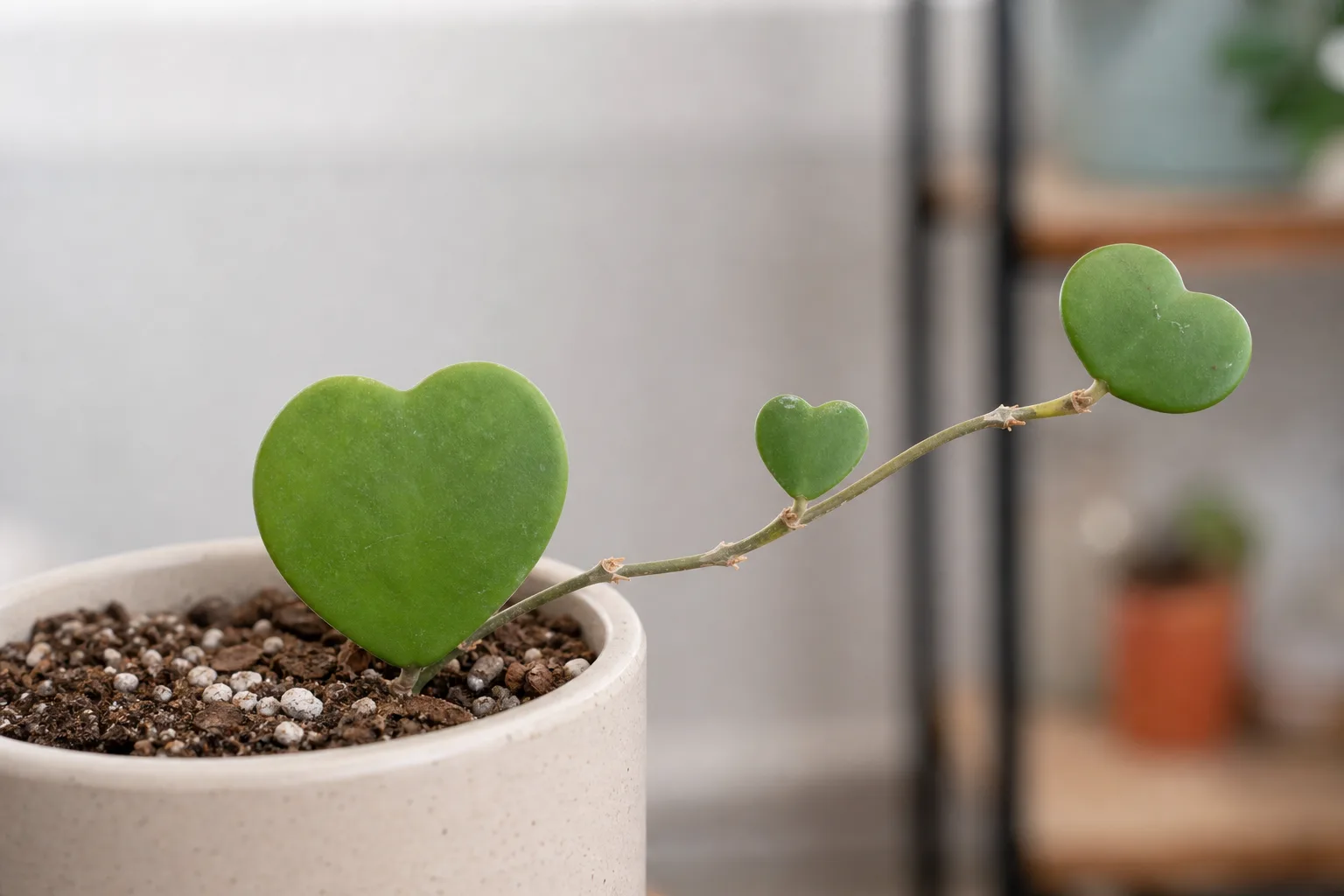
Slow Growth on Hoya Kerrii: Causes, Checks & Fixes
This guide covers slow growth on Hoya Kerrii. See also the general Slow Growth guide, watering, and light pages for this plant.
Slow Growth on Hoya Kerrii: Causes, Checks & Fixes
Quick answer
Hoya kerrii (Hoya kerrii, sweetheart hoya) is a slow-growing epiphytic vine with thick, water-storing heart leaves-not a fast foliage plant like pothos. When owners say “not growing,” they often mean one of three different things: normal slow baseline, seasonal winter pause, or a pathological stall during warm months on a plant that actually has stem tissue to grow with.
First step: identify your plant format and count new leaf pairs. Look at the base of the heart-is there a stem with visible nodes, or only a single leaf rooted in a tiny pot? A rooted leaf without node tissue may never vine regardless of care. On a true vine, mark the newest tip in spring; if zero new leaf pairs appear through summer while leaves stay pale or soil stays wet for weeks, proceed with the cause checks below-not fertilizer on day one.
What slow growth looks like on Hoya Kerrii
Slow growth on this species is reduced or absent new tissue, not one yellow heart. The pattern depends on whether you own a single-leaf novelty or a stem-bearing vine.
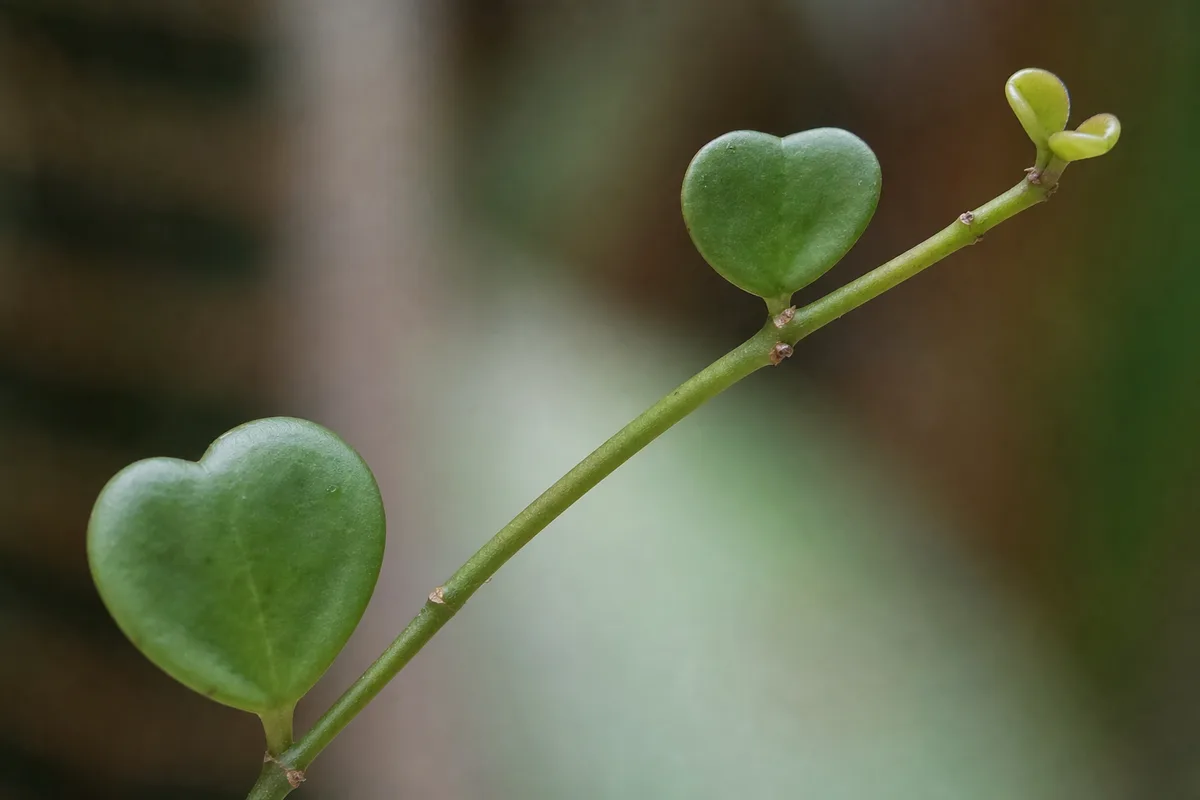
Slow Growth symptoms on Hoya Kerrii - compare with healthy tissue on the same plant.
On vining specimens (stem + nodes present):
- Few or no new leaf pairs through March–September despite stable care
- Inches per season of stem extension instead of steady summer progress-acceptable in moderate light, alarming if zero tips form all warm season
- Compact but pale leaves without obvious internode stretch (stretch points to leggy growth and low light)
- Pot stays damp 14+ days after watering while the vine produces no new flush-classic low-light uptake lag
- Post-repot pause: two to four weeks with no new tips after a gentle spring repot is normal; six-plus warm weeks with nodes and no response is not
On single rooted heart leaves (Valentine gift format):
- No stem extension ever-the same one heart for one to three years is often anatomy, not failure
- Judge health by firmness and deep green color, not vining speed
- Progressive softening, yellowing, or wrinkling in a dim spot means the leaf is exhausting reserves-light and moisture matter even when vining is impossible
Soil and pot clues shared by both formats:
- Light pot + firm leaf + crumbly dry mix → possible underwatering stall (see underwatering)
- Heavy pot + wet surface + sour smell → overwatering root stress, especially in shade (see overwatering)
- Roots circling the surface, water channels through in seconds → root-bound limit on vines
What’s normal: baseline growth rate and winter slowdown
Understanding normal slowness prevents destructive “fixes” on a healthy plant.
Hoya kerrii is classified as a slow grower even in good conditions. As an epiphyte from Southeast Asian rainforest canopy, it evolved to add tissue gradually in filtered light-not to race like a terrestrial understory plant. Indoors, a well-cared-for vine typically produces a few new leaf pairs each active season rather than monthly stem jumps. Mature specimens can eventually reach 2.4–3 meters with support, but that timeline is measured in years, not weeks.
| Season | What healthy slow growth usually looks like |
|---|---|
| March–May | New leaf pairs or stem tips reappear on vining plants in bright light |
| June–August | Modest extension; pot dries on a faster rhythm in warm bright rooms |
| September–October | Growth slows; fewer new pairs |
| November–February | Rest-little or no new tissue on most indoor plants is normal |
Winter slowdown is expected. Lower day length and cooler room corners reduce photosynthesis. Existing hearts stay firm; watering intervals stretch toward three to four weeks in many homes. Do not repot, fertilize, and relocate simultaneously in January because a vine looks unchanged.
Warm-season stall is the diagnostic target: a vine with nodes that produces zero new leaf pairs from late spring through summer while care stayed constant-or while soil stays chronically wet in a back room.
Single-leaf anatomy is a permanent ceiling. Retailers sell millions of rooted heart leaves without stem nodes. Those leaves photosynthesize and survive for years as living novelties but cannot activate a meristem to vine. Comparing your desk heart to a trellised vine online is a category error. For growth potential, see the propagation guide on node-bearing cuttings.
Why Hoya Kerrii stops growing - cause matrix
Rank causes by how often they appear on this species, then confirm before stacking treatments.
1. Insufficient light limiting leaf-pair production
Dim placement is the leading fixable stall on stem-bearing plants. Dappled sunlight in extension terms means bright indirect light at the leaf surface-not a hallway that looks fine to human eyes. NParks recommends bright but indirect sunlight with several hours daily for healthy growth on cultivated plants.
Low light stalls photosynthesis and slows water uptake-plants in low light use less water, so epiphytic mix stays damp longer. Owners who keep a bright-window watering schedule in a north office compound root stress while growth freezes. Full workflow: not enough light on Hoya kerrii and the light guide.
2. Single-leaf anatomy (no node = no vine)
If the pot contains only one heart with a clean petiole cut and no stem segment, no amount of light, fertilizer, or repotting creates a vine. This is the most common “two years and nothing happened” story on forums. Set expectations or acquire a node-bearing plant.
3. Root-bound container after years in the same pot
Hoyas tolerate snug pots, but extreme crowding limits uptake. Signs: roots at the soil surface, roots exiting drainage holes, water running through without absorbing, and stalled extension despite good window light. NC State notes containers need good drainage-binding plus broken-down mix doubles the stall. Resolution: spring repot one size up per the repotting guide.
4. Nutrient depletion during active season only
Pale new leaf pairs on an otherwise healthy vine in bright light, with firm roots and no recent feed, may indicate mild hunger. This species is not a heavy feeder-the RHS recommends light feeding in spring and summer only. Slow growth alone in dim light is not a fertilizer problem. Never feed single-leaf cuttings.
5. Chronic overwatering root stress in low light
Wet mix for weeks + no new growth + pale or soft leaves often means roots are failing in oxygen-poor conditions. Thick leaves mask trouble until uptake stops. Fix light and dry-down together-see overwatering and root rot when mushy roots confirm damage.
6. Underwatering and drought stall
Extended drought depletes leaf reserves. Slightly soft or wrinkled hearts with a very light pot and dry mix throughout point here-not a fertilizer boost. One thorough soak after confirming firm white roots; details in underwatering.
7. Cool temperatures and seasonal slowdown
Sustained exposure below about 50°F (10°C) can damage leaves and roots. Cold window ledges in winter stall metabolism even when the room thermostat reads comfortable. Normal winter pause above 65°F (18°C) with firm leaves is not damage.
8. Relocation or repot shock
Recent move, repot, or shipping can pause growth two to four weeks while roots settle. Gentle spring repot recovery on kerrii often takes one to two weeks to look settled and months before visible new leaf pairs-stacking repot + prune + feed on a stressed vine extends the stall.
How to confirm the cause
Work through these checks in order. Each narrows the list before you change multiple variables.
- Plant format - Stem with nodes visible, or single leaf only? No node → anatomy limit; stop chasing vining fixes.
- Season - November–February pause with firm green leaves is often normal rest, not pathology.
- New leaf-pair count - Tag the newest vine tip in spring. Zero pairs by August on a node-bearing plant → investigate.
- Shadow test - At midday, hold your hand between the leaf and window. Bright indirect light casts a soft, diffuse shadow; no shadow means light is likely limiting.
- Window distance - East or filtered south/west within 12–24 inches (30–60 cm) of glass usually qualifies; across the room often does not.
- Soil dry-down - Top half wet 14+ days in a cool dim room pairs with light-limited uptake, not thirst.
- Root inspection - If warm-season stall persists after light correction, gently unpot. White firm roots → consider binding; brown mush → rot protocol first.
- Pest scan - Mealybugs in leaf axils drain vigor on slow plants; treat before fertilizing.
If four or more checks point to light on a vining plant-and rot and pests are absent-treat light as confirmed. If light is adequate but roots circle tightly in old mix, repot in spring. If you own a single leaf with firm color, success is preservation, not extension.
Lookalike symptoms
| What you see | Likely cause | First direction |
|---|---|---|
| No new tips Dec–Feb, firm hearts, longer dry intervals | Winter slowdown | Wait; resume checks in March |
| Long gaps between leaves, lean toward window, pale small new pairs | Leggy stretch / low light | Not enough light, leggy growth |
| One heart unchanged 2+ years, no stem at base | Single-leaf anatomy | Set expectations; propagation for vines |
| Wet soil weeks, yellow soft leaves, sour smell | Overwatering / root rot | Overwatering, root rot |
| Light pot, wrinkled firm leaf, dry mix throughout | Underwatering | Underwatering |
| Green but static all summer; roots circling; fast drain-through | Root-bound | Repotting in spring |
| No tips 2–4 weeks after repot, firm existing leaves | Repot pause | Hold; no feed yet |
Slow growth is reduced new tissue overall. Leggy growth is active stretch toward light with long internodes. Winter rest is seasonal quiet with stable foliage. Single-leaf format is a permanent growth ceiling, not a stall.
First fix for Hoya Kerrii (by confirmed cause)
Make one primary change, then wait two to three weeks before stacking treatments.
If single-leaf anatomy: Optimize bright indirect light and dry-down watering to keep the leaf firm. Do not fertilize. Accept no vining-or start a node-bearing cutting.
If light is limiting (most common on vines): Move gradually to bright filtered light at the leaf-east window or filtered south/west within arm’s reach. Hold watering steady until you see new dry-down speed. Do not repot or feed the same week. Full steps: not enough light.
If root-bound: Repot in early spring one size up with fresh chunky epiphytic mix. Water lightly once; no fertilizer for four to six weeks per RHS repot guidance.
If overwatering / rot in shade: Stop watering, improve light if dim, inspect roots. Trim mushy tissue and repot only if damage is confirmed-not preemptively on day one.
If underwatering: Soak thoroughly until runoff, then resume dry-down checks-not a calendar.
If nutrients (last resort on vines): After light and roots check out, use quarter- to half-strength balanced liquid every four to six weeks in active growth only-see fertilizer guide. Never on single leaves or winter-rest plants.
If winter rest: Shorten watering interval toward winter rhythm; skip feed until spring shoots appear.
Recovery timeline
Hoya kerrii remains a slow grower even after fixes-judge recovery on new leaf pairs, not overnight transformation.
- 1–2 weeks: After a light move, soil may begin drying slightly faster; lean on vines may slow.
- 2–4 weeks: New vine tissue should look firmer and more evenly green if light was the limiter. Single leaves may simply stabilize without new parts.
- One growing season: Tighter internode spacing on new stems; one to three new leaf pairs is realistic success on indoor vines.
- Permanent: Old pale leaves and stretched stems do not revert-success is tissue formed after the correction.
Worsening signs: progressive yellowing and softness with sour wet soil, or a node-bearing vine with no new tips six warm weeks after confirmed bright indirect placement-recheck grow-light need, root health, or hidden rot.
What not to do
Do not fertilize a stalled plant to force growth-especially single-leaf pots, winter-rest plants, or specimens in dim wet corners. Fertilizer cannot replace light-driven photosynthesis.
Do not repot on day one unless mix is failing or rot is confirmed; light correction does not require a new pot. Do not water more because growth is slow in shade-that keeps roots wet while metabolism stays low.
Do not compare a gift heart to a trellised vine and conclude care failure. Do not stack repot, prune, and pesticide the same day on a stressed epiphyte.
Do not expect small changes to show up in days-this species responds in seasons. One care correction at a time keeps the diagnosis readable.
How to prevent slow growth next time
Place stem-bearing vines where they receive bright indirect light for most of the day at the leaf surface-see the overview and light guide. Pair every light level with dry-down watering, not a fixed weekday schedule.
Repot every one to two years or when roots circle holes-before extreme binding stalls summer growth. Feed lightly in active season only on vines with nodes. Accept winter pause without panic treatments.
For Valentine’s single leaves, buy for display longevity, not trailing expectations-or verify stem tissue below the leaf at purchase.
When to worry
Escalate when a single leaf softens and yellows in low light while soil stays wet for weeks-that is rot risk, not mere slowness. Move to brighter filtered light and inspect roots if smell turns sour.
A vine with nodes that produces no new tips through an entire warm season after a documented light correction needs grow-light supplementation or root inspection-not repeated fertilizer.
Patience is enough when leaves are firm and green, mix smells neutral, the calendar is winter, or you repotted less than four weeks ago in spring.
Hoya Kerrii care cross-check
| Factor | Active-season target | Slow-growth mistake |
|---|---|---|
| Plant format | Stem + nodes for vining | Expecting vines from leaf-only gift pots |
| Light | Bright indirect at leaf; soft shadow test | Dark shelf survival mode |
| Water | Dry down substantially; 10–14 days typical in bright warm months | Calendar watering in dim wet corners |
| Roots | Repot before extreme circling | Waiting until water races through daily |
| Feed | Quarter–half strength, active growth only on vines | Winter feed or single-leaf fertilizer |
| Expectations | Few leaf pairs per season | Comparing to pothos speed |
Related Hoya Kerrii problems
- Not enough light - pale stretch and wet-soil stall from shade
- Leggy growth - when internode stretch, not general stall, dominates
- Overwatering and root rot - chronic wet mix in low light
- Underwatering - depleted leaf reserves before collapse
- Overview - single-leaf anatomy and baseline epiphytic biology
When to use this page vs other Hoya Kerrii guides
- Hoya Kerrii watering guide - Use for routine moisture checks before assuming slow growth is the main issue.
- Hoya Kerrii problems hub - Browse all 16 common issues on this species.
- Not Enough Light on Hoya Kerrii - Different entry point when symptoms overlap with slow growth.
- Leggy Growth on Hoya Kerrii - Different entry point when symptoms overlap with slow growth.
- Yellow Leaves on Hoya Kerrii - Different entry point when symptoms overlap with slow growth.