Drooping Leaves on Hoya Kerrii: Causes, Checks & Fixes
Quick answer
Drooping leaves on Hoya Kerrii usually mean the plant lost turgor - either from dry soil thirst or from roots that cannot take up water in wet mix. First step: pinch a heart leaf for firmness, lift the pot for weight, and probe the top half of the mix before you pour anything.
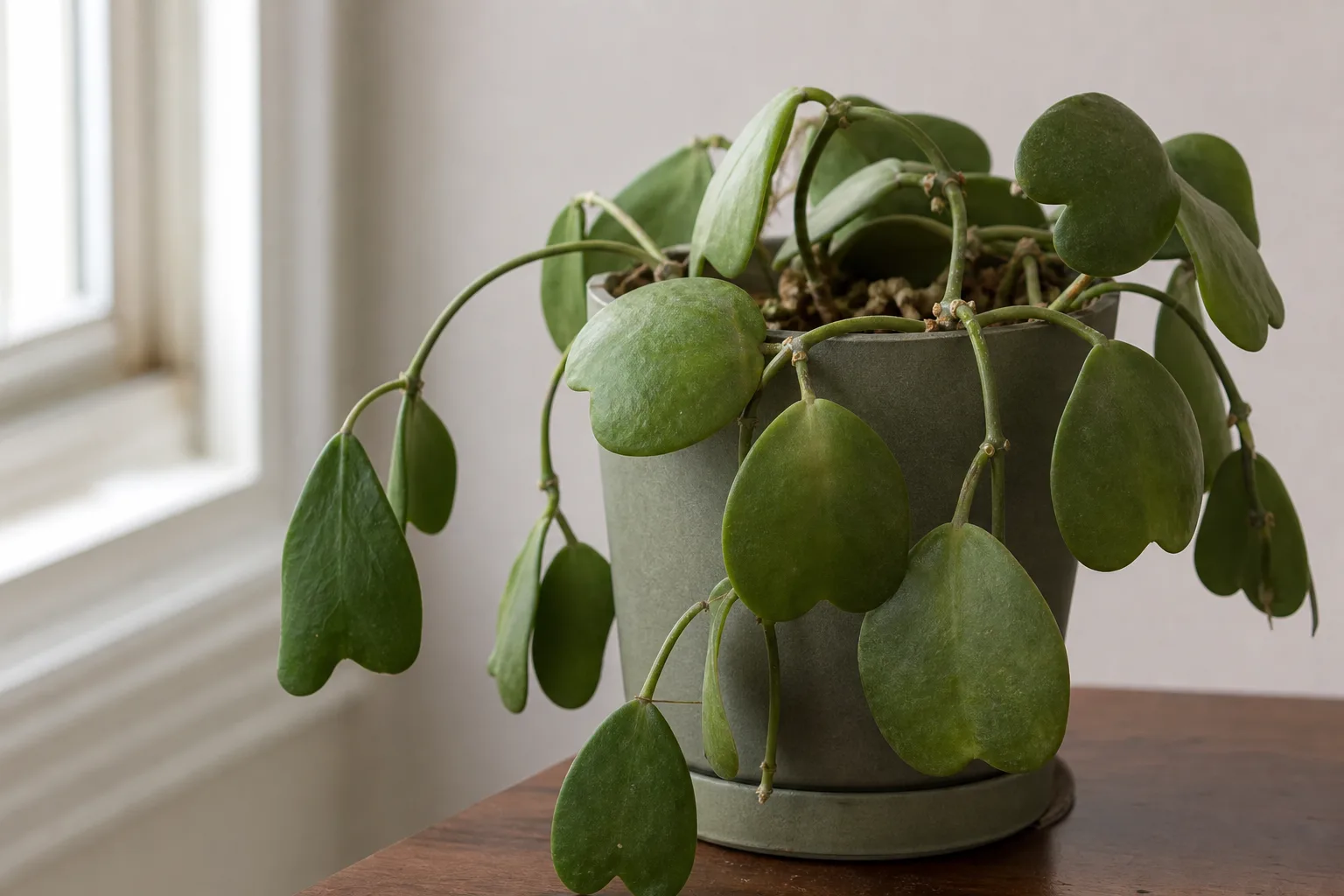
Drooping Leaves on Hoya Kerrii: Causes, Checks & Fixes
This guide covers drooping leaves on Hoya Kerrii. See also the general Drooping Leaves guide, watering, and light pages for this plant.
Drooping Leaves on Hoya Kerrii: Causes, Checks & Fixes
Quick answer
Drooping leaves on Hoya Kerrii (Hoya kerrii, Sweetheart Hoya) mean the thick heart-shaped foliage has lost turgor - the internal water pressure that keeps leaves upright. On this epiphytic species, droop almost always traces to water balance, not random “plant stress.”
The split that matters: soft, thin, or wrinkled hearts on a light pot with dry mix below the surface = thirst. Limp foliage on dark, damp mix with yellow lower leaves = root failure from overwatering, not a drink.
First step: do not water yet. Pinch a heart leaf between thumb and finger, lift the pot, and stick a finger or dry chopstick into the lower third of the mix. Only after those three checks should you soak, hold water, or inspect roots.
Hoya kerrii stores water in its semi-succulent, leathery leaves and can stay firm for weeks before suddenly softening - so droop often looks sudden even when the cause built slowly.
What drooping looks like on Hoya Kerrii
Healthy kerrii hearts feel firm and slightly thick, like a coin. Drooping changes that texture before it changes colour.
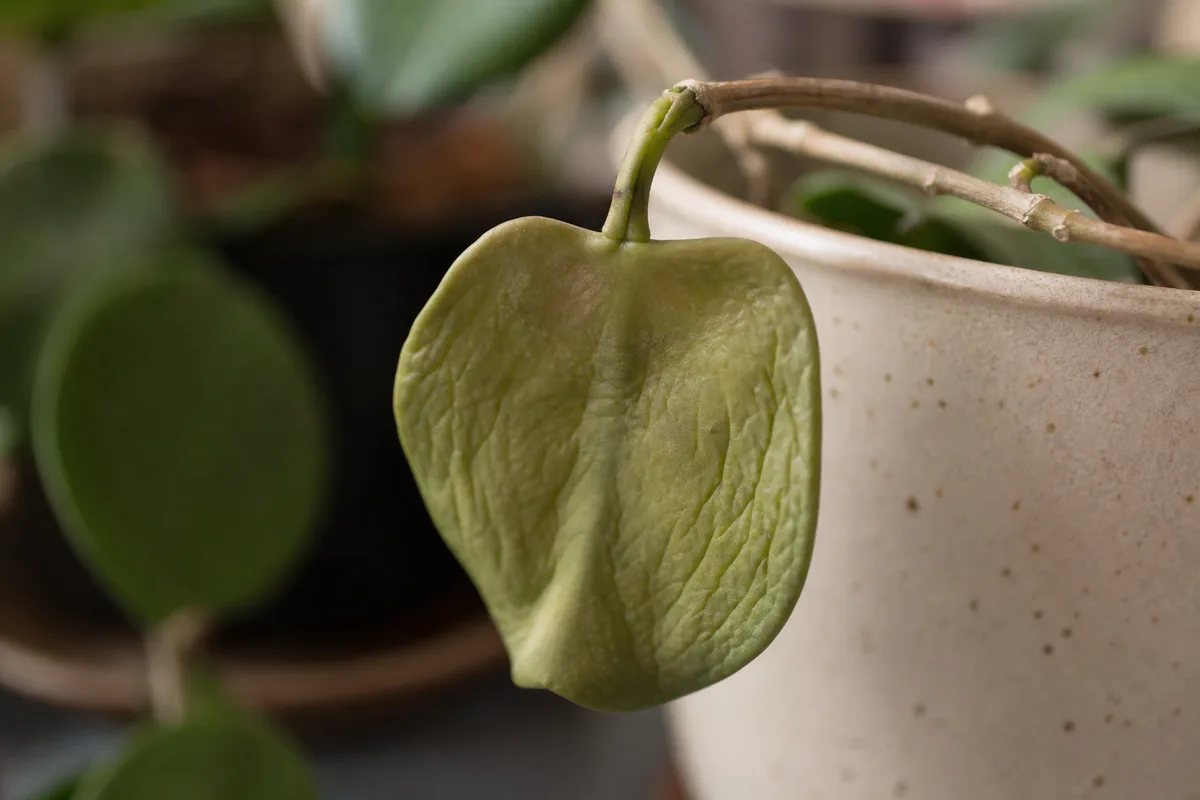
Drooping Leaves symptoms on Hoya Kerrii - compare with healthy tissue on the same plant.
Thirst droop (dry soil): Leaves hang lower on the petiole and feel soft, thin, or lightly wrinkled. NC Extension notes that thinning, brown, or wrinkled leaves can mean the plant is allowed to dry too much between waterings. The pot feels noticeably light, and mix several centimetres down is crumbly and pale.
Wet-soil droop (root dysfunction): Foliage stays limp and heavy even right after you watered. Lower leaves may yellow, petioles feel weak, and the mix stays dark and cool. A sour smell or mushy stem base points to rot - the opposite problem from thirst.
Hydrophobic-mix droop: Leaves soften while the surface looks briefly damp after a quick pour, because water channels through dry bark without wetting the core. You may see instant runoff on the first pass.
Cold-draft droop: Hearts go limp and slightly translucent near a cold window or AC vent in winter. Soil moisture may be normal; watering alone will not fix cold-damaged tissue.
Single-leaf gift collapse: A Valentine rooted leaf with no vine node can stay visually unchanged for months, then sag or brown at the base once the single leaf exhausts its water stores.
Drooping vs. wilting on Hoya Kerrii - when to use this page
Both terms describe limp foliage, but search intent differs slightly. Drooping here covers the gradual hang or softening of heart leaves - the most common complaint on Sweetheart Hoya. Wilting describes more sudden collapse, often from acute drought or heat.
If your hearts are wrinkled with bone-dry soil, the dedicated underwatering guide walks through soak-and-dry recovery in more depth. If leaves are yellow and limp in wet soil, see overwatering and root rot. This page focuses on confirming which water problem you have before you act.
Why Hoya Kerrii leaves droop
Sweetheart hoya is an epiphytic vine with succulent leaves - NParks describes it as intolerant of waterlogging. That biology explains why kerrii droops on both extremes:
Chronic underwatering. Thick leaves mask drought for weeks, then soften quickly once internal stores run low. Owners who overcorrected after one rotted plant often skip water too long in bright summer rooms.
Overwatering and root rot. Kerrii fails fast in dense, soggy mix. Damaged roots cannot absorb water, so leaves droop while soil stays wet - the classic “wet wilt” paradox. Containers without good drainage can lead to root rot on this species.
Hydrophobic bark after long drought. Chunky epiphytic blends dry thoroughly between drinks - which kerrii needs - but if left dry too long, mix can repel water. Very dry potting mix may need to be soaked to wet properly again.
Tight pots in bright light. NParks notes kerrii flowers best when kept rootbound. A snug root ball in a sunny east window dries in days during heat - easy to miss if you water on a calendar.
Cold exposure. NC Extension recommends 65–80 °F for active growth; cold drafts or chilled window sills can limp tissue without changing soil moisture.
Single-leaf reservoir exhaustion. Gift hearts store water in one leaf. They need water less often than vining plants but still need occasional deep soaks - months of neglect ends in sudden droop.
Lookalike symptoms to rule out
- Normal post-soak limpness - Rare on kerrii, but very fresh leaves may sit slightly softer for a few hours after a heavy soak in warm rooms. If firmness returns the next day, no action needed.
- Pest stress - Mealybugs and spider mites on hoyas weaken petioles; check leaf axils and undersides before assuming water issues. NC Extension lists aphids, spider mites, and mealybugs as common pests.
- Heat scorch with dry soil - Bleached patches facing the window plus fast-drying mix still need water, but also lighter exposure.
- Low humidity alone - Kerrii tolerates typical indoor humidity. Crispy tips with otherwise firm leaves and moist soil point to salts or airflow more often than drought.
- Yellow leaves without droop - Often a separate issue; see yellow leaves on Hoya Kerrii if colour change is the main symptom.
How to confirm the cause
Work through this checklist in order:
- Heart-leaf firmness pinch - Firm with dry soil means reserves remain; wait. Soft, thin, or wrinkled with dry soil means thirst.
- Pot weight - Lift the container. Light and hollow-feeling supports drought; heavy and cold supports wet-soil problems.
- Mix moisture at depth - Probe the lower third. Crumbly and dry confirms thirst. Cool, clingy, or dark mix means hold water - even if leaves look sad.
- Yellow lower leaves - More common with persistent overwatering than with simple thirst.
- Drainage and smell - Dry, neutral mix supports underwatering. Sour odour or mushy petioles point to rot.
- Recent care history - Fear-of-overwatering drought swing, winter calendar neglect, or repotting into dense mix all narrow the cause.
- Form factor - Single-leaf gift vs. vining specimen with nodes changes recovery expectations.
The critical split: wilted leaves can mean soil is too dry or too wet when rotting roots cannot take up water - leaf firmness and pot weight tell them apart on kerrii.
First fix for Hoya Kerrii
Run the three-part check before any treatment: leaf pinch, pot weight, mix probe at depth.
Do not pour water until you know which branch applies:
If the top half of mix is dry and hearts feel soft, thin, or wrinkled
Give one thorough soak until water runs freely from drainage holes, then empty the saucer. Water in slow passes if the mix was hydrophobic - two or three rounds until runoff is steady. That single deep drink recharges both soil and leaf tissue. See the underwatering guide for full soak-and-dry steps.
If mix is wet and leaves stay limp after watering
Stop watering immediately. Move the plant out of its cachepot, confirm drainage holes are open, and slide the root ball out to inspect. Trim mushy brown roots with sterile scissors and repot into fresh chunky epiphytic mix only if rot is confirmed - do not repot a merely stressed plant on day one without evidence.
If water runs straight through on first pour
Rewet the core in pulses - top-water slowly across several passes, or bottom-water in a tray for 30–45 minutes until the surface darkens. Hydrophobic bark mimics chronic drought while leaves soften.
If plant sits in a cold draft or on a cold sill
Move to stable 65–80 °F away from the glass pane. Hold extra water until tissue firms; cold damage and thirst can overlap, so still check mix dryness before soaking.
If you have a single-leaf gift plant with no node
Soak once if mix is fully dry, then accept that a leaf without stem tissue may not grow into a vine regardless of care. Late collapse after months without water is often terminal.
Step-by-step recovery by cause
Dry-soil thirst:
- Soak the full root ball; drain all runoff - kerrii is intolerant of standing water.
- Wait until the mix dries down again before the next drink; NParks recommends watering when the top 3 cm of soil becomes dry.
- Hold fertilizer until leaves feel plump and new growth is stable for two weeks.
- Adjust rhythm to infrequent but deep drinks, not daily splashes.
Wet-soil root failure:
- Stop watering; improve airflow and light if the plant was in a dim corner.
- Inspect roots - firm and pale means rot may be early; mushy brown tissue needs trimming and repot into bark-perlite mix.
- Remove yellowed lower leaves only after the plant stabilizes.
- Cross-check overwatering and root rot guides if damage spreads.
Hydrophobic mix:
- Repeat soak pulses across several hours until a skewer from the bottom third exits without dry streaks.
- Repot into fresh chunky mix only if repeated soaks fail and roots are still firm.
Recovery timeline
Thirst droop: Leaf firmness often returns within two to five days after a proper soak when roots are intact. Very thick kerrii hearts can take up to a week to refill internal stores.
Wet-soil droop: Recovery takes several weeks to months depending on root damage. Judge progress by stable new growth and firm petioles, not by old leaves re-turgoring.
Cold-draft droop: Improvement within one to two weeks after moving to stable warmth - damaged translucent patches may not fully green again.
Worsening signs: stems soften at the base, leaves go papery after watering, mix stays wet while foliage keeps limping, or crown tissue collapses - escalate to root inspection same day.
What not to do
Do not water a drooping kerrii when mix is already wet - that deepens root rot, the most common killer of this epiphyte indoors.
Do not mist instead of fixing soil moisture - surface humidity does not replace a dry or hydrophobic root zone.
Do not stack repot, prune, fertilize, and pesticide on the same day - make one care correction at a time so you can read the plant’s response.
Do not fertilize a stressed plant - salts on compromised roots burn fine hairs.
Do not repot into a much larger container to “help watering” - extra wet soil volume slows drying and worsens overwatering risk.
Avoid cold tap water shocks - NC Extension recommends room-temperature water for hoyas.
How to prevent drooping leaves on Hoya Kerrii
Build a dry-down routine tied to your pot and light, not a blog calendar:
- Check when the top half of mix is dry in warm active growth, or when the top 3 cm is dry - combine with pot weight and leaf firmness.
- Water deeply, then let mix approach dry again before the next drink.
- Use chunky, well-drained epiphytic mix with open drainage holes so you can soak safely without waterlogging.
- Lift the pot weekly until weight tells you when the plant is ready.
- Keep the plant in bright indirect light so dry-down timing stays predictable - see the Hoya Kerrii overview for full care context.
- For single-leaf gifts, water sparingly but thoroughly when the tiny root zone is fully dry - often every four to six weeks, not never.
When to worry
Treat same-day if a vining plant wilts completely with bone-dry mix in hot conditions, or if leaves feel papery thin rather than slightly soft.
Escalate to root inspection if leaves stay limp after a full soak, stems soften, soil smells sour, or damage spreads up the vine.
Single-leaf plants that brown from the petiole upward after long neglect may not recover.
Hoya Kerrii care cross-check
If drooping keeps returning, verify the baseline setup from the overview guide:
- Light: Bright indirect; enough to support steady but not frantic dry-down.
- Mix: Bark, perlite, and open drainage - not dense peat-heavy indoor soil.
- Pot: Slightly snug is fine; cachepots must not hold standing water.
- Season: Stretch intervals in winter rest; do not force summer frequency in cool, short days.
Conclusion
Drooping leaves on Hoya Kerrii are a water-direction problem disguised by thick, slow-changing heart foliage. Pinch the leaves, lift the pot, and probe the mix before you pour - thirst droop and wet-soil droop need opposite first fixes. Most healthy vining plants firm within days after a confirmed soak; limp leaves in damp mix mean stop watering and inspect roots instead. For deeper dry-side or wet-side recovery, use the related underwatering, overwatering, and root rot guides on the same plant hub.