How to Prune Hoya: When, Where, and What to Cut
How to Prune Hoya: When, Where, and What to Cut
How to Prune Hoya: When, Where, and What to Cut
Hoya pruning is less about forcing a compact shape and more about protecting peduncles - the short, woody flower spurs where waxy umbels form year after year. Wax plants (Hoya spp.) store their bloom infrastructure on the stem itself. Cut a healthy spur because it looks bare after petals drop, and you delete the site where the next inflorescence was scheduled - not tidying the plant. The practical rule: leave every healthy peduncle attached, remove dead or damaged tissue whenever you see it, and limit cosmetic shaping to light trims during active growth.
First action: scan the vine for dead, blackened, or mushy stems and yellow or pest-damaged leaves. Remove only that tissue with clean, sharp scissors before you consider shortening anything for shape. Healthy peduncles stay untouched even during cleanup.
Why Hoya Pruning Starts With Flower Spurs
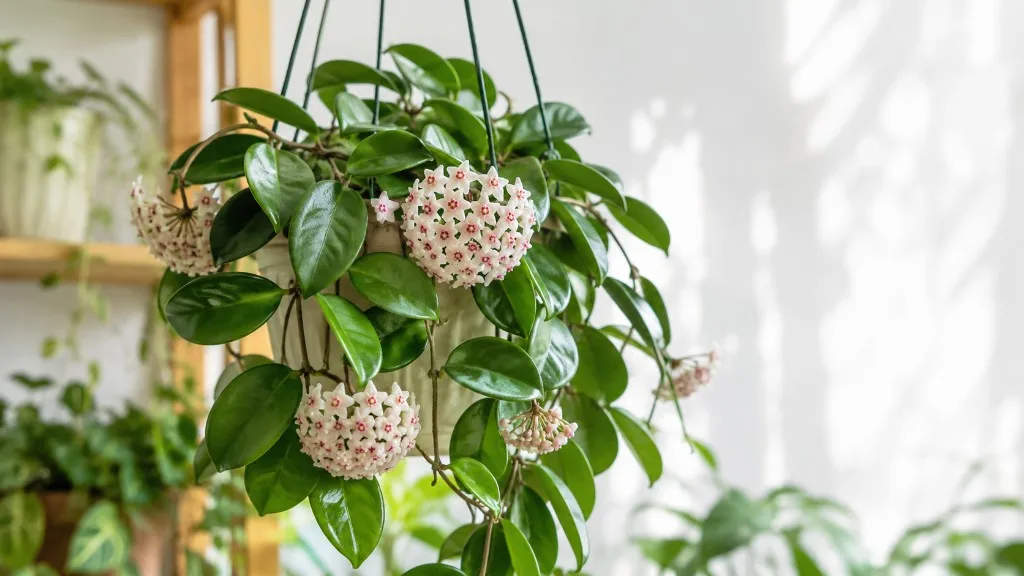
Most houseplants rebloom from new growth each season. Hoya often reblooms from the same permanent spur for many years. A peduncle is the rigid stalk from which a star-shaped umbel emerges. After individual flowers senesce, the umbel collapses but the peduncle usually remains - a woody, sometimes grey projection that can look lifeless for months between cycles.
NC State Extension is direct: resist pruning the peduncle where flowers have been produced, because it will repeatedly produce flowers over several years. Cutting those stems removes future flowers. The Royal Horticultural Society adds that if flower stalks are left in place, more blooms will often sprout from the stumps of previous clusters. That consensus should override the instinct to snip anything that looks unfinished after a bloom cycle.
Removing a healthy peduncle forces the plant to build a new spur from scratch at a different node - a process that can take seasons on an otherwise mature vine. Treat every intact peduncle as permanent infrastructure unless it shows clear failure: blackened, mushy, shriveled and brittle, or rotting tissue.
What Peduncles Are and Why They Matter
Peduncles form at or near nodes - the slightly swollen points where leaves attach. They feel firm and woody compared with supple new growth. After a previous bloom, a spur may show a blunt end where the umbel attached. That scar means history, not death. With each successful cycle, the same peduncle may elongate slightly and flower again - sometimes multiple times in one growing season on well-grown Hoya carnosa and related species.
Older vine sections often look bare between leaf pairs, but spurs frequently sit on those seemingly empty internodes. A vine that looks naked may be exactly where the next umbel initiates. Cosmetic neatness is never a valid reason to cut a healthy spur.
What to Check Before You Cut
Before any session, trace each stem slowly from base to tip. Note woody projections, leaf pairs, aerial roots, and any structures you cannot identify. If the plant has bloomed before, spurs may scatter along older wood - not only near the newest growth.
Peduncle vs Leaf vs Aerial Root
Leaves attach via a flat petiole at the node. Removing a damaged leaf by cutting the petiole near the stem is safe and does not affect future blooms unless you accidentally sever a peduncle at the same node.
Aerial roots are cylindrical, often pale or brown, and may show a pointed tip where they contact air or a support. They anchor and absorb moisture in the wild; indoors they are harmless. Cutting them for aesthetics is optional and unrelated to flowering.
Peduncles are shorter, stubbier, and do not lengthen toward soil the way active roots do. They project at an angle from the stem and feel woody. When unsure, do not cut - photograph the vine or mark the spot and watch it across a season before removing anything.
When to Prune Hoya
Timing splits into two categories: cosmetic shaping, which follows the growth calendar, and sanitary removal, which follows damage regardless of month.
Cosmetic Shaping Window
The Royal Horticultural Society recommends light pruning in late winter or early spring to keep vigorous plants manageable - promoting fuller growth and removing leggy stems. For Northern Hemisphere indoor growers, plan shape work from late winter through early summer when you see new tips extending and leaves look turgid. Cuts above nodes most reliably activate dormant buds within two to four weeks during active growth.
Spread shaping across two or three sessions two weeks apart rather than one aggressive session. That staged approach matters when correcting legginess on a plant you hope will bloom in the same season.
Cleanup Cuts Anytime
Remove stems that are clearly dead, blackened from rot, heavily infested with mealybugs or scale, or physically broken. Remove individual yellowed or shriveled leaves. These actions do not depend on season because leaving diseased tissue creates more risk than the stress of a small removal.
Even during cleanup, the peduncle rule still applies: if a spur is healthy, keep it. If a spur is mushy or dead, cut it back to sound stem tissue with a sterilized tool.
When Not to Prune
Avoid major shaping while the plant carries visible bud clusters or open flowers - moving and cutting during initiation often causes bud blast. Iowa State Extension warns not to deadhead hoya, because cutting spent flower clusters removes future flower sites. Do not perform large-scale reshapes in the dimmest winter months unless you have no choice - recovery is slowest then, and bloom initiation on remaining spurs may stall.
The RHS notes that Hoyas do not respond well to hard pruning, so plants that have badly outgrown their space are often best managed with repeated light trims rather than one dramatic cut.
The First Cut to Make
Start with obvious dead tissue only - brown stems back to live green or firm tan wood, mushy tips removed to healthy tissue, and yellow or pest-damaged leaves cut at the petiole base. Do not shorten live vines, pinch tips, or remove woody projections until you have mapped every peduncle on stems you might trim later. This inspection-first step prevents the most expensive mistake: spur amputation during what feels like routine cleanup.
Tools and Sap Safety
You need very little equipment: sharp bypass pruning shears or fine scissors for thin stems, and 70% isopropyl alcohol for sterilizing blades. Sharp tools matter because Hoya stems contain milky latex sap - dull blades crush tissue and slow healing. The Royal Horticultural Society recommends wearing gloves when pruning, as the milky sap is toxic and can irritate skin.
Sterilize before you start and between plants if trimming more than one Hoya. Re-wipe after removing suspect diseased tissue before touching healthy stems elsewhere on the same plant. Skip pruning sealants under normal conditions - clean cuts in bright, indirect light heal adequately on healthy plants.
How to Prune Hoya Step by Step
Light shaping follows a repeatable sequence that keeps spur loss unlikely.
First, sterilize tools and place the plant where you can see all sides without twisting the vine sharply. Second, remove only obvious problems: dead leaves, mushy stems, pest hotspots. Third, identify and mentally protect every peduncle along stems you plan to shorten. Fourth, choose cut points just above a healthy node where you want the vine to branch or stop extending - never mid-internode on healthy green tissue unless removing a dead tip back to live wood.
Make each cut 5–10 mm above a healthy node, angled slightly so water runs off the face if the plant lives outdoors. The node is the slightly swollen region where leaves or buds arise; Hoya branches from the node, not from random stem tissue. Step back after every one or two cuts to confirm no spur sits just below your planned angle.
Pinching Soft Tips
On soft new growth only, pinching the topmost soft leaves redirects energy to lower nodes and can produce a bushier habit without removing bloom infrastructure on older wood. Pinching works best during active growth when light is already adequate. Pinching a leggy Hoya in dim light produces weak side shoots that stretch again within weeks.
How Much You Can Safely Remove
Limit live foliage removal to no more than one-third of the plant in a single session. Hoya depends on leaf surface to photosynthesize and fund recovery. Removing half the vine in autumn often produces yellowing, stalled tips, and no new branches for months. If a plant is wildly overgrown, plan three light sessions across six to eight weeks during active growth rather than one dramatic cut.
Hard pruning also removes nodes - and nodes are where both branches and future peduncles arise. When correcting size on a blooming plant, shorten stems above known spur nodes whenever possible, even if the remaining section looks uneven temporarily.
Where to Cut on the Stem
Always cut just above a node, leaving a short stub of 5–10 mm. Cutting too close can damage the bud; leaving a long bare stub above the node invites dieback. If removing a dead stem, trace it back to where tissue turns firm and green, then cut one node above that transition into healthy wood.
For crossing branches that rub and wound each other, remove the weaker strand at its base node or shorten it above a lower node on the healthier branch. Rank these structural fixes above purely cosmetic length reduction.
Pruning Leggy Vines Without Losing Bloom Sites
Legginess - long internodes and sparse leaves - is usually a light problem, not a pruning problem. Before you cut, confirm the vine sits in Hoya light guide. Moving it closer to a window and rotating the pot often produces tighter new growth without removing old wood where spurs may already exist.
When light is adequate and you still want a denser habit, shorten the longest leaders above nodes closer to the main crown, preserving any peduncles on the section you keep. On a multi-strand hanging basket, uneven lengths with intact spurs beat uniform length with spurs gone. If one strand has no spurs and another does, shorten the spurless strand for length reduction and leave the spur-bearing strand alone.
Training onto a trellis is not pruning, but avoid repositioning stems that carry spurs or soft bud initials. Tie gently with soft plant ties - crushing a spur with a tight zip tie is as effective as cutting it.
Aftercare and Recovery Timeline
After light pruning, keep light steady - do not move the plant to a darker corner or harsh direct sun. Water on the normal schedule for your mix; slightly reduced leaf mass may mean slightly slower drying for a few weeks.
Hold fertilizer for two to three weeks after a moderate shaping session. Resume half-strength balanced feeding once you see new growth actively extending with normal color. Watch cut ends for blackening or mushiness - signs of infection or a cut made into already compromised tissue. A healthy cut may dry slightly and tan; that is normal.
Most Hoyas push visible new shoots from nodes above the cut within two to four weeks during active season. Full filling-in of a thinned section may take six to eight weeks or longer on slow species. Out-of-season cuts can take multiple months.
Mistakes That Delay Flowering
The mistakes that matter most are category errors - applying pothos logic to a plant that flowers from permanent spurs.
Removing peduncles after flowering is the most common reason a mature Hoya stops blooming after years of reliability. After petals drop, pick up fallen flowers and leave the spur alone. Iowa State Extension is explicit: do not deadhead hoya. If you already removed spurs, new ones can form eventually, but you reset the clock at each removed site.
Hard renovation cuts remove nodes where future peduncles arise. The RHS states Hoyas do not respond well to hard pruning - repeated light trims beat one dramatic chop. Pruning during bud swell or open bloom causes bud blast. Confusing spurs with dead wood and cutting “bare” woody stubs eliminates bloom sites that looked inactive but were healthy.
Conclusion
Hoya pruning succeeds when you treat it as spur preservation with optional light shaping, not size control by default. Identify peduncles before any cut, leave every healthy spur attached, trim dead tissue whenever it appears, and limit live foliage removal to one-third during late winter through early summer when the plant can respond quickly. Use sharp, sterilized tools, cut just above nodes, and pause fertilizer briefly while new shoots establish.
The bare woody stub after flowers fade is not a mistake to fix - it is the plant’s bloom memory. Protect it, and shaping becomes a low-risk occasional task instead of a gamble with years of flowers on the line.
When to use this page vs other Hoya guides
- Hoya overview - Start here for whole-plant context before deep-diving this topic.
- Hoya problems hub - Jump to symptom-specific fix guides when this care topic does not resolve the issue.
- Leggy Growth on Hoya - Escalate here when pruning adjustments are not enough.
- Slow Growth on Hoya - Escalate here when pruning adjustments are not enough.
- Brown Tips on Hoya - Escalate here when pruning adjustments are not enough.