Aphids on Hoya: Causes, Checks & Fixes
Quick answer
Aphids on Hoya cluster on soft new vines, unfurling leaves, and peduncles. First step: isolate the plant and rinse insects off tender growth with lukewarm water before applying any spray.
Aphids on Hoya: Causes, Checks & Fixes
This guide covers aphids on Hoya. See also the general Aphids guide, watering, and light pages for this plant.
Aphids on Hoya: Causes, Checks & Fixes
Quick answer
Aphids on Hoya are small, soft-bodied sap feeders that show up almost exclusively on tender new tissue-unfurling leaves, soft vine tips, and peduncles (the permanent flower spurs Hoya blooms from year after year). Mature waxy foliage is rarely the first place you will find them.
First step: move the plant away from your collection and rinse the insects off with lukewarm water. Use a sink spray or shower setting and aim at new growth, stem joints, and peduncles until you see most aphids wash away. Do not reach for oil, soap, or systemic products until you have confirmed live insects and finished this knockdown-spraying blindly on a stressed Hoya adds leaf damage without solving the problem.
What aphids look like on Hoya
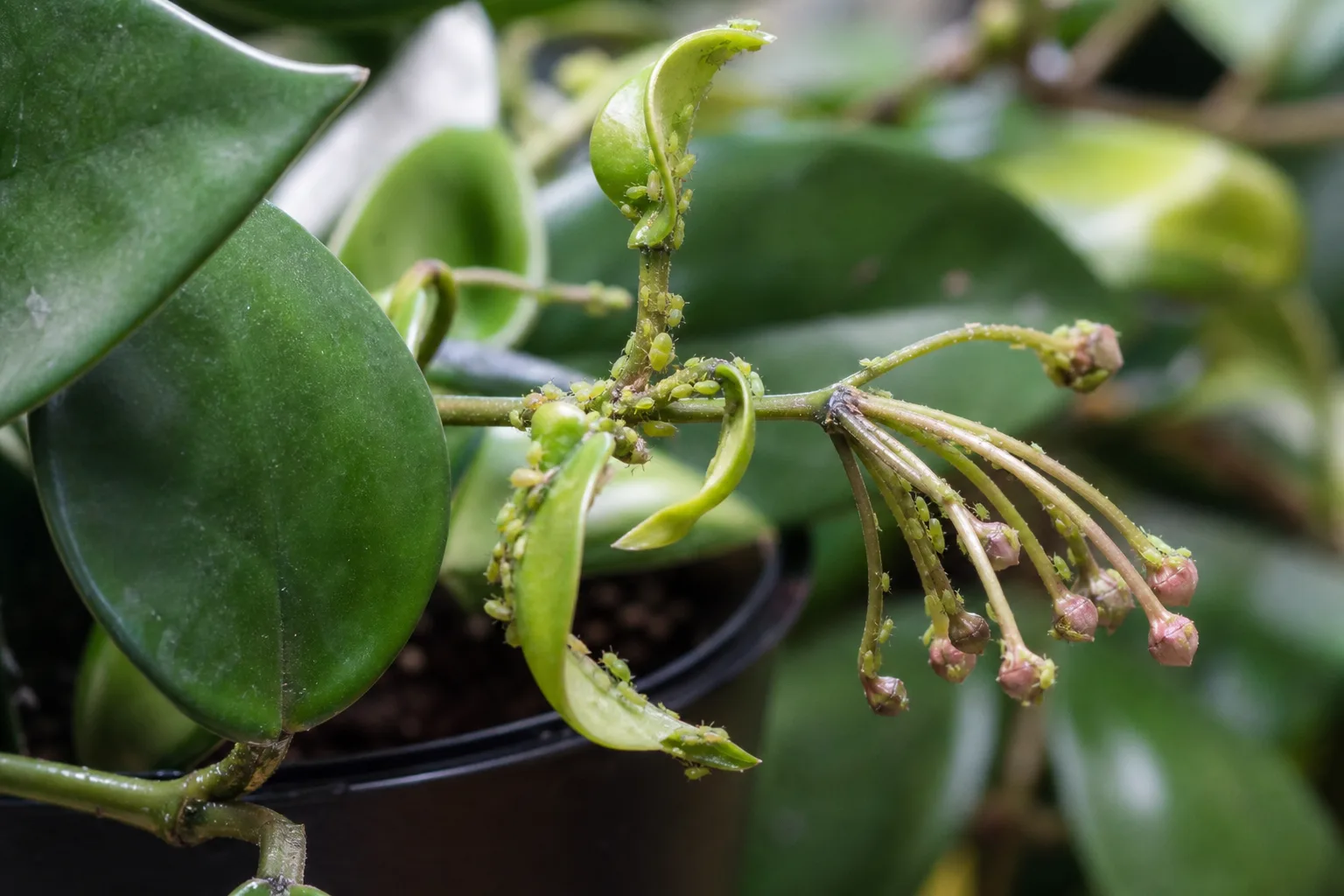
On Hoya, aphids usually form dense clusters where tissue is still soft:
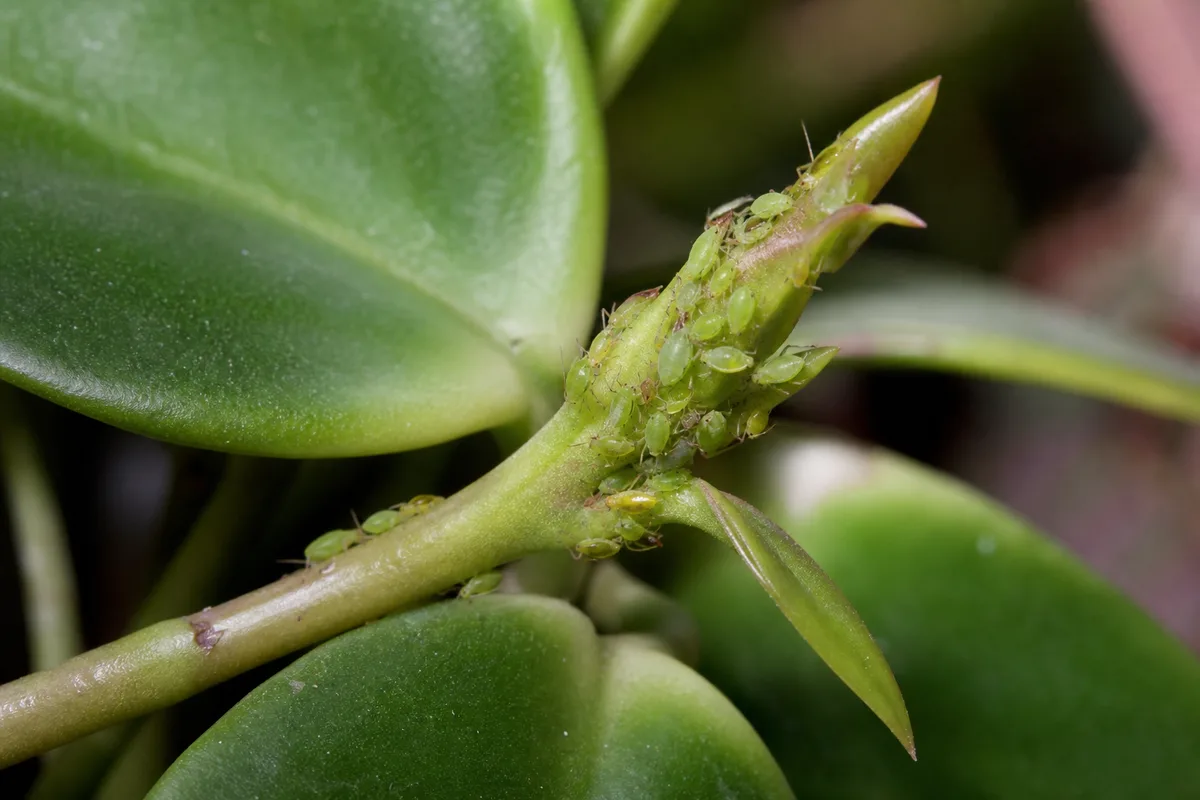
Aphids symptoms on Hoya - compare with healthy tissue on the same plant.
- Tips of new vines and the undersides of leaves that are still opening
- Leaf axils along actively growing stems
- Peduncles and closed or opening flower buds
- Occasionally on sticky nectar trails if blooms are present, though bloom nectar alone is normal
Individual aphids are pear-shaped, about 1/16 to 1/8 inch long, with visible legs and antennae. Color varies-green is common indoors, but black, brown, yellow, or gray forms also occur. Wingless adults are typical on houseplants; winged adults may appear when a colony gets crowded and wants to move to another plant.
Supporting damage signs include:
- Curled or twisted new leaves where feeding was heavy
- Sticky honeydew on leaves, pots, or shelves below the plant
- Sooty mold turning honeydew patches black over time
- Whitish cast skins left behind as aphids molt
- Ants on the pot or nearby surfaces, often trailing to the infestation
Do not confuse normal bloom behavior with pests. Hoya flowers produce abundant sweet nectar that can drip onto leaves and floors during bloom-that stickiness comes from open flowers, not from insects. If you see stickiness on non-blooming new growth plus clustered specks that move, aphids are the more likely explanation.
Why Hoya gets aphids
Hoya is not unusually aphid-prone compared with other houseplants, but its growth habit makes outbreaks easy to miss until new vines or buds are affected.
Soft spring and summer shoots attract aphids. Aphids feed on soft, new plant growth. When a Hoya wakes from its slower winter pace and pushes fresh vines in bright light, that tender growth is exactly what aphids target. The same window is when collectors propagate and trade cuttings-another common introduction route.
New plants and open windows bring aphids indoors. Nursery stock, shared cuttings, and outdoor summer stays can all introduce a few aphids that multiply quickly in the stable temperatures of a home. Indoor collections lack the lady beetles, lacewings, and parasitic wasps that keep aphids in check outdoors.
Overfed, fast-growing Hoya is easier prey. Hoya needs only modest fertilizer during active growth, and heavy nitrogen produces lush, soft shoots while suppressing flowering. That soft tissue is easier for aphids to pierce and colonize than the firm, waxy mature leaves Hoya is known for.
Crowded shelves slow airflow. Trailing Hoyas often sit with vines overlapping neighbors. Dense foliage makes inspection harder and lets honeydew and crawlers spread to adjacent pots before you notice.
How to confirm the cause
Work through these checks before committing to sprays:
- Inspect new growth first. Mature Hoya leaves are thick and waxy; if you only see stickiness there during bloom, check open flowers before assuming pests.
- Look for movement. Aphids crawl slowly when disturbed. Tap the stem-if specks scatter or legs move, you have live insects.
- Use magnification on tight clusters. A hand lens reveals pear-shaped bodies and, on many species, small cornicles (tail-pipe-like projections) on the rear abdomen- a reliable aphid ID feature.
- Check peduncles without cutting them. Hoya reflowers from the same peduncle for years. Examine spurs and bud clusters closely, but leave the structure intact unless a spur is fully dead and brittle.
- Rule out lookalikes on the same plant. Mealybugs form white cottony masses in leaf axils. Scale looks like fixed brown or tan bumps. Thrips leave silvery scrape marks and jump when disturbed. None of these move in slow pear-shaped groups on new tips.
- Scan the collection. Aphids spread plant to plant. If one Hoya has them, inspect plants that were touching it or bought from the same source.
Confirmed diagnosis requires live aphids on soft tissue, not sticky leaves alone.
First fix for Hoya
Isolate the plant and rinse aphids off with lukewarm water.
Move the Hoya to a sink, tub, or shower where runoff will not contact other plants. Support trailing vines so you do not snap peduncles or new tips. Spray all sides of new growth, stem joints, and peduncles with a firm but not blasting stream until most insects dislodge. Let the plant drain completely before returning it to its spot-Hoya hates wet crowns sitting in stagnant air.
This single step does three things: it reduces the population immediately, confirms you are treating live insects rather than old honeydew, and buys time to inspect the rest of your collection before adding chemicals.
Do not prune peduncles, fertilize, or repot on day one. Those actions stress a Hoya that is already losing sap to feeding and can remove future bloom sites without solving the pest issue.
Step-by-step recovery
After the initial rinse, continue in this order based on severity:
Light infestations (small clusters on one vine)
- Repeat water knockdown every two to three days for two weeks. Many indoor aphid colonies collapse with consistent washing alone on sturdy stems.
- Wipe stubborn clusters on peduncles and leaf bases with a damp cloth or cotton swab. Work gently around spurs.
- Monitor new growth. Clean unfurling leaves mean you are winning; fresh clusters on the newest tip mean keep going.
Moderate infestations (multiple stems, honeydew present)
- Apply insecticidal soap labeled for houseplants, covering insects directly on new growth and stem joints. Soaps work by contact-spray must hit the aphid body.
- Repeat every five to seven days for at least three applications. Aphids reproduce quickly; one treatment rarely catches newly hatched nymphs.
- Add horticultural oil or neem only if soap alone is not enough, and only on species with smooth leaves. Test one leaf first on fuzzy-leaved Hoyas; oils and soaps can mark sensitive foliage.
- Remove heavily infested single leaves only when a leaf is already ruined and the rest of the vine is firm. Never cut peduncles just because aphids touched them.
Heavy infestations (buds coated, winged aphids, ants present)
- Isolate at distance from the main collection and treat all plants that shared a shelf.
- Combine rinse plus contact spray on a set schedule for three to four weeks.
- Control ants if they are protecting aphids from natural enemies. Sticky barriers on pot rims or removing ant trails helps sprays work better.
- Consider discarding a small, inexpensive starter plant if every new tip is coated and the specimen has little mature growth to recover from-protecting the rest of the collection may matter more than saving one cutting.
Hold fertilizer until new growth looks normal for two weeks. Feeding during an active infestation pushes more soft tissue for aphids to colonize.
Recovery timeline
Expect visible aphid numbers to drop within three to seven days of consistent rinsing or the first soap application. Plan on two to three weeks minimum before calling the plant clear; aphid life cycles need repeat treatments to break.
Signs recovery is working:
- No new clusters on the latest vine tip for two full weeks
- New leaves unfurl flat instead of tightly curled
- Honeydew stops accumulating on leaves below the growth point
- Peduncles remain firm and green, ready for the next bloom cycle
Signs the problem is worsening:
- Winged aphids appearing on multiple plants
- Bud clusters aborting or turning brown while still infested
- Sooty mold spreading despite knockdowns
- New growth stalling entirely while insects remain on every soft tip
Distorted leaves already hardened on the vine do not flatten out again; judge success by clean new tissue, not by old curl.
Lookalike symptoms and causes to rule out
| What you see | Likely cause | How to tell apart |
|---|---|---|
| Stickiness only under open flowers | Normal nectar drip | No clustered insects; stickiness tracks bloom period |
| White cottony patches in leaf axils | Mealybugs | Waxy filaments, not pear-shaped mobile insects |
| Fixed brown bumps on stems | Scale | Does not move when scraped; no cornicles |
| Silvery streaks on mature leaves | Thrips | Insects jump; damage is scrape-like, not sap clusters |
| Sticky leaves, no insects visible | Old honeydew residue | Wipe clean; recheck new growth in three days |
Mistakes to avoid
- Cutting peduncles during cleanup. Hoya blooms repeatedly from the same spur. Aphids on a peduncle can be rinsed or swabbed off; removing the spur removes future flowers.
- Spraying dish soap or household detergents. Plant-labeled insecticidal soap is formulated to reduce leaf burn. Random detergents damage waxy cuticles.
- Treating fuzzy-leaved species without a test patch. Some Hoyas mark or drop leaves after oil or soap. Always test one leaf and wait 48 hours.
- Applying oil or soap to wilted, sun-stressed, or cold-shocked plants. Contact products stress already weakened tissue. Stabilize care first.
- Feeding nitrogen to “help recovery.” Soft new shoots invite reinfestation and delay blooming on Hoya.
- Returning the plant to the collection after one rinse. Two pest-free weeks on new growth is a safer standard before reuniting plants.
Hoya care cross-check
Aphids are a pest problem, not a Hoya watering guide problem-but weak, etiolated growth from low light is easier for aphids to exploit.
While treating, confirm:
- Light is bright and indirect enough that new leaves emerge firm, not pale and stretched
- Watering follows dry-down-top half of mix dry before rewatering-so the plant is not simultaneously fighting root stress and sap loss
- Fertilizer is paused or at half strength only after pests are controlled
- Airflow around trailing vines is adequate; slightly spaced pots make weekly inspection realistic
Healthy Hoya growth is slow but steady. A plant that was overpushed with feed and low light often produces the soft shoots aphids prefer.
How to prevent aphids next time
- Quarantine every new Hoya or cutting for two weeks and inspect new tips under magnification before placing it near others.
- Check new growth weekly during spring and summer-the season Hoya and aphids both favor active vines.
- Rinse or wipe dust from leaves during regular care so pests are easier to spot on waxy surfaces.
- Avoid heavy nitrogen feeds. Use balanced or bloom-oriented fertilizer at half strength during active growth only.
- Inspect plants after outdoor summer stays or open-window seasons; aphids can walk in on air currents or hitchhike on other plants.
- Keep ants off plant shelves so outdoor biocontrol allies are not blocked when you do move plants outside briefly.
Prevention on Hoya is mostly early detection on new vines and peduncles, not constant spraying.
When to worry
Most established Hoya survive aphids when caught early. Escalate urgency when:
- Flower buds are coated before opening-you may lose that bloom cycle on affected spurs
- Multiple plants in the same area show new colonies within days
- Winged aphids appear-this means dispersal is active
- A small specimen has every soft tip infested and little mature foliage to sustain it
Hoya rarely dies from aphids alone, but heavy, repeated infestations on weak plants can stall growth for a full season and leave peduncles too damaged to bloom until new spurs form-which can take months on slow species.
If treatment fails after a month of consistent contact sprays and rinses, reassess whether you are actually targeting live insects on new growth or only cleaning old honeydew from mature leaves. Persistent stickiness without new clusters may mean the pest phase is over and you need cleanup, not more chemicals.
When to use this page vs other Hoya guides
- Hoya watering guide - Use for routine moisture checks before assuming aphids is the main issue.
- Hoya problems hub - Browse all 17 common issues on this species.
- Mealybugs on Hoya - Different entry point when symptoms overlap with aphids.
- Spider Mites on Hoya - Different entry point when symptoms overlap with aphids.
- Yellow Leaves on Hoya - Different entry point when symptoms overlap with aphids.