Sunburn Scorched Leaves on Christmas Cactus: Causes, Checks
Quick answer
Sun scorch on Christmas cactus shows as yellow-green, bleached, or reddish-crispy phylloclades on the window-facing side-usually after summer direct sun through south or west glass. First fix: pull the pot back 2–3 feet or add a sheer curtain today; do not increase watering.
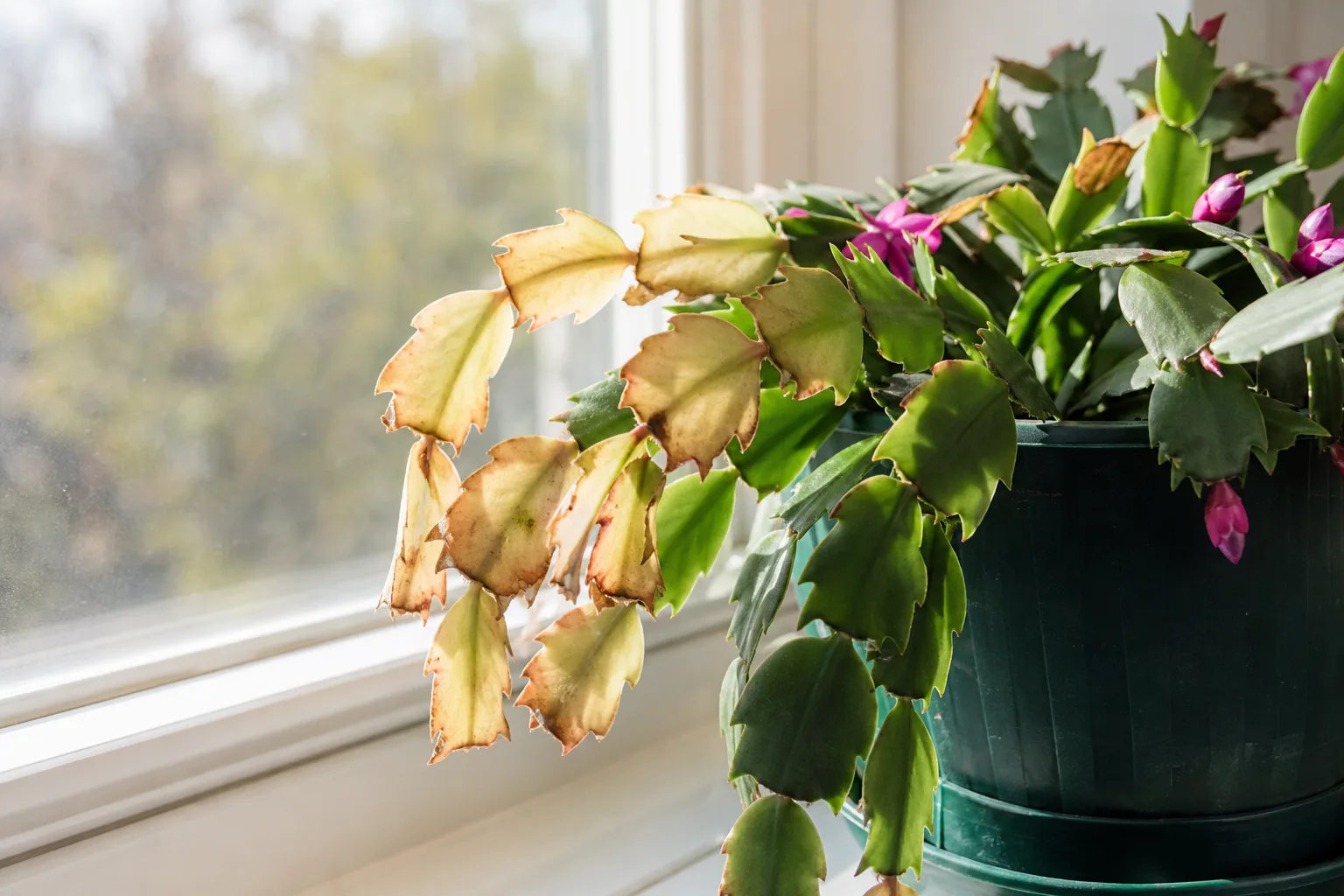
Sunburn Scorched Leaves on Christmas Cactus: Causes, Checks & Fixes
This guide covers sunburn / scorched leaves on Christmas Cactus. See also the general Sunburn / Scorched Leaves guide, watering, and light pages for this plant.
Sunburn Scorched Leaves on Christmas Cactus: Causes, Checks & Fixes
Quick answer
Sunburn on Christmas cactus (Schlumbergera × buckleyi) appears on the phylloclades-the flat, jointed stem segments that photosynthesize-not on true leaves. After too much direct sun through glass, especially on a south or west window from late spring through summer, the window-facing side turns pale yellow-green, bleached white, or reddish-brown and crispy while shaded segments on the same chain may stay deep green.
Holiday cacti are epiphytic rainforest plants, not desert sun collectors. Bright sun during summer months can make them look pale and yellow even when the same window worked fine in November.
First fix: move the pot 2–3 feet back from the glass or hang a sheer curtain today. Do not compensate with extra water-sun stress is a light problem, not a drought signal.
What sun scorch looks like on Christmas cactus phylloclades
Sun damage on Schlumbergera has a directional pattern that separates it from most watering problems.
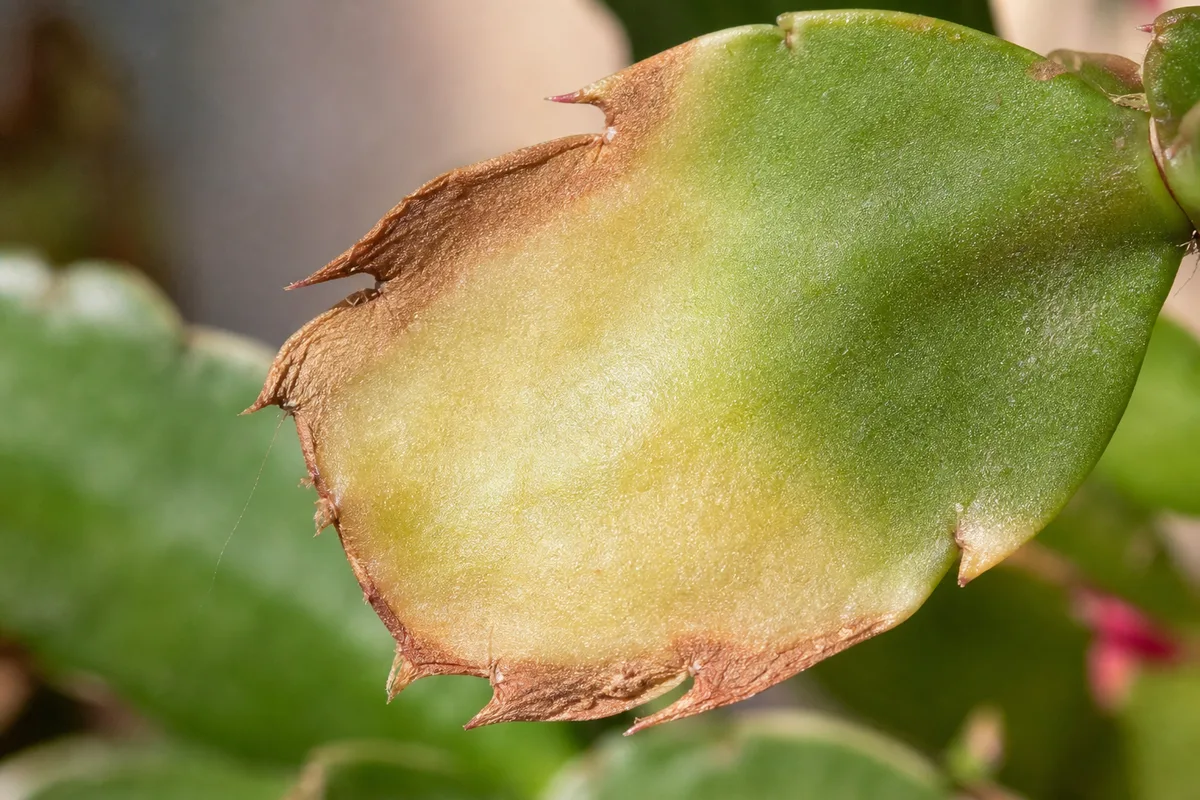
Window-facing segment surface bleached yellow-green with dry crispy reddish-brown tissue - shaded side of the same segment stays greener.
- Bleached or yellow-green pads on the side facing the window, with healthier color on the shaded face of the same segment.
- Red or purple stress coloring on exposed segments-some cultivars redden before bleaching when light is too intense.
- Crispy, papery margins or patches that feel dry and brittle, not soft or translucent.
- Tip dieback on chains that took the hottest afternoon beam after a sudden move to a brighter sill.
- Limp segments at midday that firm up overnight once moved-too much direct sunlight can burn segments or leave them limp without the uniform shrivel of underwatering.
Old burn marks never re-green. Always read the newest joints at the stem tips to see whether today’s light level is safe.
Why Christmas cactus sunburns (and desert cacti usually do not)
The name “cactus” sends many owners toward full-sun window sills. That logic fits saguaro and barrel cactus-not Christmas cactus.
In the wild, holiday cacti grow as epiphytes on tree branches in shady Brazilian rain forests, where light is bright but filtered. The RHS describes their natural habitat as dappled shade-warm, humid, and never exposed to blazing midday sun.
That biology explains why scorch is seasonal and window-specific:
Summer sun intensity through glass. From roughly June through August, south and west panes concentrate heat and UV. Segments pressed against the glass can bleach within days in full sun. The same sill is often beneficial in fall and winter when Clemson HGIC notes full sunlight becomes helpful for holiday cacti.
Post-bloom placement errors. Plants displayed in a bright bay window after flowering may scorch when spring sun strengthens-even though they looked perfect during shorter winter days.
Outdoor acclimation failures. Summering outdoors in dappled shade works well; moving straight from a dim shelf to unfiltered patio sun without a two-week gradual exposure causes segment drop and bleach.
Reflective heat. White sills, radiators beneath the pot, and hot glass amplify scorch beyond what the room “feels” like to you.
Grow lights too close. Fixtures placed within a few inches can heat phylloclades and mimic sun scorch even without visible burn-raise the light if segments feel warm.
This problem page focuses on diagnosis and first response. Seasonal placement rules and the fall dark-period routine live in the Christmas cactus light guide.
Lookalike symptoms on Christmas cactus
| What you see | More likely cause | Quick check |
|---|---|---|
| Uniform shriveled segments, light pot | Underwatering or root loss | Mix dry deep down; pot feels light |
| Soft, mushy, translucent segments; sour soil | Overwatering / root rot | Unpot and inspect root firmness |
| Long, thin segments; lean toward window | Not enough light | Stretch and pale new growth, not crisp bleach |
| Brown tips only at segment margins | Brown tips | Marginal browning without full-pad bleach |
| Compact plant, no winter buds | Interrupted fall dark period | Lamps or streetlights at night-not sun scorch |
Sun scorch is one-sided and recent. Water stress and rot tend to affect whole chains or the whole pot unless you are comparing window-facing vs. shaded sides deliberately.
How to confirm sunburn is the cause
Work through these checks in order before pruning, Christmas Cactus repotting guide, or changing fertilizer.
-
Light timeline - Did you move the plant closer to glass, remove a curtain, or bring it in from outdoor shade within the last two weeks? Sun scorch follows light increases, not random decline.
-
Directional pattern - Compare the window-facing face of a segment to its shaded back. One-sided bleach strongly supports sunburn.
-
Shaded lower segments - Pads protected by segments above them often stay green while exposed tips bleach. That contrast is a classic sunburn tell.
-
Season and window - South or west glass in late spring through summer is the highest-risk combo. Fall and winter scorch is less common but possible on unacclimated moves.
-
Soil moisture - Push your finger into the top 2–3 cm. Sun-stressed Christmas cactus usually has normal or slightly dry mix, not chronic wetness. Mushy tissue with wet soil shifts diagnosis toward overwatering.
-
Pot weight - Lift the container. A light pot with wrinkled segments everywhere fits drought. A heavy wet pot with soft segments fits rot. Firm bleached segments with moderate pot weight fit light stress.
-
Rule out heat plus light - Segments that feel hot to the touch at midday on a sill confirm excessive radiant exposure, not just “bright room” light.
If every check points to sun but segments are turning soft and translucent, treat as a possible rot overlap-reduce water and inspect roots before assuming light correction alone will save the plant.
First fix for Christmas cactus sun scorch
Move the pot out of direct sun beams today-one change only.
Choose the fastest option available:
- Pull back 2–3 feet from south or west glass, or shift to an east window where morning sun is brief and cool.
- Hang a sheer curtain that softens afternoon rays while keeping the room bright.
- Rotate so the most damaged face is no longer the lead segment into the beam-but do not rely on rotation alone if the plant still sits in direct sun.
If the plant was outdoors in full sun, move it to bright dappled shade and leave it there for at least two weeks before any further light increases.
Do not:
- Increase watering “because the plant looks stressed.”
- Fertilize bleached segments.
- Repot on the same day you move light.
- Prune heavily before the plant sits in stable filtered light for one week.
After moving, hold your normal watering rhythm-allow the top 2–3 cm of mix to dry between soaks as described in the Christmas cactus watering guide. Brighter filtered light may dry the pot slightly faster; check with your finger rather than adding extra water to sunburned tissue.
Recovery timeline
Expect stabilization within a few days once direct beams are off the phylloclades-no new bleach on the tips is the first success sign.
New segment quality improves in two to four weeks. The next joints should look plump and evenly green if filtered light is correct. Thin, pale new growth means the spot is still too dim or too harsh-adjust distance incrementally.
Old scorched tissue stays discolored permanently. You may trim fully crispy, brown segments with clean scissors for appearance once the plant is stable, but greenish-yellow pads often remain as harmless scars. Holiday cacti bloom on mature segments; avoid removing more than one-third of a chain at once.
Flowering is usually unaffected if bud set already occurred or fall darkness routines are separate. Severe summer scorch can weaken the plant entering autumn-give it stable bright-indirect light through the growing season so it rebuilds reserves before the short-day bloom routine begins around mid-September.
If new tips keep bleaching after two weeks in a filtered spot, move farther from glass or add a second layer of diffusion. If segments soften while soil stays wet, pivot to root health-sun correction will not fix rot.
What not to do
Do not blast a scorched plant with direct sun to “toughen it up.” Schlumbergera does not harden off like desert cactus. Recovery requires less direct beam, not more.
Do not increase watering on bleached segments. Sunburn is not fixed by moisture. Extra water on an unchanged schedule risks root rot when the plant is already stressed.
Do not confuse cultivar red pigmentation with burn. Some holiday cacti naturally redden at the margins in bright indirect light. Burn adds crisp, papery texture and one-sided washout on the glass-facing face.
Do not stack repotting, heavy pruning, and fertilizer on the same week you fix light. One variable at a time lets you read the plant’s response.
Do not assume winter placement rules work in July. A south sill that is perfect in December can scorch in July-plan seasonal moves instead of a permanent “brightest window” rule.
How to prevent sun scorch next time
Use a simple seasonal light calendar tied to how Schlumbergera actually grows:
- April–September (active growth): Bright indirect light-east window, filtered south/west, or 1–3 feet back from harsh glass. Outdoor summer stays in dappled shade.
- October–March (cooler, lower sun): Brighter exposure is usually safe; many plants color up and bloom better with more direct fall and winter sun per Clemson HGIC.
- After holiday display: Move from mantels and interior tables back to a bright window for spring growth-but filter summer sun before segments bleach.
- Any light increase: Shift a few inches every two to three days over 10–14 days, watching new segment color daily.
- Grow lights: Keep fixtures 12–18 inches above foliage; if segments feel warm, raise the lamp.
Cross-check daily placement with the light guide and keep watering matched to how fast the pot dries in that spot-not a fixed calendar.
When sun scorch becomes urgent
Sunburn alone is rarely fatal, but act quickly when:
- Bleaching spreads to every new tip within a week-total loss of photosynthetic surface on a small plant.
- Segments go limp at midday and stay soft overnight after you moved light-possible heat collapse or rot beginning.
- Crispy tissue turns wet and translucent-sun stress may have opened the door to infection; inspect roots and reduce water.
- The plant was outdoors in full sun during a heat wave and dropped entire chains-shade immediately and avoid pruning until stable.
For gradual cosmetic bleach on a few segments, correction is routine. For rapid whole-plant washout, treat it as an emergency light relocation-not a wait-and-see watering experiment.
Related Christmas cactus care
- Light - Seasonal placement, fall dark periods, and when direct sun helps vs. hurts
- Not enough light - Stretch and pale growth when the problem is too dim, not too bright
- Watering - Dry-down rhythm; avoid overwatering scorched plants
- Brown tips - Marginal browning without full-segment bleach
- Underwatering - Uniform shrivel vs. one-sided sun bleach
- Root rot - Soft segments with wet soil after sun stress or overcorrection
- Overview - Hub for all Christmas cactus care topics
When to use this page vs other Christmas Cactus guides
- Christmas Cactus watering guide - Use for routine moisture checks before assuming sunburn / scorched leaves is the main issue.
- Christmas Cactus problems hub - Browse all 21 common issues on this species.
- Brown Tips on Christmas Cactus - Different entry point when symptoms overlap with sunburn / scorched leaves.