Christmas Cactus Watering: Schedule, Soil Checks & Mistakes
Christmas Cactus Watering: Schedule, Soil Checks & Mistakes
Christmas Cactus Watering: Schedule, Soil Checks & Mistakes
What Christmas Cactus Actually Needs From Water
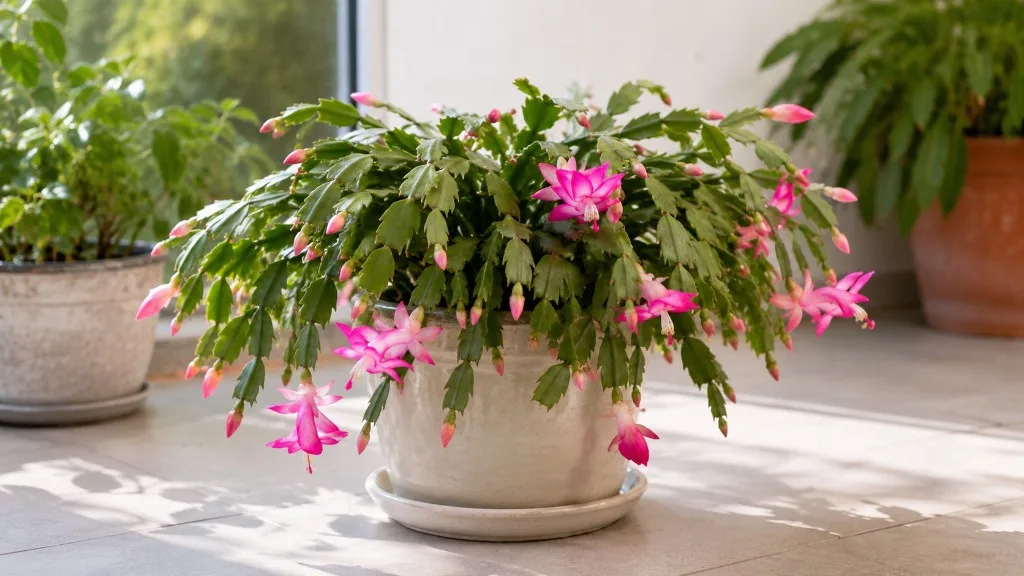
Christmas cactus (Schlumbergera × buckleyi) is one of the most forgiving flowering houseplants you can own - until watering goes wrong. The plant stores moisture in its flattened stem segments (called phylloclades), roots absorb water quickly when the mix is open and airy, and the whole system shuts down fast when roots sit in stale, oxygen-starved soil. Most failures are not about forgetting a plant for a month. They come from watering on autopilot: same day every week, same volume every time, regardless of season, light, or what the pot is actually doing.
The core rule is simpler than most care tags suggest. Check the soil, then water thoroughly, then let the mix dry down to the appropriate level before the next drink. How far it should dry depends on the calendar. In active growth, the top inch or two should feel dry before you water again. During the pre-bloom rest starting around mid-September, you stretch that dry window to encourage bud formation. Once buds appear, you shift again - keeping the mix evenly moist without waterlogging - because drought at that stage is one of the fastest ways to lose flowers before they open.
That seasonal rhythm is not optional decoration. It mirrors how the plant behaves in its native range along the Brazilian coastal mountains, where Schlumbergera species grow as epiphytes in humid cloud-forest conditions. They receive regular moisture during warm, bright months and experience drier, cooler stretches that trigger flowering. Your job indoors is not to copy a desert cactus schedule or a tropical fern schedule. It is to give the root zone enough water when the plant is growing or blooming, enough dry time when it is resting, and enough drainage every time so roots never stew in runoff.
Why Holiday Cacti Are Not Desert Cacti
If you have ever killed a cactus by watering it too much, you might be tempted to treat Christmas cactus the same way - barely water, let everything go bone dry, hope for the best. That instinct will backfire here. Unlike barrel cacti or prickly pears adapted to arid deserts, holiday cacti evolved in tropical forests where they cling to tree bark and absorb moisture from rain, humidity, and decaying organic matter around their roots. They need more frequent watering than typical desert succulents, but they still require a dry-down period between drinks. The failure mode is different: roots rot when soil stays wet too long, especially in cool, low-light winter rooms where evaporation slows to a crawl.
The Clemson Home & Garden Information Center notes that holiday cacti tolerate dry conditions during spring and summer but should not be kept in completely dry soil for extended periods, and they must not become waterlogged - especially during the short winter days when soil dries slowly. Iowa State University Extension adds a critical distinction: unlike typical cacti, holiday cacti need consistent moisture while in bud and bloom, because dry conditions can cause buds to drop. After flowering, watering is reduced again. That single sentence explains why two owners with the same plant can follow opposite advice and both think they are correct - they are in different seasonal phases.
Also worth noting: plants sold as “Christmas cactus” are sometimes Thanksgiving cactus (Schlumbergera truncata), which blooms slightly earlier and has pointed, claw-like stem segments rather than the rounded, scalloped edges of true Christmas cactus. Watering rules are nearly identical, but Thanksgiving cactus often dries a touch faster in the same pot because of slightly different growth habits. If your plant blooms in late November rather than December, check the segment shape before you assume the label is wrong.
How Water, Light, and Season Work Together
Watering never happens in isolation. Light intensity controls how fast the plant metabolizes water. A Christmas cactus in a bright east window through spring will dry its pot in a week; the same plant in a dim hallway in January may hold moisture for two weeks or longer. Temperature works the same way - warm rooms accelerate dry-down, cool rooms slow it. Humidity matters less for frequency than most guides claim, but very dry air below 30% relative humidity can stress segments and make underwatering on Christmas Cactus damage show up faster. Aim for 45–60% humidity when you can; grouping plants or using a humidifier helps more than misting, which only wets surfaces briefly.
Pot and mix are the other half of the equation. A well-draining mix with components like peat, perlite, and orchid bark holds moisture without compacting into a wet brick. An oversized plastic pot in heavy peat stays wet dangerously long. A snug terracotta pot in an airy mix dries faster and forgives fewer missed checks. Before you ask “how often,” look at where the plant sits, what it is planted in, and what month it is. Those three variables explain most of the gap between a one-week schedule and a three-week schedule for the same species.
How Often to Water Christmas Cactus Indoors
There is no honest universal answer to “how often” that works in every home. Expert guidance converges on a range - roughly every 1 to 3 weeks for many indoor setups - with the Old Farmer’s Almanac recommending water when the top one-third of the potting mix feels dry. In a 6-inch pot, that means checking about 2 inches down. Kelly Funk of Jackson & Perkins, cited by Martha Stewart, frames it similarly: water when the top 1 to 2 inches feel dry, usually every 1 to 3 weeks depending on conditions - and never water on a fixed schedule without checking first.
Use these intervals as starting points, then let soil checks override the calendar:
| Growth phase | Typical interval (starting point) | Dry-down target before next watering |
|---|---|---|
| Active growth (April–August) | Every 7–10 days in warm, bright conditions | Top 1–2 inches (2.5–5 cm) dry |
| Pre-bloom rest (mid-September–bud set) | Every 10–14 days; sometimes longer in cool rooms | Top 2–3 inches dry; mix noticeably lighter |
| Bud development and flowering | Every 5–10 days | Top inch dry; never let entire pot go crisp |
| Post-bloom rest (late January–March) | Every 10–14 days | Top 2 inches dry; reduce volume slightly |
| Cool winter, low light (non-bloom) | Every 14–21 days | Top 2 inches dry; prioritize drainage |
If your pot still feels heavy and cool at the base a week after watering, you are not waiting long enough - or you are adding too much water at once. If segments shrivel and the pot is light as cardboard, you waited too long. The schedule serves the soil check, not the other way around.
Active Growth: Spring and Summer
From roughly April through August, Christmas cactus is in its most predictable watering phase. Days are longer, temperatures are warmer, and new segment growth or post-winter recovery consumes water steadily. The Royal Horticultural Society advises watering regularly from April to September, keeping compost moist but never waterlogged, with excess drained away. In practice, that means a full soak when the top inch dries, then a complete dry-down before the next soak.
During this window, a plant in Christmas Cactus light guide may need water weekly. One in moderate light may go 10 days. If you moved the plant outdoors for summer shade, check every few days - heat and wind can dry a small pot in 48 hours. Watch new growth: firm, plump segments with good color mean the rhythm is working. Soft, yellowing segments with wet soil mean you are overdoing it regardless of what the calendar says.
Pre-Bloom Rest: September and October
Starting around mid-September, watering changes purpose. You are no longer just supporting growth - you are helping trigger flower bud formation through cooler temperatures, longer nights, and reduced watering. The RHS recommends a rest period from mid-September until buds develop, with compost allowed to dry down more between drinks. NC State Extension specifies reducing watering in mid-September as buds develop and pairing that with cool nights around 55–65°F (13–18°C) and at least 13 hours of uninterrupted darkness nightly.
During this rest, let the top 2–3 cm (about 1 inch) go dry, and in cooler rooms you can let the dry zone extend a bit deeper - but do not let the entire root ball turn to dust for weeks on end. The goal is slightly drier, not desiccated. When you see tiny buds forming at segment tips, that is your signal to transition to the bloom-phase rhythm. Missing this rest by keeping soil summer-wet is a common reason for lush green plants that refuse to flower.
During Flowering and Post-Bloom Recovery
Once buds are visible, the rules flip again. Keep the mix evenly moist until flowers finish. Clemson HGIC is explicit: after bud set in fall, the growing medium must stay evenly moist to prevent flower bud abscission (bud drop). Iowa State Extension warns that dry conditions may cause buds to drop during bloom. That does not mean soggy - it means do not let the pot go fully dry while buds are swelling and opening. Check every few days; water when the top inch is dry but do not wait until segments wrinkle.
After flowers fade - typically late January through March - the plant enters a second rest. Reduce watering again, similar to the autumn rest, while the plant recovers. The RHS advises less frequent watering from late January to late March, then returning to regular spring-summer hydration from April onward. If you fertilize, resume feeding only when active growth returns, not during this tired post-bloom stretch.
How to Check Soil Moisture Before You Water
The most reliable Christmas cactus owners are not the ones with the best memory. They are the ones with a consistent moisture-check habit they run before every watering decision. Pick one primary method and one backup. Run both when symptoms confuse you - especially limp segments, which can mean too much water or too little.
The Finger Test and Top-Inch Rule
The finger test remains the fastest check for most pots. Insert your index finger into the mix near the pot wall (roots are often denser in the center). For active growth, water when the top 1–2 inches (2.5–5 cm) feel dry. During pre-bloom rest, wait until that dry zone extends slightly deeper before watering. During flowering, water when the top inch is dry even if the layer below still holds faint moisture - you are preventing drought stress at a sensitive stage, not chasing bone-dry soil.
Learn what “dry” actually feels like for your mix. Dry peat feels cool and crumbly; damp peat feels cool and clings to skin. Surface color alone lies - the top can look pale and dusty while the core stays wet. That is why the finger goes in, not just across the surface.
Pot Weight, Skewers, and Moisture Meters
Pot weight is the check experienced growers trust most. Lift the pot after a thorough watering and notice the heft. Lift it again every few days. When it feels noticeably lighter - roughly half the saturated weight in a small pot - the root zone has likely dried enough for another drink. This method shines in cool months when finger tests feel ambiguous and in glazed pots where you cannot see the mix.
A wooden skewer or chopstick pushed to the bottom of the pot and left for two minutes tells a similar story. Pull it out: clinging mix and dark wood mean wet; clean, dry wood means ready. Moisture meters help beginners but can lie in chunky bark mixes unless you calibrate near the root ball and wipe the probe between readings. Treat meters as confirmation, not gospel.
When segments look limp, combine checks. Limp with wet soil and a heavy pot points to overwatering on Christmas Cactus. Limp with dry soil and a light pot points to underwatering. Limp with wet soil after you have been watering on schedule without checking is almost always root trouble - pause watering and inspect before the next soak.
How to Water Christmas Cactus the Right Way
Checking moisture is half the job. The other half is how water enters and exits the pot. Christmas cactus roots want a full drink followed by fresh air - not a perpetual damp sponge.
Top Watering, Drainage, and Empty Saucers
Top watering is the standard method. Use room-temperature water - cold tap water can shock roots in a cool room. Water slowly and evenly until it runs freely from the drainage hole at the bottom. That full percolation ensures the entire root ball rewets, not just the top inch. Partial top-ups between full waterings are a common mistake; they keep the surface moist while the middle stays inconsistently wet-dry, which encourages fine root dieback.
After watering, wait 10–15 minutes, then empty the saucer completely. Never let the pot sit in standing water - not overnight, not “just this once.” Cachepots and decorative outer pots are the silent killer here: water drains into the outer shell and the inner pot wicks it back up for days. If you use a cachepot, lift the nursery pot out to water, drain fully, then return it. Clemson HGIC warns explicitly: never let water stand in the saucer beneath the pot.
If water runs straight through and out the bottom in seconds, the mix may have gone hydrophobic (repellent when dry). In that case, water twice in one session - once to re-expand the peat, then again after ten minutes - or bottom-water until the surface darkens. Chronic fast runoff usually means the mix has broken down and needs refreshing at Christmas Cactus repotting guide.
Bottom Watering and When It Helps
Bottom watering - setting the pot in a tray of water for 20–30 minutes so the mix wicks moisture upward - helps when segments are slightly shriveled but you fear overpouring from the top on a very dry root ball. It is also useful for small pots that dry unevenly. Remove the pot once the surface moistens, let it drain, and empty any tray water. Bottom watering alone does not wash accumulated salts from the mix, so alternate with top watering every few cycles if you rely on this method heavily.
Do not leave pots soaking for hours. Extended bottom baths recreate the waterlogged conditions epiphytic roots hate. One cycle to rehydrate is enough; return to top watering for routine care.
Christmas Cactus Watering by Season
Season is the master variable that makes “every two weeks” true for one owner and wrong for another. Think in four phases - active growth, pre-bloom rest, flowering, post-bloom rest - rather than calendar months alone, because indoor heating and grow lights shift timing.
Summer vs Winter: A Practical Comparison
| Factor | Summer (active growth) | Winter (rest or bloom) |
|---|---|---|
| Light | Longer days; often brighter | Short days; often dimmer |
| Temperature | Warm rooms; faster evaporation | Cooler rooms; slower evaporation |
| Water frequency | More often (roughly 7–10 days) | Less often in rest (10–21 days); more careful during bloom |
| Dry-down depth | Top 1–2 inches dry | Top 2 inches dry in rest; top 1 inch dry in bloom |
| Risk profile | Underwatering from heat | Overwatering from slow dry-down |
| Special note | Outdoor shade increases needs | Bud drop if too dry during flowering |
In winter rest (no buds), the biggest error is sympathy watering - adding a cup because the plant “looks quiet” while the mix is still wet from two weeks ago. In winter bloom, the biggest error is the opposite: forgetting the plant while it displays flowers and letting buds drop from drought. Same season, opposite mistakes, depending on phase.
Signs of Overwatering Christmas Cactus
Overwatering kills more Christmas cacti than underwatering, especially in winter. Roots need oxygen; saturated mix drives out air and invites root rot on Christmas Cactus pathogens. Watch for these signals:
- Yellowing or translucent segments, often starting at the base and spreading upward
- Soft, mushy stem segments that feel waterlogged rather than firm
- Limp, drooping phylloclades even though the soil is wet and the pot is heavy
- Sour or musty smell from the mix surface - a sign of anaerobic breakdown
- Blackened, slimy roots if you slip the plant from the pot (healthy roots are white or tan and firm)
- No new growth for months in spring despite wet soil - roots may be failing silently
- Fungus gnats hovering constantly; their larvae thrive in perpetually moist mix
Overwatering is rarely about one catastrophic flood. It is usually small amounts too often, no drainage hole, oversized pots, or low light plus frequent water compounding over weeks. If multiple signs appear together, stop watering, move the plant to bright indirect light with good airflow, and inspect roots. Trim black mushy tissue, repot into fresh airy mix if needed, and wait until the root zone is truly dry before a cautious rehydration.
Signs of Underwatering Christmas Cactus
Underwatering is less common but still damaging - especially during bud and bloom, when drought triggers bud drop. Signs include:
- Shriveled, thin segments that look deflated rather than plump
- Limp stems with dry, lightweight soil - the opposite of the overwatering limp-wet pattern
- Dry, compacted mix that repels water and sheds moisture instantly when you try to top-water
- Brown, crispy edges on older segments after repeated drought cycles
- Slow recovery even after watering - fine roots may have died back and need time to regrow
- Dropped flower buds during bloom after the mix was allowed to go fully dry
A single dry episode is usually recoverable. Soak thoroughly, ensure full drainage, and resume checks. Repeated drought weakens the plant and makes it react badly when water finally returns - segments may split or rot at stress points. If the mix is hydrophobic, bottom-water to re-saturate, then fix your check interval.
Common Christmas Cactus Watering Mistakes
Most Christmas cactus problems trace back to a short list of repeatable errors. Avoid these and your watering rhythm becomes dramatically easier:
- Watering on a calendar without checking soil. Weekly reminders are fine; automatic weekly pours are not. Light, temperature, and pot size change the interval every month.
- Treating it like a desert cactus. Extended bone-dry periods outside the intentional rest windows stress epiphytic roots and drop buds during bloom.
- Keeping soil summer-wet through September. Missing the pre-bloom dry-down is a leading cause of green, healthy plants that never set buds.
- Letting soil go fully dry while buds are forming or flowers are open. Bloom-stage drought drops buds faster than almost any other care error.
- Leaving the pot in a saucer of runoff. Standing water suffocates roots within days, especially in cool rooms.
- Using a pot with no drainage hole. No trick - gravel layers, charcoal, or ” careful measuring” - fixes a sealed bottom long term.
- Overpotting into a huge container. Excess mix holds moisture the roots never reach, keeping the center wet for weeks.
- Watering with ice cubes. Cold, slow drips shock roots and wet unevenly. Room-temperature water applied thoroughly works better.
- Ignoring light when adjusting water. A plant moved from a bright window to a dim shelf needs less water immediately, not after the next yellow leaf.
- Changing water, light, and repotting simultaneously when problems appear. Fix moisture first, observe for two weeks, then adjust other variables one at a time.
If you are troubleshooting alongside other care topics - light placement, soil mix, or repotting - change watering first when symptoms involve limp segments, yellowing, or bud drop. Water is the fastest variable to correct and the most common root cause.
Conclusion
Christmas cactus watering is not about memorizing a number of days between pours. It is about reading the pot through soil checks, weight, and season - then giving a full, draining soak when the mix has dried to the right depth for that phase. In active growth, water when the top 1–2 inches are dry, roughly every 7–10 days in warm bright conditions. From mid-September until buds form, stretch the interval and let the mix dry deeper to support flowering. Once buds appear, keep the soil evenly moist without waterlogging until blooms finish. After flowering, rest again with reduced water until spring growth returns.
Run the finger test or lift the pot before every decision. Water thoroughly until runoff, then empty the saucer. Match frequency to light, temperature, and pot size rather than a calendar. When segments go limp, check whether soil is wet or dry before you add more water - that single distinction separates overwatering rescue from underwatering recovery. Get those habits in place and a Christmas cactus becomes a durable, decades-long houseplant that rewards you with winter color instead of a mystery rot diagnosis every January.
When to use this page vs other Christmas Cactus guides
- Christmas Cactus overview - Start here for whole-plant context before deep-diving this topic.
- Christmas Cactus problems hub - Jump to symptom-specific fix guides when this care topic does not resolve the issue.
- Overwatering on Christmas Cactus - Escalate here when watering adjustments are not enough.
- Underwatering on Christmas Cactus - Escalate here when watering adjustments are not enough.
- Root Rot on Christmas Cactus - Escalate here when watering adjustments are not enough.
Related Christmas Cactus guides
- Christmas Cactus overview
- Christmas Cactus light
- Christmas Cactus soil
- Christmas Cactus propagation
- Christmas Cactus fertilizer
- Christmas Cactus repotting
- Overwatering on Christmas Cactus
- Underwatering on Christmas Cactus
- Root Rot on Christmas Cactus
- Wilting on Christmas Cactus
- Drooping Leaves on Christmas Cactus
- Mold on Soil on Christmas Cactus
Related tool
Try the Plant Watering Calculator with christmas-cactus pre-selected to estimate needs for your setup.