Mold on Soil on Christmas Cactus: Causes, Checks & Fixes
Quick answer
Fluffy white or gray mold on Christmas Cactus soil is almost always harmless saprophytic fungus feeding on wet organic mix. First step: scrape off the top layer and pause watering until the surface dries-then confirm segments are firm and roots are healthy.
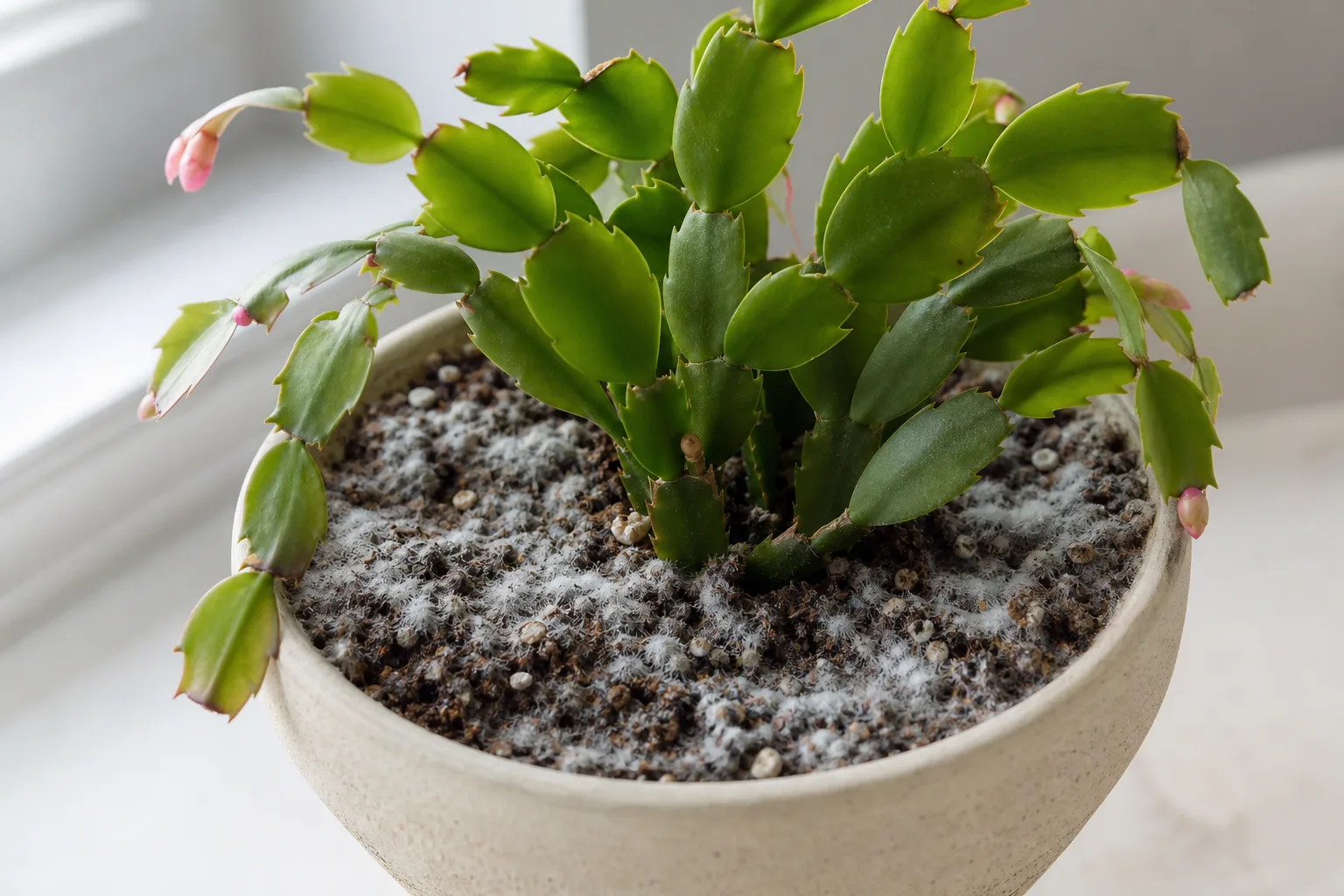
Mold on Soil on Christmas Cactus: Causes, Checks & Fixes
This guide covers mold on soil on Christmas Cactus. See also the general Mold on Soil guide, watering, and light pages for this plant.
Mold on Soil on Christmas Cactus: Causes, Checks & Fixes
Quick answer
White or gray fuzz on Christmas Cactus (Schlumbergera × buckleyi) potting mix is usually saprophytic mold-a fungus eating decaying organic matter on a surface that stays wet too long. It is rarely attacking living stem tissue.
First step: scrape off the top 1–2 cm of affected mix and stop watering until that surface feels dry. That single move removes active spores and breaks the wet cycle. Extension guidance for Christmas cactus mold recommends scraping the top layer and reducing watering frequency rather than treating the plant as diseased. Only after the top layer dries should you decide whether the plant needs a Christmas Cactus watering guide change, better airflow, or a root inspection.
What mold on soil looks like on Christmas Cactus
Surface mold on a holiday cactus pot typically shows as:
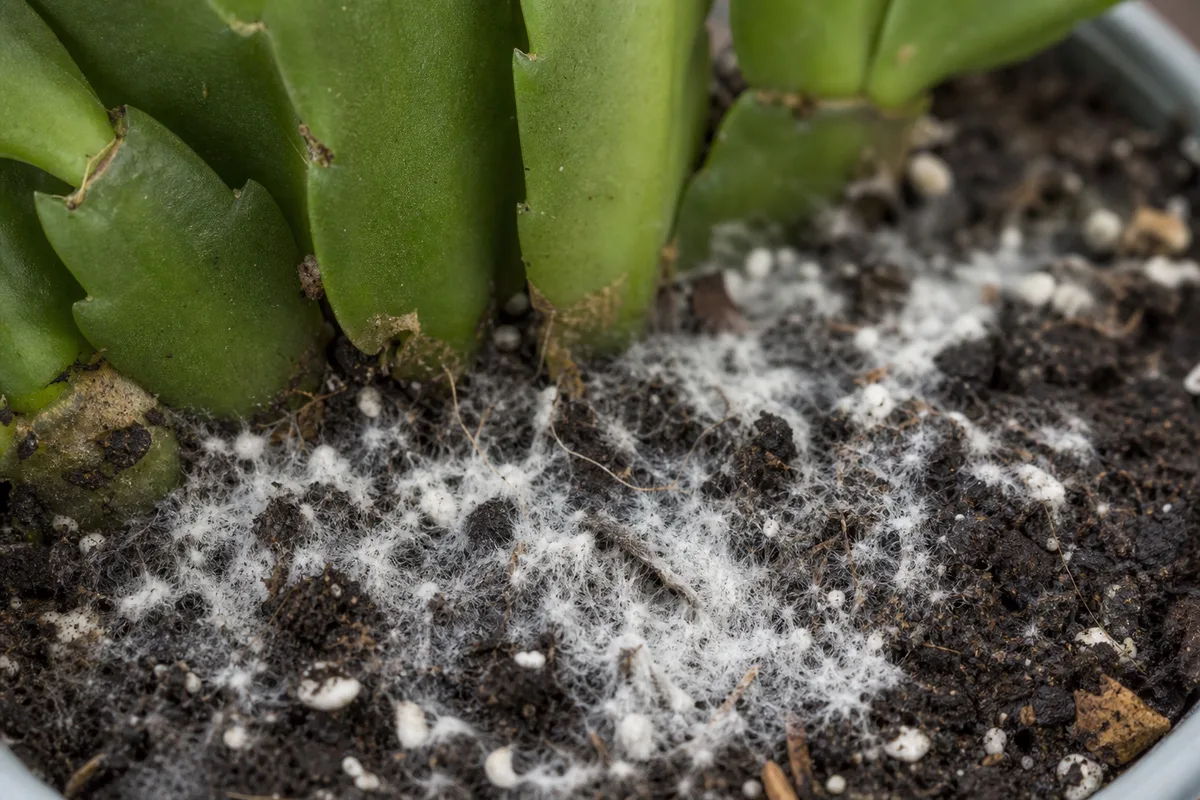
White fluffy saprophytic mold on a persistently wet soil surface - compare with a clean dry top layer after scraping and pausing watering.
- White, gray, or occasionally yellow-green fuzz spread across the top of the mix, sometimes in patches around the base of arching stems
- Soil that looks damp for days after your last drink, even though segments still appear plump
- A light musty smell when you lift the pot or disturb the surface
- Fungus gnats on Christmas Cactus hovering near the pot rim-often in the same pots where mold appears
The segmented stems themselves usually stay firm and green when mold is only a surface issue. Each phylloclade (the flattened stem segments) should feel slightly succulent, like a thick leaf, not limp or translucent.
Salt crust lookalike: White crusty deposits without a fuzzy texture may be fertilizer or mineral salt buildup from tap water or repeated feeding-not mold. Salt crust feels gritty and hard; mold looks cottony or thread-like. Both can sit on a chronically wet surface and both respond to scraping the top layer and fixing watering.
Why Christmas Cactus gets mold on soil
Christmas Cactus evolved as an epiphytic forest cactus in Brazilian rain forests, growing in tree crotches where leaf litter and bark collect. It wants an organic, airy mix-not desert sand-but that same peat-and-bark blend feeds saprophytic fungi when it never dries at the surface.
overwatering on Christmas Cactus relative to use is the main trigger. Many growers treat it like a tropical foliage plant that wants constantly moist soil. In practice, segments store water internally; roots still need oxygen between drinks. When the top 2–3 cm stays wet for days, fungi colonize the surface.
Christmas Cactus–specific situations that keep the surface soggy:
- Watering on a calendar instead of checking whether the top 2–3 cm is dry-especially after Christmas Cactus repotting guide into a larger pot that holds more wet mix around a small root ball
- Cool, dim placement in autumn when growth slows and evaporation drops, but watering continues on the summer schedule
- Pre-flowering rest mishandled-the plant needs longer dry intervals before bud set; wet rest periods encourage surface mold and can stress roots
- Organic-rich mix without enough bark or perlite, so the surface compacts and holds moisture
- Fallen flowers and old segments left on the soil, giving fungi fresh food on a wet surface
- Decorative cache pots or saucers that hold standing water after each watering
- Grouped hanging baskets with poor air movement between pots
Mold is a moisture signal, not proof of infection. The same wet conditions that grow harmless surface fungi also raise the risk of root rot-the serious disease on Christmas Cactus overview.
How to confirm the cause
Work through these checks before repotting or spraying fungicide:
- Segment firmness - Pinch stem sections. Firm and plump = surface issue likely. Soft, wrinkled, or translucent segments with wet mix = suspect root trouble.
- Topsoil moisture - Stick a finger 2–3 cm deep. If it feels cool and clings to your skin days after watering, the rhythm is too frequent for current light and temperature.
- Pot weight - A heavy pot days after watering confirms slow dry-down. A light pot with fuzzy soil may mean only the surface stayed wet from overhead splashing.
- Drainage - Are saucers empty? Is the plant sitting in a decorative outer pot that traps water? Are drainage holes open?
- Debris scan - Remove spent blooms, fallen segments, and any mulch-like top dressing. Organic litter on wet mix accelerates mold.
- Salt versus mold - Scrape a bit between fingers. Crunchy crystals suggest salts; soft threads suggest fungus.
- Root spot-check (if segments feel off) - Slide the plant partly out of the pot. Healthy roots are pale and firm. Brown, mushy, or foul-smelling roots mean rot-not a scrape-and-wait fix.
If segments are firm, roots look clean on a partial lift, and only the surface is fuzzy, you have confirmed cosmetic saprophytic mold with a culture problem behind it.
First fix for Christmas Cactus
Scrape off the top 1–2 cm of moldy mix and discard it, then pause all watering until the remaining surface feels dry to the touch.
Do not water “to help the plant” while mold is active-that keeps the fungus fed. Do not reach for fungicide as a first response; fixing moisture beats chemicals for surface saprophytes.
After the surface dries, resume watering only when the top 2–3 cm is dry during active growth, or on the longer interval your plant uses during autumn rest.
Step-by-step recovery
Once you have scraped and dried the surface, continue in this order if needed:
- Refresh the top layer - Replace removed mix with a small amount of dry, well-draining potting blend (houseplant mix with extra bark or perlite). Do not pack it wet.
- Adjust the watering rhythm - During spring and summer growth, water when the top 2–3 cm is dry, then drain thoroughly. Before flowering, allow longer dry-down between drinks as the plant rests.
- Improve airflow and light - Move the pot to Christmas Cactus light guide with gentle circulation. Forest cacti in dark corners dry slowly and mold recurs.
- Clean the surface weekly - Pick off fallen blooms and segments. They are common on arching, flowering plants and decay quickly on wet mix.
- Address fungus gnats together - If gnats appear, let the topsoil dry longer and use sticky traps. Gnats and mold share the same wet-soil habitat; drying fixes both.
- Repot only if mold keeps returning - Chronic recurrence after care changes suggests compacted, waterlogged mix or an oversized pot. Repot in spring into fresh bark-enriched mix one size up at most-not as a day-one reaction to a first fuzzy patch.
Skip repotting on the same day you first notice mold unless roots are already mushy or the mix smells sour throughout.
Recovery timeline
Surface mold should stop reappearing within one to two weeks once the top layer routinely dries between waterings. The fuzzy patch you scraped will not “heal”-it is gone when removed.
Plant tissue does not need to recover from surface mold because segments were not infected. Watch for:
- Improving signs: Topsoil dry within a few days after watering; no new fuzz; firm segments; normal new segment growth at stem tips
- Stall signs: Mold returns within 48–72 hours of scraping; gnats persist; segments soften at the base; buds drop while mix stays wet
If the surface stays mold-free for two full watering cycles and segments remain plump, consider the episode resolved.
Lookalike symptoms
- Root rot on Christmas Cactus - Soft segments, wilt despite damp mix, sour smell, brown mushy roots. Requires dry-down, possible trim and repot-not scrape alone.
- Botrytis gray mold on stems - Fuzzy gray growth on living tissue, often where flowers were wet or damaged. Different from soil-surface saprophytes; improve airflow and remove affected parts.
- Powdery mildew - White dusting on segments or buds, not confined to soil. Fixed with airflow and humidity balance, not topsoil scraping.
- Mineral salt crust - Hard white film without fuzz; scrape and flush carefully, reduce fertilizer frequency.
- Slime mold - Irregular colorful blobs on wet bark mixes; also saprophytic and harmless-same dry-and-scrape approach.
What not to do
Do not drench the soil with fungicide for harmless surface mold-the moisture from some products can worsen the underlying problem.
Avoid watering on schedule without checking dryness; Christmas Cactus use changes with season and room brightness.
Do not mist heavily over the pot thinking humidity helps flowering while the soil surface never dries.
Skip cinnamon, vinegar, or baking soda as substitutes for drying the mix-they may change surface pH but do not fix chronic wetness.
Do not ignore returning mold because segments still look fine-persistent wet soil can progress to root rot.
Avoid repotting into a much larger container “to fix mold”; extra wet soil volume slows drying.
Christmas Cactus care cross-check
Mold often appears when general care drifted:
- Light: Bright indirect light helps the mix cycle. Weak light + frequent water = chronic surface wetness.
- Mix: Aim for houseplant soil with roughly 20% orchid bark-airy enough to drain but organic enough for epiphytic roots.
- Season: Reduce watering frequency as days shorten before flowering; wet rest is a common mold window.
- Pot: Drainage holes are non-negotiable. Empty saucers after every drink.
Align those basics and surface mold usually disappears without heroic intervention.
How to prevent mold next time
Let the top 2–3 cm dry before the next watering during active growth. Lengthen the interval in autumn when the plant rests.
Use bark-enriched, well-draining mix in a right-sized pot with open drainage. Remove spent blooms and fallen segments promptly.
Place the plant where bright indirect light and gentle airflow help the surface dry between waterings within a few days after watering.
If you bottom-water, do not leave the pot sitting in water for hours-epiphytic roots still need dry cycles.
Watch for early fungus gnats as a moisture warning before a full mold mat forms.
When to worry
Treat mold as urgent when it returns within days of removal, the mix smells sour, segments soften at the soil line, or wilting continues despite wet soil. Those point toward root rot or chronic saturation.
A first-time fuzzy patch on firm segments with a fixable watering habit is not an emergency-scrape, dry, and adjust.
Conclusion
Mold on Christmas Cactus soil is a wet-surface warning, not a death sentence. Scrape the top layer, let it dry, and match watering to how fast the mix actually dries in your home. Firm segments and clean roots mean the plant was never infected-only the potting mix was too hospitable to harmless fungi. Fix the moisture rhythm and the fuzz stays gone.
When to use this page vs other Christmas Cactus guides
- Christmas Cactus watering guide - Use for routine moisture checks before assuming mold on soil is the main issue.
- Christmas Cactus problems hub - Browse all 21 common issues on this species.
- Fungus Gnats on Christmas Cactus - Different entry point when symptoms overlap with mold on soil.
- Overwatering on Christmas Cactus - Different entry point when symptoms overlap with mold on soil.
- Root Rot on Christmas Cactus - Different entry point when symptoms overlap with mold on soil.