Slow Growth on Christmas Cactus: Causes, Checks & Fixes
Quick answer
Slow growth on Christmas Cactus is often normal during pre-bloom rest (mid-September until buds form) and post-flowering recovery (late January through March). First step: confirm the calendar-if segments stay plump and the plant is in a rest window, reduce watering and wait. If growth stays absent through April–August with wrinkled segments or circling roots, treat it as a fixable cultural stall.
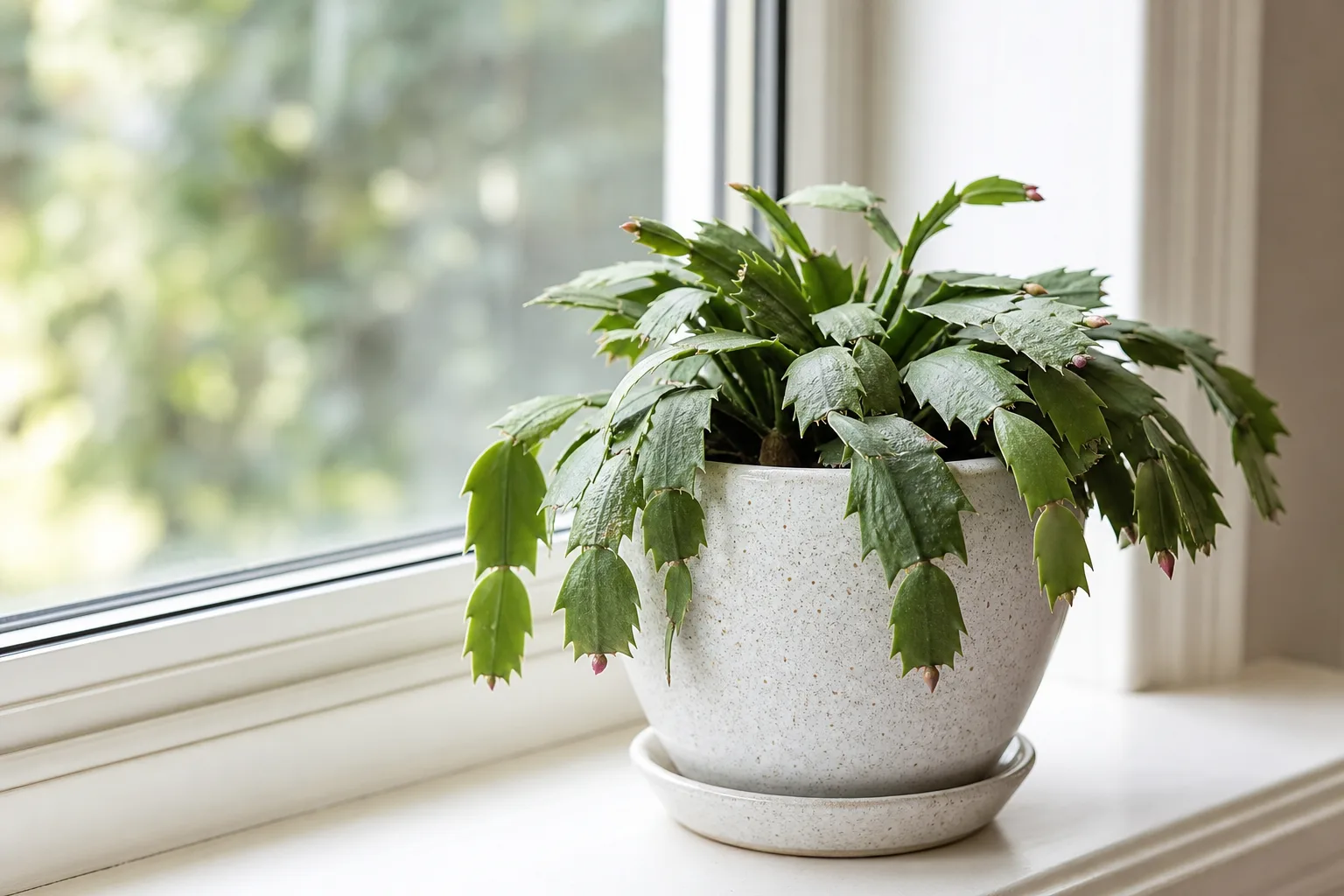
Slow Growth on Christmas Cactus: Causes, Checks & Fixes
This guide covers slow growth on Christmas Cactus. See also the general Slow Growth guide, watering, and light pages for this plant.
Slow Growth on Christmas Cactus: Causes, Checks & Fixes
Quick answer
Slow growth on Christmas Cactus (Schlumbergera × buckleyi) is often normal. This is an epiphytic forest cactus that naturally pauses growth around flowering cycles, so “not doing much” is sometimes correct behavior rather than a problem.
First fix: check the calendar before changing care. During pre-bloom and post-bloom rest windows, firm green segments plus little elongation usually mean the plant is resting, not failing. If you are in active growth months and still see no new segment tips, run the confirmation steps below and correct light and watering first.
Slow growth vs leggy growth vs wilting
These patterns look similar from a distance but need different responses:
- Slow growth: few new segment tips, but existing segments may stay firm.
- Leggy growth: stretched joints and leaning toward light; see leggy growth.
- Wilting/decline: limp or soft segments, often with moisture imbalance; compare wilting and root rot.
Do not treat all three as “needs fertilizer.” Diagnosis first prevents avoidable root stress.
What slow growth looks like on Christmas Cactus
On holiday cacti, growth is measured by new phylloclades (flat stem segments) added at tips during active season.
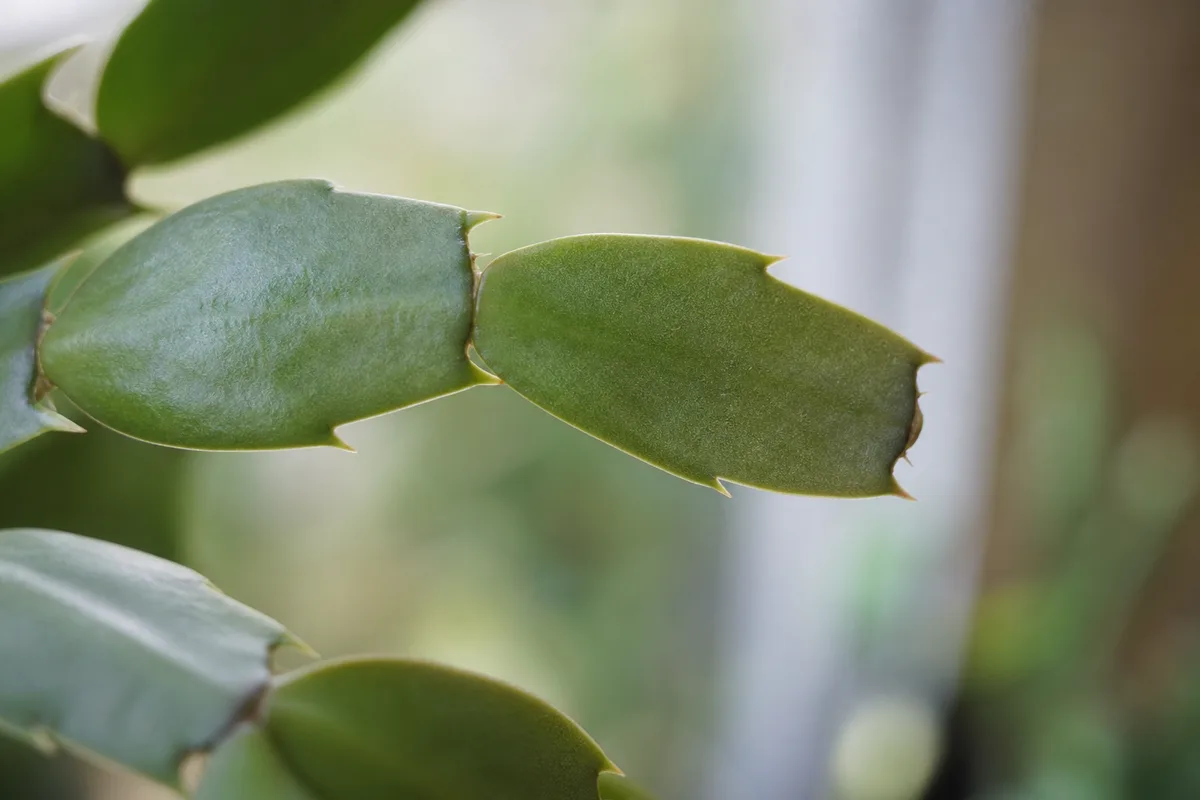
Segment chain tip with firm green tissue but no fresh paddle forming - a stalled growth pattern outside normal seasonal rest.
- Normal slowdown: firm, green segments with minimal elongation during known rest windows.
- Stall pattern: no new tips through spring and summer, plus thin or wrinkled segments.
- Root-crowding pattern: mostly healthy color but long-term minimal growth, often with circling roots at pot edges.
Holiday cacti can stay in one pot for a long time, and MSU Extension notes they may not need frequent repotting. That longevity is useful, but eventually crowded roots limit growth response.
When slow growth is normal on Christmas Cactus
Pre-bloom rest (mid-September until buds form)
Flower initiation in holiday cacti depends on day length and cooler nights. The Clemson HGIC guide describes a target of about 14 hours of uninterrupted darkness for roughly six weeks during bud-setting season. In this period, reduced growth is expected.
Post-flowering rest (late winter)
After flowering, growth often pauses while the plant recovers. The RHS recommends cooler conditions around 12 to 15 C with reduced watering before active growth resumes.
Short pause after repotting
A light growth pause after spring repotting is common while roots re-establish. If segments stay firm and moisture rhythm is normal, this temporary pause is usually not a failure signal.
Why Christmas Cactus growth stalls outside rest windows
Insufficient light in active season
Holiday cacti typically need bright but indirect light to push consistent spring and summer growth. Dim placement can keep the plant alive but slow segment production.
Root-bound mix or exhausted substrate
Over time, roots crowd and old mix compacts. Water and oxygen movement decline, and growth can flatten even when the plant still looks mostly green.
Watering mismatch
Repeated drought can halt new tip formation, while persistently wet media in cool low light can damage fine roots. Either extreme can present as “slow growth.”
Nutrient depletion (secondary cause)
Nutrients matter, but only after light, roots, and watering are corrected. Feeding a stressed or resting plant often worsens root stress instead of improving growth.
How to confirm the cause
Use this order so you fix the right problem first:
- Calendar: Are you currently in a normal rest window?
- Segment firmness: Firm = often rest; wrinkled/thin = likely stress.
- Pot weight and moisture: Always light suggests drought; always heavy suggests poor aeration or overwatering.
- Light position: During active season, confirm the plant is near bright filtered light.
- Root check: If safe to inspect, look for firm white roots versus dark mushy roots.
- Growth marker: Mark one tip and watch for a new segment in 2 to 4 weeks after corrections.
Rest vs stall decision table
| Pattern | Typical timing | Segment feel | Pot behavior | Action |
|---|---|---|---|---|
| Seasonal rest | Fall bud set / post-bloom | Firm, green | Slower dry-down is common | Reduce watering slightly and wait |
| Cultural stall | Spring/summer active months | Often thin or wrinkled | Too dry or too wet for long periods | Correct light + watering first |
| Root-bound slowdown | Any season, older plant | Usually firm at first | Dries unevenly, roots circling | Plan spring repot one size up |
| Root failure overlap | Any season | Soft, yellowing segments | Stays wet, may smell sour | Escalate to root rot workflow |
First fix to try
If segments are firm and you are in a rest window, reduce watering and hold steady. Avoid fertilizer or repotting “just to stimulate growth.”
If you are in active season with stalled growth, correct light and watering together first:
- move to brighter indirect light
- water deeply only when upper mix has dried appropriately
- allow full drainage
- wait 2 to 3 weeks for a response
Step-by-step recovery
- Stabilize conditions for 14 days. Keep placement and watering consistent instead of making daily changes.
- Track one growth tip weekly. Look for even a single new phylloclade as an early recovery sign.
- Repot only if roots confirm crowding or mix failure. Use an airy mix and only one pot size up; see repotting guide.
- Resume light feeding only after new growth starts. Start dilute and only during active growth; details in fertilizer guide.
- Recheck for pests if growth still stalls. Mealybugs and scale at joints can suppress new growth without immediate collapse.
Recovery timeline
| Situation | Expected timeline |
|---|---|
| Normal seasonal rest | Growth resumes when rest ends; often 2 to 4 weeks into active care |
| Light/water correction | New tips often appear in about 2 to 3 weeks |
| Post-repot recovery | Short pause, then stronger growth over 4 to 8 weeks |
| Drought recovery | Turgor may improve within 1 to 2 weeks; growth follows later |
| Root-damage overlap | Recovery is slower and depends on new firm growth, not old segment appearance |
Older thin segments rarely “reinflate” fully. Success is judged by healthier new growth.
What not to do
- Do not fertilize during rest or while roots are stressed.
- Do not repot during bud development unless root failure is suspected.
- Do not increase watering just because growth is slow in rest season.
- Do not stack multiple interventions on the same day.
When to worry
Escalate beyond routine slow-growth care when you see:
- soft yellowing segments with continuously wet media
- sour smell from the pot
- rapid collapse rather than gradual slowdown
- spreading mealybugs or scale on new joints
Those signs point to active decline, not harmless dormancy. Move to the specific root rot, overwatering, or pest workflow immediately.
How to prevent repeated stalls
Use the annual rhythm as your baseline:
- support fall bud-setting rest correctly
- reduce care after bloom, then ramp up in spring
- keep bright indirect light year-round
- repot before severe root crowding
- track one spring segment chain as your performance check
For full baseline care, keep overview, light, and watering aligned with the season.
When to use this page vs other Christmas Cactus guides
- Christmas Cactus watering guide - Use for routine moisture checks before assuming slow growth is the main issue.
- Christmas Cactus problems hub - Browse all 21 common issues on this species.
- Not Enough Light on Christmas Cactus - Different entry point when symptoms overlap with slow growth.
- Leggy Growth on Christmas Cactus - Different entry point when symptoms overlap with slow growth.
- Yellow Leaves on Christmas Cactus - Different entry point when symptoms overlap with slow growth.