Leggy Growth on Christmas Cactus: Causes, Checks & Fixes
Quick answer
Leggy Christmas Cactus has long, thin phylloclades with wide gaps between joints-usually from months in dim light, especially after holiday display. First fix: move to bright indirect light or add a grow light; then prune stretched chains after flowering to encourage branching.
Leggy Growth on Christmas Cactus: Causes, Checks & Fixes
This guide covers leggy growth on Christmas Cactus. See also the general Leggy Growth guide, watering, and light pages for this plant.
Leggy Growth on Christmas Cactus: Causes, Checks & Fixes
Quick answer
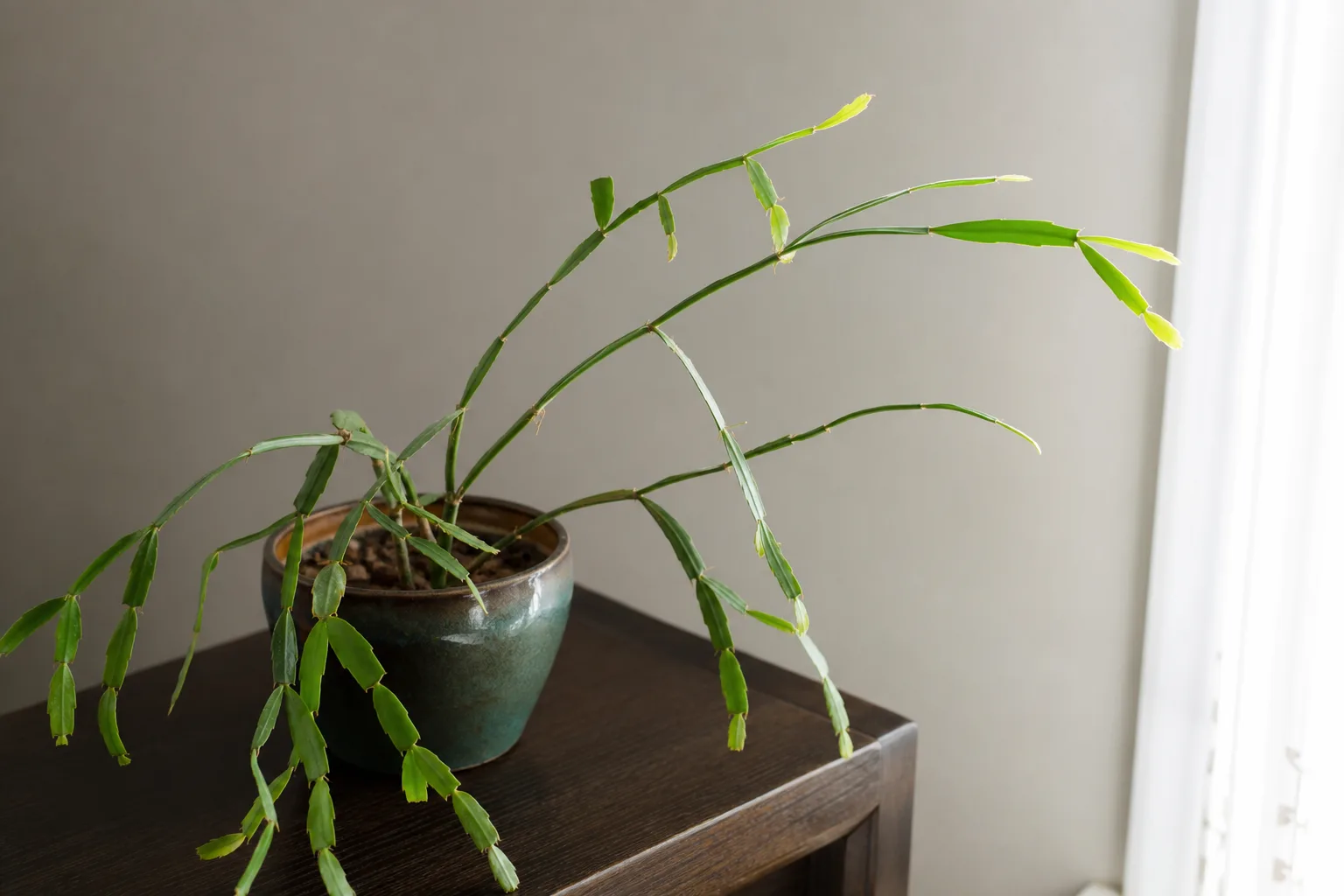
Leggy growth on Christmas Cactus (Schlumbergera × buckleyi) means the flat phylloclades-jointed stem segments-have stretched into long, stringy chains with wide gaps between joints. The plant often leans toward the brightest direction and may look sparse even though it is still alive. This is etiolation: the plant reaching for light it is not receiving, not healthy vigorous extension.
The most common trigger is months in dim light, especially after the plant finishes blooming and stays on a mantel, dining table, or bathroom shelf through spring and summer. Holiday cacti are epiphytic forest cacti from Brazilian rainforests that need bright filtered daylight to stay compact-not the deep interior shade many owners give them once display season ends.
First fix: move the pot to bright indirect light within 1–3 feet of an east window or filtered south/west glass, or add a full-spectrum grow light 6–12 inches above the foliage for 12–14 hours daily. Do not fertilize or repot a stretched plant on day one. After the last flowers fade, prune the longest leggy chains at segment joints to encourage branching-details below and in the Christmas cactus pruning guide.
For full low-light diagnosis and window placement, see not enough light on Christmas Cactus-this page focuses on recognizing stringy growth and reshaping it after bloom.
What leggy growth looks like on Christmas Cactus
On Schlumbergera, legginess shows on the phylloclades, not true leaves. Watch for these patterns:
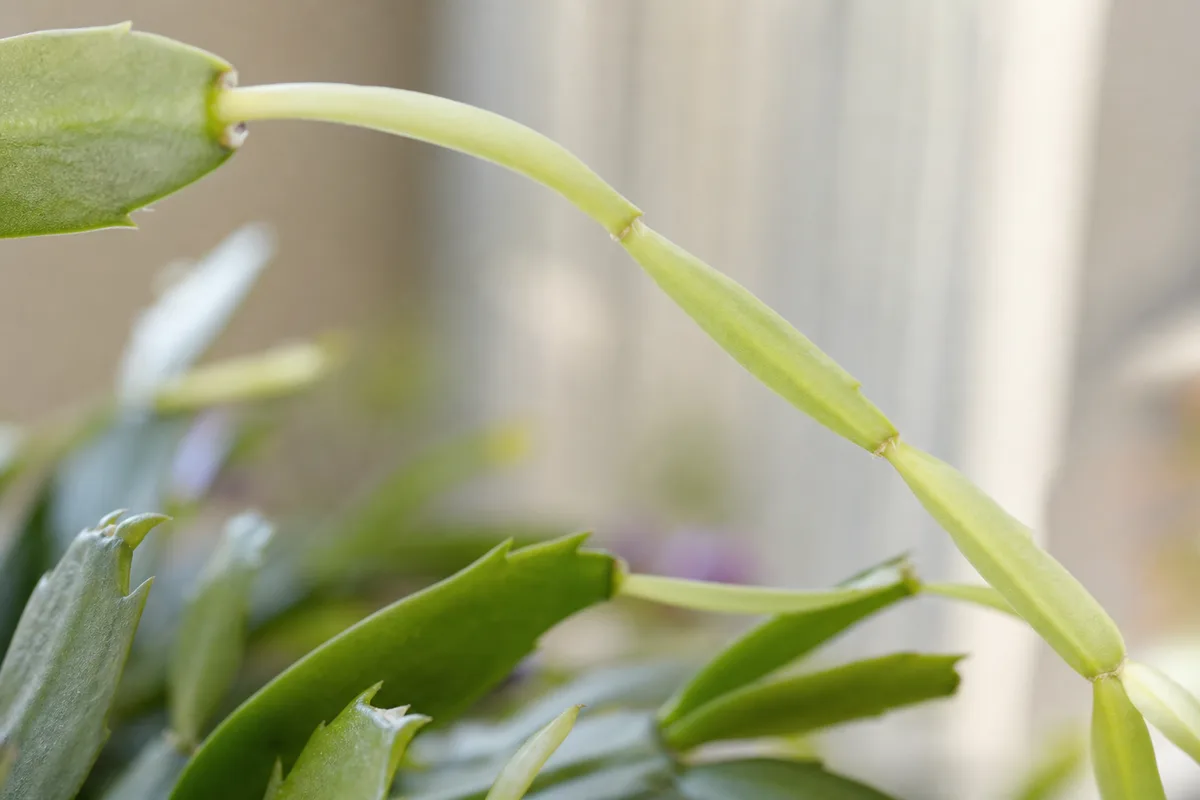
Thin elongated phylloclades with unusually wide internode spacing and pale newest growth - etiolation from months in dim light after holiday display.
- Long, thin segments with unusually wide spaces between joints. Compact healthy growth has plump, relatively short pads; leggy chains look rope-like and droopy.
- One-sided lean as stems reach toward the window or doorway with the most light.
- Pale, washed-out green on the newest segments compared with deep green lower growth from when light was adequate.
- Sparse, uneven silhouette-long arching chains on one side while the center looks bare, especially on plants that were rotated rarely during stretch.
- Weak pendulous tips that bend under their own weight because thin etiolated tissue lacks the firmness of compact segments.
Leggy Christmas Cactus does not look scorched. Red, yellow, or bleached pads after a sudden move to harsh afternoon sun indicate too much direct light-a different problem. Low light produces stretch and dull color, not crisp burn patches.
How this page differs from not enough light
Both URLs address light-related stretch on holiday cacti, but the search intent differs slightly:
| Your question | Best page |
|---|---|
| ”Is my Christmas cactus getting enough light?” - pale color, bloom failure, slow growth, wet soil in dim corners | Not enough light |
| ”Why is my Christmas cactus stringy/leggy?” - long gaps between joints, lopsided chains, post-display stretch | This page |
| Daily placement, fall dark period, window direction | Christmas cactus light |
Low light causes leggy growth; this guide focuses on identifying the stringy habit, fixing light first, and reshaping stretched chains through post-bloom pruning-the step many owners skip after moving the plant back to a windowsill.
Why Christmas Cactus gets leggy indoors
Epiphytic origin vs dark-room placement
In the wild, holiday cacti grow on tree branches in filtered rainforest light-shaded by canopy but still receiving bright daylight, not interior hallway darkness. Indoors, a spot that looks “fine” to human eyes may deliver too few photons for compact segment formation. Light intensity drops sharply as you move away from glass, so a table six feet from a window often produces etiolation over months.
The post-holiday display trap
Christmas Cactus is frequently moved to a mantel, sideboard, or office desk while in bloom, then left there through winter and spring. Those locations rarely provide enough energy for the next growth cycle. By April, what looked festive in December has become a stringy cascade. Returning the plant to a windowsill in May helps, but the elongated segments formed during display months stay long permanently.
Seasonal daylight loss
Even a plant that sat on a good windowsill in summer can stretch by late winter when days shorten. Without supplemental lighting, the same placement delivers fewer hours of usable light from November through February.
Over-fertilizing in dim conditions
Extra nitrogen pushes soft, weak extension when the plant lacks light energy to support dense tissue. Do not treat legginess with fertilizer before correcting placement.
The light–water trap
Christmas Cactus stores water in its segments. In dim light, transpiration slows, soil stays wet longer, and the same watering rhythm that worked in a brighter spot can leave roots oxygen-starved. Leggy stretch plus chronically wet mix in a dark room is a common path toward root rot-fix light and dry-down together.
How to confirm leggy growth is your main problem
Work through these checks before heavy pruning or repotting.
1. Inspect internode spacing on the newest tips. Photograph the terminal segments. Gaps wider than on older, lower growth confirm recent etiolation.
2. Map placement history. Did the plant spend three or more months away from a window after blooming? Post-display stretch is the leading cause of sudden legginess on otherwise healthy holiday cacti.
3. Compare to your brightest safe spot. If the pot is more than 4–6 feet from glass or in a room with no outdoor light, treat insufficient light as the primary driver.
4. Rule out root rot when segments are soft. Gently squeeze a lower phylloclade. Firm but slightly flexible is normal. Mushy, translucent segments with sour-smelling soil point to overwatering-not a light-only issue.
5. Separate stretch from slow growth. Slow growth in adequate light may involve temperature, pot size, or nutrient timing. Leggy growth specifically means elongated internodes, not merely fewer new segments.
6. Check for sunburn if you recently moved it. Segments turning red or bleached after a jump to direct south glass mean excess light, not etiolation.
First fix: improve light before reshaping
Move the pot to bright indirect light-one change at a time.
- East-facing windows are ideal: gentle morning sun, then bright indirect light the rest of the day.
- South- or west-facing windows work behind a sheer curtain that softens direct rays-especially in summer when intense sun can bleach foliage.
- Keep the plant 1–3 feet from the windowpane, not across the room.
- Rotate the pot a quarter turn weekly so new segments grow evenly instead of leaning.
If natural light is insufficient, add a full-spectrum LED grow light 6–12 inches above the foliage for 12–14 hours daily. Brighter light usually means faster dry-down-check the top 2–3 cm of mix with your finger before watering, not a fixed calendar.
Do not fertilize a stressed, stretched plant until new growth looks normal for two to three weeks. Do not repot on day one-a larger pot in unchanged dim light slows dry-down further.
Reshape leggy stems after flowering
Light fixes future segment shape; pruning fixes visible lopsided chains. Old stretched phylloclades never shrink back-the RHS notes that removing end segments on leggy stems in spring after flowering encourages branching and a bushier plant with more flower terminals over time.
When to prune: right after the last flowers fade-typically late winter through early spring-and before autumn bud formation begins. University of Minnesota Extension recommends pruning after flowering to encourage branching; UC ANR adds that holiday cactus often enters active growth in March or April, so cuts made just before that push redirect energy into side segments.
How to prune leggy chains:
- Wait until blooming is fully finished-no swelling buds on the chains you plan to trim.
- Identify the longest, most one-sided arching stems.
- Twist off one to three terminal segments at the narrow joint where pads connect-no mid-segment cuts. Fingers work for thin chains; use clean scissors for thick stems.
- For heavy reshaping, remove up to one-third of total segment count per year-not more in a single session on a weak plant.
- Spread major reduction across two post-bloom seasons if the plant was recently repotted or stressed.
Each cut typically produces one to two new phylloclades at the joint below, filling bare sides over the next growing season. Full pruning details live in the Christmas cactus pruning guide.
Recovery timeline
New segment shape: expect shorter, thicker joints on the next one or two growth flushes within two to four weeks after a meaningful light increase.
Old stretched segments: remain long permanently. Recovery is judged by new growth, not old chains shrinking.
Post-prune bushiness: during active spring growth, new branches at cut joints usually appear within three to six weeks if light, drainage, and watering stay consistent.
Flowering: better light during spring and summer builds reserves for autumn bud set, but a plant moved from a dark corner late in the season may not bloom until the next cycle even with correct fall darkness.
When to shift diagnosis: if segments stay soft or yellow after four weeks in brighter indirect light, investigate root rot, pests, or overwatering rather than light alone.
Lookalike symptoms on Christmas Cactus
| What you see | More likely cause | Quick check |
|---|---|---|
| Wrinkled, shriveled segments | Underwatering or root loss | Pot light when lifted; mix dry deep down |
| Soft, mushy segments; sour soil | Root rot | Unpot and inspect root firmness |
| Red or bleached pads | Sunburn | Recent move to harsh south/west glass |
| Compact plant, no winter buds | Interrupted dark period or warm fall nights | See no flowers |
| Few new segments but normal spacing | Slow growth | Light adequate; check temperature and pot size |
Leggy stretch often overlaps with slow dry-down in dim rooms. Fixing placement and adjusting water together resolves both.
Mistakes to avoid
Do not blast the plant with direct afternoon sun to fix legginess. Christmas Cactus scorches easily in harsh summer rays. Increase light gradually through filtered or eastern exposure.
Do not prune heavily in late summer or autumn when short days trigger bud initiation-cuts then can reduce next season’s bloom count. Minor removal of a single rotten segment is fine; bulk shaping is not.
Do not over-fertilize to compensate for dim conditions. Extra nitrogen produces weak, soft extension without fixing the root cause.
Do not assume stretched segments will compact on their own once light improves-only new joints shorten; old chains stay stringy until you prune or accept the shape.
Do not leave the plant on a post-holiday display spot through the active growing season-it needs light from spring through early fall to stay bushy and bloom again.
How to prevent leggy growth next time
- Return the plant to a permanent bright-indirect station when blooms fade-not a seasonal centerpiece location.
- Supplement in winter with a timer-controlled grow light when daylight shortens.
- Rotate the pot weekly during the growing season for even segment formation.
- Prune lightly after each bloom cycle to remove the longest chains before they dominate the silhouette.
- Match watering to light level-more light means more frequent checks; dim corners mean slower watering, never a fixed weekly rule.
- Track autumn bud set separately: bright days, long uninterrupted nights, and cool nights-covered in the light guide and overview.
Related Christmas Cactus guides
- Not enough light - Full low-light diagnosis, confirmation checks, and window placement
- Christmas cactus light - Daily placement, fall dark period, and grow-light specs
- Christmas cactus pruning - When, where, and how much to cut at segment joints
- Christmas cactus overview - Seasonal care rhythm and bloom initiation
- Slow growth - When the plant adds few segments but is not stringy
- Root rot - Soft segments with wet soil in dim rooms